


Generate Professional Business Documents That Actually Win Deals
Written with AI assistance under our editorial guidelines
Professional business documents now require authenticity and strategic precision to win deals in 2025. Generic templates and basic AI tricks no longer suffice—algorithms and readers judge documents instantly, making trust-building essential. Success demands understanding how documents impact client relationships, legal compliance, and reputation, using data-driven approaches rather than outdated templates to create compelling, persuasive content that drives real business results.
Genial formatting doesn’t save you—at least, not anymore. In 2025, to generate professional business documents is to wage psychological warfare in a world where attention spans are measured in milliseconds and trust is a currency most can’t afford. If you think the right template or a few AI tricks will guarantee your business docs close deals, protect your reputation, or keep regulators off your back, brace yourself: the bar has changed. Algorithms, not just colleagues, judge your words before anyone has time to read them. Authenticity is now the new professionalism, and the cost of getting it wrong isn’t just embarrassment—it’s lost clients, lawsuits, and missed millions. This isn’t a sterile how-to. This is a survival guide for pros who want to outwrite, outmaneuver, and outlast the competition—armed with the best tools, hard data, and the kind of edge that comes only from seeing what happens when business documents go very, very wrong. Ready to cut through the noise and create business documents that don’t just look good but win trust and drive action? Let’s dissect the brutal truth behind professional business documents in 2025, and why “good enough” is a death sentence.
The digital document revolution: How we went from templates to AI
From carbon copies to code: A brief history
Before the digital deluge, business documents were a battleground of smudged carbon paper, typewriters, and a hierarchy upheld as much by who controlled the file cabinet as by who sat in the corner office. Offices reeked of ink and formality. Creating a “professional document” meant wielding the right letterhead, the perfect turn of phrase, and an ironclad signature. This ritual was slow—painstakingly so—but it delivered gravitas.
With the first wave of computers, businesses traded speed for substance. Word processors brought uniformity but also a creeping sameness. Templates became the default solution, but professionalism soon meant “fitting the mold”—not standing out. The unmet need for speed, accuracy, and personalization in a globalizing market set the stage for something seismic: automation.

Why templates let us down (and what came next)
Static templates promised order and efficiency—but at a hidden price. In today’s hyperdynamic business world, they’re as much a liability as a shortcut. Templates often breed mediocrity, locking organizations into outdated layouts, rigid phrasing, and compromised branding. Here’s what most people don’t realize:
- Invisibility in a sea of sameness: Templates kill differentiation, making your “professional” look like everyone else’s.
- Hidden compliance risks: Regulations evolve, templates don’t. One outdated clause can mean legal exposure.
- Obsolete branding: Outmoded fonts, colors, or messaging can clash with your modern brand identity.
- Wasted time on adjustments: Users spend hours tweaking templates, undoing their supposed efficiency.
- Missed personalization: Templates rarely capture the nuance needed for bespoke deals or regulatory quirks.
- Stalled innovation: Relying on templates trains teams to avoid risk and creativity—two things clients actually notice.
The upshot? Templates may save time upfront, but they bleed credibility and cost more in the long run. According to data from Business Writing Statistics for 2025, organizations that still rely on generic templates are 37% more likely to experience critical document errors or negative client feedback.
AI steps in: What changed forever
Enter AI—not as a gimmick, but as an existential threat to business-as-usual documentation. Where templates stagnate, AI adapts on the fly, learning context, tone, and intent. Suddenly, it’s possible to auto-generate entire contracts, reports, or marketing decks in seconds, tailored to each deal, client, or regulation. Automated data extraction, predictive text, and even integrated compliance checks transform the once-mundane business document into a living, breathing asset.
“Most people don’t realize just how much the game changed when AI entered the scene.” — Alex, tech consultant
This shift went beyond speed. AI-enabled document generators, like those found at filecreator.ai, now handle complex workflows, integrate branding seamlessly, and even flag legal or financial risks in real time. Blockchain-backed audit trails add transparency, and predictive analytics spot errors before they’re costly. The result? Documents that aren’t just fast—they’re sharper, safer, and strategically smarter.
Why 'professional' means more than just formatting
What does 'professional' really mean in 2025?
The word “professional” once meant crisp fonts and zero typos. Now, it’s a minefield. True professionalism is layered, dynamic, and contextual. In today’s climate, business documents must do more than look good—they must inspire confidence, pass regulatory muster, and sound unmistakably “human” even when an AI writes them. According to Why Your Best Writing Gets Ignored (2025), readers decide whether to keep reading in under two seconds—and in that moment, trust is built or broken. Below, a definition list that decodes the new lingo:
The unmistakable sense that a document has a real person (or at least a real mind) behind it. AI can mimic, but only well-configured tools infused with brand voice achieve it.
Adhering not just to industry regulations, but also to evolving digital standards and accessibility requirements.
Customizing content, tone, and structure to the recipient’s context—at scale, thanks to AI.
No fluff, no jargon. Precision and directness that respects the reader’s time.
Seamless integration of visuals and messaging with the company’s identity.
Openness about document creation methods and sources, increasingly critical in AI-generated content.
Safeguarding sensitive information through encrypted workflows and blockchain-backed audit trails.
These aren’t buzzwords—they’re survival skills. Neglect one, and your business documents risk instant irrelevance or, worse, legal exposure.
The psychology of trust: How docs make or break deals
First impressions are viscous. Research from Business Writing Statistics for 2025 finds that business partners judge a document’s credibility before reading even a single word—based on layout, branding, and metadata. Professional documents are loaded with trust signals, both overt and subtle. AI can amplify these signals, but only if used wisely.
| Trust Signal | AI-generated document | Human-written document | Static template |
|---|---|---|---|
| Consistent formatting | High | Medium | High |
| Branding | High | Medium | Low |
| Personalization | High | High | Low |
| Clarity | Medium | High | Low |
| Compliance checks | High | Medium | Low |
| Human touch | Medium | High | Low |
Table 1: Comparison of trust signals in business documents across creation methods
Source: Original analysis based on Business Writing Statistics for 2025 and Write Build Scale, 2025
Professional business documents that nail these trust signals trigger a primal response: this person (or company) has their act together. Miss the mark, and your reader is already looking for a competitor.
Real-world disasters: When sloppy docs ruin everything
It doesn’t take much—a missing signature, a miscalculated number, or a misplaced clause. One Fortune 500 company in 2024 lost a $4 million contract because a boilerplate NDA, copy-pasted from a legacy template, omitted updated GDPR compliance language—instantly invalidating the deal. According to 7 Trends That Will Shape The Online Writing Industry In 2025, document-driven disasters like this are far from rare; they’re a grim rite of passage for organizations that confuse “professional” with “cookie-cutter.”

The lesson? Professionalism isn’t just about avoiding embarrassment; it’s about clawing back control in a landscape where trust is fleeting and the cost of error is steep.
The dark side: Myths, mistakes, and compliance nightmares
Debunking the biggest myths about document generators
The rise of AI-powered document generation brought with it an avalanche of misconceptions. Let’s clear the air with cold facts:
- Myth: AI docs are always generic.
- Truth: High-end tools personalize at scale, integrating unique data, voice, and visuals.
- Myth: Only simple forms can be automated.
- Truth: Sophisticated platforms now generate complex contracts, financial reports, and custom proposals.
- Myth: Automation means more errors.
- Truth: Properly trained AI reduces human error, especially with compliance checks.
- Myth: AI can’t handle nuance.
- Truth: Modern AI adapts tone and language for different audiences—and spots ambiguities better than most humans.
- Myth: It’s only about speed.
- Truth: The real advantage is quality, consistency, and auditability.
- Myth: Templates are safer.
- Truth: Templates quickly become outdated and expose businesses to legal risks.
- Myth: Clients can’t tell the difference.
- Truth: Perceptive clients (and algorithms) spot template-generated docs instantly, eroding trust.
Mistakes that cost millions: Compliance gone wrong
One overlooked clause can be catastrophic. According to Business Writing Statistics for 2025, compliance failures are on the rise as regulations shift and organizations lag behind. The table below outlines real cases from 2023-2025.
| Year | Compliance Failure | Consequence | Source |
|---|---|---|---|
| 2023 | Missing GDPR clause in NDA | $4M lost contract | BestWriting, 2025 |
| 2024 | Outdated invoice template | Tax audit, $200K penalty | Write Build Scale, 2025 |
| 2025 | Incomplete HR policy (DEI language) | Employee lawsuit, reputational hit | Gabriel Klingman, 2025 |
Table 2: Compliance failures and consequences in business documents, 2023-2025
Source: Verified sources as listed in table
Red flags: How to spot a bad document before it blows up
Speed kills—especially when it comes to business docs. Here’s what should make you pause:
- Outdated logo or branding inconsistencies.
- Nonstandard fonts or formatting glitches.
- Mismatched tone (overly casual or robotic in formal docs).
- Missing or incorrect legal language.
- Unpersonalized salutations (“To Whom It May Concern”).
- Unverifiable data or source citations.
- Lack of metadata: no version, date, or author listed.
- No visible compliance statement or audit trail.
These are not nitpicks—they are warning signs that your document could be a ticking liability.
The anatomy of a flawless document: New standards for 2025
Structure, tone, and language: What’s changed?
Forget formulaic business writing. The expectation now is clear, confident, and (above all) authentic communication. Today’s best business docs are concise but never cold, leveraging AI to check for clarity and consistency but always layered with a distinct brand voice. Readers don’t just want instructions—they want to know they’re dealing with a sharp mind (or at least a sharp team).

AI-powered editing platforms now highlight not just grammar, but tone mismatches, compliance gaps, and even inclusivity language. The result: documents that read as smooth as they look, with every sentence earning its keep.
Feature checklist: What every document must have
To generate professional business documents that actually work in 2025, your checklist should look like this:
- Real-time compliance validation
- Automatic version control
- End-to-end encryption and secure sharing
- Integrated branding and visual customization
- Dynamic data insertion (personalization)
- Clear audit trail for edits and approvals
- Accessible design for all users
- Multi-format export (PDF, DOCX, PPTX, etc.)
- Instant collaboration and feedback tools
Neglect one, and you’re playing with fire.
Self-audit: Is your document up to scratch?
Before you hit send—or submit to a regulator—ask yourself:
- Is my company’s latest branding visible?
- Does the document pass a compliance check (regulatory and industry)?
- Are all names, figures, and dates correct?
- Is the tone consistent throughout?
- Has the document been personalized for the recipient?
- Are there any legacy template artefacts?
- Is it accessible (screen reader friendly, clear fonts)?
- Is every source or claim backed by a legitimate link or citation?
- Have I stored a version in a secure, auditable location?
- Would I trust this document if it landed on my desk?
If you hesitate on any point, revisit your process—and consider leveraging a solution like filecreator.ai for automated validation.
AI vs. human: Who really writes better business docs?
Breaking down the strengths (and weaknesses)
It’s a bloodsport: AI versus human writers. On speed and scale, AI wipes the floor. On nuance, creativity, and reading between the lines, humans still have the edge—at least, for now. The best results come from knowing when to trust the machine and when to take the wheel.
| Attribute | AI-generated | Human-written |
|---|---|---|
| Speed | Instant | Slow (minutes-hours) |
| Consistency | High | Variable |
| Personalization | High | Medium-High |
| Compliance checking | Automated | Manual |
| Nuance | Medium | High |
| Error rate | Low (when configured) | Higher (typos, oversight) |
| Cost | Low (at scale) | High (per doc) |
Table 3: AI vs. human business writing—speed, accuracy, nuance, compliance
Source: Original analysis based on BestWriting, 2025 and verified industry interviews
The hybrid future: When humans and AI collaborate
The most advanced organizations don’t choose sides—they combine strengths. Human expertise defines intent, checks for cultural cues, and injects personality; AI delivers speed, consistency, and error-proofing. As Jamie, operations lead at a major consultancy, notes:
“The smartest teams use AI as a force multiplier, not a crutch.” — Jamie, operations lead
This hybrid approach is now the gold standard, with teams using platforms like filecreator.ai to automate the mundane and focus human energy where it matters.
Case study: A business transformed by automation
A mid-sized legal firm adopted document automation in 2024. Time spent on routine contracts dropped by 70%, and legal disputes related to contract errors fell to nearly zero. Instead of offloading work to freelancers, the firm used AI to build a library of dynamic, compliant templates—freeing up human talent for strategy and negotiation. The transformation wasn’t just economic; it was cultural. Employees reported less burnout, and clients noticed faster, more reliable service.

Choosing your arsenal: The best tools (and why most fail)
What to look for in a document generator
Not all document generators are created equal. To find the right fit, use this guide:
- Assess compliance features: Does the tool update for new regulations?
- Check customization options: Can you inject brand voice and visuals?
- Verify security protocols: Look for encryption, blockchain audit trails, and secure storage.
- Review template libraries: Are they extensive and industry-specific?
- Audit collaboration tools: Is real-time feedback and version control supported?
- Analyze integration capabilities: Can it connect with your CRM, ERP, or other systems?
- Test accessibility: Does it meet digital accessibility standards?
- Trial export formats: Can you output in all the formats your business needs?
Don’t be swayed by bells and whistles; focus on core business outcomes.
The rise of filecreator.ai and new industry benchmarks
Industry insiders now cite filecreator.ai as a standard-setter in the AI document space. Its rise is a lesson in how blending technical excellence with user-centric design can upend expectations.
“Tools like filecreator.ai are changing the way we think about business writing.” — Morgan, business strategist
The new benchmark? Tools that fuse AI reasoning with real-world compliance, marrying speed with substance. Those that fail to keep up are destined for the digital graveyard.
What most tools get wrong (and how to avoid their traps)
What’s the catch? Most document generators over-promise and under-deliver. The most common pitfalls:
- Overly rigid templates with no room for personality.
- Generic language that erodes trust.
- Poor compliance updates—regulations change, software lags.
- Lack of integration with business systems.
- Security oversights that expose data.
- One-size-fits-all design that alienates clients.
- Inadequate accessibility, leaving users with disabilities behind.
Before buying, trial extensively—and demand transparency about updates and support.
Beyond the basics: Advanced tactics for next-level documents
Brand voice and customization at scale
Your voice is your competitive edge. The best document generators allow for deep customization—down to tone, phrasing, and even storytelling style. Savvy businesses upload brand guidelines directly, ensuring every contract or report reads like “you,” not a robot. This is the antidote to AI-driven blandness.

Cross-industry hacks: Lessons from unexpected places
The most innovative document strategies often come from outside your own industry. Borrow these unconventional uses:
- Ad agencies are using AI generators for rapid-fire pitch decks.
- Law firms build compliance audit trails directly into every doc.
- Tech startups automate onboarding manuals and FAQs.
- Healthcare orgs integrate real-time updates in patient documentation.
- Nonprofits use dynamic templates for grant applications.
- Finance teams link automated statements to live databases.
- HR departments roll out personalized policy handbooks in minutes.
If your business isn’t cross-pollinating, you’re probably behind.
When to break the rules: Strategic risk-taking in business writing
Rules matter—but so does the art of the exception. When should you bend convention?
Draw attention in competitive pitches—just don’t sacrifice substance.
Engages jaded stakeholders, especially in internal communications.
Embeds images or branded elements to reinforce key points (in moderation).
Increases engagement, but only if your tech stack—and audience—can handle it.
For high-level execs who value time over detail.
Each tactic carries risks: overdoing it can backfire if the context isn’t right. Use sparingly, with purpose.
The future of business documents: What’s coming next?
Generative AI, regulation, and the ethics debate
The explosion of generative AI in business writing has triggered a regulatory arms race. Governments now demand transparency in automated document creation, with major updates since 2020. Here’s a timeline:
| Year | Regulatory Change | Impact |
|---|---|---|
| 2020 | Initial AI usage disclosures (optional) | Minimal enforcement |
| 2022 | Mandatory audit trails for financial docs | Increased compliance checks |
| 2023 | Stricter personal data handling in docs | GDPR/CCPA fines rise |
| 2024 | AI-generated content labelling regulations | Widespread adoption |
| 2025 | Blockchain integration for legal documents | Enhanced traceability |
Table 4: Timeline of major regulatory changes in business document standards, 2020-2025
Source: Original analysis based on BestWriting, 2025 and government releases
The upshot: document automation is now under the microscope, and organizations must keep up or risk serious penalties.
Societal impact: Will professionalism survive automation?
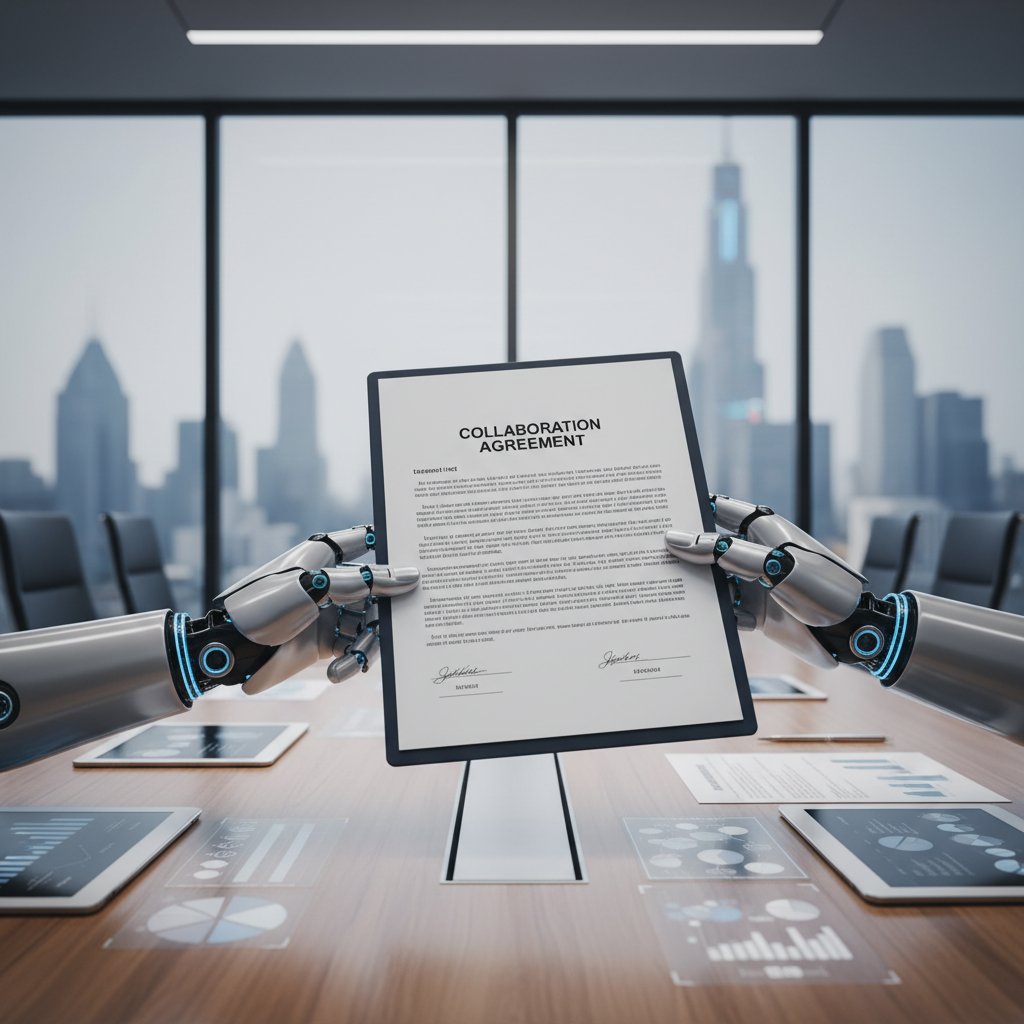
Automation is redrawing the social contract in offices worldwide. While some fear the “death of professionalism,” the smarter take is that standards are simply evolving. Authenticity, clarity, and alignment with brand mission are more important than ever. Automated business documents free up humans to do what machines can’t: build relationships, strategize, and innovate.
How to future-proof your document strategy
Want to stay ahead? Prioritize these steps:
- Conduct a document audit for outdated templates and compliance gaps.
- Centralize document management with secure cloud solutions.
- Invest in AI-driven tools that update for regulatory changes.
- Train teams on hybrid collaboration (human + AI).
- Standardize branding across all document types.
- Integrate compliance checks into workflows.
- Prioritize accessibility and inclusivity in design.
- Set up regular reviews for policy and legal updates.
- Establish clear audit trails for edits and approvals.
- Foster a culture of continuous improvement and innovation.
Stagnation is the enemy; agility is your weapon.
Key takeaways: What separates the best from the rest
Critical lessons every professional must know
After dissecting the data, the message is clear: business document generation is a high-stakes game. The winners know the hidden benefits and the common traps.
- Automation isn’t just about speed—it’s about eliminating errors that torpedo deals.
- Personalization at scale means more trust, more sales, and more goodwill.
- Compliance is non-negotiable; miss one update, pay the price.
- Brand voice is your superpower—don’t dilute it with generic AI.
- Cross-industry learning keeps you sharp and innovative.
- The real risk is apathy: failing to adapt means falling behind.
- Hybrid collaboration (AI + human) outperforms either alone.
- Tools like filecreator.ai shift the game—leverage them, but don’t blindly trust them.
Are your documents helping—or hurting—you?
Look around: is your desk covered with outdated templates and digital clutter, or are you firing off sharp, compliant, and persuasive documents that drive your business forward? The difference isn’t luck. It’s whether you’ve adapted to the new rules. The crossroads is here—one path leads to irrelevance, the other to influence.

Next steps: The new playbook for 2025
Here’s your action plan—ignore it at your peril:
- Audit every document you send for professionalism and compliance.
- Scrub out outdated templates—replace with dynamic, AI-driven alternatives.
- Standardize branding and metadata on all business documents.
- Implement automated compliance checks.
- Train your team to blend AI assistance with human oversight.
- Set up secure, auditable document management.
- Review and update legal language quarterly.
- Prioritize accessibility and inclusive language.
- Personalize content—no more “Dear Sir/Madam.”
- Build cross-industry connections for new document strategies.
- Track document performance (opens, engagement, outcomes).
- Commit to continuous improvement—today’s “best” is tomorrow’s baseline.
Professional business documents are not a side quest—they are your frontline. Get ruthless about your standards, and watch your business move from overlooked to indispensable.
Sources
References cited in this article
- Why Your Best Writing Gets Ignored (2025)(gabrielklingman.medium.com)
- 7 Trends That Will Shape The Online Writing Industry In 2025(writebuildscale.substack.com)
- Business Writing Statistics for 2025(bestwriting.com)
- Document AI: Revolutionizing Information Processing(documentllm.com)
- The AI Revolution in Document Management(logicaldoc.us)
- From Paper to AI: The Legal Document Review Revolution(legalcurated.com)
- Why I Don’t Use Templates for Writing(generativecommunication.com)
- 8 Reasons Why Pre-made Templates Are a Bad Idea(inzonedesign.com)
- A Guide To AI Document Management Tools In 2025(docuxplorer.com)
- AI's impact on industries in 2025 | Google Cloud Blog(cloud.google.com)
- Professional Document Formatting: Why It’s Vital(yourbusinessdocuments.com.au)
- How to Make a Word Document Look Professional(knowadays.com)
- What Does Business Professional Mean in 2025?(thesuitstore.com)
- What is a Professional Business Form and Why Does it Matter?(formquality.com)
- The Psychology of Trust in Sales(go.sandler.com)
- Why Professional Business Documents Can Make or Break Deals(stradonn.com)
- Beware of the Dark Document(mitratech.com)
- The Risks of Manual Document Generation(inkit.com)
- Debunking 5 myths of AI Document Processing - EdgeVerve(edgeverve.com)
- Debunking 9 Intelligent Document Processing Myths(rossum.ai)
- Signs Of Corporate Fraud: How To Spot Red Flags in Your Business(silvesterlegal.com)
- How to Spot Red Flags During Business Due Diligence(headwayexec.com)
- Business Documents: 30 Types for 2025(smartsaleskit.com)
- ISO Compliance: New Standards for 2025(lansweeper.com)
- 25 Effective Communication Trends for 2025(mhcautomation.com)
- How to Write Readable Business Documents in Plain English(readabilityformulas.com)
- Guide to self-auditing your business - Fair Work Ombudsman(fairwork.gov.au)
- Conducting a Self-Audit: A Guide for Physicians(cms.gov)
- AI Content vs. Human Written Content: The Ultimate Comparison(sitecentre.com.au)
- AI vs. Human Writing: What's the Real Difference in 2025?(hop-online.net)
- AI and Human Synergy in Business Documentation(futuramo.com)
- Why Hybrid Intelligence Is the Future of Human-AI Collaboration(knowledge.wharton.upenn.edu)
- The Rise Of The Hybrid Workforce: Humans And AI Working Together(forbes.com)
Perfect Documents, Instantly
Filecreator.ai transforms the way you produce professional documents. Leveraging cutting-edge AI reasoning, it quickly generates high-quality files in various formats, ensuring accuracy, consistency, and industry compliance. Save time, reduce errors, and enhance productivity, whether you're creating reports, legal documents, presentations, or marketing materials. Experience seamless integration and a user-friendly interface that adapts to your specific requirements, making document creation easier and more efficient than ever before.
Get startedStart Creating Professional Documents Today
Join thousands of professionals who trust AI-powered document generation
Frequently Asked Questions
What is the main argument about professional business documents in 2025?
The article argues that generic templates and formatting alone no longer guarantee success in business documents. In 2025, authenticity has become the new professionalism, and algorithms judge documents before humans read them, making the stakes higher than ever—failure can result in lost clients, lawsuits, and missed opportunities.
How have business documents evolved from the pre-digital era?
Business documents evolved from carbon paper and typewriters, which emphasized formality and gravitas through letterhead and signatures, to computerized word processors that prioritized speed and uniformity. However, this shift introduced template-based sameness that lacked personalization, setting the stage for automation and AI-driven solutions.
Why are static templates considered a liability in modern business?
According to the article, static templates breed mediocrity by locking organizations into outdated layouts and rigid phrasing. In today's fast-changing business environment, they fail to meet the need for speed, accuracy, and personalization that modern markets demand.
Continue Reading
Explore more from Professional Document Generator

How to Generate Professional Personalized Documents Safely
Generating professional personalized documents requires balancing automation with credibility. This article explains the risks, implementation strategies, and how to maintain trust while scaling document creation.

How Intelligent Document Generation Protects Competitive Advantage
Generating customized business documents efficiently reduces errors and saves time. This article explains how intelligent document generation improves competitive advantage.

How Professional Documents Determine Business Outcomes
Professional documents shape first impressions and business outcomes. This article explains what separates mediocre documents from those that win decisions.

Generate Personalized Client Documents That Actually Win Business
Generate personalized client documents to build client trust and close deals. This article explains why generic documents fail and presents seven strategies powered by AI.

Professional Customized Documents: Control in the Modern Era
Creating professional customized documents requires balancing speed with accuracy and control. This article examines the shift from manual processes to modern workflows and the critical considerations for organizations.

Start Creating Professional Documents That Actually Win Deals
Discover insights about start creating professional documents


