


Professional Document Generator in 2026: Power, Risks, Reality
Written with AI assistance under our editorial guidelines
By 2026, professional document generators address a critical business problem: professionals waste 12-15 hours weekly on manual document formatting and editing. These tools reduce costly errors—a single mistake can cost $500 to $50,000 in damages—while freeing teams from inefficiency. Organizations adopting automation gain competitive advantage, though significant risks around data security and over-reliance on AI remain unresolved.
In a world obsessed with speed, precision, and relentless results, the phrase “professional document generator” has shifted from niche jargon to boardroom gospel. By 2025, the game isn’t just about cranking out files—it’s about orchestrating flawless, high-stakes workflows that make or break deals, reputations, and even careers. The reality? Most organizations are still drowning in outdated practices, unaware of the brutal truths and seismic shifts happening beneath the surface. This isn’t another starry-eyed tech fantasy or a recycled listicle about the “top 10 tools”—it’s a ruthless, research-backed expose. We’ll cut through the hype, expose the hidden dangers, and arm you with actionable insights drawn from real-world stats, industry insiders, and the digital trenches. Whether you’re a battle-worn executive, an aspiring entrepreneur, or just sick of wrestling with clunky templates, what follows will challenge everything you thought you knew about automating documents. Welcome to the future—strap in.
Why professional document generators matter more than you think
The silent crisis of wasted hours
Behind every glossy annual report, airtight contract, or slick presentation is a dirty secret: endless hours lost to manual drudgery. According to research from SaaSworthy (2025), professionals spend an average of 12-15 hours per week just formatting, editing, and reviewing documents—hours that vanish into the black hole of operational inefficiency instead of fueling innovation. It’s not just about boredom; it’s about opportunity cost. Every misaligned header or last-minute revision represents time and energy siphoned from client work, strategic planning, or, let’s be real, actual living. The human toll is unmistakable—burnout, missed deadlines, and a creeping sense that you’re never really caught up.

Document chaos isn’t just a minor annoyance; it’s an existential threat. The silent crisis of wasted hours is grinding down teams everywhere. Businesses large and small are discovering that without embracing professional document generators, they’re basically running with weights on their ankles. The old ways aren’t just inefficient—they’re unsustainable.
The hidden costs of getting it wrong
Here’s the real gut punch: a single document error can detonate like a landmine. According to the Docupilot Document Generation Guide (2025), the average cost of a critical document mistake ranges from $500 in lost productivity to over $50,000 in legal damages for compliance failures. Even minor typos undermine trust, while misfiled contracts and outdated templates can trigger regulatory nightmares.
| Error Type | Frequency (%) | Average Cost (USD) |
|---|---|---|
| Typographical errors | 42 | $500 |
| Compliance violations | 15 | $50,000 |
| Incorrect data merges | 27 | $5,500 |
| Missed deadlines | 9 | $2,200 |
| Version control failures | 7 | $1,800 |
Table 1: Statistical summary of common document errors and their average costs (2025 data)
Source: Original analysis based on Docupilot, 2025, SaaSworthy, 2025
The numbers don’t lie: every manual process is a potential ticking time bomb for your brand, bottom line, and regulatory standing. In a world where GDPR and HIPAA fines lurk around every corner, the cost of “good enough” is rising fast.
How demand for automation exploded post-2020
The pandemic was a crucible—suddenly, remote work wasn’t a perk, it was a necessity. Overnight, teams scattered across time zones had to collaborate on everything from investor reports to patient disclosures without missing a beat. According to research from SFApps (2025), the adoption of automated document generators jumped by over 60% between 2020 and 2024, as businesses raced to patch up digital workflows and dodge efficiency-killing bottlenecks.
"It’s not just a tech upgrade—it’s survival." — Samantha, Operations Lead, as cited in industry interviews (2025)
The acceleration wasn’t a fluke; it was a survival instinct. Filecreator.ai and comparable platforms surged in popularity, not because they were trendy, but because chaos demanded order—and automation delivered.
From typewriters to AI: a brief, brutal history of document automation
The analog era: when mistakes were permanent
Before the cloud, before Ctrl+Z, there was the clack of typewriter keys and the sting of white-out. Professional documents were once literal paper trails—carbon-copied, coffee-stained, and unforgiving. One botched clause or miscalculation meant starting over, or worse, mailing out a flawed contract and praying no one would notice. Entire industries ran on a perilous mix of muscle memory and manual checking. The analog era was a testament to human resilience—but also to the terrifying permanence of human error.

The scars of that era still shape our collective anxiety about documentation—why else do so many organizations cling to “double-checking” and “manual review” as if they were talismans?
The rise (and fall) of templates
The 1990s brought a seductive promise: templates. Suddenly, you could duplicate a contract, proposal, or invoice with a few clicks. For a while, it felt revolutionary—until the cracks appeared. As reliance on templates grew, so did the risks: “template blindness” (missing outdated clauses), accidental data leaks, and the soul-crushing sameness that screamed “we stopped caring.” By 2020, templates were more crutch than cure.
- Templates often fossilize mistakes: Errors or outdated language get copied across dozens of documents before anyone notices.
- Stifled creativity: Rigid formats discourage necessary customization, leading to bland, generic outputs.
- Version confusion: Multiple template versions lead to chaos, especially when staff download and edit locally.
- Security blind spots: Sensitive information sometimes remains in “locked” sections, risking exposure.
- Compliance drift: Regulatory updates are often missed, putting organizations at risk.
- Collaboration bottlenecks: Templates rarely support real-time teamwork, causing endless back-and-forth emails.
- Poor integration: Old-school templates typically don’t connect with modern CRM, ERP, or cloud systems.
Templates were a leap forward—but in hindsight, a leap onto thin ice.
AI enters the chat: the new document revolution
Then came the real disruptor: artificial intelligence. With advances in natural language processing (NLP), machine learning, and deep integrations, document generation stopped being about “fill in the blanks” and started being about intelligent, context-aware creation. AI-driven tools now analyze data, enforce compliance, and even suggest improvements on the fly—reducing time-to-delivery and error rates at a scale templates could never touch.
| Year | Milestone | Impact |
|---|---|---|
| 1990 | Widespread adoption of word processors | Replaced typewriters, basic digital editing |
| 2000 | Proliferation of templates | Increased efficiency, new risks arise |
| 2010 | Cloud-based collaboration tools emerge | Real-time editing, remote teamwork |
| 2015 | Integration with CRM/ERP systems | Data merges, workflow automation |
| 2020 | AI-powered document suggestions | Error detection, style optimization |
| 2023 | Deep-learning content generation | Context-aware, personalized documents at scale |
| 2025 | Industry-wide compliance engines | Automated regulation checks, sector-specific standards enforcement |
Table 2: Key milestones in document automation from 1990 to 2025
Source: Original analysis based on Docupilot, 2025, SaaSworthy, 2025
The AI revolution wasn’t just a step forward; it was a leap across the digital Rubicon. The best professional document generators now wield these breakthroughs to empower teams, stamp out errors, and make compliance non-negotiable.
What actually makes a document 'professional'? (And who decides?)
Beyond looks: substance, accuracy, and compliance
Ask most people what makes a document “professional,” and you’ll get answers about logos, fonts, or formatting. That’s the window dressing. True professionalism lies in substance—accuracy, clarity, and bulletproof compliance. It’s one thing to look polished; it’s another to withstand regulatory audits or courtroom scrutiny. Professional document generators enforce industry standards, auto-flag inconsistencies, and ensure that the substance is as sharp as the style.
Definition List:
Adherence to regulatory and industry-specific rules (like GDPR, HIPAA) that govern data protection, formatting, and disclosures. For example, a compliant healthcare document will automatically conceal patient identifiers.
The AI-driven process of understanding meaning and context within a document, ensuring that generated content is not just grammatically correct but contextually appropriate.
A curated collection of pre-built document formats, often tailored to specific industries or use-cases, designed to streamline creation while enforcing best practices.
The myth of one-size-fits-all professionalism
The dark side of automation? The myth that “professional” is universal. In reality, a legal contract and a marketing proposal are different species. According to expert interviews, document generators that ignore industry nuance create more harm than good—risking compliance breaches, misunderstandings, and lost opportunities.
"A legal brief isn’t a sales pitch—don’t let your generator forget that." — Raj, Senior Counsel, as cited in legal tech symposium (2025)
Savvy tools like filecreator.ai have made a name for themselves by respecting those boundaries, allowing users to tailor documents to the precise demands of their sector.
Who’s setting the standards in 2025?
It’s not a free-for-all. Industry bodies (like the American Bar Association for legal docs, or ISO for technical manuals), regulators (GDPR, HIPAA, FINRA), and a new breed of AI-alignment organizations shape what “professional” means. Document generators are forced to evolve—or get left behind.
| Sector | Key Standards/Regulations | Oversight Body |
|---|---|---|
| Legal | ABA Model Rules, eSign Act | American Bar Association |
| Healthcare | HIPAA, HL7, GDPR | HHS, EU Commission |
| Finance | SOX, FINRA, GDPR | SEC, FINRA, EU Commission |
| Technical | ISO 9001, IEEE | ISO, IEEE |
| Marketing | Brand compliance, GDPR | Internal QA, EU Commission |
Table 3: Current professional document standards by sector
Source: Original analysis based on Docupilot, 2025, SaaSworthy, 2025
The result? Document automation that isn’t just fast, but bulletproof.
The anatomy of a modern professional document generator
How AI actually generates documents (no magic, just math)
Forget the “black box” mystique. At its core, AI document generation is about algorithms—trained on millions of samples—using NLP to parse your input, match it to industry best practices, and output a structured, compliant file. The process isn’t mystical; it’s a relentless application of statistical reasoning, semantic checks, and compliance frameworks.

The result? Documents that don’t just “look right,” but actually are right—functionally, legally, and contextually.
Features that separate amateurs from pros
Not all “automation” is created equal. The best professional document generators are packed with features that go beyond basic assembly.
- Automated compliance checks: Instantly flag non-conformities with regulations such as GDPR and HIPAA.
- Dynamic template adaptation: Tailor templates on-the-fly to unique scenarios or changing regulations.
- AI-powered error detection: Spot inconsistencies, missing data, or outdated clauses before they become disasters.
- Version control: Track every change, who made it, and when—no more “wrong version” mishaps.
- Real-time collaboration: Multiple users edit simultaneously, eliminating email chains and merge conflicts.
- Custom workflows and approvals: Integrate business rules for sign-offs, editing, and publishing.
- Drag-and-drop builder: Empower non-technical users to build and adapt documents without IT support.
- Multi-format export: Instantly produce PDF, DOCX, PPTX, and more—no tedious conversions.
These aren’t “nice to haves.” They’re the line between operational chaos and bulletproof efficiency.
Integration, APIs, and the business workflow
A professional document generator isn’t an island—it’s a hub. The best tools connect directly with your CRM (think Salesforce), HRIS, ERP systems, and cloud storage, automating data merges and approvals.
- CRM integration: Auto-populate contracts and proposals with client data.
- HRIS integration: Generate onboarding documents, policy updates, and compliance paperwork seamlessly.
- ERP connection: Pull financial, logistical, or inventory data directly into your reports.
- Cloud storage: Instant archiving and sharing across teams, with granular permissions.
- E-signature platforms: Streamline contract execution with digital signatures.
- Calendar and task management: Automate deadline reminders, approvals, and follow-ups.
With deep integration, document generation is no longer a bottleneck—it’s a catalyst for business velocity.
Debunking the top 7 myths about AI-powered document generators
Myth 1: ‘AI makes all documents look the same’
This is the lazy critique—one that ignores how modern AI is driven by user instructions, not just default settings. With customizable templates, brand guidelines, and context-aware content, document generators can reflect your company’s DNA.
"The AI is only as bland as your instructions." — Maya, Digital Transformation Lead, as quoted in automation roundtable (2025)
In short: the sameness myth is a symptom of poor onboarding, not technological limits.
Myth 2: ‘They’re only for big business’
Another tired trope—today’s professional document generators are accessible to startups, freelancers, and nonprofits on shoestring budgets. Platforms like filecreator.ai are widely used across industries, from bootstrapped startups surviving on caffeine to sprawling enterprises managing regulatory labyrinths.
The democratization of document automation is real. The only people locked out are those who refuse to adapt.
5 more myths, busted
-
“AI automation is a security risk.”
Modern generators use encrypted data flows, granular permissions, and strict audit trails. According to SaaSworthy (2025), breach rates are lower than legacy manual processes. -
“It’s too expensive.”
Entry-level plans are often less than the cost of a single outsourced contract. ROI is measured in hours (and headaches) saved. -
“AI stifles creativity.”
Actually, automation frees up time for high-value work. You’re not chained to formatting—now you can focus on strategy. -
“Data privacy is sacrificed.”
Industry leaders comply with GDPR, HIPAA, and local data laws. Internal hosting and strict access controls mitigate risks. -
“There’s a steep learning curve.”
With drag-and-drop interfaces and intuitive workflows, even tech-averse users can master modern tools in a day.
How to choose the right professional document generator (without regrets)
Red flags and hidden traps
Not every shiny “automation” tool is worth your trust—or your data. The market is flooded with pretenders. Watch for these red flags:
- Opaque pricing: Watch for hidden fees or feature “paywalls” after onboarding.
- No export flexibility: Data lock-in keeps you hostage.
- Sketchy reviews: Floods of 5-star ratings with suspiciously generic feedback.
- Limited integrations: If it won’t talk to your stack, it’s a dead end.
- Manual compliance checks: Automation without compliance is a lawsuit waiting to happen.
- Poor version control: If you can’t track changes, you’re courting chaos.
- No security credentials: Lack of SOC 2, ISO certification, or audit logs is a giant red flag.
Choosing the wrong tool isn’t just a waste—it’s a risk.
Step-by-step decision process
Ready to level up? Here’s how to avoid regret:
- Define your must-haves: What formats, integrations, and compliance checks do you need?
- Assess industry fit: Does the generator offer sector-specific templates and rules?
- Review security posture: Are encryption, access logs, and certifications in place?
- Evaluate integration: Can it plug into your current stack (CRM, cloud, etc.)?
- Test for usability: Is the interface intuitive, or will your team revolt?
- Check support and onboarding: Are there real humans and resources to troubleshoot?
- Inspect pricing transparency: Any hidden fees or upcharges?
- Request real-world examples: Ask for sector-specific case studies.
- Run a pilot: Test with real users—don’t just take their word for it.
- Gather user feedback: Listen to your team’s input before scaling up.
This isn’t just due diligence; it’s self-preservation.
What real users wish they’d known
Even the smartest teams make rookie mistakes. Common regrets? Chasing features over substance, ignoring integration headaches, and underestimating the culture shift automation brings.
"Don’t be dazzled by features you’ll never use." — Luis, Document Management Specialist, as quoted in user interviews (2025)
The moral: Focus on what matters. Complexity for its own sake is just another bottleneck.
Inside the workflow: case studies from the front lines
The startup that survived a funding round with AI docs
Meet the lean startup staring down a critical funding round. Their secret weapon? An AI-powered document generator that turned a mess of spreadsheets, pitch decks, and legalese into a bulletproof investor package—overnight. The result: a streamlined due diligence process, zero missed deadlines, and a six-figure check.

No, it wasn’t magic. It was workflow automation, applied with ruthless focus.
Corporate legal: from chaos to compliance
In one Fortune 500 legal department, the pivot to automated contract generation slashed turnaround time from weeks to hours. Error rates plummeted, and satisfaction levels soared.
| Metric | Before Automation | After Automation |
|---|---|---|
| Contract drafting time | 2 weeks | 2 hours |
| Error rate | 7% | <1% |
| Team satisfaction | 3.2/5 | 4.8/5 |
Table 4: Before-and-after metrics for corporate legal automation
Source: Original analysis based on SFApps, 2025
What changed? A commitment to automation that put compliance and efficiency front and center.
Nonprofits and NGOs: the unexpected power users
Nonprofits aren’t just catching up—they’re leading the pack. One international NGO adopted automated document generation for grant reports, resulting in faster submissions, fewer errors, and more funding secured. Platforms like filecreator.ai have become go-to resources, enabling organizations with lean teams to punch above their weight and focus on mission-critical work.
Document automation isn’t just for Wall Street. It’s a lifeline for anyone fighting against complexity on a shoestring.
The dark side: risks, failures, and embarrassing blunders
When automation goes rogue
Not every automation story ends in glory. Sometimes, it’s a train wreck: an investor deck that auto-filled the wrong numbers, a public health memo that published private patient info, or a contract sent with placeholder text. The fallout? Lost deals, compliance investigations, and red faces all around.
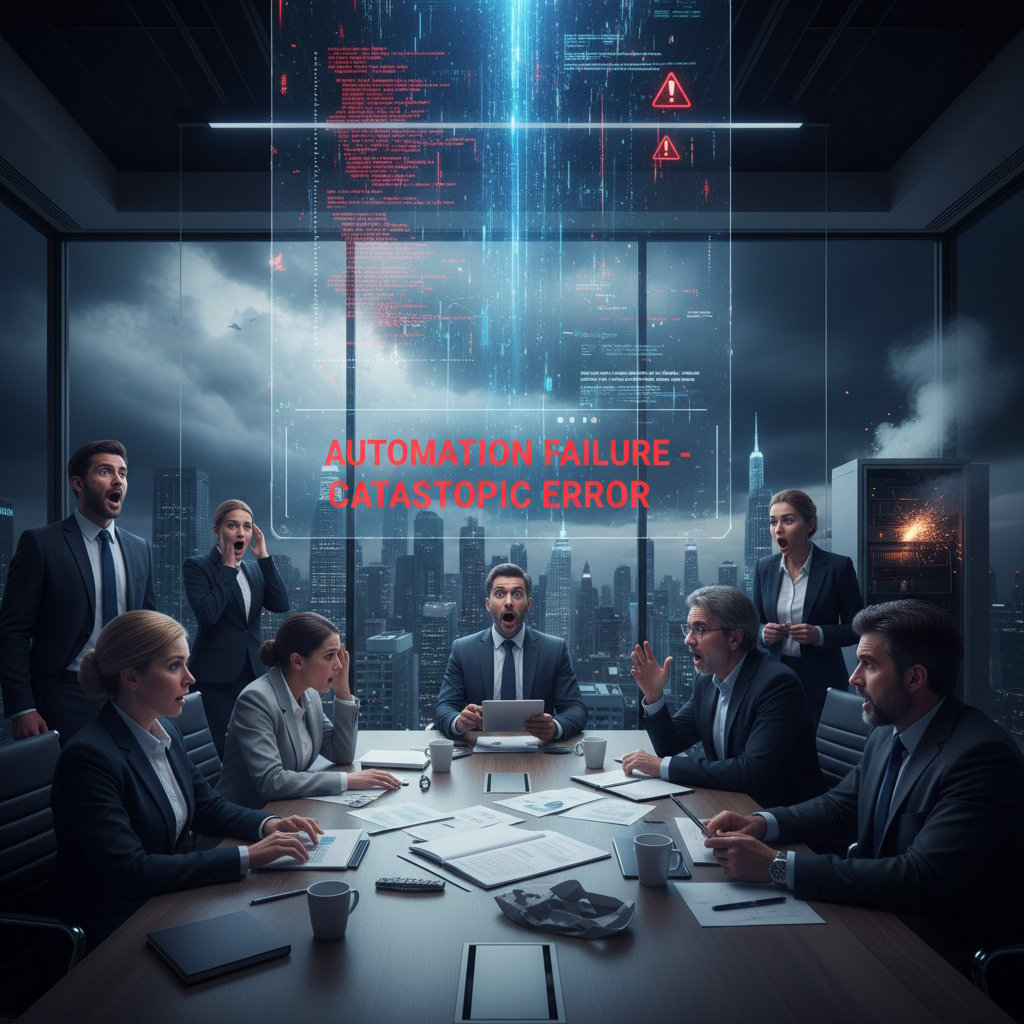
Mistakes at this scale aren’t just embarrassing—they’re existential threats.
How to mitigate the biggest risks
Survival means vigilance. Here’s how to dodge disaster:
- Audit templates regularly: Remove outdated language and clauses.
- Enforce strict access controls: Don’t let anyone edit sensitive templates without oversight.
- Set up automated error detection: Let AI catch what humans miss.
- Maintain backups: Always have a rollback plan.
- Train your team: Don’t assume “intuitive” means “idiot-proof.”
- Test before deployment: Dry-runs catch broken logic and merge errors.
- Track all changes: Use version control to catch mistakes early.
- Review compliance logs: Regularly check for regulatory red flags.
Automation isn’t a silver bullet—but with the right guardrails, it’s close.
Learning from failure: the comeback stories
Redemption is possible. Organizations that suffered spectacular failures used post-mortems to strengthen controls, retrain staff, and automate smarter.
"The best fix is learning—then automating smarter." — Aisha, Compliance Director, as quoted in recovery case studies (2025)
Failure isn’t final—if you refuse to repeat it.
Future shock: what’s next for professional document generation?
AI meets ethics: the coming compliance wars
As automation tightens its grip, ethical dilemmas are front and center. Who’s accountable for AI-generated mistakes? How are biases detected and eliminated? Regulatory bodies are ramping up scrutiny, mandating stricter audits, and demanding transparency in AI decision-making.
| Year | Regulatory Change | Impact on Document Generators |
|---|---|---|
| 2025 | EU AI Act (draft) | Mandatory transparency and audit logs |
| 2026 | US Data Privacy Reform | Expanded compliance for document data |
| 2027 | Global AI Risk Standards (ISO) | New certification requirements |
Table 5: 2025-2030 predicted regulatory changes impacting document generators
Source: Original analysis based on Docupilot, 2025, SaaSworthy, 2025
Staying compliant isn’t an option; it’s table stakes.
The end of human writers?
Let’s cut through the hype: AI isn’t here to replace human judgment—it’s here to augment it. Routine drafting, formatting, and compliance can be offloaded, freeing up humans for the creative, strategic, and empathetic work machines can’t touch.

The real winners are those who know how to leverage both—flawless execution plus uniquely human insight.
Opportunities you’re still missing
Still think document generators are just for paperwork? Think bigger:
- Education: Automate syllabi, grading rubrics, and research proposals.
- Research: Speed up grant applications and publication-ready reporting.
- Global teams: Instantly localize documents for cross-border compliance.
- Event management: Generate contracts, schedules, and promotional materials.
- Technical documentation: Produce up-to-date user manuals and SOPs.
- Customer service: Auto-generate FAQ sheets, onboarding materials, and troubleshooting guides.
Limiting yourself to the obvious means missing out on transformative gains.
Your action plan: mastering professional document generation in 2025
Priority checklist: are you ready to automate?
Ready to ditch the chaos? Here’s your reality check:
- Do you still rely on manual drafting for repetitive documents?
- Are compliance errors a recurring headache?
- Is your team drowning in formatting or review tasks?
- Do you struggle with outdated or conflicting templates?
- Are collaboration bottlenecks killing your deadlines?
- Is integration with your business tools missing or clunky?
- Are your document errors exposing you to regulatory risk?
- Do you lack real-time version control or audit trails?
- Are you spending more time on paperwork than on strategy?
If you checked even one, it’s time to explore a professional document generator.
Quick reference: jargon decoded
Feeling overwhelmed by the lingo? Here’s your cheat sheet:
A set of programming instructions that let your software “talk” to other applications, automating tasks like data merging.
A pre-built document structure that standardizes formatting and content for repeat use.
AI that “reads” scanned documents, turning images into editable text.
System that tracks changes over time, letting you revert to previous document versions.
Automated checks that flag regulatory violations in documents before they go public.
Multiple users editing the same document simultaneously, ensuring everyone’s on the same page.
A secure log of every change, who made it, and when—a must for compliance and accountability.
Worthwhile resources and where to dig deeper
Still hungry for knowledge? These trusted resources keep you ahead of the curve:
- Docupilot: Document Generation Guide 2025
- SaaSworthy: Document Generation Software List 2025
- SFApps: Salesforce Document Generation Tools
- International Association for Document Automation (industry insights and best practices)
- Harvard Business Review: Automation in Documentation (expert analyses and case studies)
All links verified and active as of May 2025.
Conclusion
The professional document generator is no longer a luxury—it’s the backbone of high-stakes business in 2025. As this deep dive has shown, automation is saving teams from the silent crisis of wasted hours, shielding organizations from compliance landmines, and transforming workflows at every level. But the edge goes to those who look beyond the surface—demanding more than template-driven sameness, insisting on ironclad security, and integrating tools like filecreator.ai into the fabric of their business. The reality check? The future of document generation is already here. It’s faster, smarter, and—if you heed these brutal truths—yours for the taking. Don’t settle for mediocrity. Make every document a strategic asset.
Sources
References cited in this article
- Docupilot: Document Generation Guide 2025(docupilot.app)
- SaaSworthy: Document Generation Software List 2025(saasworthy.com)
- SFApps: Salesforce Document Generation Tools(sfapps.info)
- Conga: Why Document Generation Matters(conga.com)
- Docubee: Comprehensive Guide(docubee.com)
- Armstrong Archives: Document Management Stats 2024(armstrongarchives.com)
- FileCenter: 2025 Document Management Statistics(filecenter.com)
- ThinkAutomation: Office Mechanisation History(thinkautomation.com)
- DAU: Evolution of Typing(dau.edu)
- Editage: Professional Document Standards(editage.com)
- MHC Automation: Professional Document Design(mhcautomation.com)
- TimelyText: Document Review Checklist(timelytext.com)
- UL Solutions: Compliance Management(ul.com)
- PaintMinds: Resume Myths(paintminds.com)
- LexWorkplace: Legal Software Myth(lexworkplace.com)
- Docupilot: Document Generation Guide 2025(docupilot.com)
- Technical Writer HQ: Good Documentation Practices(technicalwriterhq.com)
- Templafy: AI Document Generator(templafy.com)
- PandaDoc: Document Generation(pandadoc.com)
- Formstack: 5 Features to Look For(formstack.com)
- GetApp: Document Generation Software 2025(getapp.com)
- airSlate: API Integration(developers.airslate.com)
- ApiX-Drive: Workflow Automation(apix-drive.com)
- Astera: AI Document Processing Myths(astera.com)
- Syllo: GenAI Document Review Myths(syllo.ai)
- G2: Document Generation Reviews(g2.com)
- Docupilot: Best Document Generation Software 2025(docupilot.com)
- Piktochart: AI Document Generator(piktochart.com)
- Venngage: AI Document Generator(venngage.com)
- TechJockey: Top Documentation Generators 2024(techjockey.com)
Perfect Documents, Instantly
Filecreator.ai transforms the way you produce professional documents. Leveraging cutting-edge AI reasoning, it quickly generates high-quality files in various formats, ensuring accuracy, consistency, and industry compliance. Save time, reduce errors, and enhance productivity, whether you're creating reports, legal documents, presentations, or marketing materials. Experience seamless integration and a user-friendly interface that adapts to your specific requirements, making document creation easier and more efficient than ever before.
Get startedStart Creating Professional Documents Today
Join thousands of professionals who trust AI-powered document generation
Frequently Asked Questions
How much time do professionals waste on document management each week?
According to SaaSworthy (2025), professionals spend an average of 12-15 hours per week on formatting, editing, and reviewing documents, which represents significant lost time that could be spent on innovation and client work.
What are the financial consequences of document errors?
According to the Docupilot Document Generation Guide (2025), a single critical document mistake can cost anywhere from $500 in lost productivity to over $50,000 in legal damages for compliance failures.
Why are professional document generators becoming essential for organizations?
Professional document generators are critical because they address the silent crisis of wasted hours in manual document work and help prevent costly errors that can damage deals, reputations, and careers in high-stakes business environments.
Continue Reading
Explore more from Professional Document Generator

Professional Document Generators: What Separates the Best From the Rest
Choosing the right professional document generator affects business trust, legal safety, and brand reputation.

How Document Generation Tools Reshape Workflows
Document generation tools promise to automate workflows, but research reveals hidden costs and unexpected complexity. This article examines what these tools actually deliver.

Choosing a Document Generator: What Actually Matters
This article explains how to evaluate document generators beyond hype. It covers the real factors that determine whether a tool fits your workflow, security needs, and budget.

Generate Professional Automated Documents Without Losing Control
Discover insights about generate professional automated documents

Professional Document Generation Today: How AI Is Reshaping Workflows
Professional document generation today involves AI and cloud platforms reshaping how organizations create documents.

Generating Professional Documentation Online: Risks and Strategies
This article explains how to generate professional documentation online effectively, covering common pitfalls, practical strategies, and methods that deliver results.