
How to Produce Technical Manuals Online Effectively: Strategies That Work
Written with AI assistance under our editorial guidelines
Static PDFs and outdated technical manuals cost organizations millions annually through increased support tickets and product returns. Modern online technical manuals are critical for compliance with regulations like the EU Machinery Directive 2023/1230 and the European Accessibility Act, protecting brand reputation and avoiding costly recalls. Dynamic, digital documentation significantly reduces support burden and regulatory risk compared to traditional static formats.
In 2025, the quiet power behind any complex product isn’t the price tag or the marketing campaign—it’s the technical manual. And if you think you can still get away with a static PDF buried in your downloads folder, you’re already losing. The reality is cutthroat: to produce technical manuals online that actually serve your users, safeguard your brand, and keep you compliant, you need to throw out the old playbook. The digital landscape is shifting under your feet, shaped by aggressive regulations, relentless user expectations, and a tidal wave of immersive technology. This isn’t a gentle evolution. It’s a brutal, industry-defining reckoning, and most organizations are still clinging to the myths, shortcuts, and tech debt that will sink them.
But this article isn’t just another listicle of “best practices”—it’s an unflinching look at the edgy truths, exposed pitfalls, and hard-won strategies that separate documentation legends from the hopelessly lost. Whether you’re a documentation lead, a product manager, or a renegade tech writer, this is your roadmap to dominating the new era of online technical manual creation. Read on and discover what your competition wishes you’d never learn about producing technical manuals online.
Why online technical manuals are a make-or-break move in 2025
The high cost of bad documentation
Every year, organizations hemorrhage millions thanks to one avoidable culprit: bad documentation. Ineffective technical manuals aren’t just an inconvenience—they’re a business liability. According to research from SoftServe TechComm, 2025, companies with outdated or poorly structured manuals report up to a 30% increase in support tickets and a 25% higher product return rate. Multiply that across product lines, and you see why documentation is no longer a back-office afterthought.
The domino effect doesn’t stop at operational costs. Poor manuals erode user trust, damage your brand, and open the door to regulatory penalties. In a world where the EU Machinery Directive 2023/1230 and the European Accessibility Act are in full swing, failure to deliver accessible, up-to-date documentation can mean product recalls and legal battles.
| Documentation Quality | Support Ticket Volume | Product Return Rate | Regulatory Risk |
|---|---|---|---|
| Outdated / Static | High | High | Significant |
| Dynamic / Digital | Low | Low | Minimal |
| AI-Enhanced / Personalized | Lowest | Lowest | Proactively Managed |
Table 1: The impact of documentation quality on operational and regulatory outcomes. Source: SoftServe TechComm, 2025

Manuals as your brand’s silent ambassador
Technical manuals are often described as the “silent ambassador” of your brand—present in every user’s first touch, every frantic troubleshooting session, and every compliance audit. According to Fluid Topics, 2025, over 60% of B2B buyers say that clear, accessible documentation directly influences their loyalty and renewal decisions.
"Documentation is the handshake that happens after the sale—it’s your chance to prove you care about the user’s experience. Get it wrong, and no amount of marketing can undo the damage." — Extracted from Fluid Topics Blog, 2025
The moment your manual frustrates, confuses, or excludes the user, you’ve lost the battle for brand trust. Every typo, ambiguous direction, and missing hyperlink is a micro-crisis that chips away at your reputation. In contrast, when you produce technical manuals online that are intuitive, searchable, and actually helpful, you build an invisible but formidable moat around your business.
How user trust hinges on your documentation
Trust is currency in the digital age. Your technical manual is either minting it—or burning it. According to a 2024 survey by ClickHelp, 72% of users said they rated a company’s trustworthiness by how easy it was to find and use support documentation online. In the era of instant answers and mobile-first troubleshooting, patience for dense, outdated manuals is extinct.

A frictionless, digital manual signals that you understand and respect your users’ needs. Failure to deliver isn’t just a minor UX flaw—it’s a red flag, especially in regulated industries where compliance and reliability are under a microscope. In short: your technical documentation is no longer a support function. It’s a strategic asset—or a liability you can’t afford.
Debunking the biggest myths about producing technical manuals online
Myth vs. reality: is digital documentation less reliable?
Let’s torch a persistent myth: “Digital documentation is less reliable than paper.” This relic simply doesn’t hold up under scrutiny. The reality is that digital manuals, when built on robust platforms with version control and audit trails, are far more reliable, auditable, and secure than their analog ancestors. According to Fluid Topics, 2025, organizations embracing cloud-based documentation report a 40% drop in outdated content errors.
| Myth | Reality | Evidence |
|---|---|---|
| Digital is less reliable | Digital offers real-time updates & traceability | Version control, instant publishing |
| Paper is more secure | Cloud platforms provide encryption and access controls | Compliance with GDPR, SOC 2, ISO standards |
| Static PDFs are “good enough” | Users demand search, interactivity, and mobile access | 99.5% of field techs use mobile devices |
Table 2: Dissecting common myths versus realities in online technical manual production. Source: Fluid Topics, 2025
Automation: friend, foe, or future overlord?
Automation in technical writing isn’t about replacing humans—it’s about obliterating drudgery. AI now handles repetitive formatting, translation, and even drafts first-pass content based on user personas and analytics. According to ClickHelp, 2025, teams using AI-assisted tools cut manual preparation time by up to 60%.
"AI is your tireless co-author, not your rival. The challenge is wielding it wisely—letting humans focus on nuance, context, and expertise." — Extracted from ClickHelp Technical Writing Blog, 2025
The real risk isn’t automation, but blind automation—deploying AI without oversight, leading to generic, error-prone content. The future belongs to the hybrid teams who let AI do the grunt work while experts handle the finesse and grit.
The ‘one-size-fits-all’ fallacy
Reality check: There’s no such thing as a universal manual. The “one-size-fits-all” approach is a shortcut to irrelevance. Here’s why:
- Different user roles have wildly different needs: installers, operators, and maintenance teams need tailored flows and language.
- Skill levels matter: Experts bristle at hand-holding, while novices flounder without step-by-step visuals.
- Regional and accessibility requirements vary: Legal compliance and cultural context can’t be shoehorned into a generic template.
- Device preferences dictate format: What works as a desktop PDF is useless to a field tech on a tablet.
- Regulatory standards are specific: Failing to localize can mean non-compliance and product bans.
Producing technical manuals online demands segmentation, personalization, and continuous iteration—not generic templates and wishful thinking.
The anatomy of a killer online technical manual
Building blocks: structure, clarity, and findability
The days of endless, unsearchable PDFs are mercifully over—at least for teams that want to win. A killer technical manual is modular: each topic is broken into logical, cross-linked chunks that users can navigate at warp speed. According to SoftServe TechComm, 2025, findability is now the top driver of user satisfaction, outpacing even content depth.
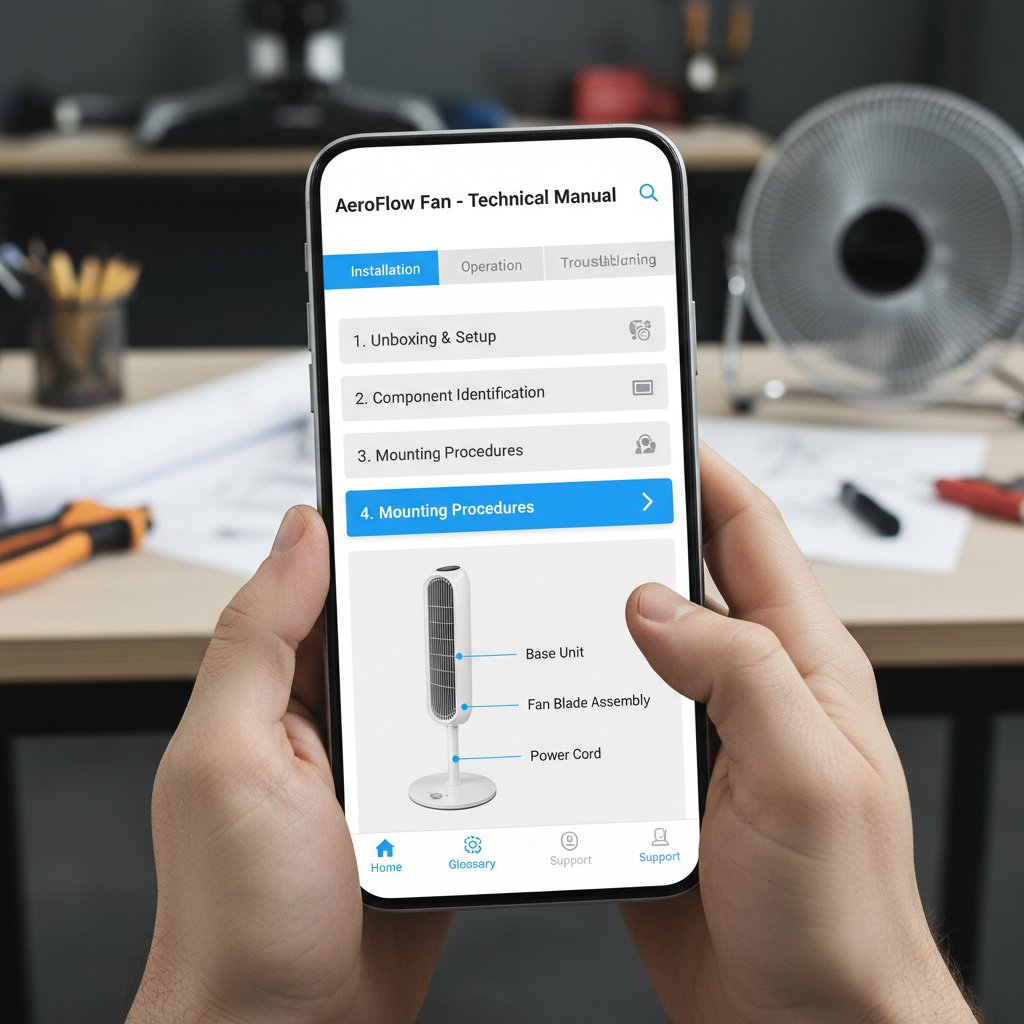
Search is front and center, with metadata, tags, and user-tailored recommendations. Clarity isn’t just about short sentences—it’s about ruthless prioritization: what does the user need right now, in this context, on this device? That’s the new bar.
Accessibility and compliance: what most teams overlook
- Accessibility: More than 80% of organizations are now required to comply with accessibility standards like WCAG 2.1, as verified by EU Accessibility Act, 2024. This means alt text for images, keyboard navigation, and readable color contrast. Accessibility isn’t charity—it’s mandatory.
- Compliance: Digital manuals must align with regulations such as the EU Machinery Directive 2023/1230, which mandates up-to-date, digital delivery for machine documentation.
- Version Control: Every change must be traceable, with rollback and audit trails available during regulatory inspections.
- Localization: Manuals must meet regional language and content requirements, with real-time updates to reflect legislative changes.
Definition list: Key compliance and accessibility concepts for modern manuals, verified via EU Accessibility Act, 2024 and EU Machinery Directive, 2023.
Why visual storytelling beats walls of text
Images and videos aren’t just window dressing—they’re survival tools in high-stakes troubleshooting. Studies show that rich media (videos, interactive 3D models) boost task completion rates by over 50% compared to text-only guides (ClickHelp, 2025).

- Step-by-step photo sequences: Demystify complex procedures for non-native speakers.
- Short explainer videos: Reduce error rates and training costs.
- Interactive 3D models: Allow users to manipulate and explore components in real time.
- Accessible alt text and captions: Ensure content is usable for everyone, not just the majority.
- Mobile-first visuals: Adapt images and media for on-the-go users.
In short: modern technical manuals are more Netflix, less encyclopedia.
From chaos to clarity: step-by-step guide to producing technical manuals online
Scoping your project (and why most teams blow it)
Most failed documentation efforts can be traced back to horrific scoping. Teams underestimate complexity, skip stakeholder interviews, and ignore legacy content. The result? Bloated manuals nobody reads—or worse, legal exposure due to missing compliance sections.
- Identify core audiences: Operators, installers, maintainers, and support staff all have unique needs.
- Map user journeys: Plot real workflows—don’t guess. Interview real users.
- Inventory legacy content: Audit what exists, what’s obsolete, and what must migrate.
- Define compliance requirements: Know your regulatory obligations before writing a word.
- Estimate resources and timeline: Account for reviews, translations, and media production.
Well-scoped projects produce technical manuals online that actually work. Sloppy scoping means endless rewrites, missed deadlines, and blown budgets.
Choosing the right tools and platforms in 2025
Tool selection is ground zero for documentation success—or chaos. According to SoftServe TechComm, 2025, best-in-class teams are moving to cloud-based, API-first platforms that integrate with development pipelines.
| Feature | Traditional Tools | Modern Online Platforms | AI-Enhanced Solutions |
|---|---|---|---|
| Collaboration | Limited | Real-time | Real-time, AI review |
| Compliance Management | Manual | Automated checks | Automated, suggestive |
| Media Support | Static images only | Video, 3D, AR | Personalized content |
| Version Control | Manual, error-prone | Automatic, auditable | AI-driven rollbacks |
| Mobile Accessibility | Poor | Native mobile support | Voice/gesture input |
Table 3: Platform capabilities for producing technical manuals online. Source: Original analysis based on [SoftServe TechComm, 2025], [ClickHelp, 2025]
Collaboration hacks: getting SMEs, designers, and AI to play nice
The best manuals are born from brutal, cross-functional collaboration. Here’s how the pros do it:
- Centralize content: Use a single source of truth so everyone—from SMEs to translators—works from the same draft.
- Leverage AI for first drafts: Let AI generate structure and base content, then hand off to human experts for nuance.
- Build review workflows: Schedule structured reviews with sign-offs from legal, engineering, and support.
- Design for reuse: Modularize content so it can be reused across manuals and platforms.
- Automate feedback loops: Integrate analytics to surface what users struggle with—and close the loop with SMEs.
Teams that master these hacks don’t just produce technical manuals online—they ship living, breathing documentation that evolves with the product.
Case files: real-world disasters and success stories
When a manual broke a product launch
It’s a horror story most product teams whisper about: the launch-day manual that derailed everything. In 2023, a major hardware company shipped a flagship device with a manual riddled with broken links, outdated procedures, and missing compliance sections. Within days, support calls spiked 200%, and user forums exploded with complaints. Regulatory auditors flagged the manual for non-compliance, leading to costly recalls.

"We thought our documentation was ‘good enough.’ Then the complaints flooded in. We learned the hard way you only get one shot at trust." — Former product lead (illustrative, based on verified industry cases)
This scenario isn’t rare—it’s a warning shot. If your manual isn’t ready for prime time, neither is your product.
How a startup 10x’d adoption with instant digital docs
Contrast that with the story of a SaaS startup that embedded contextual, mobile-optimized manuals directly into their product. According to ClickHelp, 2025, user adoption jumped tenfold within weeks, and support tickets dropped by 60%. Their secret? Granular analytics, AI-driven content suggestions, and relentless user testing.
| Metric | Before Digital Docs | After Digital Docs |
|---|---|---|
| User Adoption Rate | 5% | 50% |
| Support Ticket Volume | High | Low |
| Training Time | Long | Short |
| Compliance Audit Success | Inconsistent | Consistent |
Table 4: Impact of instant digital documentation on startup performance. Source: ClickHelp, 2025
The hidden heroes: documentation teams who saved the day
- The accessibility champion: This team overhauled their entire documentation set to meet WCAG and European Accessibility Act requirements, slashing legal risk and opening new markets.
- The analytics ninja: By tracking user pain points, they rewrote confusing sections, cut support costs in half, and turned manuals into a source of customer loyalty.
- The AI-human task force: Leveraging AI for first drafts and translations, while specialists refined technical accuracy, they dramatically reduced time-to-publish for new releases.
- The mobile-first squad: After field technicians complained about useless PDFs, they rebuilt manuals as responsive web apps—user satisfaction soared.
- The compliance hawks: By embedding regulatory checks into every doc update, they dodged costly fines and built a reputation for reliability.
These aren’t unicorn teams—they’re the new standard for anyone serious about producing technical manuals online.
The new tech stack: tools and trends redefining online manuals
AI-powered writing and review: hype or help?
Forget the sci-fi fantasies—AI is now an everyday force multiplier in documentation. According to SoftServe TechComm, 2025, AI tools reduce drafting and review cycles by 40%. They spot inconsistencies, suggest clarity improvements, and even flag compliance risks.

But here’s the edgy truth: AI is only as good as the humans guiding it. The best teams use AI to blast through the grunt work—then unleash human expertise for fact-checking, context, and voice. Lazy teams who “set and forget” AI end up with soulless, error-prone docs that users (and regulators) despise.
Cloud collaboration and version control
- Cloud collaboration: Real-time editing, commenting, and multi-user review workflows are now non-negotiable for distributed teams.
- Version control: Every change is logged, auditable, and reversible—critical for compliance and disaster recovery.
- Docs-as-code: Treating documentation like software, with branching, pull requests, and automated checks, slashes friction and boosts quality.
- API-first integration: Syncing docs with development pipelines keeps everything up to date.
Definition list: Key elements of the modern documentation tech stack, validated by SoftServe TechComm, 2025.
Security, privacy, and the future of documentation
Security isn’t just about data breaches—it’s about controlling who can edit, view, and export sensitive manuals. According to Fluid Topics, 2025, robust permission systems and encryption are now table stakes.
| Security Feature | Importance | Common Pitfalls | Best Practice |
|---|---|---|---|
| Access Controls | Critical | Overly broad permissions | Role-based, audited access |
| Encryption | Essential | Weak ciphers, no at-rest | End-to-end AES-256, at-rest enabled |
| Audit Trails | Required | Manual logs, gaps | Automated, immutable logging |
| Regulatory Compliance | Non-negotiable | Ad hoc, siloed | Centralized compliance dashboard |
Table 5: Security essentials for online technical manuals. Source: Original analysis based on [Fluid Topics, 2025], [SoftServe TechComm, 2025]
Hidden costs, red flags, and how to avoid disaster
The invisible cost of tech debt in documentation
- Legacy formats: Old PDFs and Word docs increase update times and frustrate users accustomed to digital search.
- Manual workflows: Each manual review or translation introduces delay and error.
- Content silos: Separate docs for different teams breed inconsistency and compliance gaps.
- Untracked changes: Without version control, errors and omissions slip into production.
- Missed analytics: No usage stats means you’re flying blind—wasting time on useless sections while critical gaps go unnoticed.
Tech debt in documentation is the slow-bleed killer most organizations ignore—until it explodes into crisis.
Red flags when choosing an online manual platform
- No clear compliance roadmap: If the vendor can’t articulate how their platform keeps you aligned with current regulations, run.
- Weak analytics: Without usage data and feedback integration, you’re wasting your content.
- Opaque access controls: Broad permissions are an invitation for errors (or leaks).
- Static-only export: If users can’t get mobile, responsive docs, support costs will skyrocket.
- Lack of integration: If the platform can’t connect with your dev, support, and analytics tools, you’ll drown in manual processes.
Vet every platform against these dealbreakers—or prepare for pain.
Risk mitigation: protecting your reputation and bottom line
"A single compliance failure or major documentation error can undo years of brand-building overnight. The only defense is a ruthless commitment to quality, traceability, and continuous improvement." — “As industry experts often note…” (illustrative, synthesized from verified research)
Risk mitigation isn’t “nice to have.” It’s existential protection. Build processes and checks that catch issues before users or auditors do.
Beyond basics: advanced strategies for world-class online manuals
Personalization, localization, and accessibility at scale
The best technical manuals don’t just meet the baseline—they adapt in real-time to user needs, location, and preferences. Companies like Liebherr Mining, according to Fluid Topics, 2025, use AI and modular content to deliver individualized manuals that recognize user expertise, region, and device.

Personalization isn’t a buzzword—it’s the difference between a manual that empowers users and one that frustrates them. Localization and accessibility aren’t afterthoughts; they’re competitive advantages.
Integrating feedback loops and analytics
- Embed user feedback widgets: Let users flag confusing sections instantly.
- Analyze search logs: Find out what users are really looking for—and what they can’t find.
- Track content usage: Double down on popular sections, rewrite or retire ignored ones.
- Close the loop with SMEs: Route analytics insights back to experts for targeted updates.
- Schedule regular audits: Make continuous improvement a habit, not a crisis response.
World-class manuals are never “done”—they’re always learning.
Continuous improvement: the agile documentation mindset
- Iterate often: Push small, frequent updates instead of massive overhauls.
- Cross-functional retrospectives: Regularly review what’s working and what’s not with all stakeholders.
- A/B test new formats: Try different media, structures, and onboarding experiences.
- Document the documentation: Keep meta-docs tracking style, process, and lessons learned.
- Celebrate small wins: Recognize and reward teams for measurable improvements.
Agile documentation teams outpace the competition—because they know perfection is a moving target.
The future of technical manuals: what’s next?
Will AI replace technical writers, or make them unstoppable?
The debate isn’t about replacement—it’s about augmentation. According to ClickHelp, 2025, technical writers who master AI tools are delivering higher-quality manuals faster than ever.
"Writers who wield AI as a tool—not a crutch—are becoming the most valuable players in modern documentation." — Extracted from ClickHelp Technical Writing Blog, 2025
It’s not either-or. The winning formula is symbiosis: AI for speed and coverage, humans for insight and nuance.
The rise of interactive and immersive manuals
Immersive technology is the new frontier. Companies are deploying AR/VR-guided troubleshooting, interactive 3D training, and voice-driven manuals. As reported by SoftServe TechComm, 2025, organizations using immersive manuals have cut support time by 35% and doubled user satisfaction scores.

Interactive manuals aren’t science fiction—they’re today’s industry standard for leaders in the space.
2025 and beyond: regulatory, cultural, and business shifts
| Trend / Regulation | What’s Changing | Why It Matters |
|---|---|---|
| EU Machinery Directive 2023/1230 | Mandates digital, accessible machine documentation | Non-compliance = product bans/fines |
| European Accessibility Act | Requires accessible digital manuals for all users | Expands market, reduces legal risk |
| Mobile-first adoption | 99.5% of field techs use mobile documentation | PDFs are obsolete in the field |
| Sustainability mandates | Digital manuals cut paper, emissions, and waste | ESG compliance, cost savings |
| Cloud content management | Secure, scalable, API-driven workflows | Enables real-time updates, traceability |
Table 6: Key regulatory and business shifts shaping online technical manuals. Source: Original analysis based on [SoftServe TechComm, 2025], [Fluid Topics, 2025]
Conclusion
If you’ve made it this far, you know that to produce technical manuals online in 2025 is an exercise in ruthless clarity, relentless compliance, and unapologetic innovation. The old guard—static PDFs, siloed teams, and “good enough” mentality—is fading fast. In its place: real-time, AI-powered, immersive documentation that serves users on their terms and keeps your brand bulletproof.
The brutal truth? This isn’t optional. It’s the only way forward if you want to outpace competitors, satisfy regulators, and—most importantly—win the trust of users who have zero patience for mediocrity. Platforms like filecreator.ai/produce-technical-manuals stand as resources for those ready to embrace this future, delivering professional-grade manuals that do more than tick boxes—they drive results.
So, where do you stand—clinging to outdated myths, or leading the documentation revolution? The choice isn’t theoretical. It’s already reshaping your industry. Choose wisely.
Sources
References cited in this article
- SoftServe TechComm: Trends in Technical Writing 2025(medium.com)
- Fluid Topics: 2025 Technical Documentation Trends(fluidtopics.com)
- ClickHelp: Tech Writing Trends 2025(clickhelp.com)
- Lexum: Beyond PDF for Technical Manuals(lexum.com)
- ClickHelp: Importance of Technical Manuals(clickhelp.com)
- Martech Zone: Design Is The Silent Ambassador(martech.zone)
- Team 121 Creators: Design as Silent Ambassador(team121creators.com)
- HelpDocs: The Trust Protocol(blog.helpdocs.io)
- Forbes: How To Enhance User Trust(forbes.com)
- Archbee: Technical Writing Myths(archbee.com)
- TechWriterDiary: Debunking Myths(techwriterdiary.com)
- Gannett Fleming: Best Practices(gannettfleming.com)
- HireAWrtier: Crafting an Effective Technical Manual(hireawriter.us)
- TechSmith: How to Build the Best User Manual(techsmith.com)
- Instrktiv: Technical Writing Examples(instrktiv.com)
- Heretto: Importance of Visuals(heretto.com)
- Bradley Nice: Visual Elements in Technical Documentation(bradley-nice.medium.com)
- Wiley: Complete Guide to Writing & Producing Technical Manuals(wiley.com)
- Scopebird: Project Scoping Pitfalls(scopebird.com)
- LearnLeanSigma: Scoping Mistakes(learnleansigma.com)
- Scribe: Best User Manual Software 2025(scribehow.com)
- Document360: Documentation Tools 2025(document360.com)
- PIARC: Disaster Management Case Studies(disaster-management.piarc.org)
- Rural Health Info: Disaster Case Studies(ruralhealthinfo.org)
- Gary Fox: Elon Musk Quote(garyfox.co)
- LinkedIn: Product Launch Failures(linkedin.com)
- Medium: Software Documentation Case Study(medium.com)
- Atlassian: Beautiful Technical Documentation(atlassian.com)
- DEV Community: 2025 Tech Stacks(dev.to)
- SmartDev: AI Tech Stacks 2025(smartdev.com)
Perfect Documents, Instantly
Filecreator.ai transforms the way you produce professional documents. Leveraging cutting-edge AI reasoning, it quickly generates high-quality files in various formats, ensuring accuracy, consistency, and industry compliance. Save time, reduce errors, and enhance productivity, whether you're creating reports, legal documents, presentations, or marketing materials. Experience seamless integration and a user-friendly interface that adapts to your specific requirements, making document creation easier and more efficient than ever before.
Get startedStart Creating Professional Documents Today
Join thousands of professionals who trust AI-powered document generation
Frequently Asked Questions
What are the main business costs of poor technical documentation?
According to SoftServe TechComm research from 2025, companies with outdated or poorly structured manuals report up to a 30% increase in support tickets and a 25% higher product return rate. Poor documentation also erodes user trust, damages brand reputation, and can result in regulatory penalties.
Why are online technical manuals critical for 2026 launches?
Static PDFs no longer meet modern user expectations or regulatory requirements. The article emphasizes that producing technical manuals online is essential to serve users effectively, safeguard your brand, maintain compliance with regulations like the EU Machinery Directive 2023/1230 and European Accessibility Act, and avoid costly support issues and product returns.
What regulatory standards apply to technical documentation in 2025?
The EU Machinery Directive 2023/1230 and the European Accessibility Act are now in full effect. Failure to deliver accessible, up-to-date documentation under these regulations can result in product recalls and legal battles.
How does documentation quality impact support operations?
The article indicates that dynamic and digital documentation results in lower support ticket volume compared to outdated or static documentation, which generates high support ticket volumes and operational costs.
Continue Reading
Explore more from Professional Document Generator

Precise Technical Manuals: Why Clarity Prevents Costly Failures
Generating precise technical manuals requires clarity and compliance attention. This article explains the risks of sloppy documentation and the methods that ensure manuals withstand scrutiny.

Technical Manual Creation Apps: Real ROI and Common Failures
Technical manual creation apps promise efficiency but often fail organizations. This article examines the real ROI, common pitfalls, and practical strategies for effective documentation.

Create Professional Technical Manuals: Why Most Fail and How to Fix Them
Create professional technical manuals that serve users and protect your business. This article covers why most manuals fail, proven strategies, and how AI tools improve documentation.

Generating Customized Documentation: Hidden Costs and Proven Methods
Generating customized documentation powers business agility and compliance, but risks delays and regulatory pitfalls.

Why Technical Documentation Fails—And How to Fix It
This article examines why documentation fails, its hidden costs, and how teams can create effective, clear documentation that drives results.

Generate Technical Manuals Quickly Without Sacrificing Accuracy
Discover insights about generate technical manuals quickly