
The Real Problems with Freelance Writers (and How to Avoid Them)
Written with AI assistance under our editorial guidelines
Hiring freelance writers through gig platforms often disappoints despite apparent advantages. Quality varies wildly, missed deadlines are common, and rates have stagnated while competition intensifies. Over 30% of new freelance writers earn under $10 hourly in their first year, reflecting a speed-over-skill culture. Success requires careful vetting strategies beyond platform ratings alone.
If you think hiring a freelance writer is a shortcut to content nirvana, you’re not alone—and you’re probably wrong. Beneath the glossy promises of the gig economy, the real problems with freelance writers cut deeper than most brands want to admit. Sure, platforms like Upwork or Fiverr parade an endless scroll of smiling avatars and five-star ratings, but the reality? Missed deadlines, vanishing acts, and writing so bland it could pass as AI-generated oatmeal. As companies scramble to publish more, faster, and cheaper, the risks multiply: inconsistent quality, intellectual property nightmares, and a hidden tax on your time that nobody tells you about. Yet, in a landscape flooded with content mills and fleeting talent, some businesses still manage to strike gold. What’s their secret? This is the ultimate 2025 guide: a warts-and-all exploration of the most common—and costly—problems with freelance writers, loaded with hard stats, case studies, and actionable strategies that will help you avoid disaster (or at least see it coming a mile away).
Welcome to the wild west: Why freelance writing is broken
The gig economy’s double-edged sword
The gig economy has exploded, and with it, opportunities for both brands and writers. On the surface, it’s a win-win: instant access to thousands of content creators, each promising to be the missing puzzle piece for your next campaign. But here’s the rub: that same explosion has bred wild volatility in both writing quality and reliability. According to TeamStage’s 2024 freelance statistics, 70% of freelancers now rely on online platforms for jobs, but competition is so intense that the median rates have stagnated or even dropped in many niches.

Clients expect smooth sailing: you post a job, hire a “pro,” and watch the content roll in. Reality bites back. Platforms are crowded, filtering mechanisms are shallow, and the distance between what’s promised and what’s delivered has never been wider. Over 30% of new freelance writers earn under $10 an hour in their first year, according to TeamStage, reflecting a churn-and-burn culture that rewards speed over skill. So, while you might think you’re tapping into a goldmine, what you’re actually getting is a roulette wheel—sometimes you win, often you lose.
The illusion of unlimited talent
It’s tempting to believe there’s an endless supply of brilliant writers just waiting for your brief. Search “content writer” on any major platform, and you’ll find thousands of profiles—most promising “native-level English,” “SEO mastery,” and “fast turnaround.” But scratch beneath the surface and the numbers tell a different story.
| Platform | Estimated Writers | Verified Professionals | Avg. Project Success Rate |
|---|---|---|---|
| Upwork | 350,000+ | ~15,000 | 76% |
| Fiverr | 500,000+ | ~22,000 | 68% |
| Freelancer | 180,000+ | ~7,000 | 61% |
| ProBlogger | 45,000+ | ~4,000 | 82% |
Table 1: Comparing the pool of listed writers to actual professionals and project success rates on leading freelance platforms. Source: Original analysis based on TeamStage, 2024, Exploding Topics, 2024.
What these numbers reveal is stark: for every dozen profiles, only a handful are vetted pros. The rest? Newcomers, dabblers, or side-hustlers learning on your dime. The result for clients is buyer fatigue and analysis paralysis—a paradox of choice where endless options lead to indecision, wasted hours, and underwhelming results. The more you scroll, the less inspired you feel, and the more likely you are to settle for “good enough” instead of great.
Broken communications: Where projects go to die
Lost in translation: briefings gone wrong
If you think the biggest hurdle is finding a writer, think again. Poor communication is where freelance projects most often go off the rails. Vague, jargon-heavy, or incomplete briefs leave freelancers guessing—and you footing the bill for rewrites and missed deadlines. According to Upwork’s 2023 research, 45% of client complaints trace back to unclear expectations or misunderstood project scopes.
- Warning signs in client-freelancer communication:
- The brief is less than a page and full of internal lingo.
- You get more “Can you clarify?” emails than actual drafts.
- Timelines and deliverables are mentioned “somewhere” but never confirmed.
- Feedback arrives piecemeal, often contradicting earlier guidance.
- The freelancer’s questions go unanswered for days (or weeks).

When communication breaks down, even the most talented writer will struggle to deliver. Projects stall, tempers flare, and the infamous “this isn’t what I wanted” email lands in your inbox.
Ghosted: When writers vanish mid-project
Ask any seasoned marketer or agency head—the number one horror story is the disappearing freelancer. One day, great progress; the next, radio silence. The emotional and financial fallout is real: missed launches, disappointed stakeholders, sunk costs, and a scramble to patch things up.
"Every time a writer ghosts, a deadline dies."
— Jessica, Content Director (quote)
Why does ghosting happen? Sometimes it’s burnout, sometimes personal emergencies, but often it’s simple overcommitment in a market that encourages writers to juggle too many clients at once. According to Elna Cain, 2024, emotional struggles like imposter syndrome and isolation also play a role. Preventing ghosting is about more than vetting—clear milestones, upfront payments, and regular check-ins dramatically reduce the odds of being left in the lurch.
Quality roulette: Why results are so inconsistent
When cheap becomes expensive
It’s the oldest trap in the book: save a buck on freelance rates, lose a fortune on revisions, missed opportunities, and brand damage. According to the 2024 TeamStage report, only 9% of writers reach the coveted $100/hour bracket—yet 30% labor for less than $10/hour, often churning out content that’s rushed, generic, or outright wrong.
| Writer Type | Upfront Cost | Avg. Revisions | Delay Risk | Brand Impact |
|---|---|---|---|---|
| Bargain-basement | $10-30/hr | 2-4 | High | Often negative |
| Mid-range professional | $50-80/hr | 1-2 | Medium | Consistently solid |
| Top-tier specialist | $100+/hr | <1 | Low | Positive/lifts brand |
Table 2: True cost breakdown for different freelance writer tiers. Source: Original analysis based on TeamStage, 2024, Jennifer Goforth Gregory, 2023.

You might pay less upfront, but factor in time spent fixing errors, re-briefing, and cleaning up brand messes, and suddenly, “cheap” becomes the most expensive option on the menu.
Plagiarism, AI, and the authenticity crisis
The rise of AI-generated content and content mills has created a new authenticity crisis for anyone hiring freelance writers. According to research from Exploding Topics, 2024, a growing percentage of submissions on major platforms are now either partially or fully AI-generated, often without disclosure.
Key terms you need to know:
A high-volume, low-quality freelance writing service that prioritizes quantity over quality. Most writers are underpaid and overworked, leading to generic, error-prone output.
The use of artificial intelligence tools to generate articles, blog posts, or entire books—sometimes with minimal human oversight. While fast, it often lacks nuance and originality.
A software tool that detects copied content by scanning for similarities against a massive database of published work. Essential for anyone outsourcing content production.
To protect yourself, always run submissions through a trusted plagiarism checker, ask direct questions about the use of AI tools, and look for subtle red flags: awkward phrasing, inconsistent tone, or sudden drops in quality. As Jennifer Goforth Gregory notes, “Continuous skill upgrading is essential to stay relevant and command higher rates” (Jennifer Goforth Gregory, 2023). In short: trust, but verify.
The client is (sometimes) the problem
Unrealistic expectations and shifting goalposts
Not every problem with freelance writers is their fault. Many projects implode because clients set vague goals, shift direction midstream, or expect mind-reading levels of intuition. This kills both morale and output quality, leading to rushed rewrites and burned bridges.
- Define clear objectives: Spell out exactly what success looks like, including KPIs and tone of voice.
- Set deadlines and milestones: Break large projects into phases with clear handoffs.
- Limit revisions: Agree on a fair revision cap upfront—then stick to it.
- Centralize feedback: Collect all input before sending it to the writer to avoid conflicting messages.
- Respect expertise: If you’ve hired a pro, give them room to suggest improvements.
Destructive behaviors include “just one more tweak” syndrome, ghosting writers for weeks, and piling on new requirements without adjusting scope or budget. As countless project post-mortems prove, a little discipline on the client side goes a long way.
The onboarding gap: Skipping the setup
If projects fail, onboarding (or lack thereof) is usually to blame. Skipping setup leaves writers in the dark about your brand, audience, and goals. According to Location Rebel’s 2024 analysis, the most successful relationships start with a robust onboarding process.
Freelancer onboarding essentials:
- Share your brand guidelines and audience personas
- Provide example content (both hits and misses)
- Clarify approval workflows and escalation points
- Grant access to necessary tools and files
- Set up regular check-ins from day one

Without these basics, even the best freelancer is flying blind, and your odds of disappointment skyrocket.
Legal limbo: Rights, risks, and ghostwriting
Who owns the words? Navigating IP and NDAs
Intellectual property (IP) is a minefield in the world of freelance writing. Unless contracts are clear, you risk disputes over copyright, confidential information, or accidental plagiarism. The legal risks don’t end there: non-disclosure agreements (NDAs) are often ignored or misunderstood, putting your brand at risk.
| Legal Risk | Example scenario | Mitigation strategy |
|---|---|---|
| Plagiarism | Writer copies chunks from online | Use plagiarism checkers, contract terms |
| Copyright | Reusing protected images or text | Explicit rights transfer, IP clauses |
| NDA breach | Sharing client info elsewhere | Signed NDA, clear scope and penalties |
Table 3: Key legal risks in freelance writing and how to mitigate them. Source: Original analysis based on industry best practices and Upwork Research Institute, 2023.
Before publishing any freelance work, double-check that you have written transfer of rights, verify originality, and ensure all contributors have signed appropriate NDAs. A little diligence here can save you giants headaches later.
Ghostwriting: Ethics and the invisible workforce
Ghostwriting occupies a shadowy ethical territory: who truly “owns” the content when someone else’s name appears on the byline? Some see it as a harmless business transaction; others call it intellectual sleight of hand.
"The best content you’ll never get credit for."
— Alex, Professional Ghostwriter (quote)

The ethical gray zone is real—and so are the risks. Always clarify attribution and rights upfront, especially for sensitive or high-profile projects, and consider the reputational stakes before going down the ghostwriting path.
The hidden costs nobody talks about
Time sinks and hidden admin
The time cost of managing freelancers can quickly eclipse the savings. From endless emails to feedback loops that spiral out of control, the admin side of freelance projects is a notorious productivity killer. According to DDIY’s 2024 review, brands spend up to 35% more time managing freelancers than they expect.
- Hidden drains in freelance writing:
- Chasing down late drafts and overdue invoices
- Handling tax forms and legal paperwork
- Vetting applicants and checking references
- Training writers on your systems (again and again)
- Dealing with last-minute substitutions or crisis fixes
While DIY management might seem cheaper, solutions like filecreator.ai can centralize workflows, automate quality checks, and radically cut down the hidden admin tax.
Reputation risk: When bad writing goes public
Nothing stings like seeing your brand name splashed across social media for the wrong reasons. Shoddy writing—be it factual errors, tone-deaf phrasing, or copied content—can go viral for all the wrong reasons, torching trust you spent years building.

To mitigate these risks:
- Always implement a robust review process before hitting publish.
- Run every piece through plagiarism and fact-checking tools.
- Have a plan for fast retraction and damage control if mistakes slip through.
A single embarrassing article can cancel out months of solid work—don’t let a freelance misfire be your undoing.
How to actually get great results from freelance writers
Vetting like a pro: Beyond the portfolio
If you want to avoid the most common problems with freelance writers, you need to dig deeper than a shiny portfolio or a few glowing testimonials. Advanced vetting is your best defense.
- Test assignments: Give candidates a paid, real-world task (not generic samples).
- Live interviews: Discuss strategy, background, and see how they think on their feet.
- Reference checks: Verify past work with real clients.
- Skill assessments: Run a technical or style test relevant to your industry.
- Trial period: Start with a short-term contract and scale up only if results match the hype.

No single step will guarantee perfection, but stack enough safeguards and your odds of success improve dramatically.
Feedback loops and real collaboration
The best freelance work doesn’t come from micromanagement or one-off briefs—it comes from real partnership. Structured feedback loops unlock better results and build trust on both sides.
"The best work comes from real partnership, not orders."
— Priya, Senior Editor (quote)
Regular check-ins, shared documents, and collaborative tools (like Google Docs, Notion, or even filecreator.ai’s workflow features) foster transparency and adaptability. When both parties feel heard and supported, creativity flourishes and outcomes improve.
Alternatives and the future: What comes after freelancers?
AI, in-house, or agencies: The new content frontier
Freelance writers aren’t your only option. Each alternative—AI tools, in-house teams, and agencies—comes with its own tradeoffs.
| Approach | Pros | Cons | Best Use Cases |
|---|---|---|---|
| Freelancers | Flexible, cost-effective, scalable | Inconsistent, time-consuming vetting | Seasonal projects, niche expertise |
| AI tools | Fast, low-cost, 24/7 availability | Lacks nuance, risk of generic output | First drafts, bulk content, basic docs |
| In-house teams | Deep brand knowledge, consistency | Expensive, slow to scale | Core messaging, ongoing campaigns |
| Agencies | Full service, project management | High cost, less flexibility | Large projects, end-to-end campaigns |
Table 4: Pros, cons, and ideal use cases for common content creation approaches. Source: Original analysis based on Fiverr/Mellow, 2024, industry data.
Platforms like filecreator.ai are redefining the landscape, blending the flexibility of freelancers with the speed and quality control of AI-driven systems, offering a new playbook for brands tired of content headaches.
The hybrid model: Getting the best of all worlds
Hybrid content teams—blending human writers, AI tools, and managed workflows—are taking hold for a reason. They offer the agility to scale up, the insight of real experts, and the efficiency of automation.
- Surprising benefits of hybrids:
- Spot-checking by humans catches AI hallucinations and errors.
- Custom workflows adapt to your brand’s voice, not just templates.
- Built-in review and compliance systems keep content on point.
- Faster pivots and less downtime when a writer or AI “calls in sick.”
- More transparency into who did what, when, and why.

When done right, hybrid teams deliver content that’s both fast and flawless—a rare feat in today’s fractured content ecosystem.
Myths, misconceptions, and hard-won lessons
Debunking the top 5 myths about freelance writers
It’s time to clear the air about what freelancers can (and can’t) do for your business.
- Myth: All freelancers are unreliable
Truth: Many are, but those with robust vetting, contracts, and clear communication excel. - Myth: Cheaper is always better
Truth: Bargain rates often hide bigger costs in quality and time. - Myth: More experience equals better output
Truth: Context and motivation matter—some “juniors” out-hustle the old guard. - Myth: Portfolios tell the whole story
Truth: Real skills emerge in live collaboration and feedback, not static samples. - Myth: Agencies always beat freelancers
Truth: Agencies can offer scale, but solo pros often deliver sharper, more agile work.
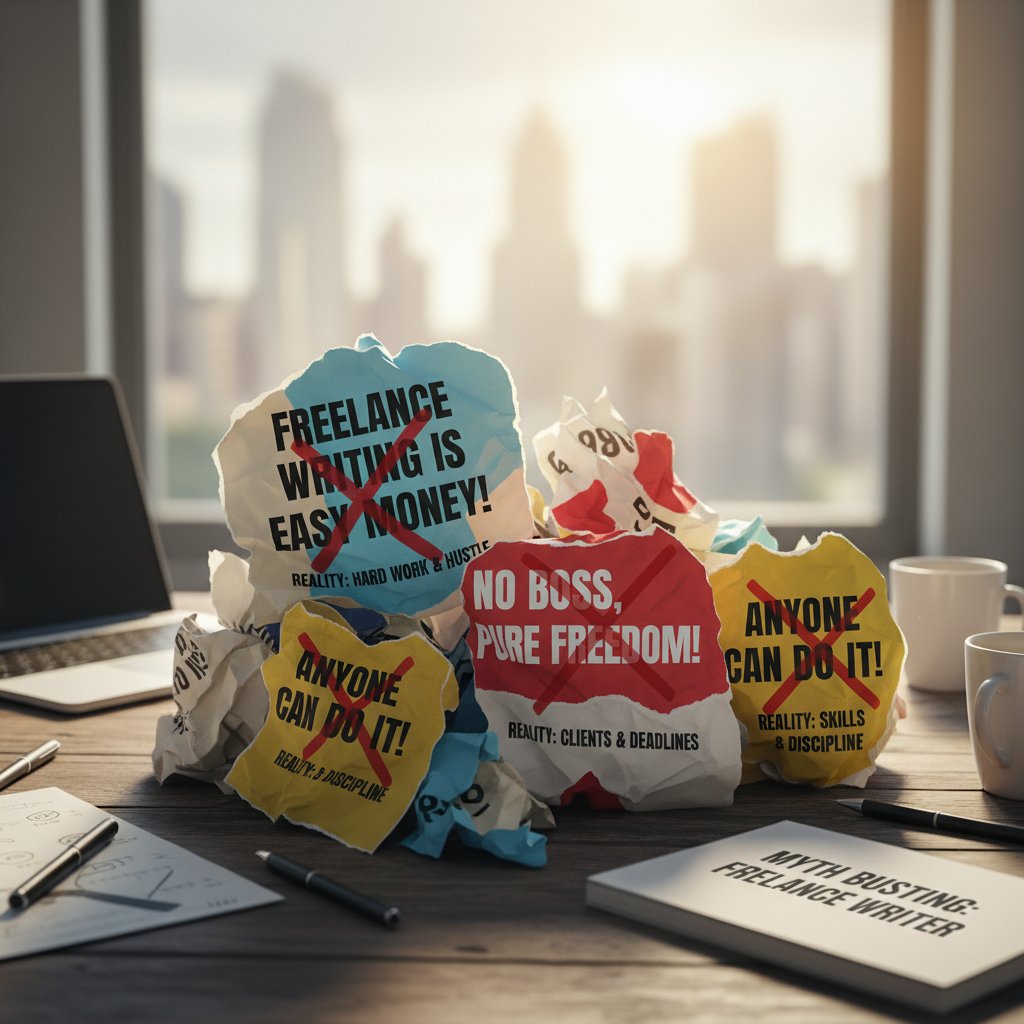
What the data really says about freelance writer success
Recent surveys provide a sobering reality check: while freelance writing is more popular than ever, the path to success is steep and competitive. As of late 2023, 38% of the U.S. workforce freelanced in some capacity (Upwork Research Institute), but only a fraction achieve stable, high-paying careers.
| Metric | Freelance Writers (All) | High Earners ($100+/hr) | Source/Date |
|---|---|---|---|
| % earning under $10/hr | 30% | 0% | TeamStage, 2024 |
| % with >5 years experience | 22% | 81% | Jennifer Goforth Gregory, 2023 |
| Avg. client satisfaction | 74% | 93% | Fiverr/Mellow, 2024 |
Table 5: Success rates and satisfaction among freelance writers by segment. Source: Original analysis based on TeamStage, 2024, Jennifer Goforth Gregory, 2023, Fiverr/Mellow, 2024.
These numbers show that most clients can find value—if they know what to look for, and are ready to invest in proper vetting and clear processes.
Conclusion: The brutal truth and a smarter path forward
Key takeaways and your next steps
Problems with freelance writers are more than a minor inconvenience—they’re a systemic challenge that can make or break your content strategy. But armed with the right insights and a willingness to rethink old habits, any brand can sidestep the pitfalls and unlock major upside.
- Don’t trust profiles—test for real skills.
- Invest time up front in onboarding and process.
- Demand clarity (in briefs, contracts, and feedback).
- Balance cost savings with quality and reliability.
- Protect yourself legally with clear contracts and checks.
- Explore hybrid models and managed solutions like filecreator.ai.
- Never stop refining your approach as the market evolves.
The harshest truth? There’s no silver bullet. But with vigilance and smart systems, you can get the results you want—without losing your mind (or your brand reputation) along the way.
Futureproofing your content strategy
In a world where platforms, algorithms, and entire industries can flip overnight, your content strategy needs resilience above all. Build in layers of review, keep learning, and use every tool at your disposal—human and AI alike. Whether you stick with freelancers, move in-house, or embrace hybrid automation, stay alert, skeptical, and always ready to adapt.

For those ready to take control and cut through the chaos, solutions like filecreator.ai offer a smarter, faster, more reliable way to generate professional documents and content—putting you back in the driver’s seat, no matter what the next disruption brings.
Sources
References cited in this article
- Exploding Topics(explodingtopics.com)
- TeamStage(teamstage.io)
- Jennifer Goforth Gregory(jennifergregorywriter.com)
- Location Rebel(locationrebel.com)
- Fiverr/Mellow(mellow.io)
- Reddit(reddit.com)
- Forbes(forbes.com)
- UMA Technology(umatechnology.org)
- Forbes(forbes.com)
- Forbes(forbes.com)
- BLS(bls.gov)
- Contentre(blog.contentre.io)
- Copyleaks(ajjuliani.com)
- Nature(nature.com)
- Gizmodo(gizmodo.com)
- Vollna(vollna.com)
- Elna Cain(elnacain.com)
- Modern Diplomacy(moderndiplomacy.eu)
- WriterAccess(writeraccess.com)
- Medium(medium.com)
- Upwork(upwork.com)
- fibodc.com(fibodc.com)
- Jennifer Goforth Gregory(jennifergregorywriter.com)
- Jennifer Goforth Gregory(jennifergregorywriter.com)
- Status Labs(statuslabs.com)
Perfect Documents, Instantly
Filecreator.ai transforms the way you produce professional documents. Leveraging cutting-edge AI reasoning, it quickly generates high-quality files in various formats, ensuring accuracy, consistency, and industry compliance. Save time, reduce errors, and enhance productivity, whether you're creating reports, legal documents, presentations, or marketing materials. Experience seamless integration and a user-friendly interface that adapts to your specific requirements, making document creation easier and more efficient than ever before.
Get startedStart Creating Professional Documents Today
Join thousands of professionals who trust AI-powered document generation
Frequently Asked Questions
What percentage of freelancers rely on online platforms for jobs?
According to TeamStage's 2024 freelance statistics, 70% of freelancers now rely on online platforms for jobs.
What are the most common problems when hiring freelance writers?
The article identifies missed deadlines, vanishing acts, inconsistent quality, intellectual property issues, bland writing, and hidden time costs as major problems with freelance writers.
How much do new freelance writers typically earn in their first year?
Over 30% of new freelance writers earn under $10 an hour in their first year, according to TeamStage statistics cited in the article.
What has happened to freelance writing rates due to competition?
Competition among freelancers has been so intense that median rates have stagnated or even dropped in many niches, according to the article.
Continue Reading
Explore more from Professional Document Generator

Why Brands Are Replacing Freelance Content Writers
Replace freelance content writers by understanding the hidden costs and inefficiencies. This article examines why brands are shifting away from freelancers and what alternatives exist.

Freelance Writers Alternative: Solutions That Scale Content
Freelance writers face deadline and reliability challenges. This article examines alternatives including AI generators, agile microagencies, and subscription platforms for scaling content.

Why Freelance Writing Services Are Failing Brands in 2025
An alternative to freelance writing services explores why the traditional model fails brands and presents newer options including AI tools and hybrid collectives.

AI Versus Freelance Document Writers: What the Shift Reveals
AI-powered document creation outperforms freelance writers on speed, consistency, and cost. This article examines why businesses are shifting away from the gig model.

How to Reduce Freelance Writer Costs Without Sacrificing Quality
Reduce freelance writer costs through hybrid AI-human strategies. This article explains 13 research-backed approaches to lower expenses without sacrificing content quality or SEO performance.

Automated Document Creation Versus Freelancers: Cost and Quality Tradeoffs
Comparing automated document creation with freelancers reveals tradeoffs in cost, speed, and quality. This article analyzes the practical differences for your workflow.