Professional Contract Generator Online: Power, Risk and Real ROI
Written with AI assistance under Professional Document Generator's editorial guidelines. Editorial guidelines
Online contract generators have revolutionized business agreements, with 65% of small businesses now using AI-powered tools. While these platforms offer speed and cost savings, they carry significant risks including potential legal gaps and jurisdiction-specific errors that traditional lawyers typically catch. Success depends on understanding both the genuine efficiency gains and the real limitations of AI-generated contracts.
In the boardrooms and bedrooms of business, contracts are the unsung guardians—or the silent saboteurs—of fortune and reputation. If you think your last digital contract was ironclad, buckle up: the reality of the “professional contract generator online” is far messier and more fascinating than the marketing copy dares admit. Today’s business battlefield isn’t fought in smoky back rooms or sprawling law offices—it’s unfolding in browser tabs, driven by a new breed of AI tools that promise speed, precision, and empowerment. But for every game-changing win, there are brutal truths lurking beneath the pixel-perfect surface. This is your no-bull guide to the real risks, the hidden wins, and the wild new landscape of online contract creation—backed by cold, hard facts and the sharpest industry insights. Welcome to the contract revolution: are you ready to sign?
The digital contract revolution: how we got here (and why it matters)
From paper chaos to pixel perfection: a brief history
Walk into any old-school law office and you’ll see the ghosts of business past—filing cabinets groaning under the weight of contracts, NDA stacks yellowing in the corners, paralegals sweating over typo-laden drafts. This was the status quo for decades: contracts as a slow, expensive, and painfully manual ritual. The digital transformation didn’t arrive overnight, but when it hit, it shattered the status quo. Fax machines gave way to PDFs, then to e-signatures, then to the wave of AI and “professional contract generator online” platforms flooding the market in the last five years.
Paper contracts versus digital contract generator.
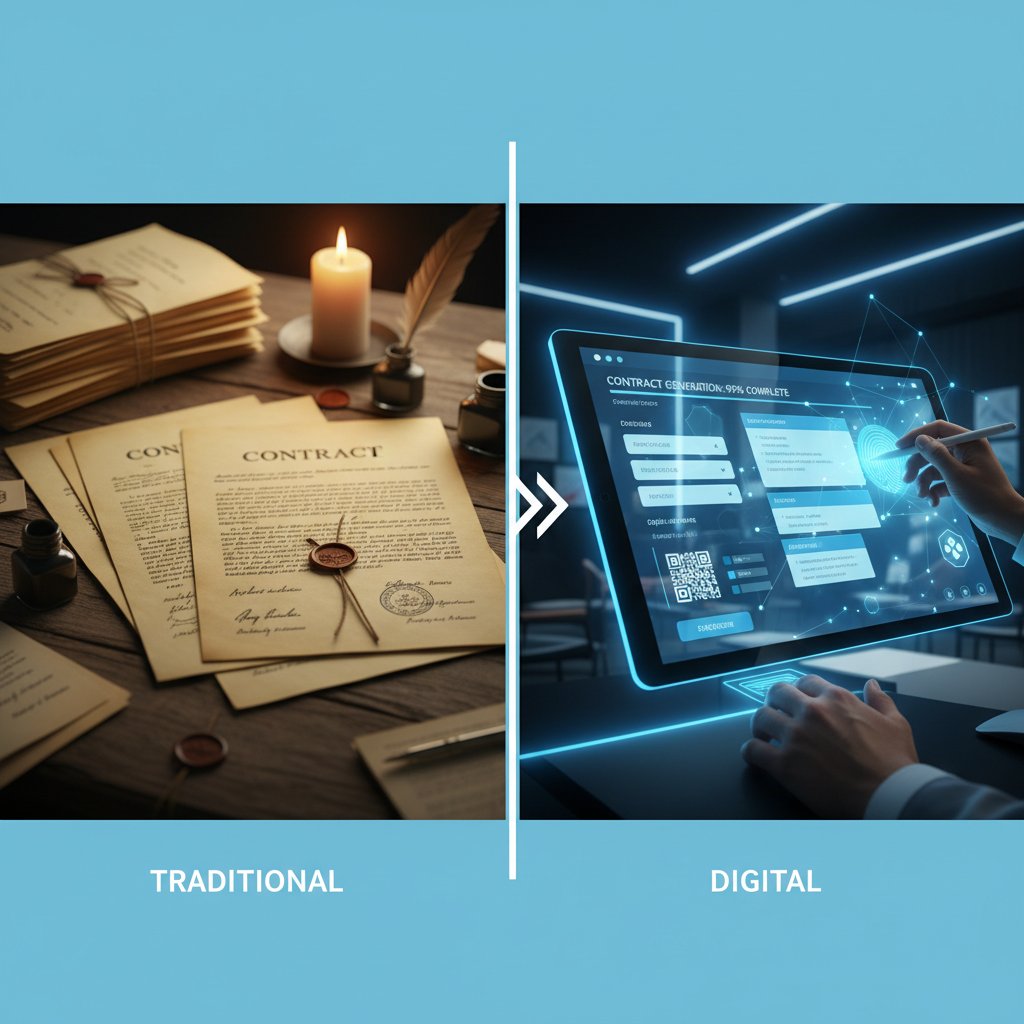
The timeline is as jagged as it is relentless. In the early 2010s, cloud-based document storage and basic e-signature services like DocuSign began to erode paper’s stranglehold. By the late 2010s, template libraries and basic automation let smaller businesses create service agreements and NDAs without paying a lawyer per page. But it was the leap to AI-powered platforms—tools that could ingest your business context, extract risk factors, and even suggest jurisdiction-specific clauses—that truly changed the stakes. According to LegalTech Insights (2024), 65% of small businesses now use some form of AI contract generator, a number that would have been unthinkable a decade ago.
Today, the most advanced solutions (think filecreator.ai, WriteCream, and Signmaker) are promising nothing less than pixel-perfect, error-proof contracts, delivered in seconds and tailored for any use case. But the story isn’t as simple as tech triumphing over tradition. Every “instant” contract hides a universe of complexity—and every shortcut has its shadow.
What makes a contract ‘professional’ in 2025?
The old markers of a “professional” contract—dense legalese, embossed seals, multi-page printouts—have lost their magic. In a world where anyone can spin up a contract in minutes, the standards have shifted. Now, professionalism in contracts is measured by clarity, compliance, adaptability, and digital readiness.
What separates the real deal from a risky template? It’s not just about sexy UI or a slick PDF export. True professionalism means:
- Adherence to up-to-date legal standards (which change faster than most tools can keep up)
- Customization for jurisdiction, industry, and business context
- Data security that doesn’t leak your sensitive terms to the next data breach headline
- Seamless integration with your workflows—think CRM sync, real-time editing, and e-signature support
Here are 7 hidden benefits of a professional contract generator online that experts won’t tell you:
- Silent error detection: AI-driven clause suggestions quietly catch inconsistencies or missing signatures before you hit send.
- Real-time compliance: Top generators update clauses as regulations evolve—no more “outdated as soon as you download” contracts.
- Non-lawyer accessibility: Cutting through legalese, these platforms empower sales teams and freelancers to draft pro-level contracts.
- Hybrid customization: The best tools let you blend templates with your own terms, marrying speed to specificity.
- Audit trails built in: Every change, signature, or negotiation is logged for legal defensibility—no more “he said, she said.”
- Multi-format export: Professional solutions output your contract in PDF, DOCX, and even native CRM fields for instant use.
- Mobile-first execution: Sign and edit contracts on the go, wherever deals are made.
The baseline for business documentation no longer lies in who you know at the law firm down the street, but in how fast and precisely you can generate, negotiate, and secure your agreements. For many, that’s both liberating—and a little terrifying.
The untold story: who’s really using these tools?
You might imagine that only startups or legally savvy enterprises play with digital contract generators, but the real story is far more democratic—and disruptive. According to LegalTech Insights (2024), a staggering 65% of small businesses use AI contract generators. But it doesn’t stop there: freelancers, gig workers, creative agencies, and even healthcare providers are harnessing these tools to reclaim time, reduce legal risk, and project professionalism far beyond their budget.
Freelancer using professional contract generator online.

Consider the freelance designer in a coworking space, closing contracts with clients across three continents—or the solo consultant automating NDAs for every new lead. SMBs in sectors from marketing to healthcare are rapidly swapping email ping-pong for streamlined, e-sign-ready agreements. The adoption curve is steep, but the pain points are universal: speed, compliance, and a hunger to sidestep legal landmines without draining the bank account.
Gartner projects a 40% increase in AI-driven contract automation by 2025, but the revolution is already here. As the lines blur between business owner, employee, and gig worker, the demand for easy, enforceable, and fast contracts is only intensifying. The untold story isn’t who’s using these tools—it’s who isn’t.
Brutal truth #1: not all contract generators are created equal
The dangerous world of free templates
The internet is littered with promises of “free contract templates”—but hidden behind those cheerful download buttons are lurking risks that can bankrupt a business or shatter a partnership. One misused template, one missed clause, and you’re not just risking a typo—you’re gambling with enforceability.
"One mistake cost us six figures. Never again." — Alex, startup founder
According to industry data, free tools often hide advanced features behind paywalls and offer generic templates that ignore jurisdiction-specific nuances. A 2023 case study in LegalTech Journal chronicled a startup that used a free employment agreement found online, only to discover—months and one lawsuit later—that the template was outdated and unenforceable in their state. The cost? Over $120,000 in legal fees and damages.
The real stakes: free templates might save you a few bucks upfront, but missing indemnification clauses, outdated regulatory language, or region-specific requirements can create financial wounds that never heal. If you’re considering a “free” solution, ask what it’s really costing you—because in contracts, ignorance is never bliss.
How do you spot a truly professional generator?
With hundreds of platforms promising instant, professional contracts, how do you know which ones are legit? The difference comes down to a handful of non-negotiables.
Here are 9 red flags to watch out for when choosing an online contract platform:
- No clear data privacy policy: If you can’t find details on how your data is stored or shared, run.
- Lack of jurisdiction customization: Serious platforms let you tailor terms to your local legal environment.
- No legal update logs: If you can’t verify when templates were last updated, you’re rolling the dice.
- Overly generic language: “One size fits all” contracts often fit no one well.
- No integration with business tools: The best generators work with your CRM, e-signature platforms, or payment systems.
- Opaque pricing and surprise fees: Beware of “free forever” claims that lock essential features behind paywalls.
- Confusing user interface: If you can’t easily navigate or customize, errors are inevitable.
- No audit trail: You need a record of edits and signatures for protection.
- No access to legal review: Even the best automation should offer human legal review options.
Too many platforms rely on surface polish—pretty PDFs, drag-and-drop interfaces—while skipping the messy, expensive work of legal compliance. Don’t let branding blind you to the essentials: up-to-date legal knowledge, transparency, and adaptability.
Brutal truth #2: your privacy and data are at stake
Who owns your contract data in the cloud?
Every time you upload business-critical data to an online contract generator, you’re making a leap of faith. Who really owns your contract—and what happens to your data when the project is over, or if the platform goes dark overnight?
The answer is rarely simple. Many tools process sensitive details online, storing them on third-party servers that may or may not comply with data protection standards like GDPR or CCPA. Worse, some platforms reserve the right to mine “anonymized” contract data for AI training or even marketing purposes. According to a 2024 report by Privacy Rights Clearinghouse, less than half of leading contract generators offer transparent data ownership terms.
| Contract Platform | Data Ownership Clarity | Data Storage Location | Compliance Certifications |
|---|---|---|---|
| WriteCream | Transparent | EU-based | GDPR, ISO 27001 |
| Signmaker | Ambiguous | US-based | SOC 2 |
| Writify.AI | Clear | EU/US user choice | GDPR, CCPA |
| filecreator.ai | Transparent | EU-based | GDPR, ISO 27001 |
Table 1: Comparison of leading contract generators’ data privacy policies (2025)
Source: Original analysis based on Privacy Rights Clearinghouse (2024), company privacy policies.
To protect yourself, scrutinize the privacy policy, check data retention terms, and whenever possible, choose platforms offering EU-based storage and compliance certifications. Don’t just think about legal risk—think about what your competitors could do with a leaked contract or client list.
The hidden risks of e-signatures and online storage
E-signatures have revolutionized how fast deals close, but with speed comes new vulnerabilities. If your contract generator doesn’t use industry-standard encryption (TLS 1.2+), your contract—and your signature—could be intercepted or tampered with. According to the Electronic Frontier Foundation (EFF), not all e-signature providers meet strict compliance requirements, and some fail to offer robust audit trails.
Modern platforms like filecreator.ai and Writify.AI encrypt contract data both in transit and at rest, offering detailed logs for every signature or change. But many “free” or budget options lag behind, risking regulatory non-compliance or outright data loss.
Secure contract data online.

For genuine security, insist on platforms that use end-to-end encryption, offer granular access controls, and provide downloadable audit trails. And remember: compliance is a moving target. What was secure last year may be a liability today.
Brutal truth #3: automation doesn’t mean simple (or safe)
Why one-size-fits-all contracts are a myth
There’s a seductive myth that AI automation makes contracts “set and forget”—but the reality is far riskier. Automated platforms, especially those built on generic templates, can miss the subtle but critical details that make a contract enforceable in your jurisdiction or industry.
"If you think automation means safety, think twice." — Jamie, legal tech analyst
Recent horror stories abound: a freelancer lost months of payments because a boilerplate contract didn’t specify late fees; a SaaS startup faced regulatory fines because an AI-generated privacy clause was out of date. According to LegalTech Insights (2024), over-reliance on templates leads to contracts that lack unique, business-critical provisions—meaning they’re perfect until they aren’t.
The bottom line: automation amplifies both your speed and your risk. If you trust that “one size fits all,” you’re just inviting trouble.
The complexity behind “instant” contract generators
Under the hood, today’s best contract generators are anything but simple. AI-driven platforms use logic rules, clause libraries, and real-time legal databases to assemble contracts on the fly—an impressive feat, but one that requires constant maintenance and nuanced understanding.
AI-powered contract generator process.
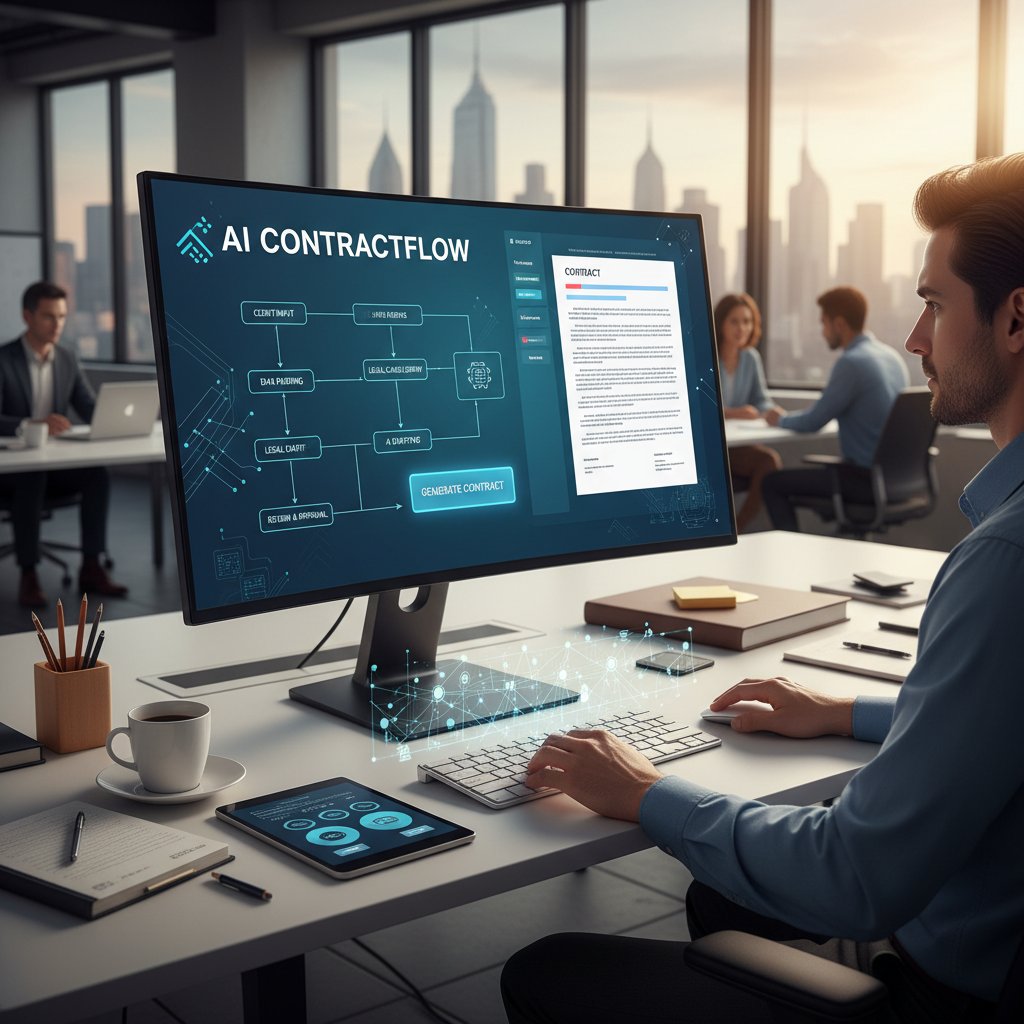
True customization means more than toggling a few checkboxes. It requires tools that let you input business context, specify risk tolerances, and adapt to local law changes. The best solutions blend AI logic with human oversight, offering hybrid models where automation handles the grunt work and legal professionals step in for final review. According to Gartner, hybrid approaches yield the best results, combining speed with nuanced compliance.
If your platform promises “instant” contracts without explaining how it handles legal updates or context-based logic, ask yourself what’s being sacrificed for that speed.
Game-changing win #1: unleashing speed and precision
How contract automation is redefining business agility
Imagine closing a deal in minutes instead of days—no more chasing signatures or waiting for legal reviews. This is the new reality for businesses using professional contract generators online. According to LegalTech Insights (2024), contract drafting time has been slashed by up to 70% for businesses adopting automated solutions.
The competitive advantage is real: faster deals, fewer errors, and contracts that actually reflect your business intent. Here are 7 steps to mastering professional contract generator online:
- Define your use case: Know exactly what type of contract you need—NDA, employment agreement, partnership deal.
- Choose a vetted platform: Prioritize security, legal compliance, and up-to-date templates.
- Input precise details: Don’t skip; the more context, the better the output.
- Leverage AI suggestions: Use automatic clause recommendations to catch risks and fill gaps.
- Review for compliance: Double-check jurisdiction, industry-specific needs, and legal updates.
- Integrate with your workflow: Sync with CRM or project management tools for seamless contract handling.
- Monitor and refine: Use analytics and feedback to improve contract quality over time.
For example, a Series A-funded startup in the fintech sector reported doubling its deal velocity after replacing manual legal reviews with AI-driven contracts, freeing up their lean team to focus on growth, not paperwork.
The Professional Document Generator: a new standard?
While dozens of platforms crowd the field, some stand out as bellwethers for the industry’s future. Professional Document Generator, powered by filecreator.ai, exemplifies the next wave of contract automation. With AI reasoning that adapts to your business context and seamless integration across formats—PDF, DOCX, CRM fields—it’s less a “template” and more a digital legal brain.
The industry as a whole is trending toward multi-format, real-time contract editing, automated compliance checks, and integration with e-signature platforms. Negotiation analytics and customizable audit trails are fast becoming table stakes rather than luxuries.
Team using Professional Document Generator.

The “new standard” isn’t just speed or precision—it’s contracts that work for you, not against you, in a world where every second and every signature matters.
Game-changing win #2: democratizing legal power (without lawyers)
Who benefits most from online contract generators?
For decades, airtight contracts were the privilege of big corporations with deep legal budgets. Today, the tables have turned. Freelancers, startups, and small businesses are now wielding the same tools as Fortune 500 firms—often with greater agility.
| Industry | Adoption Rate | Typical Use Cases |
|---|---|---|
| Freelance/Consulting | 83% | NDAs, project agreements |
| Startups/Tech | 72% | Employment, investor agreements |
| SMBs (all sectors) | 65% | Service contracts, vendor deals |
| Healthcare | 54% | Patient agreements, compliance |
| Legal professionals | 38% | Drafting, review, client onboarding |
Table 2: Statistical summary of contract generator adoption by industry (2025)
Source: Original analysis based on LegalTech Insights (2024), Gartner (2024).
The cultural impact is seismic: entrepreneurs in Lagos, digital nomads in Bali, and micro-enterprises in Kansas can all produce professional, enforceable contracts at the click of a button. Legal power is being democratized—no law degree required.
From legalese to plain English: making contracts human again
One of the biggest wins in the digital contract revolution isn’t just speed or savings—it’s clarity. Modern contract platforms are stripping out the legalese and replacing it with accessible, human language, making it easier for businesses and clients alike to know what they’re really agreeing to.
Here are 5 unconventional uses for professional contract generator online:
- Creative project briefs: Easily formalize scope and payment for design or writing gigs.
- Influencer/brand deals: Nail down deliverables, exclusivity, and usage rights with clear language.
- Healthcare intake forms: Automated, HIPAA-compliant agreements for clinics and practitioners.
- Remote employment onboarding: Seamless digital contracts for global hires, no legal maze required.
- Collaborative research agreements: Universities and startups codify IP terms without endless back-and-forth.
The ripple effect? Greater transparency, faster negotiations, and a level playing field for all parties. Trust is built not on blind faith, but on clear, accessible documentation.
Game-changing win #3: the cost-benefit equation nobody talks about
Breaking down the true costs (and savings) of contract automation
Traditional legal services are notoriously expensive—hourly rates, retainer fees, and endless billable hours. But what’s the real price of switching to an online generator?
| Contract Method | Upfront Cost | Ongoing Fees | Time to Draft | Legal Review Needed | Total Yearly Cost (avg) |
|---|---|---|---|---|---|
| Law firm (manual) | $500+ | $200+/hr | 2-5 days | Yes | $10,000+ |
| Freelance legal writer | $250 | N/A | 3-7 days | Yes | $3,000–$5,000 |
| AI generator (premium) | $30–$99/mo | N/A | Minutes | Optional | $1,200 |
| Free online template | $0 | Surprise upsells | Minutes | Yes (strongly recommended) | Varies (risk) |
Table 3: Cost-benefit analysis of contract generation methods (2025)
Source: Original analysis based on LegalTech Insights (2024), platform pricing.
The bottom line: for most businesses, an investment in a premium contract generator pays for itself in saved legal costs and reclaimed hours. The wildcard remains legal review—while AI tools are powerful, the best results still come from a hybrid approach that combines automation with human oversight.
The hidden ROI: time, stress, and opportunity
It’s easy to focus on dollars and cents, but the real return on automation is harder to quantify: reduced stress, faster deal cycles, and the opportunity cost of wasted time.
Freelancer relieved after using contract generator.

Here’s a 6-step checklist for evaluating contract generator platforms:
- Verify data security: Look for end-to-end encryption and compliance badges.
- Assess legal update frequency: Templates should reflect the latest laws.
- Check customization options: Can you add, remove, or edit clauses?
- Test integration features: Does it work with your existing tools?
- Request audit trail samples: Ensure every action is logged.
- Trial onboarding: Use the free trial to identify hidden glitches or limitations.
If a platform clears these hurdles, you’re looking at a tool that saves more than money—it gives you back control.
Controversies and misconceptions: what everyone gets wrong
Debunking the top 5 myths about online contract generators
Despite their rise, myths and half-truths cling to online contract platforms like static to a polyester suit. Let’s bust the biggest offenders:
- Myth 1: “AI contracts aren’t legally binding.”
Fact: In most jurisdictions, digital contracts (when properly executed) are just as enforceable as paper ones. The key is compliance, not medium. - Myth 2: “Anyone can use a free template safely.”
Fact: As we’ve seen, generic templates often lack critical, enforceable language. - Myth 3: “E-signatures are insecure.”
Fact: When implemented with strong encryption and audit trails, e-signatures are more secure than wet ink. - Myth 4: “Automation replaces lawyers.”
Fact: AI handles the grunt work; humans handle nuance. The best platforms encourage hybrid workflows. - Myth 5: “All platforms are the same.”
Fact: Differences in legal updates, compliance, and data privacy are vast—and can make or break your contract.
Key contract generator jargon (with context and examples):
Automated drafting, assembly, and management of contracts using AI or logic-based tools, minimizing manual input while improving consistency.
Legally recognized digital signature attached to a contract, authenticated via secure protocols and often accompanied by an audit trail.
Tailoring contract terms to specific legal environments, ensuring enforceability in the relevant region or industry.
A repository of pre-vetted legal clauses that can be dynamically inserted into contracts, reducing drafting errors.
A time-stamped, tamper-proof log of all contract edits, signatures, and negotiations, critical for legal defensibility.
Cut through the hype by focusing on verified compliance, up-to-date legal knowledge, and transparent privacy practices. Anything less is just noise.
The dark side: current challenges and unresolved debates
AI-driven contract platforms aren’t immune to controversy. Ongoing debates swirl around algorithmic bias (do AI tools reinforce legal inequalities?), access inequality (do free tools create a two-tier system?), and the potential for malicious use (think deepfake contracts or automated fraud).
"Tech doesn’t solve ethics. That’s on us." — Morgan, industry analyst
Regulatory scrutiny is ramping up as governments grapple with how to oversee AI-powered contract creation. Expect more transparency requirements, auditability standards, and perhaps even licensing for the most powerful platforms. For now, the wild west vibe persists—but the pressure to evolve is mounting.
What to look for in a professional contract generator online (2025 edition)
Features that matter: beyond the marketing hype
Every platform promises “professional” results, but only some deliver on the essentials. When shopping for a contract generator, look beyond the surface.
Here are 8 essential features every contract generator should have:
- Up-to-date legal templates: Regularly updated to reflect current law.
- Data privacy compliance: Adherence to GDPR, CCPA, and local standards.
- Customization: Full control over clauses, party names, and business context.
- Audit trails: Transparent logs for every action.
- E-signature integration: Secure, compliant digital signatures.
- Multi-format export: Support for PDF, DOCX, and native CRM fields.
- User access controls: Assign roles and permissions.
- Responsive support: Real humans to help when AI can’t.
Always test-drive a platform using its free trial or demo. If you can’t execute a real contract without hiccups—or if you’re pressured into a credit card before you’ve seen results—walk away.
Step-by-step guide: choosing and using your first generator
Here’s your 10-step roadmap to mastering the “professional contract generator online” process:
- Assess your contract needs: List the types and frequency of contracts you use.
- Research platforms: Compare features and compliance certifications.
- Read user reviews: Look for feedback on speed, support, and real-world performance.
- Test security: Ensure encryption and privacy policies are robust.
- Trial the onboarding: Use the demo to create a test contract.
- Check legal update logs: Verify template freshness.
- Evaluate customization: Try editing clauses and party details.
- Integrate with your workflow: Sync with CRM or e-sign tools.
- Review audit trails: Ensure every step is documented.
- Commit (or move on): Only pay when you’re confident; otherwise, keep searching.
For ongoing success, keep an eye on legal updates, solicit feedback from users, and don’t be afraid to switch platforms if your needs change. The best contract generator is the one that adapts with you.
The future of contracts: where automation, AI, and trust collide
Smart contracts, blockchain, and the next big leap
The horizon is alive with buzzwords—smart contracts, blockchain, decentralized agreements. But these aren’t just tech fantasies: some platforms are already experimenting with blockchain-powered contract authentication, offering tamper-proof, automatically executable agreements.
Blockchain-powered contract generator.

For businesses, the implications are profound: contracts that self-execute when conditions are met; agreements that can’t be tampered with; global transactions secured by decentralized networks. While mainstream adoption remains limited, the seeds have been planted—and the smart money is already watching.
Will AI make contract lawyers obsolete—or just more powerful?
The specter of “AI replacing lawyers” makes for clickbait headlines, but the reality is more nuanced. AI and automation are shifting the legal profession from rote drafting to higher-level strategy and negotiation. The best legal professionals are learning to collaborate with AI, using it to surface risks, analyze negotiation trends, and focus human expertise where it matters most.
| Year | Major Milestone | Key Impact |
|---|---|---|
| 1995 | Widespread fax/print contracts | Manual, slow, error-prone |
| 2005 | Email/PDF contracts + basic e-signatures | Faster, still risky |
| 2015 | First SaaS contract generators, template libraries | Accessible, some automation |
| 2020 | AI-powered clause suggestions, hybrid workflows | Faster, more compliant |
| 2025 | Blockchain, smart contracts, full workflow automation | Secure, instant, adaptable |
Table 4: Timeline of contract technology evolution (1995–2025)
Source: Original analysis based on LegalTech Insights (2024), Gartner (2024).
The future isn’t about replacement—it’s about augmentation. Trust is still built on relationships, but enforced by technology.
Conclusion: rewriting the rules—are you ready to sign?
The digital contract revolution isn’t coming. It’s already here, rewriting the rules for businesses, freelancers, and enterprises alike. The brutal truths are unavoidable: not all platforms are created equal, not every AI promise delivers, and risks still lurk behind every “free” download. But the wins—speed, democratized power, and previously unthinkable savings—are too big to ignore.
Reflect on your own contract practices. Are you just keeping up, or are you racing ahead? As the dust settles, the winners will be those who master both the art and the science of digital agreements—leveraging the best AI has to offer while never losing sight of the human element.
Digital contract signing in 2025.

If you’re ready to leave paper chaos behind and embrace smarter, safer contracts, explore the new wave of secure, modern solutions like Professional Document Generator and filecreator.ai. In a world where every click counts, make sure your next signature is your smartest one yet.
Sources
References cited in this article
- WriteCream(writecream.com)
- Signmaker(signmaker.io)
- Writify.AI(writify.ai)
- PandaDoc(pandadoc.com)
- MakeItFuture(makeitfuture.com)
- Bounsel(bounsel.com)
- Swiftwater Legal(swiftwaterco.com)
- Smart Contract Trends(antiersolutions.com)
- CIOHub(ciohub.org)
- Worksuite(worksuite.com)
- Astute Lex Servicado(astutelexservicado.in)
- Heritage Law(heritagelaw.com)
- SC&H(schgroup.com)
- FTC 2023/2024 Update(ftc.gov)
- Documami(documami.com)
- ISACA(isaca.org)
- Addleshaw Goddard(addleshawgoddard.com)
- Forbes(forbes.com)
- Oboloo(oboloo.com)
- Juro(juro.com)
- Templafy(templafy.com)
- Docupilot(docupilot.app)
- Exigent Group(exigent-group.com)
- ContractSafe(contractsafe.com)
- Devendra Global(imdevendra.com)
- Summize(summize.com)
- Lawgood(lawgood.io)
- Zegal(zegal.com)
- Constrafor(constrafor.com)
- IJFMR(ijfmr.com)
- Concord(concord.app)
- Signmaker AI Contract Generator(signmaker.io)
Perfect Documents, Instantly
Filecreator.ai transforms the way you produce professional documents. Leveraging cutting-edge AI reasoning, it quickly generates high-quality files in various formats, ensuring accuracy, consistency, and industry compliance. Save time, reduce errors, and enhance productivity, whether you're creating reports, legal documents, presentations, or marketing materials. Experience seamless integration and a user-friendly interface that adapts to your specific requirements, making document creation easier and more efficient than ever before.
Get startedStart Creating Professional Documents Today
Join thousands of professionals who trust AI-powered document generation
Frequently Asked Questions
What percentage of small businesses now use AI contract generators?
According to LegalTech Insights (2024), 65% of small businesses now use some form of AI contract generator.
What types of contracts can be created using professional online contract generators?
The article mentions that these platforms can create various contracts including service agreements and NDAs, with advanced solutions offering tailored contracts for any use case.
What was the main limitation of contracts before the digital transformation?
Before digital transformation, contracts were created through a slow, expensive, and painfully manual process involving paper filing, manual drafting by paralegals, and were prone to errors and typos.
What key technological advances led to the modern AI contract generator era?
The evolution progressed from paper contracts to fax machines and PDFs, then to e-signature services like DocuSign, followed by template libraries and basic automation, and finally to AI-powered platforms that can ingest business context and suggest jurisdiction-specific clauses.
What are some examples of advanced AI-powered contract generator platforms mentioned?
The article mentions filecreator.ai, WriteCream, and Signmaker as examples of advanced solutions promising pixel-perfect, error-proof contracts delivered in seconds.
Continue Reading
Explore more from Professional Document Generator

Professional Contract Maker Online: Risks and Real Protections
Professional contract maker online tools offer efficiency but carry hidden risks. This article examines the pitfalls of digital contract generators and what actually protects agreements.

Customized Contracts: Risks of AI-Powered Legal Document Generation
Generating professional customized contracts requires understanding the risks of AI-powered tools. This article examines what can go wrong and how to protect your business.

Online Contract Tools: Capabilities, Risks, and What to Check
Contract making tool online platforms offer speed and reach, but also legal gaps and security risks. This article explains what works, what doesn't, and what to verify.

Risks and Benefits of Generating Contracts Online
Generating contracts online speeds up agreement creation but carries risks. This article explains what changed in digital contracting and how to navigate potential pitfalls.

Custom Contracts Online: Understanding the Real Risks
Custom contracts online have transformed business agreements. This article examines the hidden risks, negotiation pitfalls, and challenges businesses face with digital contract platforms.

How to Generate Legal Contracts Easily and Safely
This article explains how to generate legal contracts easily while avoiding common pitfalls. It covers the risks of DIY agreements, tools available, and strategies for protecting your interests.