


Professional HR Document Templates That Won’t Get You Sued
Written with AI assistance under our editorial guidelines
Using generic HR templates without customizing them for your jurisdiction creates serious legal risks, as most compliance breaches stem from borrowed or outdated documents missing critical clauses. Professional templates tailored to local regulations and your company's specific needs protect you from costly lawsuits and operational chaos.
If you think professional HR document templates are the dull paperwork hiding in your company’s digital basement, it’s time for a cold shower. HR docs can be the thin line between business order and absolute chaos—especially in 2025, where legal landmines, remote chaos, and compliance nightmares are just one bad template away. According to recent analysis, only 15% of companies even attempt strategic workforce planning, and over 75% of HR leaders say their managers are drowning in process overload (Gartner, 2025). Meanwhile, the copy-paste culture, generic templates, and the rush to “just get it done” have created a silent epidemic of avoidable disasters, leaving even the most seasoned HR pros exposed. This isn’t fearmongering; it’s a wake-up call. In this article, we’ll rip the lid off the real risks, lay out the 9 unspoken secrets to bulletproofing your workforce, and show you how the right professional HR document templates can be the shield your business needs. From filecreator.ai’s game-changing AI solutions to the overlooked dangers lurking in free downloads, you’ll get a brutally honest look at what separates HR leaders from HR victims. Welcome to the dark side of documentation—let’s make sure you walk out unscathed.
Why HR document templates are more dangerous than you think
The hidden risks of copy-paste culture
Corporate folklore loves a shortcut. Download a template, change the logo, and call it “policy.” But this copy-paste habit is a slow-rolling HR disaster. According to industry insights, most compliance breaches start with a borrowed template—often written for another jurisdiction, outdated, or missing critical clauses. When every minute saved is a potential lawsuit earned, the stakes couldn’t be higher.
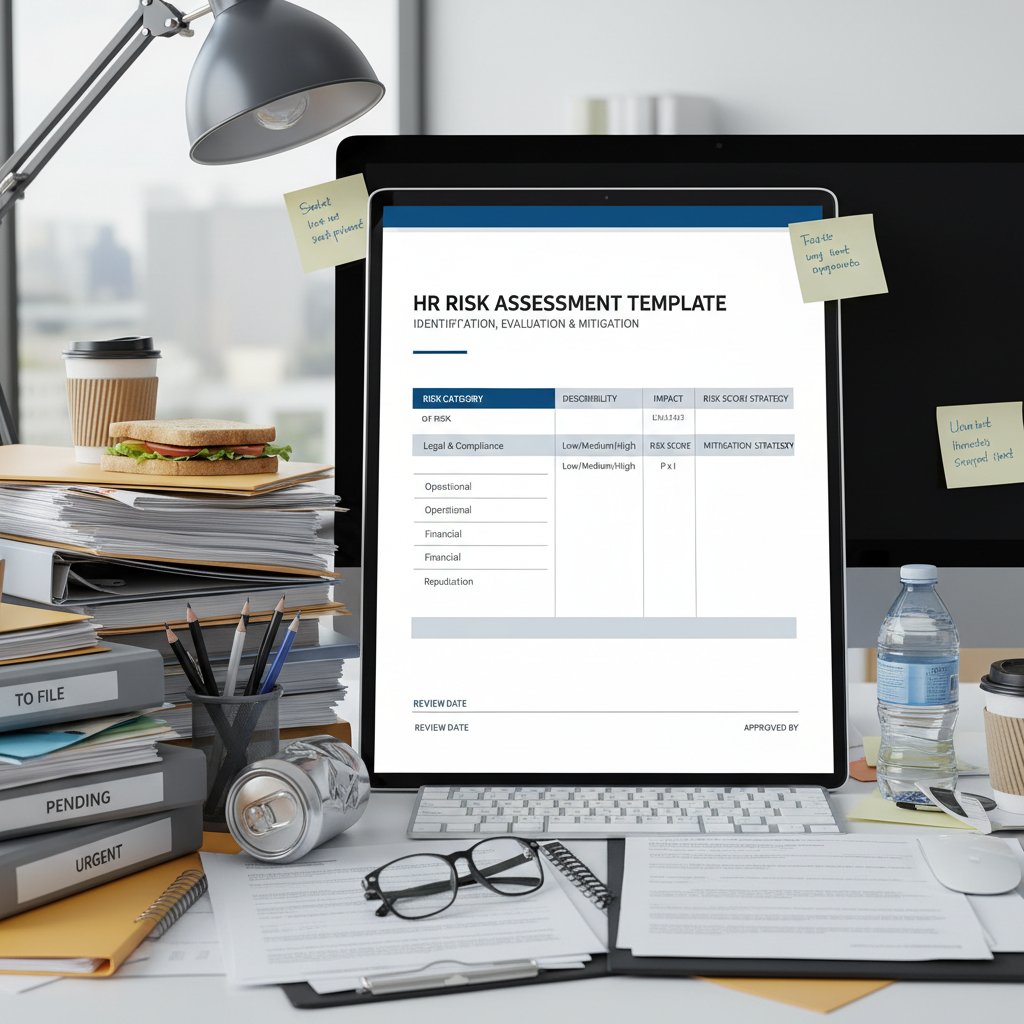
"Most compliance nightmares start with a downloaded template." — Jordan, HR director
This isn’t just a theory. The proliferation of generic HR forms—especially those found on “free” template sites—means many organizations unknowingly embed legal violations into daily operations. One missed local clause? Suddenly, your entire holiday policy is noncompliant. And the worst part: you’ll usually discover it when it’s too late.
Case study: When bad templates sparked an HR meltdown
Consider the infamous case of “AcmeTech,” a mid-sized SaaS company that thought they were saving time by adopting a set of free HR templates from a popular website. No one checked local labor regulations, and the onboarding forms didn’t ask for mandatory employee notifications. Six months later, a dismissed employee lawyered up, citing missing disclosures and wage calculation errors. The fallout included fines, a tarnished Glassdoor rating, and the resignation of the HR lead. Here’s how it unfolded:
| Event | Date | Outcome |
|---|---|---|
| Downloaded free templates | January 2023 | Forms implemented without legal review |
| Discovered noncompliance | June 2023 | Employee flagged missing mandatory notices |
| Legal action initiated | July 2023 | Formal complaint filed with labor board |
| Fines and settlement | September 2023 | $100,000+ paid; internal audit triggered |
| HR team restructured | October 2023 | New policies; external consultants hired |
Table 1: Timeline of HR template disaster at AcmeTech
Source: Original analysis based on Engagedly, 2025, AIHR Guide, 2025
Mythbusting: Are free templates ever safe?
Think free HR templates are your secret weapon? Think again. While free resources might look polished, they often lack legal vetting, local compliance, or sector-specific tweaks. Here’s why that quick download could be your undoing:
- Outdated legal references: Free templates are rarely updated for changing labor laws—a risk that multiplies across jurisdictions.
- Missing local nuance: A template built for California isn’t automatically valid in New York, let alone the EU.
- No accountability: If the document fails, you’re on your own—no support, no recourse.
- Lack of customization: These forms often ignore your company’s unique culture, values, and policies.
- Exposure to hidden costs: The price of a “free” mistake can be six figures or more when regulators come knocking.
The evolution of HR documentation: from dusty binders to AI
A brief history of HR templates
HR documentation didn’t start with Google Docs. It grew out of necessity: payroll ledgers, scribbled time cards, and, eventually, word processor forms. As employment law exploded in complexity, so did the paperwork. Today, we’re lightyears from those dusty binders, but the template you use still shapes your risk—and your reputation.
| Era | Dominant Format | Key Trend |
|---|---|---|
| Pre-1970s | Handwritten forms | Manual record-keeping; limited control |
| 1980-2000 | Digital documents | Word processors, spreadsheets |
| 2010-2020 | Cloud templates | Online sharing, increased speed |
| 2021-Present | AI-generated docs | Automated compliance, real-time updates |
Table 2: Timeline of HR documentation trends and formats
Source: Original analysis based on ClickUp HR Templates, 2025, Engagedly, 2025
How workplace culture shaped HR forms
The HR doc isn’t just a form—it’s a mirror of your company’s priorities, ethics, and adaptability. As organizations diversified, DEIB (Diversity, Equity, Inclusion, and Belonging) mandates forced massive overhauls of language, tone, and accessibility. Regulatory bodies worldwide responded to discrimination, harassment, and privacy scandals with new documentation standards. Suddenly, what you write—and how you write it—signals far more than compliance. It signals belonging.

The rise of AI-powered document generators
Enter the age of instant, compliant, and customizable HR templates. Tools like filecreator.ai take the grunt work out of document creation, ensuring your HR forms are tailored, consistent, and always up to date with current regulations. The shift isn’t just about efficiency; it’s about survival in a regulatory environment that expects precision.
- 2018: AI-powered HR template generators hit the mainstream, offering real-time compliance checks.
- 2020: Widespread adoption in startups and mid-market companies seeking speed without sacrificing quality.
- 2023: Integration with DEIB and remote work requirements becomes standard.
- 2025: Over 50% of large enterprises use AI-generated HR documentation (Gartner, 2025).
What actually makes an HR document template 'professional'?
Defining 'professional' in a world of mediocrity
Not every template deserves a place in your HR arsenal. Professional HR document templates stand apart—built for clarity, compliance, and culture. It’s more than fancy formatting or legalese; it’s about accuracy, adaptability, and trust.
Designed and regularly updated by legal or HR experts, tailored to jurisdiction, incorporates company culture, enables customization, and provides clarity in language and structure. Example: Custom onboarding form that includes mandatory notices, DEIB language, and role-specific fields.
Mass-produced, rarely updated, lacks regional adaptation, and contains vague or boilerplate terms. Example: Downloaded NDA missing GDPR clauses, or a “universal” leave policy ignoring local holidays.
Why does it matter? Because the difference between compliance and catastrophe is often hidden in the fine print.
The anatomy of a bulletproof HR template
A truly professional HR template isn’t just well-written—it’s engineered. Here’s what sets the best apart:
- Clear sections for each policy area (definitions, procedures, responsibilities)
- Up-to-date legal references with effective dates
- DEIB-friendly language and accessibility features
- Space for local adaptations and manager annotations
| Feature | Free Templates | Premium Templates | AI-Generated (e.g., filecreator.ai) |
|---|---|---|---|
| Legal Compliance | Low | Medium-High | High, real-time updates |
| Customization | Limited | Good | Full, highly flexible |
| DEIB Integration | Rare | Sometimes | Always included |
| Update Frequency | Rare | Annual | Real-time, as laws change |
| Support/Accountability | None | Email/chat | AI + human expert support |
Table 3: Feature matrix comparing HR template sources
Source: Original analysis based on ClickUp, 2025, Engagedly, 2025
Expert voices: What HR leaders demand from their docs
HR leaders aren’t just after compliance. They want clarity, culture fit, and documents that can stand up in court—or a crisis.
"Compliance is just the floor—clarity and culture are the ceiling." — Morgan, HR strategist
According to a 2025 survey by Engagedly, 76% of HR professionals say the ability to adapt templates to company culture is essential, and 63% cite clarity of language as the top reason for choosing a template provider.
Common mistakes and how to sidestep HR template fails
The most overlooked compliance traps
Even the sharpest HR pros have fallen into legal quicksand thanks to off-the-shelf templates. Here’s what trips up most organizations:
- Templates that ignore local wage and hour laws.
- Missing mandatory employee notices or at-will disclaimers.
- Outdated anti-harassment or privacy language.
- Inconsistent formatting leading to lost or misfiled documents.
- Failure to obtain signed acknowledgments—opening the door to disputes.
Red flags to watch out for when picking an HR template
- The template lacks recent legal references or effective dates.
- It claims “universal” applicability across states or countries.
- Terms are undefined or explained with ambiguous language.
- No clear sections for customization or annotations.
- No evidence of regular updates or expert review.
Why 'one-size-fits-all' is a lie
No two organizations—or regions—are identical. The myth of the universal HR template is a trap. It leads to documents that either overpromise (and underdeliver) or, worse, create noncompliance across multiple fronts.
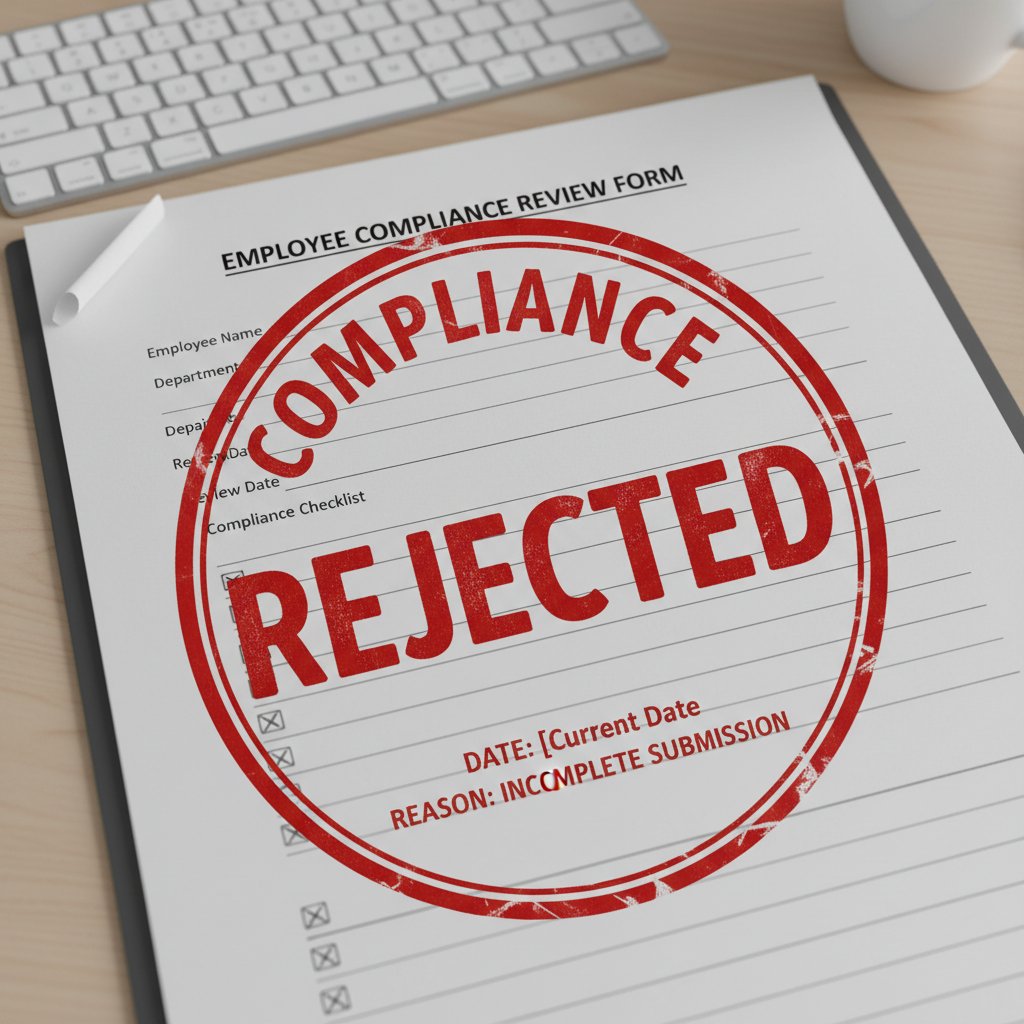
The reality: what’s legal in London might be unlawful in Los Angeles. A “standard” onboarding checklist could ignore required EU privacy notices, or a leave policy could miss local religious holidays. “One-size-fits-all” is HR’s version of Russian roulette.
How to audit your current HR docs—before disaster strikes
A proactive audit is your first—and best—defense against HR template failure. Here’s a step-by-step guide:
- Collect every template currently in use: Include handouts, digital forms, and even legacy documents.
- Verify legal compliance: Cross-check each form with current labor laws and industry regulations.
- Identify outdated language or missing sections: Look for areas lacking DEIB language, new disclosures, or digital-friendly features.
- Consult stakeholders: Get feedback from managers and employees on usability and clarity.
- Implement version control: Ensure all updates are tracked and old versions are retired.
Professional HR document templates for a changing workplace
Remote work and digital transformation
The remote revolution isn’t coming—it’s here. Traditional HR documentation struggles with distributed teams, time zone chaos, and digital signatures. Professional HR document templates, designed for digital workflows, are essential for managing compliance and efficiency in a remote-first world.

According to a 2025 survey by SHRM, 82% of remote-first organizations have overhauled their HR documentation to fit new digital realities—integrating e-signatures, automated workflows, and cloud-based templates.
DEI, compliance, and the new HR language
Diversity, equity, and inclusion aren’t just buzzwords—they’re legal and ethical imperatives now embedded in HR documentation. Modern templates are expected to:
- Include bias-free language and accessible formatting.
- Accommodate diverse religious, cultural, and family needs.
- Offer flexibility for remote, hybrid, and contract workers.
- Enable data tracking for DEIB metrics.
Unconventional uses for professional HR document templates
- Customizing onboarding to reflect neurodiversity accommodations.
- Embedding mental health resources in leave policies.
- Using dynamic templates to capture pronoun preferences and accessibility needs.
- Automating compliance training acknowledgments for distributed teams.
HR templates in cross-industry applications
HR documentation doesn’t just live in Human Resources. Finance, Legal, and Operations teams all rely on standardized templates for risk management, onboarding, and reporting.
| Department | HR Template Usage | Adaptation Needed |
|---|---|---|
| Finance | Onboarding, payroll forms | Integration with accounting systems |
| Legal | Contracts, NDAs, policy docs | Local jurisdiction clauses |
| Marketing | Freelancer agreements | Project-based scopes, rapid onboarding |
| Operations | Shift schedules, incident logs | Real-time updates, audit trails |
Table 4: Cross-industry comparison of HR template adaptation
Source: Original analysis based on AIHR, 2025, Engagedly, 2025
How to choose (and adapt) the right HR document template
Evaluating sources: Free, premium, or AI-powered?
Your options for HR templates are as varied as your risks. Here’s how they stack up:
| Provider Type | Strengths | Weaknesses |
|---|---|---|
| Free (download) | No cost, instant access | No support, outdated, risky |
| Premium (paid) | Better compliance, some support | Can be expensive, not always customizable |
| AI-powered (filecreator.ai) | Real-time compliant, customizable | Requires data input, new learning curve |
Table 5: Comparison of template providers and their strengths/weaknesses
Source: Original analysis based on ClickUp, 2025, Engagedly, 2025
Customization: Making a template truly your own
A template is just the skeleton. Customization brings it to life. To ensure your HR templates serve—not sabotage—you, follow this checklist:
- Localize for jurisdiction: Add or adjust sections to comply with local laws.
- Align with company culture: Integrate language and policies that reflect your values and workflow.
- Update regularly: Set calendar reminders to review compliance at least quarterly.
- Consult experts: Involve legal and DEIB professionals for complex updates.
- Test usability: Get end-user feedback before rolling out company-wide.
When to call in an expert (and when to trust AI)
Sometimes, a human touch is essential—especially for complex or high-risk policies. But for routine forms and adaptive compliance, AI-powered generators like filecreator.ai can save huge amounts of time and error risk.
"AI can set the table, but only you know what your company’s hungry for." — Taylor, HR consultant
The best strategy? Use AI for efficiency and scale, and bring in human experts for cultural nuance, legal gray areas, or major policy overhauls.
Real stories: HR template wins and horror shows
Success story: How a startup avoided chaos
BrightStart, a fast-growing SaaS startup, was facing rapid onboarding and regulatory stress. Instead of going DIY, they invested in professional HR document templates, customized for local compliance and digital workflows. The result? Zero compliance incidents and a 60% faster onboarding process—earning rave reviews from new hires.

Disaster story: The $100,000 template mistake
Contrast with “OldSchool Manufacturing,” who assumed a free internet policy template would suffice. When a wage dispute arose, the template’s outdated clauses couldn’t stand up to legal scrutiny—costing the company over $100,000 in settlements and audit costs.
| Scenario | Outcome (Professional) | Outcome (Free) |
|---|---|---|
| Onboarding compliance | Passed audit, no fines | Failed audit, $100k penalty |
| Employee satisfaction | High retention, positive | Low morale, resignations |
| Legal risk | Minimal | High, ongoing litigation |
Table 6: Cost-benefit analysis—professional vs. free template outcomes
Source: Original analysis based on Engagedly, 2025
User testimonials: What real teams say
“We thought all templates were alike—until we lost a contract.” — Casey, HR coordinator
“Switching to professional templates saved us from a compliance nightmare.” — Samir, Operations Manager
“filecreator.ai’s templates let us focus on people, not paperwork.” — Jordan, Head of HR
The future of professional HR document templates
Emerging trends in HR documentation for 2025 and beyond
While we won’t speculate on the future, current trends show a sharp rise in AI-driven, adaptive templates that integrate compliance, DEIB, and data analytics. Organizations are already leveraging augmented reality for interactive onboarding and automated workflow tracking.

Will AI replace the human touch?
AI-generated documents can eliminate drudgery—but human judgment is irreplaceable for nuance, ethics, and culture. The synergy between machine efficiency and human insight is the new gold standard.
- AI handles repetitive updates and compliance checks, reducing error rates.
- Humans interpret gray zones, adjust for culture, and provide empathy.
- AI enables dynamic templates, but people drive strategic alignment.
- Collaboration ensures both speed and substance in documentation.
- The best results come from blending tech with lived HR experience.
How to future-proof your HR documentation strategy
Stay ahead of the pack with this proven approach:
- Conduct regular audits: Review all templates at least quarterly for compliance and clarity.
- Invest in professional or AI-powered solutions: Ensure your tools are updated and flexible.
- Engage all stakeholders: Involve legal, HR, and operations in every major update.
- Document workflows: Map template usage for easy tracking and version control.
- Stay informed: Monitor regulatory updates and best practices through verified industry sources.
Glossary: HR documentation jargon decoded
Understanding HR jargon is half the battle. Here’s a breakdown of must-know terms (with context):
A legal doctrine in the US allowing employers to terminate employees for any reason (except illegal ones) at any time. Essential for termination letters.
Diversity, Equity, Inclusion, and Belonging; the modern standard for fostering fair, inclusive workplaces, now embedded in most HR docs.
A standardized document collecting personal and job-related data—vital for compliance and payroll.
A digital interface tracking key performance indicators, now used to monitor HR metrics like turnover and hiring speed.
Step-by-step instructions for recurring HR processes—crucial for consistent onboarding and performance reviews.
A formal review of policies and documentation to ensure alignment with current laws and standards.
Strategic allocation of human capital, often informed by HR templates—only 15% of orgs do this well (Gartner, 2025).
The full suite of documents provided to new hires, including contracts, policies, and disclosure forms.
A customizable document providing the structure for internal policies, such as leave, remote work, or conduct.
Tool for mapping shifts and coverage—key for industries with hourly or rotating staff.
Conclusion
The myth of “just download a template and you’re safe” is a relic of another era. In 2025, professional HR document templates are both sword and shield—a daily necessity that quietly shapes the fate of your workforce. The difference between surviving a compliance audit and bleeding out in legal fees often comes down to your forms, your process, and your vigilance. Don’t let copy-paste culture, outdated templates, or the lure of “free” turn your HR department into a cautionary tale. Instead, leverage expert-vetted, customizable, and regularly updated templates—ideally powered by platforms like filecreator.ai—so you can focus on leading, not just reacting. The real secret? Professional HR documentation isn’t just about paperwork. It’s about trust, culture, and building a workforce that’s resilient, compliant, and ready for anything. Don’t wait for disaster. Master your documentation—and bulletproof your business today.
Sources
References cited in this article
- Engagedly: Essential HR Document Checklist for 2025(engagedly.com)
- AIHR: Employee Information Form Guide(aihr.com)
- ClickUp: Free HR Templates(clickup.com)
- Canadian HR Reporter(hrreporter.com)
- ConnectsUs: Why small businesses should avoid AI-generated HR templates(connectsus.com)
- Software Advice: 4 Newsworthy HR Mistakes(softwareadvice.com)
- HR Partner: Free HR Templates(blog.hrpartner.io)
- HR Simplified(hrsimplified.org)
- Gravity: Evolving Employee Handbooks(gravity.global)
- HR Tech Newsroom(hrtechnewsroom.com)
- Crescent HR: Understanding and Shaping Workplace Culture(crescent-hr.com)
- Zinc: How to drive a positive company culture through HR(zincwork.com)
- Forbes: HR Trends As Generative AI Expands(forbes.com)
- MyCV Creator: Generative AI Tools for 2025(mycvcreator.com)
- ConnectsUs: HR Forms(connectsus.com)
- ProProfs: HR Documentation Template(proprofskb.com)
- WorkHQ: Bulletproof Employment Contract(workhq.com)
- Positive HR: Bulletproof HR Business Pack(positivehr.com.au)
- Jake Jorgovan: HR Thought Leaders(jake-jorgovan.com)
- Mercer: Voice of the CHRO(mercer.com)
- HRX People: 5 Common HR Mistakes(hrxpeople.com)
- Testlify: 10 Common HR Mistakes(testlify.com)
- Remote: HR Document Management(remote.com)
- FactorialHR: HR Audit Checklist(factorialhr.com)
- SnackNation: HR Templates(snacknation.com)
- Employment Hero (UK): Updated HR Docs(help.employmenthero.com)
- AIHR: Project Plan Templates(aihr.com)
- Zimyo: HR Policy Templates(zimyo.com)
- Case IQ: HR Templates Directory(caseiq.com)
- Template.net: HR Templates(template.net)
- monday.com: HR Templates(monday.com)
- ScribeHow: HR Document Generator(scribehow.com)
- Springworks: HR Toolkit(springworks.in)
- Workable: HR Templates(resources.workable.com)
Perfect Documents, Instantly
Filecreator.ai transforms the way you produce professional documents. Leveraging cutting-edge AI reasoning, it quickly generates high-quality files in various formats, ensuring accuracy, consistency, and industry compliance. Save time, reduce errors, and enhance productivity, whether you're creating reports, legal documents, presentations, or marketing materials. Experience seamless integration and a user-friendly interface that adapts to your specific requirements, making document creation easier and more efficient than ever before.
Get startedStart Creating Professional Documents Today
Join thousands of professionals who trust AI-powered document generation
Frequently Asked Questions
What percentage of companies actually attempt strategic workforce planning?
According to Gartner 2025 analysis cited in the article, only 15% of companies even attempt strategic workforce planning.
What is the main risk of using copy-paste HR document templates?
The article states that most compliance breaches start with borrowed templates that may be written for another jurisdiction, outdated, or missing critical clauses. This can result in unknowingly embedding legal violations into daily operations, such as noncompliant holiday policies.
How do HR managers currently feel about process overload?
According to Gartner 2025, over 75% of HR leaders say their managers are drowning in process overload.
What does the article identify as a major source of HR compliance problems?
The article identifies the copy-paste culture, generic templates from free download sites, and the rush to 'just get it done' as sources of a 'silent epidemic of avoidable disasters' in HR documentation.
Continue Reading
Explore more from Professional Document Generator

Professional HR Documents: Why Compliance Matters for Your Business
Professional HR documents protect companies from legal risk. This article explains why generic templates fail, the real costs of poor documentation, and how to create bulletproof HR paperwork.

Generate HR Documents That Prevent Audits, Chaos and Burnout
Discover insights about generate HR documents

HR Document Creation Tool Myths: What's Actually Costing Your Team
HR document creation tool myths drain resources and perpetuate inefficiency. This article explains which assumptions cost HR teams time and how to address them.

Why Detailed HR Documents Prevent Chaos and Legal Risk
Creating detailed HR documents reduces legal risk and protects company culture. This article explains why documentation matters and how to build files that prevent costly compliance failures.

Official HR Documents: Risks, Failures, and Audit Strategies
Generating official HR documents requires more than compliance boxes. This article examines the risks, failures, and strategies that determine audit success.

HR Document Generators: What Changes and What Doesn't
HR document generators automate manual documentation tasks but introduce new compliance risks. This article examines what these tools actually change and where HR teams should focus attention.