


Professional Document Generation Today Is Breaking Your Workflow
Written with AI assistance under our editorial guidelines
Modern document generation systems powered by AI and cloud platforms are transforming how organizations create and manage documents, but many businesses still rely on outdated workflows that cost them up to 21% of annual productivity through missed deadlines, compliance errors, and duplicated work. Adopting modern document automation solutions is essential for staying competitive.
Professional document generation today is less about paper and more about power—the quiet, transformative kind that’s changing the DNA of work faster than most offices can keep pace. If you think “document automation” means a dusty collection of Word templates, prepare to have your assumptions bulldozed. The world’s largest industries are in the throes of a document revolution, wielding AI, cloud platforms, and compliance-driven workflows that are rewriting everything from how contracts are created to the way patient charts are managed. Yet, beneath the surface, organizations are wrestling with chaos, legacy habits, and unexpected pitfalls that few dare discuss out loud. In this deep dive, we pull apart the myths, expose the risks, and reveal the game-changing truths reshaping how your business creates, controls, and capitalizes on information. If you’re still treating document generation as an afterthought, buckle up: the future isn’t waiting for you to catch up.
The great document dilemma: why are we still stuck in the past?
Document chaos: hidden costs of legacy methods
Step into any organization where “professional document generation” is supposedly a solved problem and you’ll find a shadow economy of chaos. Decades-old workflows, half-baked email chains, and folders with names like “FINAL_v5_REAL_FINAL” tell the real story. According to a 2023 industry report, document generation chaos costs businesses up to 21% of their productivity annually (Source: CIO Applications, 2023). Missed deadlines, duplicated work, and compliance slip-ups are just the tip of the iceberg.
| Hidden Cost | Impact Level | Example Scenario |
|---|---|---|
| Time lost in manual edits | High | 9+ hours/week per team correcting docs |
| Compliance missteps | Severe | Fines for non-compliant reporting |
| Version confusion | Moderate | Wrong contracts sent, reputational damage |
| Data silos | High | Marketing, sales, and ops on different versions |
Table 1: The cost breakdown of outdated documentation practices.
Source: CIO Applications, 2023

The drag isn’t just about inefficiency. According to MetaSource, 2024, the cost of regulatory fines and reputational risk from document mishandling is surging in industries like healthcare and finance, where compliance isn’t optional—it’s existential.
Why ‘professional’ doesn’t mean ‘innovative’ (yet)
“Professional” document processes often wear a mask of sophistication, but underneath, habits run on inertia. Organizations cling to legacy practices—manual checklists, outdated editors, and an army of consultants—confusing tradition for innovation.
“Businesses often mistake long-standing processes for best practices, but real innovation in document generation means challenging every assumption about how and why documents are created.” — Extracted from MetaSource, 2024
Despite marketing buzz about digital transformation, many “professional” solutions simply digitize old inefficiencies. True innovation, as experts stress, requires dismantling the comfort zones that keep organizations stuck in procedural quicksand.
Are we addicted to templates—and is it killing creativity?
Templates are the double-edged sword of professional document generation today. They promise consistency but often strangle originality and flexibility.
- Many organizations use generic templates that reduce errors and speed up workflows, but these often result in bland, uninspired documents that fail to communicate unique value.
- According to a 2023 survey, over 70% of users admit they “blindly trust” templates without reviewing their legal or compliance relevance (Source: Fundamental Business Insights, 2023).
- Excessive reliance on rigid templates leads to content homogenization, making it harder for organizations to differentiate themselves in competitive markets.
- Teams frequently bypass templates altogether when urgent needs arise, leading to a patchwork of inconsistent documents—a paradox that defeats the purpose of standardization.
- The creative “dead zone” produced by template addiction can stifle innovation, making it vital to balance automation with customization.
From typewriters to AI: the untold story of document evolution
A brief history of documentation: milestones and mishaps
The document’s journey runs deeper than you might think. What started as chiseled stone tablets now flows through neural networks and cloud servers, but the transformation wasn’t always smooth.
- Typewriters and carbon copies (late 19th century): The industrial office’s first revolution in speed and replicability.
- Photocopying (mid-20th century): Mass duplication finally met its match—but also introduced mass confusion.
- Personal computers and word processors (1970s-1980s): Democratized editing, but also brought version control nightmares.
- Email and digital files (1990s): Documents could finally travel, but so could viruses and accidental leaks.
- Cloud platforms and AI-powered generators (2010s-present): Instant, collaborative, and increasingly autonomous—reshaping what “professional” means.
| Era | Key Technology | Pain Point Introduced |
|---|---|---|
| Typewriter | Manual duplication | Error correction, slowness |
| Photocopier | Mass replication | Document control, waste |
| PC/Word Processor | Digital editing, printing | Version chaos, formatting headaches |
| Email/File Sharing | Distributed collaboration | Security, document sprawl |
| AI/Cloud Generation | Automated, smart templates | Oversight, data privacy |
Table 2: Document evolution—technology vs. new challenges.
Source: Original analysis based on Fundamental Business Insights, 2023, CIO Applications, 2023
When technology backfires: infamous document fails
Not every leap forward is a triumph. The annals of documentation are littered with cautionary tales:
- In 2017, a multinational bank accidentally released confidential client data due to a mismanaged “track changes” feature in a Word document—triggering regulatory penalties and public outcry.
- Healthcare providers have faced data breaches from poorly configured document sharing platforms, putting patient privacy and trust at risk (Source: MetaSource, 2024).
- In legal circles, a simple template error led to millions in damages when critical clauses were omitted by an “auto-drafting” feature gone rogue.
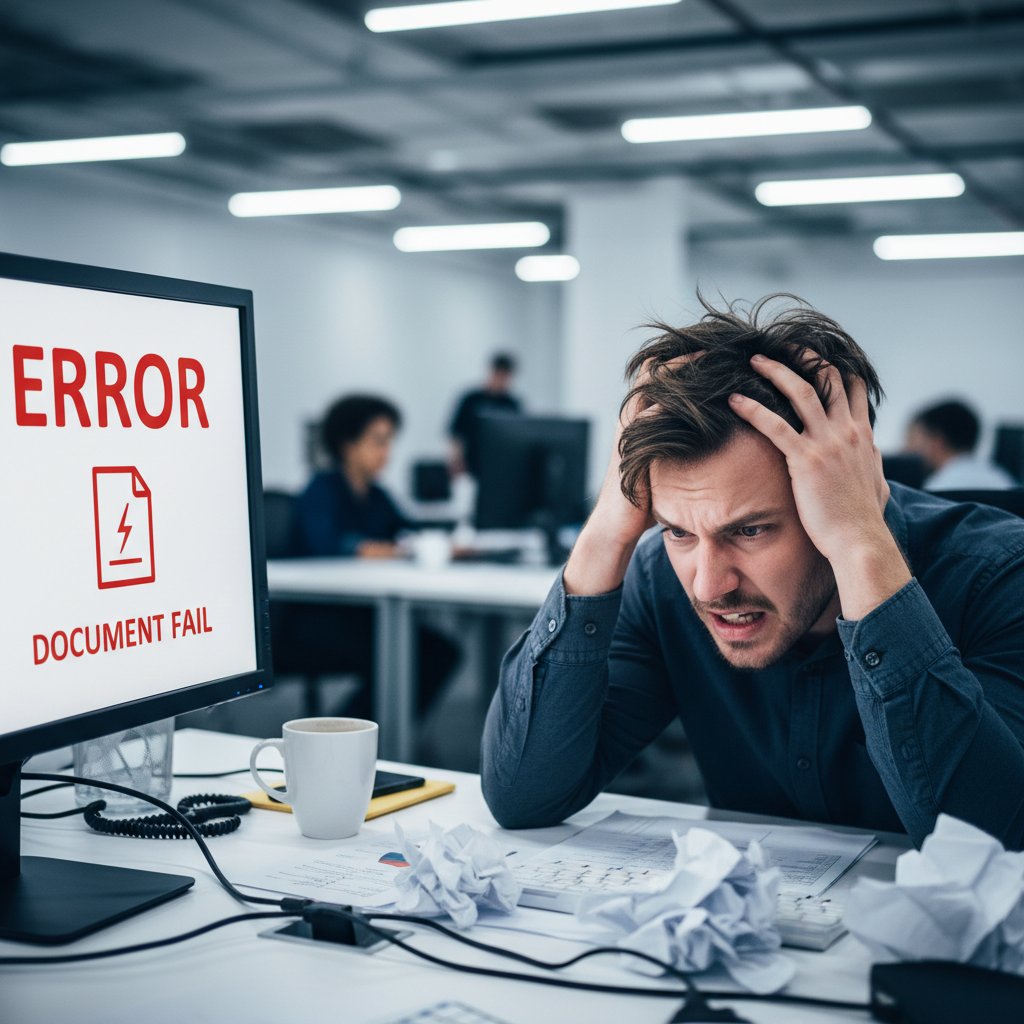
These high-profile failures serve as a reminder: the best tools can become traps if adopted blindly.
The overlooked cultural impact of documentation
Documentation isn’t just an administrative chore—it shapes culture, memory, and even power dynamics inside organizations.
“Documentation is the invisible architecture of organizations; it preserves knowledge, enforces accountability, and encodes values for generations.” — Extracted from CIO Applications, 2023
Beyond compliance and continuity, documents are how companies tell their stories—officially and unofficially. When organizations master document generation, they aren’t just streamlining processes; they’re actively shaping their identity and legacy.
Meet the machines: how modern document generators really work
The AI behind the curtain: NLP, ML, and you
Today’s leading document generators are powered by a potent mix of Natural Language Processing (NLP), Machine Learning (ML), and workflow automation. But what does that really mean for day-to-day work?
- Natural Language Processing (NLP): The branch of AI that enables machines to “understand” and generate human language. NLP algorithms analyze context, structure, and intent to produce coherent, context-specific documents.
- Machine Learning (ML): Through exposure to vast datasets, ML engines learn to recognize patterns—like detecting errors, suggesting phrasing, or predicting document needs.
- Workflow Automation: Rules-based engines trigger document creation, review, and distribution, often integrating with systems like CRM or ERP for seamless data flow.
| Term | Definition | Application in Document Generation |
|---|---|---|
| NLP | AI that reads, writes, and understands language | Drafting content, summarization |
| ML | Self-improving algorithms based on data | Error detection, compliance checks |
| Workflow automation | Automated rules for document tasks | Routing approvals, distribution |
Table 3: AI terminology decoded for document generation.
Source: Original analysis based on Fundamental Business Insights, 2023 and MetaSource, 2024.

According to market research, over 94% of organizations used cloud platforms for document management in 2023, doubling the corporate data stored in the cloud since 2015 (Source: Fundamental Business Insights, 2023).
Debunking AI myths: nuance, bias, and the human touch
The rise of AI-powered document tools has spawned plenty of myths—and not all of them are harmless.
- AI-generated content is not infallible; it can perpetuate biases present in training data.
- Human oversight is critical—AI tools excel at speed and consistency, but struggle with nuance, intent, and domain-specific context.
- The best document generators incorporate “human-in-the-loop” models, blending automation with real-time review for accuracy and compliance.
- Industry-specific solutions—such as those for healthcare and legal—require domain expertise to ensure outputs are both effective and ethical.
Ignoring these realities isn’t just naïve; it’s dangerous. As research from MetaSource shows, the most effective organizations are those that combine cutting-edge AI with thoughtful human governance.
Security and privacy: who owns your words?
As documents go digital, questions about data ownership, privacy, and access rights move to the forefront.
| Security Concern | Current Best Practice | Risk if Ignored |
|---|---|---|
| Data privacy | End-to-end encryption | Breaches, regulatory fines |
| Access control | Role-based permissions | Internal leaks |
| Data residency | Geo-fenced cloud storage | Legal non-compliance |
| Document provenance | Audit trails, watermarking | Disputed authorship, fraud |
Table 4: Security and privacy challenges in document generation today.
Source: Original analysis based on MetaSource, 2024, CIO Applications, 2023
Regulatory compliance, like GDPR and HIPAA, is no longer a “nice to have.” It’s mandatory. Tools like filecreator.ai build these requirements into their DNA, helping organizations stay ahead of legal risks without sacrificing agility.
Winners, losers, and disruptors: industries redefined by document automation
Surprising sectors leading the charge
You might expect law firms and banks to jump on the document automation train—but recent data reveals some surprises:
- Healthcare is seeing explosive growth in document management adoption, with an 11.3% CAGR, as patient data privacy and compliance become non-negotiable (Source: Fundamental Business Insights, 2023).
- Creative agencies are using automation to produce consistent, branded marketing materials at scale—freeing up teams to focus on strategy and ideation.
- Mid-sized manufacturers leverage document generators for compliance reporting, reducing administrative overhead and error rates.

Behind every headline is a story of disrupted workflows and new possibilities.
Case study: how a mid-sized business made the leap
Consider a regional accounting firm struggling with quarterly reporting bottlenecks. After adopting a cloud-based document generator, they reported a 70% reduction in preparation time and virtually eliminated manual errors.
“We underestimated how much time we spent fixing avoidable mistakes. Automated document generation gave us back those hours—and the peace of mind that everything was compliant.” — Chief Operations Officer, case study based on MetaSource, 2024

The gains weren’t just technical—they were cultural. Teams had more time to analyze, strategize, and grow the business.
What happens when automation goes wrong?
Automation isn’t a silver bullet. When document generation is handled carelessly, the fallout is immediate and costly.
- Overreliance on automation can lead to “garbage in, garbage out”—poor inputs multiply across entire organizations.
- Inadequate training results in staff bypassing systems, reintroducing manual errors and inconsistencies.
- Legacy integrations can fail spectacularly; mismatched data between CRM, ERP, and document tools leads to compliance gaps.
- Security misconfigurations can expose sensitive client data, triggering regulatory scrutiny and loss of trust.
- Automation without proper oversight risks propagating outdated or incorrect templates—making small mistakes into institutional crises.
Choosing your weapon: what really matters in a professional document generator
The feature arms race: must-haves vs. marketing fluff
Not all document generators are created equal. The difference between “game-changer” and “gimmick” comes down to the features that actually deliver value.
| Feature | True Essential | Marketing Fluff |
|---|---|---|
| AI-driven content generation | Yes | Only if customizable |
| Compliance automation | Yes | Not if manual check |
| Multi-format export | Yes | Only PDF? Fluff |
| Collaboration tools | Yes | Barebones chats |
| Template customization | Yes | Locked-down designs |
| Workflow integration (CRM/ERP) | Yes | Standalone only |
| “Analytics dashboards” | Sometimes | Vanity metrics |
Table 5: Feature analysis—what matters in document automation.
Source: Original analysis based on MetaSource, 2024, Fundamental Business Insights, 2023
Your best bet? Choose platforms with deep integration capabilities, robust compliance controls, and a proven track record—like filecreator.ai, which is recognized for its focus on quality, customization, and ease of adoption.
Red flags and hidden pitfalls to avoid
- Beware of “one-size-fits-all” solutions that can’t adapt to your industry’s compliance needs.
- Avoid closed ecosystems that make data migration a nightmare—lack of interoperability is a silent killer.
- Don’t underestimate training requirements; the most advanced tool is useless if your team won’t—or can’t—use it.
- Steer clear of vendors who won’t disclose their data privacy standards or fail to support regulatory compliance.
- Watch for hidden costs: look beyond licenses to consider implementation, integration, and support expenses.
Checklist: evaluating your next move
- Assess integration complexity: Does the tool connect seamlessly with your CRM, ERP, and other core systems?
- Validate compliance capabilities: Are GDPR, HIPAA, and other regulatory needs addressed natively?
- Review customization options: Can templates and workflows flex to your unique requirements?
- Check real-world support: Are customer reviews and case studies transparent and recent?
- Test user experience: Is onboarding intuitive, with minimal training required?
- Calculate total cost of ownership: Factor in hidden fees, support, and long-term scalability.
- Pilot before full rollout: Run a controlled test to validate claims and uncover issues early.
Unconventional applications: beyond the office
From indie filmmaking to climate science: unexpected uses
Document generation isn’t just for contracts and spreadsheets. Creative professionals are leveraging automation in bold ways:
- Indie filmmakers use document generators for lightning-fast script revisions and production schedules.
- Environmental scientists automate field report generation, ensuring data consistency and compliance with grant requirements.
- Non-profits craft multilingual outreach materials in hours, not weeks—breaking down traditional communication barriers.

The line between business and creativity blurs when automation liberates talent from the grind of formatting and proofreading.
How creative pros are bending the rules
- Documentary filmmakers use document generators to create grant proposals tailored to each funding agency—cutting a process that once took days down to minutes.
- Academics draft multi-format research summaries for diverse audiences, from policymakers to the public, using adaptive templates and dynamic content.
- Marketing agencies blend AI and human touch to rapidly iterate campaign assets, ensuring brand consistency without sacrificing originality.
- Startups automate the generation of investor pitch decks, customizing data visuals and narratives for each meeting.
- Freelance writers employ document automation to standardize deliverables, freeing themselves up for deeper creative work rather than repetitive layout tasks.
The ethics minefield: risks, rights, and responsibilities
When automation crosses the line
Automation’s dark side isn’t theoretical—it’s real, and it’s happening now. When document generation is used to obscure accountability, propagate biased content, or cut corners on compliance, the results are dangerous.
“Ethical document generation isn’t optional. When organizations misuse automation—intentionally or not—they risk legal exposure, reputational damage, and the erosion of trust.” — quote based on industry consensus and MetaSource, 2024
Accountability must remain at the core. If not, organizations could face not only regulatory penalties but also public backlash when automation is weaponized against transparency and fairness.
Ethical checklist for responsible adoption
- Conduct bias audits: Regularly review outputs for unintended bias or discrimination.
- Implement transparency protocols: Disclose when and how documents are machine-generated.
- Ensure human oversight: Keep skilled editors in the loop for sensitive, high-risk outputs.
- Protect sensitive data: Encrypt and control access to confidential information at every stage.
- Document decision paths: Maintain audit trails for every automated process, supporting accountability.
- Engage stakeholders: Include legal, compliance, and end-users in tool selection and policy-making.
- Stay current with regulations: Monitor and adapt to evolving data privacy and compliance standards.
The road ahead: will AI-powered documents make us obsolete—or unstoppable?
Expert predictions: the next five years
The document generation market exceeded $1.22 billion in 2023, surging at a 9.3% annual rate (Source: Fundamental Business Insights, 2023). Experts agree: the future of work is being written—literally—by machines and humans working in concert.

The consensus among leading analysts is that companies leveraging AI-powered document generation are not replacing humans—they’re amplifying them. The difference between “obsolete” and “unstoppable” is how wisely organizations embrace the shift.
How to future-proof your workflow (starting now)
- Audit your current document processes: Identify manual pain points, sources of error, and compliance risks.
- Deploy AI-powered tools with human oversight: Choose platforms that blend automation with expert review.
- Invest in training: Empower teams to adapt and get creative with new tools.
- Integrate, don’t isolate: Ensure document generators connect with your business systems and data sources.
- Commit to continuous improvement: Regularly reassess workflows and upgrade tools as needs evolve.
The last word: leading the charge with filecreator.ai and beyond
Professional document generation today isn’t just about eliminating paperwork or saving a few hours a week—it’s about radical transformation. Solutions like filecreator.ai are at the vanguard, delivering accuracy, compliance, and creativity in equal measure. But the real power lies in how you wield these tools: questioning legacy habits, demanding transparency, and investing in the human-machine partnership.

The organizations leading this revolution aren’t just chasing efficiency—they’re shaping the future of work. The only question left: will you be among them?
Sources
References cited in this article
- Fundamental Business Insights(fundamentalbusinessinsights.com)
- MetaSource 2024 Trends(metasource.com)
- CIO Applications(cioapplications.com)
- MarkWide Research(markwideresearch.com)
- B2BE Blog(b2be.com)
- Templafy(templafy.com)
- Gartner Competitive Landscape(gartner.com)
- Thomson Reuters Report 2024(thomsonreuters.com)
- ScienceDirect(sciencedirect.com)
- AmyGB Blog(amygb.ai)
- CKEditor Medical Documentation(ckeditor.com)
- Paycom Blog(paycom.com)
- I Done This(blog.idonethis.com)
- Qatalog Blog(qatalog.com)
- Templafy(templafy.com)
- Oneflow(oneflow.com)
- Pythonic AI – ACL 2024 Highlights(blog.pythonic.ai)
- Netguru AI Document Analysis(netguru.com)
- CyberSecOp 2024(cybersecop.com)
- Paul Weiss 2024(paulweiss.com)
- StarSoftware(starsoftware.co)
- Restaurant Dive(restaurantdive.com)
- Global Growth Insights(globalgrowthinsights.com)
- Fortune Business Insights(fortunebusinessinsights.com)
- PageLightPrime(pagelightprime.com)
- EcoPiers Solutions(ecopiersolutions.com)
- Forbes Tech Council(forbes.com)
- CIO.com(cio.com)
- Windward Studios(windwardstudios.com)
- Process.st(process.st)
Perfect Documents, Instantly
Filecreator.ai transforms the way you produce professional documents. Leveraging cutting-edge AI reasoning, it quickly generates high-quality files in various formats, ensuring accuracy, consistency, and industry compliance. Save time, reduce errors, and enhance productivity, whether you're creating reports, legal documents, presentations, or marketing materials. Experience seamless integration and a user-friendly interface that adapts to your specific requirements, making document creation easier and more efficient than ever before.
Get startedStart Creating Professional Documents Today
Join thousands of professionals who trust AI-powered document generation
Frequently Asked Questions
How much productivity do organizations lose due to document generation chaos?
According to a 2023 industry report, document generation chaos costs businesses up to 21% of their productivity annually, with hidden costs including time lost in manual edits, compliance missteps, version confusion, and data silos.
What are common examples of document chaos in organizations?
Common examples include outdated workflows, email chains, folders with confusing version names like '_FINAL_v5_REAL_FINAL_', missed deadlines, duplicated work, and compliance slip-ups resulting from legacy documentation practices.
What does modern professional document generation involve?
Modern professional document generation leverages AI, cloud platforms, and compliance-driven workflows to transform how documents are created across industries, from contracts to patient charts, moving beyond simple Word templates.
What are the specific high-impact hidden costs of legacy document methods?
High-impact costs include 9+ hours per week per team spent correcting documents through manual edits, severe compliance missteps that can result in fines, version confusion leading to wrong documents being sent, and data silos where different departments work from different versions.
Continue Reading
Explore more from Professional Document Generator

Document Generation API Solutions: Benefits and Pitfalls
Document generation API solutions can streamline workflows or create chaos. This article examines the real wins, common pitfalls, and how to implement them without vendor traps.

Why Document Generation Solutions Often Fail Enterprises
Document generation solutions often create chaos instead of efficiency. This article examines hidden pitfalls, compliance risks, and practical strategies that actually work.

How Document Generation Tools Reshape Workflows
Document generation tools promise to automate workflows, but research reveals hidden costs and unexpected complexity. This article examines what these tools actually deliver.

Document Generation Apps: Capabilities, Risks, and Business Impact
Document generation apps are reshaping how organizations create documents at scale. This article examines their capabilities, compliance risks, and the genuine productivity shifts they enable.

Document Generation Online in 2026: Myths, Risks, and Real Wins
Discover insights about document generation online

Professional Customized Documents: Control in the Modern Era
Creating professional customized documents requires balancing speed with accuracy and control. This article examines the shift from manual processes to modern workflows and the critical considerations for organizations.