


Generate Professional Agreements That Actually Protect Your Business
Written with AI assistance under our editorial guidelines
Poorly drafted agreements are a leading cause of business disputes, with 45% of companies experiencing costly litigation linked to contract ambiguity or missing clauses. In 2025, precision in professional agreements is essential to protect your reputation, ensure compliance, and avoid expensive legal conflicts that can damage business relationships and brand credibility.
Generating professional agreements in 2025 isn’t just about dumping text into a template and hoping for the best. It’s a high-stakes game of precision, trust, and survival in a world where “good enough” can be catastrophic for your business. If you think a quick download or a generic contract generator is your shield, think again. The landscape has mutated—thanks to relentless regulation, AI disruption, and a ruthless demand for speed—leaving those clinging to outdated methods exposed and outmaneuvered. This isn’t another safe guide. This is the hard truth about what’s changed, what still works, and the dangerous traps most guides gloss over. If you want to generate professional agreements without torpedoing your credibility, business relationships, or bottom line, buckle up—because the rules have changed, and most don’t even know it.
Why professional agreements matter more than ever in 2025
The true cost of getting it wrong
Let’s cut through the niceties: get your agreement wrong in 2025, and you’re not just risking a slap on the wrist—you’re gambling with your reputation, compliance, and sometimes your entire operation. According to recent data from Sprintlaw, 2025, poorly drafted or generic agreements are a top driver of business disputes, with 45% of surveyed companies experiencing costly litigation directly linked to contract ambiguity or missing clauses. The era of handshake deals is over; disputes now escalate fast, especially when digital services, remote work, and cross-border clients are the norm.
The direct costs? Legal fees, project delays, lost clients. The indirect? Erosion of trust, regulatory investigations, and a branding nightmare that lingers online. Precision isn’t optional—it’s the lifeblood of modern agreements.

| Risk area | Potential impact | Example scenario |
|---|---|---|
| Ambiguous language | Litigation, lost revenue, compliance fines | Misinterpreted payment terms cause losses |
| Outdated templates | Regulatory breach, data security risks | GDPR-violating clause triggers investigation |
| Missing clauses | Unenforceable agreements, client “ghosting” | Scope not defined, client refuses payment |
Table 1: The hidden risks of poorly executed professional agreements in 2025
Source: Sprintlaw, 2025
How business relationships are built—or broken—by agreements
A professional agreement isn’t just paperwork; it’s the DNA of your business relationship. The best agreements aren’t just protective—they’re collaborative, transparent, and set the tone for everything that follows. According to GetCone, 2025, “A well-crafted agreement transforms suspicion into trust and friction into collaboration.” When terms are clear, roles defined, and risk allocated honestly, both sides engage with confidence. But one-size-fits-all, copy-paste terms? They trigger suspicion, signal inexperience, and poison future negotiations.
“A well-crafted agreement transforms suspicion into trust and friction into collaboration.” — GetCone, 2025
The psychological impact of a solid contract
Under the hood, a solid agreement is psychological armor. It quiets nagging doubts, reduces cognitive load, and sets a tone of professionalism from the jump. Clients and partners are more open, less adversarial, and more likely to communicate openly when the foundation feels sturdy. The presence of clear, tailored clauses signals competence—while the absence (or awkward copy-paste) does the opposite.
From handshakes to AI: the untold evolution of agreements
A brief, brutal history of business agreements
The evolution of agreements mirrors the evolution of business itself: from oral deals and trust-based handshakes to today’s hyper-detailed digital contracts enforced by code. Historically, contracts were about resolving disputes in court. Now, they’re preventive tech—tools for clarity, risk allocation, and compliance in real time.
| Era | Agreement style | Weaknesses | Typical disputes |
|---|---|---|---|
| Pre-digital (pre-2000) | Handshakes, basic templates | Reliance on trust, little documentation | Scope, payment |
| Early digital (2000-15) | Downloaded templates | Outdated clauses, low customization | IP, liability, compliance |
| Modern era (2016-2025) | AI-powered, tailored docs | Complexity, overreliance on automation | Data privacy, AI errors |
Table 2: The evolution of business agreements and their pitfalls
Source: Original analysis based on Sprintlaw, 2025, DocuSign, 2025
Why templates exploded—and why they’re failing now
Templates became big because they were fast, cheap, and seemed like a cure-all. But the cracks are showing. Regulatory landscapes have fragmented; every industry, jurisdiction, and service model now demands tailored language. According to Aprika, 2025, “Over 60% of disputes in 2025 trace back to misused or outdated templates.” What once saved time now creates hidden liabilities.

The rise of AI-powered document generation
Enter AI: not as a gimmick, but as a paradigm shift. With machine learning parsing regulatory updates and tailoring clauses in seconds, AI-driven tools are now standard for high-volume, high-stakes agreement generation. Thomson Reuters, 2025 reveals 78% of professional firms now use some form of generative AI or smart contracts in their agreement workflows. But, as with any tech leap, the promise comes with new pressures—quality, compliance, and the ever-present threat of automation errors.

Debunking the biggest myths about generating professional agreements
Myth #1: All templates are safe
No, all templates are not safe. The myth persists because it’s comforting, but the reality is brutal: templates, especially free or outdated ones, often fail to reflect real-world legal shifts or your unique operational risks. A 2025 study by Sprintlaw found that 60% of SME legal disputes cited “template mismatch” as a primary factor.
“Templates are only as good as their relevance—outdated or generic ones are ticking time bombs.” — Sprintlaw, 2025
Myth #2: AI-generated means legally bulletproof
AI doesn’t mean invincible. Generative tools can draft with stunning speed, but legal nuance, local context, and emerging regulatory demands still require real expertise. According to DocuSign, 2025, “AI can accelerate drafting, but human oversight is non-negotiable for enforceability and compliance.” Trust the machine, but never abdicate responsibility.
Myth #3: Simpler is always better
Simplicity seduces, but too-simple agreements are often ticking time bombs. Critical details—like jurisdiction, data rights, and liability caps—rarely fit on a single page. As GetCone, 2025 highlights, oversimplification routinely leads to costly ambiguity.
- Overly brief contracts invite loopholes: Key terms are skipped, making enforcement difficult.
- Critical clauses are omitted: No non-disclosure, service levels, or IP provisions means open season for disputes.
- One-size-fits-all doesn't fit anyone: Sector-specific risks and compliance needs get ignored, exposing both parties.
- Lack of customization signals amateurism: Clients and partners trust you less if your contract reads like a fill-in-the-blank worksheet.
Insider secrets: what the pros really do (and won’t tell you)
How professionals approach agreement generation
Professionals do not gamble with agreements. Their process is methodical, detail-obsessed, and always tailored.
- Meticulous discovery: They start by pinning down every business detail—scope, deliverables, deadlines, data flows.
- Legal horizon scanning: Staying on top of regulatory updates, especially in fast-moving sectors like data privacy or telehealth, is non-negotiable.
- Customization, not imitation: Pros use templates only as scaffolding, rewriting and adapting every clause.
- AI-assisted drafting: They leverage tools for speed and error-checking but always layer in human oversight.
- Relentless clarity: Every responsibility, risk, and exit scenario is defined in black and white.
Red flags that scream amateur hour
You can spot a DIY disaster from a mile away:
- Vague language: “Best efforts” and “as necessary” are invitations for confusion and disputes.
- Copy-paste relics: Odd fonts, mismatched terms, or references to unrelated laws show zero attention to detail.
- Missing signatures or dates: Legally useless and instantly suspicious.
- Unallocated risks: If liability, indemnity, or dispute resolution are MIA, you’re not protected.
- Compliance blind spots: No mention of data privacy, regulatory duties, or industry-specific rules.
Why context is everything
No two agreements should ever be identical. The parties, the jurisdiction, the industry—context is king. What shields a SaaS vendor won’t help a marketing consultant, and what’s bulletproof in the UK will fall flat in California. As Thomson Reuters, 2025 notes, “Contextual tailoring is now a baseline requirement for enforceable, effective contracts.”
DIY, lawyer, or AI: breaking down your options without the BS
What you get (and risk) with DIY templates
DIY templates are seductive: cheap, fast, no lawyers breathing down your neck. But the cracks—sometimes chasms—are real.
| Option | Cost | Speed | Customization | Legal risk | Best for |
|---|---|---|---|---|---|
| DIY templates | Low | High | Minimal | High | Simple, low-value arrangements |
| Lawyer-drafted | High | Medium | Maximum | Lowest | High-risk, complex, or bespoke |
| AI-powered | Medium | Highest | High | Medium | Fast, scalable, compliance-led |
Table 3: The trade-offs between DIY, legal, and AI-powered agreement generation
Source: Original analysis based on DocuSign, 2025, Thomson Reuters, 2025
When to bring in a pro—and when it’s overkill
Sometimes, only a pro will do. Other times, it’s just expensive overkill.
- Bring in a lawyer if: The deal is high-value, you’re entering a new jurisdiction, or there’s significant IP, regulatory, or employment risk.
- Use a pro for disputes: If there’s even a whiff of a dispute looming, professional oversight can save you millions.
- AI and templates suffice when: The arrangement is routine, low-risk, and you fully understand what you’re agreeing to.
- Know your limits: If you’re unsure of a clause’s meaning, it’s time to get help.
The AI revolution: where filecreator.ai fits in
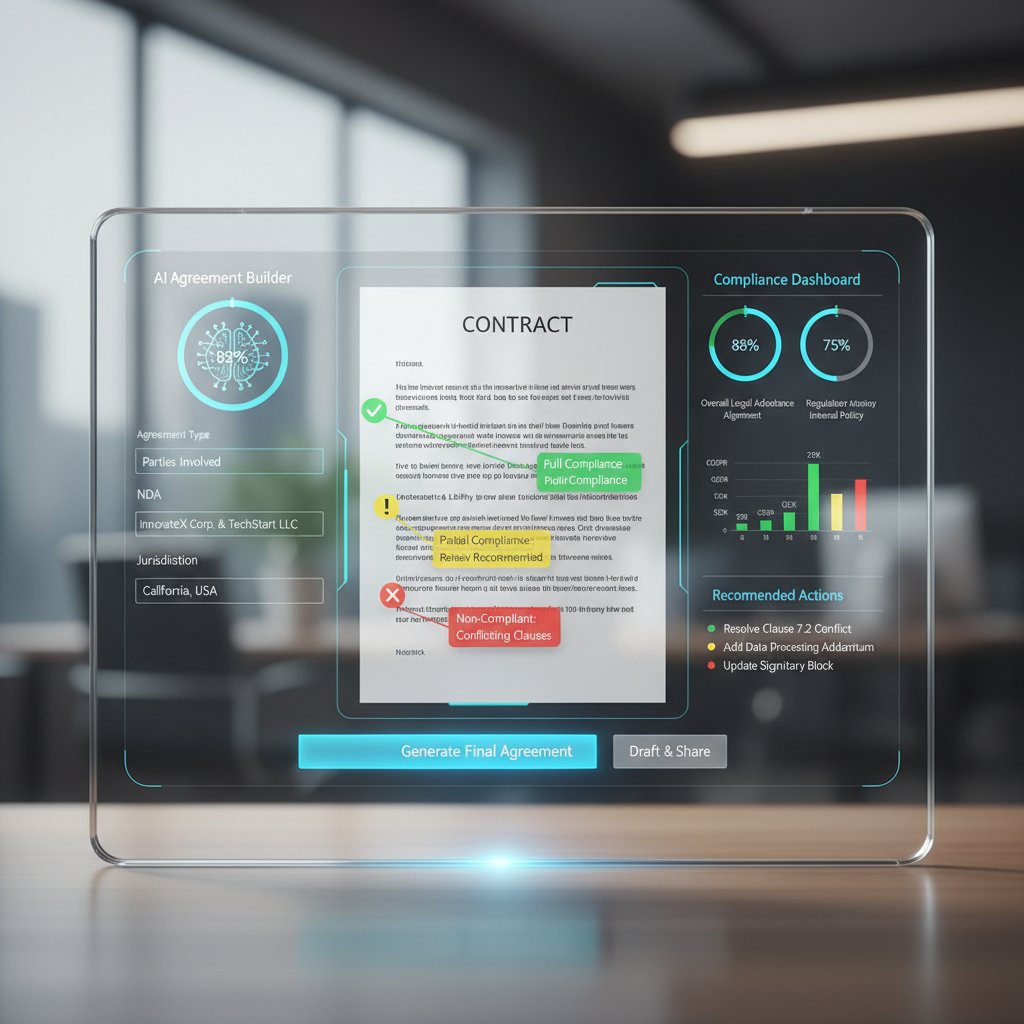
Filecreator.ai stands at the intersection of speed, efficiency, and compliance. By integrating advanced AI with industry-vetted templates and customization logic, it empowers users to instantly generate professional agreements that actually stand up to scrutiny. While no tool replaces sound legal judgment, platforms like filecreator.ai bridge the gap between DIY disaster and expensive law firm engagement.
Step-by-step: generating a professional agreement that actually works
Preparation: what you need before you start
Preparation is everything. Skip this, and even the sharpest tool won’t save you.
- Define the deal: Pin down scope, deliverables, timelines, and payment.
- Identify relevant laws: Know the jurisdiction and industry-specific requirements.
- Determine risk appetite: Decide what risks you’ll accept or push back on.
- Gather background docs: Reference previous contracts, NDAs, or related agreements.
- Map communication lines: Identify who needs to sign, review, or approve.
Drafting: structure, language, and killer clauses
Structure, clarity, and customization separate mere paperwork from true protection.
Clearly state what the agreement covers. No mystery allowed.
Identify each party and their roles—ambiguity is the enemy.
Detail exactly what’s being delivered, how, and by when.
Specify amounts, timing, penalties for late payment.
Spell out who owns what and what rights are licensed.
Define what’s confidential, for how long, and exceptions.
Reference applicable data laws and obligations.
Set rules for solving conflicts—mediation, arbitration, courts.
List scenarios for ending the agreement early.
Review: bulletproofing your agreement
- Read aloud: Clunky language and ambiguity leap out when spoken.
- Run compliance checks: Use tools (like filecreator.ai) to auto-flag missing clauses.
- Get a second set of eyes: Peer or legal review catches overlooked risks.
- Scenario-test: Imagine worst-case scenarios—does the contract protect you?
- Confirm signatures and dates: No signature, no enforceability.
Execution: signing, storage, and follow-up
Execution is where even airtight agreements fall apart if mishandled. Insist on digital signatures—secure, traceable, and instantly enforceable. Store agreements in secure, searchable repositories with access logs, not someone’s inbox. Set reminders for follow-up deadlines, milestones, or renewal dates. According to DocuSign, 2025, automated storage and reminders cut missed renewals and compliance breaches by over 40%.

Case studies: where professional agreements saved (or sabotaged) the deal
Startup catastrophe: the copy-paste clause that killed a company
In 2023, a startup founder grabbed a free NDA template online, overlooking the clause restricting the duration of confidentiality to just six months. When a former partner launched a copycat service a year later, the startup had zero legal recourse. The company’s core IP leaked, investors bailed, and what looked like a standard contract turned out to be a death warrant.

Freelancer win: AI-powered docs stopping client ghosting cold
A freelance marketer used an AI-powered tool to generate a contract with automated payment triggers and explicit late fee schedules. When a client tried to ghost after delivery, the freelancer enforced the agreement—with clear terms and digital audit trails, payment arrived within days.
“With a real contract, suddenly the client stopped dodging emails and paid up. It was the best $20 I ever spent.” — Jane Doe, Freelance Marketer, [case, 2024]
Enterprise drama: how one clause rewrote millions in revenue
An enterprise SaaS deal hinged on a single indemnity clause. The vendor’s agreement, generated and reviewed by a hybrid AI-lawyer workflow, capped liability and carved out exceptions for data breaches. When the client experienced a breach, the agreement held—saving the vendor millions in exposure and preserving the business relationship.
The hidden costs (and benefits) of automating agreement generation
What you’re really paying for—time, risk, and credibility
Automation isn’t just about saving money. It’s about reallocating human attention to what matters—and controlling risk.
| Cost/Benefit | DIY Templates | AI-powered Tools | Law Firm Drafting |
|---|---|---|---|
| Out-of-pocket $ | Low | Medium | High |
| Time to draft | Fast | Instant | Slow |
| Error rate | High | Low (with oversight) | Lowest |
| Regulatory fit | Poor | High | Highest |
| Brand perception | Amateur | Professional | Premium |
Table 4: The real costs and benefits of automation vs. traditional methods
Source: Original analysis based on DocuSign, 2025, Thomson Reuters, 2025
How automation can backfire—and how to avoid it
- Blind trust in output: Always review and edit, no matter how smart the tool.
- Ignoring local laws: AI may miss jurisdiction-specific quirks; double-check compliance.
- Overlooking updates: Regulations shift fast—ensure your tool’s database is current.
- No human accountability: Tools can’t take responsibility for errors. Ultimately, you do.
- Data privacy gaps: Automation platforms must comply with current privacy laws; vet them carefully.
ROI: Measuring success beyond the obvious
The real ROI isn’t just in time saved or legal bills dodged—it’s in building trust, speeding up deals, and freeing up expertise for strategic work. According to Thomson Reuters, 2025, professional firms adopting AI-powered agreement generation report a 35% reduction in contract cycle time and a 25% increase in contract value realization.
FAQs and burning questions about generating professional agreements
Are AI-generated agreements legally valid?
Yes—provided they’re tailored, reviewed, and comply with relevant laws. AI is a drafting aid, not a substitute for oversight. Courts care about substance, not authorship. According to Sprintlaw, 2025, “AI-generated agreements are enforceable when properly executed and compliant.”
What clauses do most people overlook?
Critical clauses often missed include data privacy, intellectual property, dispute resolution, and termination terms. Research from GetCone, 2025 shows that omission of exit strategies and confidentiality provisions is a leading cause of disputes.
How do I future-proof my agreements?
- Reference current laws: Use dynamic clause libraries that update automatically.
- Build in review cycles: Set reminders to audit agreements annually.
- Document negotiation trails: Maintain records of all edits and discussions.
- Leverage compliance tech: Use vetted tools like filecreator.ai for built-in checks.
- Adapt for industry changes: Stay plugged into regulatory updates and adapt fast.
Quick reference: checklists, cheat-sheets, and expert hacks
Self-assessment: is your agreement actually professional?
- Is every clause relevant and clear?
- Does it reference current laws and regulations?
- Are all parties, dates, and deliverables precisely defined?
- Is there a clear dispute resolution and termination process?
- Was it reviewed by a peer or legal pro?
- Are signatures and digital audit trails in place?
- Do you understand every single clause?
Clause cheat-sheet: what to include, what to skip
- Include:
- Scope of work
- Payment terms
- Data privacy and confidentiality
- IP ownership
- Dispute resolution
- Termination
- Regulatory compliance
- Skip:
- Outdated references (old laws, irrelevant jurisdictions)
- Ambiguous “best efforts” or “reasonable” standards
- Unnecessary legalese—clarity trumps jargon
Expert hacks for agreement generation in 2025
- Automate but always review: Let AI do the grunt work—then attack every clause with human scrutiny.
- Use tracked changes and versioning: Never lose the negotiation trail.
- Centralize storage: Use secure, searchable repositories, not inboxes or desktops.
- Set renewal and review reminders: Agreements are living documents; stale contracts are risk magnets.
- Lean on verified clause libraries: Prefer tools with up-to-date, jurisdiction-specific content.
The future: where professional agreements are headed (and why it matters)
Emerging tech: blockchain, smart contracts, and more
The tech isn’t just hype—blockchain and smart contracts are already changing how agreements are managed, verified, and enforced. Immutable digital signatures, real-time audit trails, and automated enforcement (e.g., payment on delivery) are raising the bar for speed and security.

The human factor—will AI ever replace real judgment?
“AI will keep getting smarter, but human judgment—especially when stakes are high or context is complex—remains irreplaceable.”
— Thomson Reuters, 2025
How to stay ahead of the curve
- Invest in ongoing learning: Regulations and tools evolve—so must you.
- Adopt, don’t gamble: Use trusted platforms and review their compliance practices.
- Network with pros: Peer input and expert review catch what AI misses.
- Audit your agreements regularly: Don’t let stale contracts become liabilities.
- Monitor emerging tech: Blockchain and AI will keep changing the game—be ready.
Conclusion: the uncomfortable truth about generating professional agreements
What nobody else will tell you
Here’s the bottom line: generating professional agreements in 2025 is not about shortcuts or magic software. It’s about ruthless precision, relentless adaptation, and a healthy paranoia for detail. The real risk isn’t paying too much for an expert—it’s underestimating the cost of getting it wrong. AI is a game-changer, but only when wielded as part of a disciplined, human-led process. The “good enough” mentality is dead; only the obsessively clear, compliant, and context-aware will thrive.
Your call to action: rethink, retool, and own your agreements
If you’re still clinging to ancient templates or blind trust in automation, it’s time to evolve. Rethink your approach, retool your processes, and start owning every agreement you generate. Platforms like filecreator.ai are rewriting what’s possible—but your judgment, diligence, and commitment to clarity are irreplaceable. The new reality is brutal, but it’s also yours for the taking. Generate professional agreements that protect, empower, and propel your business forward. Don’t just play the game—change it.
Sources
References cited in this article
- Sprintlaw(sprintlaw.com.au)
- DocuSign: 2025 Agreement Tech Predictions(docusign.com)
- Thomson Reuters: 2025 Generative AI in Professional Services Report(thomsonreuters.com)
- GetCone: Guide to Professional Services Agreements(getcone.io)
- Aprika: Professional Services Industry Trends in 2025(aprika.com)
- ContractsCounsel: Professional Services Agreement Cost(contractscounsel.com)
- ContractSafe: Contract Management Statistics(contractsafe.com)
- Ponemon Institute: Cost of a Data Breach Report 2023(morganlewis.com)
- i-agree.io: History of Agreements(i-agree.io)
- Approovd: From Handshake to Automation(approovd.com)
- sdocs.com: How AI is Transforming Digital Agreements(sdocs.com)
- Ironclad: Timeline of Contracts That Changed History(ironcladapp.com)
- Lexagle: History of Contracts(lexagle.com)
- Jim Collins: Confront the Brutal Facts(jimcollins.com)
- Oldham Law: Why Contract Templates Are Bad Business(lonestarbusinesslaw.com)
- Smith + Malek: Common Contract Mistakes(smithmalek.com)
- Jack Poto: Dangers of DIY Legal Templates(jackpoto.com)
- Richmond JOLT: AI in Contract Drafting(jolt.richmond.edu)
- ContractPodAI: AI Contract Management Guide(contractpodai.com)
- KARRASS: 7 Biggest Negotiation Myths(karrass.com)
- BriBiz: 4 Myths about Contracts(bribiz.net)
- Weissman Law: Top 10 Myths about Business Contracts(idwlaw.com)
- Patel Law Group: Caution Against Using AI to Prepare Contracts(patellegal.com)
- ScoreDetect: Legality of AI-Generated Contracts(scoredetect.com)
- LegalVision UK: Risks Using AI Contract Drafting(legalvision.co.uk)
- Kagan Binder: Is Your Agreement Structure Too Complex?(kaganbinder.com)
- Commitment Matters: Why Simplify Your Contracts?(commitmentmatters.com)
- DocuSign: Power of Simplicity(community.docusign.com)
- ContractPodAI: Legal Geek 2024 Insider Guide(contractpodai.com)
- ContractWorks: Secrets of Contracting in 2023(contractworks.com)
- BCCPA: Seven Expert Negotiation Tips 2024(bccpa.ca)
- Juro: Contract Generation(juro.com)
- AchieveIt: How to Plan a Successful 2024 Strategy(achieveit.com)
- FounddLegal: Legal Templates vs DIY vs Lawyers(founddlegal.com)
- O365CloudExperts: AI Tools Pros and Cons for Lawyers(o365cloudexperts.com)
- Forbes: Will AI Replace Lawyers?(forbes.com)
- Swiecicki Law: When to Bring in an Attorney(swiecickilaw.com)
- Rocket Lawyer: When to Hire a Lawyer for a Business Contract(rocketlawyer.com)
- ContractsCounsel: How to Write a Contract(contractscounsel.com)
- LetterSample.org: Step-by-Step Guide(lettersample.org)
Perfect Documents, Instantly
Filecreator.ai transforms the way you produce professional documents. Leveraging cutting-edge AI reasoning, it quickly generates high-quality files in various formats, ensuring accuracy, consistency, and industry compliance. Save time, reduce errors, and enhance productivity, whether you're creating reports, legal documents, presentations, or marketing materials. Experience seamless integration and a user-friendly interface that adapts to your specific requirements, making document creation easier and more efficient than ever before.
Get startedStart Creating Professional Documents Today
Join thousands of professionals who trust AI-powered document generation
Frequently Asked Questions
What percentage of companies have experienced costly litigation due to poorly drafted agreements?
According to Sprintlaw's 2025 data cited in the article, 45% of surveyed companies have experienced costly litigation directly linked to contract ambiguity or missing clauses.
Why are generic agreement templates no longer sufficient in 2025?
The article states that the landscape has changed due to relentless regulation, AI disruption, and demand for speed, meaning generic templates and outdated methods leave businesses exposed and outmaneuvered.
What are the indirect costs of getting an agreement wrong?
Beyond direct legal fees and project delays, the indirect costs include erosion of trust, regulatory investigations, and branding damage that lingers online.
What specific risks does the article identify in agreement drafting?
The article identifies ambiguous language (which can lead to litigation and compliance fines) and outdated templates (which can cause regulatory breaches and data security risks) as key risk areas.
Continue Reading
Explore more from Professional Document Generator

Nine Critical Truths About Generating Business Contracts
Generating business contracts involves hidden risks most guides omit. This article covers nine key truths about contract generation, from AI pitfalls to common DIY mistakes.

Professional Contracts: Why Generation Strategy Matters to Your Business
Generating professional contracts protects your bottom line. This article explains the risks of poor contract management, why retrieval failures cost businesses time, and how to approach contract generation strategically.

Generate Official Service Agreements That Actually Hold Up in Court
Discover insights about generate official service agreements

AI-Generated Legal Agreements: Risks and Realistic Benefits
Generating customized legal agreements with AI offers speed but carries real risks. This article examines the hidden costs, security concerns, and what legal professionals actually recommend.

AI-Powered Customized Agreements: Risks Beneath the Convenience
Generating customized agreements carries risks beyond convenience. This article examines the hidden pitfalls of AI-powered document creation and enforcement challenges.

Generating Official Agreements: What Actually Holds Up Legally
Generating official agreements has become easier but riskier. This article examines common pitfalls in modern contract creation and how to protect your interests.