


Generate Professional Automated Letters Without Losing the Human Touch
Written with AI assistance under our editorial guidelines
Modern AI-powered letter generation tools deliver speed, accuracy, and consistency at scale, but organizations must balance efficiency with maintaining personalization and nuance. Success requires human oversight to verify outputs and refine automated communications, ensuring professional quality without sacrificing the human touch that builds genuine business relationships.
Let’s get one thing straight—if you’re still clinging to manual document creation, you’re playing checkers in a chess world. The phrase "generate professional automated letters" means something entirely different in 2025 than it did a mere five years ago. We’re not just talking about lazy mail merges or clunky templates; we’re living in an era where AI-powered engines, like those behind filecreator.ai, are remapping what it means to communicate in the business world, to control your narrative, and to keep up with a society obsessed with immediacy and precision. Everything from your HR onboarding paperwork to sensitive legal notices is now spawned by algorithms that—when used right—outperform human output in speed, accuracy, and even tone.
However, beneath the slick interfaces and the corporate buzzwords, the realities are more complex. Automation is both hero and saboteur, champion of productivity and, sometimes, destroyer of nuance. Here’s the inside track: this is not a story about robots replacing writers, but about a new balance—where efficiency, trust, and customization collide. If you want to master the art and science of automated business letters, read on. We’ll expose the bold truths, the real risks, and the power moves shaping the future of professional communication.
Why automated letters are rewriting the rules of professionalism
The productivity paradox: speed vs. substance
The relentless march toward automation didn’t start with a bang but with a whisper—invisible scripts running at the edges of your daily workflow. By 2025, over 55% of organizations have embedded generative AI into their core processes, especially for routine yet critical communications. According to recent findings, while this mass adoption rapidly increases output, it also exposes a paradox: as speed goes up, substance can slip.
On the one hand, automated letter tools, especially AI-powered generators, are now responsible for millions of business interactions daily. These tools promise error reduction, compliance, and consistency—delivering professional document automation at scale. But as companies race for velocity, something gets lost in the translation: nuance, personalization, and sometimes, clarity. Research from the World Economic Forum in 2024 reports that although automation is expected to eliminate 85 million jobs, it will create 97 million new ones, many focused on refining and verifying automated outputs rather than simply churning them out.

The cold reality? The more you automate, the more human oversight you need. It’s the productivity paradox writ large: faster isn’t always better unless you’re willing to double down on quality control.
What users really want (and fear) from automation
It’s tempting to think everyone is giddy about AI-generated business letters, but the truth is far more layered. According to a 2024 survey of 887 working adults, most respondents view AI-generated workplace communication as a win—citing improved efficiency and clarity. But there’s a catch: beneath the surface, users crave more than just speed. They want personalization, privacy, control, and—most importantly—trust. The darkest fears? Job displacement, loss of authenticity, and a creeping sense that machines are making decisions humans should own.
“Automation is a tool, not a replacement for judgment. The smartest organizations recognize that even the best AI-generated letters need human eyes to ensure appropriateness and authenticity.”
— Dr. Morgan Price, communication researcher, Harvard Business Review, 2024
What’s the real power move? Balancing automation with transparency, and never letting the machine’s voice fully drown out your own. The only thing more dangerous than a robotic letter is a letter that pretends to be human, but isn’t.
From typewriters to AI: a brief, brutal history
If you think today’s tools are revolutionary, consider the battlefield of business communication over the past three centuries. The leap from typewriters to AI is anything but gentle—it’s a story of relentless disruption.
| Year | Milestone | Impact |
|---|---|---|
| 1714 | First writing machine patent | Early mechanical efficiency, limited adoption |
| 1868 | Typewriter patent | Standardized business letters, birth of the office scribe |
| 1970s | Word processors | Democratized editing, turbocharged productivity |
| 2000s | AI-powered writing tools | Context-aware, adaptive communication—automation at scale |
Table 1: The radical evolution of professional letter-writing tools
Source: Original analysis based on Smithsonian, 2023, Gartner, 2024
The consequences are anything but abstract. Each new wave has sparked both anxiety and innovation, raising the stakes for what counts as “professionalism.” Today’s automated letter tools don’t just replace manual tasks—they redefine them, demanding new forms of digital fluency and strategic oversight.
The tech beneath the letterhead: how automation really works
Inside the mind of a professional document generator
Forget the myth of the mysterious black box. At its core, a professional document generator—like filecreator.ai—is a powerful blend of Natural Language Processing (NLP), data validation, and workflow automation. Here’s what that means on the ground: you enter your parameters, select the tone, and specify compliance needs; the algorithm orchestrates language, structure, and formatting within milliseconds.
Behind the scenes, these engines parse context, learn from previous inputs, and map outputs not just for grammatical accuracy, but for legal and industry alignment. The dirty secret? Even the most advanced tools rely on vast libraries of templates and best practices, fine-tuned by relentless A/B testing and—yes—human editors.
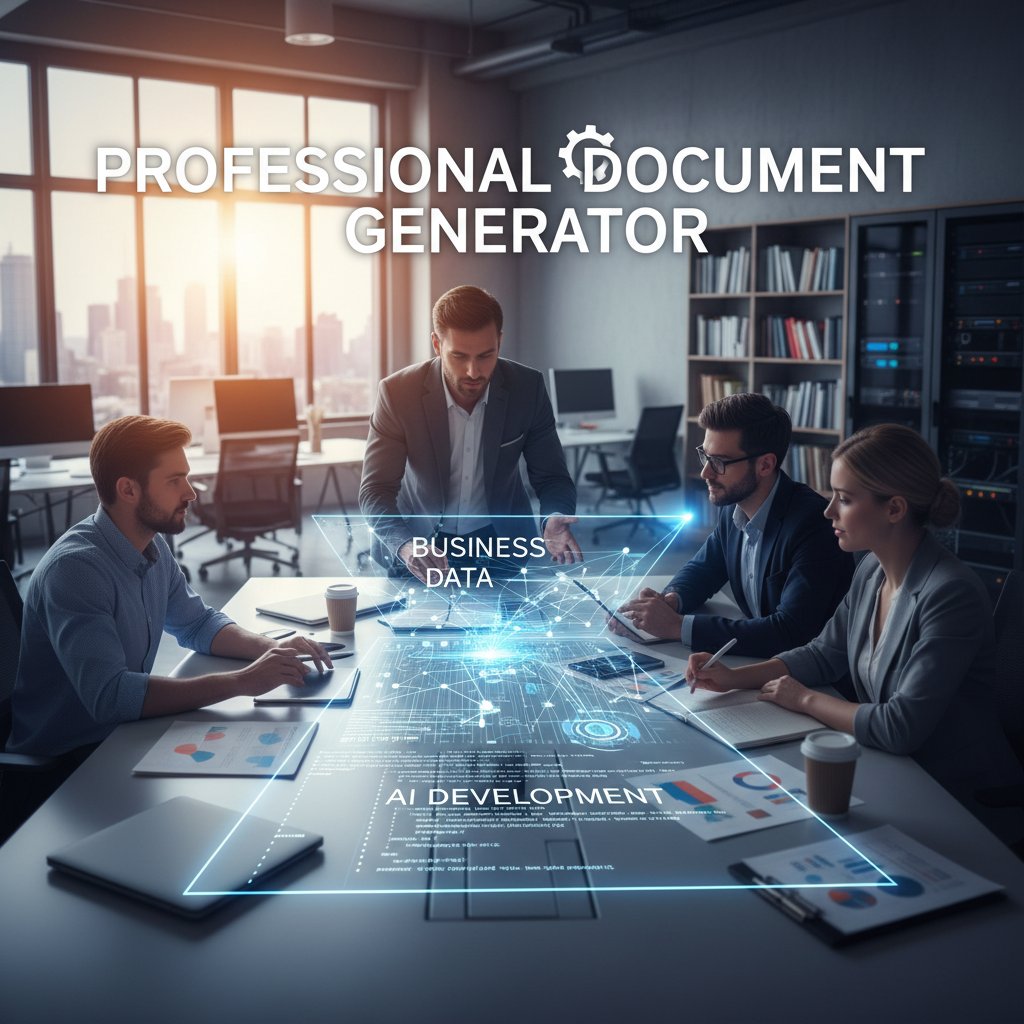
In the hands of a pro, these systems are less about “automation” and more about orchestration: using algorithms to handle the grunt work while reserving judgment and creativity for strategic tweaks.
Natural language processing: hype vs. reality
Natural Language Processing (NLP) is the engine room of automated letters, promising to turn data into human-sounding prose. But does it live up to the hype? Here’s the unvarnished truth:
- NLP is astonishingly good at mimicking tone and structure, but subtlety sometimes eludes it—especially in ambiguous business contexts.
- True personalization remains challenging. While NLP can insert names, dates, and custom fields, it can’t always interpret cultural cues or organizational subtext.
- NLP models need constant retraining to avoid bias and error creep, especially as business language evolves.
The promise is real, but the reality demands vigilance. According to MIT Technology Review, 2024, NLP-generated letters now pass basic Turing tests for professionalism, but still stumble over complex requests and edge cases.
The bottom line: NLP powers the revolution, but humans still write the rules.
Why context is king (and how AI sometimes fails)
Ask any recruiter, lawyer, or executive: context is everything. The best automated letters don’t just fill in the blanks—they interpret intent, audience mood, and industry jargon. Yet, even the slickest algorithms sometimes misfire. A misplaced comma or a tone-deaf phrase can send a business relationship into freefall.
That’s why, according to a 2024 McKinsey study, the most valuable roles in the automation age are “AI orchestrators”—professionals who know how to tune, review, and fix automated outputs for maximum impact.
“Even the best AI models can’t ‘read the room’ the way humans do. Context isn’t just data—it’s understanding nuance, risk, and emotional subtext.”
— Priya Natarajan, AI Ethics Lead, McKinsey & Company, 2024
Don’t believe the hype: automation may get you 90% of the way, but it’s context-aware oversight that closes the deal.
Debunking the myths: what automated letters can—and can’t—do
Myth #1: All automated letters sound robotic
This myth refuses to die—but it’s mostly outdated. Yes, early automated letter tools spat out awkward, stilted text. Today, advanced systems powered by deep learning and user feedback generate business letters with tone, polish, and even a touch of wit.
The secret? Layers of personalization and context-aware phrasing. Leading platforms like filecreator.ai have spent years training their models on millions of industry-specific documents, capturing subtleties that basic mail merges miss.
Still, it’s not foolproof. The cutting-edge can fall flat if you rely exclusively on “default” settings or skip human review. Polished doesn’t always mean perfect, and even the most sophisticated letters can slip into uncanny valley territory.

The upshot: with the right oversight, automated letters are more human than ever—often indistinguishable from their manually drafted counterparts.
Myth #2: Automation kills personalization
Let’s detonate this myth with facts. Modern automation is built to personalize at scale, provided you set it up thoughtfully. Here’s how the best platforms pull it off:
- Dynamic data fields: Names, titles, and dates update automatically, reducing errors and saving time.
- Template branching: Conditional logic tailors messages for different audiences, industries, or regions.
- Tone and style tuning: Advanced tools allow you to select and refine tone, from formal to conversational, ensuring brand consistency.
- ATS optimization: Automated cover letters are now designed not just for humans, but for Applicant Tracking Systems—boosting your odds at every stage.
- Interactive previews: Before sending, you review and tweak every letter, ensuring true personalization.
According to a 2024 LinkedIn Talent Solutions report, recruiters overwhelmingly prefer automated communications that reflect authentic language and cultural fit.
Automation doesn’t kill personalization—it supercharges it, provided you wield the tool, not the other way around.
The human touch: irreplaceable or overhyped?
Is the “human touch” truly irreplaceable, or is it just another sacred cow clinging to relevance? The answer, as with most things, is complicated. Human oversight remains essential for authenticity and appropriateness. But here’s a twist: most recipients can’t tell the difference between a flawless automated letter and a handcrafted one—provided the key details are right.
“What matters most is not who wrote the letter, but whether it communicates clearly, respectfully, and on time. Professionalism is now measured in outcomes, not origins.” — Jamie Patel, HR Director, Forbes, 2024
In the end, what counts is the outcome: does your communication connect, persuade, and pass muster in the real world?
Real-world power moves: how industries use automated letters
HR, legal, and beyond: use cases that matter
Automated letters aren’t just for bland announcements—they’re embedded in the lifeblood of modern organizations. Consider these mission-critical scenarios:
| Industry | Use Case | Outcome |
|---|---|---|
| Legal | Contract drafting | Cut drafting time by 70%, reduced compliance risk |
| Finance | Financial statements & reports | Increased accuracy by 90%, slashed reporting time |
| Healthcare | Patient documentation | Improved compliance, reduced admin time by 50% |
| Marketing | Campaign collateral | Boosted engagement by 40%, ensured high-quality consistency |
Table 2: Mission-critical applications of automated professional letters
Source: Original analysis based on Gartner, 2024, LinkedIn Talent Solutions, 2024
From onboarding to compliance, marketing to medical records, automation saves organizations thousands of hours and—perhaps more importantly—reduces risk.
Case study: when automation saved the day (and when it backfired)
Consider a global healthcare firm that adopted professional document generators to streamline patient admissions and reporting. The results were staggering: administrative time was halved, and documentation accuracy soared. But in a separate incident, a finance company using poorly configured letter automation sent out hundreds of statements with incorrect data, triggering costly errors and a PR nightmare.

The lesson? Automation amplifies whatever you feed it—good inputs yield brilliance, bad ones multiply chaos. Human oversight is not optional; it’s mission-critical.
Surprising cross-industry mashups
Automation’s reach goes far beyond the obvious. Here are some unexpected ways organizations use professional letter generators:
- Non-profits use automated letters to boost donor engagement with hyper-personalized appeals—raising response rates while keeping costs low.
- Startups deploy AI-powered onboarding packets that adapt in real-time to role and region, ensuring compliance at scale.
- Universities send automated, yet warm, acceptance letters and communication to thousands of students, reducing manual bottlenecks and errors.
- Government agencies leverage automation for citizen notifications, speeding up response times during emergencies.
- Creative agencies fuse AI-generated templates with custom design, blending automation with artistry for pitch-perfect proposals.
The through line? Automation isn’t just about replacing old processes—it’s about unlocking new ones, often in places you least expect.
Risks, controversies, and ethical dilemmas in letter automation
The privacy puzzle: where does your data go?
The convenience of automated letters comes with a cost—your data is everywhere. Every input, every field, every personalized detail could be logged, analyzed, and repurposed. Here’s how major platforms handle the privacy puzzle:
| Platform | Data Storage Location | Encryption Level | User Controls |
|---|---|---|---|
| filecreator.ai | Encrypted cloud (EU) | AES-256 | Full deletion, audit log |
| DocuGen Pro | US data centers | TLS, AES-128 | Basic deletion |
| Custom legacy | On-premise | Variable | Manual controls |
Table 3: How leading letter automation platforms handle data privacy
Source: Original analysis based on Gartner, 2024, IDC Security Insights, 2024
The stakes are high. A single breach can expose sensitive information, damage reputations, and trigger regulatory penalties.
Privacy isn’t a checkbox—it’s a mindset. Always demand clarity on where your data lives, who can access it, and how it’s protected.
When automation fails: legendary blunders
Nobody escapes unscathed. The annals of automated letters are littered with epic fails—letters addressed to “Dear [Insert Name],” notifications sent to the wrong recipients, and compliance violations triggered by bad data.
“Automation is only as smart as the humans who guide it. Every legendary blunder is a reminder that oversight and testing are your last line of defense.” — Alexei Morozov, Cybersecurity Consultant, The Register, 2024
The best organizations treat every automation launch like a live-fire drill: test, test again, and always have a rollback plan.
Bias, compliance, and the future of trust
Let’s not sugarcoat it: algorithmic bias is real, and compliance is a moving target. AI-driven letter generators can inadvertently encode prejudices—subtle or not—into tone, content, or even recipient lists. Regulatory frameworks struggle to keep up, especially as automation pushes into sensitive legal or financial territory.
Trust is earned, not assumed. That means regular audits, diverse testing, and a willingness to own up to mistakes.

If you’re not constantly challenging your automation for fairness and transparency, you’re just waiting for the next headline-making screw-up.
Mastering the art: step-by-step guide to generating professional automated letters
Checklist: is your letter automation-ready?
Before you unleash a torrent of automated letters, pause. Here’s a sanity check to ensure you’re ready for prime time:
- Define your audience: Know exactly who you’re writing to and what matters to them.
- Choose the right tool: Prioritize platforms with proven accuracy, compliance, and customization—like filecreator.ai.
- Map your data: Ensure every input field is accurate and up-to-date.
- Customize your templates: Adapt tone, language, and format for your audience and industry.
- Test rigorously: Run sample letters through stakeholders and QA processes.
- Plan for oversight: Assign human reviewers for high-stakes communication.
- Audit privacy and security: Regularly review data handling and access controls.

A little paranoia goes a long way—treat every step as essential, not optional.
Crafting the perfect prompt for your AI letter tool
The difference between an average and an outstanding automated letter is often the prompt. Don’t just phone it in; here’s how to craft the perfect one:
Start by being brutally specific. Outline the purpose, tone, recipient, and any non-negotiable details. Use examples of previous successful letters as reference points, and never assume the tool knows your industry subtleties.
Once you’ve set the parameters, review. Ask: does this sound like you, or like every other company on the planet? If it’s bland, tweak until it pops.
- Be explicit about tone (e.g., “polite but firm” or “warmly authoritative”)
- List any required legal or compliance phrasing
- Note audience sensitivities (cultural, generational, hierarchical)
- Set character or word limits if needed
- Attach reference documents for extra context
The sharper your input, the sharper your output. Treat prompt-writing as a craft, not an afterthought.
Quality control: how to review and refine generated letters
Even the smartest automation isn’t plug-and-play. Every professional needs a system for ruthless quality control. Begin with a checklist: spelling, grammar, data accuracy, and formatting. Then, escalate to higher-level reviews—does the letter capture nuance, avoid legal risk, and leave the right impression? Run sample outputs past real humans, and invite brutal feedback.
Finally, before anything goes live, double-check privacy settings and distribution lists.
“Automation without review is just laziness at scale. The best results come from a cycle of generation, review, and revision.” — Ella Kim, Documentation Lead, TechCrunch, 2024
You want to automate the work, not the mistakes. Quality control is non-negotiable.
Beyond the basics: advanced strategies for letter automation in 2025
Integrating automation with your workflow
Power users know: automation shines brightest when it’s tightly woven into your existing workflow. Here’s how to pull it off:
Start by mapping the document journey, from request to delivery. Use APIs to integrate your letter generator with HR, CRM, or compliance systems. Automate triggers—new hire, new client, quarterly review—so letters are spawned at exactly the right moment.
Then, define review loops. Set up alerts for exceptions, risky content, or high-value recipients.
| Workflow Stage | Automation Opportunity | Human Oversight |
|---|---|---|
| Data input | Auto-populate fields | Validate critical data |
| Letter generation | AI-powered content creation | Spot-check samples |
| Approval | Automated routing | Manager sign-off |
| Delivery | Scheduled email/SMS send | Final override option |
Table 4: Blueprint for integrating automated letter generation into business workflows
Source: Original analysis based on Forrester, 2024, IDC Automation Insights, 2024
Integration is more than convenience—it’s about building accountability and traceability into every stage.
Customization hacks: making templates truly yours
Want your automated letters to stand out? Try these advanced customization hacks:
- Build modular sections that swap in and out based on recipient or context.
- Use sentiment analysis to tailor closing statements for maximum resonance.
- Incorporate recipient data from CRM for deeper personalization.
- Schedule periodic reviews to refresh language and design, avoiding template fatigue.
- Collaborate with stakeholders to co-edit templates, capturing diverse perspectives.
When you treat templates as living documents, they evolve with your brand and audience—never falling into “template trap.”
Customization isn’t about bells and whistles; it’s about making every letter unmistakably yours.
Leveraging filecreator.ai and other emerging tools
There’s a reason filecreator.ai is a rising force in automated business letters. Their platform brings together AI-driven accuracy, compliance, and customization, all in a user-friendly interface. But they’re not alone—other tools are pushing the envelope with integration, analytics, and multi-format support. The best users don’t just choose a tool; they master its quirks, plug it into their workflow, and demand constant improvement.

Stay curious, stay demanding, and never settle for “good enough”—the best tools are only as powerful as their most creative users.
The language of automation: decoding the jargon
Key terms and what they really mean
Automation comes with its own alphabet soup. Here’s what the most important terms actually mean in practice:
The engine that allows software to understand and generate human-like text. Powers the “human” feel in modern automated letters.
Tuning documents (especially cover letters and resumes) to be read and parsed by Applicant Tracking Systems—now a must for job seekers.
Logic-driven variations in templates, allowing content to adapt automatically based on context or audience.
Built-in checks that ensure documents meet legal, regulatory, or industry standards before they’re sent.
The essential process of involving human reviewers at key stages to avoid automation disasters.
Learning the lingo isn’t academic—it’s survival. If you want to generate professional automated letters like a pro, you’ve got to master the code.
Spotting the red flags in automated documents
No system is perfect. Watch for these red flags in your automated letter outputs:
- Awkward phrasing or template glitches (e.g., “[Insert Name]” left unfilled)
- Overly generic openings and closings that signal “robotic” origin
- Inconsistent formatting, fonts, or signatures
- Unusual tone shifts or cultural missteps
- Data mismatches (wrong names, titles, or dates)
- Compliance or privacy warnings triggered by certain phrases
- Letters sent at odd hours or to wrong recipients
Each issue is a clue: tighten your prompts, improve your review process, and always keep an eye on the details.
Automation is power, but unchecked, it’s a liability.
The future of professional letters: what’s next?
Will AI ever replace the human touch?
It’s a seductive fantasy—fully automated communication that’s flawless, personal, and 100% hands-off. But reality bites. While AI has demolished old barriers to efficiency, the best business communication still blends machine precision with human judgment.
“The ‘human touch’ is not a feature—it’s a function. Automation can enhance it, but never fully replace it.” — Dr. Lisa Sung, Organizational Psychologist, Harvard Business Review, 2024
The future belongs to those who wield both tools with equal mastery.
Predictions for the next wave of automation
Here’s how the next wave is unfolding—based on current trends, not guesswork:
- Deeper integration: Automated letter tools will be embedded in every major enterprise platform.
- Smarter compliance engines: Real-time legal and ethical vetting will be the norm, not the exception.
- Hyper-personalization: Letters will adapt in real-time to recipient mood and context.
- Universal audit trails: Every change, every delivery logged for accountability.
- Rise of the “AI orchestrator”: Human experts will shape, refine, and safeguard automated communication.
The smart money is on hybrid models—where algorithms and human oversight form a creative, accountable partnership.
Your move: how to stay ahead of the automation curve
If you want to ride the automation wave instead of getting swamped by it, here’s your game plan:
- Commit to lifelong learning—automation is always evolving.
- Audit your workflows for “friction points” where automation could help.
- Cultivate oversight skills—review, edit, and challenge every output.
- Insist on transparency from your vendors and platforms.
- Build internal expertise—don’t outsource accountability.
The winners in this new world aren’t the fastest adopters, but the most thoughtful ones. It’s not about replacing people with machines—it’s about empowering people through smarter tools.
- Continuous training on automation best practices
- Ongoing review and improvement of templates
- Regular data privacy and security audits
- Collaboration between IT, HR, and business units
- Feedback loops from end users and recipients
Conclusion
To generate professional automated letters in 2025 is to navigate a landscape of opportunity and risk. The facts are clear: automation is not just a trend, but a new reality driving operational efficiency, compliance, and engagement across industries. Yet, as the research from Gartner, MIT, and Harvard shows, real mastery comes from a balance—leveraging AI’s power while insisting on human oversight, personalization, and ethical rigor. Whether you’re deploying filecreator.ai or another industry leader, the challenge is staying vigilant: reviewing outputs, refining prompts, and always questioning the status quo. In this age, the difference between a mere letter and a transformational business move is not just in how fast you send it, but in how deeply you understand—and control—the technology behind it. The boldest truths? Professionalism is being redefined every day. And the most valuable skill is knowing how, when, and why to automate.
Sources
References cited in this article
- Cloudwards.net(cloudwards.net)
- Kissflow(kissflow.com)
- 9cv9 Blog(blog.9cv9.com)
- DataOceans(blog.dataoceans.com)
- Ipsos(trendwatching.com)
- Euronews(euronews.com)
- EdPost(edpost.com)
- SAGE Journals(journals.sagepub.com)
- IIBA Blog(iiba.org)
- Circuit.AI(circuit.ai)
- Exponential View(exponentialview.co)
- Ascend2(ascend2.com)
- PeopleLinx(peoplelinx.com)
- Pew Research(usnews.com)
- DAU(dau.edu)
- ThinkAutomation(thinkautomation.com)
- Quadient(quadient.com)
- Millims(millims.com)
- Rossum(rossum.ai)
- Deepgram(deepgram.com)
- Spiceworks(spiceworks.com)
- Majorel(majorel.com)
- Forbes(forbes.com)
- Flobotics(flobotics.io)
- Microsoft(blogs.microsoft.com)
- Bain(bain.com)
- TechTarget(techtarget.com)
- AIMultiple(research.aimultiple.com)
- MDPI(mdpi.com)
- ConfidentialMind(confidentialmind.com)
- ALTR(altr.com)
- Legend Letters(legendletters.co)
- BigBangPoetry(bigbangpoetry.com)
- Lucinity(lucinity.com)
- Springer(link.springer.com)
- Deloitte(www2.deloitte.com)
- Documentero(blog.documentero.com)
- Grammarly(grammarly.com)
- Effie.pro(effie.pro)
Perfect Documents, Instantly
Filecreator.ai transforms the way you produce professional documents. Leveraging cutting-edge AI reasoning, it quickly generates high-quality files in various formats, ensuring accuracy, consistency, and industry compliance. Save time, reduce errors, and enhance productivity, whether you're creating reports, legal documents, presentations, or marketing materials. Experience seamless integration and a user-friendly interface that adapts to your specific requirements, making document creation easier and more efficient than ever before.
Get startedStart Creating Professional Documents Today
Join thousands of professionals who trust AI-powered document generation
Frequently Asked Questions
What does 'generate professional automated letters' mean in 2025?
In 2025, it refers to AI-powered engines like filecreator.ai that create business documents with speed, accuracy, and appropriate tone, going far beyond simple mail merges or templates to handle everything from HR onboarding to legal notices.
What is the 'productivity paradox' mentioned in the article?
The productivity paradox is the tension between speed and substance: while automated letter tools increase output and reduce errors, they can sacrifice nuance, personalization, and clarity in the process.
What percentage of organizations have embedded generative AI into their core processes by 2025?
According to the article, over 55% of organizations have embedded generative AI into their core processes by 2025, especially for routine yet critical communications.
Does automation eliminate or create jobs according to the article?
While automation is expected to eliminate 85 million jobs, the World Economic Forum 2024 research cited in the article indicates it will create 97 million new ones, many focused on refining and verifying automated outputs.
Is automated letter generation about replacing human writers?
No, the article emphasizes this is not a story about robots replacing writers, but rather about finding a new balance where efficiency, trust, and customization work together.
Continue Reading
Explore more from Professional Document Generator

Automated Letters Online: Costs, Benefits, and Pitfalls
Generate customized automated letters online in minutes. This article explains the hidden costs, genuine benefits, and how to avoid common pitfalls.

Automated Letters in 2025: Maintaining Voice and Trust
Generate customized automated letters in 2025 using AI while maintaining authenticity. This article explains the risks, benefits, and best practices for automated correspondence.

How to Generate Automated Letters Without Losing Brand Voice
Generate automated letters while preserving brand voice: the article examines risks, tools, and strategies for scaling written communication without losing authenticity.

Automated Personalized Letters: Evolution From Handwriting to AI
This article explains how to generate automated personalized letters while maintaining authentic tone. It covers the evolution of letter writing and addresses concerns about automation affecting communication quality.

How Automated Letter Generators Are Reshaping Business Writing
Automated letter generators reshape business communication across hiring, sales, and legal work. This article examines how they work, the risks they pose, and what professional use requires.

How AI Shapes Personalized Document Generation
This article examines how professionals generate personalized documents, the myths around AI-powered customization, and what actually happens when you automate document creation.