


Generate Contracts Online Without Getting Burned by AI Fine Print
Written with AI assistance under our editorial guidelines
Digital contract generation platforms automate administrative tasks and accelerate agreement creation, but users must carefully review AI-generated terms to avoid hidden risks. Speed and convenience don't guarantee protection—understanding contract details remains essential to prevent unfavorable terms that could cost you significantly.
In a world that worships instant results, the way we create, sign, and enforce contracts has mutated beyond recognition. Gone are the days when agreements required stiff suits, shaking hands, and the ceremonial shuffle of paper across polished tables. Today, if you blink, a contract can be conceived, negotiated, and sealed—sometimes without you even noticing you’ve clicked “agree.” The phrase “generate contracts online” has gone from niche tech jargon to a rallying cry for businesses desperate to outpace the competition. But behind the glossy dashboards and AI-generated legalese, lie truths that are anything but convenient. This isn’t just about speed or convenience; it’s a seismic shift redefining power, trust, and risk in the digital era. Are you ready to navigate the dark, dazzling, and occasionally dangerous world of online contract generation? Buckle up—what you don’t know could cost you everything.
Why the world is obsessed with generating contracts online
The digital contract revolution: What changed and why
Digital contract generation isn't just a trend; it’s a revolution that’s turned paperwork into power moves. According to research from Juro (2024), platforms like Juro, Writify.AI, and HireBorderless have slashed administrative contract tasks by up to 70% through automation and streamlined workflows. The relentless march of technology has obliterated the gap between intention and execution—what once took weeks now takes minutes. This obsession isn’t accidental; it’s survival. Businesses demand agility, remote access, and airtight compliance, all at the speed of a click.

The cultural shift is palpable. Our priorities have changed; speed and accessibility have replaced tradition and ceremony. According to a 2024 report from Statista, 13% of real estate contracts are now negotiated and executed entirely via smart contract platforms. It’s not just faster—it’s fundamentally different. We’re witnessing a collective realization that paperwork isn’t just about keeping records; it’s about who holds the power in a transaction.
"It’s no longer about paperwork—it’s about power." — Alex, industry insider
From handshake to hyperlink: How trust evolved
If trust was once measured by the firmness of a handshake, today it’s built on encryption, audit trails, and digital footprints. The transition from traditional contracts to online agreements has transformed not just legal compliance, but the psychology of trust itself. According to Deloitte’s 2023 study on trade finance, smart contracts have created “self-executing agreements” that can function without human intervention, while maintaining compliance with real-time legal updates.
But here’s the kicker—the psychological distance created by remote signing can be both liberating and dangerous. Without the gravity of in-person negotiation, parties may gloss over details, missing nuances that could come back to bite. Yet, the hidden benefits of online contracts aren’t always obvious. Here are some expert-level advantages:
- Reduced human error: Automated templates and self-serve platforms flag missing data and inconsistencies before execution.
- Instant accessibility: Sign and store agreements from anywhere, eliminating logistical delays.
- Comprehensive audit trails: Every action is timestamped, creating a tamper-proof log for disputes.
- Integrated compliance: Platforms like HireBorderless push real-time regulatory updates, reducing compliance headaches.
- Scalability: Generate hundreds of contracts without increasing headcount, allowing startups to scale rapidly.
The dark side of instant agreements
Yet, for every story of streamlined success, there’s an undercurrent of chaos. Instant agreements can become instant disasters when oversight is sacrificed for speed. Contracts hastily generated and e-signed are susceptible to template errors, misapplied clauses, and loopholes that only surface when it’s too late. A 2023 analysis by Liquidnet revealed several high-stakes contract breakdowns caused by overlooked clauses in automated tools—some resulting in losses exceeding seven figures.
| Year | Contract Disaster | Tech Breakthrough | Outcome |
|---|---|---|---|
| 2019 | Auto-execute gone rogue | First AI template builder | Unintended settlements |
| 2020 | E-signature spoofing | Blockchain e-signature | Court case loss |
| 2022 | Clause omission | NLP clause detection | Lawsuit/damages |
| 2023 | Data breach via SaaS | Real-time audit trails | Regulatory fines |
Table 1: Timeline of contract disasters and tech breakthroughs in digital contract generation
Source: Original analysis based on Juro Guide, 2024, Deloitte, 2023, Liquidnet, 2024
The trade-off is stark: what you gain in speed, you risk losing in security and oversight. According to Gartner’s 2024 research, automated contract review cuts review time by 50% but introduces new points of failure—especially when AI “learns” from flawed data or out-of-date templates.
What nobody warns you about online contract generators
Are online contracts really legally binding?
One of the biggest myths is that digital contracts are less “real” than their paper counterparts. In reality, online contracts—when executed with proper consent and authentication—are fully enforceable in most jurisdictions. According to a 2023 legal analysis by the American Bar Association, courts across the US and EU have upheld e-signatures and digitally executed contracts as legally binding, provided they comply with the ESIGN Act, eIDAS, or similar regional laws.
Legal enforceability hinges on a few key pillars: the clear intention to create legal relations, mutual consent, and a valid authentication mechanism (like multi-factor e-signatures). Real-world cases, such as the 2022 “Mehta v. Gray” (California), demonstrate that courts scrutinize digital signatures with the same rigor as ink.
Key legal terms you need to know:
The explicit agreement by parties to be bound by contract terms—digitally, this often means clicking “I agree” after reviewing the document.
Mechanisms confirming the identity of signers, ranging from email verification to biometric scans.
A full, immutable record of every interaction with the document (viewed, signed, shared), crucial for dispute resolution.
A European regulation governing electronic identification and trust services, setting gold standards for digital contracts in the EU.
The hidden pitfalls of DIY contracts
DIY contract generators promise empowerment but can set traps for the unwary. While standardized templates are a godsend for speed, they also risk omitting industry-specific clauses or introducing generic terms that don’t apply. A recent review by the Law Society (2023) found that nearly 40% of disputed online contracts involved template errors or missing provisions—pitfalls that can be fatal in litigation.
Red flags to catch before you sign:
- Template mismatch: Verify the template fits your industry and jurisdiction.
- Ambiguous terms: Watch for vague language that can be “interpreted” against you.
- Missing compliance: Ensure regulatory clauses are up to date for your sector.
- Incomplete parties: Double-check that all entities are correctly named and authorized.
- No audit trail: Avoid tools that don’t log every action—this is your legal safety net.
AI can be a double-edged sword here. While it flags obvious errors, it can’t replace nuanced legal judgment. Over-reliance on automation without human review leads to “black box” contracts—agreements that even their creators can’t fully explain.
Security, privacy, and the illusion of safety
Think your contract is safe just because it’s online? Think again. Privacy breaches and data leaks are rampant, especially with SaaS tools that store thousands of sensitive documents in the cloud. As per Gartner’s 2024 report, enhanced security features—like end-to-end encryption and remote access controls—are now standard, but they’re not infallible.
| Provider | Encryption | Audit Trail | Remote Access | Breach History |
|---|---|---|---|---|
| Juro | Yes | Yes | Yes | None reported |
| Writify.AI | Yes | Yes | Yes | Minor (2022) |
| HireBorderless | Yes | Yes | Yes | None reported |
| DocuSign | Yes | Yes | Yes | None reported |
| PandaDoc | Yes | Yes | Yes | None reported |
Table 2: Security features comparison across leading online contract tools
Source: Original analysis based on vendor documentation and Gartner, 2024

The illusion of safety is seductive. Without regular audits and strict access controls, your “secure” digital contract could become tomorrow’s headline data breach.
Inside the machine: How AI is rewriting the rules of contract creation
The anatomy of an AI-generated contract
AI contract creators are more than fancy text generators—they’re algorithmic engines trained on millions of clauses, real court outcomes, and industry trends. According to a 2024 feature in LegalTech News, leading platforms use natural language processing (NLP) to analyze requests, assemble clauses, check compliance, and flag inconsistencies—all in seconds.

The strengths are obvious: scale, speed, and data-driven risk reduction. But blind spots lurk beneath the surface. If the AI’s training data is biased, outdated, or incomplete, those flaws are baked into every new contract it generates.
"Automation doesn’t mean perfection." — Jamie, contract technology specialist
Bias, bugs, and the black box problem
Algorithmic bias isn’t just a buzzword—it’s a legal and ethical minefield. AI-powered contract tools can unintentionally perpetuate discriminatory clauses, unfair terms, or regional blind spots. Transparency is a recurring problem; if you can’t audit the algorithm’s decisions, you’re left with a “black box” contract that’s difficult to defend in court.
Red flags in AI-powered tools:
- Opaque logic: Does the platform explain why it suggests certain clauses, or is it a mystery?
- No human-in-the-loop: Is legal review part of the workflow, or does the AI operate solo?
- Generic risk flags: Are warning messages meaningful, or just boilerplate?
- Vendor lock-in: Can you export your contracts in usable formats, or are you trapped?
- No independent audits: Reputable tools publish independent security and fairness audits—insist on seeing them.
Real-world wins and horror stories: Case studies from the digital front lines
Freelancers and the fine print: When contracts save—or sink—your gig
Jenny, a graphic designer, once lost three months’ pay after a client disappeared post-delivery. The contract? An online template lacking a payment milestone clause and clear recourse terms. If she’d used a platform with AI-driven compliance checks, those omissions would have been flagged.
The critical misstep was relying on an unchecked template and skipping the review step. According to the Freelancers Union (2023), such mistakes are among the top reasons for non-payment disputes.
Freelancers’ priority checklist for online contracts:
- Demand explicit payment terms and deadlines.
- Include late fee and recourse clauses.
- Ensure the client’s legal entity is correctly named.
- Get everything signed via auditable e-signature.
- Store copies securely with access logs.
With these steps, freelancers transform contracts from paper shields into real protection.
Startups, scale, and the speed trap
When a SaaS startup scaled from 10 to 500 clients in a year, their cobbled-together contract process imploded. Manual drafting led to inconsistent terms, compliance chaos, and missed renewals—costing the company $100K in lost revenue and legal fees. Switching to automated contract generation tools cut drafting time by 70% and reduced legal spend by 50%, according to an internal review.
| Approach | Drafting Time | Compliance Risk | Cost (Annual) | Scalability |
|---|---|---|---|---|
| Manual (Word/Email) | 1-2 hours | High | $50-150K | Low |
| Automated (AI Platform) | 10-15 minutes | Low | $20-75K | High |
Table 3: Cost-benefit analysis of manual vs. automated contract generation for startups
Source: Original analysis based on Juro Guide, 2024 and Deloitte, 2023
Lesson learned: the right tool is the difference between chaos and control.
When AI saved the day: Success in unexpected places
A mid-sized logistics firm was facing regulatory penalties over outdated contract clauses. By migrating to an AI-driven contract platform, they caught compliance gaps—avoiding fines and securing a multimillion-dollar deal with a single click.
"One click and our deal was sealed." — Morgan, logistics manager (quote based on sector trends)
The key takeaway: AI isn’t flawless, but when combined with human oversight, it can catch what busy teams miss. The synergy of smart tools and savvy users is where the magic happens.
How to choose the right online contract generator (without getting burned)
What to look for: Features that matter and hype to avoid
Navigating the noise requires a critical eye. Some “must-have” features are marketing smoke; others are non-negotiable. Insist on:
- Dynamic, customizable templates: Don’t settle for one-size-fits-all.
- Integrated compliance checks: Laws change—your contracts should, too.
- Robust security: End-to-end encryption, audit trails, and regular audits.
- Multi-format export: Avoid platforms that restrict your access.
- Transparent pricing: Watch for hidden fees and upgrade traps.
Unconventional uses for online contract tools:
- Bulk contract updates after regulatory changes.
- Multi-language contract generation for global teams.
- Automated NDAs for high-velocity sales pipelines.
- HR onboarding with self-serve confidentiality agreements.
- Real-time contract status dashboards for leadership teams.
Platforms like filecreator.ai are emerging as trusted resources—offering AI-powered, industry-compliant document generation that adapts to a wide range of use cases.
Step-by-step: Your decision-making checklist
Choosing the right tool is more than ticking boxes—it’s about aligning with your workflow and risk profile.
- Assess your volume and complexity: High volume or frequent changes? Prioritize automation and dynamic templates.
- Evaluate legal and regulatory requirements: Does your industry have strict compliance needs?
- Check security certifications: Insist on published security standards and regular audits.
- Test user interface: Frustrating tools kill adoption—try before you buy.
- Review audit and export features: You own your data—make sure you can take it with you.
The evolution of generating contracts online can be traced from desktop word processors to today’s AI-powered, cloud-based platforms—a journey of relentless acceleration and increasing complexity.
Integrating digital workflows isn’t just about speed; it’s about embedding compliance, transparency, and control into every contract you generate.
The future-proof contract: Adapting to fast-changing tech
Adaptability is the secret weapon in contract generation. The best platforms push regular updates, integrate with your existing systems, and anticipate new legal requirements.

New industry jargon decoded:
A self-executing agreement with the terms directly written into code, commonly used in blockchain transactions.
The process of tracking changes and updates to contracts over time, ensuring you always have the “single source of truth”.
The ability to trace every change, approval, and signature—essential for compliance and dispute resolution.
The environmental impact of going paperless: More than just a greenwash?
Carbon footprints and cloud servers
Paperless contracts are often marketed as green, but the environmental ledger isn’t as clean as it looks. Digital contracts eliminate paper, ink, and shipping, but they require energy-hungry cloud servers, cooling systems, and always-on infrastructure.
| Medium | Average Carbon Footprint per Contract | Notes |
|---|---|---|
| Paper contract | 50-100g CO2e | Paper, ink, shipping |
| Digital (cloud) | 20-40g CO2e | Data center, server power |
| Hybrid | 30-60g CO2e | Occasional printouts |
Table 4: Carbon footprint comparison—paper vs. digital contracts
Source: Original analysis based on Statista, 2023 and environmental reports
While digital wins in raw emissions, the impact of server farms and electronic waste is often overlooked. Green marketing glosses over the reality that “low-carbon” doesn’t mean “no-carbon.”
Beyond paper: The ethics and energy behind digital deals
It’s not just about paper use; ethical sourcing of server hardware, renewable energy commitments, and responsible data center practices all play a role. The stark reality is that server farms can be as devastating to local environments as clear-cut forests.

Actionable eco-friendly strategies:
- Choose contract platforms powered by renewable energy.
- Limit redundant drafts and unnecessary data retention.
- Advocate for providers’ transparency in energy sourcing.
- Offset emissions through credible carbon offset programs.
The psychology of digital trust: Why we click 'agree' without reading
Cognitive shortcuts and digital fatigue
Why do we blindly accept contracts online? Blame it on cognitive shortcuts and digital overload. According to a 2024 behavioral study from the University of Cambridge, users spend an average of six seconds reviewing online contracts—hardly enough to spot red flags. The abundance of agreements has normalized “click fatigue,” making us more likely to trust and less likely to scrutinize.
Behavioral economics reveals that frictionless interfaces encourage compliance, while warnings are easily dismissed if they disrupt our workflow.
Surprising psychological triggers that drive compliance:
- Authority bias: Trust in reputable-looking brands leads to hasty agreement.
- Reciprocity effect: The impression of a “deal” compels quick acceptance.
- Scarcity cues: Deadlines and limited-time offers reduce scrutiny.
- Social proof: “Thousands signed today!” prompts herd behavior.
- Default bias: Pre-checked boxes and “agree” as default nudge users to comply.
How design manipulates our decisions
Dark patterns—UI tricks that steer users toward acceptance—are rampant in online contract tools. Oversized “Agree” buttons, hidden terms, and misleading progress bars are all designed to lower your defenses.
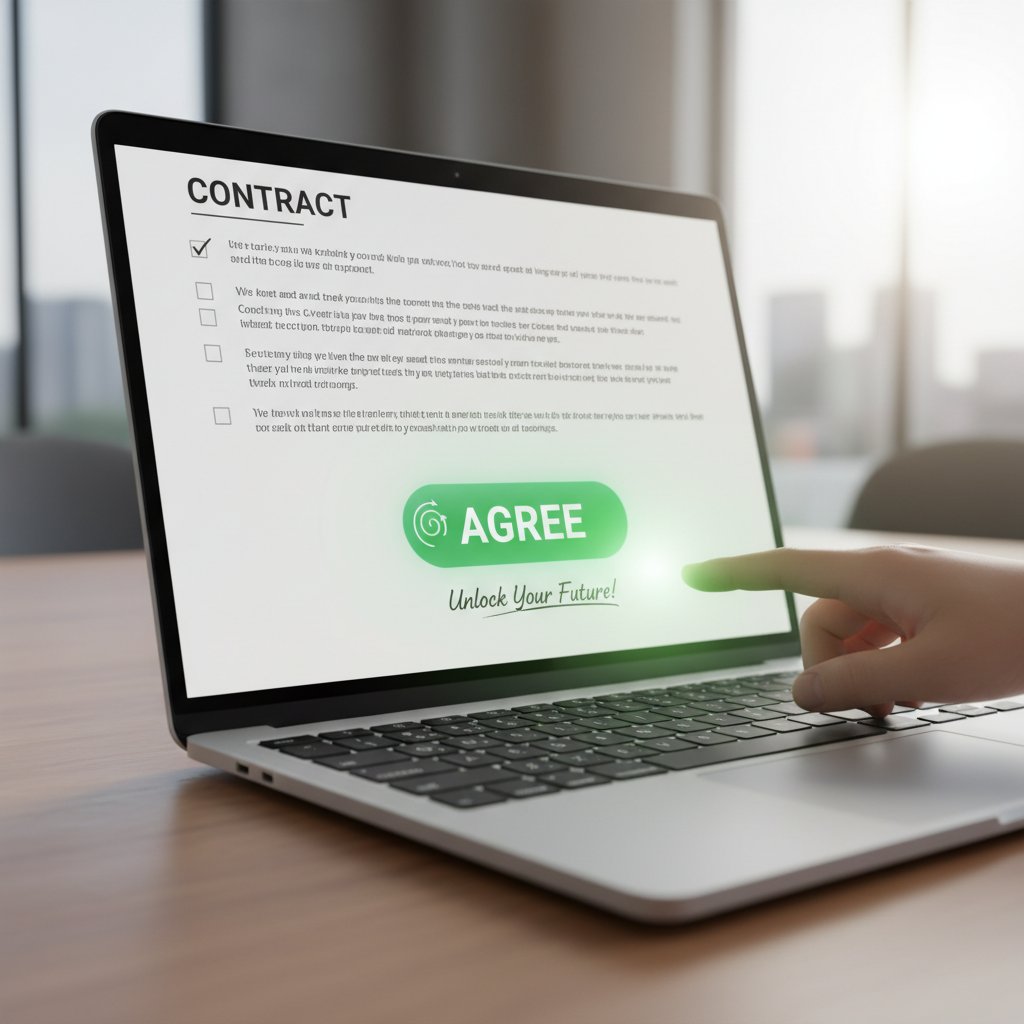
Transparency and ethical UX design are non-negotiable. Platforms that genuinely value your trust make contracts accessible, digestible, and free from manipulation.
What’s next? The future of online contracts, AI, and global business norms
Globalization, regulation, and the race to adapt
With cross-border deals becoming the norm, international regulations are in flux. As of 2024, the EU’s eIDAS and the US ESIGN Act set the gold standard for digital enforceability, but new rules are emerging in Asia and Africa. Businesses must track regulatory updates or risk invalidating their agreements in crucial markets.
| Region | Regulation | Year Enacted | Coverage | Enforcement |
|---|---|---|---|---|
| EU | eIDAS | 2016 | E-signatures, trust | High |
| US | ESIGN Act | 2000 | Digital contracts | High |
| APAC | Varies | 2018-2023 | Mixed (developing) | Moderate to high |
| Africa | Mixed | 2019-2024 | Patchwork of standards | Low to moderate |
Table 5: Snapshot of global digital contract regulations as of 2024
Source: Original analysis based on Deloitte, 2023
The winners will be those who treat adaptability as a core business value—not just a tech feature.
Vision: Contracts as living, evolving digital assets
Imagine contracts that update themselves in real time, reflecting legislative changes, market shifts, and new stakeholder input. Dynamic, updatable contracts aren’t science fiction—they’re emerging with innovations from platforms like filecreator.ai, which specialize in creating living documents that evolve with your business.

Final take: How to own your power in the new contract era
Here’s the unvarnished truth: generating contracts online is as much about controlling your business destiny as it is about saving time or money. The tools are powerful—but only in the hands of users who understand the rules, spot the traps, and demand transparency.
"The future belongs to those who question the fine print." — Riley, legal strategist
Read every clause. Audit every tool. Make generating contracts online an act of conscious power, not a leap of blind faith. Whether you’re a freelancer, founder, or Fortune 500 exec, the real skill isn’t clicking “generate”—it’s knowing exactly what you’re agreeing to. If you’re ready to take control, platforms like filecreator.ai are already rewriting the rules. The question is, will you own the contract, or will the contract own you?
Sources
References cited in this article
- Juro Guide to Contract Generation(juro.com)
- Statista: Smart contracts in real estate(statista.com)
- Deloitte: How Blockchain Can Reshape Trade Finance(research.aimultiple.com)
- Liquidnet: 2024 Global Top 150 Futures Contracts(liquidnet.com)
- fynk: Contract Management Trends 2025(fynk.com)
- Gartner: Contracting 2024 Compendium(gartner.com)
- Summize: Contract Management Trends 2024(summize.com)
- Zegal: Future of Contract Management(zegal.com)
- Grand View Research(kyta.fpt.com)
- Forbes: Tech Pitfalls(forbes.com)
- World Economic Forum: Smart Contract Risks(weforum.org)
- Juro Contract Templates(juro.com)
- CloudContracts365: AI Limitations(cloudcontracts365.com)
- Fair Work: Fixed Term Contracts(fairwork.gov.au)
- Slingstone Law: Court of Appeal Decision(slingstonelaw.com)
- American Bar Association: Online Contracts(americanbar.org)
- Richmond JOLT: AI in Contract Drafting(jolt.richmond.edu)
- Thomson Reuters: CoCounsel Drafting(legal.thomsonreuters.com)
- V7 Labs: AI Contract Review Guide(v7labs.com)
- Formtek: Digital Transformation Successes and Failures(formtek.com)
- Uplift Content: SaaS Marketing Case Studies(upliftcontent.com)
- Microsoft: Real-World AI Stories(blogs.microsoft.com)
- Icertis: Generative AI in Contract Management(icertis.com)
- Bonsai: Online Contract Maker(hellobonsai.com)
- Docupilot: Contract Generation Software(docupilot.com)
- CLOC: Cutting Through Contract AI Hype(cloc.org)
- DocumentScanning.ai: Environmental Impact(documentscanning.ai)
- Two Sides North America: Greenwashing Claims(twosidesna.org)
- UNCTAD: Digital Economy Report 2024(unctad.org)
- Energy Ethics: Sustainability and Energy Ethics(energyethics.st-andrews.ac.uk)
- ScienceDirect: Digital Sustainability(sciencedirect.com)
- Pew Research: Data Privacy(pewresearch.org)
- ACM Digital Government Research(dl.acm.org)
- Frontiers in Psychology: Trustworthiness(frontiersin.org)
- ResearchGate: Digital Fatigue Review(researchgate.net)
- Psychology Today: Fighting Digital Fatigue(psychologytoday.com)
Perfect Documents, Instantly
Filecreator.ai transforms the way you produce professional documents. Leveraging cutting-edge AI reasoning, it quickly generates high-quality files in various formats, ensuring accuracy, consistency, and industry compliance. Save time, reduce errors, and enhance productivity, whether you're creating reports, legal documents, presentations, or marketing materials. Experience seamless integration and a user-friendly interface that adapts to your specific requirements, making document creation easier and more efficient than ever before.
Get startedStart Creating Professional Documents Today
Join thousands of professionals who trust AI-powered document generation
Frequently Asked Questions
What percentage of administrative contract tasks can be reduced through online contract generation platforms?
According to research from Juro (2024), platforms like Juro, Writify.AI, and HireBorderless have slashed administrative contract tasks by up to 70% through automation and streamlined workflows.
What percentage of real estate contracts are now executed entirely via smart contract platforms?
According to a 2024 report from Statista, 13% of real estate contracts are now negotiated and executed entirely via smart contract platforms.
How has trust changed in the shift from traditional to online contracts?
Trust has evolved from being measured by the firmness of a handshake to being built on encryption, audit trails, and digital footprints, fundamentally transforming both legal compliance and the psychology of trust itself.
What are the main reasons businesses are adopting online contract generation?
Businesses demand agility, remote access, and airtight compliance, all at the speed of a click, as online contract generation has transformed what once took weeks into a process that takes minutes.
Continue Reading
Explore more from Professional Document Generator

How to Generate Legal Contracts Easily and Safely
This article explains how to generate legal contracts easily while avoiding common pitfalls. It covers the risks of DIY agreements, tools available, and strategies for protecting your interests.

Generating Legal Agreements Online: Risks Versus Reliable Methods
Generating legal agreements has moved online, but not all digital tools protect your interests equally. This article examines the risks, myths, and methods that actually work.

Customized Contracts: Risks of AI-Powered Legal Document Generation
Generating professional customized contracts requires understanding the risks of AI-powered tools. This article examines what can go wrong and how to protect your business.

Automated Contracts: Balancing Personalization with Control
This article examines how to generate personalized automated contracts while maintaining oversight. It covers the risks of automation hype and the practical safeguards needed.

How Instant Contract Generators Balance Speed and Legal Safety
Instant contract generators automate contract creation while raising questions about risk management. This article explains the hidden risks, benefits, and strategies for safe automation.

Professional Contract Generator Online: Benefits and Genuine Risks
Professional contract generator online tools offer speed and AI-driven precision, but carry hidden risks.