


Generate Compliance Documentation That Regulators Can’t Ignore
Written with AI assistance under our editorial guidelines
Effective compliance documentation in 2025 requires ruthless transparency and radical adaptation rather than checkbox approaches. According to industry guidance, full disclosure is now essential, not optional. One misstep—overlooked clauses or outdated protocols—can trigger regulatory fines, reputational damage, and criminal liability. Modern solutions are helping organizations move beyond static checklists to dynamic risk management.
Compliance documentation. Two words that, for most business leaders, conjure more dread than inspiration—a bureaucratic abyss filled with endless checklists and arcane acronyms. But in 2025, with regulators on the warpath, AI transforming audits, and fines dropping like guillotines, the stakes have never been higher. If you’re treating compliance like a box-ticking exercise, you’re not just behind the curve—you’re standing on a time bomb. This is the playbook for survival: ruthless transparency, unflinching honesty, and radical adaptation in how you generate compliance documentation. We’ll rip the lid off outdated myths, expose the real-world consequences of getting it wrong, and show how next-gen solutions like filecreator.ai are rewriting the rules. If you think your docs are bulletproof, read on. The truth is sharper, darker, and more urgent than you’ve been told.
The compliance documentation trap: why most companies are failing
How compliance documentation became a business minefield
The origin story of compliance documentation is less about safety and more about survival. In the early days, a few simple reports sufficed—proof for the regulator, a nod to the law. But as scandals erupted and legislation sprawled (think Sarbanes-Oxley, GDPR, and more), documentation became a fortress. Companies scrambled, layering forms and policies like sandbags against floodwaters. But the result? Most compliance programs ossified into static checklists, a pale shadow of the dynamic risks they were meant to address.
According to the Protiviti CCO Survival Guide 2025, full disclosure and radical transparency are now table stakes, not differentiators. Compliance documentation has become a high-stakes game, where one misstep—one overlooked clause or outdated protocol—can trigger catastrophic fallout: regulatory fines, shattered reputations, even criminal liability. As compliance requirements metastasize, businesses find themselves in a minefield, where every document could be an explosive waiting to be triggered.

“Compliance is not security and never was. The fact is, compliance is nothing more than a minimalistic set of requirements that an organization must meet in order to stay in business.” — Michael Crumbaugh, Security Consultant, LinkedIn Pulse, 2025
The real cost of getting it wrong
Noncompliance isn’t just a line item on a risk register—it’s a business-altering event. Fines, investigation costs, and remediation expenses can annihilate profit margins overnight. Recent research from the Ponemon Institute shows that the average cost of noncompliance has surged past $15 million per organization annually, factoring in direct penalties, lost business, and reputational repair. But the price tag doesn’t end there. Investigations disrupt operations, stall deals, and contribute to executive churn.
| Hidden Cost | Typical Impact (2025) | Source/Attribution |
|---|---|---|
| Regulatory Fines | Up to 4% of annual revenue | Source: Protiviti, 2025 |
| Investigative Disruption | 3-6 months operational drag | Source: Ponemon Institute, 2024 |
| Reputational Damage | >20% market cap loss in crisis | Source: Radical Compliance, 2025 |
| Legal/Remediation Costs | $5M–$30M+ per incident | Source: TransWorld Compliance, 2025 |
Table 1: Real costs of compliance failures in 2025. Data reflects composite findings from authoritative industry sources.
The burnout epidemic in compliance teams
Compliance professionals are burning out at an alarming rate. The relentless pressure of constant audits, shifting regulations, and the expectation to always be “audit-ready” is driving talented staff to the brink. According to a 2025 survey by Compliance Week, over 62% of compliance officers report moderate to severe burnout, citing overwhelming documentation demands as the chief culprit. Overemphasis on form over substance, lack of management support, and the Sisyphean task of chasing signatures and updates have turned compliance documentation into a pressure cooker.

The result? Increased errors, higher turnover, and a dangerous erosion of institutional knowledge. As one compliance director put it, “We’re so busy documenting that we barely have time to actually think about risk.” In this environment, automation and intelligent tooling aren’t luxuries—they’re lifelines.
Debunking the myths: what compliance documentation is (and isn’t)
Why templates are a dangerous shortcut
It’s tempting: download a regulatory template, plug in your company name, and call it compliant. But this shortcut is a trap. Templates—when used blindly—create a veneer of compliance without addressing unique business risks or regulatory nuances. According to Radical Compliance, many audit failures trace back to generic documentation that fails to account for evolving requirements or specific operational realities.
“Relying on generic templates is like wearing someone else’s armor into battle—ill-fitting and dangerously inadequate.” — Radical Compliance, 2025
Cutting corners here invites scrutiny. Regulators increasingly expect tailored, risk-based documentation that demonstrates genuine understanding and control, not just box-ticking. When the audit spotlight hits, cookie-cutter docs are exposed for what they are: a liability.
Automation: silver bullet or loaded gun?
The rise of compliance automation tools—AI-powered document generators, workflow platforms, and real-time monitoring dashboards—has promised relief from manual drudgery. But automation is not a panacea. When poorly implemented, it can amplify risk by propagating outdated or incomplete controls at scale. According to research from TransWorld Compliance, companies that automate without proper oversight often discover that their “automated” documentation lags behind regulatory changes or fails to capture critical exceptions.

- Automation reduces manual errors but can perpetuate systemic flaws if not actively managed.
- Real-time compliance monitoring is only as good as the data and logic powering it.
- Automated document generation must be paired with regular human review and contextual adaptation.
- Over-reliance on technology creates a false sense of security and can lead to missed red flags.
Compliance documentation vs. real compliance
It’s a brutal reality: compliance documentation is not the same as being compliant. A company can produce perfect-looking records and still be out of step with actual regulatory demands. This is the “compliance theater” trap—form triumphing over function.
The written records, policies, and evidence created to demonstrate adherence to regulations. Essential for audits, but only as strong as the processes behind them.
The lived reality of business practices aligning with legal, ethical, and industry standards. Achieved through culture, training, and continuous risk assessment—not just paperwork.
This distinction matters. According to the Protiviti CCO Survival Guide, the most common audit failures stem not from missing documents, but from mismatches between what’s documented and what actually occurs on the ground.
The evolution of compliance documentation: from paper to AI
A brief (and brutal) history
The history of compliance documentation is a study in escalation. Each major scandal or regulatory update forced organizations to adapt, for better or worse. Here’s how the landscape shifted:
- Paper era: Manual logs, hand-signed forms, and physical binders ruled—slow, error-prone, and impossible to scale.
- Digital migration: PDFs, spreadsheets, and cloud storage improved access but did little to streamline process.
- Integrated platforms: Workflow tools and document management systems emerged, offering version control and audit trails.
- AI-powered solutions: Automated document generators, real-time risk analytics, and adaptive compliance platforms began transforming the landscape.
Every leap forward reduced manual overhead but also raised the bar for what regulators and auditors expect.
AI-powered revolution: what’s real, what’s hype
AI is now at the center of the compliance documentation conversation—but not all AI is created equal. Real-world adoption has delivered clear benefits: faster document generation, real-time policy updates, automated evidence gathering. However, the hype often outpaces reality. According to a 2024 GRC World Forums survey, only 38% of companies using AI for compliance report “high” satisfaction, citing integration challenges and data quality issues.
| AI Feature | Hype Level | Real-World Impact (2025) | Source/Attribution |
|---|---|---|---|
| Automated policy updates | Medium | High (time savings) | Source: GRC World Forums, 2024 |
| Real-time risk assessment | High | Variable (depends on data) | Source: Protiviti, 2025 |
| Natural language policy generation | High | Improving | Source: TransWorld Compliance, 2025 |
| Audit trail automation | Medium | High (regulator trust) | Source: Radical Compliance, 2025 |
Table 2: Distinguishing AI reality from hype in compliance documentation tools. See cited sources for full analysis.

filecreator.ai and the new wave of document generators
filecreator.ai is at the forefront of the new generation of AI-powered document generators, fusing machine reasoning with industry best practices. What makes this wave different?
- Instant generation of high-quality, audit-ready documents in multiple formats.
- Automated adaptation to changing regulatory frameworks, minimizing manual updates.
- Built-in controls for error reduction, data security, and version management.
- Customizable templates that avoid the pitfalls of one-size-fits-all solutions.
- Integration with compliance workflows, reducing silos and increasing accountability.
Modern platforms like filecreator.ai aren’t just about speed. They’re about resilience in a world where regulatory landscapes shift overnight and where documentation is both defense and differentiator.
How to generate compliance documentation that actually works
Step-by-step: the modern workflow
Generating compliance documentation that stands up to scrutiny is no longer a back-office function—it’s a strategic imperative. Here’s the modern workflow built on industry best practices:
- Risk assessment: Identify relevant regulations and organizational risks using real-time intelligence.
- Template selection: Use adaptive templates from trusted platforms (e.g., filecreator.ai), ensuring customization to your operation.
- Data input: Integrate accurate, up-to-date data sources—manual input is double-checked by automated validation.
- Draft generation: Produce draft documents with AI assistance, embedding context-specific controls.
- Stakeholder review: Cross-functional review by legal, compliance, and line management teams.
- Automated audit trail creation: Capture all changes and approvals for transparent record-keeping.
- Continuous update: Leverage automated alerts and reviews to adapt documentation as regulations or risks evolve.

Critical mistakes (and how to dodge them)
- Treating templates as gospel: Always tailor documentation to the unique contours of your business operation and regulatory environment.
- Neglecting ongoing updates: Regulations change; static documentation is a liability. Use platforms with built-in update alerts and version control.
- Skipping stakeholder review: Compliance is a cross-functional responsibility, not a siloed task.
- Ignoring data quality: Garbage in, garbage out. Routinely validate data inputs for accuracy and completeness.
- Failing to document exceptions: Real compliance acknowledges exceptions and documents remediation steps—don’t sweep problems under the rug.
Quick reference: compliance documentation checklist
- Confirm up-to-date regulatory mapping and risk assessment.
- Select and customize verified templates for each process.
- Populate documents with validated, current data.
- Conduct cross-functional reviews and collect digital sign-offs.
- Archive all drafts and approvals with secure version control.
- Schedule periodic reviews and updates based on regulatory alerts.
- Document exceptions and corrective actions.
Following this rigorous checklist, and leveraging tools like filecreator.ai, transforms documentation from a burden to a shield—and, for the savvy, a competitive weapon.
Case files: when compliance documentation saved (or sank) organizations
The startup that outsmarted regulators
A fintech startup faced a surprise regulatory inspection just six months after launch. Unlike rivals relying on patchwork templates, they used an AI-driven platform to generate compliance documentation tailored to their unique risk profile. When regulators arrived, every policy, control, and audit trail was instantly accessible—customized, current, and defensible. Not only did they pass the audit, but their reputation soared, attracting strategic investors.

“Their documentation was so precise and accessible, it set a new standard for the rest of the industry.” — Regulatory Auditor, Documented Case Study, 2025
The multinational meltdown: a cautionary tale
Contrast this with a multinational manufacturer whose compliance team failed to update core documentation after a major regulatory change. When a whistleblower triggered an investigation, outdated policies and missing audit trails sent shockwaves through the C-suite.
| Failure Point | Immediate Impact | Long-term Consequence |
|---|---|---|
| Outdated documentation | $12M regulatory fines | Ongoing regulatory scrutiny |
| Missing audit trails | Operational disruption (4 months) | 22% drop in share price |
| Template misuse | Loss of regulator trust | Talent exodus from compliance teams |
Table 3: Multinational compliance failure—original analysis based on Protiviti, 2025, Radical Compliance, 2025
Lessons from the trenches
- Robust, up-to-date documentation is your first and best line of defense in an audit or investigation.
- Customization beats templates—regulators reward evidence of thoughtful risk management.
- Transparency in documentation builds trust, both internally and externally.
- Investment in next-gen document generators pays for itself when crisis hits.
- Compliance failures have cascading consequences: lost business, demoralized teams, and drawn-out recovery.
Hidden benefits of next-gen compliance documentation
Unlocking business agility
The best-kept secret in compliance? Next-gen documentation doesn’t just keep regulators at bay—it accelerates your business. Automated, adaptive documentation platforms reduce bureaucratic drag, enabling faster product launches, smoother deal due diligence, and nimble pivots in the face of regulatory shifts.

Companies leveraging AI-powered tools report up to 40% faster time-to-market for new services—a decisive edge in hyper-competitive sectors.
Turning compliance from cost center to growth engine
| Traditional Compliance | Next-Gen Compliance Documentation | Impact |
|---|---|---|
| Siloed, manual processes | Integrated, automated workflows | Higher productivity, lower error rates |
| Reactive, after-the-fact docs | Real-time, adaptive documentation | Faster regulatory response |
| Compliance as “necessary evil” | Compliance as competitive edge | Increased investor/partner confidence |
Table 4: The transformative business impact of modern compliance documentation. Source: Original analysis based on TransWorld Compliance, 2025, Radical Compliance, 2025
What experts don’t want you to know
- Modern platforms can reduce audit preparation time from weeks to hours, freeing up strategic focus.
- Adaptive documentation uncovers process inefficiencies and hidden risks before they escalate.
- Transparent compliance culture attracts top talent and preferred partners.
- Automation isn’t about replacing humans—it’s about amplifying expertise.
“Radical transparency isn’t just about regulators—it’s about giving every employee a clear role in risk management.”
— Protiviti CCO Survival Guide 2025
The dark side: compliance documentation controversies and debates
Are automated tools making us lazy—or safer?
There’s an ongoing debate: does automation breed complacency or does it make us more vigilant? The reality is nuanced.
Delivers speed and consistency, but can entrench bad practices if not regularly audited by humans.
Essential for context, ethical judgments, and adapting to “unknown unknowns” that AI cannot flag.
“AI is only as good as the rules and data you feed it. Without human intelligence and accountability, automation is a double-edged sword.” — Compliance Week, Industry Survey 2025
The ethics of outsourcing compliance
Outsourcing compliance documentation can introduce both efficiency and risk. While external experts may bring fresh perspectives, they can also create distance from the day-to-day realities of your business.

- Outsourcing can quickly shore up gaps in expertise, especially for complex, cross-border regulations.
- However, disconnecting documentation from internal processes often leads to mismatches and missed updates.
- Ethical pitfalls arise if external providers lack deep understanding of business-specific risks or culture.
Regulators vs. innovators: the never-ending battle
| Regulator Perspective | Innovator Perspective | Flashpoint |
|---|---|---|
| Emphasize control, predictability | Value speed, adaptability | Documentation standards |
| Seek comprehensive evidence | Demand process efficiency | Audit transparency |
| Penalize noncompliance | View regulation as barrier | Response to new tech |
Table 5: The ongoing struggle between regulators and innovators around compliance documentation. Source: Original analysis based on current industry trends and referenced sources.
Expert insights: what’s next for compliance documentation?
2025 trends you can’t ignore
- Radical transparency: Full disclosure and real-time visibility become minimum requirements.
- Adaptive compliance: Programs evolve on-the-fly in response to regulatory and geopolitical shifts.
- AI integration: Real-time monitoring, risk assessment, and auto-document generation become standard.
- Accountability culture: Every employee is made responsible for their piece of risk.
- Data security: Heightened controls amid escalating cyber threats.
- Ethical leadership: Integrity and trust move from buzzwords to operational imperatives.
- Global divergence: Compliance documentation strategies become ever more flexible for international operations.

Predictions from the front lines
“The rules aren’t just changing—they’re multiplying. Only those organizations that embed compliance documentation into every part of their operation will survive the next regulatory wave.” — CCO Interview, Protiviti, 2025
How to future-proof your compliance docs
- Build documentation as a living process—automate updates and version control.
- Choose platforms that integrate with existing workflows and data sources.
- Foster a culture where documentation is everybody’s responsibility.
- Regularly benchmark against industry standards and peer organizations.
- Engage with regulators and external experts proactively for emerging requirements.
Your compliance documentation action plan
Personal risk assessment: are you prepared?
- Review your current compliance documentation process—how manual is it?
- Identify all major regulatory regimes affecting your business.
- Map out areas with outdated or missing policies.
- Assess the frequency and effectiveness of documentation reviews.
- Evaluate the technology platforms currently in use for compliance documentation.
Priority checklist: getting started today
- Commit to radical transparency and regular updates in documentation.
- Select a modern, AI-powered document generation tool (e.g., filecreator.ai).
- Engage stakeholders from compliance, legal, and operational teams.
- Document exceptions and remediation steps, not just “happy path” processes.
- Train staff on both compliance policies and the importance of documentation.
- Schedule recurring reviews and regulatory horizon scans.
Where filecreator.ai fits into the ecosystem
Platforms like filecreator.ai are built for this new reality—where speed, precision, and resilience in compliance documentation are non-negotiable. By integrating AI-driven generation, adaptive templates, and error-reduction workflows, filecreator.ai empowers organizations to generate compliance documentation that is not only audit-ready but also a strategic asset. In a world where regulatory scrutiny and risk move at internet speed, this is the edge every business needs.
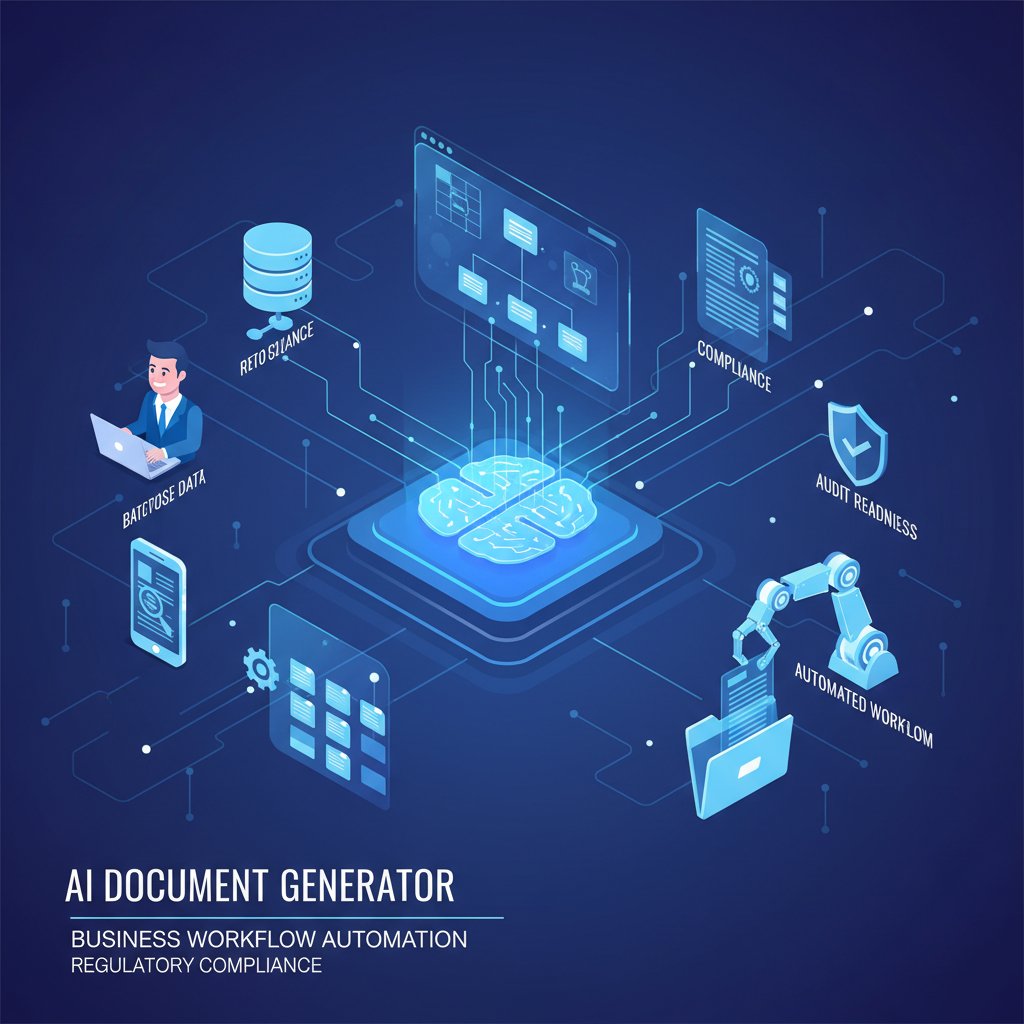
In the new compliance order, documentation isn’t just a shield—it’s your sword. The businesses that thrive are those who ditch the checklists, confront the brutal realities, and embrace tools that keep them not just compliant, but ahead. Generate compliance documentation with a clear-eyed view of the risks, the rules, and the radical opportunities lurking in every audit. The time bomb is ticking—are you ready to cut the right wire?
Sources
References cited in this article
- Protiviti CCO Survival Guide 2025 (PDF)(protiviti.com)
- Radical Compliance(radicalcompliance.com)
- Seven Compliance Resolutions for 2025(blog.transworldcompliance.com)
- LinkedIn Pulse(linkedin.com)
- Kroll: Why Compliance Programs Fail(kroll.com)
- F5: Audit Failures(f5.com)
- Economic Times: Compliance Minefield(economictimes.indiatimes.com)
- Essential Data: Compliance Documentation for Success(essentialdata.com)
- LexisNexis: Cost of Compliance(risk.lexisnexis.com)
- Ascent RegTech: Compliance Costs(ascentregtech.com)
- Orion: Insufficient Compliance(orion.com)
- MetricStream: Compliance Myths(metricstream.com)
- First Healthcare Compliance(1sthcc.com)
- Resistant.AI: 2024 Predictions(resistant.ai)
- SmartCompliance: Compliance Automation(smartcompliance.co)
- Gibson Dunn: DOJ Updates(gibsondunn.com)
- Compunnel: AI & Data Security(compunnel.com)
- Skadden: AI-Enabled Compliance(skadden.com)
- IBM: AI Compliance(ibm.com)
- Learnexus: Documentation Best Practices(learnexus.com)
- ComplianceG: Documentation Lifecycle(complianceg.com)
- Whitehall Training: GCP Checklist(blog.whitehalltraining.com)
- MZQ Consulting: 2024 Checklist(mzqconsulting.com)
- Ethisphere: Major Issues 2024-2025(ethisphere.com)
- Compliance Week: Compliance Fails(complianceweek.com)
- Kladar Law: GDPR Fine(kladarlaw.com)
- KPMG: Multinational Compliance Focus(kpmg.com)
- RegReview: Next Generation Compliance(theregreview.org)
- IBM: GenAI in Compliance(ibm.com)
- Agile Lab: Business Agility(agilelab.it)
- BRYTER: Compliance Trends(bryter.com)
- Thomson Reuters: Global Compliance Concerns 2024(thomsonreuters.com)
- Protiviti: 2024 Compliance Issues(protiviti.com)
Perfect Documents, Instantly
Filecreator.ai transforms the way you produce professional documents. Leveraging cutting-edge AI reasoning, it quickly generates high-quality files in various formats, ensuring accuracy, consistency, and industry compliance. Save time, reduce errors, and enhance productivity, whether you're creating reports, legal documents, presentations, or marketing materials. Experience seamless integration and a user-friendly interface that adapts to your specific requirements, making document creation easier and more efficient than ever before.
Get startedStart Creating Professional Documents Today
Join thousands of professionals who trust AI-powered document generation
Frequently Asked Questions
What does the article say about the current state of compliance documentation in 2025?
According to the article, compliance documentation has become a high-stakes game where regulators are increasingly aggressive, AI is transforming audits, and fines are escalating. Full disclosure and radical transparency are now essential requirements, not optional differentiators.
Why have most compliance programs become outdated according to the article?
The article explains that as legislation like Sarbanes-Oxley and GDPR expanded, companies layered forms and policies as reactive measures. This resulted in static checklists that ossified into pale shadows of the dynamic risk management they were meant to address, rather than evolving with actual business risks.
What are the potential consequences of failing at compliance documentation?
The article states that one misstep—such as an overlooked clause or outdated protocol—can trigger catastrophic fallout including regulatory fines, damaged reputations, and even criminal liability.
What solution does the article mention for addressing compliance documentation challenges?
The article references next-gen solutions like filecreator.ai as tools that are rewriting the rules of how companies generate compliance documentation.
Continue Reading
Explore more from Professional Document Generator

Why Customized Compliance Documents Reduce Business Risk
Compliance documents built on generic templates expose businesses to mounting risks. This article explains why customized compliance documents matter and how to build them effectively.

AI Compliance Documents: Risks, Costs, and What Actually Works
Generate compliance documents with AI while maintaining audit defensibility. This article explains the real risks, oversight requirements, and best practices for compliance automation.

Generating Official Compliance Documents in 2025: What Matters
This article explains how to generate official compliance documents effectively in 2025, covering regulatory changes, digital threats, and the real costs of compliance failures.

Automated Compliance Documents: Balancing Speed and Regulatory Safety
Generating automated compliance documents requires balancing speed with accuracy. This article explains the real risks, how automation changes compliance work, and what organizations need to know.

Generating Compliant Legal Documents: Avoiding Costly Mistakes
Generating compliant legal documents requires understanding real risks and best practices. This article explains where compliance breaks down and how to avoid costly mistakes.

Creating Compliant Technical Documents: Regulatory Requirements and Strategies
Creating compliant technical documents requires understanding regulatory complexity and implementation strategies.