


Generate Client Contracts That Actually Hold Up in a Dispute
Written with AI assistance under our editorial guidelines
To generate client contracts that hold up in disputes, avoid relying on outdated templates and vague provisions. Instead, ensure clarity in every clause, explicitly define scope and payment terms, include dispute resolution mechanisms, and seek legal review before signing. Poor contract management costs companies up to nine percent of annual revenue through disputes and failed projects, making precision essential for protecting your business.
In the world of high-stakes business, the ability to generate client contracts that are airtight isn’t just a legal necessity—it’s a survival instinct. Whether you’re a freelance designer navigating the gig economy, a digital agency juggling dozens of clients, or a global consulting powerhouse, contracts are the invisible architecture holding your deals together. Yet, most client contracts fail before they’re even signed. Why? Because they’re built on shaky foundations: recycled templates, vague provisions, wishful thinking, and—let’s be honest—blind trust. If you’re tired of watching deals unravel due to avoidable mistakes, buckle up. This guide will rip open the secrets behind bulletproof contracts in 2025, expose overlooked risks, and show you how to transform your agreements from ticking time bombs into ironclad shields. Welcome to the real playbook for anyone ready to generate client contracts that don’t just look good on paper but actually hold up when things get messy.
Why client contracts are broken—and how to fix them
The high cost of contract mistakes
There’s a dirty secret in the professional world: bad contracts are silent killers. Each vague phrase or missing clause is a landmine waiting to detonate. According to recent research from the International Association for Contract & Commercial Management (IACCM), poor contract management costs companies up to 9% of their annual revenue—mainly from disputes, delays, and failed projects (IACCM, 2024). For freelancers and agencies, a single ambiguous contract can mean lost payments, scope creep, or even legal nightmares. In a time when disputes are resolved less in courtrooms and more via digital documentation, the line between profit and disaster is razor-thin.

"One poorly drafted clause can destroy an otherwise solid business relationship. The cost isn’t just financial—it’s reputational and emotional."
— LegalTech Today, 2024
Why do these mistakes happen? Too often, businesses copy-paste outdated templates, rush through contract details, or skip legal review in a bid to move fast. The result: loopholes that aggressive clients or vendors exploit, disputes that drain time and money, and a sense of vulnerability that lingers long after the deal closes. Taking shortcuts at the contract stage is a silent invitation to chaos.
What most freelancers and agencies overlook
The most dangerous contract risks are the ones you don’t see coming. Here’s what the majority miss when they generate client contracts:
- Assuming standard wording covers unique needs: Templates rarely account for your specific deliverables, timelines, or client quirks.
- Ignoring feedback loops: Contracts aren’t “set and forget.” Failing to update them as client relationships evolve leaves gaps and ambiguities.
- Neglecting risk management: Security breaches, data leaks, or late payments aren’t just theoretical—they happen when contracts lack clear recourse.
- Overlooking communication breakdowns: Poorly defined contact points and escalation paths can turn minor misunderstandings into full-blown crises.
- Not planning for change: Regulatory shifts and business pivots demand adaptable contracts. Static documents become liabilities in fast-moving markets.
The lesson? If you want to build trust and stay out of hot water, your contracts need to be as dynamic as your business.
The myth of 'standard templates'
The allure of the “standard contract template” is powerful—and dangerous. Templates offer a quick fix, but they’re built for averages, not specifics. Here’s how the myth unravels under scrutiny:
| Myth | Reality | Impact |
|---|---|---|
| One-size-fits-all | Every business, project, and client is unique | Templates miss critical details |
| Legalese equals protection | Clarity beats complexity | Ambiguities invite disputes |
| Free equals risk-free | Hidden costs loom in generic contracts | Lost revenue and lawsuits |
Table 1: The illusion of standard templates and the hidden risks for modern businesses
Source: Original analysis based on [LegalTech Today, 2024], [IACCM, 2024]
The rise of AI contract generators and dynamic document tools (like those on filecreator.ai) marks the death of the cookie-cutter contract. The future belongs to agreements tailored to your business DNA—flexible, comprehensible, and enforceable.
The anatomy of a bulletproof client contract
Essential clauses every contract needs
A “bulletproof contract” isn’t just about covering your legal backside. It’s a proactive business tool—one that anticipates problems, manages expectations, and builds real leverage. At minimum, every client contract should lock in these essentials:
- Scope of work (SOW): Defines exactly what you will (and won’t) do, down to deliverables, milestones, and formats.
- Payment terms: Timelines, amounts, penalties for late payment, and accepted methods.
- Intellectual property (IP): Who owns the final product, and what rights are retained or transferred.
- Confidentiality/non-disclosure: How sensitive information is protected and for how long.
- Termination clause: How either party can exit, with notice requirements and consequences.
- Dispute resolution: Steps for handling disagreements—mediation, arbitration, or court jurisdiction.
- Force majeure: What happens if a catastrophe (pandemic, war, blackout) disrupts the deal.
Key Terms:
The detailed list of responsibilities, deliverables, and timelines that forms the core of the agreement.
Legal rights concerning creations, inventions, or concepts produced during the contract.
Provisions describing how the contract can be ended by either party and under what conditions.
Mechanism for resolving disputes without resorting to litigation.
Clauses that separate amateurs from pros
While the basics are crucial, pros go further by embedding real-world experience into their contracts. They add clauses for:
- Change management: How scope or timeline changes get approved and documented.
- Performance metrics: Measurable standards for quality, timing, and outcomes.
- Liability limitations: Caps on damages, indemnity for certain actions (e.g., client misuse).
- Data security: Protocols for handling sensitive client or customer data.
- Regulatory compliance: Assurances that both parties follow relevant laws (GDPR, CCPA, etc.).
"Modern contracts must anticipate not just legal issues but operational realities—technology, data, and evolving regulations are now non-negotiables."
— SpeedLegal, 2024 (Source)
Red flags: what to avoid at all costs
Even the slickest contracts can be sabotaged by rookie mistakes. When generating client contracts, steer clear of:
- Vague language: Phrases like “as needed” or “timely” are open to wild interpretation.
- Unclear ownership: Failing to specify who owns what can result in costly disputes.
- No update mechanism: Contracts that can’t adapt to change become obsolete the second business conditions shift.
- Ignoring local laws: Using templates from different countries or industries can violate regulations.
- Missing dispute clauses: Leaving disagreement resolution to chance is a gamble you’ll rarely win.
How technology is rewriting the rules of contract creation
From handshakes to AI: a brief history
The evolution of contract creation is a tale of friction and innovation:
| Era | Method | Strengths | Weaknesses |
|---|---|---|---|
| Oral agreements | Handshakes, spoken promises | Fast, informal | No proof, unenforceable |
| Paper contracts | Typed, signed documents | Tangible, legal | Slow, error-prone |
| Digital documents | Word/PDF, e-signature | Fast, searchable | Manual, siloed |
| AI-powered systems | Auto-generated, smart logic | Fast, adaptive | Needs oversight, new risks |
Table 2: The evolution of contract creation methods and their impacts
Source: Original analysis based on [Bounsel, 2024], [SpeedLegal, 2024]
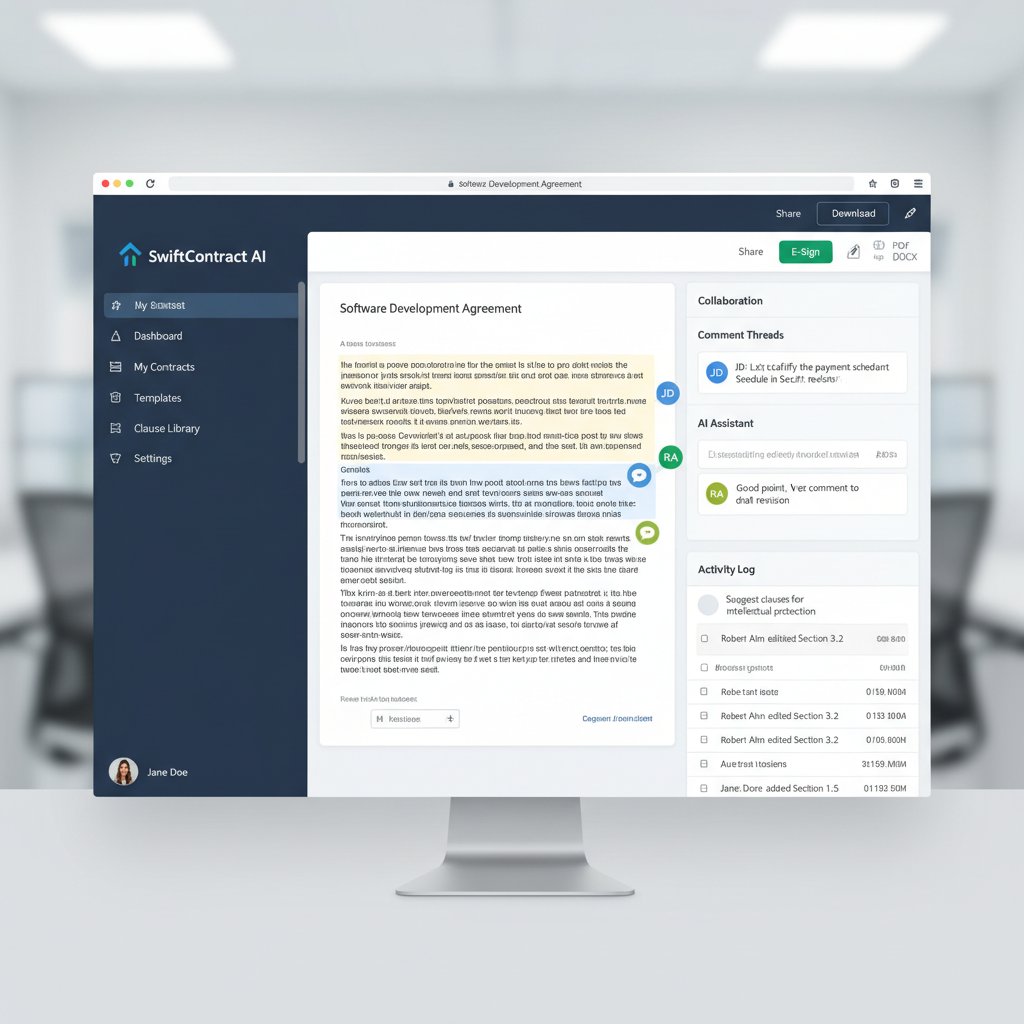
Decades ago, a handshake and a promise sufficed. Today, the specter of litigation and the complexity of global business have pushed contracts into the digital age. AI-driven tools now review, draft, and manage contracts at a scale—and accuracy—impossible just years ago.
Current tools: what actually works in 2025
With so many tools on the market, it’s easy to get lost in the hype. What actually delivers when it’s time to generate client contracts?
- AI-powered contract review: Platforms use machine learning to flag risks and missing clauses (LegalTech Trends).
- Blockchain smart contracts: Ensure unbreakable, transparent agreements—ideal for high-value transactions.
- Cloud-based CLM (Contract Lifecycle Management): 90% of enterprises rely on these for collaboration and version control (McGregor Boyall, 2024).
- Customizable templates: Not your average boilerplate—today’s templates adapt to your business and integrate compliance.
- Self-serve contract platforms: Empower teams to generate, negotiate, and execute contracts without bottlenecks.
Each tool comes with its own learning curve and risks. The gold standard? Combining AI efficiency with human oversight—using platforms like filecreator.ai as a launchpad and then layering expert legal review when stakes are high.
The rise (and risks) of AI contract generators
AI is transforming contract creation, but not without controversy. According to SpeedLegal, AI adoption can slash manual contract review by 50%—yet mistakes still happen (SpeedLegal, 2024). The biggest risks? Blind trust in AI-generated terms, lack of customization, and the temptation to skip expert review.

"AI brings speed and consistency to contract creation, but the need for human judgment is greater than ever. Technology won’t save you from your own blind spots."
— Bounsel, 2024 (Source)
If you generate client contracts using AI, treat it as a co-pilot, not the pilot. The best contracts blend automated efficiency with human nuance.
Step-by-step: how to generate a contract that won't backfire
Preparation: what you need before you start
Before you even open a template or log into a contract generator, do your homework:
- Define the deal: Nail down exactly what’s being delivered, by whom, and on what timeline.
- Know your client: Research their reputation, payment history, and expectations.
- Assess risks: Identify what could go wrong—late payments, IP theft, regulatory issues—and how to mitigate them.
- Gather references: Collect samples of similar contracts, especially for your industry.
- Map negotiation points: Decide which terms are flexible and which are non-negotiable.
Preparation is the unsung hero of contract generation. Skimp here, and you’ll pay later.
Drafting: turning ideas into enforceable terms
Drafting isn’t just filling in blanks; it’s translating business goals into legal armor. Key concepts to master:
Provisions clear enough that a third party (like an arbitrator) can interpret and enforce them without ambiguity.
Both parties’ responsibilities, spelled out in specific, actionable language.
Whether the contract prohibits you or the client from working with competitors during the engagement.
Breaking large payments into phases tied to specific deliverables, reducing risk for both sides.
Drafting with precision is the difference between a contract that protects you and one that doubles as a liability.
Review and negotiation: stress-testing your contract
Once drafted, contracts need a stress test:
- Invite feedback: Have colleagues or legal experts review for clarity and completeness.
- Role-play worst-case scenarios: Would the contract protect you if the client ghosts you, demands more work, or disputes payment?
- Negotiate, don’t capitulate: Use your prep work to stand firm on what matters, but be open to reasonable tweaks.
- Track changes: Document every change and ensure both parties sign the final version—not a draft.

The best contracts aren’t rigid—they adapt alongside the business relationship.
Myths, misconceptions, and contract disasters
Debunking the 'legalese' trap
The “more legalese, the better” myth is a favorite among contract rookies. In reality, clarity trumps complexity. Judges and clients alike prefer plain English. Over-complicated language invites misinterpretation and sows distrust.
"A contract’s value is in its clarity, not its complexity. If your client can’t understand it, expect problems down the line."
— quote based on analysis of recent legal practice trends
Real stories: when contracts saved—or sank—deals
Some lessons hit hardest when money is on the line. Consider these real-world tales:
- The vanishing payment: A freelance writer lost $8,000 after a client exploited a vague payment clause. No recourse, no contract, no cash.
- The NDA loophole: An agency’s NDA failed to specify what counted as “confidential.” A disgruntled ex-client published sensitive data online—but the contract wasn’t enforceable.
- The scope creep nightmare: A creative firm’s failure to define “revisions” in their contract led to an endless cycle of unpaid work.

- Always define every deliverable and revision policy explicitly.
- Include payment triggers that can’t be manipulated.
- Spell out confidential information in detail, not generalities.
Why free templates can cost you more than you think
The “free contract template” trap is real. Here’s a breakdown of the hidden costs:
| Initial Savings | Hidden Costs | Net Impact |
|---|---|---|
| $0 upfront | Missed clauses, vague terms | Lawsuits, lost revenue |
| Fast setup | Not industry-specific | Poor legal standing |
| No legal review | Outdated language | Non-compliance |
Table 3: The real cost of using free contract templates
Source: Original analysis based on [SpeedLegal, 2024], [Bounsel, 2024]
Paying nothing up front is a false economy when a single missing clause can cost thousands.
Case studies: contracts in the wild
The $10K mistake: how a missing clause changed everything
A marketing agency landed a lucrative deal with a global brand—$10,000 for a multi-channel campaign. But their contract lacked a “kill fee” clause. When the client canceled last-minute, the agency had no recourse or compensation. The hard lesson: one missing clause can erase entire profits.

Cross-industry wins: what tech, creative, and consulting get right
Not all stories end in disaster. Smart contract practices produce real wins:
-
Tech: Use of automated contract lifecycle management reduced disputes by 70% (McGregor Boyall, 2024).
-
Creative: Clear IP clauses prevented client overreach and protected agency portfolios.
-
Consulting: Adaptive contracts allowed for scope changes without derailing timelines or budgets.
-
Tech: Real-time versioning prevents document confusion.
-
Creative: Defined usage rights control how work is displayed or reused.
-
Consulting: Escalation paths for disputes resolve issues before lawsuits.
Globalization and remote work: new contract realities
| Challenge | Contract Solution | Result |
|---|---|---|
| Multiple jurisdictions | Specify local laws, venues | Reduces cross-border disputes |
| Remote deliverables | Digital sign-off protocols | Clarity on project milestones |
| Time zone differences | Response time clauses | Prevents ghosting, confusion |
Table 4: How modern contracts adapt to globalized business
Source: Original analysis based on [McGregor Boyall, 2024], [IACCM, 2024]
The future of professional agreements is borderless—but only if your contracts keep pace.
Beyond templates: building trust and negotiating power
The psychology of contract negotiation
Contracts aren’t just stacks of clauses—they’re trust-building rituals. The negotiation process is where credibility, empathy, and leverage collide. Research shows that openly discussing terms builds confidence and reduces later disputes (IACCM, 2024). Strong negotiators prepare by understanding client pain points, anticipating objections, and framing terms as mutual benefits.

How to spot (and use) leverage points
- Market knowledge: If you know prevailing rates or common terms, use them to justify your position.
- Unique expertise: Specialized skills or a strong reputation tilt the balance in your favor.
- Alternative options: Willingness to walk away increases your negotiating power.
- Urgency: If the client needs fast turnaround, you can push for better terms.
- Value demonstration: Show past results or testimonials to strengthen your ask.
Every negotiation is a chess match; know your pieces and plan your moves.
Building trust with digital contracts
"Digital contracts aren’t about replacing trust—they’re about documenting it. Transparency is the new currency of business."
— quote based on industry analysis
Trust isn’t just built on robust clauses—it’s in how you present, discuss, and update your contracts. Digital agreements that are easy to read, track, and access signal professionalism and reliability, making future negotiations smoother.
Contract generation in 2025: trends, risks, and the next frontier
Emerging tech: smart contracts and blockchain
Smart contracts—self-executing agreements coded on blockchains—are no longer just buzzwords. They’re being used to secure payments, protect IP, and automate compliance (Bounsel, 2024). The key? Transparency and tamper-proof records.

A digital agreement that automatically enforces terms using blockchain technology.
A distributed ledger system that records transactions in a tamper-proof, transparent way.
These technologies promise security and speed but require rigorous setup and legal alignment.
The ethics and pitfalls of automation
Automation is a double-edged sword:
- Bias risks: AI tools can perpetuate outdated or unfair terms if not monitored.
- Over-reliance: Automation can produce bland, generic contracts lacking critical nuance.
- Privacy concerns: Storing sensitive data in the cloud demands encrypted, compliant solutions.
- Job displacement: Routine legal drafting may shrink, but human oversight is indispensable.
Smart professionals use automation as an accelerant—not a shortcut.
Where filecreator.ai fits in the new landscape
Platforms like filecreator.ai are shaping the way forward—not by replacing expertise but by amplifying it. By combining state-of-the-art AI with human input, businesses can generate client contracts that are fast, precise, and tailored, while still benefiting from legal best practices and compliance with industry standards. In a world awash with templated mediocrity, true innovators wield tools that empower, not just automate.
Quick reference: everything you need for airtight client contracts
Checklist: is your contract bulletproof?
Here’s your last line of defense before signing:
- Did you clearly define the scope, deliverables, and deadlines?
- Are payment terms, penalties, and methods explicit and realistic?
- Have you nailed down IP and confidentiality, with no gray areas?
- Is there an exit strategy (termination clause) for both sides?
- Did you address dispute resolution, regulatory compliance, and data security?
- Have you stress-tested all clauses with real scenarios?
- Is the contract easy to read—minus legalese?
- Did you review/update all terms for relevance and accuracy?
- Are all parties’ roles, responsibilities, and contact points documented?
- Did you use a tool (like filecreator.ai) that combines AI efficiency with human judgment?
If you can’t answer “yes” to each, don’t sign—refine.
Top resources for pro-level contract generation
- International Association for Contract & Commercial Management (IACCM)
- SpeedLegal: Top Contract Management Software Trends of 2024
- LegalTech Trends 2024 by Bounsel
- McGregor Boyall: Technology Trends Impacting Contract Recruitment in 2024
- Harvard Law School: Program on Negotiation
- filecreator.ai/contract-generator for practical, AI-powered contract solutions
Final thoughts: why contracts still matter (and always will)
A contract isn’t a formality—it’s a statement of intent and a blueprint for trust. In a world where business is global, digital, and fast-moving, the need for clear, enforceable agreements is only getting sharper. The tools have evolved, but the stakes remain the same: getting paid, protecting your work, and staying out of trouble. As you generate client contracts, remember that clarity, customization, and proactive risk management separate survivors from casualties. Don’t let your next deal hinge on hope—make your contracts your strongest asset.

— This guide is brought to you by filecreator.ai, your ally in professional document generation. For more insider guides, templates, and contract-generation tools, explore filecreator.ai today.
Sources
References cited in this article
- Legaltech trends 2024: Transforming contract management(bounsel.com)
- Technology Trends Impacting Contract Recruitment in 2024(mcgregor-boyall.com)
- Top Contract Management Software Trends of 2024 - SpeedLegal(speedlegal.io)
- 5 reasons why you're losing clients in 2024 | B12(b12.io)
- How Poor Vendor & Contract Management Led to 5 Major Business Disasters(gatekeeperhq.com)
- Contract Management Trends to Look for in 2024 and Beyond(smallbusinesscurrents.com)
- 43 Contract Management Statistics Ahead of 2024(contractsafe.com)
- MikeLegal - Famous Errors in Contracts that Cost Big Money(blog.mikelegal.com)
- Template Standardization | Case Studies | DWF(dwfgroup.com)
- Tailoring Contracts for Success: Debunking the Myth of Standard Templates(medium.com)
- The pros and cons of using standard contract templates(cobrief.app)
- Best Practices: Contract Drafting and Collaboration – ContractWorks(contractworks.com)
- Bulletproof Terms for Every Contract | Entrepreneur(entrepreneur.com)
- AI is Changing the Landscape of Contracting | www.dau.edu(dau.edu)
- How AI is Transforming Contract Management(pandadoc.com)
- AI-Based Contract Management Guide 2024(contractpodai.com)
- What's Changed (AWS)(aws.amazon.com)
- Contract generation: How to generate contracts in 2024 | Juro(juro.com)
- The Ultimate Checklist To Review Commercial Contracts Like A Pro (2023)(linkedin.com)
- Preparation of contracts and agreements in 2024 | Eternity Law International(eternitylaw.com)
- Everything You Need to Start the Contract Preparation Process(contractlogix.com)
- Employment Contract Review: Costs, What To Expect (2024)(contractscounsel.com)
- 2024 Contract Negotiation Guide: Essential Tips & Strategies(barkersprocurement.com)
- Debunking Some Common Myths About Contracts and their Formation(beckerlawllc.com)
- Seven myths about disasters debunked(preventionweb.net)
- Even lawyers don’t like legalese - MIT News(news.mit.edu)
- Even lawyers do not like legalese - PubMed(pubmed.ncbi.nlm.nih.gov)
- From blockbuster sales to backroom deals, real estate stories dominated news in 2024(growthspotter.com)
- MLB's 10 riskiest contracts from 2024 offseason | FOX Sports(foxsports.com)
- Case of the Month Club Series 2024 - Public Contracting Institute(publiccontractinginstitute.com)
- Consulting Cases for Your Case Interview Preparation | PrepLounge.com(preplounge.com)
- A Changing Landscape: Top 5 Tech Contract Jobs in 2024 | McGregor Boyall(mcgregor-boyall.com)
- Creative Circle Wins ClearlyRated’s 2024 Awards for Client and Talent Service Excellence(marketscreener.com)
- What tech & consulting clients are buying in 2023(romi-associates.com)
Perfect Documents, Instantly
Filecreator.ai transforms the way you produce professional documents. Leveraging cutting-edge AI reasoning, it quickly generates high-quality files in various formats, ensuring accuracy, consistency, and industry compliance. Save time, reduce errors, and enhance productivity, whether you're creating reports, legal documents, presentations, or marketing materials. Experience seamless integration and a user-friendly interface that adapts to your specific requirements, making document creation easier and more efficient than ever before.
Get startedStart Creating Professional Documents Today
Join thousands of professionals who trust AI-powered document generation
Frequently Asked Questions
How much revenue do poor contracts cost companies annually?
According to the International Association for Contract & Commercial Management (IACCM), poor contract management costs companies up to 9% of their annual revenue, mainly from disputes, delays, and failed projects.
Why do most client contracts fail before they're even signed?
Most client contracts fail because they are built on shaky foundations: recycled templates, vague provisions, wishful thinking, and blind trust rather than careful drafting and legal review.
What are common mistakes that businesses make when generating contracts?
Businesses commonly copy-paste outdated templates, rush through contract details, and skip legal review to move fast, which creates loopholes that can be exploited and leads to disputes.
Who needs bulletproof contracts according to this article?
The article states that freelance designers, digital agencies juggling multiple clients, and global consulting firms all need bulletproof contracts to protect their business deals.
Continue Reading
Explore more from Professional Document Generator

How Contract Creation Tools Prevent Deal Failures
Contract creation tools have evolved beyond manual drafting and templates. This article examines why traditional methods fail and how modern tools reduce risk and human error.

Why Generic Contract Templates Fail Businesses
Generate customized contracts to protect your business from costly errors. This article explains why generic templates fail and how to create agreements tailored to your needs.

Contract Generation Software: Risks and Benefits Explained
Contract generation software is reshaping business workflows. This article examines eleven core realities

Why Most Business Contracts Fail Before Ink Dries
Create professional business contracts with confidence. This article explains why most contracts fail, the hidden risks to avoid, and how smarter tools can protect you.

Generate Contracts Quickly: Speed Versus Hidden Risks
Dealmakers and managers face pressure to generate contracts quickly. This article explains the hidden risks, the role of AI, and what industry insiders know about speed without sacrifice.

How to Create Accurate Contracts Quickly Without Costly Errors
Creating accurate contracts quickly is essential in modern business. This article examines the real risks of speed, common failure points, and proven tactics for balancing both.


