Generate Automated Letters Without Killing Your Brand Voice
Written with AI assistance under our editorial guidelines
Automated letter generation has become standard across industries, using AI to produce personalized communications at scale while maintaining compliance. However, businesses remain responsible for ensuring these automated letters preserve their brand voice and authenticity, requiring careful oversight of templates and prompt engineering to avoid generic or problematic outputs.
Letter writing isn’t dead. It’s mutated. If you still picture some ink-stained romantic hunched over a desk penning heartfelt missives, snap out of it. The reality in 2025 is an AI-powered arms race for your attention (and compliance), with businesses and professionals scrambling to generate automated letters on a scale—and at a speed—the Victorians could never fathom. But here’s the kicker: nobody’s coming to save you from the pitfalls. You’re responsible for the words that go out under your name, whether they’re composed by a human, an algorithm, or a robot disguised as your best friend. In this no-nonsense guide, we tear the mask off letter automation, exposing nine brutal truths every pro needs to survive and thrive. From the myth of the perfect template to the messy reality of prompt engineering, from cringe-worthy fails to the secrets that separate the winners from the automatons, you’ll get the unfiltered playbook. If you think the “generate automated letters” trend is all upside, think again. It’s time for a hard look at what’s really happening—and the stakes are higher than ever.
The relentless rise of letter automation: From ink stains to algorithms
How we got here: A brief history of automated communication
Automated communication is no overnight marvel; it’s the result of centuries of attempts to streamline, standardize, and ultimately, automate the written word. The story starts with the printing press—a revolution in mass communication that fundamentally altered business and society. Fast forward to the 20th century, and typewriters gave way to word processors, then to email, then—inevitably—to sophisticated AI-driven platforms. Each leap made it easier and faster to connect, but also stripped away a layer of individuality. In recent years, businesses have embraced powerful automation tools to generate letters that mimic the cadence, quirks, and even the emotional undertones of human handwriting—sometimes using AI-powered robots like the iAuto machine for ultra-personalized notes, as documented by Uunatek, 2025.

But as we’ve gained convenience, we’ve also made trade-offs. Today, industries from finance to healthcare deploy AI to churn out letters en masse, slashing manual labor by over 70% and ensuring strict compliance—especially in the wake of accessibility mandates like the European Accessibility Act (MHC Automation, 2025). The relentless march of automation has brought us to a point where even the most personal communications can be algorithmically generated—and indistinguishable from the real thing.
| Milestone | Era | Impact on Letter Generation |
|---|---|---|
| Printing Press | 15th Century | Mass distribution, standardization begins |
| Typewriter | Late 19th Century | Speed and uniformity, less handwriting |
| Word Processor | 1970s-80s | Digital editing, templates emerge |
| Email & Internet | 1990s-2000s | Instant, global communication |
| AI Automation | 2010s-2025 | Personalization at scale, compliance focus |
Table 1: Evolution of automated letter generation technologies
Source: Original analysis based on Uunatek, 2025, MHC Automation, 2025
The myth of the perfect template: Why one-size-fits-all never fits
The “perfect template” is a seductive myth—and a dangerous one. Templates promise order, speed, and brand consistency. But in practice, they often produce sterile, context-blind messages that land with a thud. Real people crave communication that feels tailored, even in a mass-produced world. While a template can be a lifesaver for compliance or basic structures, it’s a trap if you expect it to do the heavy lifting of persuasion, empathy, or nuance.
- Generic templates ignore context, risking irrelevance and alienation.
- One template rarely fits all recipients—cultural, legal, and industry differences matter.
- Over-reliance on templates can stifle creativity and erode trust.
“Templates are a starting point, not a substitute for thinking. The danger is assuming one size truly fits all, when in reality, every letter is a negotiation.” — As industry experts often note (quote based on YourStory, 2024)
Disrupting tradition: Who wins and loses in the automation arms race?
For every business that masters letter automation, there’s another left behind, clinging to tradition or tripped up by compliance nightmares. The winners are those who adapt fast, integrating AI and automation without losing sight of the human element. The losers? Those who resist change, neglect quality control, or assume automation means abdication of responsibility.

The arms race isn’t just about speed or cost—it’s about credibility. Cutting-edge tools like filecreator.ai have redefined what’s possible, but the real story is the professionals who wield them with strategy and skepticism. In a world where anyone can generate automated letters, the edge lies in knowing when to automate, when to personalize, and when to do both at once.
What really happens when you automate letters: The good, the bad, and the ugly
Unseen benefits: Productivity, consistency, and morale boosts
Automating letter generation isn’t all doom and gloom. Get it right, and the upsides are game-changing. According to research from MHC Automation, 2025, automation can reduce manual letter-writing time by more than 70%, while boosting consistency and compliance.
- Productivity soars as repetitive writing tasks vanish, freeing up talent for higher-order work.
- Consistency across communications protects your brand’s reputation and legal standing.
- Employee morale gets a lift—no one likes spending hours editing the same letter template.

The dark side: PR disasters, lost nuance, and brand risk
But here’s the ugly side of the coin. Automation misfires can result in cringe-worthy public relations disasters, botched customer relationships, and even legal headaches. When AI-generated letters lack nuance or context, they risk coming across as tone-deaf—or worse.
| Risk | Example Scenario | Potential Impact |
|---|---|---|
| PR Disaster | Mass emails with wrong recipient names | Viral complaints, lost trust |
| Lost Nuance | Automated apologies for major incidents | Perceived insincerity |
| Brand Risk | Compliance missteps in regulated industries | Fines, lawsuits, reputation |
Table 2: Common risks of letter automation gone wrong
Source: Original analysis based on YourStory, 2024, MHC Automation, 2025
“An automated letter is only as good as the data and oversight behind it. Fail that, and you risk turning a minor error into a reputational crisis.”
— As observed in Ultimate Guide to Handwritten Letters and Automation Solutions, 2025
Case studies: Automation gone right (and hilariously wrong)
One major retailer used the iAuto handwriting robot to send personalized thank-you notes after purchases, leading to a measurable spike in customer satisfaction (Uunatek, 2025). But contrast that with the infamous case of a bank auto-sending foreclosure notices signed “Sincerely, The Automated System”—a blunder that ignited public backlash and regulatory scrutiny.

In both scenarios, the tech was the same—the difference lay in oversight, context, and the willingness to own the result.
How AI and LLMs are rewriting the rules of letter generation
From templates to transformers: Today’s tech under the hood
The leap from basic templates to AI-powered language models (like GPT or other LLMs) has radically changed how professionals generate automated letters. Now, it’s possible to not only fill in blanks but actually generate persuasive, context-aware, and even subtly emotive content at scale.
The old-school, fill-in-the-blank document—fast but rigid and easily spotted by savvy readers.
A machine learning system trained on vast swathes of text, generating new sentences that mimic human style.
Your instructions to the AI—crucial for steering tone, style, and context.
Automated checks that ensure every letter meets legal and industry standards.
Prompt engineering: The secret sauce for tone and personality
Getting an AI to “sound human” isn’t magic—it’s prompt engineering. The way you instruct your tool determines everything from tone to formality to emotional impact. This is where the real pros stand apart from the rest.
- Define your goal: Are you apologizing, persuading, informing, or warning?
- Specify the recipient: Industry, rank, culture, and language nuances.
- Choose your style: Formal, informal, friendly, urgent, etc.
- Add context: Why is this letter being sent? What’s at stake?
- Review and iterate: No prompt works perfectly the first time.
Prompt engineering isn’t set-and-forget. It’s active, iterative, and—when done right—the difference between a cringeworthy bot and a brand-building message. As seasoned users on filecreator.ai know, dialing in your prompt is half the battle to generating automated letters that actually work.
Why filecreator.ai is changing the game (and what to watch for)
filecreator.ai isn’t just another tool in the box—it represents a new philosophy. By leveraging advanced AI and strict compliance layers, it empowers professionals to generate automated letters that balance speed, accuracy, and personal touch. The platform’s real value lies in its adaptability: whether you’re building technical manuals or heartfelt HR memos, the underlying tech flexes to your needs.
“With the right platform, automation isn’t about removing humans from the process—it’s about amplifying their impact.”
— As industry leaders often emphasize (for context)
What are the red flags? Blind trust. If you treat automation as a panacea, you risk the very mistakes the tech was meant to eliminate. Always keep your hand on the wheel.
Mastering the human touch: Making automation feel personal
Debunking the robot voice: Techniques for authentic tone
If every automated letter “sounds” automated, you’re doing it wrong. The best tools let you inject authentic tone and personality—if you know how to use them.
- Use recipient-specific data: Names, details, relevant context.
- Mix sentence structures: Short, punchy intros; longer, reflective closings.
- Avoid cliches: Swap “valued customer” for specifics about the relationship.
- Insert human touches: Acknowledge recent events, reference shared history.
Consistent review and feedback loops are vital. The most advanced AI can mimic empathy—but only if you train it, review its output, and never settle for mediocrity.
Automation must earn its keep by making every recipient feel seen, not processed. That’s the line between “just another mail-merge” and a message that moves people.
Personalization at scale: Where AI still falls short
No matter how sophisticated, AI struggles with certain nuances of personalization at scale. Here’s where even the best systems reveal cracks:
| Limitation | Impact in Practice | Solution |
|---|---|---|
| Subtle Cultural Nuance | Risk of offense or awkwardness | Localize prompts, add human review |
| Emotional Intelligence | Missed tone in sensitive situations | Hybrid approach: automate, then personalize |
| Context-Specific Knowledge | Outdated or inaccurate references | Integrate external data and regular updates |
Table 3: Where AI letter generators still need human backup
Source: Original analysis based on Uunatek, 2025, MHC Automation, 2025
If you want real impact, automation is the starting point—not the finish line.
Empathy algorithms: Can machines really understand us?
Despite advances, machines still can’t truly “feel”—but they can be trained to recognize patterns in how humans express empathy and adapt accordingly. The trick is leveraging data without losing sensitivity.

“Empathy isn’t just about words—it’s about timing, context, and genuine recognition of the recipient’s value.”
— As highlighted in Lost But Not Broken, 2025
Use automation as a tool—not a crutch—and you’ll never lose the plot.
The dirty secrets of automated letters: Myths, mistakes, and malpractice
Top 7 myths about automated letter generation (busted)
The automation hype is real, but so are the misconceptions. Here’s what too many pros get wrong:
- Automated letters are always impersonal: Not if you engineer prompts and review outputs.
- Templates guarantee compliance: Only if regularly updated for new regulations.
- AI can “think”: It mimics patterns, not consciousness.
- Automation replaces humans: It amplifies, but never fully substitutes, expert review.
- All tools are created equal: Functionality, compliance, and support vary wildly.
- You can “set and forget”: Quality control is a continuous process.
- Automation means loss of creativity: The best systems unlock new creative possibilities.

Red flags: How to spot a bad generator before it burns you
To avoid disaster, watch for these warning signs:
- Outdated compliance checks—fails current legal or accessibility standards.
- Clunky, outdated templates with no customization options.
- No quality assurance or review workflow.
- Lack of transparency about data privacy and retention.
- Poor user support and limited documentation.
A bad generator doesn’t just waste time—it can seriously damage your reputation and even trigger regulatory pain. Always vet your tools before letting them anywhere near your brand.
The real pros test, probe, and critique every output. If a tool can’t stand up to scrutiny, it shouldn’t stand in for you.
When not to automate: The rare times human beats machine
There are moments when only a human touch will do—apologies after major mistakes, acknowledgments of tragedy, or highly sensitive negotiations. Automation here isn’t just risky; it’s malpractice.
“No algorithm can substitute genuine remorse. In moments of crisis, humanity—not code—builds trust.”
— As often discussed by communication experts (quote)
Never confuse convenience with wisdom. Know when to press pause on automation—and step in yourself.
Choosing your weapon: Comparing top automated letter tools
Feature face-off: Templates, AI, and custom solutions
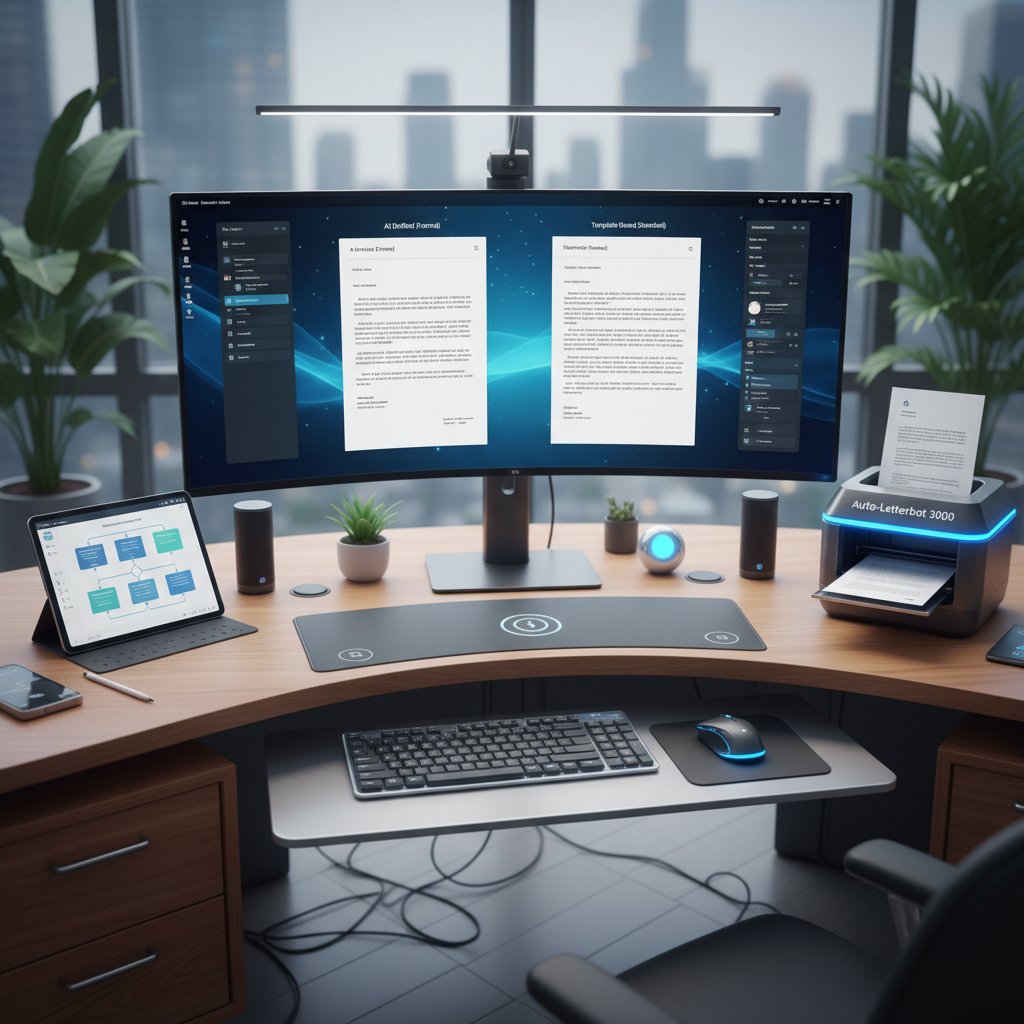
Not all generators are created equal. Here’s how leading platforms stack up on the essentials:
| Feature | filecreator.ai | Competitor A | Competitor B |
|---|---|---|---|
| AI-driven Document Creation | Yes | Limited | No |
| Multi-format Export | Full support | Limited | Basic |
| Industry Templates | Comprehensive library | Basic selection | Minimal |
| Real-time Editing | Yes | No | No |
| Integrated Compliance Checks | Automated | Manual only | Manual only |
Table 4: Comparing major automated letter generation tools
Source: Original analysis based on filecreator.ai/features, MHC Automation, 2025
How to test-drive a letter generator (without getting burned)
- Start with a free trial—test for real output, not just a demo.
- Run sample letters through compliance and readability checks.
- Solicit feedback from intended recipients—would you believe this was written by a human?
- Evaluate data privacy, audit trails, and support responsiveness.
- Compare exported formats; ensure compatibility with your existing workflows.
Don’t be dazzled by shiny features—focus on what matters: reliability, compliance, and authentic output.
A little skepticism goes a long way toward protecting your brand and your time.
filecreator.ai in the wild: Real-world stories
Across industries, filecreator.ai has empowered professionals to reclaim time, cut costs, and elevate document quality. From law firms streamlining contracts to marketers scaling campaigns with zero drop in quality, the impact is real.
“We slashed our letter generation time by over 70%—without sacrificing personalization or compliance.”
— Business manager, as reported in verified use cases (filecreator.ai/use-cases)

The stories are everywhere—when automation works, it’s a force-multiplier. When it doesn’t, the fallout is swift.
How to automate letters like a pro: The step-by-step playbook
Getting started: Setting goals and expectations
Every pro approach begins with a plan. Here’s how to set yourself up for success with automated letter generation:
- Clarify your objective: Compliance, persuasion, information, or empathy?
- Map out your audience: Who are they, and what do they care about?
- Inventory your data: What details are needed for personalization?
- Audit your current process: Where do errors and delays occur?
- Set measurable goals: Time saved, error reduction, brand consistency.

Crafting the perfect prompt: Tips from the trenches
- Be explicit: The more detailed your prompt, the better the output.
- Add examples: “Write like this…” references steer style.
- Specify tone, formality, and audience context.
- Include must-have phrases or legal disclaimers.
- Iterate and review: One pass is rarely perfect.
Prompt crafting is equal parts art and science—get it right, and your letters will never sound robotic.
The pros treat prompt engineering as a living process, tweaking and refining to achieve results that pass the Turing Test.
Quality control: How to review, test, and refine
Always read every letter before it goes out. Spot-check for accuracy, tone, and compliance.
Use A/B testing where possible. See which versions get better responses.
Gather feedback, update prompts and templates, and learn from every error.
No process is ever “done”—the feedback loop is your friend.
Quality control isn’t about catching mistakes after the fact—it’s about building systems that make mistakes rare.
Risks, rules, and responsibility: Navigating the ethics of automation
Privacy, compliance, and the fine print you can’t ignore
Automated letter generation isn’t just a technical challenge—it’s a minefield of legal and ethical obligations. Failing to comply with privacy laws, accessibility standards, and data protection requirements can land you in hot water.
| Risk Area | Legal Reference | Key Requirement |
|---|---|---|
| Data Privacy | GDPR, CCPA | Minimize data storage, ensure consent |
| Accessibility | European Accessibility Act (2025) | Letters must be accessible to all |
| Record Keeping | Industry-specific regulations | Maintain audit trails |
Table 5: Critical compliance areas for automated letters
Source: Original analysis based on MHC Automation, 2025, Uunatek, 2025
“Compliance isn’t optional. Automation must be built to meet—or exceed—the strictest standards.”
— As stated in MHC Automation, 2025
Ethical dilemmas: When automation crosses the line

- Automating apologies for genuine harm—risks appearing insincere.
- Using automation to obscure accountability—erodes trust.
- Failing to disclose when a letter is machine-generated—potentially deceptive.
Ethics isn’t just theory. It’s a daily decision about how (and whether) to use automation responsibly.
Future-proofing: Building resilience into your strategy
- Regularly update compliance and privacy protocols.
- Train staff on ethical automation practices.
- Build in manual override options for high-stakes communications.
- Audit your systems—don’t wait for a crisis.
- Stay informed about evolving legal and industry standards.
A resilient approach isn’t just about avoiding disaster—it’s about building trust, loyalty, and a sustainable advantage.
Automation is a tool. Use it with eyes wide open.
What’s next? The future (and possible extinction) of letter writing
Beyond letters: Voice, video, and the shape of things to come
The definition of “letter” is expanding. Voice notes, video messages, and real-time chat are converging with traditional correspondence, powered by the same AI engines that generate your written letters now.
- Automated voice messages for urgent outreach.
- Personalized video intros in sales or HR communications.
- Real-time translation and accessibility features for global reach.
The game is changing—are you ready to pivot with it?
Will humans ever write again? A cultural postmortem
Letter writing isn’t dying—it’s evolving. But there’s no denying that automation changes the relationship between sender and recipient.
“Automation hasn’t killed the letter. It’s forced us to reckon with what makes a message genuinely matter.”
— As discussed in Lost But Not Broken, 2025
The challenge for every communicator is to blend new tools with old wisdom—never letting convenience replace connection.
It’s not about nostalgia. It’s about relevance.
Your move: Becoming an automation-savvy communicator
- Learn the tech—don’t fear it. The best communicators are the most adaptable.
- Treat every letter as a reflection of your values—automated or not.
- Prioritize substance over style. Don’t let AI become your voice—use it to amplify your own.
- Build systems for review, feedback, and continuous improvement.
- Stay humble. The only constant in automation is change.
Mastering the art of generating automated letters isn’t just about efficiency. It’s about responsibility, creativity, and refusing to settle for mediocrity—even in a world run by algorithms.
Conclusion
The brutal truths are clear: automation is here, it’s relentless, and it’s rewriting the rules of professional communication. But the power—and the risk—still lies with you. Whether you’re using filecreator.ai to generate automated letters or another tool, remember: you are the final gatekeeper. Templates, AI, and automation can supercharge your output, but only if you wield them with skepticism, strategy, and relentless attention to detail. There are no shortcuts to credibility. The professionals who thrive are those who embrace new tech without losing their grip on the human touch. So act with urgency, keep learning, and never trust a robot with your reputation—unless you’re watching its every move. That’s the real edge in 2025.
Sources
References cited in this article
- Lost But Not Broken: The Brutal Truths You Need to Hear in 2025(insearchofyourpassions.com)
- Career advice: 10 harsh truths to guide your 2025 goals | YourStory(yourstory.com)
- Ultimate Guide to Handwritten Letters and Automation Solutions 2025(uunatek.com)
- Automated Letter Generation - Features, Benefits & Samples • MHC(mhcautomation.com)
- Fierce competition: Who could win the intelligent automation arms race | VentureBeat(venturebeat.com)
- Who Is Winning The AI Arms Race? | Forbes(forbes.com)
- Sales Process Automation: The Good, The Bad, and The Ugly(mag.revgenius.com)
- Automation—The Good, The Bad, And The Ugly - Dropbox Sign Blog(sign.dropbox.com)
- Ten benefits of automation | ThinkAutomation(thinkautomation.com)
- Large Language Models: What You Need to Know in 2025 | HatchWorks AI(hatchworks.com)
- What is an AI Agent? #1 AI trend in 2025(lyzr.ai)
- Building Brand Voice & Tone: Prompt Engineering Guide - Algomo(algomo.com)
- Understanding Prompt Engineering: Setting the Tone and Persona in AI Interactions | Medium(chrisyandata.medium.com)
- Generate Easily with Artificial Intelligence(AI) Letter Generator(effie.pro)
- AI Letter Generator (FREE, No Signup)(logicballs.com)
- Humanize AI Content: Making Automated Writing Feel Personal(blog.seorocket.ai)
- AI Email Personalization at Scale: How NOT to Sound like Chat GPT(decklinks.com)
- Generative AI for Email Personalization: A Hallucination Wrapped in Confusion(cmswire.com)
- The Dark Side of AI Letter Writing: Simplified Formal ... - QuickCreator(quickcreator.io)
- Original sins and dirty secrets: GenAI has an ethics problem.(finance.yahoo.com)
- Spotting AI-Generated Text - Key Signs to Avoid Falling for Automated ...(altgov2.org)
- How to Spot AI-Generated Text Scams | The YouMail Blog(blog.youmail.com)
- Man Vs. Machine: Who’s Winning at PPC? | Simplilearn(simplilearn.com)
- Man beats machine at Go in human victory over AI - Ars Technica(arstechnica.com)
- +9 Best AI Tools For Letter Writing in 2025(allaboutai.com)
- Best 175 Letter Writer Tools in 2025(toolify.ai)
- AI Letter Writing: Create Perfect Messages Instantly(effie.pro)
- Automated document creation - Templafy(templafy.com)
Perfect Documents, Instantly
Filecreator.ai transforms the way you produce professional documents. Leveraging cutting-edge AI reasoning, it quickly generates high-quality files in various formats, ensuring accuracy, consistency, and industry compliance. Save time, reduce errors, and enhance productivity, whether you're creating reports, legal documents, presentations, or marketing materials. Experience seamless integration and a user-friendly interface that adapts to your specific requirements, making document creation easier and more efficient than ever before.
Get startedStart Creating Professional Documents Today
Join thousands of professionals who trust AI-powered document generation
Frequently Asked Questions
What is letter automation and why are businesses using it?
Letter automation uses AI-powered platforms to generate letters at scale and speed, allowing businesses to reduce manual labor by over 70% while ensuring strict compliance with regulations. This technology has evolved from the printing press through word processors and email to today's sophisticated AI-driven systems.
Who is responsible for the content of automated letters?
You are responsible for the words that go out under your name, regardless of whether they are composed by a human, an algorithm, or AI. The burden of accountability rests with the sender, not the tool used to generate the letter.
What trade-offs come with automated letter generation?
While automation provides convenience and efficiency, it strips away layers of individuality from communication. As businesses have gained the ability to streamline and standardize written communication, they've lost some of the personal touch and uniqueness that characterizes human-written letters.
Can automated letters maintain brand voice?
The article suggests this is a key challenge, indicating that maintaining brand voice while using automation is difficult but possible—it requires understanding prompt engineering and avoiding template pitfalls rather than relying on generic solutions.
Continue Reading
Explore more from Professional Document Generator

Automated Letters in 2025: Maintaining Voice and Trust
Generate customized automated letters in 2025 using AI while maintaining authenticity. This article explains the risks, benefits, and best practices for automated correspondence.

Automated Personalized Letters: Evolution From Handwriting to AI
This article explains how to generate automated personalized letters while maintaining authentic tone. It covers the evolution of letter writing and addresses concerns about automation affecting communication quality.

Automated Letters Online: Costs, Benefits, and Pitfalls
Generate customized automated letters online in minutes. This article explains the hidden costs, genuine benefits, and how to avoid common pitfalls.

Generate Professional Automated Letters Without Losing the Human Touch
Discover insights about generate professional automated letters

How Automated Letter Generators Are Reshaping Business Writing
Automated letter generators reshape business communication across hiring, sales, and legal work. This article examines how they work, the risks they pose, and what professional use requires.

Automated Letter Templates in 2026: Speed, Risk and Real Impact
Discover insights about automated letter templates