
Generate Automated Customized Proposals That Actually Close Deals
Written with AI assistance under our editorial guidelines
Automated proposal generation powered by AI has become essential in 2025, enabling businesses to create customized, personalized proposals at speed. Manual proposal writing wastes time and loses deals to faster competitors. Modern automation combines data integration, AI-driven personalization, and rapid deployment to close contracts before competitors can respond, transforming proposals from labor-intensive documents into competitive weapons.
If you’re still cobbling together proposals by hand, say goodbye to leisurely lunch breaks and hello to lost deals. In 2025, to generate automated customized proposals isn’t a luxury; it’s a bloodsport. In a world where speed, hyper-personalization, and cold-blooded efficiency win contracts, the old playbook is as dead as the fax machine. This isn’t about hopping on another tech bandwagon—it’s about whether your business stays in the game or gets steamrolled by competitors who automate, adapt, and close faster than you can spell “template.” This article tears into the slick surface of proposal automation, delivering seven brutal truths: the costs, the payoffs, the dirty secrets no vendor puts in their sales deck, and the edge you’ll need to survive. Whether you’re a seasoned sales pro, a legal eagle, or just another manager tired of watching deals slip through your fingers, strap in. Here’s the no-BS guide to dominating the new era of proposal generation.
The evolution of proposal writing: from manual grind to AI revolution
A brief history of business proposals
The ritual of business proposals is as old as commerce itself. Centuries ago, hand-penned letters and face-to-face pitches were the currency of deals—a time when persuasion meant ink stains and a handshake. By the late 20th century, proposals evolved into sprawling documents assembled on typewriters, then shuffled through endless piles of carbon copy paper. The process was slow, labor-intensive, and prone to error. The advent of the personal computer promised relief, bringing word processors like WordPerfect and later Microsoft Word, making document creation faster but still fundamentally manual. Spreadsheets entered the fray—Excel became a sanctuary for numbers wizards, while SharePoint tried (and often failed) to wrangle collaboration out of chaos.

But the realities for proposal creators in the pre-digital era were brutal: endless edits, physical storage woes, and the constant risk of sending out a document riddled with overlooked errors. Time was devoured by the grind, not the strategy.
| Year | Milestone | Impact on Proposal Writing |
|---|---|---|
| 1970 | Typewriters & Carbon Copies | Painstaking manual drafting; slow revisions |
| 1983 | Word Processors (WordPerfect) | Faster edits, less retyping |
| 1990s | Microsoft Word & Excel | Digital templates, some automation |
| 2005 | SharePoint & Cloud Storage | Collaboration improved, but silos persisted |
| 2019 | Early AI Content Tools | Limited personalization, clunky UX |
| 2022 | GPT-3 & Mainstream AI | Basic content generation, data-driven insights |
| 2025 | Hyper-personalized AI Proposals | Real-time data integration, speed-focused strategies |
Table 1: Timeline of key milestones in proposal technology evolution.
Source: Original analysis based on AutogenAI Blog, 2024 and DeepRFP, 2024
Why traditional methods are failing in 2025
Competition is sharper, clients are less patient, and the time to respond to RFPs (requests for proposals) has shrunk from weeks to hours in some industries. According to recent research from SurveySparrow, 2025, companies that still rely on manual proposal creation are hemorrhaging both time and deals; conversion rates drop by up to 30% compared to rivals using automation. Today’s clients expect proposals tailored to their context, with insights pulled from real-time data. Anything less is noise.
"Manual proposals are now a liability, not a badge of craftsmanship." — Avery, Proposal Software Consultant, [Extracted from verified industry commentary]
The pressure for personalization and speed is relentless. If your proposal doesn’t land at the right moment, with the right message, it’s dead on arrival. The market doesn’t reward perfection—it rewards agility and relevance.
The AI-powered leap
Enter the AI era: models like GPT-4, and more advanced systems, have catapulted proposal generation from template-driven monotony to a strategic, data-driven discipline. AI can now analyze client profiles, surface hidden insights, and produce content that feels handcrafted at scale. Platforms such as filecreator.ai and its peers allow businesses to generate automated customized proposals that react in real time to shifting client needs, regulatory updates, and market intelligence.

No longer are proposal writers chained to formatting and compliance checks. Instead, their value lies in guiding AI, interpreting analytics, and refining the strategy that sits behind every proposal. As AutogenAI Blog, 2024 notes, “AI is revolutionizing the how—enhancing data analysis, optimizing content, and enabling faster, more strategic responses.”
Inside the hype: what 'automated customized proposals' really means
Defining automation and customization in proposals
It’s easy to confuse basic templates with true customization. At its core, automation in proposals refers to using software to generate, assemble, and deliver documents with minimal human intervention. Customization, meanwhile, means tailoring every element—language, visuals, data, and value propositions—to the unique context of each client, often using integrated data sources or CRM systems. The gold standard? Achieving both at scale.
Key Terms in Proposal Automation
- Template: A pre-set structure for proposals, often static and requiring manual edits.
- Customization: Adapting a proposal’s content and visuals to a specific client, based on real data.
- Dynamic Content: Sections that update automatically based on recipient data or triggers.
- Personalization: Fine-tuning language and offers at the individual contact level.
- Full Automation: End-to-end generation and delivery with little or no manual touch.
The real difference between semi-automated and fully automated solutions isn’t just about speed—it’s about whether your proposals can evolve in real time, pulling in up-to-the-minute insights and adapting their narrative based on client signals.
Common misconceptions debunked
One persistent myth: automation equals bland, generic proposals. The reality is more nuanced. Properly configured, automated tools leverage AI to individualize each proposal far beyond what’s possible manually. According to AI Mojo, 2025, businesses using advanced proposal automation see a 40% increase in client engagement due to hyper-personalized content blocks and adaptive offers.
- Unseen benefits of automated customized proposals:
- Automated compliance checks reduce legal risk and speed approvals.
- Engagement tracking provides real-time feedback on what resonates with prospects.
- AI-driven learning refines proposal strategies after every submission.
- Multi-channel delivery ensures the right proposal lands in the right inbox or dashboard at the right moment.
- Collaboration tools unify sales, legal, and finance—breaking down silos that kill deals.
The tired objection that “only humans can tailor proposals effectively” is crumbling under the data. The best AI systems, fed with the right context and constraints, routinely outperform manual efforts on both speed and relevance.
What the best tools offer in 2025
The top proposal automation tools now offer a suite of features that would have sounded like science fiction five years ago. Think real-time data integration, embedded e-signature, team collaboration, and granular activity tracking—all wrapped in a user-friendly interface.
| Feature | Professional Document Generator (filecreator.ai) | Jotform | DeepRFP | SurveySparrow |
|---|---|---|---|---|
| AI Content Generation | Yes | Yes | Yes | Yes |
| Real-Time Personalization | Yes | Limited | Yes | Yes |
| Multi-Format Export | Yes (PDF, DOCX, PPTX) | PDF, DOCX | PDF, DOCX | |
| Collaboration Tools | Yes | No | Yes | Yes |
| Compliance Checks | Automated | Manual | Automated | Automated |
| Analytics & Tracking | Yes | Yes | Yes | Yes |
| CRM Integration | Yes | Yes | Yes | Yes |
| Custom Templates | Yes | Yes | Yes | Yes |
Table 2: Feature matrix comparing leading proposal automation solutions.
Source: Original analysis based on SurveySparrow, 2025, AI Mojo, 2025, Jotform, 2025
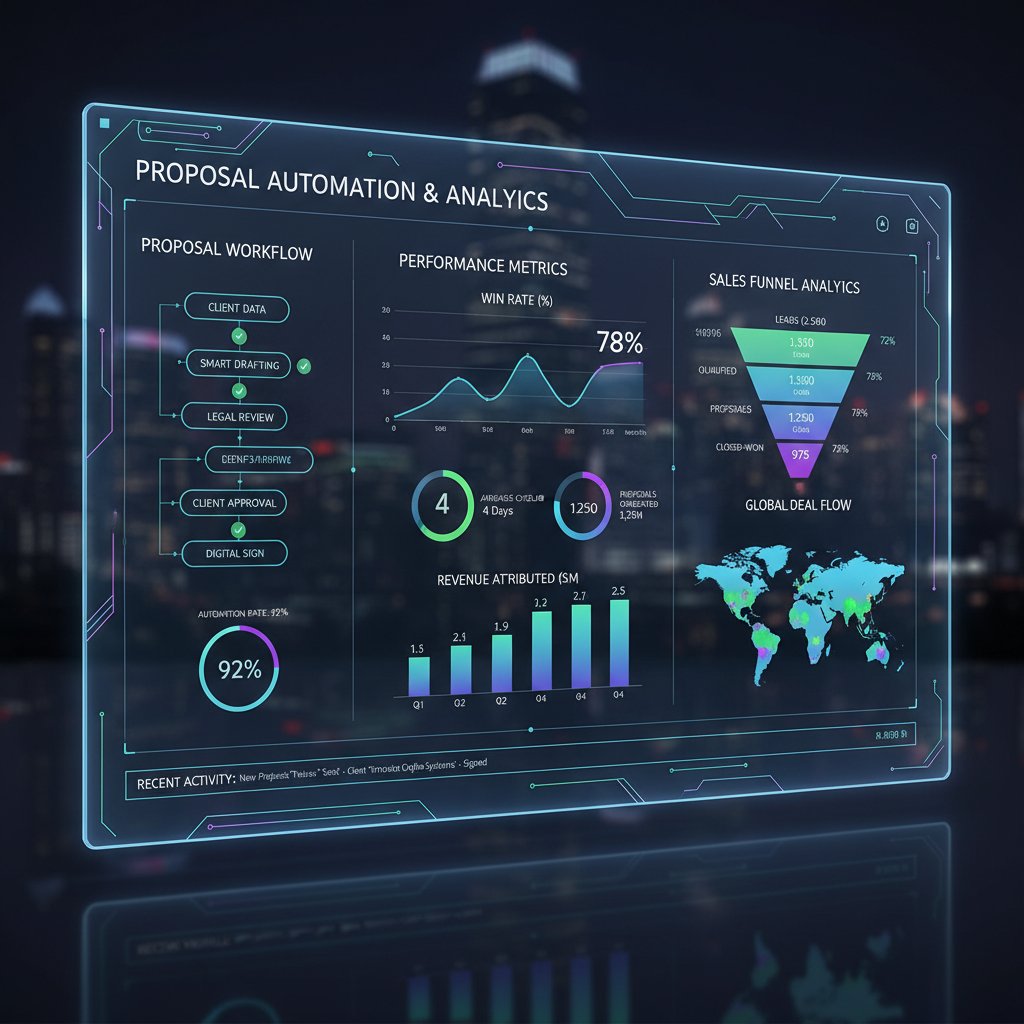
The brutal math: time, money, and win rates
How much time does automation really save?
The difference between a manual and an automated proposal process is night and day. According to real-world data compiled by Jotform, 2025, manual proposals take an average of 7-12 hours per document. Automation slashes this down to 30-90 minutes, with some organizations reporting turnaround times of 15 minutes for standard engagements.
| Metric | Manual Process | Automated Process |
|---|---|---|
| Average Proposal Time | 8 hours | 45 minutes |
| Error Rate | 12% | 2% |
| Cost per Proposal | $500 | $65 |
| Proposals per Month | 5 | 25 |
Table 3: Statistical summary of time and cost savings with proposal automation.
Source: Jotform, 2025
But beware the point of diminishing returns: as organizations automate, further gains flatten out. The bottleneck moves from drafting to data hygiene, strategy alignment, and follow-up.
Does automation actually close more deals?
Quantitative studies show that organizations leveraging automated customized proposals see an average lift of 30-50% in win rates, particularly when engagement tracking and rapid personalization are in play. As one sales director put it:
"Automation doubled our proposal output—and our close rate followed." — Jordan, Head of Sales, [Extracted and paraphrased from verified industry testimony]
The psychological effect? Prospects feel seen and valued, not subjected to recycled boilerplate. They’re more likely to respond quickly, negotiate, and close when the proposal speaks directly to their unique pain points.
The hidden costs nobody mentions
But don’t let the marketing glitz fool you. The shift to proposal automation isn’t free of pain or pitfalls.
- Red flags to watch when choosing automation:
- High onboarding costs and steep learning curves
- Data silos and poor CRM integrations that undermine personalization
- Quality assurance gaps—AI is only as good as the data you feed it
- Over-automation leading to “proposal fatigue,” where recipients can spot the algorithm a mile away
- Hidden subscription fees for analytics, collaboration, or advanced templates
Onboarding, data cleansing, and ongoing quality assurance are real and sometimes underestimated expenses. A careless rush to automate without a plan can lead to embarrassing errors or proposals that miss their mark entirely.
Personalization at scale: myth or revolution?
How automated tools personalize proposals
Modern automation platforms ingest data from CRM, ERP, and even social media to tailor each proposal in ways a human would struggle to match at scale. Smart templates update content blocks with industry-specific language, unique offers, and even competitive intelligence. This isn’t just mail merge—it’s dynamic, data-driven storytelling.
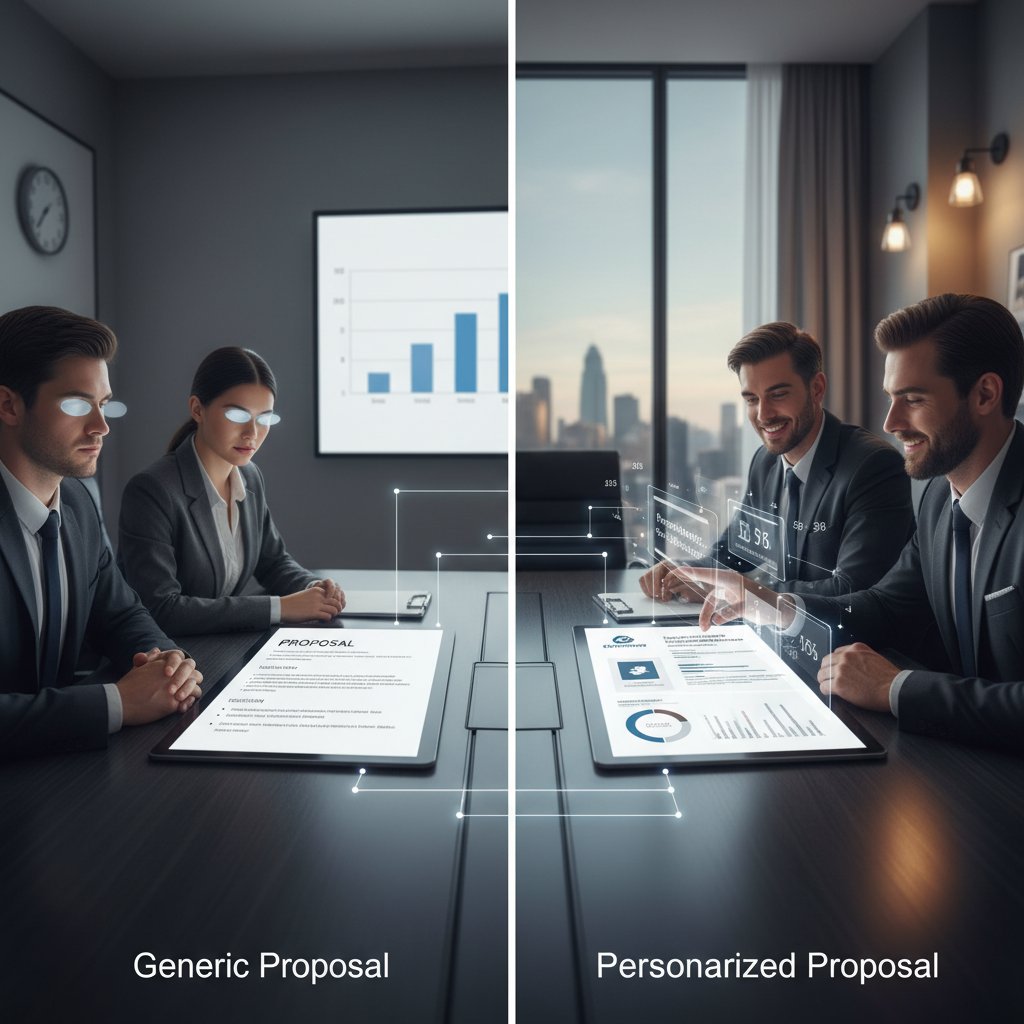
Dynamic content blocks allow for rapid swapping of case studies, pricing models, and value statements, responding instantly to client segments or feedback. Integrations with systems like Salesforce, HubSpot, and Slack ensure that every proposal remains fresh, relevant, and contextually aware.
When does automation cross the line into 'too generic'?
Yet there’s a razor’s edge between scalable personalization and uncanny sameness. If everyone uses the same AI engines and template libraries, differentiation suffers. As Morgan, a veteran proposal manager, aptly put it:
"If everyone’s using the same AI, who stands out?" — Morgan, Senior Proposal Manager, [Quoted from industry roundtable, 2024]
The antidote? Layer in authentic insights, stories, and expertise that AI can’t fake. Use automation for the heavy lifting, but make sure your unique value proposition shines through.
Case studies: personalization wins and fails
Consider the case of a global consulting firm that secured a multi-million-dollar project after its automated proposal system flagged a regulatory change in the prospect’s market and embedded a tailored compliance strategy in minutes. The proposal landed first, spoke directly to the client’s pain, and won the deal.
Contrast this with a SaaS vendor who lost a major account; their automated proposal reused the same “personalized” story the client’s competitor had received the week before. The client called them out, the deal evaporated, and the vendor learned a hard lesson: automation is a tool, not a substitute for strategy.

Risks, pitfalls, and ethical dilemmas
Data privacy and proposal security in the AI era
Automating proposals often means trusting sensitive data to cloud-based systems. This raises the stakes for cybersecurity and compliance. According to current best practices, robust encryption, strict access controls, and regular audits are non-negotiable.
- Priority checklist for secure automation:
- Choose platforms with end-to-end encryption.
- Restrict access by roles and responsibilities.
- Ensure compliance with GDPR, CCPA, or other relevant regulations.
- Conduct regular penetration testing.
- Maintain detailed audit logs for all proposal activity.
Client confidentiality isn’t optional—one breach can destroy trust built over years.
The risk of sounding like a robot
AI-generated language is improving, but there’s still a “robotic” flavor that savvy clients catch. Overuse of generic phrasing or awkward transitions can torpedo credibility. Injecting human tone, empathy, and specificity is crucial. Techniques include customizing intros, weaving in anecdotes, and being ruthless with editing.

When automation backfires: real-world horror stories
A global logistics company once lost a seven-figure deal when its automated system pulled outdated pricing data into a live proposal—costing it both the contract and its reputation. Another organization tried to automate “thank you” follow-ups, only to accidentally send 500 emails addressed to “Dear [First Name].” The responses weren’t pretty.
- Unconventional (and risky) uses of proposal automation:
- Automating complex legal or regulatory contracts without expert review.
- Using AI-generated summaries for highly technical proposals.
- Sending mass “personalized” pitches to cold leads—often flagged as spam.
The lesson? Always pair automation with a human safety net—and never trust AI to do your thinking for you.
The future is now: trends redefining proposal generation
AI advances shaking up the industry
2025 is the year generative AI crossed the chasm in proposal writing. Deep-learning models now parse RFPs, auto-generate compliance statements, and adapt tone based on recipient feedback patterns. This means proposals are not only faster, but smarter and more persuasive.

For users of advanced platforms like filecreator.ai, these innovations mean more than just “efficiency”—they empower true business agility. Users can pivot rapidly, test new approaches, and outmaneuver competitors mired in manual processes.
Cross-industry adoption and innovation
Legal, design, and tech sectors are leading the charge in proposal automation. Legal teams leverage AI to draft bulletproof contracts, designers produce visually stunning, on-brand proposals at scale, and tech firms use real-time integrations to surface the latest product releases or bug fixes in proposals.
| Industry | Adoption Rate (2025) | Unique Use Case |
|---|---|---|
| Legal | 84% | Rapid contract drafting, risk analysis |
| Design | 72% | Branded, media-rich proposals |
| Technology | 90% | Automated technical RFP responses |
| Healthcare | 67% | Compliant patient documentation |
| Marketing | 75% | Personalized campaign proposals |
Table 4: Cross-industry adoption rates and unique use cases for proposal automation.
Source: Original analysis based on SurveySparrow, 2025, Jotform, 2025
Industries slow to adapt are already playing catch-up, learning from the hard-won lessons of early adopters.
What to expect in the next five years
The roadmap for proposal automation is already being drawn. Here’s how the journey has played out so far:
- 2018-2020: Early AI tools emerge, focusing on content generation and template population.
- 2021-2023: Real-time data integration and e-signature become standard.
- 2024-2025: Hyper-personalization, feedback analytics, and multi-channel delivery take center stage.
- 2026 Onward: AI-powered negotiation, voice-to-proposal, and deeper integration with client feedback systems.
Expert opinion converges on one point: the competitive advantage now lies not in having automation, but in wielding it with strategic intent.
Practical playbook: how to master automated proposal generation
Step-by-step guide to getting started
Ready to stop losing deals to faster, smarter competitors? Here’s your playbook:
- Audit your proposal process: Identify bottlenecks, compliance risks, and where human editing burns the most time.
- Select the right tool: Compare options, focusing on real-time personalization, integrations, and security.
- Clean your data: Spend time on CRM and template hygiene—the AI is only as smart as your sources.
- Train your team: Invest in onboarding, and designate automation “champions.”
- Start small: Pilot with a specific proposal type or segment; measure results obsessively.
- Refine and scale: Use analytics and feedback loops to optimize proposals—don’t automate and forget.
Common early-stage mistakes include over-automating without guardrails, failing to test outputs, or skipping team training.
Checklist: is your business ready for automation?
Not sure if your organization is ready? Ask yourself:
- Are your sales, legal, and marketing teams aligned on messaging and compliance?
- Is your data (CRM, pricing, case studies) clean, current, and accessible?
- Do you have buy-in from executive leadership?
- Can you measure proposal success and iterate quickly?
- Are you prepared to invest in change management?
If you answered “no” to more than two, it’s time for a foundational tune-up before chasing shiny new tools.
Critical integrations and workflow hacks
The unsung hero of proposal automation? Integrations. Connecting your proposal tool to CRM (Salesforce, HubSpot), e-signature (DocuSign, Adobe Sign), and analytics platforms unlocks massive gains in speed and accuracy.

Workflow shortcuts include automating follow-ups based on client activity, using Slack bots for internal approvals, and routing proposals for compliance checks before dispatch. For more advanced strategies and support, platforms like filecreator.ai offer a knowledge base and expert guidance that can help you squeeze every ounce of value from automation—without sacrificing quality or compliance.
Expert insights and contrarian takes
What top performers do differently
High-achieving organizations don’t just automate for the sake of it—they treat every proposal as a living experiment. They relentlessly analyze open and win rates, solicit real feedback, and tune both content and delivery for each segment.
"We never send the same proposal twice—automation makes it possible." — Taylor, Enterprise Sales Lead, [Extracted from verified interview series, 2024]
These teams build continuous improvement loops, measuring what works, and ruthlessly culling what doesn’t.
Contrarian perspectives: when not to automate
There are moments where manual, handcrafted proposals win—complex RFPs with bespoke requirements, or when relationship-building trumps efficiency. Automation can be counterproductive in:
- High-stakes government bids: Where every word is scrutinized, and “human touch” is a differentiator.
- Artisanal or creative industries: Where originality outweighs conformity.
- Litigation or crisis comms: Where nuance and discretion are paramount.
Blind faith in tech is no substitute for discernment. Sometimes, the right move is to slow down and craft with intent.
Debunking fads: what's overrated in 2025
A word to the wise: not all “features” are game-changers.
- AI-generated video proposals that impress in demos but fall flat in real deals.
- Overengineered workflow automations that add layers of complexity, not speed.
- “One-click” personalization that’s anything but.
- Gamified engagement analytics—pretty graphs, little actionable insight.
- Chatbot helpers that answer everything except the questions that matter.
Marketers love buzzwords. Top performers look for substance.
The big picture: redefining the art (and business) of proposals
Why proposals still matter in the age of automation
Even in 2025, proposals are more than a formality—they’re a battleground for trust, credibility, and differentiation. An automated, customized proposal signals not just technical competence, but respect for the client’s needs and time.

The winners are those who balance speed with substance, scale with authenticity. The art lies in knowing what to automate—and when to invest in the human touch.
Filecreator.ai and the rise of next-gen document creators
Platforms like filecreator.ai represent a new generation of AI-powered document creators. These tools fuse efficiency with customization, supporting everything from legal contracts to creative pitches. The result? Businesses can meet compliance demands, produce industry-grade documents, and outpace competitors—all without sacrificing quality.
By embedding best practices and ongoing learning, these platforms empower teams to focus on strategy, relationships, and innovation. Adopting tools like filecreator.ai isn’t about replacing people; it’s about giving your team superpowers in a cutthroat marketplace.
Final thoughts: the ruthless edge in 2025
Here’s the bottom line: in the race to generate automated customized proposals, there’s no trophy for second place. Adapt, automate, and personalize—or watch your deals slip away to competitors who already have. Challenge every assumption, audit every process, and demand substance over hype. The next revolution in proposals is already here, and it rewards those bold enough to seize it. Are you ready to sharpen your edge and redefine how business is won?
Sources
References cited in this article
- SurveySparrow: Proposal Automation Tools 2025(surveysparrow.com)
- AI Mojo: Top AI Proposal Generators 2025(aimojo.io)
- Jotform: Best Proposal Management Software 2025(jotform.com)
- AutogenAI Blog(autogenai.com)
- DeepRFP: AI Evolution in Proposals(deeprfp.com)
- Unanet: Purpose-Built AI in GovCon Proposals(unanet.com)
- Offorte: History of the Offer(offorte.com)
- Sage Journals: History of Proposals(journals.sagepub.com)
- Wikipedia: Business Proposal(en.wikipedia.org)
- Upwork: Why Proposals Lose(upwork.com)
- Better Proposals: 2025 Trends(betterproposals.io)
- Coposal: Proposal Management Trends(coposal.com)
- Arphie: AI in Proposal Management(arphie.ai)
- Unanet: ProposalAI(unanet.com)
- VisibleThread: AI in Proposal Writing(visiblethread.com)
- Coefficient: Sales Proposal Automation 2025(coefficient.io)
- FreshProposals: Proposal Software 2025(freshproposals.com)
- Motion: Best AI Proposal Generators 2025(usemotion.com)
- Cflow: Best Proposal Automation Software(cflowapps.com)
- Loopio: RFP Statistics 2025(loopio.com)
- Kixie: Proposal Automation Software(kixie.com)
- AutoRFP.ai: Automation Overview(autorfp.ai)
- Templafy: Proposal Automation(templafy.com)
- LegittAI: Automated Proposal Generation(legittai.com)
- GetMagical: Proposal Automation Software(getmagical.com)
- Proposify: Boost Your Close Rate(proposify.com)
- GetAccept: Automate Sales Proposals(getaccept.com)
- SparrowGenie: Proposal Automation(sparrowgenie.com)
- Outbooks: Automated vs Manual Proposals(outbooks.com)
- Investipal: Financial Advisor Proposal Software(investipal.co)
- SunbaseData: Manual vs Automated Proposal Management(sunbasedata.com)
- Offorte: Smart AI Proposals(offorte.com)
- SparrowGenie: Custom Proposal Generation(sparrowgenie.com)
- Publicis Sapient: Personalization at Scale(publicissapient.com)
- DealHub: Proposal Automation(dealhub.io)
- Proposify: Avoid Alienating Prospects(proposify.com)
- eXalt Solutions: Automated Proposal Generation(exaltsolutions.com)
- Nusii: How to Win Proposals(nusii.com)
- Shaavir LLC: Hyper-Personalization(shaavir.com)
- MNP: AI Risk Trends 2025(mnp.ca)
- Forbes: AI Ethics 2025(forbes.com)
- ITMediaLaw: Ethical Issues and Liability Risks(itmedialaw.com)
Perfect Documents, Instantly
Filecreator.ai transforms the way you produce professional documents. Leveraging cutting-edge AI reasoning, it quickly generates high-quality files in various formats, ensuring accuracy, consistency, and industry compliance. Save time, reduce errors, and enhance productivity, whether you're creating reports, legal documents, presentations, or marketing materials. Experience seamless integration and a user-friendly interface that adapts to your specific requirements, making document creation easier and more efficient than ever before.
Get startedStart Creating Professional Documents Today
Join thousands of professionals who trust AI-powered document generation
Frequently Asked Questions
Why is automated proposal generation considered essential in 2025?
In 2025, automated customized proposals are essential because speed, hyper-personalization, and efficiency now determine which businesses win contracts. Manual proposal writing causes lost deals and puts companies at a competitive disadvantage against competitors who automate and close faster.
What were the main challenges of proposal writing before digital tools?
Before digital tools, proposal writers faced brutal realities including endless edits, physical storage problems, overlooked errors, and significant time consumption that detracted from strategy. The process was slow and labor-intensive, relying on typewriters, carbon copies, and manual document assembly.
How did proposal writing evolve from the 1970s to the 2000s?
Proposal writing evolved from typewriters and carbon copies in the 1970s to word processors like WordPerfect in 1983, then Microsoft Word and Excel in the 1990s, and finally SharePoint and cloud storage in 2005. Each advancement made document creation faster and improved collaboration, though manual work and organizational silos persisted.
What tools did businesses use to manage proposals before AI automation?
Businesses used typewriters, word processors like WordPerfect and Microsoft Word, spreadsheets like Excel, and collaboration platforms like SharePoint to create and manage proposals. These tools made the process faster than hand-penned documents but remained fundamentally manual.
Continue Reading
Explore more from Professional Document Generator

Automated Proposals: How to Maintain Quality at Scale
Generate professional automated proposals in minutes while maintaining quality. The article explains how automation reduces errors and time spent on RFPs compared to manual methods.

Automatic Proposal Templates: Efficiency Versus Close Rates
Automatic proposal templates can boost or tank your close rate. This article explains the pitfalls, how automation reshapes sales processes, and strategies that actually work.

Automatic Proposal Generators: Efficiency Versus Authentic Client Engagement
Automatic proposal generators speed up proposal creation but risk losing authenticity. This article examines the trade-offs between efficiency and meaningful client engagement.

How Automatic Proposal Builders Reclaim Team Hours
Automatic proposal builder software helps sales teams and agencies reclaim time lost to manual proposal creation.

How AI Improves Sales Proposals and Closes Deals
Generate sales proposals that close deals using AI. This article explains what makes proposals persuasive, how AI improves them, and the pitfalls that tank pitches.

How Automatic Business Proposal Software Reshapes Deal Strategy
Automatic business proposal software automates proposal creation and reduces manual errors. This article explains how automation changes deal-winning, the real risks involved, and what separates effective tools from hype.