
Generate Automated Contracts Without the Failures No One Admits
Written with AI assistance under our editorial guidelines
Automated contract generation promises speed, consistency, and reduced errors compared to manual processes, with financial services already using automation for over 85% of contracts and achieving 40% faster processing times. However, the technology carries hidden risks and technical pitfalls that organizations must carefully navigate to achieve truly bulletproof digital agreements.
Welcome to the digital battlefield where contracts are forged, not written. In 2025, to generate automated contracts isn’t just a parlor trick for overworked legal teams—it’s a survival strategy for anyone sick of paperwork, missed deadlines, and human error. But step behind the marketing curtain, and the truth is rawer than you think. Automated agreements promise frictionless deals and instant compliance, but they also bring hidden risks, technical traps, and a new breed of digital bureaucracy. This deep dive is your guide to the real story—unfiltered, fact-checked, and laced with hard-won insights. We’ll expose the brutal realities, highlight who actually wins the race to automate, and show you how to outsmart the pitfalls. If you want bulletproof digital contracts and aren’t afraid of inconvenient truths, you’re in the right place.
Why everyone is obsessed with automated contracts (and what they're not telling you)
The rise of automation in legal work
Not long ago, legal work was synonymous with endless nights, rooms stacked with paper, and a cast of clerks drowning in fine print. Today, the mood has shifted. Contract automation is no longer a Silicon Valley fever dream; it's the new office gospel for everyone from finance giants to garage startups. Driven by relentless demands for speed, accuracy, and cost control, organizations are ditching pen-and-paper for digital workflows. The pandemic slammed the accelerator, making remote collaboration and e-signatures not just normal, but necessary. According to industry data, over 85% of financial services contracts are now managed through smart automation platforms, slashing processing times by up to 40% (Summize, 2024).

Manual contracts are fading into obsolescence for one simple reason: they can’t keep up. Errors multiply, compliance slips, and deals stall in endless review cycles. Automation flips this script, promising contracts that are faster, more consistent, and far less prone to the quirks of human fatigue. As Alex, an AI strategist, puts it:
"Automated contracts aren’t just faster—they’re a whole new mindset." — Alex, AI strategist, 2024
Yet, this digital revolution hasn't arrived without skepticism. Early adopters in legal departments rolled their eyes at “one-click contracts,” fearing loss of nuance and legal risk. But as the data piles up, most are rethinking their stance. The cultural shift is real: trust in AI for critical documentation is growing, but the transition is as much about psychology as it is about technology.
The promise vs. the reality
The glossy pitch for generate automated contracts is irresistible: “Set it and forget it.” One click, zero errors, instant execution. But here’s the unvarnished truth—most organizations hit unforeseen snags. Not every deal is plug-and-play, and real-world contracts are messy, full of exceptions, and shadowed by regulatory quirks.
Hidden benefits of generate automated contracts (they won’t tell you):
- Audit trails you can actually trust: Every change tracked, every signature timestamped—no more “he said, she said.”
- Compliance as a default, not an afterthought: Automated checks flag missing clauses and outdated terms before you hit send.
- Self-service for non-legal teams: Sales, HR, and finance can run their own agreements without bottlenecking legal.
But for every upside, there are barriers and costs lurking beneath the surface. Integration with legacy systems can be a black hole for budgets, while ambiguous contract language routinely stumps even the best AI engines. Security flaws aren’t theoretical—high-profile breaches have put sensitive deals in the headlines for all the wrong reasons.
| Feature / Dimension | Manual Contracts | Template-Based | AI-Driven Automation |
|---|---|---|---|
| Speed | Slow | Faster | Instant |
| Error Rate | High | Moderate | Low (but not zero) |
| Compliance | Manual review | Partial | Automated |
| Customization | Complete | Limited | High (rule-based) |
| Integration | Weak | Moderate | Strong |
| Upfront Cost | Low | Moderate | High (initial) |
| Ongoing Cost | High | Moderate | Low |
| Security | Paper risk | Digital risk | Cyber risk |
| Human Oversight | Constant | Moderate | Optional/As needed |
Table 1: Real-world comparison of contract generation methods. Source: Original analysis based on Summize, 2024 and verified industry reports.
The anatomy of an automated contract: from blank page to binding document
Core components of contract automation systems
What separates an “automated” contract from a glorified mail-merge? True automation means more than digital templates. It’s a blend of dynamic data, smart logic, audit trails, and deep integration with your business tools. At the core are three pillars: templates, AI-driven clause selection, and seamless data handoffs.
Essential terminology in contract automation:
- Dynamic templates: Pre-built contract shells that pull in variables like party names, dates, and amounts from live data.
- Clause library: Curated bank of pre-approved language, ensuring compliance and consistency.
- Workflow engine: The system managing reviews, approvals, and e-signature routes.
- Integration API: Connects contract tools to CRMs, ERPs, and document management platforms so nothing falls through the cracks.
Under the hood, top-tier platforms use natural language processing to spot ambiguities and catch loopholes. But as any litigator will tell you, even the smartest AI can choke on subtle context or jurisdictional edge cases.
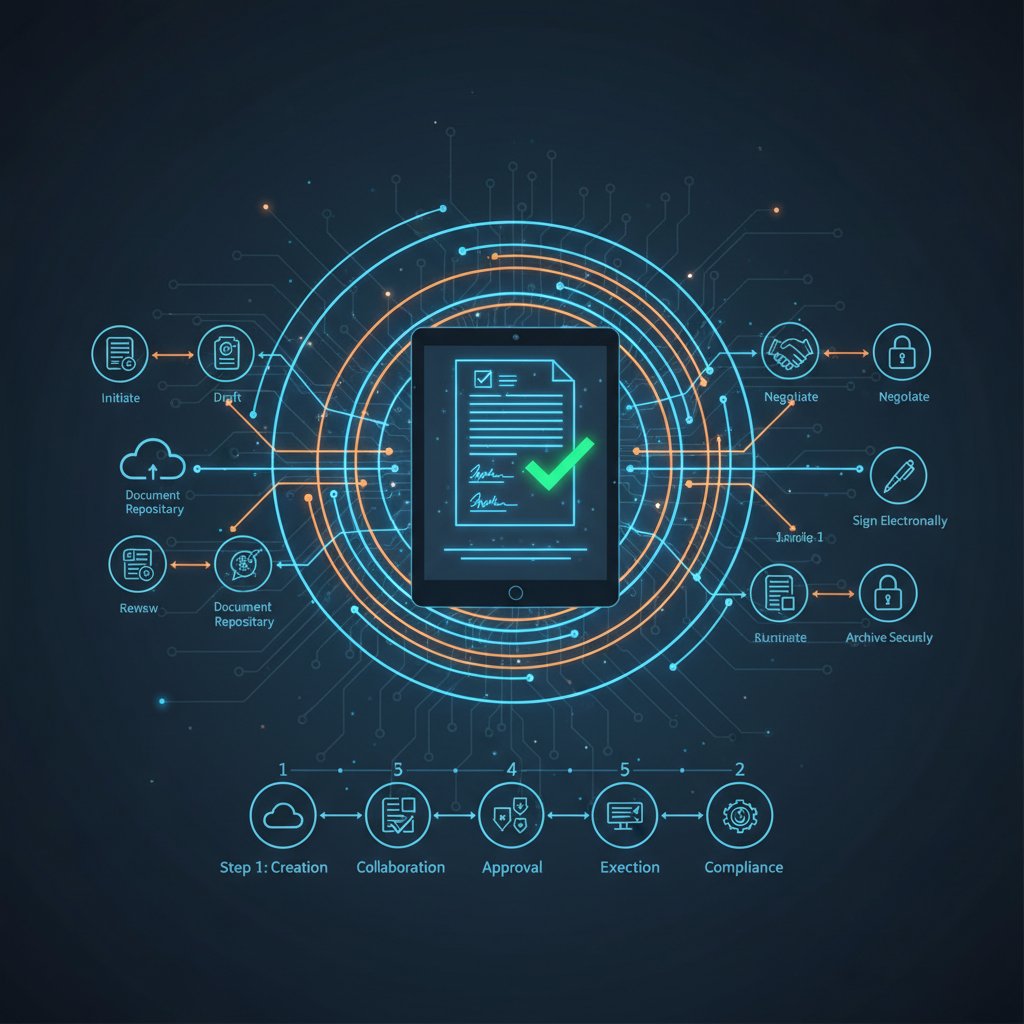
Step-by-step: how a contract is generated automatically
- Choose a template: Start with a vetted, customizable base matching your deal type.
- Input variables: Automatically pull in names, addresses, and numbers from your CRM or data source.
- Select clauses: AI recommends or locks in relevant terms based on deal context and risk profile.
- Review and approve: Designated stakeholders get notified for fast, tracked sign-off.
- E-sign: Parties execute the agreement digitally with audit trails logged.
- Store and track: Contract lives in a searchable repository, triggering alerts for renewals or compliance checks.
Think of it like building a car on an assembly line: each module snaps into place, but a single misfit part—a typo, a missing clause—can throw the whole machine out of gear. Error-prone touchpoints? Most failures happen when data is imported incorrectly, AI misreads intent, or humans skip the final review.
The brutal truth: where automated contracts break down
Case studies: automation failure stories
Picture this: A high-stakes merger derails after a template misapplies a jurisdiction, causing the deal to fall apart post-signature. Or think of a startup that trusted its “smart” contract tool, only to find out months later that a key indemnity clause was left out, exposing them to a multi-million dollar lawsuit. According to legal tech analysts, 15% of automated contracts in finance have required costly human intervention due to edge-case errors (GrowthUnhinged, 2024).

What’s often missed is that so-called “simple contracts” are riddled with hidden dependencies—think regulatory updates, regional quirks, or awkward negotiation histories. Even top platforms can fall into the trap of assuming too much. As Morgan, an in-house counsel, bluntly states:
"You never notice the cracks until everything falls apart." — Morgan, in-house counsel, 2024
The myth of legal infallibility
Automated contracts aren’t a silver bullet. They’re only as reliable as their creators and the data they ingest. The myth that every contract spat out by a digital tool is “legally binding” is dangerously naive.
Red flags to watch out for:
- Outdated templates: If your clause library isn’t updated to reflect the latest law, you’re at risk.
- Jurisdictional mismatches: A contract generated for New York law means nothing in London courts.
- Technical glitches: Bugs or crashes during generation can leave contracts half-formed or missing key elements.
- Ambiguous language: AI struggles with context, and ambiguous phrasing can be weaponized in disputes.
Jurisdiction, legacy language, and integration bugs remain real threats. A “binding” digital document is only as strong as its weakest clause—and without human oversight, mistakes propagate at the speed of code.
Not just for lawyers: who wins (and loses) with automated contracts
Cross-industry applications and surprises
Contract automation isn’t just a lawyer’s game anymore. Tech startups, construction firms, creative agencies, even healthcare providers are jumping in. The 2024 market data shows that 46% of smart contract deployments are in financial services, 20% in insurance, 15% in real estate, and the rest spread across verticals like logistics, SaaS, and healthcare (Summize, 2024).
| Industry | Adoption Rate (2024) | Key Outcomes |
|---|---|---|
| Financial | 46% | 40% reduction in processing time |
| Insurance | 20% | Faster claims, reduced fraud |
| Real Estate | 15% | Quicker closings, fewer errors |
| Healthcare | 7% | Improved accuracy, compliance |
| Marketing/Other | 12% | Faster deals, better tracking |
Table 2: Industry adoption and outcomes for contract automation. Source: Summize, 2024.
Those who benefit most? Players who move quickly—SMBs that leapfrog legacy processes, startups that scale up without bloated legal teams, and departments that empower non-lawyers to run their own deals. Who gets left behind? Organizations stuck on outdated systems or paralyzed by compliance fears.

Unexpected winners and losers
Small businesses are the real wild cards. With SaaS platforms now affordable, even a 10-person team can build ironclad agreements that once took a whole legal department. Employees, on the other hand, aren’t always so lucky—many roles tied to manual review and data entry have vanished or morphed into oversight positions. The tide isn’t stopping; as Taylor, a startup founder, puts it:
"It’s the rebels who move fast—big firms just try to keep up." — Taylor, startup founder, 2024
Choosing the right tool: inside the new breed of contract generators
The key players and how they stack up
The contract automation landscape is crowded with tools claiming to be the gold standard. From legacy platforms to nimble AI-driven startups—and respected resources like filecreator.ai—the choices are dizzying. What separates the leaders from the rest? Usability, integration muscle, compliance checks, and pricing transparency.
| Tool Name | AI-Driven | Real-Time Editing | Compliance Checks | Templates | Integration | Price Tier |
|---|---|---|---|---|---|---|
| filecreator.ai | Yes | Yes | Automated | Extensive | Strong | Mid |
| Competitor A | Limited | No | Manual | Basic | Moderate | Low |
| Competitor B | Yes | Yes | Partial | Limited | Moderate | High |
| Competitor C | No | No | None | Minimal | Weak | Low |
Table 3: Comparison of leading automated contract tools. Source: Original analysis based on verified product documentation and industry reviews.
Open-source solutions offer flexibility for coders, but often lack the compliance guardrails and support businesses need. Commercial platforms, meanwhile, bundle in legal updates and robust integrators—at a price.

Checklist: what to look for before you commit
- Compliance automation: Does the tool flag outdated or missing clauses based on current law?
- Template flexibility: Can you customize and update templates without a developer?
- Integration: Will it sync with your CRM, ERP, and document storage?
- Security: Are contracts encrypted at rest and in transit?
- Audit trails: Does the system log every change and signature?
- User experience: Will non-lawyers actually use it?
- Pricing clarity: Are there hidden add-on fees?
- Support and updates: How quickly are bugs and legal updates addressed?
- Data portability: Can you export everything if you leave?
- Vendor reputation: Are real customers happy, or just the marketing team?
Each factor can make or break your rollout. Watch for vendor lock-in—once your contracts are in, getting them back out can be a nightmare. Data portability and responsive support are not optional; they’re your insurance policy against pain down the road.
Risks, red flags, and how to outsmart the pitfalls
Security and data privacy dangers
Let’s talk about the elephant in the server room: cybersecurity. Automating contracts opens new doors for hackers. Sensitive deal terms, corporate secrets, and personal information flow through these platforms. According to recent breach reports, contract automation tools have been targeted in ransomware attacks, exposing everything from NDAs to M&A documents (Summize, 2024). Users often ignore basic security hygiene, leaving default passwords and skipping two-factor authentication.
Real-world breaches have led to deals collapsing, reputational hits, and even regulatory fines. Audit trails are only as secure as the servers hosting them.
Top security practices for automated contract workflows:
- Enable two-factor authentication and enforce strong password policies.
- Regularly update and patch contract management software.
- Restrict access based on role—don't give everyone admin privileges.
- Use end-to-end encryption for all contract data, both in transit and at rest.
- Monitor logs for unauthorized access and set up automated breach alerts.

Compliance, bias, and the human factor
Automation doesn’t mean immunity from bias or regulatory risk. AI-driven contract templates can inherit the blind spots of their creators—missing vital clauses for minority groups or perpetuating outdated norms. Worse, global rules shift fast, and legal frameworks like the UNCITRAL Model Law (2024) are still catching up (UNCITRAL, 2024).
Human review remains critical. Hybrid workflows—where AI drafts and humans approve—offer the best of both worlds.
Key compliance concepts in automated contracts:
- Regulatory lag: Laws trail technology, so “compliant today” may mean “risky tomorrow.”
- Auditability: Every change must be traceable; regulators expect full transparency.
- Fairness: Avoid built-in bias by regularly reviewing and updating clause libraries.
- Data sovereignty: Contracts must respect local data storage laws, especially in cross-border deals.
The future: smart contracts, blockchain, and beyond automation
Smart contracts: hype vs. reality
“Smart contracts” are the buzzword du jour, promising self-executing, tamper-proof agreements on the blockchain. Here’s the kicker: Smart contracts aren’t the same as automated contracts. While both cut paperwork, smart contracts are code—ruthlessly literal and unforgiving of ambiguity. As of 2024, over $1 trillion in assets are tokenized and managed via smart contracts, with the blockchain insurance market alone hitting $1.39 billion (UNCITRAL, 2024).
But the reality is less utopian. Smart contracts are only as smart as their code—and bugs in code have resulted in spectacular hacks. They’re powerful for well-defined, binary processes (like payouts or token swaps), but clumsy when nuance and negotiation matter.

What's next for contract automation?
AI-driven negotiation is the new frontier, with platforms parsing offers, counter-offers, and risks in real time. Document intelligence, powered by machine learning, is already flagging anomalies and surfacing hidden risks. The evolution of generate automated contracts follows a clear trajectory:
- Manual drafting (pre-2010): All contracts created by hand.
- Template libraries (2010-2017): Basic document automation.
- Rule-based automation (2017-2022): Clause selection with logic engines.
- AI-powered automation (2022-2024): Natural language and risk analytics.
- Hybrid smart contracts (2024): Combining blockchain execution with human oversight.
By 2030, the expectation is not for one-click perfection, but for seamless human-machine collaboration—speed, scale, and oversight in perfect tension.
Actionable steps: how to automate your contracts without losing your mind
Are you ready? Self-assessment checklist
Before you leap, take a hard look. Here’s an interactive checklist to measure your organization’s readiness for generate automated contracts:
- Do you have standardized processes for most contract types?
- Are your key stakeholders (legal, finance, sales) on board with automation?
- Can your existing systems (CRM, ERP) integrate with contract tools?
- Are your contract templates current and compliant?
- Is your team trained in both automation tools and manual review?
- Do you have a plan for regular audits and compliance updates?
- Are you prepared to manage security and access risks?
- Will you commit to a trial period before full rollout?
Common hurdles? Change resistance is real. Teams often resist giving up “their way” even when it’s objectively slower and riskier. IT bottlenecks, training gaps, and integration headaches are also frequent landmines.
Pro tips for a smooth transition
Practical guidance from industry insiders is blunt: Don’t try to boil the ocean. Start with one contract type, get quick wins, then expand. Regular audits are your best ally—review contracts, flag errors, and refine templates every quarter. Keep humans in the loop, especially at deal-critical junctures. And remember, even the best automation won’t save you from bad process.

Conclusion: the new rules of trust in the age of automated contracts
Trust, but verify: your next move
If 2025 has taught us anything, it’s that trust isn’t built on marketing hype, but on transparency, oversight, and relentless verification. Generate automated contracts is a game-changer—when wielded intelligently. But don’t mistake automation for infallibility; the dark side is real, and so are the risks. The new frontier of digital trust demands more than faith in code: it requires critical thinking, regular review, and the humility to admit when the system fails.
Human oversight remains the last line of defense. The best organizations blend automation with expert review, using platforms like filecreator.ai as a trusted resource for robust, compliant document creation—without surrendering judgment to the machine.
"Automation is a tool, not a replacement for judgment." — Jordan, contract specialist, 2024
Welcome to the new era. The rules have changed—are you ready to play by them?
Sources
References cited in this article
- IEEE(ieeexplore.ieee.org)
- Crypto.News(crypto.news)
- Veritas Protocol(veritasprotocol.com)
- ResearchGate(researchgate.net)
- Codora.io(codora.io)
- CoinLaw.io(coinlaw.io)
- AIMultiple(research.aimultiple.com)
- GrowthUnhinged(growthunhinged.com)
- Summize(summize.com)
- UNCITRAL(uncitral.un.org)
- AsiaLawPortal(asialawportal.com)
- Clio(clio.com)
- Docuease(docuease.com)
- Harvard Law(hls.harvard.edu)
- Aavenir(aavenir.com)
- Juro(juro.com)
- LLCBuddy(llcbuddy.com)
- Fynk(fynk.com)
- Medium(medium.com)
- Juro(juro.com)
- Ontra(ontra.ai)
- OpenMarketCap(openmarketcap.com)
- ACM(dl.acm.org)
- WEF(weforum.org)
- LegittAI(legittai.com)
- CryptoSlate(cryptoslate.com)
- CACI(fedsavvystrategies.com)
- Plotzy.ai(plotzy.ai)
- FreightRight(freightright.com)
- Devendra Global(imdevendra.com)
- G2(g2.com)
- ContractSafe(contractsafe.com)
- LegittAI(legittai.com)
- Juro(juro.com)
- Future Market Insights(futuremarketinsights.com)
- CobbleStone(cobblestonesoftware.com)
- Documami(documami.com)
- Axe Automation(axeautomation.co)
- SpotDraft(spotdraft.com)
Perfect Documents, Instantly
Filecreator.ai transforms the way you produce professional documents. Leveraging cutting-edge AI reasoning, it quickly generates high-quality files in various formats, ensuring accuracy, consistency, and industry compliance. Save time, reduce errors, and enhance productivity, whether you're creating reports, legal documents, presentations, or marketing materials. Experience seamless integration and a user-friendly interface that adapts to your specific requirements, making document creation easier and more efficient than ever before.
Get startedStart Creating Professional Documents Today
Join thousands of professionals who trust AI-powered document generation
Frequently Asked Questions
What percentage of financial services contracts are now managed through automated platforms?
According to industry data from 2024, over 85% of financial services contracts are now managed through smart automation platforms, which has resulted in processing times being slashed by up to 40%.
What drove the increased adoption of contract automation?
Organizations are driven by relentless demands for speed, accuracy, and cost control. The pandemic accelerated adoption by making remote collaboration and e-signatures necessary, transforming them from optional to standard practice.
What are the main problems with manual contracts that automation aims to solve?
Manual contracts suffer from errors that multiply, compliance issues that slip through, and deals that stall in endless review cycles. Automation promises to address these issues by creating faster, more consistent, and less error-prone contracts.
Does the article suggest that automated contracts are risk-free?
No. The article explicitly states that automated contracts bring hidden risks, technical traps, and a new breed of digital bureaucracy despite their promises of frictionless deals and instant compliance.
Continue Reading
Explore more from Professional Document Generator

How Automatic Contract Builders Reduce Contract Errors
Automatic contract builders automate agreement creation and management. This article explains how automation reduces manual contract errors, delays, and compliance risks across industries.

Automated Contracts: Balancing Personalization with Control
This article examines how to generate personalized automated contracts while maintaining oversight. It covers the risks of automation hype and the practical safeguards needed.

Automated Customized Contracts: Benefits, Risks, and Implementation
Generate automated customized contracts efficiently while managing risks. This article explains how automation works, what pitfalls to avoid, and where real business gains appear.

Risks and Benefits of Generating Contracts Online
Generating contracts online speeds up agreement creation but carries risks. This article explains what changed in digital contracting and how to navigate potential pitfalls.

Customized Contracts: Risks of AI-Powered Legal Document Generation
Generating professional customized contracts requires understanding the risks of AI-powered tools. This article examines what can go wrong and how to protect your business.

How AI Is Reshaping Legal Contract Generation in 2025
Generating legal contracts involves hidden risks and benefits many professionals overlook. This article explains how AI and automation are reshaping contract creation and enforcement.