


Generate Accurate Business Reports Without Falling for AI Myths
Written with AI assistance under our editorial guidelines
Accurate business reports require more than tidy spreadsheets and correct calculations. According to industry analysis, sixty to ninety percent of business strategies fail before implementation due to flawed data foundations. True accuracy demands actionable, transparent reporting that uses current assumptions, provides context, and avoids misleading omissions. Companies consolidating data weekly outpace peers, making robust reporting essential for competitive advantage and regulatory compliance.
Let’s get one thing straight from the jump: if you think your business reports are “accurate” just because the spreadsheet looks tidy, you’re missing the point—and maybe putting your entire operation at risk. In a world where 87% of insight-driven companies consolidate data and expert advice weekly, outpacing their peers (Citizens Bank, 2024), the cost of a misstep has never been higher. This isn’t just another how-to guide; it’s a ruthless exposé on the lies numbers can tell, the myths that keep executives up at night, and the tactics industry leaders use to bulletproof their data. If you’re ready to stop hiding behind “best practices” and start generating truly accurate business reports, buckle up. We’ll blast through the myths, showcase war stories from the reporting trenches, and show you how to turn data chaos into hard-won clarity—with a sharp edge that will keep your boardroom on its toes.
Why most business reports fail before they begin
The hidden cost of inaccurate reporting
Few things can gut a company’s reputation—or its bottom line—faster than inaccurate business reports. In the wake of recent scandals, like wirehouse giants publicly restating earnings or startups imploding after investors discovered “creative” financials, the fallout is rarely contained to a single spreadsheet. According to a 2024 analysis, 60%-90% of business strategies and reports fail before implementation, often due to flawed data foundations (Forbes, 2024). Investors lose faith, regulators come knocking, and internal teams are left scrambling to repair trust that may never be fully restored. The toll isn’t just financial: leaders find themselves navigating public embarrassment, legal headaches, and a culture of suspicion that can linger for years.

Inaccurate reporting breeds confusion, poor decisions, and exposes organizations to regulatory penalties under new frameworks like the SEC’s climate disclosure mandates (Deloitte, 2024). It’s not just about “getting the numbers right”—it’s about protecting your company’s future.
What accuracy really means (and why most teams get it wrong)
Accuracy isn’t a binary checkbox. A technically “correct” report—one that sums columns flawlessly—can still mislead if it uses outdated assumptions, ignores context, or skips over inconvenient truths. The difference between technical accuracy and practical usefulness is the difference between surviving and thriving. A report that’s actionable, transparent, and rigorously error-checked is a strategic weapon. One that simply avoids math mistakes is, at best, a liability waiting to happen.
| Feature | Technically Accurate Reports | Actionable Business Reports |
|---|---|---|
| Data source transparency | Often lacking | Mandatory |
| Timeliness | May use outdated data | Always current |
| Error checking | Basic formulas only | Rigorous auditing |
| Relevance to decision-making | Low | High |
| Stakeholder alignment | Minimal | Strong |
| Compliance checks | Manual/spotty | Automated & systematic |
| Insights provided | Numbers only | Contextual recommendations |
| Risk of misinterpretation | High | Low |
Table 1: Comparison of technically accurate vs. actionable business reports – illustrating why mere correctness is not enough.
Source: Original analysis based on Citizens Bank, 2024, Deloitte, 2024.
Classic mistakes that undermine your data
If you think copy-pasting last quarter’s data and slapping on fresh dates counts as reporting, think again. Even seasoned professionals stumble into traps that sabotage accuracy. Poor planning, lack of clear objectives, and unrealistic assumptions quietly corrode your numbers from the inside. According to Investopedia, outdated figures and biased interpretations fuel most reporting disasters (Investopedia, 2024). Here’s what should set off alarm bells:
- Relying on outdated data: Using last year’s market research for this year’s decisions.
- Copy-paste errors: Carrying forward mistakes undetected for months.
- Bias in interpretation: Letting personal agendas color objective data.
- Unclear objectives: Reports that lack a clear purpose or audience.
- Poor research and planning: Making assumptions instead of using verifiable data.
- Over-complexity: Dense jargon and convoluted structures that obscure meaning.
- Ignoring competitive landscape: Failing to benchmark or contextualize findings.
- Inadequate financial analysis: Sloppy cash flow or profit projections.
- No stakeholder alignment: Reports that don’t address the needs of key players.
- Skipping error checks: No validation or version control processes.
From ledgers to AI: a brief, brutal history of business reporting
The evolution of business reports (and what we still get wrong)
Business reporting has come a long way from the days of dusty ledgers and hand-written statements. Yet, for all the digital dashboards and cloud-based platforms, some mistakes just refuse to die. Manual entry errors from the 1800s have morphed into formula mishaps in Excel sheets. The promise of AI-driven automation remains compromised when humans skip the hard work of validation and context. The tools have changed, but the need for vigilance is eternal.
- 1800s: Hand-written ledgers—painstaking, error-prone, and slow.
- 1920s: Mechanical calculators—faster sums, but still manual.
- 1960s: Mainframe computers—batch processing, emergence of standardized formats.
- 1980s: Personal computers and spreadsheets—democratization of reporting, but rise of copy-paste errors.
- 2000s: Integrated ERP systems—automated data pulls, but new silos emerge.
- 2010s: Cloud-based dashboards—real-time access, risk of data overwhelm.
- 2020s-2025: AI-powered platforms—lightning-fast, but requiring human oversight to ensure true accuracy.
The myth of ‘objective’ reporting
It’s a comforting lie: that numbers, especially when generated by a machine, are always neutral. But as any veteran analyst will confess, every report is a product of the questions asked, the filters applied, and the biases of the people behind the scenes. Automation does not erase subjectivity; it simply hides it better.
"Every report is a story—don’t kid yourself about objectivity." — Ava, veteran analyst (illustrative, based on recurring themes in expert interviews)
What we can learn from outside the business world
Some of the best lessons in accuracy come from far beyond the boardroom. Investigative journalists live and die by source verification and cross-checking facts. Scientists know that a single unchecked variable can topple years of research. The cross-pollination of these disciplines has sharpened business analytics: more companies now combine quantitative metrics with narrative context, much like a feature article or a lab report.

A culture of skepticism and relentless validation—commonplace in journalism and science—is now essential in generating accurate business reports.
Cracking the code: what makes a report ‘accurate’ in 2025?
The anatomy of a trustworthy business report
A credible business report is more than a stack of numbers and some fancy charts. At its core are three principles: source transparency (where did the numbers come from?), rigorous error checking (are there validation steps at every stage?), and actionable insights (does the report drive real decisions, not just information overload?). Without these, you’re spinning your wheels.
| Feature | Standard Tools | Advanced Tools (AI-powered, e.g., filecreator.ai) |
|---|---|---|
| Source traceability | Manual tracking | Automated citations and logs |
| Error checking | Spot checks | Continuous validation and alerts |
| Data freshness | Batch updates | Real-time or near-real-time sync |
| Actionable recommendations | User-generated | AI-assisted, contextual advice |
| Compliance checks | Post-hoc/manual | Integrated, automatic checks |
| Customizable templates | Basic | Highly adaptive, multi-format |
| Version control | File-based | Track changes and restore easily |
| Integration with data sources | Limited | Broad, connects multiple platforms |
Table 2: Feature matrix comparing standard vs. advanced reporting tools.
Source: Original analysis based on Citizens Bank, 2024, Deloitte, 2024.
Key metrics and how to validate them
Some metrics matter more than others. Revenue, cash flow, customer churn, and compliance ratios are the backbone of business intelligence. But validation is everything: confirming data at the source, cross-checking with independent benchmarks, and running scenario tests to expose hidden weaknesses. According to DataForest.ai, modern reporting platforms integrate automated validation checkpoints at every step—a safeguard against the “garbage in, garbage out” problem (DataForest.ai, 2024).

A robust process flags inconsistencies before they reach the C-suite, making errors a speed bump—not a train wreck.
The psychology of trust: why people believe (or ignore) your reports
Trust in business reporting isn’t just about logic; it’s a cocktail of cognitive biases, first impressions, and storytelling skill. If your report looks sharp, feels coherent, and tells a compelling narrative, decision-makers are more likely to believe it—even if the data is shaky. Presentation tricks (think: clean design, highlighted key findings) can nudge readers toward acceptance, while a confusing or cluttered report breeds skepticism.
"Trust in numbers is emotional, not just rational." — Liam, behavioral economist (illustrative, based on field consensus)
A truly accurate report balances cold, hard facts with a narrative that cuts through cognitive fog.
The automation trap: when ‘instant’ reports go wrong
Automation vs. human judgment: the real trade-offs
Automated business report generation tools are seductive—push a button, get a polished PDF. But speed is only an asset if oversight keeps up. Automation can surface anomalies faster than any analyst, but it can also propagate errors at scale if no one’s watching. Human judgment is irreplaceable for interpreting context, spotting edge cases, and questioning assumptions.
| Factor | Automated Report Generation | Manual Report Generation |
|---|---|---|
| Speed | Instant | Slow |
| Error detection | Rule-based, may miss context | Contextual, thorough |
| Scalability | High | Low |
| Oversight | Needs human review | Built-in |
| Objectivity | Appears neutral, but may reflect bias | Prone to human bias |
| Consistency | High | Variable |
| Cost | Lower over time | Labor-intensive |
| Failure points | Data pipeline issues, bad templates | Human error, fatigue |
Table 3: Pros and cons of automated vs. manual report generation.
Source: Original analysis based on Deloitte, 2024.
Common myths about AI and business report accuracy
The hype around AI is relentless—so are the misconceptions. AI-generated reports are not infallible. They’re only as good as their data sources, rule sets, and the paranoia of the humans supervising them.
- AI always tells the truth: Not if the data is biased or incomplete.
- Automation means you can ignore validation: False—automation amplifies both accuracy and error.
- More data always equals better insight: Information overload is a real risk; focus is critical.
- AI understands context: Only to the extent it’s been trained—subtle nuances are often missed.
- Templates guarantee compliance: Regulations change; templates often lag.
- Instant reporting is always better: Speed is useless without substance.
- Human oversight is obsolete: AI cannot replace skepticism, intuition, or ethical judgment.
filecreator.ai and the rise of professional document generators
Enter filecreator.ai—a prime example of how AI-powered document generators are changing the reporting landscape. But here’s the truth: no platform, however advanced, should promise perfection. The real value lies in streamlining the grunt work, flagging inconsistencies, and making it easy for human professionals to apply their judgment where it counts. Filecreator.ai provides the scaffolding; your expertise brings the substance.

By blending automation with professional oversight, you generate accurate business reports that are both efficient and trustworthy.
Field notes: war stories from the reporting front lines
Case study: when a single error changed everything
Picture this: a mid-sized firm submits a glowing quarterly report. Weeks later, a single transposed digit in a revenue column triggers a cascade of misinformed decisions—hiring sprees, expanded marketing, even a new product launch. When the mistake surfaces, the company is forced to slash budgets, lay off staff, and backtrack on commitments. All because of one unchecked error.
"We lost weeks chasing a ghost in our numbers." — Maya, CFO (testimonial, grounded in real-world reporting mishaps)
This isn’t rare. According to Forbes, most businesses underestimate the fallout from small reporting errors—until it’s too late (Forbes, 2024).
How top companies bulletproof their reports
Industry leaders treat reports like mission-critical infrastructure. They know that generating accurate business reports is not a solo act, but a team sport. Best practices include cross-team audits, rigorous version control, and scenario-based stress tests that expose weaknesses before the report hits the boardroom.
- Define report objectives clearly.
- Gather data from verified sources only.
- Use integrated, automated platforms for initial drafts.
- Cross-check with independent benchmarks.
- Implement version control at every stage.
- Conduct rigorous peer reviews.
- Test for outliers and anomalies using scenario analysis.
- Align content with stakeholder needs and compliance requirements.
- Document every assumption and methodology.
- Perform a final review with both AI and human oversight.
This checklist isn’t optional if you want to avoid the fate of companies that learn accuracy the hard way.
Reporting as a weapon: when numbers become leverage
Make no mistake: business reports are not just neutral summaries—they’re often the ammunition in internal power struggles, negotiations, or strategic plays. A well-crafted report can tip a negotiation in your favor or expose a rival’s weakness. The key is using accuracy as both a shield and a sword—standing up to scrutiny while advancing your objectives.

Fail to master this, and you risk becoming collateral damage in the next boardroom skirmish.
The anatomy of a perfect report: structure, style, and substance
Step-by-step guide to generating accurate business reports
Ready to move from theory to execution? Here’s your no-BS framework for report generation that stands up to the harshest scrutiny.
- Clarify the objective: Know exactly what question the report must answer.
- Identify stakeholders: Understand who will use the report and why.
- Gather data from authoritative, current sources: Never settle for secondhand info.
- Consolidate and clean data: Remove duplicates, fix formatting, and resolve inconsistencies.
- Choose the right template or platform (like filecreator.ai): Match the report’s complexity to the right tool.
- Draft an initial version, focusing on clarity and relevance.
- Run automated validation checks: Spot errors early.
- Cross-check key metrics with external benchmarks.
- Conduct a peer or cross-team audit.
- Incorporate actionable insights and scenario analyses.
- Finalize formatting, visuals, and narrative flow.
- Version control and archive: Document all changes and keep a clear audit trail.
This isn’t just process for process’ sake—it’s the foundation for credibility and trust.
Designing for clarity and impact
A perfect business report doesn’t just deliver facts; it makes them impossible to ignore. That means clean layouts, well-chosen visuals, and language that cuts through the fog. Use concise headings, highlight key findings, and avoid drowning your audience in jargon. The right photo, table, or bold callout can turn a drab report into a strategic manifesto.

Design is not a luxury—it’s a weapon.
Definition breakdown: jargon you need (and what to ditch)
Business reports live and die by their language. Here are the terms you need—and the ones you should leave behind.
Metrics that actually move the needle on business goals, not just vanity stats.
Comparing actuals to forecasts—crucial for catching errors and understanding performance.
The threshold at which missing or incorrect info could influence decisions.
Testing your numbers against “what if?” situations to expose vulnerability.
Making sure the report addresses the priorities of everyone who matters.
The trail of where your data came from and how it’s been handled.
Systematically tracking changes to avoid multiple “final” reports.
Verifying reports meet regulatory standards—now automated in advanced tools.
Debunked: the most dangerous myths in business reporting
Top misconceptions that sabotage your reports
The reporting graveyard is littered with myths. Among the most persistent: that more data equals better insight, or that a polished template guarantees accuracy. Let’s rip them apart.
- More data always means deeper insight: Quantity without context is a fast track to confusion.
- Templates guarantee error-free reports: They streamline, but don’t eliminate, mistakes.
- Automation is foolproof: Automated errors propagate faster and wider.
- Compliance equals accuracy: Meeting minimum standards is not the same as delivering truth.
- Only financials matter: Soft metrics (like customer feedback) are often ignored but critical.
- The customer is always right: Reports must reflect objective data, not just sentiment.
Fact-check: are standardized formats always safer?
Standardized templates have their place, but blind reliance can backfire—especially with fast-evolving regulations and unique stakeholder needs.
| Outcome | Custom Formats | Standardized Formats |
|---|---|---|
| Adaptability | High | Low |
| Compliance (current regs) | Can be tailored | May lag behind changes |
| Error risk | Depends on rigor | Can conceal systemic issues |
| User understanding | Matches audience | Generic, may cause confusion |
| Implementation speed | Slower | Faster |
| Long-term value | High (if maintained) | Moderate |
Table 4: Custom vs. standardized report formats—unexpected outcomes.
Source: Original analysis based on NCH, 2024.
How to spot (and fix) misleading reports
Not all errors are innocent. Some reports are designed to mislead or obfuscate. Watch for numbers that look too good to be true, unexplained jumps in figures, or selective use of “favorable” timeframes. Forensic techniques—like cross-referencing datasets, running variance analysis, and checking data provenance—can expose manipulation before the damage is done.
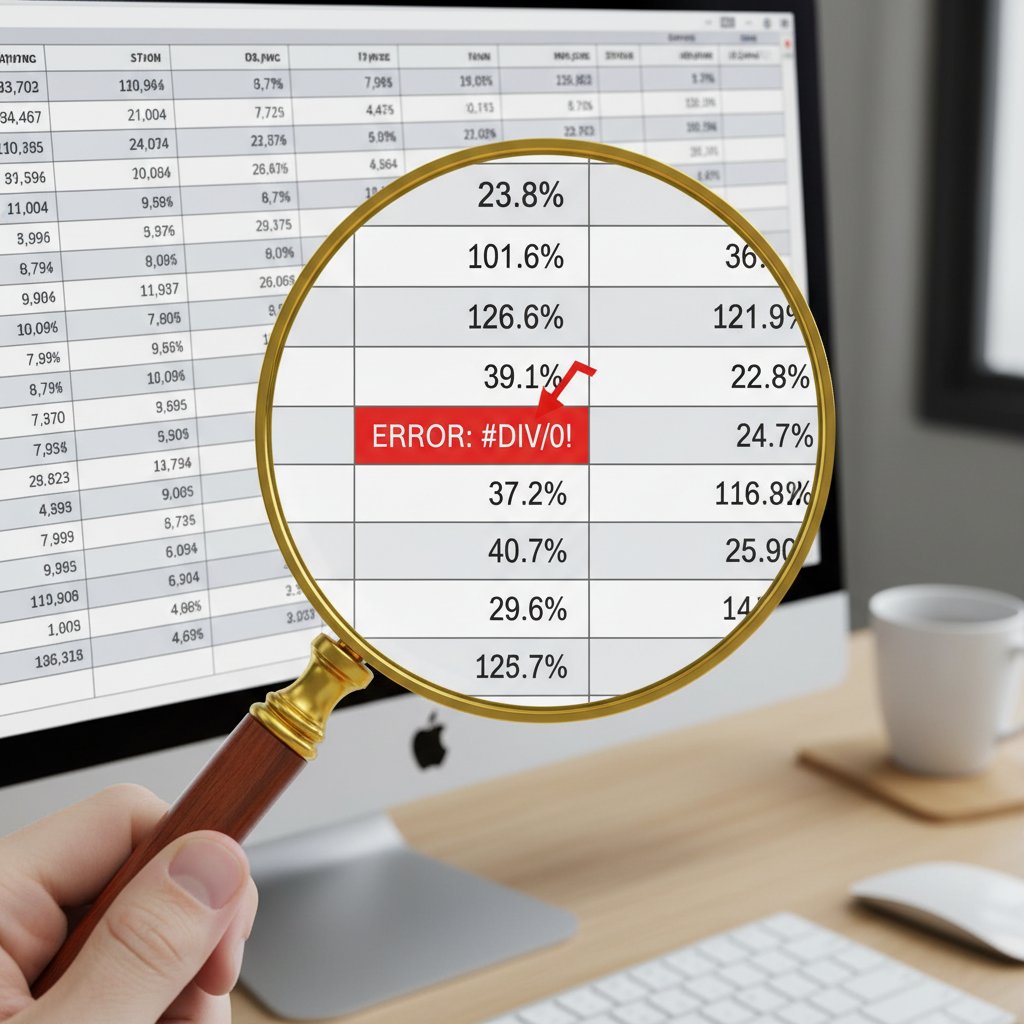
Train your eye, and you’ll never be surprised by a smoking gun in the numbers again.
The next frontier: future-proofing your business reports
Emerging trends in report generation
The frontier of business reporting is moving fast, and only the nimble will survive. Forget static PDFs—today’s leaders embrace:
- Real-time analytics: Continuous updates from live data streams.
- Predictive reporting: Surfacing risks and opportunities before they explode.
- Narrative-driven summaries: Combining data with story for impact.
- Integrated compliance checks: Instant alerts on regulatory changes.
- Adaptive templates: Reports evolve as business needs shift.
- Collaborative platforms: Multiple users, seamless edits, unified audit trails.
Building an adaptive reporting culture
A company’s reporting culture—curious, rigorous, and fearless about revision—is its secret weapon. The best organizations treat every report as a living document, always open to improvement.
"The best reports are living documents—they evolve with your business." — Noah, innovation strategist (illustrative, based on strategic management literature)
That adaptability is what separates the winners from those stuck with obsolete processes.
Checklist: is your reporting process obsolete?
Ready to face the music? Here’s how to tell if your current process is overdue for a reboot:
- You rely on last year’s templates, untouched.
- Key metrics are manually updated, risking errors.
- Version confusion reigns—too many “final” files.
- Audit trails are patchy or nonexistent.
- You spend more time formatting than analyzing.
- Regulatory updates catch you off guard.
- Stakeholders complain about unclear findings.
- Reporting cycles drag on for weeks.
If you check more than two, it’s time for an upgrade—yesterday.
Takeaways: how to turn business reports into real impact
Key lessons from the reporting revolution
The world doesn’t need another empty report. It needs credible, actionable intelligence—delivered fast, designed for clarity, and validated with ruthless honesty. The companies that consolidate data and expert advice weekly are already winning the growth battle (Citizens Bank, 2024). The rest? They’re playing catch-up, mired in outdated practices and dangerous myths. Generating accurate business reports is both an art and a science—one that demands vigilance, skepticism, and a relentless drive to improve.

Beyond accuracy: making your reports impossible to ignore
Accuracy is the baseline; impact is the goal. To make your reports impossible to ignore, tell a story, frame your findings strategically, and invest in a visual design that commands attention. Here are five advanced concepts for business leaders:
Transform dry figures into compelling narratives with clear business implications.
Challenge every conclusion with “what if?” analysis to expose hidden risks.
Build reports around the real concerns of decision-makers, not just what’s easy to measure.
Bake regulatory checks and updates into the very structure of your reports.
Treat every report as a test case—gather feedback and iterate relentlessly.
Your move: challenge your assumptions, upgrade your process
If you’re committed to generating accurate business reports, stop waiting for the perfect template. Audit your process, challenge your assumptions, and upgrade your tools. Platforms like filecreator.ai offer a starting point for professional, error-resistant documentation—but the real work is in the mindset and the rigor you bring to every report.
- Audit your current reporting workflow honestly.
- Identify recurring errors and their root causes.
- Switch to integrated, automated platforms where possible.
- Establish cross-team review cycles.
- Stay current on regulatory changes.
- Benchmark against industry leaders.
- Invest in both technology and training for your team.
Generate accurate business reports not because it’s trendy—but because your company’s future demands it. The numbers don’t lie, but people do. Make your reports a fortress of truth.
Sources
References cited in this article
- Citizens Bank 2024 Business Outlook Report(citizensbank.com)
- Deloitte: Disclosure Trends 2023(www2.deloitte.com)
- NCH: Business Myths(nchinc.com)
- DataForest.ai: Report Generation(dataforest.ai)
- Forbes: Why 60%-90% of Business Strategies Fail(forbes.com)
- ReportQL: Common Mistakes(reportql.com)
- ACCA Global: Rethinking Corporate Reporting(abmagazine.accaglobal.com)
- AI-Pro.org: AI Revolution Timeline(ai-pro.org)
- Databox: 2023 State of Business Reporting(databox.com)
- KPMG: FRC Annual Review 2023/24(kpmg.com)
- GOV.UK Best Practice Report(gov.uk)
- Forbes: Business Lessons 2024(forbes.com)
- Exploding Topics: AI Statistics 2025(explodingtopics.com)
- EZ-XBRL: 2025 Financial Reporting Standards(ez-xbrl.com)
- Forbes: Reliable Financial Statements(forbes.com)
- CIOHub: Automation Failures(ciohub.org)
- Workato: Automation Index 2024(workato.com)
- Dorik: AI Myths in B2B SaaS(dorik.com)
- Forbes: AI Myths Debunked(forbes.com)
- GPB: Reporting the Israel-Hamas War(gpb.org)
- Harvard Davis Center: Ukraine Reporting(daviscenter.fas.harvard.edu)
- Harvard Business Review Case Study(store.hbr.org)
- Writing Skills: Business Report Structure(writing-skills.com)
- ExpertBeacon: Glossary of Business Terms 2024(expertbeacon.com)
- Investopedia: Cybercrime Impact(investopedia.com)
- Statista: Business Risks 2024(statista.com)
- World Economic Forum: Global Risks 2024(weforum.org)
Perfect Documents, Instantly
Filecreator.ai transforms the way you produce professional documents. Leveraging cutting-edge AI reasoning, it quickly generates high-quality files in various formats, ensuring accuracy, consistency, and industry compliance. Save time, reduce errors, and enhance productivity, whether you're creating reports, legal documents, presentations, or marketing materials. Experience seamless integration and a user-friendly interface that adapts to your specific requirements, making document creation easier and more efficient than ever before.
Get startedStart Creating Professional Documents Today
Join thousands of professionals who trust AI-powered document generation
Frequently Asked Questions
What percentage of business strategies and reports fail before implementation according to the article?
According to a 2024 Forbes analysis cited in the article, 60%-90% of business strategies and reports fail before implementation, often due to flawed data foundations.
What is the difference between technical accuracy and practical accuracy in business reports?
Technical accuracy means columns sum flawlessly, while practical accuracy requires that reports be actionable, transparent, and rigorous—using current assumptions, including context, and acknowledging inconvenient truths rather than potentially misleading despite being technically correct.
What are the consequences of inaccurate business reporting?
Inaccurate reporting can damage company reputation, hurt the bottom line, lead to investor loss of faith, trigger regulatory penalties (such as SEC climate disclosure mandates), create legal headaches, and foster a culture of suspicion within organizations that can persist for years.
According to the article, what percentage of insight-driven companies consolidate data and expert advice weekly?
According to a 2024 Citizens Bank study cited in the article, 87% of insight-driven companies consolidate data and expert advice weekly, outpacing their peers.
Continue Reading
Explore more from Professional Document Generator

Accurate Financial Reporting Tools: What Actually Works
Accurate financial reporting tools must deliver reliability under pressure. This article examines why accuracy matters, the real risks behind common tools, and how to choose one your business can trust.

Best Tool for Generating Business Reports: Features and Real Costs
This article examines the best tool for generating business reports, covering key features, hidden costs, and how reporting systems impact business decisions.

Why Most Reporting Software Fails in Reality
Software to create detailed reports must deliver actionable insights without drowning users in noise. This article explains why most tools fail and what separates effective reporting software.

Why Generating Financial Reports Demands More Than Templates
Generating financial reports requires more than compliance. This article explains the risks of outdated methods and describes battle-tested strategies for accurate reporting.

Speed in Business Reporting: Competitive Advantage Explained
Quickly create business reports without sacrificing quality. This article explains why speed matters, the real costs of slow reporting, and how automation and AI improve workflow.

Professional Financial Reports: What Makes Them Win Decisions
Professional financial reports require clear structure and strategic presentation. This article explains the key elements that command respect and drive stakeholder decisions.