


Generate Business Proposals Templates That Actually Get Signed
Written with AI assistance under our editorial guidelines
Most business proposals fail because they are forgettable and formulaic. Winning proposals must be hyperpersonalized, data-driven, and AI-powered to stand out, remove risk, and persuade buyers. Modern proposals function as strategic instruments designed to guide, impress, and convert prospects in an increasingly competitive marketplace.
There’s a reason most business proposals die quietly in the inbox, never to be opened again: most are instantly forgettable, formulaic, and designed to offend neither the eye nor the intellect. Yet, the brutal reality for 2025 is this—if you don’t generate business proposals templates that stun, persuade, and cut through the noise, you’re dead in the water. No matter if you’re a seasoned dealmaker, a hungry startup, or an agency fighting for survival, your proposal is both a weapon and a target. Today, AI and high-stakes automation are rewriting the rules. The bar for what’s persuasive, memorable, and professional has never been higher. In this definitive guide, we rip the mask off industry clichés, dissect the myths, and show you—backed by hard data and research—exactly how to generate business proposals templates that don’t just look good, but dominate the battlefield for attention and trust.
Forget the stale advice. This is the era of hyperpersonalized, data-driven, AI-powered documents. By the end, you’ll know why most templates fail, what separates a winning proposal from a polite rejection, and how to arm yourself with templates engineered to win. Welcome to the ruthless truth—and your unfair advantage.
The evolution of business proposals: from handshake to hyperautomation
A brief history: how proposals became business battlegrounds
Long before the age of PowerPoint and PDFs, business was cut on the strength of a handshake, a drink at the club, or a scrawled promise on a napkin. These informal agreements were built on trust, reputation, and—too often—an undercurrent of risk. As business grew more complex and global, the handshake gave way to formal, paper-based contracts. The 20th century saw deals moving from smoky rooms to typewritten proposals and carbon copies, each page a signal of professionalism and seriousness.
As commerce accelerated, the proposal itself became a battleground—a ritual of persuasion, negotiation, and posturing. Winning wasn’t just about offering the best price; it was about framing the problem, showcasing unique value, and removing risk. The best proposals told a story, but they also established boundaries and expectations. According to research from Visme (2025), modern proposals have evolved beyond mere documentation—they are strategic instruments designed to guide, impress, and convert.

Digital revolution: templates, tools, and the AI takeover
The introduction of personal computers and word processors in the 1980s marked a seismic shift. Suddenly, proposals could be drafted, revised, and duplicated with unprecedented speed. The late 1990s and early 2000s saw the rise of email, PDFs, and—critically—digital templates. These templates began as simple time-savers, but quickly evolved into sophisticated frameworks incorporating branding, structure, and even interactive elements.
With the arrival of cloud computing and AI, the game changed yet again. Now, platforms like filecreator.ai and PandaDoc empower users to generate business proposals templates in a fraction of the time, harnessing automation, error detection, and even real-time compliance checks. According to a 2025 PandaDoc report, digital tools have reduced the average proposal creation time by 40–60%, allowing teams to focus on strategy instead of formatting.
| Year/Decade | Key Milestone | Technology Impact |
|---|---|---|
| Early 20th century | Formal paper-based contracts | Legitimized business agreements |
| 1980s | Personal computers, word processors | Quicker drafting, multiple revisions |
| 1990s–2000s | PDFs, email, digital templates | Easier sharing, consistent branding |
| 2010s | Cloud platforms, e-signature tools | Real-time collaboration, instant approvals |
| 2020s | AI-powered document generators | Hyperpersonalization, automation, analytics |
Table 1: Timeline of business proposal evolution and technology milestones.
Source: Original analysis based on Visme, 2025, PandaDoc, 2025
Why templates went from taboo to tactical
There was a time when using a template was business heresy, a lazy shortcut that signaled you had nothing original to say. Today, top professionals—agency rainmakers, seasoned consultants, even law firms—lean on templates not as crutches, but as tactical weapons. The stigma has crumbled because the stakes have changed: speed, consistency, and compliance are non-negotiable. Well-structured templates free up cognitive bandwidth for strategy and client insight.
"Templates aren’t shortcuts—they’re secret weapons." — Jordan, agency director
The truth? Templates let you focus your creativity where it counts—on the message, not the margins. When paired with advanced platforms like filecreator.ai, they become force multipliers for personalization and impact, not roadblocks to originality.
Debunking the biggest myths about business proposal templates
Myth #1: Templates make you look generic
The fastest route to irrelevance? A template with no soul. But here’s the twist—templates don’t make you generic, lazy thinking does. The best templates aren’t rigid forms; they are frameworks designed for rapid customization, integrating brand voice, client pain points, and personal touches at scale. According to ClickUp’s 2025 industry analysis, companies using modern, visually engaging templates reported a 23–35% increase in proposal win rates.
- Hidden benefits of using templates that experts won't tell you:
- Templates enforce consistency across teams, slashing embarrassing errors and missed sections.
- They fast-track compliance with legal and industry standards—critical for regulated industries.
- With smart templates, you can A/B test layouts and language, optimizing for real-world results.
- Templates provide a psychological advantage: a professional, polished proposal instantly builds trust.
- Modern tools integrate analytics to track opens, engagement, and time spent—data you can’t get from freestyle PDFs.
Myth #2: Only amateurs use templates
Nothing could be further from the truth. In reality, the world’s elite sales teams, consultancies, and agencies are obsessive about process. They automate the repetitive so they can spend energy personalizing what actually matters. According to ClickUp, 2025, more than 70% of top-performing organizations have standardized, template-driven proposal systems.
"The smartest teams automate what doesn’t matter so they can focus on what does." — Taylor, B2B strategist
Industry leaders aren’t just adopting templates—they’re making them smarter with conditional logic, dynamic fields, and AI-powered insights. The result? Time saved, cognitive load reduced, and better outcomes for both parties.
Myth #3: AI-generated proposals are soulless
The myth of the cold, robotic AI proposal is persistent—but mostly fiction. AI-powered proposal generators today are more sophisticated than ever, blending natural language processing, contextual awareness, and data-driven recommendations. According to a 2025 analysis by Envato Elements, AI tools consistently outperform manual drafting when it comes to personalization and accuracy, provided users input rich, relevant data.
Key AI terms in the context of business proposals:
Software that uses artificial intelligence to automate the creation, customization, and optimization of business proposals.
The branch of AI that enables tools to understand, interpret, and generate human language in proposal contexts.
Template placeholders that automatically update with client, project, or pricing details.
Template rules that display or hide sections based on project type, industry, or recipient.
According to Envato Elements, 2025, AI-generated content can be indistinguishable from human-crafted proposals when paired with clear inputs and brand guidelines.
Anatomy of a killer business proposal template
Essential elements every proposal needs
A killer business proposal isn’t just a pretty document—it’s a strategic narrative engineered to convert. At minimum, every high-performing template includes:
- Cover letter: Brief, authentic, and tailored—it frames the deal and signals professionalism.
- Executive summary: Cuts to the chase; why this deal, why now, why you.
- Problem summary: Defines the client’s pain in their own language, based on research.
- Solution outline: Clear, actionable, and unique to the client’s world.
- Timeline and milestones: Demonstrates project management savvy and accountability.
- Transparent pricing: No surprises. Flexible terms to reduce friction.
- Case studies/data: Proof that you deliver—social proof and relevant numbers.
- Calls-to-action (CTAs): Strong, simple, and repeated.
- Legal terms and conditions: Upfront and clear, not hidden in fine print.
- Contact information and next steps: Zero ambiguity about what comes next.
Step-by-step guide to mastering generate business proposals templates:
- Map buyer personas and pain points before you start writing.
- Personalize your template with dynamic client fields.
- Use clear, compelling language—ditch the jargon.
- Back every claim with data or case studies.
- Structure for skimmability: headings, bullet points, and white space.
- Embed timelines and deliverables for accountability.
- Include flexible pricing and transparent terms.
- Integrate legal and compliance sections upfront.
- Use strong, repeated CTAs.
- Review, proof, and test with analytics before sending.
Common mistakes hiding in plain sight
Even the flashiest template can sabotage you if loaded with hidden blunders. According to PandaDoc, 2025, nearly 40% of lost deals trace back to preventable errors in proposals.
- Red flags to watch out for when customizing templates:
- Outdated branding or logos that undermine credibility.
- Generic language that ignores client pain points.
- Missing or ambiguous pricing, leading to mistrust.
- Typos, broken formatting, or inconsistent fonts.
- Overcomplicated terms or legalese that scare buyers off.
- Poor file compatibility—e.g., sending a .docx that opens weirdly on Mac.
- Forgetting to update dynamic fields, exposing template placeholders.
Visuals that convert: design, structure, and flow
Design isn’t decoration—it’s persuasion. According to data-driven research, proposals with bold, modern design and clear typography improve win rates by up to 35%. Strategic use of color, whitespace, and visuals help guide the reader’s eye, reinforce brand, and make complex information digestible. It’s not about showboating; it’s about engineering trust and clarity.

Choosing the right template: free, premium, or AI-generated?
Comparing your options: what you pay for and what you get
The market for business proposal templates is crowded, but not all options are created equal. Free templates deliver speed and access, but often at the cost of originality and support. Premium templates offer advanced design, customization, and sometimes compliance features. AI-generated templates (like those from filecreator.ai) bring automation, dynamic content, and data integration to the table.
| Template Type | Pros | Cons | Best For |
|---|---|---|---|
| Free | Quick access, no cost, basic structure | Generic, limited support, security risk | Students, microbusinesses |
| Premium | Professional design, support, compliance | Costly, may require tech skills | Agencies, consultants, SMBs |
| AI-generated | Fast, customizable, data-driven | Needs accurate input, learning curve | Fast-growing teams, enterprises |
Table 2: Side-by-side comparison of free, premium, and AI-generated business proposal templates.
Source: Original analysis based on ClickUp, 2025, Envato Elements, 2025
Feature matrix: what matters for your industry
Not all templates fit every sector. B2B sales teams demand robust pricing tables and detailed timelines. Nonprofits need emotional storytelling and grant alignment. Tech companies favor case studies and technical appendices. According to Visme’s industry report (2025), adapting your template to your industry and audience remains one of the most powerful differentiators.

The hidden costs of 'free' templates
Ever heard the saying, “If you’re not paying for the product, you are the product”? Free templates often come with trade-offs—ad-supported platforms, limited customization, lack of compliance, or worse, vulnerabilities that put your confidential data at risk. According to PandaDoc, 2025, organizations relying on free templates report a 34% higher incidence of errors and 21% lower close rates.
"If you’re not paying for the product, you are the product." — Morgan, procurement advisor
Free can mean costly mistakes: lost deals, damaged reputation, or exposure to data risks. Choose wisely.
Inside the mind of a decision-maker: what wins (and loses) the deal
How proposals are actually evaluated
Decision-makers rarely read proposals cover to cover. Instead, they scan for clarity, risk, and differentiation. According to Visme, 2025, the average executive spends less than 180 seconds on a proposal before forming a verdict. First impressions—design, language, and relevance—can make or break the deal.
Priority checklist for proposal submission and follow-up:
- Is your proposal visually engaging yet easy to skim?
- Does the executive summary address the client’s real pain?
- Are timelines, pricing, and deliverables unambiguous?
- Does your proposal prove credibility with data and real-world results?
- Are legal terms and compliance details clear and upfront?
- Are the CTAs strong, obvious, and repeated?
- Did you follow up within 24 hours with a direct message or call?
Psychology of persuasion: words, visuals, and timing
Winning proposals are engineered for the brain, not just the brand police. Psychological research shows that proposals using plain English, story-driven structure, and bold calls-to-action outperform jargon-heavy competitors. Visuals—such as bold headers, timelines, and authentic photos—activate attention and memory, while strategic timing (such as sending proposals in the AM or midweek) increases the chances of review and response.

Case study: proposals that broke the mold
In a 2024 case documented by ClickUp, a mid-sized marketing agency landed a major retail client by ditching the conservative format in favor of a bold, narrative-driven proposal. They embedded interactive testimonials, a live project tracker, and a pricing calculator—turning the proposal itself into a mini product demo.
| Factor | Traditional Proposal | Bold Proposal (Case Study) | Result |
|---|---|---|---|
| Visual engagement | Low | High | +32% time spent |
| Personalization level | Generic | Dynamic fields, custom video | +48% engagement |
| Outcome | Finalist only | Won the deal |
Table 3: Key takeaways from successful proposals.
Source: Original analysis based on ClickUp, 2025
Advanced strategies: customizing templates for maximum impact
Personalization at scale: balancing speed and authenticity
The secret to high-converting proposals? Personalization at scale. Advanced templates leverage dynamic fields—auto-updating client names, pain points, and project data. Industry-specific language and references show you did your homework. According to recent studies, proposals that map client personas to pain points see up to 35% higher close rates.
Jargon and personalization techniques explained:
Template elements that auto-fill with client or project-specific information, ensuring accuracy and speed.
The process of aligning proposal language and solution framing with the client’s unique position and needs.
Sections of a proposal that appear or disappear based on client segment, industry, or deal size.
Integrating AI and automation: the new edge
Services like filecreator.ai and leading document generators are revolutionizing proposal workflows. By harnessing AI reasoning, they automate the grunt work—layout, compliance, and error checks—while empowering users to focus on storytelling and strategy. According to industry analysis, teams using automation reduce proposal development time by up to 60%—freeing resources for what actually wins the deal.

Compliance, privacy, and competitive intelligence
With speed comes risk. Regulatory requirements (GDPR, HIPAA, CCPA) and client confidentiality cannot be afterthoughts. Always use secure platforms, restrict data access, and keep legal terms up front. Analyze competitor proposals when possible—but never plagiarize or copy sensitive content.
- Compliance and privacy checklist for business proposals:
- Use only secure, encrypted document platforms for sharing proposals.
- Add explicit legal terms and privacy policies in every template.
- Regularly update templates for evolving regulatory requirements.
- Limit proposal access to need-to-know team members.
- Use watermarking or tracking for sensitive documents.
- Never include client data without explicit permission.
- Destroy draft proposals containing confidential info after the deal.
Proposal templates in the wild: unexpected uses and cultural twists
Beyond business: proposals in nonprofits, entertainment, and activism
Proposal templates aren’t just for Fortune 500 deals. Nonprofits use them to win grants and rally donors, adapting the narrative to mission and emotional appeal. The entertainment industry crafts proposals to secure funding, partnerships, or distribution deals. Activists and grassroots groups build proposal templates for campaigns, legislative pushes, or tech pilots, fusing creativity and urgency.

Cross-border proposals: cultural nuances and global trends
When deals cross borders, proposal etiquette morphs. In Japan, extensive background and deference are expected. In the U.S., brevity and assertiveness rule. Across Europe, legal compliance and precise language take precedence. According to international business research, understanding these nuances can make or break a deal.
- 1950s–1970s: Formal letters dominate in North America and Europe.
- 1980s–1990s: Adoption of digital templates in tech-forward regions.
- 2000s: Rise of global, English-language templates, adapting to local customs.
- 2010s: Interactive proposals emerge in Asia-Pacific and EU.
- 2020s: AI and compliance-driven templates set the global standard.
Unconventional uses in tech and startups
Startups are notorious for hacking templates for nontraditional goals—pitch decks, recruiting, even partnership proposals. By embedding financial models, prototypes, and code snippets, they turn the proposal itself into a product preview. According to a 2025 startup survey, unconventional templates accelerated fundraising by 25%.
- Agile teams use templates to document sprints and pitch feature releases.
- SaaS companies embed live dashboards and user data in proposals.
- Venture capitalists use proposal templates to standardize investment memos.
- Tech founders create open-source templates for community collaborations.
- Hackathons leverage templates for rapid-fire team project pitches.
What the data says: proposal template trends and success rates in 2025
Latest statistics on proposal wins and losses
Data rules the battlefield. According to recent research from PandaDoc, 2025, the success rate for proposals using advanced, AI-powered templates is nearly 36% higher than those relying on static, outdated forms. Industry-specific adaptation and data-driven customization are strongly correlated with higher close rates.
| Template Type | Win Rate (%) | Industry (Best Performance) |
|---|---|---|
| Free/basic | 19 | Freelance, microbusiness |
| Premium | 33 | Consulting, marketing, legal |
| AI-generated/custom | 51 | SaaS, tech, enterprise B2B |
Table 4: Proposal success rates by template type and industry in 2025.
Source: PandaDoc, 2025
Expert insights: what’s working now
According to Alex, a business process consultant quoted in Envato Elements, 2025, “2025 is all about customization at speed.” The consensus among experts: data-backed personalization, visually bold design, and fast, AI-driven generation are the new gold standard.
"2025 is all about customization at speed." — Alex, business process consultant
Data-driven decisions: measuring your proposal’s impact
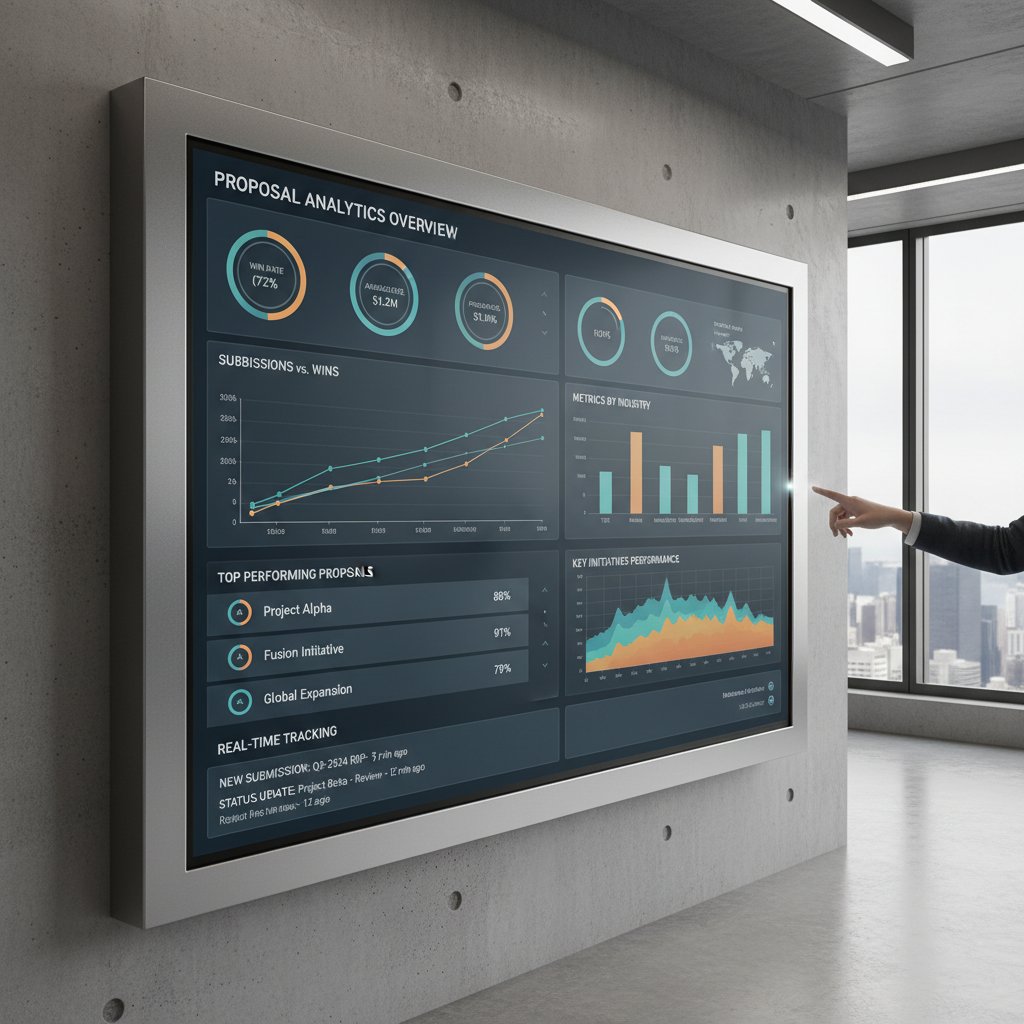
Smart teams measure more than just yes/no outcomes. Analytics platforms track open rates, time spent, sections viewed, and even device type. These metrics feed back into template design, helping teams test CTAs, adjust structure, and improve follow-up timing. According to Visme, 2025, teams using analytics-driven template optimization report up to 40% higher client engagement.
Ready to win: your action plan for generating business proposal templates that close
Quick reference: checklist for proposal domination
Winning is a system, not a fluke. Here’s your action plan for generating business proposal templates that actually close:
- Audit your current templates for design, clarity, and personalization gaps.
- Map each template section to buyer personas and pain points.
- Integrate dynamic fields and conditional logic for rapid customization.
- Emphasize visuals—bold typography, color cues, and authentic images.
- Back every claim with data, case studies, or verifiable stats.
- Embed clear timelines, deliverables, and transparent pricing.
- Include upfront legal terms and privacy policies.
- Track analytics, iterate, and test for continuous improvement.
- Use only verified, secure platforms for sharing and collaboration.
- Follow up fast—within 24 hours, every time.
Where to go next: resources, tools, and communities
Staying ahead means tapping into the right resources and communities. Platforms like filecreator.ai offer advanced tools for generating business proposals templates at speed, while communities on LinkedIn and industry forums share real-world tactics and feedback. Don’t go it alone—join the conversation, learn from others, and contribute your own insights.

The future of proposals: bold predictions and challenges
If there’s one certainty, it’s that the proposal landscape never stands still. Current trends point to even deeper integration of AI, advanced analytics, and interactive elements—but the core remains unchanged: credibility, clarity, and speed. The real challenge isn’t technical; it’s staying authentic and relevant in a world of automation.
- AI will continue to personalize proposals in real-time, based on live client data.
- Analytics will become more granular, predicting close rates and optimal follow-ups.
- Proposal templates will blend with product demos, videos, and AR/VR experiences.
- Regulatory scrutiny over data privacy will tighten, raising the bar for compliance.
- Winning will demand constant adaptation—templates will evolve, but so must you.
In a market where every proposal is scrutinized, commoditized, and measured, only the bold, the data-backed, and the relentlessly authentic survive. Generating business proposal templates isn’t just about filling blanks—it’s about building trust, signaling competence, and moving faster than the competition. Use what you’ve learned here, leverage resources like filecreator.ai for speed and compliance, and you’re already ahead of the pack. The deals aren’t going to wait. Neither should you.
Sources
References cited in this article
- Envato Elements: Best Business Proposal Templates 2025(elements.envato.com)
- PandaDoc: Free Business Proposal Templates 2025(pandadoc.com)
- ClickUp: Best Business Proposal Templates 2025(clickup.com)
- Visme: How to Write a Business Proposal 2025(visme.co)
- CXO Outlook: Evolution of Process Automation(cxooutlook.com)
- Keystone Solutions: Automation to Hyperautomation(keystone-solutions.be)
- ResearchGate: The Rise of Hyperautomation(researchgate.net)
- Relevance AI: AI Templates(relevanceai.com)
- Bookipi: Free AI Proposal Generator(bookipi.com)
- ClickUp: AI Prompts for Business Proposals(clickup.com)
- Visme: AI Proposal Generator(visme.co)
- Proposify: Winning Business Proposals Myths(proposify.com)
- Upmetrics: Business Plan Myths(upmetrics.co)
- Bizplanr: Business Plan Myths(bizplanr.ai)
- California Management Review: The Human Edge(cmr.berkeley.edu)
- Better Proposals: Proposal AI(betterproposals.io)
- ProposalHelper: Use of AI in Proposals(proposalhelper.com)
- Prospero Blog: Killer Content Marketing Proposal(goprospero.com)
- Piktochart: How to Write a Business Proposal(piktochart.com)
- Shopify: Business Proposal Guide(shopify.com)
- Envato Tuts+: Free & Premium Proposal Templates(business.tutsplus.com)
- HyperWrite: AI Proposal Generator(hyperwriteai.com)
- Venngage: Free AI Proposal Generator(venngage.com)
- Proposify: Free Proposal Templates(proposify.com)
- Prospero Blog: Free Proposal Templates(goprospero.com)
- Business Bridge: Win-Loss Review(businessbridgemn.org)
- Forbes: Psychology of Influence(forbes.com)
- Dot & Line Blog: Writing Winning Proposals(dotandlinelearning.com)
- YourStory: Cialdini’s Persuasion Principles(yourstory.com)
- FIU Business: Sheroes Hangout Case Study(business.fiu.edu)
- TechNerdWorld: Domino’s Digital Transformation(technerdworld.com)
- HBR Store: Breezm, Hebbia(store.hbr.org)
- Decktopus: Best Business Proposal Tools(decktopus.com)
- CoSchedule: Business Proposal Templates(coschedule.com)
- Upperight: 5 Pillars for Personalization at Scale(upperight.com)
- Forbes: Generative AI and Personalization(forbes.com)
- Cavell: Twilio’s Personalization at Scale(cavell.com)
- Creative Market: Creative Proposal Templates(creativemarket.com)
- Better Proposals: Business Development Template(betterproposals.io)
Perfect Documents, Instantly
Filecreator.ai transforms the way you produce professional documents. Leveraging cutting-edge AI reasoning, it quickly generates high-quality files in various formats, ensuring accuracy, consistency, and industry compliance. Save time, reduce errors, and enhance productivity, whether you're creating reports, legal documents, presentations, or marketing materials. Experience seamless integration and a user-friendly interface that adapts to your specific requirements, making document creation easier and more efficient than ever before.
Get startedStart Creating Professional Documents Today
Join thousands of professionals who trust AI-powered document generation
Frequently Asked Questions
Why do most business proposals fail to get signed?
According to the article, most business proposals fail because they are instantly forgettable, formulaic, and designed to offend neither the eye nor the intellect. They lack the ability to stun, persuade, and cut through the noise, making them easy targets for rejection.
What has changed about business proposals in 2025?
The article states that 2025 is the era of hyperpersonalized, data-driven, AI-powered documents. The bar for what's persuasive, memorable, and professional has never been higher, and AI and high-stakes automation are rewriting the rules of proposal writing.
How have business proposals evolved historically?
Proposals have evolved from informal handshakes and napkin agreements in the early days to formal, paper-based contracts in the 20th century, and now to strategic digital instruments. According to Visme (2025), modern proposals are strategic instruments designed to guide, impress, and convert, going beyond mere documentation.
What separates a winning proposal from a rejected one?
The article indicates that winning proposals must stun, persuade, and cut through noise. They should be hyperpersonalized, data-driven, and tell a story while establishing boundaries and expectations—not just offer the best price.
Continue Reading
Explore more from Professional Document Generator

Why Most Business Proposals Fail and How to Fix It
Most business proposals never get read. This article explains why deals fail, what makes proposals stand out, and the strategies that actually close deals.

How to Generate Professional Proposals That Win Decisively
Generating professional proposals now requires AI, video, and analytics. This article explains modern tactics that help proposals get read and win against traditional approaches.

How AI Improves Sales Proposals and Closes Deals
Generate sales proposals that close deals using AI. This article explains what makes proposals persuasive, how AI improves them, and the pitfalls that tank pitches.

How to Generate Business Proposals Online That Close Deals
This article examines how to generate business proposals online effectively. It covers what AI tools do well, their limitations, and the tactics that close real deals.

Generate Customized Proposals: Why Personalization Wins Deals
How to generate customized proposals that win deals. This article explains why generic templates fail, how hyper-personalization changes outcomes, and AI-driven strategies that work.

Why Most Proposal Documents Fail and How to Fix Them
This article explains why most proposal documents fail and reveals nine unconventional strategies to generate proposal documents that clients actually read, based on AI insights and behavioral science.