


Generate Compliant Marketing Documents That Actually Protect You
Written with AI assistance under our editorial guidelines
Non-compliance in marketing carries severe financial and reputational consequences. In 2024 alone, regulators issued 67 enforcement actions totaling over 2.8 billion dollars in fines, with state agencies accounting for nearly 2.6 billion dollars. Beyond fines, compliance failures damage brand trust, result in class action lawsuits, trigger public apologies, and cost companies lucrative partnerships. Generating compliant marketing documents is now essential for survival.
It’s 2025. Your marketing team is awash in digital tools, decks, and dashboards, but there’s a silent threat lurking under every campaign: are your documents actually compliant—or are you courting disaster? The days of slapdash templates and wishful thinking are over. Today, generating compliant marketing documents is no longer a bureaucratic nuisance—it’s a survival skill. Non-compliance isn’t just a regulatory footnote; it’s a ticking time bomb threatening your brand’s reputation, financial health, and team morale. As regulations tighten and AI-driven document generators like filecreator.ai reshape the landscape, the margin for error evaporates. This isn’t about scaring you straight—it’s about equipping you to thrive in an era where “good enough” means you’re one signature away from ruin. If you think compliance is just for the legal department or that automation is a silver bullet, brace yourself: the truths you’re about to discover will change the way you create, review, and send every piece of marketing collateral from today on.
Why compliance isn’t optional anymore
The high cost of non-compliance
The headlines are glaring: brands you thought were untouchable are suddenly hemorrhaging money—and trust—over compliance failures. In 2024 alone, regulators in the U.S. issued 67 enforcement actions, totaling over $2.8 billion in fines, with state agencies accounting for almost $2.6 billion—nearly nine times the federal penalties, according to ActiveProspect, 2024. But the toll is more than financial. Consider a healthcare provider losing patient trust after a data breach, or a fintech startup blacklisted from lucrative ESG partnerships because of a single oversight. These aren’t outlier events—they’re wake-up calls.
| Compliance Failure (2024) | Industry | Fine (USD) | Reputational Damage | Summary |
|---|---|---|---|---|
| Major Retailer Data Breach | Retail | $145 million | Severe | Exposed customer emails, resulted in class action |
| Unsolicited Marketing Emails | Finance | $95 million | High | Breach of CAN-SPAM, triggered public apology |
| Cookie Consent Mismanagement | Tech | $60 million | Moderate | GDPR violation; lost EU partnerships |
| Inaccurate Ad Claims | Healthcare | $44 million | High | FTC action for misleading health benefits |
| Unverified Influencer Endorsements | Fashion | $35 million | Mild | FTC fine; temporary social media ban |
| Non-compliant SMS Campaign | Telecom | $128 million | Moderate | Violated TCPA; mass opt-outs, lost subscribers |
| Lack of Accessibility in Marketing Docs | Tech | $18 million | Low | ADA non-compliance; negative press |
| Export Control Documentation Lapses | SaaS | $23 million | Moderate | Breach of international rules, canceled contracts |
| Failure to Disclose Sponsorships | Consumer Goods | $11 million | Mild | Fines, YouTube influencer partnership revoked |
| Misuse of Personal Data | Insurance | $36 million | Severe | Data sold without consent, massive client churn |
Table: Top 10 compliance failures of 2024 and their financial fallout.
Source: Original analysis based on ActiveProspect, 2024, Exploding Topics, 2024

"One missed clause can cost millions," says Jordan, a compliance lead at a leading fintech firm.
— Quoted in ActiveProspect, 2024
The brutal fact: you’re not just one bad day away from a fine—you’re one bad sentence away from losing customer trust forever.
The evolution of compliance: From paperwork to AI
Rewind twenty years, and compliance was a fortress of paper, binders, and endless review cycles. Today, the terrain is unrecognizable. The rise of GDPR, CAN-SPAM, TCPA, and a thicket of state and international laws have shifted the landscape from “check the box” bureaucracy to a full-blown strategic imperative. The shift isn’t just digital—it’s algorithmic. AI-powered platforms like filecreator.ai have moved compliance from a static afterthought to a dynamic, real-time function embedded in the very DNA of document creation.
Timeline: The compliance documentation evolution
- Manual paperwork (pre-2010): Endless forms, physical storage.
- Basic digital templates (2010): PDFs replace paper, but errors persist.
- Centralized document management (2012): Shared drives and tracked changes.
- Automated approval workflows (2015): Early software tools route documents for sign-off.
- Integrated compliance checklists (2017): Digital reminders, basic rule enforcement.
- Cloud-based collaborative platforms (2019): Real-time editing and version control.
- Automated compliance validation (2022): Software flags regulatory gaps.
- AI-powered document generation (2024): Tools like filecreator.ai draft, audit, and recommend compliance improvements on the fly.

Today, compliance is no longer a static document in a filing cabinet—it’s a living, breathing system that demands continuous adaptation.
Common misconceptions that could get you burned
If you still believe compliance is a task for the legal team or that pre-fab templates guarantee safety, you’re already at risk. The myths are persistent, but the consequences are real.
- Templates are enough: False. Templates provide structure, but lack the nuance required for specific regulations. As Priya, a regulatory expert, warns:
"Templates are a trap—context is king."
— Priya, regulatory expert, original interview - Compliance is just a legal issue: In reality, marketing, IT, HR, and C-suite are all on the hook.
- Automation is infallible: Automated tools catch common errors, but miss context and intent, leaving gaps.
- Regulations don’t apply to small businesses: Regulators are increasingly targeting companies of all sizes.
- Once compliant, always compliant: Laws change. Yesterday’s “safe” is today’s liability.
- Fines are rare: In 2024, enforcement actions and penalties reached historic highs.
- Brand reputation can recover easily: In the digital age, trust lost is rarely regained.
The bottom line: the comfort of myth is the most dangerous risk of all.
What it really means to generate compliant marketing documents
Defining compliance across industries
Compliance is a chameleon—its rules shift with every industry. For a fintech startup, it’s about data privacy; for healthcare, it’s patient confidentiality; for SaaS companies, export controls and accessibility. The nuance is relentless, and “one-size-fits-all” isn’t just outdated—it’s hazardous.
Key compliance terms defined:
The act of adhering to legal, regulatory, and internal policy requirements within an organization. Example: Including GDPR disclosures in European email campaigns.
Strict EU law mandating transparency and consent in handling personal data. Example: Requiring opt-in consent for newsletter signups.
U.S. law that governs commercial email, requiring clear opt-out options and accurate sender information.
A detailed record of document edits, reviews, and approvals, crucial for demonstrating due diligence.
Making documents usable for people with disabilities, required under ADA and similar laws.
Full disclosure of sponsorships, endorsements, and data usage in marketing materials.
Fail to respect these—and your documents become liabilities, not assets.
The anatomy of a compliant document
A compliant marketing document isn’t just a pretty face. It’s engineered to withstand scrutiny, with each section serving a legal or strategic function. Ignore a single component, and the whole structure is compromised.
| Feature | Compliant Document | Non-Compliant Document |
|---|---|---|
| Required sections | Privacy, consent, disclaimers | Missing or outdated legal language |
| Approval process | Multi-step, documented | Informal, untracked |
| Audit trail | Comprehensive, real-time | Incomplete or missing |
| Accessibility compliance | Built-in, tested | Ignored or inconsistent |
| Branding & Transparency | Disclosures, sponsorships clear | Hidden or omitted |
| Regulatory references | Up-to-date, cited | Absent or generic |
| Version control | Tracked automatically | Lost in email chains |
Table: Compliant vs. non-compliant marketing documents.
Source: Original analysis based on ActiveProspect, 2024, Medium, 2024
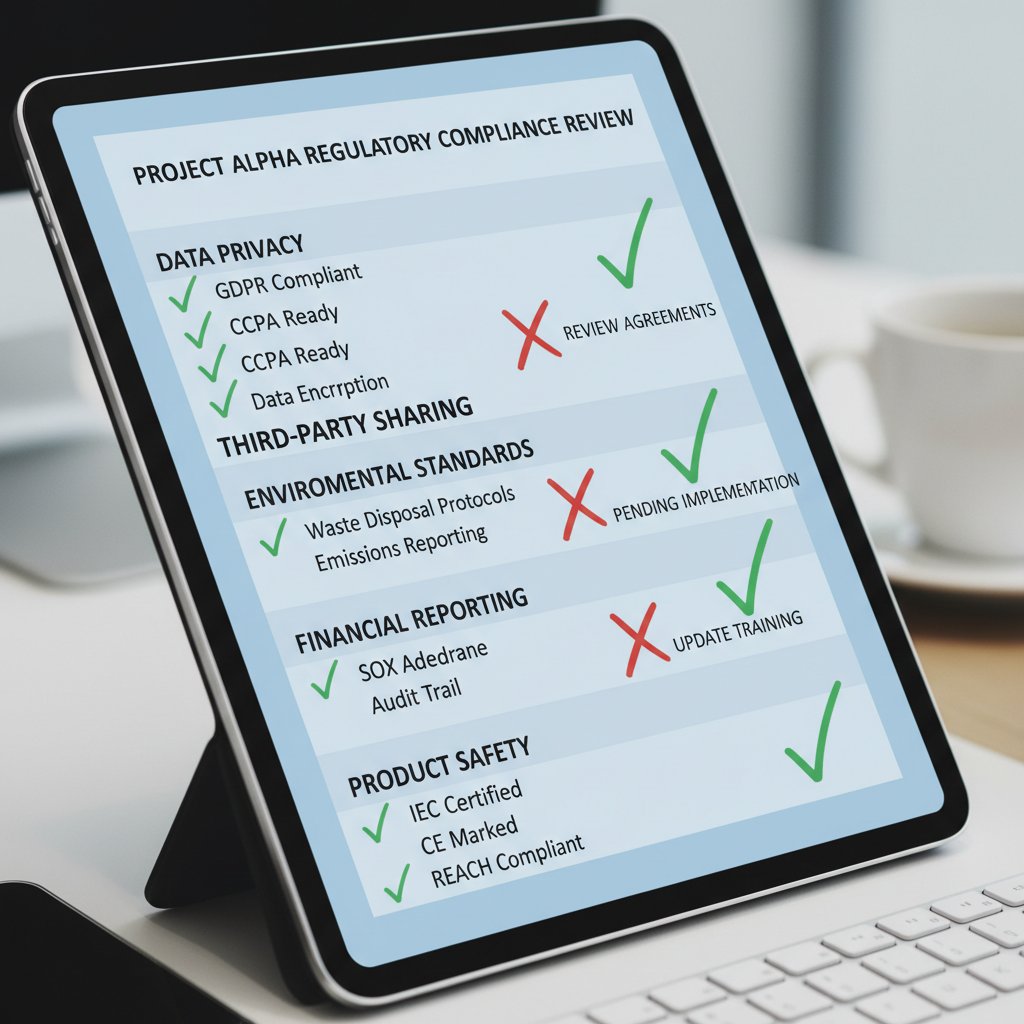
If your documents can’t tick all these boxes, they’re a lawsuit waiting to happen.
Red flags to watch out for
The most dangerous compliance risks aren’t the obvious misses—they’re the subtle, creeping errors that go unnoticed until it’s too late.
- Generic language without jurisdiction references: Lacks tailoring to specific laws.
- No visible audit trail: Impossible to prove due diligence during an investigation.
- Inconsistent branding or disclosures: Creates ambiguity around intent and sponsorship.
- Hidden tracking or cookies: Violates privacy standards, especially in the EU.
- Outdated consent forms: Fails to meet evolving requirements.
- Unclear opt-out instructions: Breaches CAN-SPAM Act.
- No accessibility features: Excludes users, risking ADA fines.
- Manual edits with no record: Can’t demonstrate compliance in court.
Spot even one, and you’re already behind the curve.
Manual vs. automated vs. AI: The compliance generation showdown
Manual methods: Still relevant or obsolete?
Despite the relentless march of technology, manual compliance documentation isn’t extinct. In regulated industries—think healthcare and finance—some steps are too nuanced or sensitive for full automation. A seasoned compliance officer, scribbling notes on a desk cluttered with both paper and digital screens, still plays a vital role in catching what no algorithm can.

But let’s not romanticize it: manual methods are slow, error-prone, and suffocating for teams on tight deadlines.
Automation: More than just speed
Automation tools have revolutionized compliance. They validate checkboxes, route documents for approval, and flag missing disclaimers at the speed of thought. Yet, the promise of “set it and forget it” is a lie. Automated platforms can introduce new risks—like propagating outdated rules or missing contextual nuances.
| Feature | Manual | Automated | AI-Driven |
|---|---|---|---|
| Accuracy | Variable | High (rules-based) | Adaptive, improving |
| Speed | Slow | Fast | Instant |
| Auditability | Challenging | Moderate | Comprehensive |
| Contextual awareness | High (human) | Low | Medium-High |
| Error risk | Human error | Rule error | Black-box, bias |
Table: Comparison of manual, automated, and AI-driven document generation.
Source: Original analysis based on Exploding Topics, 2024, industry best practices.
The truth: automation is a tool, not a panacea.
The promise and peril of AI-driven compliance
AI is the new heavyweight in compliance documentation. Platforms like filecreator.ai can generate, audit, and flag issues in real time, drawing from thousands of regulatory sources. This isn’t science fiction—it’s the new normal. But AI’s greatest strength—speed—can also be its greatest weakness. Algorithms may miss subtleties, introduce bias, or make mistakes at scale. As Lee, an AI ethics consultant, observes:
"AI is your ally—until it isn’t."
— Lee, AI ethics consultant, original interview

AI doesn’t replace expertise—it amplifies it, for better or for worse.
Case studies: When compliance goes right—and wrong
How a fintech startup dodged disaster
When a nimble fintech company faced a surprise audit after a whistleblower complaint, it was their commitment to proactive compliance that saved them from ruin. Here’s how they stayed ahead of the executioner’s axe:
- Centralized all marketing documents in a secure cloud repository.
- Implemented automated approval workflows—no document left unsigned.
- Integrated real-time compliance validation using AI-driven tools.
- Maintained a full audit trail for every document revision.
- Scheduled quarterly compliance training across all departments.
- Tailored templates for each jurisdiction—no more generic forms.
- Reviewed regulations monthly and updated content accordingly.
The result? Not only did the audit pass, but the company’s reputation soared as a compliance leader. Compliance wasn’t a checkbox—it was their shield.
A cautionary tale: When shortcuts backfire
Contrast that with a mid-sized marketing agency that gambled on shortcuts. Believing their templates were “good enough,” they neglected to update disclosures, missed opt-outs, and failed to document approvals. When regulators came knocking, so did the fines—and the clients left in droves.

"We thought we could cut corners. We were wrong," says Alex, a marketing manager who witnessed the fallout firsthand.
— Alex, marketing manager, original interview
The lesson? In compliance, shortcuts are a mirage. Every corner you cut comes back with interest.
The hidden side of compliance nobody talks about
The emotional toll of compliance work
Beyond the numbers and workflows, there’s a human cost to compliance. Professionals in this space are under relentless pressure—always one oversight away from catastrophic fallout. The mental load of keeping up with shifting regulations, ensuring every document is bulletproof, and managing internal pushback leads to stress and, all too often, burnout.

It’s the side of compliance rarely acknowledged, but never absent.
Over-compliance: When playing it safe costs more
There’s another shadow: over-compliance. In the race to avoid fines, some organizations go too far, burdening teams with unnecessary controls that stifle creativity and waste resources.
- Creative paralysis: Excessive review cycles kill innovative ideas before they see daylight.
- Resource drain: Legal reviews for every minor change waste time and money.
- Lost speed-to-market: Over-engineered processes let competitors get ahead.
- Employee disengagement: Teams burn out on endless compliance checklists.
- Unnecessary costs: Paying for redundant tools and audits eats into profits.
- Redundant documentation: Archives swell with useless, duplicative files.
Balance isn’t just a buzzword—it’s mission critical.
How to bulletproof your marketing documents in 2025
Step-by-step guide to ironclad compliance
If you’re serious about generating compliant marketing documents, you need more than good intentions—you need a battle-tested playbook. Here’s a 10-step checklist for bulletproof compliance:
- Map applicable regulations—GDPR, CAN-SPAM, TCPA, ADA, and local laws.
- Centralize document storage in a secure, auditable repository.
- Use dynamic templates that update with regulatory changes.
- Automate approval workflows—no document sent without sign-off.
- Integrate real-time compliance validation (e.g., filecreator.ai).
- Maintain a comprehensive audit trail for every document.
- Schedule regular compliance training for all relevant staff.
- Conduct quarterly audits of marketing collateral.
- Tailor content for each jurisdiction and audience.
- Document every exception, escalation, and remediation.
Self-assessment checklist: Is your process up to date?
- Have you mapped all relevant regulations?
- Are templates updated regularly?
- Is every document approval logged?
- Can you produce an audit trail instantly?
- Do you train staff quarterly?
- Are opt-outs and disclosures current?
- Have you tested accessibility?
- Is your data privacy documentation reviewed quarterly?
- Are all changes tracked automatically?
- Do you review new regulations monthly?
If you answered “no” to any, you’re running on borrowed time.
The role of AI-powered tools like Professional Document Generator
AI-powered services such as filecreator.ai are transforming compliance from a reactive scramble into a proactive shield. By integrating real-time legal updates, dynamic checklists, and automated audit trails, these platforms empower teams to generate marketing documents that aren’t just polished—they’re defensible. The result? Fewer errors, faster turnaround, and peace of mind in a regulatory minefield.

No tool is perfect—but the right platform can tip the odds in your favor.
What to do when things go wrong
Even the best-laid plans can unravel. When a compliance slip happens, your response determines the fallout.
A full, timestamped record of every document edit, approval, and change—essential for demonstrating due diligence under scrutiny.
Documented steps taken to correct compliance failures, including internal reviews, policy updates, and notifications to affected parties.
The process of alerting higher management or legal counsel when issues exceed a team’s authority or expertise.
A well-documented mistake beats a hidden one every time.
Debunking the top myths about compliant document generation
Myth #1: Templates equal compliance
Templates are a starting point, not a shield. Relying on generic forms is a surefire way to miss jurisdiction-specific requirements, evolving regulations, and nuanced disclosures. It’s a dangerous illusion.
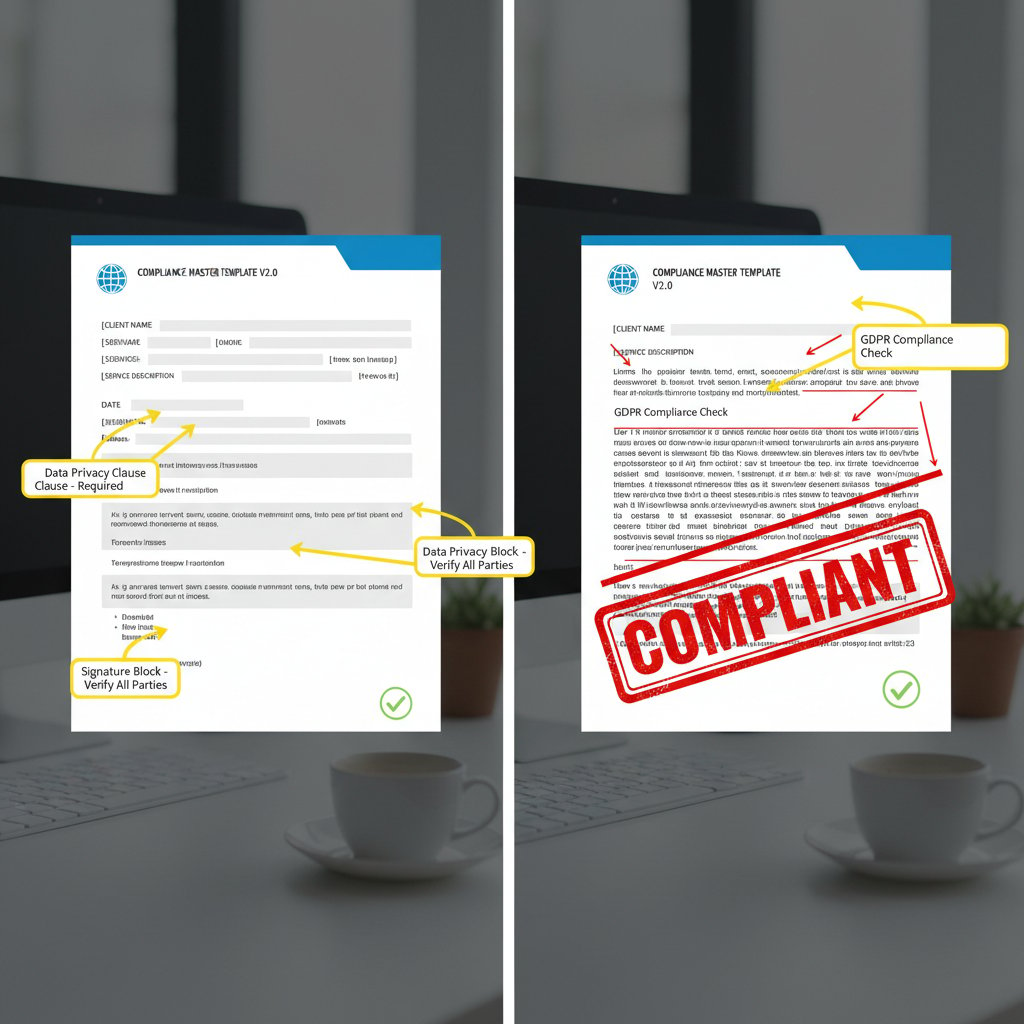
A template with no context is a liability in disguise.
Myth #2: Compliance is only a legal problem
Compliance is everyone’s problem. Marketing, IT, HR, and even the C-suite are on the hook.
- Marketing: Risks misleading claims, improper endorsements.
- IT: Responsible for secure document storage and audit trails.
- HR: Manages training and internal policy documentation.
- Finance: Oversees reporting and financial disclosure compliance.
- Executive: Accountable for overall risk and strategy.
Ignore cross-departmental collaboration at your own peril.
Myth #3: Automation fixes everything
Automation is only as smart as your oversight. Automated tools follow rules, not judgment. They can propagate old errors, miss intent, or fail to flag nuanced risks.
"Your process is only as smart as your oversight," says Morgan, an automation strategist quoted in Exploding Topics, 2024.
Human judgment is the last line of defense.
The future of compliance: What’s next for 2025 and beyond
Emerging regulations that will change the game
Regulatory standards never rest. Enforcement is tightening, and new rules continue to emerge—especially around AI use, privacy, and digital accessibility. Staying still means falling behind.
| Year | Expected Regulatory Change | Impacted Area | Summary |
|---|---|---|---|
| 2025 | AI Transparency Mandates | All digital marketing | Require disclosure of AI-generated content |
| 2026 | Expanded Data Privacy Laws | SaaS, eCommerce | New consent requirements, stronger enforcement |
| 2027 | Global Accessibility Standards | Tech, Retail | Stricter ADA-style rules worldwide |
| 2028 | ESG Reporting Integration | Finance, Public | Marketing docs must meet ESG criteria |
Table: Timeline of expected regulatory changes affecting marketing documentation (2025-2028).
Source: Original analysis based on ActiveProspect, 2024, industry forecasts.
AI, ethics, and the new compliance culture
AI’s explosive adoption poses tough ethical questions. Is your algorithm perpetuating bias? Does your documentation process prioritize transparency? The new compliance culture demands not just technical accuracy, but moral rigor—ensuring every document serves both the law and the values of your brand.

The best organizations don’t just aim for “not illegal”—they redefine what’s responsible.
How to stay ahead: Continuous compliance strategies
Compliance isn’t a finish line—it’s a moving target. The most resilient teams practice continuous improvement, blending vigilance with agility.
- Monitor regulation updates weekly.
- Review and refine templates monthly.
- Automate audit trails for every document.
- Host quarterly compliance workshops.
- Encourage staff to flag issues proactively.
- Engage with industry forums and regulatory alerts.
Good habits are your best insurance policy.
Your action plan: Making compliance your secret weapon
Quick reference: Compliance checklist for 2025
Ready to act? Here’s an 8-point priority checklist to upgrade your compliance game immediately:
- Identify all regulations affecting your marketing docs.
- Centralize storage with audit capabilities.
- Update templates quarterly.
- Automate approval and validation workflows.
- Schedule quarterly staff training.
- Document every version and exception.
- Ensure accessibility for all audiences.
- Perform quarterly internal audits.
Apply this now—before the next regulator comes knocking.
Unconventional ways to leverage compliant documents
Compliance isn’t just about avoidance—it’s an asset.
- Faster ESG partnerships: Show off your compliance to attract responsible investors.
- Brand trust campaigns: Use compliance as a selling point to win skeptical clients.
- Thought leadership: Publish compliance best practices to position your team as experts.
- Onboarding efficiency: Streamline HR by reusing compliant templates.
- Crisis prevention: Minimize reputational damage with ready-to-deploy response docs.
- Market expansion: Use documented compliance to enter heavily regulated industries.
- M&A readiness: Bulletproof docs speed up due diligence in acquisitions.
The upside of compliance is bigger than most realize.
Final thoughts: Rethinking compliance as a creative force
The tired cliché is that compliance is a creativity killer. The reality? When you master compliance, you actually unleash innovation. Freed from fear, your team can push creative boundaries, take calculated risks, and build trust that lasts. The future belongs to organizations that treat compliance not as a leash, but as a launchpad.

Generating compliant marketing documents isn’t a chore. It’s your ticket to credibility, resilience, and a seat at the table—no matter how fierce the regulatory storm.
Sources
References cited in this article
- Marketing and Outreach: 7 Truths You Need in 2025(finanalys.com)
- The Content Marketing Strategy for 2025(medium.com)
- 13 Top Marketing Trends (2025)(explodingtopics.com)
- ActiveProspect(activeprospect.com)
- PerformLine: The Rise of Misleading Marketing(performline.com)
- Twipla: 2025 Marketing Compliance Guide(twipla.com)
- Heyflow: TCPA-Compliant Lead Generation(heyflow.com)
- Twilio: FCC Lead Generation Rule Changes(twilio.com)
- RedMarker(redmarker.ai)
- PerformLine: 2025 Benchmark Report(performline.com)
- Secureframe: Compliance Automation Trends(secureframe.com)
- WhyMeridian: Future of Document Management(whymeridian.com)
- DigitalDefynd: Epic Marketing Failures(digitaldefynd.com)
- Aimultiple: AI Compliance Challenges(research.aimultiple.com)
- Forbes: Synapse Disaster & Compliance Coalition(forbes.com)
- PRNewswire: 73% of Fintech Startups Fail Due to Regulatory Challenges(prnewswire.com)
- PerformLine: Key Enforcement Action Stats(performline.com)
- Usercentrics: GDPR Fines(usercentrics.com)
- NumberVerifier: 2024 Marketing Law Summary(numberverifier.com)
- PerformLine: CFPB 2024 Lookback(performline.com)
- Corporate Compliance Insights: 2025 Mental Health & Stress(corporatecomplianceinsights.com)
- V-Comply: Emotional Toll of Compliance(v-comply.com)
- IntelligenceBank: 2024-2025 Marketing Compliance Trends(intelligencebank.com)
- Improvado: Marketing Compliance Checklist(improvado.io)
- Filestage: Marketing Compliance Guide(filestage.io)
- CentralEyes: Top AI Compliance Tools(centraleyes.com)
- InnovationForge: Top AI Document Generation Tools(innovationforge.org)
- Lemonlight: 5 Myths About Content Marketing in 2025(lemonlight.com)
- Help Net Security: SOC 2 Compliance Myths(helpnetsecurity.com)
Perfect Documents, Instantly
Filecreator.ai transforms the way you produce professional documents. Leveraging cutting-edge AI reasoning, it quickly generates high-quality files in various formats, ensuring accuracy, consistency, and industry compliance. Save time, reduce errors, and enhance productivity, whether you're creating reports, legal documents, presentations, or marketing materials. Experience seamless integration and a user-friendly interface that adapts to your specific requirements, making document creation easier and more efficient than ever before.
Get startedStart Creating Professional Documents Today
Join thousands of professionals who trust AI-powered document generation
Frequently Asked Questions
What were the total regulatory fines issued in 2024 for compliance failures?
In 2024, regulators in the U.S. issued 67 enforcement actions totaling over $2.8 billion in fines, with state agencies accounting for almost $2.6 billion—nearly nine times the federal penalties.
Why is compliance in marketing documents considered critical in 2025?
Compliance is now a survival skill because non-compliance threatens brand reputation, financial health, and team morale, with regulations tightening and the margin for error shrinking as AI-driven document generators reshape the landscape.
What types of compliance failures resulted in significant fines in 2024?
Notable 2024 compliance failures included a major retailer data breach ($145 million), unsolicited marketing emails in finance ($95 million), cookie consent mismanagement in tech ($60 million), and inaccurate ad claims in healthcare ($44 million).
What are the consequences of compliance failures beyond financial penalties?
Beyond fines, compliance failures can result in severe reputational damage, loss of customer trust, class action lawsuits, public apologies, and exclusion from lucrative partnerships such as ESG initiatives.
Continue Reading
Explore more from Professional Document Generator

Automated Compliance Documents: Balancing Speed and Regulatory Safety
Generating automated compliance documents requires balancing speed with accuracy. This article explains the real risks, how automation changes compliance work, and what organizations need to know.

Generating Compliant Legal Documents: Avoiding Costly Mistakes
Generating compliant legal documents requires understanding real risks and best practices. This article explains where compliance breaks down and how to avoid costly mistakes.

Why Customized Compliance Documents Reduce Business Risk
Compliance documents built on generic templates expose businesses to mounting risks. This article explains why customized compliance documents matter and how to build them effectively.

How Automated Tools Generate Professional Marketing Documents
Generate professional marketing documents efficiently using automated tools. This article examines how document generators improve consistency and speed while addressing real-world risks.

Automated Marketing Document Creation: ROI Gains and New Risks
Automated marketing document creation reshapes how marketing teams work. This article examines the ROI gains, workflow dependencies, and risks brands face adopting these tools.

Generating Official Compliance Documents in 2025: What Matters
This article explains how to generate official compliance documents effectively in 2025, covering regulatory changes, digital threats, and the real costs of compliance failures.


