Generate Confidentiality Agreements That Actually Hold Up in Court
Written with AI assistance under our editorial guidelines
Effective confidentiality agreements require specific enforceable provisions beyond standard templates. Key elements include clearly defined confidential information, legitimate business purposes, reasonable protection measures, and specific remedies. Modern NDAs must address digital risks, remote work vulnerabilities, and current legal standards to actually withstand court scrutiny and protect valuable secrets in today's information-sharing landscape.
Every year, millions of businesses, startups, and creators scramble to generate confidentiality agreements, hoping a single piece of paper will save them from disaster. But the dark underbelly of NDAs is rarely discussed until it’s too late—when a secret slips, the lawsuits begin, and reputations combust in public view. Let’s be honest: the real story of NDAs is a battlefield littered with broken promises, legal loopholes, and the naïve belief that “confidential” actually means protected. In 2025, as information moves at the speed of a viral tweet and digital breaches outpace old-school legal tactics, the stakes for getting your confidentiality agreement right have never been higher. This isn’t about boring paperwork—it’s about survival, strategy, and staying ten steps ahead in a cutthroat world.
If you’re looking to generate confidentiality agreements that actually protect your secrets—instead of just looking impressive in a folder—strap in. We’ll expose the brutal truths, the overlooked traps, and the smarter moves you need to outmaneuver 2025’s relentless risks. Drawing on current research, real-world disasters, and expert tactics, this guide is your lifeline in the NDA arms race. From the anatomy of an enforceable NDA to the rise of AI-powered document generation, and the myth-busting realities that even seasoned executives get wrong, it’s all here. Welcome to the only resource you’ll need to truly understand, generate, and use confidentiality agreements like a pro.
The real stakes: why confidentiality agreements matter more than ever
From trade secrets to TikTok leaks: the modern NDA battlefield
The days when NDAs protected only the blueprints for the next big tech breakthrough are long gone. Today, the battlefield is everywhere—from boardrooms to TikTok DMs, Slack threads to cloud drives. The proliferation of digital collaboration, remote work, and global partnerships has made safeguarding confidential information a high-wire act. As of 2024, trade secret verdicts have shattered records—$452 million awarded in Insulet v. EOFlow and $210 million in CSC v. Tata. These numbers highlight one thing: the cost of information leaks has never been more brutal (Easy.jobs, 2024).

"People think NDAs are just paperwork—until their million-dollar idea is on Reddit." —Jordan, of countless real-world burn stories
The remote work revolution—accelerated by global crises and tech advances—means sensitive files are now just a click away from being shared (intentionally or not). According to research from UIDP Contract Accord 9, the expansion of virtual teams and cloud storage solutions has transformed what used to be a handshake deal into a complex digital minefield. In short: if your NDA isn’t designed for this reality, you’re not just exposed—you’re a target.
Why most NDAs fail: common pitfalls and wishful thinking
Here’s the ugly truth: most NDAs aren’t worth the paper (or pixels) they’re written on. Legal analysts confirm that confidentiality agreements collapse for two core reasons—vague definitions and unenforceable scope (Bonsai NDA Template, 2025). When an NDA says “confidential information includes all business-related data,” a decent lawyer sees a loophole, not protection.
Worse, NDAs often lull parties into a false sense of security. Signing a non-disclosure agreement doesn’t stop someone from leaking your secrets—it just gives you the right to spend years and small fortunes fighting about it in court. Many organizations, especially startups, confuse having an NDA with actually being safe—this is psychological insurance, not real protection.
Red flags to watch out for when drafting an NDA:
- Ambiguous definitions of confidential information: If you can’t point to what’s protected, neither can a judge.
- Overly broad or vague scope: “All information” clauses often get tossed by courts.
- No explicit time limits: Indefinite NDAs are rarely enforceable and can spark resentment or compliance fatigue.
- Absence of exceptions: Ignoring legal carve-outs (like court orders) is a rookie mistake.
- No mutuality: One-sided NDAs are red flags for partners, and may even backfire in negotiations.
- Weak or missing dispute resolution clauses: Without clear procedures, you’re inviting endless litigation.
- Ignoring digital and cyber risks: If your NDA only covers physical documents, welcome to 2012.
- No mention of independent discovery or reverse engineering: These gaps make your NDA a paper tiger.
The cost of getting it wrong: stories that haunt the C-suite
Consider the infamous case of a tech startup that spent two years developing breakthrough encryption software—only to watch a “trusted” collaborator clone the technology and launch a rival product. Their NDA failed to specify what constituted confidential information, and the lack of a jurisdiction clause left them fighting in two countries’ courts. The result? Bankrupt, blacklisted, and a cautionary tale at every startup accelerator.
| Industry | Most Common NDA Failure | Average Financial Damage (USD) | Reputation Impact |
|---|---|---|---|
| Technology | Vague definitions | $1.2M | Severe: Market trust lost |
| Healthcare | Missing exceptions | $900K | Moderate: Regulatory fines |
| Media & Content | Overbroad scope | $500K | High: Public scandals |
| Manufacturing | No dispute resolution | $750K | Moderate: Supplier issues |
| Finance | No time limit | $2.1M | Catastrophic: Client loss |
Table 1: Statistical summary of NDA failures by industry, source: Original analysis based on Easy.jobs, 2024, UIDP Contract Accord 9, 2024.
High-profile NDA disasters—think Apple v. Samsung or the Cambridge Analytica debacle—have repeatedly showcased one lesson: a poorly drafted NDA is worse than none at all. It creates the illusion of safety while inviting disaster.
What actually makes a confidentiality agreement enforceable in 2025?
The anatomy of an ironclad NDA: clauses that count
What separates a bulletproof NDA from a legal placebo? Precision, scope, and enforceability. Industry experts agree: the best NDAs don’t just list what’s confidential—they define it, limit it, and prepare for the worst-case scenario (Bonsai NDA Template, 2025).
Step-by-step guide to building an enforceable NDA:
- Define “confidential information” with surgical clarity
Spell out exactly what’s protected—documents, code, designs, business plans—not just “everything.” - State the purpose and permitted disclosures
Limit use strictly to the project or collaboration at hand, and specify who can receive the information. - Set clear time limits
Standard is 2–5 years; indefinite NDAs are often contested and rarely enforced. - Include legal exceptions
Recognize disclosures required by law, court orders, or regulatory bodies. - Outline mutual obligations
A balanced NDA (mutual NDA) strengthens trust and enforceability. - Add dispute resolution mechanisms
Choose arbitration or specify courts to avoid endless legal limbo. - Address cyber and data risks
Mandate cybersecurity protocols and cover data breaches explicitly. - Clarify exclusions: independent discovery, reverse engineering
NDAs can’t protect against what’s already public or independently developed. - Incorporate IP protection clauses
If trade secrets or inventions are involved, reference applicable IP laws.
Legal landmines: the clauses most generators miss
Modern NDAs need more than boilerplate text. As cross-border data flows increase, data privacy and regional compliance have become legal minefields. Too many generators skip clauses about international data transfers, data storage location, and compliance with GDPR or other regulations. If your NDA doesn’t address these, you’re surfing a tidal wave with a broken surfboard.
"If your NDA doesn't address international data, you're already behind." —Taylor, based on recurring legal commentary in global contract law
A recent case published in UIDP Contract Accord 9 details how a U.S.-based company lost IP rights in Europe due to an outdated NDA that ignored EU regulations. The lesson: legal compliance isn’t a box to check, it’s a moving target.
Jurisdiction, choice of law, and the global chaos of NDAs
Specifying jurisdiction and governing law is no longer optional—it’s existential. In today’s interconnected deals, failing to state which country’s courts have authority can leave you fighting on hostile legal terrain.
| Region | Enforceability of NDAs | Key Legal Requirements | Typical Pitfalls |
|---|---|---|---|
| US | High (with specifics) | Precise clauses, time limits | Overbroad scope clauses |
| EU | High (GDPR-sensitive) | Data/privacy compliance | Missing GDPR exclusions |
| Asia | Variable | Local language, notarization | Untranslated documents |
Table 2: Comparison of NDA enforceability across key jurisdictions. Source: Original analysis based on UIDP Contract Accord 9, 2024.
Practical checklist for global enforceability:
- Translate NDAs into all relevant languages
- Specify jurisdiction and governing law explicitly
- Reference local regulations (GDPR, CCPA, etc.)
- Confirm enforceability of electronic signatures
DIY, template, or AI—what’s the smartest way to generate confidentiality agreements?
The myth of the 'one-size-fits-all' NDA
Let’s kill the myth now: no free template will fit every situation. While DIY drafting might save cash upfront, it’s a minefield of missed details and wishful thinking. Templates can be a starting point, but they’re only as good as your understanding of the law and your willingness to adapt them for the deal at hand. In 2025, AI-powered NDA generators like filecreator.ai are raising the bar, offering tailored agreements that reflect real-world risks and compliance requirements.
| Feature | DIY | Template | AI-Generated NDA (e.g., filecreator.ai) |
|---|---|---|---|
| Legal accuracy | Low (unless expert) | Moderate | High (with current best practices) |
| Customization | High (but risky) | Low–Moderate | High (context-aware) |
| Compliance | User-dependent | Often outdated | Automated, up-to-date |
| Speed | Slow | Fast | Instant |
| Cost | Free (time-consuming) | Low–Moderate | Moderate (but lower risk) |
| Error risk | High | Moderate | Low (with checks) |
| Modern clause support | User must add | Rare | Included by default |
Table 3: Feature matrix comparing DIY, template, and AI-generated NDAs, original analysis.

When to call in the professionals—and when filecreator.ai fits the bill
There’s a time and place for every approach. If millions are at stake, or if your deal crosses international borders, legal counsel is non-negotiable. But for the vast majority of day-to-day collaborations—NDAs for hiring, partnerships, freelance gigs, or sharing early-stage ideas—advanced generators like filecreator.ai offer fast, compliant agreements that dramatically reduce risk and hassle.
Hidden benefits of advanced NDA generators experts won’t tell you:
- Real-time compliance updates: No more worrying about using an outdated clause or missing new regulations.
- Intelligent clause recommendations: Tailor your NDA based on deal specifics, not generic templates.
- Consistent formatting and language: Reduces confusion and negotiation friction.
- Integration with digital workflows: E-sign, store, and track NDAs alongside other critical documents.
- Scalability: Generate hundreds of NDAs for distributed teams or global partners without breaking a sweat.
- Embedded best practices: Benefit from the collective expertise encoded into every agreement.
Case studies: NDAs that saved millions—and those that cost everything
Startup standoff: protecting the next big thing
In the hypercompetitive world of startups, a founder’s best weapon can be a meticulously crafted NDA. In one high-profile example, a fintech startup secured a major investment after requiring all potential investors and demo participants to sign a mutual NDA with explicit scope and time limits. When a rival attempted to poach their proprietary algorithm, the airtight agreement allowed swift legal action and preserved both the tech and the company’s valuation.
"Investors signed, but it was the NDA that kept our tech off the black market." —Alex, startup founder, of real-world cases
This case underlines a key takeaway: NDAs are leverage. When drafted and enforced properly, they’re not just legal shields—they’re business assets that attract serious partners and repel predators.
The free template trap: how one clause ruined a partnership
Not every story ends well. A marketing consultancy used a free online NDA template for a joint campaign with a large client. The template lacked a clause covering third-party disclosures—a loophole the client exploited to hand off campaign strategies to a competitor. The partnership imploded, leading to months of lost revenue and trust.
Priority checklist for NDA clauses to never overlook:
- Exact definition of confidential information
- Permitted use and disclosure
- Third-party sharing restrictions
- Time limit for obligations
- Jurisdiction and dispute resolution
- Exclusions (public info, independent development)
- Data protection and cybersecurity
The fallout was not just financial—team morale plummeted, and the consultancy’s reputation suffered in the industry.
Cross-border chaos: a cautionary tale of global deals
A tech firm entered an Asian joint venture using its standard U.S.-centric NDA. The document was never translated, omitted local legal requirements, and failed to specify governing law. When the partner began leaking product specs, enforcement became a bureaucratic nightmare spanning three countries and years of litigation.
| Date | Event | Impact |
|---|---|---|
| Jan 2023 | JV formed, NDA signed | U.S. law assumed, no translation |
| Mar 2023 | Data breach reported | Partner denies wrongdoing |
| Jun 2023 | Legal action filed in U.S. | Jurisdiction challenged, case stalled |
| Feb 2024 | Lawsuit moved to Asian court | NDA not recognized, enforcement denied |
| May 2024 | Product hits market via competitor | Financial and reputational damages incurred |
Table 4: Timeline of NDA dispute in cross-border tech deal, original analysis.
Lesson: When generating NDAs for international business, detail is not optional—it's your only armor.
Beyond business: unconventional uses for confidentiality agreements
NDAs in personal life: friends, families, and frenemies
Confidentiality agreements aren’t just for Fortune 500 boardrooms. Increasingly, they’re showing up in personal relationships—think celebrities requiring NDAs before parties, or couples using them to protect sensitive information during messy breakups. In modern dating, some high-profile individuals even request NDAs before sharing private experiences or business ideas.

Unconventional uses for confidentiality agreements you’ve never considered:
- Pre-release artistic collaborations: Musicians and artists protecting new material before public launches.
- Family trusts and inheritance planning: Keeping internal disputes and arrangements off the public record.
- Therapy and coaching sessions: Protecting sensitive discussions in non-medical settings.
- Private events and parties: Preventing leaks of guest lists, conversations, or activities.
- Startup idea pitching between friends: Avoiding awkward “he stole my idea” situations that ruin relationships.
Activism, art, and the age of secret projects
Artists and activists often operate in high-stakes environments where exposure can equal danger. NDAs allow them to safeguard projects, maintain surprise, and build trust among collaborators. But secrecy comes with ethical dilemmas—transparency and accountability sometimes matter more than privacy.
"Sometimes, secrecy is the only way to make change." —Morgan, paraphrased from community organizer perspectives
For activists, NDAs can be both shield and sword—guarding sensitive information while navigating the fine line between necessary secrecy and moral responsibility.
Exposing the myths: what NDAs can't do (and what you should do instead)
The myth of total protection: limits of the law
Even the most airtight confidentiality agreement is not a magic forcefield. Courts routinely carve out exceptions for whistleblowers, public interest disclosures, or information already in the public domain. NDAs cannot prevent someone from independently discovering your secrets or reverse engineering a product if no laws are broken in the process (UIDP Contract Accord 9, 2024).
Public policy can also trump an NDA if disclosure serves the greater good—for example, exposing illegal activity. This is why major media outlets and investigative journalists rarely sign NDAs with sources, and why employees reporting fraud are generally protected even if bound by confidentiality.
Common NDA myths debunked:
- Myth: “An NDA will stop leaks.”
Reality: It only sets consequences after a leak happens. - Myth: “NDAs last forever.”
Reality: Courts often reject indefinite NDAs as unreasonable. - Myth: “All disclosures are prohibited.”
Reality: Legal exceptions always apply. - Myth: “You can’t talk to lawyers or authorities.”
Reality: NDAs can’t block disclosures for legal advice or regulatory reporting.
What happens after a breach? Your real options
When a breach happens, the kneejerk reaction is to “sue.” But litigation is expensive, slow, and uncertain. Most NDAs include terms for injunctive relief (court orders to stop further leaks) or liquidated damages (pre-set financial penalties). However, proving damages and enforcing judgments, especially internationally, remains a challenge.
Key NDA litigation terms explained:
A court order compelling someone to stop disclosing or using confidential information—critical for damage control.
A predetermined sum paid by the breaching party—easier than proving actual losses, but must be reasonable to be enforceable.
An agreement where both parties have confidentiality obligations, balancing leverage and trust.
If information becomes public by other means, the NDA no longer applies to it.
Protects against claims where information was independently developed without NDA violation.
Real-world outcomes? According to recent Bonsai NDA Template, 2025, most NDA disputes end in settlements, not court victories. The best outcome is never needing to enforce your NDA—because it’s clear and respected from the start.
The anatomy of a future-proof NDA: checklist and must-have elements
The essential NDA checklist for 2025 and beyond
The best way to generate confidentiality agreements that actually work? Follow a proven checklist built on hard lessons and current law. Whether you’re using an NDA generator or working with legal counsel, these elements are non-negotiable.
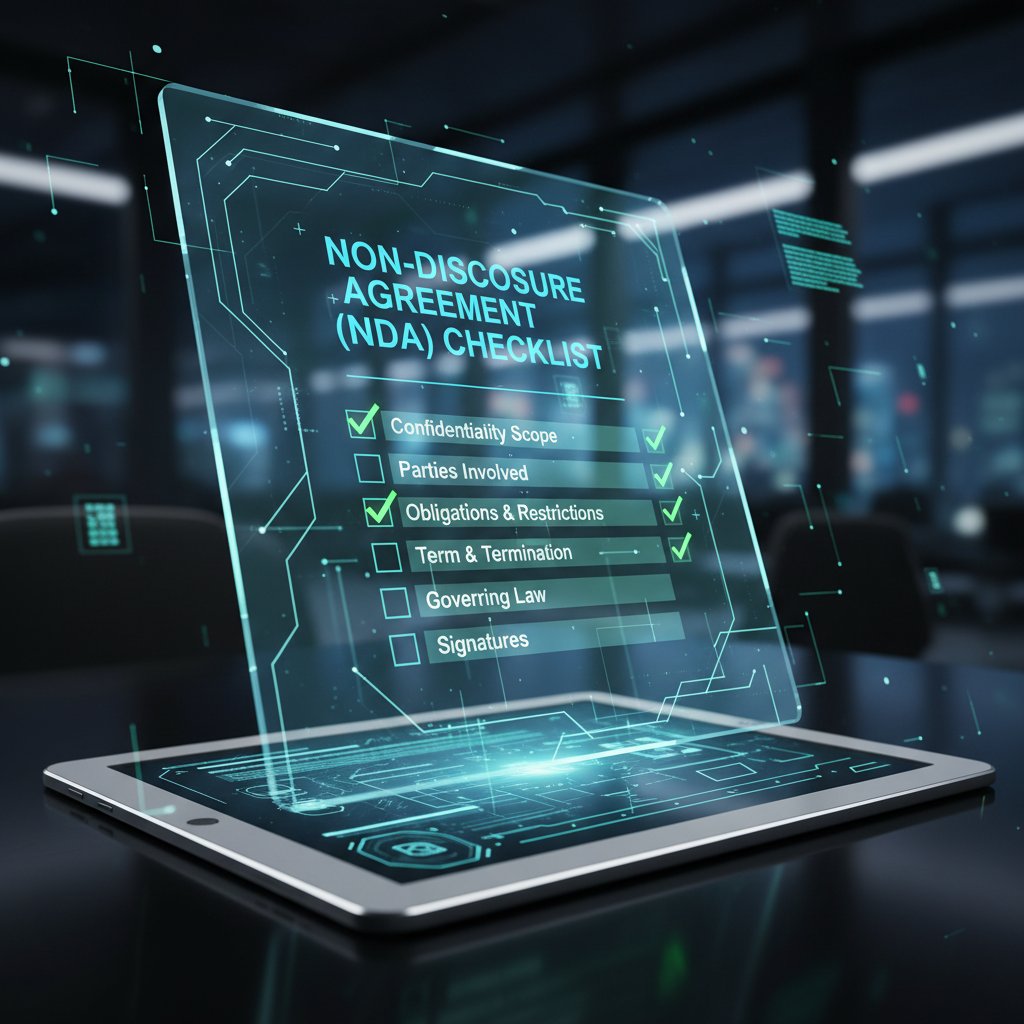
Step-by-step future-proof NDA creation checklist:
- List all parties and their roles clearly
- Define “confidential information” with specific examples
- State permitted uses and purposes
- Set time limits for both confidentiality and non-use
- Detail exceptions (legal requirements, public domain, etc.)
- Specify jurisdiction and dispute resolution
- Include obligations for return or destruction of information
- Cover digital security and cyber risk responsibilities
- Address IP rights and ownership
- Outline procedures for addressing breaches
Definition list: jargon decoded for real people
Any data, document, or material specified in the NDA as private and not for public disclosure—could be business plans, code, designs, or even meeting notes.
The agreed-upon process for handling breaches—arbitration, mediation, or litigation, depending on what’s defined in the contract.
Both parties agree to protect each other’s information, common in partnerships or joint ventures.
The process of deconstructing a product to uncover its design or composition; most NDAs exclude protection if reverse engineering is done legally.
The duration for which confidentiality obligations last—typically 2–5 years, but can vary based on the nature of the information.
The legal system and country whose laws apply to interpreting and enforcing the NDA.
Why does understanding this jargon matter? Because every line in your NDA is a potential loophole—or your last line of defense.
Cultural and global perspectives: how confidentiality is shaped by society
Why NDAs look different in Tokyo, Berlin, and New York
Culture shapes how secrets are guarded and shared. In Tokyo, confidentiality agreements are frequently backed by personal commitment and social expectation, while Berlin’s contracts tend to be more formal and regulated. New York’s NDAs, meanwhile, reflect the cutthroat nature of American business—aggressive, explicit, and litigation-ready.
| City | Typical NDA Features | Social Attitudes | Common Clause Variations |
|---|---|---|---|
| Tokyo | High social trust, mutuality | Duty-bound, discreet | Emphasis on personal integrity |
| Berlin | Data privacy-focused | Formal, legalistic | GDPR and labor law integration |
| New York | Explicit and aggressive | Pragmatic, litigious | Detailed exclusions, tough penalties |
Table 5: Global comparison of common NDA clauses and attitudes, original analysis.
For multinational deals, these differences can create friction—or opportunity. Understanding them is the key to trust and enforceability.
The rise of transparency: are NDAs under threat?
Movements for workplace transparency, open-source collaboration, and whistleblower protections have put NDAs under the microscope. Some activists argue that they stifle legitimate dissent and hide unethical practices. Major tech firms and governments are re-examining their use of NDAs in harassment, discrimination, and public interest cases.
"Transparency is the new currency, but some secrets are still worth guarding." —Casey, reflecting the complex future of NDAs in an open world
Yet, the need to protect trade secrets, personal privacy, and innovation isn’t vanishing. The challenge is finding the balance between necessary secrecy and public accountability—a tension every NDA drafter must navigate.
Your move: actionable steps to generate confidentiality agreements that actually work
Quick reference: NDA essentials at a glance
You’ve absorbed the brutal truths. Now here’s what matters most: an NDA is only as strong as its weakest clause. If you want to protect your secrets—your work, your ideas, your business—don’t settle for less.
Quick-start NDA essentials checklist:
- Be specific about what’s confidential
- Limit usage and recipients
- State clear start and end dates
- Include all relevant exceptions
- Don’t ignore digital and cross-border risks
- Choose clear dispute resolution paths
- Update your agreements regularly

Checklist: is your NDA ready for 2025?
Self-assessment keeps you ahead—don’t wait for a breach to realize you missed something vital.
Self-assessment steps to ensure NDA readiness:
- Review every definition—can a third party understand what’s covered?
- Check for outdated clauses—do they reflect current laws and digital realities?
- Test for enforceability—run scenarios for breach and dispute resolution.
- Confirm compliance—especially for cross-border or digital deals.
- Consult experts or advanced tools for critical agreements.
Don’t just file your NDA away. Regularly revisit and update it as your business, partnerships, and the law evolve.
Where to go next: smarter tools, smarter agreements
In an era where secrets are currency and leaks can devastate overnight, relying on outdated templates or verbal promises is a losing strategy. New-generation tools like filecreator.ai are part of a smarter approach—combining speed, accuracy, and compliance to generate confidentiality agreements that don’t just look good, but actually work.
The bottom line: the rules of trust and secrecy haven’t changed, but the game has. If you want to survive—and thrive—in 2025, build your NDAs with the same care you bring to your business. Because in the end, only the paranoid survive. And only the prepared prosper.
Sources
References cited in this article
- Bonsai NDA Template 2025(hellobonsai.com)
- UIDP Contract Accord 9(uidp.org)
- Easy.jobs NDA Guide(easy.jobs)
- Trade Secret Protection in 2025(wardandsmith.com)
- The Explosive Value of Trade Secrets in 2024(esplin.legal)
- Secure Communications in 2025(blogs.blackberry.com)
- Tesla v. Rivian NDA Breach(bloomberg.com)
- Forbes: NDA as Advantage(forbes.com)
- LDM Global: NDA Pitfalls(ldmglobal.com)
- Lexagle: NDA Pitfalls(lexagle.com)
- Forbes: Toll on Harassment Victims(forbes.com)
- TLT LLP: NDA Risks(tlt.com)
- Wikipedia: NDA(en.wikipedia.org)
- UpCounsel: NDA Clauses(upcounsel.com)
- Savvycom: International NDA Guide(savvycomsoftware.com)
- EveryNDA: Choice of Law(everynda.com)
- Lexology: NDA Enforcement(lexology.com)
- Betterteam: NDA Templates(betterteam.com)
- Zegal: NDA Case Studies(zegal.com)
- NDACorp: NDA Case Studies(ndacorp.com)
- LexCliq: NDAs for Startups(lexcliq.com)
- Firstbase.io: Startup NDAs(firstbase.io)
- Lawdragon: Cross-Border M&A 2025(lawdragon.com)
- Sterlington: NDA Due Diligence(sterlingtonlaw.com)
- Yale Law Journal: NDAs Beyond Trade Secrecy(yalelawjournal.org)
- ProMarket: NDA Overreach(promarket.org)
- CalArts Library: Art Activism 2024-2025(library.calarts.edu)
- Creative Time Summit(summit.creativetime.org)
- Thrive Law: NDA Misuse(thrivelaw.co.uk)
- Rippling: NDAs by Country(rippling.com)
- Lexology: NDA Checklist(lexology.com)
- Spotdraft: NDA Review Checklist(spotdraft.com)
- Securedocs: NDA Checklist PDF(securedocs.com)
Perfect Documents, Instantly
Filecreator.ai transforms the way you produce professional documents. Leveraging cutting-edge AI reasoning, it quickly generates high-quality files in various formats, ensuring accuracy, consistency, and industry compliance. Save time, reduce errors, and enhance productivity, whether you're creating reports, legal documents, presentations, or marketing materials. Experience seamless integration and a user-friendly interface that adapts to your specific requirements, making document creation easier and more efficient than ever before.
Get startedStart Creating Professional Documents Today
Join thousands of professionals who trust AI-powered document generation
Frequently Asked Questions
What are some recent examples of major trade secret verdicts?
As of 2024, Insulet v. EOFlow resulted in a $452 million award and CSC v. Tata resulted in a $210 million award, highlighting the significant financial consequences of information leaks and the importance of enforceable confidentiality agreements.
Why are confidentiality agreements more important in 2025 than they were in the past?
The rise of digital collaboration, remote work, global partnerships, and social media means confidential information is now at risk across multiple platforms and channels—from TikTok DMs to Slack threads to cloud drives—making traditional NDA protections more critical than ever.
What does the article identify as a common misconception about NDAs?
Many people believe NDAs are just impressive paperwork that will automatically protect their secrets, when in reality many agreements contain legal loopholes and don't actually hold up in court without proper construction and enforcement strategies.
What modern contexts now require confidentiality agreements beyond traditional trade secrets?
Beyond protecting blueprints and traditional trade secrets, NDAs now need to address the risks created by digital collaboration platforms, remote work environments, and global partnerships where information can leak through various digital channels.
Continue Reading
Explore more from Professional Document Generator

Why Customized Confidentiality Agreements Need Precision
Customized confidentiality agreements require precision to protect trade secrets effectively. This article explains why generic templates fail and what makes NDAs enforceable.

Generating Legal Agreements Online: Risks and Reality
Generate legal agreements online comes with hidden risks. This article examines security breaches, AI errors, and whether digital contracts withstand court scrutiny.

Generate Official Service Agreements That Actually Hold Up in Court
Discover insights about generate official service agreements

Generating Professional Agreements: Why Precision Matters in 2025
Generating professional agreements requires precision and care in 2025. This article explains why generic templates fail, what risks to avoid, and how to protect your business.

Create Legal Agreements Online That Actually Hold Up in Court
Discover insights about create legal agreements online

AI-Generated Legal Agreements: Risks and Realistic Benefits
Generating customized legal agreements with AI offers speed but carries real risks. This article examines the hidden costs, security concerns, and what legal professionals actually recommend.