


Generate Customized Agreements Without the Hidden AI Risks
Written with AI assistance under our editorial guidelines
AI-powered contract generators promise speed and customization but carry hidden risks including AI biases, enforcement vulnerabilities, and false sense of security. True protection requires understanding that checkbox-based customization and template generation cannot replace thorough legal review and negotiation, especially when stakes are high and business-specific nuances matter.
It’s 2025, and the digital contract world is a battleground of speed, illusion, and hidden risk. Everyone wants to generate customized agreements in a click, but beneath the glossy dashboards and AI-generated “personalization,” the stakes are higher—and messier—than ever. In this guide, we’ll peel back the layers of hype and marketing to reveal what most professionals don’t want you to know about digital contract generation. From the subtle traps of so-called customization to the brutal truths about enforcement, negotiation, and AI biases, you’re about to discover the secrets, risks, and new rules of creating truly custom agreements. If you think a few checkboxes or a fancy template will protect your business, think again. Before you generate your next “tailored” agreement, read this—and spare yourself a world of pain.
Why everyone’s obsessed with generating customized agreements
The rise of instant document culture
The rise of instant gratification has infiltrated every corner of modern business, from food delivery to the expectation of one-click digital contracts. No one wants to wait—especially when legal paperwork stands between inspiration and execution. The result? A world where generating customized agreements has become a default move, not just for lawyers but for startups, freelancers, and major corporations alike. According to DocuSign (2024), the number of agreements created digitally is at an all-time high, driven by demands for speed and accessibility.

But speed comes with a price. The psychological need to control every detail in a contract—without waiting weeks for legal review—feeds the appeal of so-called customized agreement generators. There’s comfort in the idea that, with the right digital tool, you can cover every base and protect your interests. The reality? True control is rare, and the illusion is dangerous.
The promises (and perils) of AI document generators
AI-powered contract tools promise to do it all: lightning speed, zero errors, and ironclad legal protection. Legal tech companies parade machine learning models capable of digesting thousands of precedents and spitting out “bespoke” agreements in seconds. The global legal tech market is projected to surpass $35 billion by 2025, fueled by the explosive adoption of AI contract generators (Statista, 2024).
Yet these promises often hide hard truths. According to a 2024 analysis by Aaron Hall Law, automated tools can accelerate drafting but frequently miss crucial nuances—leading to costly misunderstandings, unenforceable clauses, or dangerous loopholes hiding in plain sight. Even worse, “custom” contracts can lull users into a false sense of security, falsely believing their agreement covers every risk.
| Method | Speed | Accuracy | Risk Level | Cost |
|---|---|---|---|---|
| Traditional Legal Drafting | Low | Very High | Very Low | High |
| Template-based | High | Low-Medium | High | Low |
| AI-powered Customization | Very High | Medium-High | Medium | Medium-Low |
Table 1: Comparison of agreement generation methods—speed, accuracy, risk, and cost. Source: Original analysis based on DocuSign (2024), Aaron Hall Law (2024), and independent industry reports.
What does ‘customized’ really mean? Debunking the myths
Template tweaks vs. true personalization
The word “customized” gets thrown around as carelessly as “artisanal” in a supermarket aisle. Most platforms offer template-based customization—tweak a few fields, add a clause or two, and call it a day. But as legal experts warn, this often amounts to nothing more than superficial personalization.
True customization demands a deep understanding of your unique needs, business context, and regulatory landscape. According to DocuSign (2024), most users settle for surface-level changes, missing out on adaptive clauses that could genuinely protect their interests. It’s the difference between buying a suit off the rack and having one tailored to your exact measurements.
Key terms:
An agreement modified from a base template to include specific terms tailored to the parties’ needs. Genuine customization considers context, jurisdiction, and long-term implications.
A contract that incorporates individual preferences or company requirements, moving beyond generic language but not always addressing legal nuances.
A contract provision designed to adjust automatically to changing circumstances—such as regulatory updates or business model shifts—requiring sophisticated drafting often beyond basic generators.
The illusion of control: Are you really protected?
Marketing for document generators leverages a powerful myth: the idea that a few customization options equal bulletproof protection. Users eagerly toggle settings and drop in custom text, assuming the end product will withstand any challenge. Yet when the rubber meets the road—in litigation or negotiation—surface-level changes often crumble.
"Most people think clicking a few checkboxes makes it custom. That’s a dangerous myth." — Sam, contract analyst
Real-world consequences abound. Take the case of a startup sued over an ambiguous indemnity clause—plucked from a template, barely edited, and ultimately thrown out in court for vagueness. According to Aaron Hall Law (2024), poorly customized agreements are a leading cause of business disputes, costing companies time, money, and credibility.
Inside the machine: How AI actually crafts your agreements
Behind the curtain: Data, algorithms, and biases
Let’s get real: AI-generated agreements aren’t conjured from thin air. They’re the product of massive datasets, neural networks, and algorithmic pattern-matching. Every clause, every word, is influenced by the data used to train the model. According to research published by the Harvard Law Review (2024), bias in legal AI systems remains a significant concern—especially when datasets are built on outdated or jurisdiction-specific templates.

Errors often slip in where the data is weakest: niche industries, unusual jurisdictions, or “edge case” legal issues. AI can replicate existing mistakes, or worse, amplify them—baking bias into every “custom” contract. The risk? An agreement that looks perfect on the surface but is riddled with unseen flaws.
The hidden hands: Who really writes your contracts?
Beneath the AI veneer, there’s always a human element. Behind every automated document generator stands a global network of lawyers, paralegals, and content specialists tweaking templates, updating language, and building the rules that guide the software. According to a 2024 survey by LegalTech Today, most major platforms rely on both proprietary AI and teams of legal experts to deliver usable contracts at scale.
"Every “custom” agreement has someone’s fingerprints on it. The question is whose." — Jordan, industry insider
This hidden industry is largely invisible to end-users but shapes everything from risk allocation to enforceability. The bottom line: even in the age of automation, the expertise (or oversight) of unseen professionals colors every “customized” agreement you download.
From startups to side hustles: Wild case studies of customization gone right—and wrong
The $5,000 mistake: When a ‘custom’ NDA failed
Consider the story of a SaaS startup that trusted a quick online NDA generator to protect their intellectual property during early investor talks. The agreement, cobbled together in under five minutes, missed a crucial clause about jurisdiction—leaving the company exposed when a dispute arose with an overseas partner. The result? Over $5,000 in legal fees and a lost business opportunity, as documented in industry case studies from LegalTech Today (2024).

What went wrong? The generator offered jurisdiction options, but the founder, in a rush, left the default setting. No one flagged the issue until it was too late. Lesson learned: when it comes to customization, speed kills if you don’t check every detail.
How the right tool saved a freelancer’s reputation
On the flip side, take Casey—a freelancer burned by a vague contract that left payment terms open to interpretation. After switching to a professional document generator specializing in creative industry contracts, Casey found peace of mind and, more importantly, a stable income.
"The right generator can be a career-saver—if you know what to look for." — Casey, freelancer
Hidden benefits of using a professional document generator:
- Dramatically faster drafting, freeing up time for actual work.
- Peace of mind knowing critical clauses are covered by industry standards.
- A competitive edge when negotiating, thanks to clear, professional presentation.
- Reduced risk of costly disputes and misunderstandings.
- Support for multiple formats (PDF, DOCX), streamlining client communications.
- Built-in compliance checks that flag risky omissions before you sign.
The anatomy of a truly customized agreement: What the experts demand
Essential elements every custom agreement must have
There’s no shortcut to substance. The best customized agreements share several foundational elements—non-negotiable for legal protection and business clarity. According to current best practices verified by DocuSign (2024) and numerous legal professionals, these are the critical clauses and features every robust contract needs:
- Clear identification of all parties—full legal names and contact information.
- Detailed purpose and scope—what the agreement covers, and what it doesn’t.
- Explicit terms and conditions—including deliverables, deadlines, and payment schedules.
- Well-defined obligations and responsibilities—for both sides, with no ambiguity.
- Confidentiality and non-disclosure clauses—precisely worded to avoid loopholes.
- Termination conditions—how, when, and why the agreement can end.
- Dispute resolution mechanisms—mediation, arbitration, or jurisdiction.
- Governing law and jurisdiction—specifying which legal system applies.
- Force majeure provisions—protecting against uncontrollable external events.
- Amendment procedures—outlining how changes must be made and agreed upon.
- Signatures and digital authentication—including digital signature support.
- Compliance statements—ensuring adherence to relevant regulations.
Step-by-step guide to mastering customized agreement creation:
- Identify your unique business needs and objectives.
- Gather all relevant information—parties, context, and regulatory requirements.
- Choose a reputable agreement generator or consult a legal professional.
- Select or build a template that closely matches your situation.
- Scrutinize and adapt every clause—don’t rely on defaults.
- Add context-specific provisions (e.g., for data privacy, intellectual property).
- Review for clarity, plain language, and absence of jargon.
- Verify local compliance and cross-jurisdiction enforceability.
- Involve stakeholders—get feedback and approval from all parties.
- Validate with digital signature and authentication tools.
- Store and back up signed agreements securely.
- Schedule periodic reviews and updates to maintain relevance.
Red flags: How to spot a fake custom agreement
Even seasoned professionals fall for slick-looking, but ultimately generic, contracts. According to research from LegalTech Today (2024), the following warning signs should set off alarms:
- Use of vague, “catch-all” language that lacks detail.
- Missing critical party information or incomplete addresses.
- Absence of governing law, jurisdiction, or dispute resolution clauses.
- Inconsistent formatting, suggesting copy-pasted elements.
- No clear process for amendments or termination.
- Overreliance on “boilerplate” clauses.
- Lack of digital signature support or authentication.
- Clauses that contradict each other or legal norms.
How to verify real customization? Use digital tools to check for hidden metadata, clause uniqueness, and compliance with local regulations. When in doubt, run the document through a professional document generator like filecreator.ai/generate-customized-agreements or consult an expert.
The cost of shortcuts: What happens when customization fails
The hidden risks nobody talks about
Behind every “free” or ultra-cheap online contract generator lurks a minefield of risk. Legal ambiguity, unenforceable terms, and hidden obligations can cost far more than the price of a lawyer. Recent research from DocuSign (2024) and Aaron Hall Law (2024) highlights how common it is for poorly customized agreements to result in expensive litigation, lost deals, or reputational damage.
| Method | Upfront Cost | Hidden Fees | Potential Losses | Peace of Mind |
|---|---|---|---|---|
| DIY | None | High (errors) | Very High | Low |
| AI-generated | Low-Medium | Some (limits) | Medium | Medium |
| Lawyer-drafted | High | Minimal | Very Low | Very High |
Table 2: Cost-benefit analysis of main agreement generation methods. Source: Original analysis based on DocuSign (2024), Aaron Hall Law (2024).
Mitigating major risks means getting serious about review and compliance. Always validate your agreements using reputable tools, and—especially for high-value deals—bring in a legal professional for review.
When free really means expensive
Nothing in the business world is truly free. Many users discover this the hard way, when a “complimentary” online generator leaves them exposed. Negative testimonials abound: one consultant described losing a six-figure deal over a poorly drafted indemnity clause; another business owner spent months untangling the fallout from a void non-compete.
"Cheap now, expensive later. I learned the hard way." — Alex, entrepreneur
What’s the lesson? Protect yourself by investing time, or a little money, in reputable platforms and thorough review.
The future is now: AI, automation, and the next wave of agreement generation
What 2025’s smartest agreement generators can (and can’t) do
The most advanced agreement generators today use AI reasoning, natural language processing, and real-time compliance updates to craft highly tailored documents. As of 2025, tools like filecreator.ai stand out for supporting multiple document formats, built-in error checking, and seamless integration with business workflows.
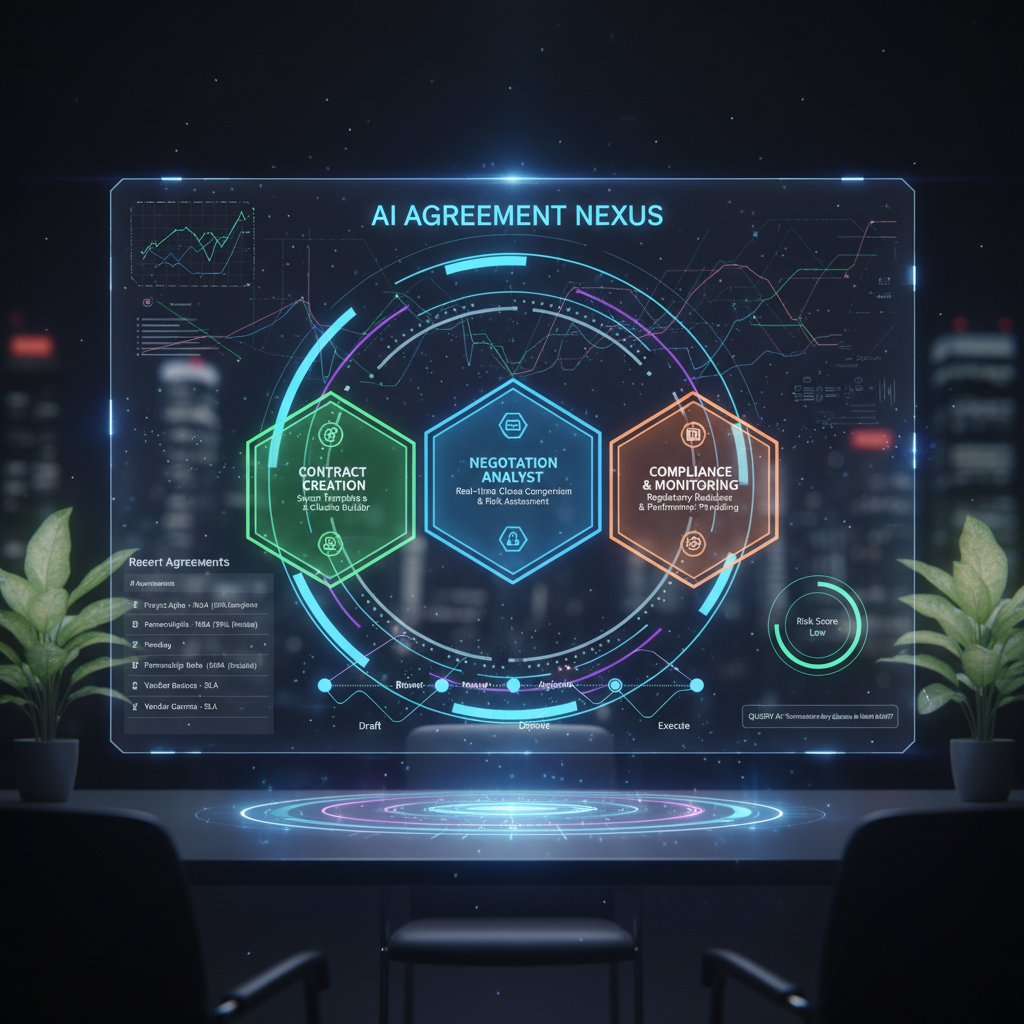
Yet even the smartest tools have limits. According to a 2024 analysis by Harvard Law Review, no AI can replace human judgment for truly complex, high-stakes deals. Ethical questions persist, especially around bias, privacy, and the transparency of algorithmic decision-making.
Are we ready for fully autonomous contracts?
The push toward “self-executing” agreements—smart contracts, blockchain-enforced deals—has set off fierce debate in legal and business circles. These agreements automatically enforce terms without human intervention, raising complex issues of trust, privacy, and regulation. As of now, adoption remains niche outside of cryptocurrency and certain tech sectors, due to enforceability, jurisdiction, and user comprehension challenges.
Key future terms:
A digital agreement that automatically executes and enforces terms when certain conditions are met, typically on a blockchain platform.
A contract designed to operate without manual intervention, triggering penalties or payments on predefined events.
An encrypted, legally recognized method of verifying document authenticity and acceptance in digital contracts.
How to choose the best tool: A critical buyer’s guide
Top criteria for selecting an agreement generator
Not all generators are created equal. Choosing the right tool can mean the difference between protection and disaster. Here’s what to look for:
- Customization depth—Does it go beyond templates?
- Security features—How is your data protected?
- Support for multiple formats—PDF, DOCX, and others.
- Integrated compliance checks—Automatic flagging of regulatory risks.
- User support—Access to real experts when you need help.
- Audit trails—Can you track changes and signatures securely?
- Clause libraries—Are they industry-specific and regularly updated?
- UX and interface—Is it intuitive, or a headache?
- Price transparency—No hidden fees.
- User reviews and ratings—What do real users say?
Priority checklist for agreement generator selection:
- Define your needs and risk tolerance.
- Research available tools—focus on reputable, reviewed platforms.
- Test customization features for real depth.
- Assess security protocols and privacy guarantees.
- Check export and integration options.
- Review built-in compliance and error checking.
- Read independent user reviews.
- Verify pricing structure.
- Evaluate customer support responsiveness.
- Run a trial agreement and review output quality.
| Tool Name | Customization Depth | Security | Support | Price | User Rating |
|---|---|---|---|---|---|
| filecreator.ai | High | Advanced | 24/7 | Medium | 4.9/5 |
| TemplateQuick | Low-Medium | Standard | Email Only | Low | 3.8/5 |
| LawGenPro | High | Advanced | Phone & Chat | High | 4.7/5 |
| CheapDocs | Low | Basic | None | Free | 2.5/5 |
Table 3: Feature matrix comparing major digital contract tools. Source: Original analysis based on user reviews and published specifications (2025).
filecreator.ai and the rise of professional document generators
Professional document generators like filecreator.ai are reshaping the industry by blending cutting-edge AI with real human oversight. These platforms offer a middle ground: speed and accessibility without sacrificing quality or compliance. For businesses and freelancers alike, filecreator.ai has emerged as a go-to resource for generating customized agreements that truly fit the situation—supported by industry best practices and robust compliance checks.
Such tools fit into the broader landscape by bridging the gap between “good enough” and “expert level,” making professional-grade agreements accessible to anyone willing to invest a little more attention and care.

Your next move: Action steps and questions nobody else will ask
Checklist: Is your agreement really customized?
Most people never ask the tough questions about their digital contracts. Here’s how to self-assess:
- Does every clause make sense for your business, or did you leave defaults unchecked?
- Are the parties, addresses, and scope crystal clear?
- What law applies, and who gets to decide disputes?
- Are there ambiguous or boilerplate terms?
- Has a real expert reviewed the agreement, or is it all automated?
- Would a third-party (client, regulator) understand every provision?
- Are digital signatures and audit trails enabled?
- Is the language free of hidden obligations or surprises?
- Have you compared your agreement against industry best practices?
- Is the document up to date with current regulations?
Next steps: Rethink how you approach digital agreements. Invest in review, update regularly, and treat every contract as a living document—especially as AI and automation add new layers of complexity.
Rewriting the rules of trust in a digital world
Trust in contracts is shifting from notaries and wet signatures to algorithmic checks and digital signatures. But the human element—judgment, caution, and thorough review—can’t be automated away. As we navigate this new era, the wise move is to combine the best of both worlds: the speed and efficiency of AI, and the vigilance of human oversight.
Rethink your approach: Before you sign, ask the uncomfortable questions. Don’t be seduced by the promise of instant, cost-free protection. In the end, trust is built not by clicking faster—but by verifying smarter.
Conclusion
The world of generating customized agreements is both thrilling and treacherous—a landscape where speed, technology, and legal complexity collide. As this guide has shown, the glossy promises of AI-powered contract generators hide a messier reality: real customization requires depth, vigilance, and a willingness to question the status quo. Whether you’re drafting your first NDA or renegotiating a high-stakes partnership, remember: shortcuts can be ruinously expensive, and the illusion of control is no substitute for real protection. Use trusted resources like filecreator.ai to up your game, but never outsource your judgment. Stay sharp, stay skeptical, and keep your contracts as unique—and defensible—as your business itself.
Sources
References cited in this article
- DocuSign: Creating Agreements You Can Actually Understand(docusign.com)
- Aaron Hall Law: Importance of Customizing Contracts(aaronhall.com)
- Worksighted: Evolution of Document Collaboration Tools(worksighted.com)
- Retirely: Instant Culture and Gen Z(retirely.co)
- Advanced Science News: The Promise and Perils of Generative AI(advancedsciencenews.com)
- Gallagher Sharp LLP: Ethical Perils of AI in Law(gallaghersharp.com)
- Becker Law: Debunking Contract Myths(beckerlawllc.com)
- Adams on Contract Drafting: I Don’t “Tweak” Templates(adamsdrafting.com)
- You Legal: When to Use a Template vs. See a Lawyer(youlegal.com.au)
- TermsFeed: AI and Legal Agreements(termsfeed.com)
- Ironclad: AI Customization in Contracts(ironcladapp.com)
- IBM: Shedding Light on AI Bias(ibm.com)
- SAP: AI Bias and Mitigation(sap.com)
- StartupNation: Protecting Your Side Hustle(startupnation.com)
- Medium: Startup/Corporate Case Studies(medium.com)
- Lawrina: Anatomy of a Contract(lawrina.org)
- Netsheria: Red Flags in Contracts(netsheria.com)
- Supply Chain Connect: Spotting Counterfeits(supplychainconnect.com)
- HogoNext: Hidden Costs and Dangers of the Shortcut(hogonext.com)
- SafetyPedia: Risks of Shortcuts(safetypedia.com)
- One Legal: AI Legal Risks(onelegal.com)
- MIT Sloan: Legal Issues of Generative AI(mitsloan.mit.edu)
- Tech Wire Asia: AI and Automation Trends 2024(techwireasia.com)
- Built In: The Future of AI(builtin.com)
- V7 Labs: AI Contract Review Guide(v7labs.com)
- Superlegal: AI Contract Review Buyer’s Guide(superlegal.ai)
- ContractCrab: Best AI Contract Management Tools(contractcrab.com)
Perfect Documents, Instantly
Filecreator.ai transforms the way you produce professional documents. Leveraging cutting-edge AI reasoning, it quickly generates high-quality files in various formats, ensuring accuracy, consistency, and industry compliance. Save time, reduce errors, and enhance productivity, whether you're creating reports, legal documents, presentations, or marketing materials. Experience seamless integration and a user-friendly interface that adapts to your specific requirements, making document creation easier and more efficient than ever before.
Get startedStart Creating Professional Documents Today
Join thousands of professionals who trust AI-powered document generation
Frequently Asked Questions
What are the main risks of using AI-powered contract generators?
AI contract generators promise speed and accuracy but hide hard truths about their limitations. The article warns that beneath glossy dashboards and AI-generated 'personalization,' there are subtle traps related to customization, enforcement, negotiation, and AI biases that most professionals don't openly discuss.
Why has generating customized agreements become so popular in 2025?
The rise of instant gratification culture and demand for speed has made one-click digital contracts the default approach for startups, freelancers, and corporations. According to DocuSign (2024), the number of agreements created digitally is at an all-time high, driven by the desire for accessibility and fast execution without waiting for legal review.
Can checkboxes and templates truly protect your business when generating agreements?
No. The article explicitly warns that 'if you think a few checkboxes or a fancy template will protect your business, think again,' emphasizing that true control in customized agreements is rare and the illusion of protection is dangerous.
How large is the legal tech market driving AI contract generators?
According to Statista (2024), the global legal tech market is projected to surpass $35 billion by 2025, fueled by explosive adoption of AI contract generators.
Continue Reading
Explore more from Professional Document Generator

AI-Generated Legal Agreements: Risks and Realistic Benefits
Generating customized legal agreements with AI offers speed but carries real risks. This article examines the hidden costs, security concerns, and what legal professionals actually recommend.

Customized Contracts: Risks of AI-Powered Legal Document Generation
Generating professional customized contracts requires understanding the risks of AI-powered tools. This article examines what can go wrong and how to protect your business.

Customized Legal Documents: Why Generic Templates Fail
Generate customized legal documents to protect your interests. This article explains the risks of generic templates, how to use AI-powered tools responsibly, and what to scrutinize before signing.

Personalized Contracts: How AI Changes Risk and Accuracy
Personalized contracts reduce risks that generic agreements create. This article examines how AI contract generation works, its limitations, and when human expertise remains essential.

Automated Customized Contracts: Benefits, Risks, and Implementation
Generate automated customized contracts efficiently while managing risks. This article explains how automation works, what pitfalls to avoid, and where real business gains appear.

Automated Contracts: Balancing Personalization with Control
This article examines how to generate personalized automated contracts while maintaining oversight. It covers the risks of automation hype and the practical safeguards needed.