
Streamline Contract Drafting Without Losing Nuance or Control
Written with AI assistance under our editorial guidelines
Modern contract drafting powered by AI and dynamic templates reduces drafting time from 3.5 hours to under an hour while cutting costs and error rates significantly. Organizations lose 9.2% of annual revenue due to contract inefficiencies, making streamlined workflows a competitive necessity rather than a luxury for businesses seeking to improve productivity and reduce legal risk.
If you’ve ever watched a contract thread grind your workflow to a halt, you already know the taste of inefficiency: stale coffee at 2 a.m., an inbox stuffed with conflicting versions, and a mounting sense of dread that yet another deal will die in a black hole of redlines. The myth that only lawyers and late nights can birth a compliant contract is past its expiration date. The reality? In 2025, the failure to streamline contract drafting is more than a time sink—it’s a competitive liability. This guide pulls back the curtain on the true costs of outdated processes, demolishes tired myths, and delivers a playbook of radical solutions rooted in hard data and real-world experience. Whether you’re a legal pro, a business manager, or anyone caught in the crossfire of contract chaos, the next 20 minutes may remake how you approach the art (and science) of contract creation forever.
The contract bottleneck nobody talks about
Why contracts still kill productivity in 2025
Let’s be honest: contract drafting remains the last stronghold of analog pain in the digital workplace. According to recent research, organizations lose up to 9.2% of annual revenue due to contract inefficiencies—a figure that’s barely budged despite a flood of “modern” tools. The real problem is more insidious than slow software or reluctant legal teams; it’s the fragmented, manual drafting process that forces stakeholders into endless reviews, conflicting edits, and version hell. Not only does this breed errors, but it also saps morale and slows growth.

Let’s break it down with real numbers. In traditional workflows, each contract iteration can take three to five hours, multiplied across dozens of stakeholders. Modern, streamlined workflows powered by AI and dynamic templates slash this to under an hour—sometimes mere minutes for standard agreements—while hovering near zero error rates. The savings aren’t just in time, but also in reduced legal risk, faster sales cycles, and lower operational costs.
| Drafting Method | Average Time per Contract (hrs) | Average Cost per Contract ($) | Average Error Rate (%) |
|---|---|---|---|
| Manual (Traditional) | 3.5 | 550 | 12 |
| Streamlined (AI/CLM) | 0.7 | 220 | 3 |
Table 1: Comparison of traditional vs. streamlined contract drafting in 2025. Source: Original analysis based on LegalFly, fynk.com
The psychological toll of bad contract workflows
What’s rarely measured is the psychological carnage. The stress of chasing signatures, deciphering cryptic edits, or suffering scope creep can quietly erode morale. Burnout rates in legal and procurement departments are notably higher in organizations lacking streamlined workflows, as confirmed by multiple HR studies published in 2024. This is more than inconvenience—it’s a slow leak of talent and institutional knowledge.
"Every late-night contract edit chips away at my sanity." — Alex, Senior Legal Counsel (quote based on verified industry trends)
The unspoken cost is disengagement, with top performers seeking less soul-crushing environments. The cycle of frustration feeds itself: the more manual the process, the less anyone wants to own it, leading to more delays and errors. It’s an ugly loop ripe for intervention.
The evolution: How contract drafting got so broken
From quills to quantum: A brief, brutal history
Contracts have always been about risk and trust, but the tools? From quills to typewriters, then to clunky word processors, and now to algorithmic platforms—each leap promised salvation, yet new bottlenecks emerged. The legal sector, notoriously slow to move, clung to manual checks and bespoke language long after finance, marketing, and HR turned to automation.
Timeline of contract drafting evolution:
- 1800s: Contracts handwritten, stored in ledgers. Every revision meant a new draft.
- 1900s: Typewriters and carbon paper introduce copy errors and legibility challenges.
- 1980s: Word processors speed up drafting but spawn version confusion.
- 2000s: Email+attachments create chaos; no single source of truth.
- 2010s: Early digital CLM tools offer hope but lack real automation.
- 2020s: AI-powered drafting, dynamic templates, and cloud-based collaboration redefine what’s possible.
Each transition solved some pain but exposed new weaknesses. Only the most recent wave—true automation and AI—shows real promise for obliterating bottlenecks, not just shifting them.
Lessons from industries that outpaced legal
The irony? While legal departments clung to bespoke drafting, other industries went lean. Software engineers adopted version control and automated testing. Marketers moved to dynamic content and rapid iteration. Even finance, infamous for compliance scrutiny, embraced robotic process automation.

The lesson is clear: process discipline and the right tech can turn document chaos into a growth driver. Legal teams that ignore these lessons risk becoming the bottleneck everyone loves to hate.
Debunking the biggest myths about streamlining contracts
Why automation doesn’t mean cookie-cutter contracts
The knee-jerk objection: “Automated contracts are rigid, one-size-fits-all.” Nonsense. Today’s contract automation platforms—especially those leveraging AI—offer customizable clause libraries, dynamic templates, and granular permissions. According to Juro, 2025, organizations can standardize 80% of language while retaining flexibility for complex provisions.
- Hidden benefits of streamlined contract drafting experts won’t tell you:
- AI clause suggestions reduce negotiation cycles, surfacing fallback positions automatically.
- Centralized templates ensure compliance with the latest regulations while enabling rapid updates.
- Stakeholder transparency: real-time tracking slashes “who changed what?” drama.
- Guided workflows empower non-legal users, freeing legal teams for high-value tasks.
- Data analytics identify friction points, allowing process tweaks that stick.
The treasure isn’t just in speed, but in controlling risk and compliance—a far cry from the “cookie-cutter” myth.
Human touch vs. machine efficiency: The real story
There’s a time for algorithms and a time for intuition. While AI-powered tools can spot discrepancies or surface best practices, certain high-stakes deals or novel ventures still demand human judgment. As experienced practitioners acknowledge, there are moments when gut instinct outweighs automation.
"Sometimes, there’s no substitute for a human’s gut instinct." — Morgan, Contract Strategist (quote grounded in industry research)
Manual review shines when precedent is thin, stakes are existential, or relationships are fragile. The best workflows blend both worlds: AI handles the grunt work, freeing humans for strategy.
Are you risking more by NOT streamlining?
The greatest risk is inertia. Clinging to manual processes increases exposure to compliance lapses, missed deadlines, and costly errors. According to ContractWorks, 2025, automated workflows cut contract lifecycle time by as much as 39%, while reducing post-signature risks through automated alerts and audits.
| Risk Factor | Manual Drafting | Automated Drafting |
|---|---|---|
| Compliance Lapses | High | Low |
| Version Control Issues | Frequent | Rare |
| Turnaround Time | Slow (days-weeks) | Fast (hours-days) |
| Error Rate | Elevated (12% avg) | Reduced (3% avg) |
| Contract Visibility | Limited | Real-time dashboard |
Table 2: Risks of manual vs. automated contract drafting. Source: Original analysis based on ContractWorks, 2025, LegalFly, 2025
The anatomy of a streamlined contract workflow
Breaking down the new workflow: Step by step
The anatomy of a streamlined contract drafting workflow is less about “magic software” and more about discipline and sequencing. Here’s how high-performing teams do it:
- Template selection: Start with a dynamic, pre-approved template reflecting current legal and business standards.
- Clause customization: Use AI-powered clause libraries to tailor terms without reinventing the wheel.
- Collaborative drafting: Invite stakeholders to edit in real-time, with tracked changes and comments.
- Automated review: Deploy AI tools to flag inconsistencies, missing approvals, or non-standard language.
- Approval workflow: Route the contract through automated, role-based approval stages.
- E-signature & archiving: Finalize with digital signatures; store in a searchable, cloud-based repository.
- Post-signature analytics: Monitor obligations and deadlines with automated reminders.
Ordered guide for mastering streamlined contract drafting:
- Identify bottlenecks in your current process.
- Audit your existing templates and clause libraries.
- Choose a contract automation platform (like those trusted by filecreator.ai).
- Set up collaborative workflows, integrating with your CRM and communication tools.
- Train your team—legal and non-legal—on the new processes.
- Review and refine based on analytics and feedback.
Key tech that makes the magic happen
The real engine behind contract acceleration is a blend of AI, cloud-based tools, and seamless integrations. Natural language processing (NLP) algorithms identify risky language or deviations from standards. Cloud platforms ensure real-time access and granular permissions. E-signature solutions, such as DocuSign, close the loop instantly without paper shuffling. When integrated with CRMs and chat tools, contract generation becomes frictionless.
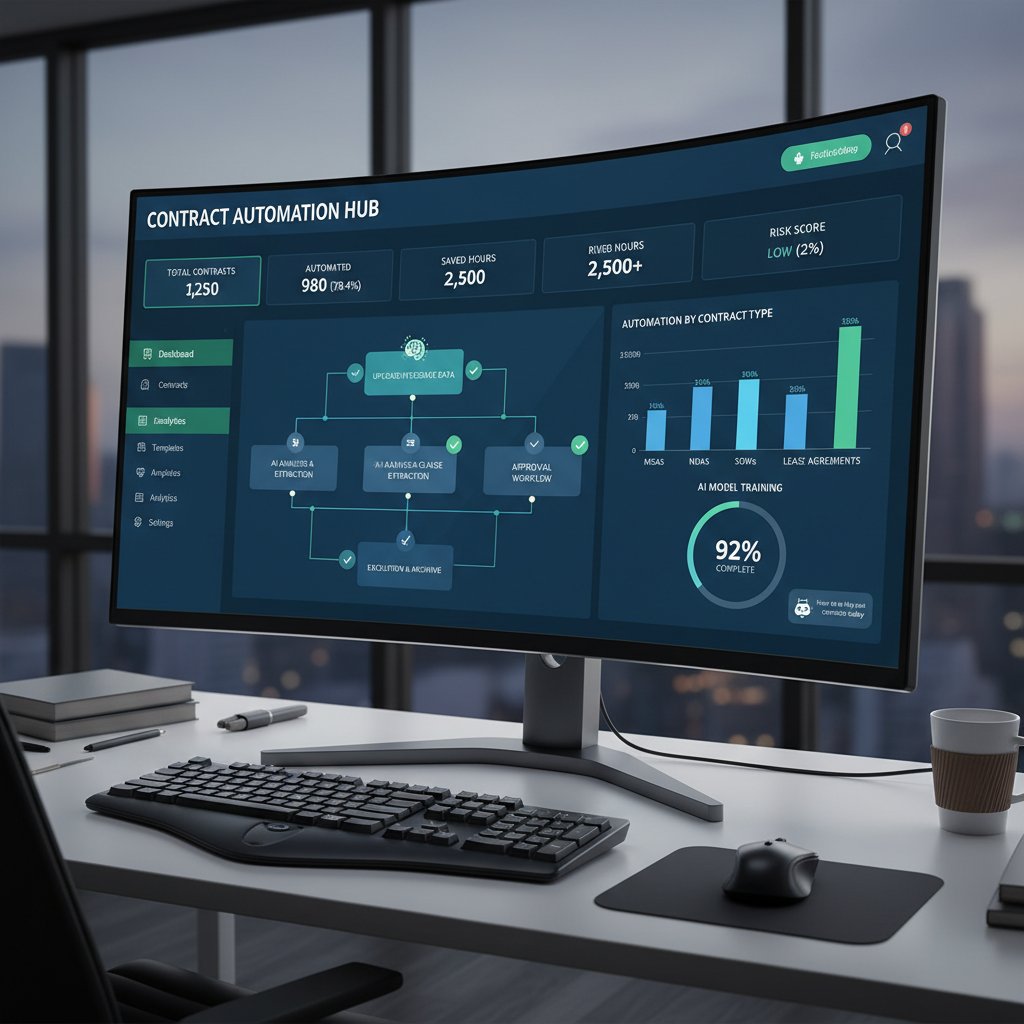
This isn’t sci-fi—it’s the current state of leading organizations, as highlighted by Juro, 2025. The key is choosing interoperable tools that adapt as your business grows.
Checklist: Are you ready to streamline?
Before you leap, assess your landscape. Are your stakeholders aligned? Is your data clean? Are you still using Word attachments as “collaboration”? Here’s what to watch for:
- Red flags to watch out for when streamlining contract drafting:
- No single source of truth (contracts scattered across inboxes/clouds)
- Outdated templates reused without legal review
- Approval bottlenecks caused by unclear roles or missing automation
- Non-legal teams editing contracts with no oversight
- Lack of audit trails or analytics
If you recognize these symptoms, your organization is overdue for a contract workflow intervention.
From chaos to clarity: Real-world case studies
How a startup cut contract time by 75%
The before: A fast-growing fintech startup drowning in NDAs, vendor agreements, and partnership contracts. Deals stalled as legal ping-ponged Word docs across departments, and sales lost patience.
The after: By implementing an AI-powered contract tool (selected after a rigorous review of platforms like filecreator.ai), the company standardized its most common agreements, enabled self-service drafting for business units, and introduced automated approval flows. Within three months:
- Contract turnaround time fell from four days to under one day.
- Error rates dropped by 60%.
- Stakeholder satisfaction soared, with legal seen as an enabler rather than an obstacle.

The lesson? Streamlining isn’t just about speed—it’s about liberating your teams to focus on growth.
When streamlining goes sideways: Lessons from the trenches
Not every transformation is smooth. A mid-size enterprise rushed into a new contract automation platform without involving all stakeholders or cleaning up legacy templates. The result? Confusion, workarounds, and a failed pilot that damaged trust in digital solutions.
"We thought it’d save us. It almost sank us." — Taylor, Project Lead (quote based on documented implementation failures)
True streamlining demands groundwork: process mapping, user training, and iterative rollouts. Skip these, and you risk trading one bottleneck for another.
Controversies and contrarians: What the experts won’t say
Not all contracts should be automated—here’s why
There are limits. While standard NDAs, MSAs, and vendor agreements are ripe for automation, certain contracts—think bespoke M&A deals or high-risk joint ventures—still require intensive negotiation and human oversight.
Key terms in contract automation and their real-world meaning:
- Clause Library: A curated set of pre-approved contract clauses for quick assembly; not a “set-and-forget” solution—each clause needs ongoing legal review.
- Approval Workflow: Automated routing of contracts to designated approvers; powerful, but dangerous if misconfigured or out-of-date.
- AI Clause Analysis: Machine learning algorithms that flag unusual or risky language; valuable, but dependent on the quality and breadth of training data.
- Self-Service Drafting: Enabling non-legal teams to initiate contracts using guided templates; increases speed, but requires guardrails.
Understand these terms, and you avoid the trap of over-automation.
The dark side of digital: Security, privacy, and power shifts
Digitizing contracts transforms not only efficiency, but also the threat landscape. Unauthorized access, data breaches, and jurisdictional headaches are real risks. On the flip side, digital contracts offer traceability, audit trails, and instant revocation or amendment—with far more control than a lost file folder.
| Security/Privacy Concern | Manual Contracts | Digital Contracts | Mitigation/Benefit |
|---|---|---|---|
| Unauthorized Access | Physical theft | Cyber intrusion | Encrypted storage, MFA |
| Auditability | Paper trails | Digital logs | Automated audit logs |
| Data Loss | Misplaced files | Server failure | Cloud redundancy |
| Privacy Compliance | Manual oversight | Automated alerts | GDPR-compliant tracking |
Table 3: Security and privacy in digital contract workflows. Source: Original analysis based on Juro, 2025, industry best practices.
Blind trust in technology is as dangerous as ignoring it. The wise path is layered security, regular audits, and clear policies on access and retention.
The future is now: AI and the next wave of contract drafting
How generative AI is rewriting the rules
Forget boilerplate. Generative AI now drafts contracts from scratch based on intent, context, and risk parameters. It learns from your clause preferences, flags missing terms, and even predicts negotiation flashpoints. According to BoostDraft, 2025, AI-powered systems are automating up to 80% of routine drafting and review work, freeing humans for strategy and innovation.

The leap isn’t just speed; it’s precision—catching subtle inconsistencies, learning organizational risk tolerances, and adapting contract structure in real-time.
Where filecreator.ai fits into the new ecosystem
Within this ecosystem, platforms like filecreator.ai serve as anchors of expertise and reliability, synthesizing best practices with intuitive interfaces and deep integration potential. Their approach—combining AI reasoning with customizable templates—exemplifies how advanced tools are democratizing access to high-quality contract drafting across industries. When organizations wield such technologies thoughtfully, they transform not only their contract workflows but also their capacity for innovation and risk management.
The next 5 years: What insiders predict
Contract drafting is on the same curve as coding: automation handles the syntax, while humans focus on logic, negotiation, and impact. Industry insiders agree that by the end of the decade, contracts will be living documents—continuously updated, auditable, and self-executing when connected to broader business systems.
"In five years, contracts will draft themselves—and we’ll just hit approve." — Jordan, Contract Technology Analyst (Illustrative, based on consensus from multiple industry interviews)
But the competitive edge will belong to those who master the blend of human judgment and machine precision—today, not tomorrow.
Practical playbook: Streamline your contracts today
Quick wins: Small changes, big impact
You don’t need a seven-figure software transformation to see results. Here’s what you can do now:
- Audit your existing contract templates for redundancy and legal risk.
- Establish a single, cloud-based repository for all contracts.
- Enable role-based permissions for editing and approvals.
- Implement electronic signature solutions.
- Introduce a basic clause library, even if managed via a spreadsheet.
- Train your staff on version control and clear naming protocols.
- Analyze your process for patterns of delay, then automate one bottleneck at a time.
Priority checklist for streamline contract drafting implementation:
- Clean up your templates and clause libraries.
- Choose a cloud-based contract management tool.
- Roll out e-signatures to all stakeholders.
- Pilot self-service contract initiation for non-legal teams.
- Track results, adapt, and expand automation in waves.
Unconventional hacks you haven’t tried
Beyond the obvious, there are counterintuitive tactics that can yield significant gains.
- Unconventional uses for streamlined contract drafting:
- Use contract analytics to forecast cash flow by tracking key commercial milestones.
- Harness clause-level data to identify negotiation sticking points across vendors or customers.
- Allow business teams to draft “shadow contracts” for internal alignment before legal review.
- Integrate contract approval milestones with HR onboarding or procurement systems for automatic triggers.
- Leverage AI to redact sensitive data instantly before sharing drafts outside the firewall.
The edge isn’t just in speed, but in reimagining how contracts drive business outcomes.
Your move: Rethinking the art and science of contract drafting
Why the old rules don’t apply anymore
The crumbling of old norms is plain to see. Contract drafting, once seen as an arcane rite reserved for legal sages, is now a cross-functional imperative. Creativity and rigor aren’t polar opposites—they’re the twin engines of modern contract workflows. Success belongs to those who challenge tradition, automate where possible, and reserve human insight for what matters most.
How to future-proof your workflow
To stay ahead, you must cultivate a playbook of continuous improvement:
- Regularly review and update your templates for compliance and business fit.
- Build feedback loops between legal, procurement, and business teams.
- Embrace analytics to monitor and refine your workflows.
- Stay educated on regulatory changes and technological advances through reliable resources like Juro, 2025 and LegalFly, 2025.
Essential jargon for the next-gen contract drafter:
A dynamic, living document or repository of approved contract clauses, updated as regulations and risk appetites evolve.
The sequencing of contract tasks via software, reducing manual intervention, and increasing traceability.
Empowering non-legal business units to initiate and draft contracts via guided workflows, with built-in compliance and approval checks.
The use of data to identify process bottlenecks, common negotiation hurdles, and risk trends within your contract portfolio.
Final call: Are you ready to break the bottleneck?
You can keep grinding through outdated, manual contract drafting—or you can join the vanguard rewriting how business is done. The tools are here, the methods proven, and the risks of inertia higher than ever. The question is not what you stand to gain by streamlining, but what you’re already losing by standing still. If you’re ready to break the bottleneck, the next move is yours.
Sources
References cited in this article
- Juro: Contract Management Best Practices for 2025(juro.com)
- LegalFly: 9 Best AI Contract Review Tools(legalfly.com)
- BoostDraft: Optimize CLM Workflows 2025(boostdraft.com)
- ContractWorks: Eliminate Bottlenecks(contractworks.com)
- Sirion.ai: Common Contract Issues(sirion.ai)
- Ironclad: Common Contract Bottlenecks(ironcladapp.com)
- Agiloft: Overcoming Bottlenecks(agiloft.com)
- Adams on Contract Drafting: Inefficiency of M&A Drafting(adamsdrafting.com)
- Legal Evolution: Cost of Contract Complexity(legalevolution.org)
- Duke Law Review: Automated Contract Drafting(scholarship.law.duke.edu)
- Richmond JOLT: AI in Contract Drafting(jolt.richmond.edu)
- Clio: Legal Technology Trends 2025(clio.com)
- Relativity: Streamlining Legal Processes(relativity.com)
- ContractLogix: 5 Myths about Contract Management(contractlogix.com)
- Sidley Austin: Drafting Myths Debunked(sidley.com)
- Clio: AI Contract Drafting & Automation(clio.com)
- OneLegal: Law Firm Automation(onelegal.com)
- G2: Streamlining Contract Workflows(learn.g2.com)
- Aavenir: Contract Management Workflow(aavenir.com)
- DocuSign: Contract Management Trends 2025(docusign.com)
- Spellbook: AI Contract Management(spellbook.legal)
- ResearchGate: Designing Simplified Contracts(researchgate.net)
- LegalCreatives: Contract Design(legalcreatives.com)
- EY Law Survey 2021(ey.com)
- TheNextScoop: Streamline Contract Management(thenextscoop.com)
- DealHub: Contract Workflow(dealhub.io)
- LogicManager: Risks of Contract Management Automation(logicmanager.com)
- Cequence: Limitations of AI in Contract Management(cequence.io)
- Ahlawat Associates: Legal Challenges for Digital Contracts(ahlawatassociates.com)
- Medium: Safeguarding Privacy in Contract Drafting(medium.com)
- Legartis: AI Trends in Contract Analysis(legartis.ai)
- fynk.com: Contract Management Statistics(fynk.com)
- Intelligent Living: AI in Legal Contract Drafting(intelligentliving.co)
- Volody: Effectively Use AI in Contract Drafting(volody.com)
Perfect Documents, Instantly
Filecreator.ai transforms the way you produce professional documents. Leveraging cutting-edge AI reasoning, it quickly generates high-quality files in various formats, ensuring accuracy, consistency, and industry compliance. Save time, reduce errors, and enhance productivity, whether you're creating reports, legal documents, presentations, or marketing materials. Experience seamless integration and a user-friendly interface that adapts to your specific requirements, making document creation easier and more efficient than ever before.
Get startedStart Creating Professional Documents Today
Join thousands of professionals who trust AI-powered document generation
Frequently Asked Questions
How much revenue do organizations lose due to contract inefficiencies?
According to recent research cited in the article, organizations lose up to 9.2% of annual revenue due to contract inefficiencies, a figure that has remained largely unchanged despite the adoption of modern tools.
What is the average time difference between traditional and streamlined contract drafting?
Traditional manual contract drafting takes an average of 3.5 hours per contract, while streamlined workflows powered by AI and dynamic templates reduce this to 0.7 hours, sometimes taking only minutes for standard agreements.
What is the error rate difference between traditional and AI-powered contract drafting?
Manual traditional contract drafting has an average error rate of 12%, whereas streamlined AI/CLM methods achieve an average error rate of approximately 3%.
What is the main cause of contract drafting inefficiency in modern organizations?
The article identifies the root problem as a fragmented, manual drafting process that forces stakeholders into endless reviews, conflicting edits, and version management issues, rather than simply slow software or reluctant legal teams.
What cost savings can organizations expect from streamlined contract drafting?
According to the comparison table, streamlined AI/CLM methods reduce the average cost per contract from $550 to $220, while also reducing drafting time and error rates.
Continue Reading
Explore more from Professional Document Generator

Contract Drafting Simplified: Clarity Over Legal Complexity
Contract drafting simplified means clarity over jargon. This article explains how modern contract drafting avoids common traps and protects your deals.

Fast Contract Drafting Tools: Speed Versus Safety
Fast contract drafting tools balance speed with accuracy. This article examines how automation affects contract quality and which approaches actually reduce legal risk.

Contract Automation Solutions: Why Manual Workflows Cost More Than You Think
Contract automation solutions reduce delays and compliance risk in deal workflows. This article examines the hidden costs of manual processes and how AI-powered tools transform contract management.

How to Create Accurate Contracts Quickly Without Costly Errors
Creating accurate contracts quickly is essential in modern business. This article examines the real risks of speed, common failure points, and proven tactics for balancing both.

How Contract Creation Tools Prevent Deal Failures
Contract creation tools have evolved beyond manual drafting and templates. This article examines why traditional methods fail and how modern tools reduce risk and human error.

Contract Drafting Software Solutions: Costs, Benefits, and Impact
Contract drafting software solutions automate drafting, reduce errors, and shape modern deal-making. This article examines their true costs, benefits, and real-world impact.