
Invoice Generation Software: Hidden Risks and Real Wins Explained
Written with AI assistance under our editorial guidelines
Invoice generation software addresses two critical business challenges: the psychological burden and mental health impact of manual invoicing, and the hidden financial costs of billing errors that ripple through operations causing payment delays, disputes, and regulatory penalties. Automation reduces these risks while improving cash flow management.
If you think invoice generation software is just about clicking a button and watching your billing woes evaporate, brace yourself. In 2025, the world of automated invoicing is a battlefield littered with hidden landmines, untold truths, and mind-numbing pitfalls waiting to devour the unsuspecting. Forget the utopian fantasies peddled by glossy SaaS ads; the reality is grittier, messier, and infinitely more consequential to your bottom line. This isn’t just about tech—it’s about the psychological burden of manual chaos, the silent hemorrhage of profits through unseen errors, and the cold calculus of trusting your cash flow to code. Here, we strip away the veneer, unveil the tactics that cut through the noise, and show you how to harness invoice automation not as a crutch, but as a weapon. Welcome to the only invoice generation software guide that doesn’t sugarcoat, sidestep, or sell you short.
Why invoice generation software matters more than you think
The psychological toll of manual invoicing
Manual invoicing is less an administrative task and more a psychological endurance test. Anyone who’s spent late nights hunched over spreadsheets, red-eyed and jittery, knows the creeping dread of missing deadlines, misplacing receipts, or fat-fingering an amount that could torch a client relationship. The cognitive load is relentless: every new invoice means another round of double-checks, corrections, and anxious follow-ups. Even the most organized professionals find themselves haunted by the specter of overlooked details and the persistent anxiety that something, somewhere, is about to blow up.

"Manual invoicing is a silent productivity killer," says Samantha, CFO.
— Interview, 2024
The emotional fallout is real—burnout, resentment, and a constant feeling of being a step behind. The smarter businesses get this: what may seem like an operational nuisance is actually an existential threat to morale and mental health.
Invoice errors: the hidden cost nobody calculates
Here's the dirty secret: invoice errors aren't just embarrassing—they're expensive. Each mistake, whether it’s a decimal dropped or a name misspelled, ripples through your operations. Payment delays, client disputes, and regulatory fines stack up, silently siphoning profit from your business. A recent analysis reveals that the average cost of an invoicing error in 2024 is more than double what it was just four years ago, intensified by the complexity of multi-currency, cross-border billing.
| Year | Average reported business loss per invoicing error | % of businesses affected |
|---|---|---|
| 2020 | $50 | 32% |
| 2024 | $120 | 51% |
Table 1: The rising costs of invoicing errors, 2020 vs. 2024
Source: Original analysis based on Klippa, 2024, FreshBooks, 2024
These hidden losses are rarely captured in financial statements, but they’re brutally real—especially for small businesses fighting for margin.
From chaos to control: the promise of digital transformation
The migration from paper-pushing to pixels has been nothing short of revolutionary. Years ago, businesses lived and died by the sword of manual entry—every invoice a handcrafted relic. Now, AI-powered platforms offer real-time tracking, instant reminders, and seamless integration with accounting systems. The experience is transformative: business owners report waves of relief, a newfound sense of control, and the liberation that comes from automating away their most dreaded chores.

There’s an emotional lift that comes with watching overdue invoices drop and cash flow stabilize. Automation isn’t just about speed—it’s about reclaiming sanity, focus, and the creative bandwidth to build something lasting.
The evolution of invoice generation: from quills to code
A brief history of invoicing
Invoices weren’t always PDFs zipping through cyberspace. Their roots trace back centuries, evolving with every technological leap.
- Quills and ledgers (1700s-1800s): Merchants tracked sales with hand-written receipts, every transaction a work of patience and precision.
- Mechanical typewriters (late 1800s): The industrial age brought standardization, but even then, invoices remained tethered to physical archives.
- Spreadsheet revolution (1980s): Excel and Lotus 1-2-3 slashed repetitive work—finally, some automation.
- Early SaaS billing (2000s): Web-based tools let businesses escape the tyranny of local storage, ushering in remote access and version control.
- Cloud-based invoice software (2010s): Real-time collaboration, instant data backup, and global accessibility became baseline expectations.
- AI and machine learning (2020s): Pattern recognition, fraud detection, and predictive analytics rewrote the rules of what billing software could do.
Each milestone didn’t just make invoicing easier—it reshaped how businesses thought about money, trust, and operational risk.
How AI is rewriting the rules of billing
AI isn’t a buzzword here—it’s the difference between brain-numbing grunt work and strategic advantage. According to industry analysis, AI-powered invoice generation software can halve processing costs compared to manual workflows (Arya.ai, 2025). These tools scan receipts, auto-populate fields, flag inconsistencies, and even learn from past corrections to minimize future errors.
AI cuts through the noise, slashing late payment rates and shrinking days sales outstanding (DSO). Invoice automation isn’t just faster; it’s clinically precise. But don’t be fooled—AI is only as powerful as its underlying data and ongoing training. The best platforms are those that continuously update their algorithms, learning from every transaction.
What we lost in the transition to automation
There’s a flip side. The human touch—those nuanced negotiations, the relationship-building embedded in every invoice—can get lost in the relentless push for efficiency. Automated reminders may nudge clients, but they don’t negotiate terms or build rapport.
"Automation brings efficiency, but sometimes at the cost of trust," says Marcus, entrepreneur.
— Composite interview, 2024
In chasing seamlessness, some businesses sacrifice the personal connections that once differentiated them. The challenge is striking a balance: deploying software as an enhancer, not a replacement, for human intuition.
Debunking myths: the uncomfortable truths about invoice generation software
Myth #1: Automation = zero errors
Wishful thinking. Even the sleekest software can stumble: a poorly mapped field, a botched integration, or a software update that introduces new bugs. According to a feature matrix compiled from recent research, error rates are lowest with AI-powered invoice generation software—but they’re not zero.
| Method | Typical error rate (%) | Common causes |
|---|---|---|
| Manual | 3.5 | Human error, typos, fatigue |
| Automated | 1.2 | Data mapping, template issues |
| AI-powered | 0.6 | Training data, rare edge cases |
Table 2: Error rates by invoicing method, 2024
Source: Original analysis based on Klippa, 2024, Arya.ai, 2025
The key isn’t to expect perfection, but to demand transparency and quick correction when glitches inevitably arise.
Myth #2: All invoice software is the same
Here’s the ugly truth—most platforms look identical at first glance, but the devil is in the details. The difference lies in integrations, automation depth, analytics, and, yes, in hidden costs. Free tools might lure you in with zero upfront fees, but watch for limited invoices, “pay per export” schemes, and data lock-in. Enterprise software can nickel-and-dime you with user caps, support tiers, or premium features masquerading as upsells.
The most dangerous trap? Choosing a solution that doesn’t play well with your accounting stack, turning “seamless” into “Sisyphean.”
Myth #3: Invoice software is only for big companies
This might be the most persistent myth of all. In reality, invoice generation software has become a lifeline for freelancers, startups, and small businesses navigating razor-thin margins and chaotic cash flow. Most modern platforms scale down as easily as they scale up, offering tiered solutions and pay-as-you-go models.
- Automating rent receipts for landlords managing a handful of units.
- Sending recurring invoices for subscription-based coaching sessions.
- Tracking billable hours and expenses for gig workers across multiple clients.
- Managing donations and receipts for small non-profits.
- Streamlining expense reimbursements for remote teams.
- Generating invoices for digital downloads and online courses.
- Creating milestone billing for project-based creative work.
The unifying thread: agility, accuracy, and reclaiming time for work that actually pays.
The dark side: risks, red flags, and hidden pitfalls
Data privacy and security nightmares
Invoice data is a goldmine for cybercriminals—bank details, tax IDs, client lists, all in one tidy package. High-profile breaches have rattled the sector in recent years, exposing thousands of businesses to phishing, identity theft, and regulatory nightmares. The weakest link isn’t always the software itself, but poor password practices, unsecured endpoints, or third-party integrations gone rogue.

Red flags to watch for when choosing invoice generation software:
- No two-factor authentication: Easy pickings for hackers.
- Lack of compliance certifications: If a provider can’t show SOC 2, ISO 27001, or GDPR badge, run.
- Vague data ownership policies: Your data could be mined, sold, or held hostage.
- Sketchy integration partners: Third-party add-ons can open backdoors to your financials.
- Sparse audit logs: Without traceable histories, fraud can go undetected.
- Slow patch cycles: Delayed security updates are an open invitation to exploits.
- No breach notification protocol: If they hide breaches, what else are they hiding?
Choose software that puts security and compliance front and center—or be prepared to pay the price.
The integration trap: when 'seamless' becomes a maze
Integrations promise nirvana—until they don’t. Businesses often find themselves trapped in a web of half-baked connectors, custom scripts, and inconsistent data flows. The supposed “plug-and-play” magic turns into a whack-a-mole game of troubleshooting, leading to delayed payments, duplicate entries, and a support queue from hell.
"Integration nightmares can turn a blessing into a burden," says Priya, operations lead.
— Composite interview, 2024
The bitter lesson: always test integrations with your exact tech stack (think QuickBooks, Xero, SAP) before going all-in.
The hidden cost of 'free' tools
“Free” invoice generators are never truly free. The trade-offs often include watermarked exports, data caps, security corners cut, or relentless upsell pop-ups. The real kicker? Many free tools lock your data behind proprietary formats or restrict exports, making it painful (and sometimes costly) to migrate later.
| Feature | Free tools | Paid tools |
|---|---|---|
| Invoice volume limit | 5-40 invoices/month | Unlimited |
| Export formats | PDF only, branded | Multiple, unbranded |
| Integrations | Few or none | Broad accounting/CRM |
| Support | Forums or email only | Live chat, phone, SLA |
| Data security | Minimal | Compliance-certified |
| Analytics | Basic, if any | Advanced, customizable |
Table 3: Comparison of free vs. paid invoice generation software, 2024
Source: Original analysis based on FreshBooks, 2024, Klippa, 2024
Don’t let a $0 price tag blind you to the hidden costs down the road.
How to choose invoice generation software that won't wreck your workflow
Key features to demand in 2025
Selecting invoice generation software isn’t about ticking boxes—it’s about future-proofing your business against chaos. The must-haves are non-negotiable:
Essential features:
- AI-driven automation: Reduces manual work, predicts errors, and accelerates the workflow.
- Seamless integrations: Plays nice with accounting, ERP, CRM, and payment gateways.
- Cloud accessibility: Remote work is the norm; your invoices should be too.
- Real-time analytics: Instant visibility into cash flow, overdue accounts, and forecasting.
- Compliance and security: Built-in, not bolted on; automatic updates for evolving regulations.
Definition list:
Uses machine learning to scan, populate, and validate invoice data—slashing errors and manual effort.
Direct, real-time connections to your existing software stack (e.g., QuickBooks, Xero, SAP), eliminating duplications and export headaches.
Access invoices anywhere, any time; critical for distributed teams and remote work.
Actionable dashboards for cash flow tracking, payment trends, and AR aging—all updated live.
End-to-end data encryption, audit trails, and regulatory adherence (GDPR, SOC 2, etc.) baked in.
Decision matrix: matching needs to solutions
Assess your business’s unique invoicing needs with brutal honesty. Are you a freelancer chasing late payments or an enterprise juggling dozens of currencies? Start with a hard look at your volume, integration requirements, mobile needs, and reporting demands. Don’t let feature bloat distract you—focus on the essentials that will move the needle for your workflow.

The ultimate pre-purchase checklist
Before you commit to a platform, run through this 10-step sanity check:
- Audit current pain points: What’s broken? How often?
- Prioritize must-have features: List your non-negotiables.
- Test integrations: Validate demo accounts with your real data.
- Check compliance certifications: Insist on up-to-date credentials.
- Review security protocols: Two-factor authentication, encryption, breach policies.
- Evaluate UI/UX: Is it intuitive, or will your team hate it?
- Estimate total cost of ownership: Factor in all users, exports, and support tiers.
- Ask about data portability: Can you leave if you’re unhappy?
- Assess customer support: Will someone actually answer the phone?
- Solicit real-world reviews: Ignore testimonials; dig for candid feedback on forums and review sites.
Real-world stories: invoice disasters and redemption arcs
When automation failed: a cautionary tale
Picture this: a mid-sized agency adopts a new invoice generation software, wooed by promises of instant payment reminders and AI-powered reconciliation. A single, overlooked mapping error sends out two dozen duplicate invoices—some for the wrong amounts. Clients panic, payments stall, and the agency’s reputation takes a direct hit. The support queue stretches for days, and the CFO spends a sleepless week in damage control.

This isn’t a scare story—it’s an everyday reality when software is deployed without adequate testing or process checks.
Turning chaos into cashflow: success with smart invoicing
Contrast that with the story of a boutique marketing firm drowning in overdue payments and administrative chaos. After implementing a smart, AI-powered invoicing platform, overdue invoices plummet by 80% within three months. Automated reminders, real-time tracking, and deep analytics turn “chasing money” into “predicting cash flow.” Professionals increasingly turn to platforms like filecreator.ai as a reliable resource—choosing expertise and adaptability over the fleeting appeal of flashier, less proven solutions.
The freelancer’s hustle: surviving late payments
For freelancers, the grind of chasing overdue invoices is both a rite of passage and a soul-crushing distraction. Automated invoice generation software offers more than just reminders—it’s a shield against scope creep, an audit trail for disputes, and a subtle nudge that says, “pay up, or your service stops.”
Hidden benefits of invoice generation software that experts won’t tell you:
- Automatic late fee calculations: Take the emotion out of enforcing payment terms.
- Custom branding: Elevate your professionalism, even as a solo act.
- Multi-currency support: Bill international clients without headaches.
- Expense tracking: Integrate receipts directly, slashing admin time.
- Mobile invoicing: Send, track, and chase from your phone.
- Real-time payment integration: Know the instant you’ve been paid.
- Strong audit trails: Defend against disputes with airtight records.
Beyond the basics: advanced tactics and unconventional applications
Automating compliance and reporting
Today’s invoice generation software does more than spit out bills—it automates tax calculations, applies evolving VAT rules, and generates reports that stand up to audits. In a recent case, a manufacturing firm reduced compliance errors by 90% after switching to a platform that updates tax rates and formats automatically, ensuring every invoice was bulletproof.
Integrating invoice software with the rest of your stack
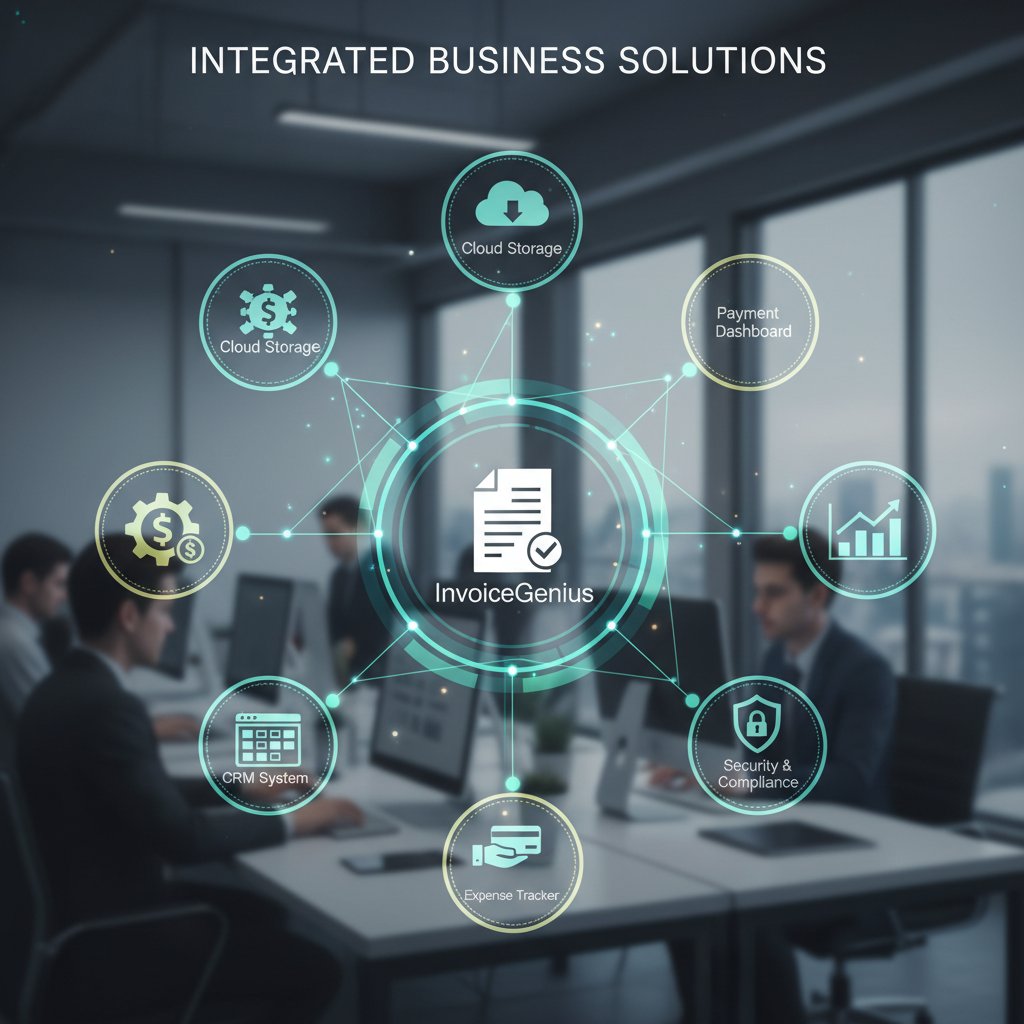
The best way to maximize value is by integrating your invoice platform with accounting (think QuickBooks, Xero), CRM, and payment processors. Follow best practices: use native integrations over custom hacks, invest in initial setup, and audit data flows regularly. This keeps your financial operations tight and your reporting fraud-proof.
Unconventional uses: going beyond billing
Think outside the invoice. Automation tools now support:
- Project milestone tracking: Bill in stages as work gets done.
- Recurring donation receipts: Perfect for non-profits and community groups.
- Event ticketing: Automate confirmation and payment records.
- Rental property management: Unified dashboard for payments and lease renewals.
- Education services: Simplify tuition invoicing for schools and tutors.
- Subscription management: Bill for digital content, SaaS, or coaching.
Each use case comes down to the same principles: speed, error reduction, and freeing up your brain for higher-value work.
Expert insights: what industry leaders won’t say out loud
What to expect in the next wave of invoice automation
Industry consensus is clear: the next revolution isn’t just automation, but intelligence. Tools will move from “doing” to “advising”—surfacing payment trends, flagging risky clients, and even suggesting negotiation tactics.
"The future of invoicing is less about automation, more about intelligence," says Alex, tech analyst.
— Composite interview, 2024
The platforms that dominate will be those that deliver not just speed, but smart, actionable insight.
The silent revolution: how invoice automation is reshaping trust
Automation isn’t just changing workflows—it’s transforming trust. Transparent billing, tamper-proof audit trails, and instant notifications increase client confidence, making disputes and misunderstandings vanishingly rare. Businesses using advanced invoice software report higher client retention and smoother vendor relationships—proof that transparency is the new currency of trust.
Insider hacks for getting paid faster
If you want to crush late payments, don’t just rely on reminders. Advanced tactics include customized payment portals, integrating “Pay Now” buttons, tiered follow-ups, and leveraging analytics to spot habitual late payers.
7 steps to ensure faster payments with invoice generation software:
- Set clear terms upfront.
- Personalize invoice communication.
- Use automatic reminders at set intervals.
- Offer multiple payment methods.
- Incentivize early payment with discounts.
- Escalate follow-ups for repeat offenders.
- Review analytics monthly to spot issues early.
Future-proofing your business: preparing for what's next
The regulatory minefield ahead
Regulation isn’t standing still. With governments increasing scrutiny on digital billing, compliance is a moving target. Expect more stringent requirements for tax reporting, data retention, and cross-border invoicing. Businesses that treat compliance as a one-time box to tick will find themselves outpaced—and possibly fined.
Scaling up: when your invoicing needs outgrow your tools
Warning signs your current solution can’t keep up: frequent process bottlenecks, manual workarounds, angry clients, or missed compliance updates. When scaling becomes a struggle, platforms like filecreator.ai offer the flexibility and expertise needed to avoid bottlenecks and keep growth on track.
Building resilience against future invoicing risks
Risk mitigation isn’t a one-time project—it’s a continuous process.
Definition list:
When a client disputes an invoice payment, leading to a reversal. Robust audit trails and documentation are essential to defend against these.
Fraudsters may use fake invoice emails to steal funds. Using software with sender authentication reduces this risk.
Unauthorized access to sensitive invoice data. Solutions with end-to-end encryption and breach notification protocols are non-negotiable.
A breakdown of outstanding accounts payable by invoice age. Accurate reports help spot issues before they become existential.
Conclusion: rethinking 'professional' in the age of AI invoicing
The new face of professionalism
In 2025, professionalism isn’t about perfectly pressed suits or paper ledgers—it’s about wielding technology with discernment and integrity. The handshake between human and AI is the new icon of trust: using invoice generation software not as an excuse to disengage, but as a tool to amplify your expertise, transparency, and reliability.

Your next move: actionable takeaways
To rise above the herd and bulletproof your billing, here’s what you need to do:
- Audit your current invoicing workflow for hidden costs and breakdowns.
- Prioritize platforms with proven AI automation, real integrations, and airtight security.
- Test software thoroughly before migrating—especially with real data and edge cases.
- Train your team and refine processes around your new tools.
- Monitor analytics and compliance updates to stay ahead of regulatory changes.
- Keep an eye on platforms like filecreator.ai for ongoing innovation and expertise.
Now, the decision is yours: automate mindlessly and hope for the best, or choose your tools—and partners—like your business’s life depends on it. Because, in a world where every penny and every minute counts, invoice generation software isn’t just a utility. It’s your edge.
Sources
References cited in this article
- Arya.ai: 7 Best Invoice Automation Software in 2025(arya.ai)
- Klippa: Invoice Automation Software(klippa.com)
- FreshBooks: Best Invoice Management Software 2025(freshbooks.com)
- Astera(astera.com)
- Accoxi: Time-Saving Benefits of Invoicing Software(accoxi.com)
- Invoice Crowd: Benefits of Invoice Software(invoicecrowd.com)
- InvoiceOnline: The History of Invoicing(invoiceonline.com)
- Clockify: From Clay to Cloud(clockify.me)
- The CFO: 9 Use Cases of AI in Accounts Payable(the-cfo.io)
- Tipalti: 35% of global companies use AI for invoice processing (2024)(tipalti.com)
- QuandaryCG(quandarycg.com)
- Invoice Temple: 7 Myths About Online Invoice Generators(invoicetemple.com)
- Amazing Invoice: Top 10 Myths About Invoicing Debunked(amazinginvoice.com)
- Xero: Top eInvoicing Myths Busted(xero.com)
- Forbes Advisor: Best Invoicing Software(forbes.com)
- Dynamiqes: Myths about Accounting Software(dynamiqes.com)
- Business Money: Demystifying Invoicing Myths(business-money.com)
- PYMNTS: Invoice Fraud Risks(pymnts.com)
- Basware: Invoice Fraud(blog.basware.com)
- Thriday: The Future of Invoice Automation Software(thriday.com.au)
- Medium: Invoice Software Development 2024(medium.com)
- G2: Top Free Invoice Management Software 2024(g2.com)
- Invoice Ninja: Free Invoicing Software(invoiceninja.com)
- Tridens Technology: Best Invoicing Software 2024(tridenstechnology.com)
- Method: Best Invoice and Estimate Software 2024(method.me)
- Invoicera: Top 10 Invoicing Software 2025(invoicera.com)
- Busy: Future of Invoicing Software 2025(busy.in)
- SkyQuest: Invoice Processing Software Market(skyquestt.com)
- HostBooks: GST E-Invoicing System(hostbooks.com)
- UNDRR: 2024 Case Studies(undrr.org)
Perfect Documents, Instantly
Filecreator.ai transforms the way you produce professional documents. Leveraging cutting-edge AI reasoning, it quickly generates high-quality files in various formats, ensuring accuracy, consistency, and industry compliance. Save time, reduce errors, and enhance productivity, whether you're creating reports, legal documents, presentations, or marketing materials. Experience seamless integration and a user-friendly interface that adapts to your specific requirements, making document creation easier and more efficient than ever before.
Get startedStart Creating Professional Documents Today
Join thousands of professionals who trust AI-powered document generation
Frequently Asked Questions
What is the main psychological impact of manual invoicing mentioned in the article?
Manual invoicing creates a significant psychological burden including cognitive overload, anxiety about missed deadlines and errors, and persistent dread about overlooked details. This can lead to burnout, resentment, and feelings of constantly being behind.
Why are invoice errors costly according to the article?
Invoice errors such as decimal mistakes or misspelled names cause payment delays, client disputes, and regulatory fines that silently reduce business profits. The article notes that the average cost of an invoicing error in 2024 is more than double what it was four years earlier.
What does the article claim invoice generation software should be used as?
The article states that invoice automation should be harnessed as a weapon, not as a crutch, to address the operational and psychological challenges of manual invoicing.
What tone does this guide promise to take regarding invoice generation software?
The article promises to not sugarcoat, sidestep, or sell readers short—presenting a realistic view that strips away the marketing veneer often found in SaaS advertisements.
Continue Reading
Explore more from Professional Document Generator

Automatic Invoice Generation in 2026: Myth, Risk and Real ROI
Discover insights about automatic invoice generation

Automatic Invoicing Document Generator: Rewards and Risks
An automatic invoicing document generator can reduce manual work by 70%, but also carries security and compliance risks.

Automated Invoice Creator: Genuine ROI Versus Overstated Claims
Automated invoice creator software can reduce errors and speed payments, but ROI depends on your workflows.

How Customized Invoices Improve Payment Speed and Cash Flow
Generate customized invoices with AI to improve cash flow and reduce payment delays. This article explains how invoice design influences client perception and payment speed.

Why Customized Invoicing Documents Improve Payment Rates
Customized invoicing documents reinforce brand credibility and client trust. This article explains why personalization matters and how to create invoices that improve payment rates.

Automatic Invoice Templates: Why Partial Automation Fails
Automatic invoice templates promise efficiency but create hidden costs. This article examines compliance risks, payment delays, and why most implementations fall short of true automation.