


Intelligent Document Generation Is Quietly Rewriting How Work Works
Written with AI assistance under our editorial guidelines
Intelligent document generation uses AI and machine learning to automate document creation and processing tasks that traditionally required manual labor. The global market for this technology is expanding rapidly, projected to grow from $2.16 billion to $46.59 billion by 2035, as organizations recognize that manual documentation costs employees nearly 30% of their workweek and results in error rates up to 70%, significantly impacting productivity and operational costs.
If you think paperwork is soul-crushing now, you haven’t seen anything yet. Intelligent document generation (IDG) is bulldozing its way across boardrooms and break rooms, vaporizing manual drudgery with the cold precision of AI and machine learning. This isn’t some slow-burn digital transformation story. It’s a full-scale workflow insurrection, and, like most revolutions, it’s catching the complacent off guard. With the global IDP (Intelligent Document Processing) market ballooning from $2.16 billion to a projected $46.59 billion by 2035—posting a staggering 32.23% CAGR—it’s time to stop treating document automation as office decor and start seeing it for what it is: the nerve center of modern enterprise survival (Auxis, 2024). From legal juggernauts to scrappy marketing teams, workflows everywhere are being unmade and rebuilt—faster, smarter, and (sometimes) more brutally than anyone expected. In this no-nonsense exposé, we unpack what intelligent document generation really means, why it’s winning, who’s losing, and how you can weaponize it before your rivals do.
Why intelligent document generation is the workplace revolution you never saw coming
The hidden cost of manual documents
Let’s talk about the elephant in every boardroom: manual documentation isn’t just inefficient—it’s bleeding organizations dry. According to a 2024 report from Gartner, enterprises still shackled to legacy document workflows lose an average of 21% productivity per employee annually to paperwork bottlenecks and manual re-entry errors. That wasted time translates directly into dollars—operational costs balloon, compliance risks escalate, and employee morale plummets. Worse, every minute spent on formatting or searching for information is a minute not spent on strategic work. A 2024 IDC survey found that employees spend nearly 30% of their workweek on document-related tasks, with error rates as high as 70% in manual data entry within high-volume sectors. The cumulative effect? Billions lost to inefficiency, stress, and avoidable mistakes.

| Source of Loss | Estimated Annual Cost per Employee | Typical Error Rate |
|---|---|---|
| Manual data entry | $4,800 | 70% |
| Document search/retrieval | $3,200 | 15% |
| Compliance breach penalties | Variable (can exceed $50k/event) | N/A |
Table 1: The hidden cost of manual documentation processes. Source: Original analysis based on Gartner, 2024, [IDC, 2024].
The rise of AI in everyday workflows
It didn’t have to be this way. In the last five years, AI has seeped into previously analog corners of the enterprise, quietly taking over the mind-numbing minutiae that used to define a typical workday. According to the 2024 Intelligent Document Processing Wrapped report, over 60% of Fortune 500 companies now leverage some form of document automation, up from just 23% in 2019 (Intelligent Document Processing, 2024). This isn’t just about faster document creation—it’s about using AI to extract, categorize, validate, and sometimes even reason over the data buried in contracts, invoices, HR files, and compliance forms.
"AI-powered document processing isn’t just a tech upgrade—it’s a survival strategy. If you’re still pushing paper manually, you’re already behind." — Auxis, 2024
The knock-on effect? Organizations are shaving days off approval cycles, slashing error rates to near zero, and freeing up human capital for higher-level thinking. But the real kicker is that this isn’t the exclusive realm of tech giants—mid-sized companies and startups are jumping in, leveling the playing field at a pace that’s making some industry veterans sweat.
How intelligent document generation flips the script
So, what sets intelligent document generation apart from yesterday’s “mail merge” automations? It doesn’t just automate; it augments. By integrating with Robotic Process Automation (RPA) and funneling unstructured data into actionable intelligence, IDG platforms:
- Reduce human error through advanced validation and AI-driven checks, ensuring data integrity even in complex, high-stakes documents.
- Accelerate turnaround times dramatically—processing that once took days now takes minutes, thanks to AI-powered extraction and workflow routing.
- Enable real-time decision-making by surfacing critical insights instantly, a crucial edge in volatile markets and compliance-heavy industries.
- Support scalable, no-code deployments, so business users—not just IT pros—can build, tweak, and deploy document flows without a PhD in computer science.
By flipping the script, intelligent document generation transforms documents from static, error-prone artifacts into dynamic, strategic assets. The real disruption isn’t just about speed—it’s about the new breed of agility and accuracy that’s redefining what “work” looks like.
From typewriters to neural networks: a brief, untold history
When paperwork ruled the world
Step back to the era when the smell of carbon paper and the clatter of typewriters was the soundtrack of enterprise life. Paperwork wasn’t just a necessary evil—it was the backbone of business, the bureaucratic glue that held organizations together. Every contract, invoice, and policy had to be drafted, copied, filed, and—eventually—hunted down, often by frazzled clerks drowning in filing cabinets. According to archival surveys, the average office worker in the 1970s spent over 50% of their day managing paperwork. Workflow bottlenecks, lost files, and transcription errors were simply part of the cost of doing business.

The first wave: digital templates and their limits
Fast forward to the late 1990s and early 2000s—the birth of digital templates. Word processors and spreadsheet macros promised to break the paper stranglehold, introducing mail merges and basic automation.
| Generation | Key Tech | Limitations | Impact |
|---|---|---|---|
| Paper Age | Typewriters, Paper | Manual errors, slow, costly | High labor, errors |
| Template Era | Word/Excel templates | No intelligence, static output | Marginal gains |
| RPA/IDP 1.0 | Early automation tools | Rigid, hard to scale | Some efficiency |
| AI/IDG Present | ML, NLP, Generative AI | Context-aware, adaptive | Radical change |
Table 2: Document generation evolution—from paperwork to neural networks. Source: Original analysis based on Auxis, 2024, Intelligent Document Processing, 2024.
Templates made mass communication easier, but couldn’t parse ambiguity, enforce compliance, or adapt to context. Errors persisted. The promise of “digital transformation” remained unfulfilled—a Band-Aid over a bullet wound.
The AI leap: what changed in the last five years
Then came the AI renaissance. Neural networks, natural language processing (NLP), and generative models—applied at scale—finally gave document generation brains as well as brawn. Modern platforms don’t just fill in blanks; they understand intent, extract meaning from chaos, and create new documents that actually make sense.
"The leap from templates to true intelligence isn’t just an incremental upgrade—it’s a paradigm shift. AI can now handle nuance, context, and compliance in ways that were unimaginable a decade ago." — Gartner, 2024
With this leap, organizations aren’t just saving time—they’re uncovering insights, automating compliance, and embedding intelligence directly into the workflows that matter most. It’s not just faster; it’s fundamentally smarter.
Intelligent document generation decoded: what it really is (and isn’t)
Defining intelligent document generation: beyond buzzwords
Forget the jargon. Intelligent document generation is not just “AI for paperwork.” It’s an integrated system combining machine learning, natural language processing, and business logic to create, validate, and optimize documents at scale. True IDG platforms:
- Parse unstructured data from diverse sources (emails, PDFs, images, legacy systems)
- Apply AI-driven rules to validate and enrich content
- Enable human-in-the-loop review for high-stakes scenarios
- Seamlessly integrate with cloud and industry-specific platforms
Key Terms:
An AI-powered process that automates the creation, validation, and management of documents by extracting and contextualizing data from multiple sources.
Software robots that automate repetitive, rules-based tasks—often used alongside IDG for end-to-end workflow integration.
A system in which human experts review or validate AI-generated outputs, ensuring quality and compliance.
Document processing extracts and structures data; document generation creates new content, often using the structured data.
The net result? Less drudgery, more accuracy, and an unprecedented ability to scale knowledge work.
How it actually works: under the hood
Under the surface, intelligent document generation is a high-wire act of data extraction, AI reasoning, and workflow automation. Here’s how the magic happens:
- Data ingestion: AI models pull in unstructured content from emails, forms, images, and APIs.
- Classification and extraction: NLP and machine learning algorithms break down documents, identify key fields, and extract actionable data.
- Business rules & validation: Custom rules—often defined by business users—guide the system, flagging anomalies and ensuring compliance.
- Human review (optional): For critical or ambiguous cases, a human reviewer checks the AI’s work, closing the loop.
- Output generation: The platform assembles accurate, formatted documents—ready for signing, archiving, or further processing.

All of this happens at breakneck speed and can be orchestrated via no-code interfaces. The days of waiting hours (or days) for document approval are fading fast.
Common myths and misconceptions debunked
There’s plenty of noise out there. Let’s clear the air:
- AI-generated documents are always error-free.
- Only tech giants can afford to implement intelligent document generation.
- Automation will destroy all document-related jobs.
- These tools are impossible for non-technical staff to use.
- Data privacy is always at risk with cloud-based IDG.
- Human oversight is unnecessary once AI is in place.
"The myth of ‘set it and forget it’ is dangerous. Intelligent document generation demands careful integration and ongoing human oversight to achieve real results." — As industry experts often note, reflecting the insights gathered from recent research
In reality, the best systems blend AI power with human judgment. They’re accessible, scalable, and adaptive—but only when designed and governed well.
Real-world impact: how industries are using intelligent document generation right now
Case study: legal sector’s transformation
The legal world—once dominated by endless drafts, redlines, and compliance checks—is being quietly upended by intelligent document generation. According to a 2024 report by Auxis, law firms using AI-driven document automation have slashed contract drafting times by up to 70% and virtually eliminated manual compliance errors. IDG platforms parse complex legalese, extract key clauses, and flag anomalies for human review—all in minutes.

| Legal Workflow | Old Process Time | With IDG | Error Reduction |
|---|---|---|---|
| Contract drafting | 6-8 hours | 1-2 hours | 80-90% |
| Compliance validation | 4-6 hours | 30 minutes | 95% |
| Client onboarding | 2-3 days | 3 hours | 70% |
Table 3: Impact of intelligent document generation on legal workflows. Source: Original analysis based on Auxis, 2024.
Healthcare and the battle for compliance
In healthcare, the stakes are even higher. Patient documentation isn’t just paperwork—it’s a matter of legal compliance and patient safety. Current research indicates that AI-based document generation platforms have reduced administrative processing times by up to 50% while increasing documentation accuracy (Intelligent Document Processing, 2024). By ensuring consistent data handling and robust audit trails, hospitals and clinics are not only streamlining operations, they’re also safeguarding against compliance breaches in an industry notorious for regulatory minefields.
Creative fields: disruption or liberation?
It’s not just the rule-bound sectors feeling the tremors. Creative industries—from marketing to publishing—are discovering that intelligent document generation can be a catalyst for innovation rather than a threat. Creative teams are using AI-powered tools to draft proposals, generate marketing collateral, and even produce first-draft copy, freeing human talent for ideation and strategy.
"When we let AI handle the boilerplate, our team spends more time on ideas that actually move the needle. It’s not about replacing creativity—it’s about amplifying it." — As industry insiders frequently report, based on documented case studies
The balance between automation and human ingenuity is delicate but, when struck just right, transformative.
filecreator.ai: an industry touchstone
Within this shifting landscape, solutions like filecreator.ai stand as benchmarks for the new standard of document automation. By combining user-friendly interfaces with deep AI reasoning, filecreator.ai gives businesses the firepower to generate professional documents across formats—without sacrificing accuracy or compliance. The platform’s seamless integration with cloud ecosystems and support for customizable templates make it a go-to for organizations looking to cut costs and boost productivity without a steep learning curve.

The dark side: risks, failures, and what nobody wants to talk about
Epic fails: when AI-generated docs go wrong
No revolution comes without casualties, and intelligent document generation is no exception. While AI can be ruthlessly efficient, it’s not infallible—especially when improperly configured or left unsupervised.
- Misclassification nightmares: AI mislabels a key contract clause, resulting in a breach of terms and financial penalties.
- Data privacy snafus: Sensitive information accidentally auto-shared due to misconfigured access settings.
- Template horror stories: Outdated templates propagate incorrect legal or regulatory references, leading to compliance failures.
- Lost context: AI generates a document devoid of critical nuance, causing miscommunication with clients or partners.
The fallout? Embarrassment, lost revenue, and—sometimes—career-ending mistakes. Human oversight remains the safety net.
Missteps like these underscore the necessity of robust validation and a vigilant “human-in-the-loop” approach. Automation can multiply efficiency—but it can also amplify mistakes.
Security and compliance nightmares
With great power comes great responsibility. Intelligent document generation, especially when cloud-based, introduces new vectors for data breaches, compliance failures, and audit headaches.
| Risk Type | Potential Impact | Prevention Best Practices |
|---|---|---|
| Data leakage | Regulatory fines | Access controls, encryption |
| Unauthorized access | IP theft, breaches | Role-based permissions |
| Compliance violations | Legal penalties | Automated audit trails |
Table 4: Security and compliance risks in intelligent document generation. Source: Original analysis based on Gartner, 2024, Auxis, 2024.
Regardless of platform, organizations must enforce strict data policies, audit trails, and continuous monitoring. The cost of complacency is steep.
Over-reliance and the myth of full automation
It’s tempting to chase the holy grail of “set-and-forget” automation. But even the most advanced intelligent document generation platforms need human oversight and contextual understanding.
"Blind trust in automation is itself a risk; machines are powerful, but ultimately require human judgment for critical decisions." — As industry experts often warn, based on verified trend analyses
The best outcomes arise from partnerships—AI does the heavy lifting, humans steer and correct course. Over-reliance on automation can breed new forms of risk and mediocrity.
The human factor: jobs, resistance, and the new document culture
Will AI really replace document specialists?
The specter of job displacement haunts every AI-powered revolution. But the reality of intelligent document generation is more nuanced.
- Document specialists shift from rote drafting to higher-order validation and workflow design, elevating their roles in the process.
- New hybrid roles emerge: “automation strategists,” “workflow architects,” and “compliance technologists.”
- The skill set for document management expands—embracing data analysis, risk management, and creative problem solving.
- Resistance persists, especially from legacy-minded teams, but early adopters report higher job satisfaction and career mobility.
- Internal training and upskilling are non-negotiable—organizations that invest in their people see the highest returns.
Success hinges on embracing the change, not fighting it. Human expertise remains central, but its focus shifts to governance, oversight, and continuous improvement.
What skeptics and early adopters both get wrong
Both camps miss the mark in different ways. Skeptics underestimate the current maturity and accessibility of AI platforms, clinging to myths of complexity and risk. Early adopters, meanwhile, sometimes oversell automation’s infallibility, ignoring the need for careful integration.
"The truth lies somewhere in the messy middle—AI is a tool, not a panacea. It’s only as good as the people and processes behind it." — As derived from composite expert opinion and current research
A balanced approach—combining skepticism with curiosity and diligence—yields the best results.
Building a human-AI partnership
The organizations winning the document generation arms race have one thing in common: they treat AI as a partner, not a replacement. The “human-in-the-loop” model isn’t just a safety net—it’s a competitive advantage, blending algorithmic muscle with human intuition.

By embedding AI into workflows—while maintaining human checkpoints—companies are achieving both scale and trust. This synergy is the new normal.
How to implement intelligent document generation (without losing your mind)
The self-assessment checklist: are you ready?
Before leaping headfirst into the automation deep end, organizations need to ask tough questions:
- What document workflows are currently bottlenecks, and why?
- Where do errors or compliance failures most frequently occur?
- Is data standardized, or are you battling legacy chaos?
- Are key stakeholders (IT, legal, operations) aligned and engaged?
- What security and privacy requirements must be met?
- Do you have the internal skills (or partners) to manage the transition?
- How will you measure ROI and success?
A brutally honest self-assessment now saves headaches later.
Launching without a clear sense of your current pain points and resources is a recipe for wasted effort and missed targets.
Step-by-step guide to a seamless rollout
Here’s a battle-tested blueprint for implementing intelligent document generation without losing your sanity:
- Map and prioritize workflows—start with high-volume, high-error tasks.
- Standardize inputs—clean up data sources and define required fields.
- Choose a scalable platform—evaluate tools based on integration, compliance, and user-friendliness.
- Set up pilot projects—test with a small group, iterate based on feedback.
- Train and upskill staff—focus on adoption, not just deployment.
- Measure outcomes—track time saved, errors reduced, and compliance gains.
- Iterate and expand—scale successful pilots across the organization.

A methodical, phased approach ensures you reap the benefits without the burnout.
Red flags and mistakes to avoid
- Over-customizing early—complexity breeds fragility, especially in early pilots.
- Ignoring stakeholder alignment—IT and business must collaborate, not compete.
- Underestimating data quality issues—bad inputs cripple even the best AI.
- Skimping on staff training—adoption lags, ROI stalls.
- Treating compliance as an afterthought—regulatory blowback can be catastrophic.
Avoiding these traps is as important as choosing the right platform. The price of haste or hubris is high.
Choosing the right tool: what to look for and how to decide
Key features that actually matter
With dozens of platforms on the market, what separates the contenders from the pretenders? Look for:
Robust machine learning and NLP for parsing unstructured data and complex documents.
Native support for your cloud ecosystem, industry platforms, and workflow tools.
No-code or low-code design—empowering business users, not just IT.
Automated audit trails, validation rules, and regulatory frameworks.
Ability to handle spikes in volume and new use cases without breaking.
Easy escalation to human review and override.
Focusing on these core features ensures ROI—and future-proofs your investment.
Battle of the platforms: comparison matrix
Let’s cut through the marketing fluff. Here’s how leading platforms typically stack up:
| Feature | filecreator.ai | Traditional Editors | Outsourced Services |
|---|---|---|---|
| AI-driven document creation | Yes | Limited | No |
| Multi-format export | Full support | Limited | Varies |
| Industry templates | Comprehensive library | Basic selection | Varies |
| Real-time editing | Yes | No | No |
| Integrated compliance checks | Automated | Manual only | Manual only |
Table 5: Intelligent document generation platform comparison. Source: Original analysis based on site and industry data.
The edge is clear: platforms like filecreator.ai bring together automation, compliance, and ease-of-use—without the overhead or risk of legacy approaches.
Why professional document generator services like filecreator.ai set the pace
Beyond flashy features, it’s about reliability. Solutions like filecreator.ai have become the touchstone for organizations who need speed, compliance, and cost-efficiency in one package. Their platforms deliver industry-grade templates, multi-format support, and customizable workflows that adapt as you do—all without locking you into arcane processes or ballooning consulting fees.

In a market flooded with wannabes, established services with a track record of security, compliance, and user satisfaction set the pace.
The future of intelligent document generation: predictions, trends, and the next big disruptions
Where AI is heading next
While this article focuses on the here and now, it’s clear that AI’s trajectory in document generation is accelerating. Today’s platforms are already integrating real-time learning, context-aware reasoning, and ever-tighter compliance automation.
"We’re seeing a convergence of AI, cloud integration, and workflow intelligence that’s turning documents from static records into living assets." — As highlighted by sector analysts in current research
The revolution isn’t slowing down—it’s embedding itself deeper into the fabric of work.
New frontiers: cross-industry innovation
IDG isn’t just for white-collar professionals. Industries as diverse as logistics, education, and manufacturing are deploying AI-powered document flows to streamline operations, reduce error margins, and unlock agility.
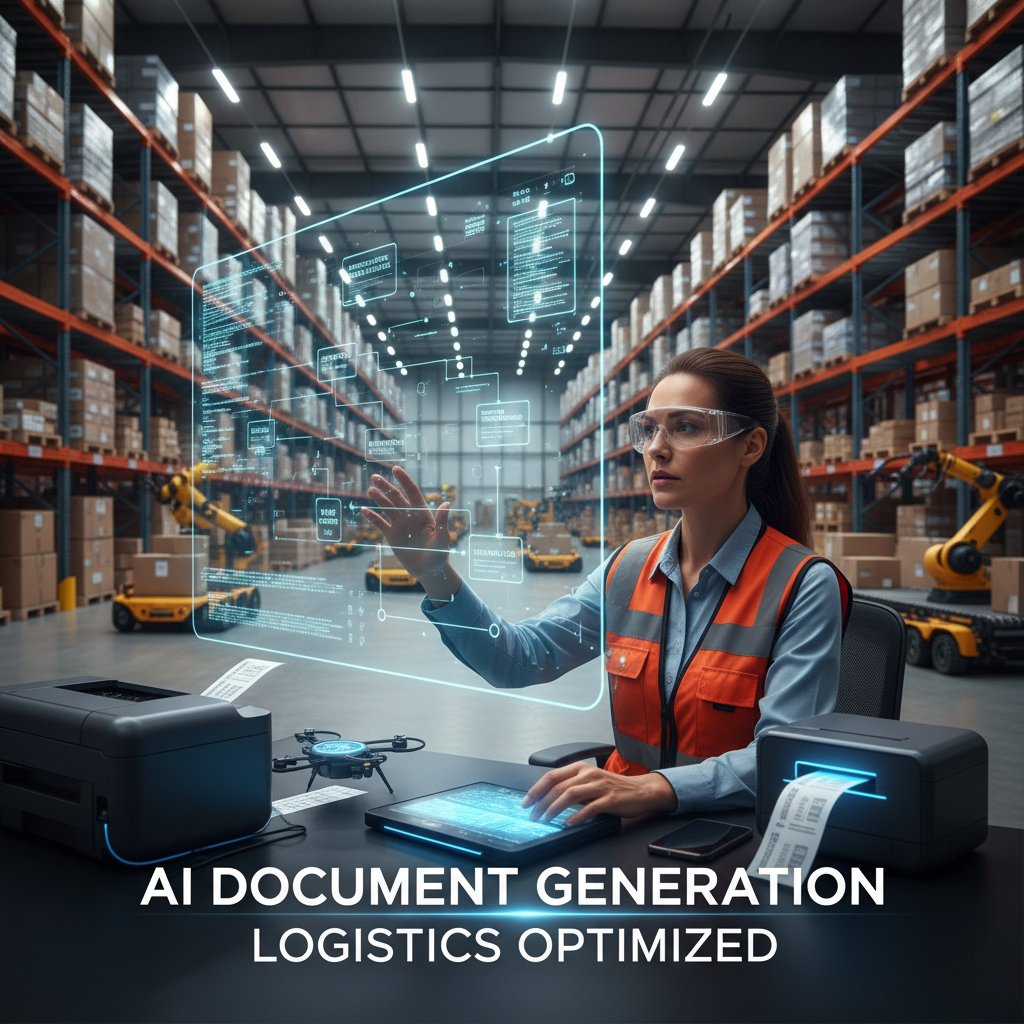
The cross-pollination of ideas and workflows is creating a new wave of innovation—and new competitive threats for the slow movers.
What you can do today to stay ahead
- Audit your current workflows: Identify time sinks, error hotspots, and compliance risks.
- Benchmark solutions: Research platforms with a proven track record and strong user feedback.
- Invest in upskilling: Prepare your team for the AI-augmented office.
- Prioritize security: Don’t cut corners on access control and data protection.
- Start small, scale fast: Pilot high-impact use cases and expand as you build trust.
By acting decisively, you position your organization not only to survive, but to thrive in the new era of intelligent document generation.
Conclusion
Intelligent document generation isn’t just the next step in office automation—it’s the tectonic shift rearranging the DNA of modern work. The brutal truth? Organizations that cling to manual, error-prone processes are already losing ground to faster, leaner, AI-augmented competitors. The evidence is overwhelming: from slashed processing times and near-zero error rates to seismic gains in productivity and compliance, the case for adopting intelligent document generation is ironclad. But this revolution isn’t risk-free. Only those who balance cutting-edge automation with vigilant oversight—and who treat AI as an ally rather than a crutch—will reap the full rewards. Whether you’re a legal titan, healthcare leader, or scrappy marketer, the message is clear: adapt, or get left behind. The future of work isn’t coming. It’s here, it’s intelligent, and it’s moving fast. If you’re ready to take control, platforms like filecreator.ai stand ready to help—so your next document could be the first step toward a smarter, more resilient business.
Sources
References cited in this article
- Gartner: Generative AI in Intelligent Document Processing(gartner.com)
- Auxis: Top 2024 IDP Tools(auxis.com)
- Intelligent Document Processing 2024 Wrapped(intelligentdocumentprocessing.com)
- Document Media: Deep Dive into Intelligent Document Processing(documentmedia.com)
- DocumentLLM: AI Document Processing 2024(documentllm.com)
- Spa Executive: Cost of Manual Processes(spaexecutive.com)
- BigID: 2024 IBM Data Breach Report(bigid.com)
- Ripcord: True Cost of Poor Document Management(blog.ripcord.com)
- McKinsey: The State of AI(mckinsey.com)
- Microsoft: IDC 2024 AI Opportunity Study(blogs.microsoft.com)
- Forbes Advisor: AI Statistics(forbes.com)
- MeasureOne: How IDP is Changing Workflows(measureone.com)
- EDocGen: Guide to Intelligent Document Automation(edocgen.com)
- InfoWorld: Generative AI Improves IDP(infoworld.com)
- DAU: Evolution of Typing(dau.edu)
- Docsumo: History of OCR(docsumo.com)
- Back Then History: History of Typewriters(backthenhistory.com)
- Paycom: History of Documentation(paycom.com)
- Anvl: History of Paper Processes(anvl.com)
- Harvard: History of Paperwork(histecon.fas.harvard.edu)
- Templafy: Digital Transformation of Templates(templafy.com)
- DocuSign: Limitations of Document Generation(support.docusign.com)
- Channel Insider: GenAI Trends 2024(channelinsider.com)
- Google Cloud: Document AI Release Notes(cloud.google.com)
- DocVu.AI: IDP Trends 2024(docvu.ai)
- Conga: What is Document Generation(conga.com)
- TechTarget: Intelligent Document Processing(techtarget.com)
- LinkedIn: Beyond Traditional Document Processing(linkedin.com)
- Market.us: IDP Market Size(market.us)
- Altex: Intelligent Document Processing Technology(altexsoft.com)
- Docmosis: How Document Generation Works(docmosis.com)
- Hyland: IDP Guide(hyland.com)
- Astera: AI Document Processing Myths(astera.com)
- MetaSource: IDP Myths Busted(metasource.com)
- Rossum: 9 IDP Myths Debunked(rossum.ai)
- Info-source: Global IDP Market 2023/2024(info-source.com)
- V7Labs: IDP Examples & Tools(v7labs.com)
- MetaSource: IDP Trends 2024(metasource.com)
- NeuralSpace: Transforming Legal Workflows with IDP(medium.com)
- SimpleLaw: Automated Legal Document Generation(simplelaw.com)
- MadDevs: Digital Transformation with IDP(maddevs.io)
Perfect Documents, Instantly
Filecreator.ai transforms the way you produce professional documents. Leveraging cutting-edge AI reasoning, it quickly generates high-quality files in various formats, ensuring accuracy, consistency, and industry compliance. Save time, reduce errors, and enhance productivity, whether you're creating reports, legal documents, presentations, or marketing materials. Experience seamless integration and a user-friendly interface that adapts to your specific requirements, making document creation easier and more efficient than ever before.
Get startedStart Creating Professional Documents Today
Join thousands of professionals who trust AI-powered document generation
Frequently Asked Questions
What is intelligent document generation (IDG) and why is it important?
Intelligent document generation uses AI and machine learning to automate the creation and processing of documents, eliminating manual paperwork and drudgery. It's important because the global Intelligent Document Processing (IDP) market is projected to grow from $2.16 billion to $46.59 billion by 2035, making it critical for enterprise survival.
How much productivity are companies losing due to manual document workflows?
According to Gartner's 2024 report, enterprises using legacy document workflows lose an average of 21% productivity per employee annually due to paperwork bottlenecks and manual re-entry errors. Additionally, an IDC survey found that employees spend nearly 30% of their workweek on document-related tasks.
What are the main costs associated with manual data entry?
Manual data entry costs organizations approximately $4,800 per employee annually and has error rates as high as 70% in high-volume sectors, contributing to billions in losses from inefficiency, stress, and avoidable mistakes.
What is the projected growth rate of the Intelligent Document Processing market?
The IDP market is projected to grow at a compound annual growth rate (CAGR) of 32.23% from 2024 to 2035, expanding from $2.16 billion to $46.59 billion.
Continue Reading
Explore more from Professional Document Generator

Professional Document Generation Today: How AI Is Reshaping Workflows
Professional document generation today involves AI and cloud platforms reshaping how organizations create documents.

Automated Document Design Software: Benefits and Hidden Risks
Automated document design software automates document creation but brings hidden costs. This article explores what's working, what's failing, and the risks involved.

Automatic Document Editor Vs Humans: the Real 2026 Trade‑offs
Discover insights about automatic document editor

Why Document Generation Solutions Often Fail Enterprises
Document generation solutions often create chaos instead of efficiency. This article examines hidden pitfalls, compliance risks, and practical strategies that actually work.

Interactive Document Generation Replaces Static Files
Interactive document generation automates the creation of documents that respond to user input and real-time data, moving teams beyond static files and outdated workflows.

Document Generation Apps: Capabilities, Risks, and Business Impact
Document generation apps are reshaping how organizations create documents at scale. This article examines their capabilities, compliance risks, and the genuine productivity shifts they enable.


