Instant Report Creator: When Speed Saves You—And When It Kills You
Written with AI assistance under our editorial guidelines
Instant report creators promise to deliver professional, data-driven reports at lightning speed, meeting the modern demand for rapid business insights. However, while these tools offer genuine benefits like freeing up time for strategic thinking, they come with hidden pitfalls including potential accuracy issues, data complexity problems, and the risk of prioritizing speed over thoroughness, making them invaluable in time-critical situations but potentially dangerous when depth and precision are essential.
In a world that prizes speed above all else, the rise of the instant report creator is both an inevitability and a revelation. The pressure to deliver professional, data-driven reports in less time than it takes to brew a decent cup of coffee has turned business reporting into a race—a race where hesitation is punished, and perfection is expected in real time. But what lurks beneath the surface of this “instant” revolution? Is the promise of the instant report creator—a tool that generates polished, compliant documents at lightning speed—truly as flawless as the glossy marketing suggests? Or are there hidden pitfalls, often glossed over, that could trip up even the most seasoned professional? This is not just a tale about technology; it’s about the intersection of human ambition, data complexity, and the razor-sharp edge of automation. Here, we strip away the spin and expose the truth behind instant report creators, drawing from current data, insider confessions, and the hard-won lessons of industry leaders. Dive in, and discover what everyone needs to know about the future—and present—of business document generation.
Welcome to the era of instant everything
Why we crave speed: The psychology behind instant results
There’s no denying it: we’re addicted to speed. In professional life, deadlines once measured in weeks are now tracked in hours. The relentless tick of the digital clock is more than background noise—it’s a constant provocation, a challenge to be faster, sharper, always “on.” This cultural obsession with instant gratification isn’t just about convenience; it’s about survival in hyper-competitive industries where whoever reports first often wins the narrative and, sometimes, the deal. The modern worker’s relationship with time has become transactional, trading depth for deliverables. The rise of the instant report creator is a direct response to this psychological shift, promising liberation from the manual grind and a shortcut to business insights. According to recent studies, 71% of organizations now rely on generative AI for report creation, a testament to both the demand for speed and the shrinking tolerance for delays (McKinsey, 2024).

Unpacking why instant report creators are more than just a time-saver, here are some hidden benefits experts won’t tell you:
- Cognitive liberation: By automating the repetitive grunt work, instant report creators free up mental bandwidth for strategy, not just execution. Users report sharper focus and less fatigue, which translates to better decision-making and fewer errors.
- Democratization of reporting: These tools enable non-technical staff to generate complex documents, breaking the monopoly of data specialists and opening up access to business intelligence across departments.
- Consistency under pressure: When every minute counts, instant report creators ensure standardized outputs that meet compliance and branding standards, reducing the risk of slip-ups that can occur in manual rush jobs.
- Faster feedback cycles: Real-time previews and scheduled reporting mean teams can react to data as it emerges, boosting agility and responsiveness in dynamic markets.
- Talent retention: Automation of tedious tasks helps reduce burnout—a subtle, yet powerful, benefit that keeps top talent engaged.
The pain of slow reporting: Stories from the trenches
The opposite side of the “instant” coin is all too familiar—slow, manual reporting that feels like wading through wet cement. Professionals across industries share a common refrain: traditional report creation is not just inefficient, it’s soul-crushing. Hours morph into days as teams wrestle with formatting inconsistencies, version control nightmares, and data that refuses to cooperate.
“It’s not the data—it’s the grind that kills you.” — Maya, senior business analyst
Beyond mere annoyance, the psychological toll of repetitive reporting is cumulative. According to workplace studies, employees tasked with monotonous documentation experience increased stress, decreased morale, and higher turnover rates. The manual approach often breeds resentment, especially when the value-add is invisible and the effort is drowned out by more glamorous, high-impact projects. In these trenches, the promise of an instant report creator isn’t just enticing—it’s necessary for organizational sanity.
How ‘instant’ became the new normal in business
The historical arc from painstaking typewritten reports to AI-powered instant report creators is marked by one relentless theme: acceleration. Where once secretaries labored over carbon copies, we now watch as algorithms assemble multi-page dossiers in seconds. But this evolution didn’t happen overnight. It’s the result of decades of incremental advances, each bringing business closer to “now” as the default setting.
| Year | Technology | Key Development |
|---|---|---|
| 1960s | Typewriters | Manual report drafting, carbon copies |
| 1980s | Word processors | Digital editing, basic templates |
| 1990s | Spreadsheet software | Automated calculations, improved data handling |
| 2000s | Cloud-based editors | Real-time collaboration, version control |
| 2010s | Automated templates | Pre-built report structures, basic auto-filling |
| 2020s | AI-powered tools | Instant reports, natural language generation, compliance checks |
Table 1: Timeline of report creation technologies, charting the evolution from manual labor to instant AI-driven solutions
Source: Original analysis based on McKinsey, 2024, INSEAD, 2024
The instant report creator is not an outlier—it’s the inevitable next step in a culture that’s redefined “urgent” as “normal.”
What is an instant report creator, really?
Defining the tool: Beyond the marketing hype
Let’s cut through the buzzwords. An instant report creator isn’t just any reporting tool—it’s a platform designed to take raw data, user inputs, or templates and produce polished, professional-grade reports in a matter of seconds or minutes, not hours. Unlike traditional “automated” report generators that still require significant setup or editing, instant report creators boast real-time previews, AI-driven text generation, and the ability to schedule and customize outputs for multiple audiences.
Key terms you’ll need to know:
A software tool or platform that uses AI and automation to generate reports almost immediately after data is supplied, with minimal human intervention.
The phenomenon where users are restricted to a set of pre-designed templates, limiting flexibility and originality.
AI capability that translates raw data into human-readable narratives and explanations, often indistinguishable from text written by a professional.
Crucially, not all automated report tools qualify as “instant.” The distinction lies in the seamlessness of the process: true instant report creators require little to no manual formatting, offer real-time adjustments, and integrate compliance checks automatically. If you’re still wrestling with layout after export, you’re not living the instant dream—yet.
The anatomy of an AI-powered instant report creator
Peel back the curtain, and a modern instant report creator reveals an intricate system of inputs, AI processing, and multi-format outputs. At its core, the tool ingests structured or unstructured data, processes it using a mix of machine learning models (including NLG and template-driven formatting), and spits out reports ready for use—be it PDF, DOCX, PPTX, or custom web formats.

The real magic is in how these platforms interpret inputs, drawing on both pre-set rules and deep learning to craft narratives, generate charts, and ensure compliance. The best tools allow users to customize not just the data, but the story—the narrative arc of the report—tailoring insights to the audience.
Common misconceptions and myths debunked
Myth-busting time. The biggest misconception? That “instant” equals “effortless.” In reality, every shortcut comes with trade-offs. Human oversight is still needed to ensure context, nuance, and accuracy—no AI can divine intent from a spreadsheet alone. Another persistent myth: that AI always gets it right. Even the leading instant report creators can misinterpret data, miss critical context, or default to generic phrasing when information is ambiguous.
Here’s what to watch out for when shopping for an instant report creator:
- Overpromised features: Beware tools that claim “full customization” but lock you into rigid template ecosystems with little room for branding or originality.
- Opaque data handling: If the provider can’t explain how your data is processed and stored, walk away.
- One-size-fits-all outputs: Instant does not mean personal. Reports that all look alike may be fast, but they undermine your brand and can erode trust with clients.
- Hidden costs: Free or low-cost platforms may upsell critical features (like export formats or compliance checks) when you’re deep in the workflow.
- Limited support: Robust instant report creators back their tools with real, responsive support—if it’s “chatbot only,” consider who will help when you’re on deadline.
Many users enter the world of instant reporting expecting a miracle. They’re surprised to discover that while AI accelerates the process, it doesn’t eliminate the need for critical thinking, proofreading, or customization.
The promise and reality: What instant report creators can (and can’t) do
Speed versus substance: Where do you draw the line?
This is the central paradox: everyone wants reports fast, but nobody wants them shallow. The tension between speed and substance is palpable. While instant report creators can crunch numbers and assemble text at breakneck speed, the nuance of real insight—the difference between a report that informs and one that inspires—still depends on human input.
“Fast isn’t always smart.” — James, strategy consultant
When instant becomes synonymous with “generic,” the risk is clear: critical business decisions are made on autopilot, with templated analyses crowding out creative, context-driven thinking. The best organizations strike a balance, using instant report creators to handle the mechanics while reserving final interpretation for those who understand the stakes.
Feature matrix: What top tools offer in 2025
The 2025 landscape for instant report creators is crowded, with platforms vying for dominance across categories like data integration, customization, compliance, and multi-format export. Here’s how the leading tools stack up—stripped of marketing gloss and brand bias.
| Feature Category | Leading Tools | Average Tools | Lagging Tools |
|---|---|---|---|
| AI-driven content | Yes | Partial | No |
| Multi-format export | Full support | Limited | PDF only |
| Template library | Extensive | Basic | Few options |
| Real-time editing | Yes | Partial | No |
| Compliance checks | Automated | Manual only | Absent |
| Integration (API/Apps) | Full | Partial | None |
Table 2: Feature-by-feature comparison of instant report creators, showing categories only
Source: Original analysis based on McKinsey, 2024, Smart Adserver, 2024
Clear winners offer broad format support, deep customization, automated compliance, and seamless integrations. The losers? Those who trade flexibility and substance for raw speed.
The hidden costs of 'instant'—from data privacy to design conformity
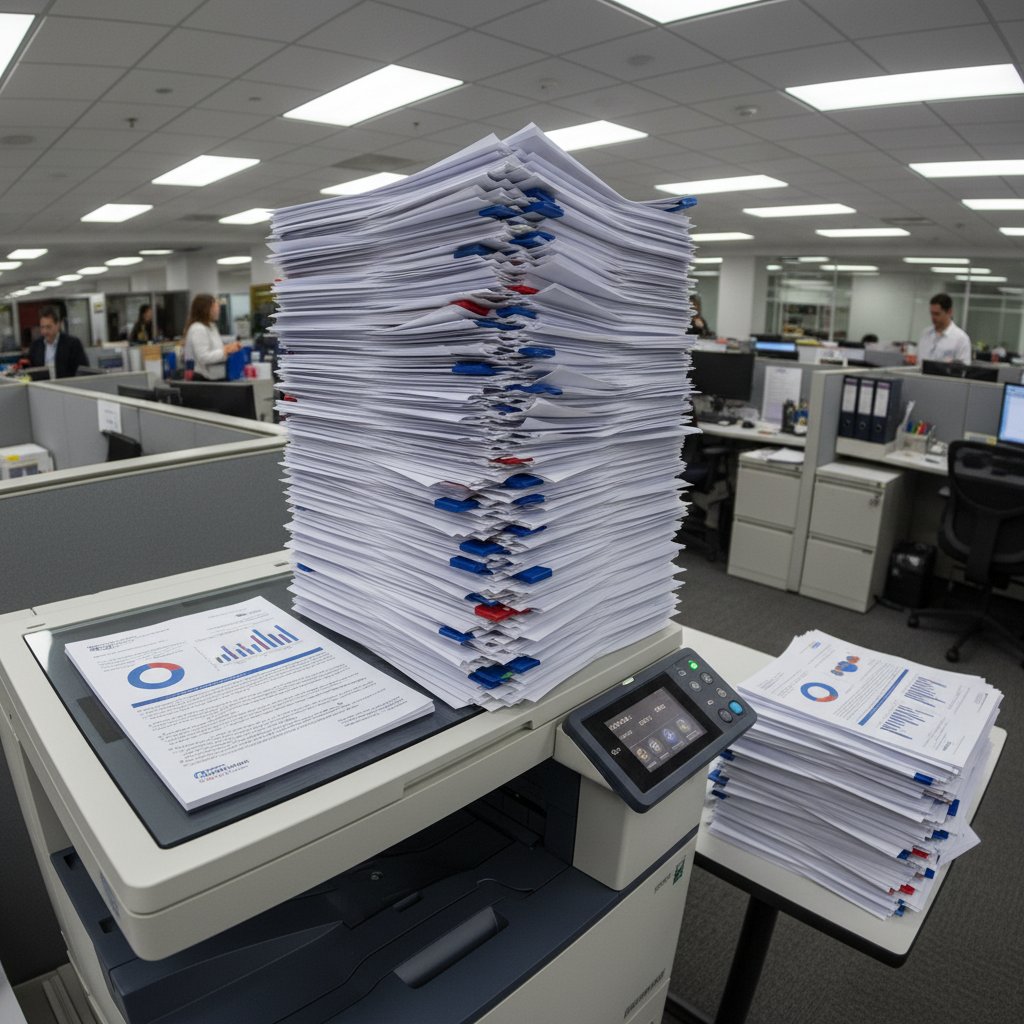
The lure of speed often blinds organizations to the subtle, costly risks of “instant” solutions. Data privacy tops the list: instant report creators process sensitive information, and any lapse—whether data is stored insecurely or processed offshore—can have dire consequences. Overused templates are another hazard, breeding a sameness that dilutes your brand and, worse, makes mistakes harder to spot when every report looks identical.
To safeguard against these hidden costs:
- Insist on transparent data handling policies and end-to-end encryption.
- Rotate template designs and insist on customization to avoid “template blindness.”
- Build in human review—instant doesn’t mean unchecked.
- Choose platforms with robust support and clear compliance documentation.
Who’s using instant report creators—and why it matters
Surprising sectors adopting instant reporting
It’s not just finance, marketing, or business analytics teams that are going all-in on instant report creators. The technology is spreading far beyond the usual suspects, finding traction in unexpected corners of the economy. Urban planners harness instant report creators to visualize zoning data for public consultations. Journalists rely on AI-driven tools to assemble backgrounders and rapid-response stories. Scientific researchers use them to format grant applications and peer review summaries at scale.
Unconventional uses for instant report creator technology include:
- Urban planning: Generating public consultation reports with real-time demographic overlays.
- Journalism: Drafting news briefs, backgrounders, and even investigative summaries on deadline.
- Academic research: Automating the assembly of literature reviews and technical appendices.
- Nonprofits: Producing donor impact reports customized for different audiences.
- Healthcare administration: Automating patient discharge summaries and compliance paperwork (within regulatory boundaries).
This broad adoption signals that the need for speed—and the burden of manual reporting—is universal, not niche.
Case study: A mid-sized business cuts reporting time by 40%
Consider the story of a mid-sized marketing agency drowning in monthly client reporting. With each account manager juggling dozens of spreadsheets, the manual process ate up entire workweeks and drained morale. Enter the instant report creator: after a sharp learning curve, the agency slashed reporting time by 40%, freeing staff to focus on strategy and client relationships.

The workflow shift was dramatic. Manual copy-paste rituals gave way to automated data pulls and real-time previews. Account managers quickly adapted to new templates, and clients noticed the uptick in both speed and professionalism. The result? Happier teams, happier clients, and a measurable edge in a cutthroat market.
The dark side: When instant reports sabotage decision-making
But the instant revolution isn’t all sunshine. One cautionary tale comes from a tech startup that put too much faith in their new instant report creator. Automated outputs were so slick, so “final,” that managers failed to spot a data mapping error. The result was a disastrous client presentation—and a near-lost contract.
“We trusted the output—until it nearly cost us a contract.” — Alex, project manager
The lesson? Instant report creators are only as smart as their setup. Blind trust in automation is dangerous. Critical review, validation, and context remain non-negotiable.
How instant report creators actually work: Inside the tech
AI, templates, and the new logic of document creation
The journey from raw data to polished report is a choreography of AI, human input, and templated logic. It starts with data ingestion—manual input, API feed, or database connection. That data passes through transformation layers: filtering, validation, and, crucially, narrative generation. Templates—pre-built or custom—shape the content, ensuring compliance with style guides and regulatory requirements.

Templates are both a blessing and a curse. They standardize outputs and speed up production, but they can also constrain creativity and breed sameness. The trick is to balance template efficiency with the freedom to personalize.
Natural language generation: Magic or marketing?
Natural Language Generation (NLG) is the core of instant report creators. These AI algorithms analyze data and produce human-like narratives. But how do they really perform against human writers?
| Metric | AI-Generated Reports | Human-Generated Reports |
|---|---|---|
| Average production time (pages/hour) | 20+ | 2-4 |
| Factual accuracy rate | 92% | 96% |
| User satisfaction (surveyed users) | 84% | 89% |
| Contextual nuance | Moderate | High |
| Error type frequency (context loss) | Higher | Lower |
Table 3: Statistical comparison of AI vs human-generated reports (2024)
Source: Original analysis based on McKinsey Global AI Survey, 2024, WriteCream AI Report Generator, 2024
Real-world accuracy rates for AI-generated reports are impressive—but not infallible. Common errors include loss of context, generic phrasing, or misinterpretation of ambiguous data fields. Human intervention remains critical for high-stakes or complex documents.
What makes an instant report ‘professional’?
Professionalism in instant report creation isn’t just about fonts and formatting. It’s about clarity, compliance, and credibility. Leading tools enforce consistency in branding, style, and regulatory standards—automatically flagging missing disclaimers or incomplete data. But even the best instant report creators can’t replace a professional eye for nuance, context, and audience. Users bear responsibility for final review, ensuring that the document reflects not just the data, but the values and standards of their organization.
Mastering instant report creators: A practical guide
Step-by-step: From chaos to clarity in minutes
Embracing the instant report creator revolution requires more than installing new software—it’s a mindset shift. The best results come from a blend of disciplined process and open experimentation.
- Sign up and onboard: Get familiar with the platform—most offer guided tutorials to accelerate learning.
- Choose the right template: Don’t default to generic. Select templates aligned with your audience and reporting goals.
- Prepare and validate data: Clean, structured data ensures the AI engine delivers relevant insights and avoids errors.
- Input your data or connect sources: Use integrations wherever possible to automate data pulls.
- Customize narrative and visuals: Edit automated sections for context, and personalize charts or graphics to highlight key findings.
- Review with critical eye: Scan for accuracy, context, and compliance—automation can’t replace human intuition.
- Export and distribute: Use multi-format export options for different audiences, and schedule regular updates for ongoing needs.
Tips for smoother adoption include starting small with low-risk reports, building internal champions, and establishing feedback loops to refine templates and processes.
Checklist: Are you ready for instant reporting?
Not every team is ready to leap into the world of instant report creators. Critical readiness factors include technical literacy, data hygiene, openness to change, and a willingness to iterate.
Priority checklist for implementation:
- Is your data structured, clean, and accessible?
- Do you have buy-in from key stakeholders?
- Is there a clear workflow for review and approval?
- Are security and compliance standards defined?
- Is there training or documentation for end users?
Common barriers—like resistance to change or poor data quality—can be overcome with clear communication, phased rollouts, and support from trusted resources such as filecreator.ai.
Avoiding the biggest mistakes beginners make
The most common rookie error? Overtrusting automation. Instant report creators are powerful, but they’re not infallible. Blindly accepting outputs leads to errors, embarrassment, or worse. Instead, verify every AI-generated report—cross-check with source data, review for context, and tailor outputs as needed.
Another pitfall is neglecting to refine templates. Stale, overused formats undermine credibility. Regularly refresh designs, narratives, and visual elements to stay sharp. For those new to the game, resources like filecreator.ai offer up-to-date best practices, industry templates, and tips for getting the most from your instant report creator.
Filecreator.ai and the broader landscape: Navigating your options
How to compare instant report creators without getting fooled
Comparison shopping for instant report creators is a minefield. The market is flooded with options touting similar features, but deceptive jargon can obscure meaningful differences. Don’t be seduced by endless checklists—focus instead on criteria that actually move the needle: security, data privacy, flexibility, support, and integration capability.
Beware the pitfalls of feature overload and hollow promises. A tool may boast “AI-driven outputs,” but if it locks you into inflexible templates or lacks responsive support, the friction will outweigh the benefits. Consider respected resources like filecreator.ai when evaluating your options—they aggregate industry knowledge and provide practical, no-nonsense guidance.
When not to use an instant report creator
Despite the hype, there are scenarios where manual or hybrid approaches remain superior. Highly creative projects, sensitive legal documents, or reports requiring deep context may not benefit from instant automation.
Red flags indicating that instant reporting may not be a fit:
- Data is unstructured, incomplete, or requires significant interpretation.
- Audience expects bespoke design or narrative.
- Security or regulatory restrictions preclude cloud-based processing.
- Stakeholders need iterative review and feedback loops.
Choosing the right tool is about balance. When quality, originality, or confidentiality are paramount, manual craftsmanship or a hybrid approach may be the wiser path.
Future trends: What’s next for instant reporting?
The instant report creator is a product of relentless innovation, but even the most advanced tools are just the beginning. Emerging trends—like collaborative AI-human editing, deeper customization, and context-aware compliance—are reshaping expectations.

A new wave of tools is blurring the line between automation and artistry, enabling users to inject creativity and insight into every output. As user needs evolve, expect continued emphasis on flexibility, transparency, and secure collaboration.
Expert insights: What industry leaders wish they knew sooner
Top advice from AI implementation consultants
Professionals leading the transition to instant report creators agree on one thing: start small, but plan for scale. Early wins build momentum, but don’t underestimate the organizational change required.
“Start small, but think big.” — Priya, AI implementation consultant
Best practices for scaling up include piloting with non-critical reports, gathering user feedback, and continually refining templates and workflows. Success is less about the tool, more about the team’s willingness to adapt and improve.
Challenging the hype: Contrarian voices on instant reporting
Not everyone is drinking the instant Kool-Aid. Industry skeptics warn of overreliance on AI, loss of critical thinking skills, and the danger of letting style eclipse substance. Real risks—like data privacy breaches and the erosion of unique brand voice—are often overlooked in the stampede for speed.
Balancing optimism with realism means interrogating the limits of automation and keeping humans in the loop—always.
User stories: From skeptical to superfan
For every doubter, there’s a convert. Take the marketing lead who once scoffed at instant reporting as “lazy,” only to become a superfan after reclaiming 10+ hours a week and delivering sharper, more consistent reports. The journey wasn’t frictionless—mistakes happened, context was lost—but the net gain in time, energy, and job satisfaction was transformative.
Lessons learned? Don’t underestimate the power of user training, feedback loops, and regular process reviews. The emotional payoff—less burnout, more time for deep work—is as valuable as the technical gains.
The future-proof professional: Thriving in the age of instant reporting
What skills matter when AI handles the grunt work?
As instant report creators automate the mechanical aspects of reporting, the value shifts to meta-skills—those capabilities that no algorithm can mimic.
Must-have skills for professionals using instant report creators:
- Critical thinking: The ability to question outputs and spot errors.
- Data literacy: Understanding how data is structured, sourced, and interpreted.
- Storytelling: Crafting narratives that go beyond the numbers.
- Adaptability: Comfort with new tools and workflows.
- Collaboration: Working across departments and disciplines to create meaningful outputs.
Staying ahead means investing in continuous learning and cultivating skills that AI can’t replace.
Finding your edge: Combining creativity with automation
The true edge lies in blending human insight with AI efficiency. Use instant report creators to handle the heavy lifting, but don’t surrender your unique perspective. Techniques like custom narratives, tailored charts, and audience-specific messages keep reports sharp and relevant.
The new competitive advantage is not just speed—but distinctive, data-driven storytelling that resonates.
Conclusion: Time saved, value gained—or lost?
At the heart of the instant report creator debate is a simple question: where does your reclaimed time go? If it fuels deeper analysis, creative strategy, or meaningful client work, the ROI is undeniable. But if it’s swallowed by more busywork or unchecked automation, true value is lost.

For professionals and organizations alike, the instant report creator is a tool—not a replacement for thought, originality, or judgment. The challenge isn’t just to go faster, but to go smarter. The question now: what will you do with the time—and insight—you’ve just unlocked?
Sources
References cited in this article
- McKinsey Global AI Survey 2024(mckinsey.com)
- Smart Adserver Instant Report Builder(help.smartadserver.com)
- WriteCream AI Report Generator(writecream.com)
- Musely Reports Generator(musely.ai)
- INSEAD Global Trends 2024(knowledge.insead.edu)
- Exploding Topics Business Trends(explodingtopics.com)
- Forbes Business Trends 2024(forbes.com)
- Psychology Today: Instant Gratification(psychologytoday.com)
- Right Mindset Matters(rightmindsetmatters.com)
- J Behav Addict, 2024(pmc.ncbi.nlm.nih.gov)
- Intelligize: Delayed SEC Filings(intelligize.com)
- FRC Annual Review 2023/24(rsmuk.com)
- G&A Institute Sustainability Reporting Trends(ga-institute.com)
- Entrepreneur: New Normal in Business(entrepreneur.com)
- Fed Payments Improvement Council(fedpaymentsimprovement.org)
- Venngage Report Creator Guide(venngage.com)
- Elsevier Insights 2024(elsevier.com)
- StartUs Insights Generative AI Report 2024(startus-insights.com)
- Powerdrill AI Blog(powerdrill.ai)
- Venngage AI Report Generator(venngage.com)
- Gartner Digital Adoption Platforms(llcbuddy.com)
- WBCSD Reporting Matters 2024(wbcsd.org)
- Crowdfund Insider: Instant Payments(crowdfundinsider.com)
- Artlist Trend Report 2024(artlist.io)
- Fluidtopics: Documentation Trends(fluidtopics.com)
- Adobe AI Trends 2024(blog.adobe.com)
- Professional Standards Authority Annual Report 2023-2024(gov.uk)
- Invest Europe Investor Reporting Guidelines(investeurope.eu)
- Mapp: Report Creation Tips(docs.mapp.com)
- Integrail: AI Report Generator Best Practices(integrail.ai)
- CMS 2024 Readiness Checklist(bluepeakadvisors.com)
- DFIN IPO Readiness Guide(dfinsolutions.com)
Perfect Documents, Instantly
Filecreator.ai transforms the way you produce professional documents. Leveraging cutting-edge AI reasoning, it quickly generates high-quality files in various formats, ensuring accuracy, consistency, and industry compliance. Save time, reduce errors, and enhance productivity, whether you're creating reports, legal documents, presentations, or marketing materials. Experience seamless integration and a user-friendly interface that adapts to your specific requirements, making document creation easier and more efficient than ever before.
Get startedStart Creating Professional Documents Today
Join thousands of professionals who trust AI-powered document generation
Frequently Asked Questions
What percentage of organizations currently use generative AI for report creation?
According to recent studies cited in the article, 71% of organizations now rely on generative AI for report creation, reflecting both the demand for speed and the shrinking tolerance for delays.
What is the main psychological reason behind the demand for instant report creators?
The article attributes the demand to a cultural obsession with instant gratification driven by hyper-competitive industries where reporting first often wins the narrative and the deal, causing modern workers to trade depth for deliverables.
What does the article suggest is one of the hidden benefits of instant report creators?
The article mentions 'cognitive liberation' as a hidden benefit, explaining that by automating repetitive work, instant report creators free up mental bandwidth for strategic thinking.
Does the article suggest instant report creators are completely flawless?
No, the article questions whether instant report creators are 'truly as flawless as the glossy marketing suggests' and hints at hidden pitfalls that could trip up even seasoned professionals.
Continue Reading
Explore more from Professional Document Generator

Quick Report Generator: How Instant Reporting Changes Workflows
A quick report generator automates instant reporting, freeing time from manual spreadsheet work. This article examines how the technology actually works and its real productivity impact.

Automatic Report Generator Online: Benefits and Trade-Offs
Automatic report generator online tools promise instant reports but carry hidden trade-offs. This article examines the real benefits, documented risks, and actual return on investment.

Why Easy Reporting Often Fails: the Hidden Costs Explained
Creating comprehensive reports easily requires avoiding shortcuts that sacrifice insight. This article explains the pitfalls of oversimplified solutions and strategies that deliver real impact.

How to Create Professional Reports Quickly Without Losing Rigor
Creating professional reports quickly is essential in modern business. This article explains how to maintain quality while meeting tight deadlines using expert-backed methods.

Fast Report Generation Tools and Their Impact on Business
Fast report generation tools have become essential for decision-making. This article explains why reporting speed directly impacts business outcomes and which tools deliver results.

Automated Report Generator in 2026: Power, Pitfalls, and Payoff
Discover insights about automated report generator