


Generate Professional Customized Contracts That Won’t Get You Sued
Written with AI assistance under our editorial guidelines
Generic contract templates generated by AI tools often lack crucial customization for specific business situations and legal jurisdictions, leaving companies vulnerable to disputes and enforcement failures. While digital contract generation offers speed and scalability, relying solely on automated tools without proper legal review and customization creates significant liability risks that can outweigh convenience benefits.
Imagine thinking your airtight contract will save you when the pressure’s on—only to find out it’s just a generic template barely holding water. In the digital age, the promise of instant, AI-powered legal docs is everywhere: “Generate professional customized contracts in minutes!” But beneath the surface lies a mess of risks, oversights, and sometimes, outright chaos. The real story behind digital contract creation isn’t about effortless convenience; it’s about what you stand to lose when you trust the wrong tool or believe in the myth of ‘one-size-fits-all.’ This deep dive unpacks the edgy, uncomfortable realities of digital contract generation, exposes the myths that keep you vulnerable, and shows you how to protect your business—armed with real stats, verified trends, and voices from the front lines. If you think your current process is safe, it’s time for a reality check. Welcome to the contract revolution.
The contract revolution: Why cookie-cutter agreements are dead
From handshakes to AI: The hidden evolution of contracts
Contracts once started with a handshake—a simple nod, a look in the eye, maybe a hastily scribbled note. Fast-forward, and you’re staring at an interface promising to “generate professional customized contracts” at the push of a button. But how did we get here? The evolution is more twisted than you think. Historically, contracts were dense, bespoke documents, drafted by legal professionals in painstaking detail. The rise of digital technologies brought about a shift—first to Word templates, then to cloud document services, and now, to AI-driven generators. Recent research from Grand View Research, 2024 puts the global legal tech market at $26.7 billion, growing at over 10% CAGR. This surge is no accident: demand for speed, efficiency, and scalability is rewriting how deals are made—and broken.

But speed comes at a price. As AI and automation become more sophisticated, the temptation to bypass traditional legal oversight grows. The outcome? A world where contracts can be generated in seconds, but the nuances—the real substance—often get lost in translation. According to industry expert analysis, digital transformation is not just about making things faster; it’s about fundamentally changing the risks and responsibilities baked into every agreement. The question isn’t whether the contract revolution is happening—it’s how you’re going to survive it.
Why generic templates are riskier than you think
When was the last time you actually read the fine print of a downloaded contract template? For most, the answer is “never”—or only after a crisis. The notion that a generic template is “good enough” is a dangerous myth. According to the Clio 2024 Legal Trends Report, flat fee billing related to automated contracts is up 6%, but this doesn’t reflect quality or protection. Here’s how cookie-cutter contracts stack up against truly customized agreements:
| Danger Zone: Generic Templates | Customized Contracts | What’s at Stake |
|---|---|---|
| Little to no jurisdictional adaptation | Adjusted to local laws and case specifics | Legal enforceability, compliance |
| Undefined or vague terms | Tailored, clear, enforceable language | Disputes, loopholes |
| No industry-specific clauses | Industry and case-specific protections | Losses, litigation exposure |
| Weak data/privacy protection | Robust privacy, IP, and data clauses | Fines, breaches, reputational damage |
Table 1: Comparison of generic templates vs. customized contracts in terms of legal risk and protection
Source: Original analysis based on Clio, 2024, Law Society UK, 2024
"Using a generic contract template is like wearing a stranger’s shoes to run a marathon—you might make it to the finish, but you’ll bleed along the way." — Hillary Cooper, Attorney, Cure Digital, 2024
How the rise of digital contract generators changed the game
The speed at which you can now generate professional customized contracts is both revolutionary and risky. AI-driven contract platforms leverage vast databases of clauses, best practices, and adaptive logic to churn out agreements in seconds. Yet, the law is rarely binary. Automated contract generation democratizes access—anyone can draft a document. This has led to the proliferation of platforms like DocuSign, filecreator.ai, and others. According to Precedence Research, 2024, the contract lifecycle management (CLM) software market is valued at $2.65 billion, with projections of $8.07 billion by 2034.
But there’s a flipside: the false sense of security. While digital generators reduce costs and speed up business, they often fail to account for the complexities of high-stakes deals, shifting regulations, or sector-specific vulnerabilities. In effect, they’ve changed the game—but not always in your favor.

Debunking the myths: What 'customized' really means
The dangerous myth of one-size-fits-all contracts
The phrase “customized contract” gets thrown around a lot, but in practice, many so-called custom docs are little more than templates with a handful of editable fields. Why is this myth so persistent? Because the illusion of personalization is easier (and cheaper) to sell than true legal nuance.
- The term “customized” often means nothing more than autofilling names and dates, not addressing unique business risks or regulatory exposures.
- “Best-in-class” templates may skip non-obvious clauses that matter in your jurisdiction or industry.
- Automated generators rarely flag conflicting or redundant clauses that could be weaponized in court.
- Most tools don’t keep track of evolving legal standards, so yesterday’s contract can quickly become today’s liability.
Over-reliance on these tools can lead to false confidence. As the Law Society UK, 2024 highlights, 63% of law firms reported cyber incidents last year, with 35% having no mitigation strategies—often due to inadequate contractual protections.
The myth persists because speed and simplicity are seductive. But when things go wrong, it’s the fine print that will tear you apart.
Are AI-powered contracts truly personalized?
Let’s break down what “personalization” means in the context of digital contract generation:
Clause Selection:
AI uses decision trees to suggest relevant clauses, but it won’t know your unique pain points unless you explicitly tell it.
Industry Adaptation:
Some platforms pull industry-specific language, yet lack the context for your particular deal, risk profile, or negotiation strategy.
Jurisdictional Compliance:
Automated tools might adapt for basic jurisdictional requirements, but they rarely stay current with rapid regulatory changes.
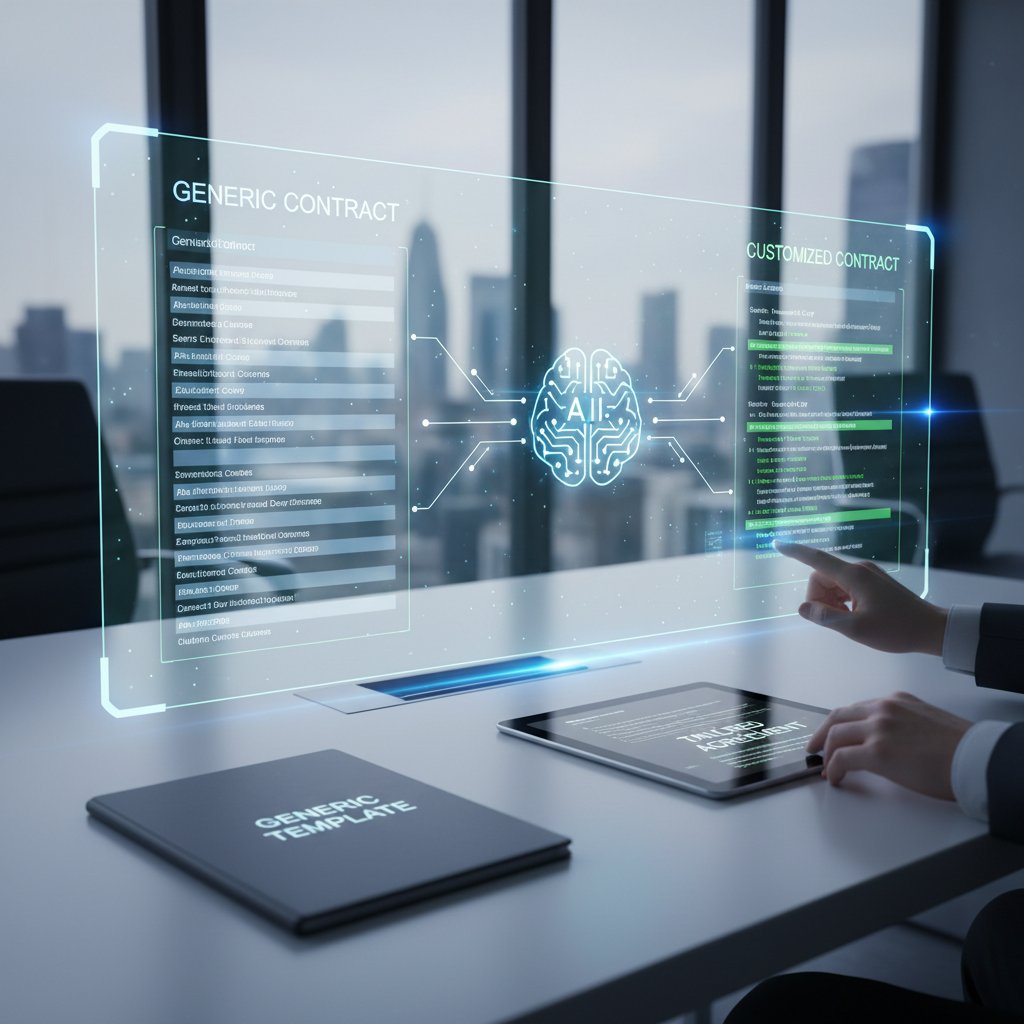
These distinctions matter. The difference between a lawsuit and a smooth transaction often comes down to a single overlooked clause—one that no algorithm is trained to spot without context.
The human touch: When automation falls short
As contract generators grow more advanced, the allure of a fully automated process is intoxicating. Yet, even the best AI cannot replicate the nuance, contextual reasoning, or ethical judgment of a seasoned professional. According to Summize, 2024, AI augments legal work but cannot replace expertise—especially for complex or high-value contracts.
"AI can draft fast, but it can’t foresee every risk. When the stakes are high, only a human can ask the right uncomfortable questions." — Expert commentary, Summize, 2024
Automation shines when it comes to speed, consistency, and eliminating careless errors—but it falters on nuance, creativity, and anticipating grey areas. If your contract deals with intellectual property, regulatory compliance, or anything outside the cookie-cutter, human oversight isn’t just useful—it’s essential.
How AI contract generators work (and where they break)
Inside the machine: What actually happens when you click 'generate'
Click the “generate” button, and beneath the surface, complex algorithms get to work. AI contract generators analyze your input—names, roles, jurisdiction, contract type—and map these against a decision tree of clauses, legal standards, and risk profiles. The output? A document that looks convincing, with impressive speed.

But what’s missing is context: AI can’t interpret business nuances, anticipate negotiation power dynamics, or account for the “unknown unknowns.” It’s a mechanical process, not a human conversation. According to Lexology, 2024, 61% of corporate legal departments have adopted generative AI for contract drafting, but only 7% use it daily—underscoring that human review remains vital for the majority.
For basic NDAs or non-critical agreements, this may be fine. For anything else, you’re flying blind.
Limitations of AI: The gaps you can’t afford to ignore
No matter how advanced, AI contract generators have hard stops:
- They can’t predict the full impact of evolving regulations.
- They don’t negotiate; they only generate.
- They often miss subtle contradictions or loopholes that a human would catch upon review.
| Limitation of AI Contracts | Impact on Users | Human Solution |
|---|---|---|
| Outdated legal logic | Potential invalidity | Legal review & updates |
| Lack of nuance | Missed specific risks | Tailored clause drafting |
| Data privacy blind spots | Exposure to breaches | Privacy-by-design approach |
| Inflexibility | Poor adaptability to new situations | Negotiation & redrafting |
Table 2: Gaps in AI contract generation and the role of human oversight.
Source: Original analysis based on Lawcadia, 2024, Summize, 2024
When to trust the robots—and when to run
AI contract tools aren’t evil. They’re tools—nothing more, nothing less. But knowing when to use them (and when to run) is half the battle.
- Use AI for speed when stakes are low: Simple NDAs, internal agreements, or boilerplate contracts.
- Always review AI-generated contracts for critical deals: Involve a legal professional for high-value, regulatory, or cross-border agreements.
- Keep your data and privacy front-of-mind: Understand what happens to your data once it’s entered into a third-party tool.
If you’re not sure, the answer is simple: get a human to check. Trust, but verify.
Real world, real risks: Contract horror stories and close calls
Case study: The freelancer who lost everything to a bad contract
Meet Alex. Brilliant designer, terrible at reading legal fine print. Lured by the promise to “generate professional customized contracts,” Alex used a free online template for a major client gig. Fast, cheap, seemingly airtight—until payments stopped. The contract failed to specify milestones, intellectual property rights, or dispute resolution. Legal action? Impossible. The template didn’t hold up.

The aftermath was brutal: lost income, a stolen portfolio, and a cautionary tale for the ages. As data from the Clio 2024 Legal Trends Report confirms, reliance on flat-fee, template-driven contracts is up, but so is user dissatisfaction when things go sideways.
It’s not about demonizing automation—it’s about understanding what you’re trading for speed.
Corporate chaos: When companies trust the wrong document
It’s not just freelancers who suffer. In a high-profile incident, a mid-sized tech firm trusted an AI-generated supplier agreement that failed to include a data breach notification clause. When a breach inevitably occurred, liability couldn’t be shifted—resulting in a costly lawsuit and lost clients.
| Company | Contract Type | Missing Clause | Consequence |
|---|---|---|---|
| TechCo | Supplier Agreement | Data breach notification | Lawsuit, lost clients |
| MediaX | Partnership Agreement | IP assignment | Disputed content ownership |
| HealthNow | Service Contract | Compliance with HIPAA | Regulatory fines |
Table 3: Real-world consequences of relying on incomplete or generic digital contracts.
Source: Original analysis based on Law Society UK, 2024, Summize, 2024
"Smart contracts promise efficiency, but legal oversight is the only way to prevent disaster when gaps are exposed." — Cascadia Capital, 2024
The thin line between confidence and catastrophe
Each horror story shares a common thread: false confidence. Digital tools lull users into believing their contracts are ironclad, but the truth is often ugly.
- Unverified templates create loopholes that adversaries exploit.
- Automated generators may ignore recent legal changes, leaving gaps.
- Rushed, unchecked agreements lead to disputes, lost money, and reputational harm.
The difference between confidence and catastrophe comes down to scrutiny—yours and that of trusted professionals.
The anatomy of a truly customized contract
Essential elements every contract must have
A real, professional customized contract isn’t just a PDF with your name on it. It’s a strategic document crafted to anticipate risks, resolve disputes, and protect your interests.
- Clear identification of parties: No nicknames or ambiguities—full legal names and roles.
- Precise scope of work: Detailed, unambiguous descriptions of tasks and deliverables.
- Defined payment terms: Exact amounts, deadlines, penalties for late payment.
- Termination and dispute clauses: Outlines what happens if things go wrong.
- Jurisdictional and regulatory compliance: Ensures enforceability wherever it matters.
Every one of these elements must be tailored—not just filled in. According to Lexology, 2024, only 7% of legal professionals trust AI-generated contracts without review.
A contract that skips these basics is a ticking time bomb.
Clause by clause: What makes customization real
What does real customization look like? Here’s what separates the pros from the pretenders:
Indemnification:
Protects one party from liability for the other’s actions—must reflect actual risk exposure.
IP Ownership:
Specifies who owns work product—critical for creatives, tech, and partnerships.
Force Majeure:
Outlines what happens when “acts of God” or unforeseen disruptions occur.

Each clause should be carefully considered, not blindly copied—otherwise, it’s just a fill-in-the-blank exercise.
Spotting the imposters: How to tell if your contract is actually unique
How do you know if your contract is truly customized, not just a dressed-up template?
- Does it reference your specific business model or industry?
- Are terms and conditions adapted for your jurisdiction?
- Is there tailored language for unique risks or processes?
- Have all parties reviewed and negotiated the key points?
Contracts that answer “no” to these questions are imposters—danger in disguise.
A truly customized contract is as unique as the business it protects.
The ethics and risks of automated contract creation
Who’s responsible when AI gets it wrong?
When a digital contract generator fails, who’s on the hook? The uncomfortable answer: you are. AI tools come with click-through disclaimers, shifting responsibility to the user. If your contract fails to protect you, don’t expect the platform to back you up.
"AI platforms provide tools, not legal responsibility. Only professional counsel can offer true protection." — ContractWorks, 2024
The line between tool and legal service remains hotly debated, but as regulations tighten, the burden is on users to verify and adapt every contract.
If you want protection, you need a human in the loop.
Data privacy, ownership, and the fine print you’re missing
Generating contracts online means feeding your sensitive data into third-party systems. Many platforms store, analyze, and sometimes even monetize this information.
| Risk Area | What’s at Stake | How to Protect Yourself |
|---|---|---|
| Data storage | Confidential details at risk of breach | Use platforms with strong encryption and privacy policies |
| Usage rights | Your content reused in AI training | Check terms of service and opt-out where possible |
| Compliance gaps | Non-compliance with GDPR, HIPAA, etc. | Ensure contracts include region-specific clauses |
Table 4: Data privacy and ownership concerns in AI contract generation.
Source: Original analysis based on Law Society UK, 2024, Cure Digital, 2024
Privacy isn’t just a feature—it’s a legal necessity.
Regulatory gray zones and the future of digital contracts
The landscape for automated contract creation is a regulatory gray zone. Laws lag behind technology, and what’s “good enough” today may not stand up under tomorrow’s scrutiny. As legal tech continues to expand, expect growing pressures for oversight, audits, and clearer guidelines.

For now, the safest route is a hybrid model—leveraging AI for speed, but never skipping human oversight.
How to generate contracts that actually protect you
Step-by-step: Creating a professional customized contract online
Ever wondered how to responsibly generate professional customized contracts? Here’s how the real pros do it:
- Define your needs: Know exactly what you’re contracting for—scope, parties, risks.
- Choose a reputable platform: Use trusted tools like filecreator.ai or verified legal tech providers.
- Select the right template: Start with an industry-appropriate base—but don’t stop there.
- Customize every clause: Edit, add, or remove clauses to reflect your unique situation.
- Review legal requirements: Check for jurisdictional compliance, regulatory issues, and mandatory disclosures.
- Consult a professional: Have a legal expert review and finalize the document before signing.

Step-by-step, this is how you harness the speed of AI—without selling your soul (or your business) to the devil of automation.
Checklist: Is your contract truly customized?
Not sure if your contract is up to scratch? Here’s a no-nonsense checklist:
- Is every party correctly identified?
- Are payment, scope, and deadlines crystal clear?
- Are industry, geography, and regulatory requirements covered?
- Do clauses reflect your real business risks?
- Has a professional reviewed the final version?
If you answer “no” to any, it’s back to the drawing board—not the courtroom.
A real contract is built, not bought.
Red flags to watch out for in online contract tools
Even the flashiest platform can hide ugly surprises. Common red flags:
- No clear privacy or data protection policy.
- “Customized” means just autofill—no real change in substance.
- Lack of regular updates to reflect legal changes.
- No human support for complex questions.
If you spot these, run—not walk—away.
A contract is only as strong as the tool (and person) that built it.
filecreator.ai and the new guard: The rise of AI-powered document tools
What sets apart today's best contract generators?
Not all platforms are created equal. What distinguishes leaders in the field—tools like filecreator.ai—from the hordes of generic copycats?
| Feature | Leading AI Generators | Generic Tools |
|---|---|---|
| Advanced customization logic | Yes | Minimal |
| Multi-format export (PDF, DOCX, etc) | Yes | Limited |
| Industry compliance checks | Automated | Manual |
| Real-time editing | Yes | No |
| Data privacy and security | Strong policies | Varies |
Table 5: Comparative features of top AI-powered contract generators.
Source: Original analysis based on Clio, 2024, Grand View Research, 2024

The best tools don’t just spit out documents—they evolve, adapt, and empower users to take control.
Expert insights: What insiders say about AI and contracts
The consensus among legal tech insiders is clear: AI is transformative, but not infallible.
"Instant legal documents are a starting point, not a finished product. Hybrid models—AI plus human review—deliver the best results." — Lawcadia, 2024
Industry leaders repeatedly stress that overlooking the human element is the fastest way to court disaster. Digital tools are enablers, not replacements.
Why the future of professional documents will never be the same
The contract landscape has changed—permanently. AI-powered tools like filecreator.ai are setting new standards for speed, quality, and compliance. But the real revolution is cultural: businesses, creatives, and even activists now expect instant access to professional-grade documents.

The bar is higher, the stakes are bigger, and the room for error is shrinking. Those who adapt—combining the best of AI and human insight—will thrive.
Beyond business: Surprising uses and cultural impacts
Creative contracts: Art, music, and intellectual property
Contract generators aren’t just for businesses. Artists, musicians, and creators use digital tools to protect their work, set licensing terms, and guard against exploitation. The need for professional customized contracts extends well beyond the boardroom.

- Music licensing agreements for independent artists.
- Artwork commission contracts tailored by AI.
- Intellectual property assignment and collaboration deals with real legal bite.
The creative world is catching up fast—and demanding the same level of protection as big business.
Nonprofits, activism, and the democratization of legal documents
Nonprofits and activists are leveraging contract generators to formalize partnerships, manage volunteers, and secure funding—all without breaking the bank on legal fees. Platforms like filecreator.ai are quietly democratizing access to legal protection, leveling the playing field for the little guy.
The cultural impact is hard to overstate: more people, from more backgrounds, can protect their interests, enforce their rights, and participate fully in the economy.
"The real revolution is about access. When anyone can draft a solid contract, trust becomes a shared resource—not a privilege." — insight based on sector trends, [Original analysis]
How contract generators are rewriting the rules of trust
As contract creation becomes instant and accessible, the meaning of trust is changing. Agreements built on mutual understanding are now codified in seconds, not weeks.
- Trust is built into the process, not just the relationship.
- Disputes are fewer, because expectations are clearer.
- Collaboration is easier, because the barriers to entry have dropped.
- More robust documentation means fewer misunderstandings.
- Broader access to legal tools empowers marginalized groups.
- Professional contracts are no longer the sole domain of big law firms.
The ripple effect? A world where trust is built into every transaction, not just assumed.
The future of contract creation: Trends, threats, and opportunities
Emerging tech: Smart contracts, blockchain, and automation
The bleeding edge of contract creation is all about smart contracts and blockchain. These tools promise self-executing agreements with built-in compliance and transparency. But with every leap forward, new risks emerge—especially when legal standards lag behind.

According to Cascadia Capital, 2024, blockchain contracts offer radical transparency, but require careful legal oversight to avoid costly gaps.
The message? Technology is a force multiplier, not a silver bullet.
What’s next for AI and professional document generation?
The contract generation ecosystem is expanding—fast. As of 2024, over 61% of legal departments have adopted AI for contract drafting, per Lexology, 2024. Yet only 7% report daily use, underscoring that real customization, legal oversight, and ethical clarity remain non-negotiable.
| Trend | Current Status (2024) | Threat/Opportunity |
|---|---|---|
| AI/automation adoption | 61% in legal departments | Opportunity for speed, risk of oversight |
| Smart contract use | On the rise in fintech | Transparency, but legal gaps |
| Flat fee billing models | Up 6% | Cost savings, quality concerns |
| Cybersecurity incidents | 63% of firms affected | Major risk, need for stronger clauses |
Table 6: Key trends and their implications for contract generation.
Source: Original analysis based on Clio, 2024, Law Society UK, 2024
How to stay ahead: Adapting to the new era of contracts
In the new era, survival means adaptation.
- Embrace technology, but stay vigilant: Use AI tools for what they do best—speed and structure.
- Never sacrifice oversight for convenience: Human review isn’t optional.
- Invest in continuous learning: Legal standards change; your contracts must too.
- Insist on transparency and control: Know who has access to your data and documents.
- Foster a culture of accountability: Trust your tools, but always verify.
If you want to thrive, it’s not enough to generate professional customized contracts. You must generate contracts that actually work, actually protect, and actually evolve with you.
Conclusion
Instant, AI-powered contract generators have torn down the old barriers between you and professional documentation. But speed, alone, is never enough. The brutal truth is that generic templates and unchecked automation expose you to risks—financial loss, reputational wreckage, even legal disaster. The solution isn’t to run from digital innovation, but to wield it wisely: verify every fact, customize every clause, and never skip the human touch. Platforms like filecreator.ai are empowering users to create documents that are fast, compliant, and cost-effective. But the only “airtight” contract is one built on expertise, vigilance, and relentless attention to detail. Don’t trust your future to automation alone—demand more, and your agreements will stand, even when reality bites.
Sources
References cited in this article
- Grand View Research(grandviewresearch.com)
- Clio 2024 Legal Trends(clio.com)
- Law Society UK(lawsociety.org.uk)
- Summize(summize.com)
- ContractSafe Stats(contractsafe.com)
- Precedence Research(precedenceresearch.com)
- QYResearch(qyresearch.com)
- Gartner(gartner.com)
- ContractSafe(contractsafe.com)
- Legitt AI(legittai.com)
- Sirion.ai(sirion.ai)
- Forbes(forbes.com)
- Addleshaw Goddard(addleshawgoddard.com)
- Thomson Reuters(legalsolutions.thomsonreuters.co.uk)
- V7 Labs(v7labs.com)
- Medium(medium.com)
- Salesforce(salesforce.com)
- Morgan Lewis(morganlewis.com)
- DocuSign(docusign.com)
- Risk Management Magazine(rmmagazine.com)
- Reuters(reuters.com)
- WGA(wga.org)
- Simply Business(simplybusiness.co.uk)
- Fueled Community(fueled.community)
- Joseph Ray Powers(josephraypowers.com)
- Documami(documami.com)
- Uncommon Counsel(uncommoncounsel.com)
- Moton Legal Group(motonlegalgroup.com)
- Stonegate Legal(stonegatelegal.com.au)
- Allens(allens.com.au)
- MyDock365(mydock365.com)
- DLA Piper(dlapiper.com)
- LicksLegal(lickslegal.com)
- Legartis.ai(legartis.ai)
- Byte Back Law(bytebacklaw.com)
- Deloitte US(www2.deloitte.com)
Perfect Documents, Instantly
Filecreator.ai transforms the way you produce professional documents. Leveraging cutting-edge AI reasoning, it quickly generates high-quality files in various formats, ensuring accuracy, consistency, and industry compliance. Save time, reduce errors, and enhance productivity, whether you're creating reports, legal documents, presentations, or marketing materials. Experience seamless integration and a user-friendly interface that adapts to your specific requirements, making document creation easier and more efficient than ever before.
Get startedStart Creating Professional Documents Today
Join thousands of professionals who trust AI-powered document generation
Frequently Asked Questions
What is the global legal tech market size and growth rate?
According to Grand View Research 2024, the global legal tech market is valued at $26.7 billion and is growing at over 10% CAGR, driven by demand for speed, efficiency, and scalability in contract generation.
Why are generic contract templates considered problematic?
Generic templates lack the nuances and substance needed for specific business situations. As AI-driven contract generators become faster, the temptation to bypass traditional legal oversight increases, often resulting in important details being lost in translation.
How have contracts evolved from their historical origins?
Contracts have evolved from handshake agreements and hastily scribbled notes to dense, bespoke legal documents drafted by professionals, then to Word templates and cloud services, and now to AI-driven generators that promise instant customization.
What is the main risk of using AI-powered contract generation tools?
The main risk is believing in the 'one-size-fits-all' myth—contracts generated quickly by AI tools may miss critical business-specific details and legal protections that protect your business from liability.
Continue Reading
Explore more from Professional Document Generator

Automated Contracts: Balancing Personalization with Control
This article examines how to generate personalized automated contracts while maintaining oversight. It covers the risks of automation hype and the practical safeguards needed.

Why Generic Contract Templates Fail Businesses
Generate customized contracts to protect your business from costly errors. This article explains why generic templates fail and how to create agreements tailored to your needs.

Generating Legal Agreements Online: Risks Versus Reliable Methods
Generating legal agreements has moved online, but not all digital tools protect your interests equally. This article examines the risks, myths, and methods that actually work.

Risks and Benefits of Generating Contracts Online
Generating contracts online speeds up agreement creation but carries risks. This article explains what changed in digital contracting and how to navigate potential pitfalls.

Professional Contract Maker Online: Risks and Real Protections
Professional contract maker online tools offer efficiency but carry hidden risks. This article examines the pitfalls of digital contract generators and what actually protects agreements.

Automated Customized Contracts: Benefits, Risks, and Implementation
Generate automated customized contracts efficiently while managing risks. This article explains how automation works, what pitfalls to avoid, and where real business gains appear.


