Why Generic Contracts Fail and How to Generate Personalized Agreements
Written with AI assistance under our editorial guidelines
Generic contracts fail because they contain vague language like "reasonable efforts" that courts increasingly scrutinize and invalidate. Personalized agreements tailored to specific business scenarios protect against legal disputes and financial losses by clearly defining terms and reducing ambiguity that opposing counsel can exploit.
Welcome to 2025, where the simple act of signing an agreement is anything but simple—and the stakes are higher than ever. Whether you’re running a scrappy startup, negotiating enterprise partnerships, or just trying to keep your freelance gigs legit, the old world of cookie-cutter contracts is dead. Today, personalization isn’t a luxury—it’s survival. The surge in AI-powered agreement generators, adaptive legal tech, and digital risk has flipped business power upside down. This is more than a paperwork revolution; it’s a seismic shift in how we define trust, manage risk, and hold each other accountable.
If you’ve ever been burned by fine print, blindsided by loopholes, or left exposed by boilerplate nonsense, you know what’s at stake. And the change isn’t subtle: according to Forbes, the cybersecurity talent gap alone is creating a 3.5 million-person vacuum, forcing businesses to rethink how agreements are created, managed, and enforced. Meanwhile, as tech giants consolidate power and regulators struggle to keep up, personalized agreements have become the new strategic currency. This guide rips the mask off the myths, exposes the real risks (and hacks), and shows you how to generate personalized agreements that actually protect you in 2025. Buckle up—the rules aren’t just changing, they’re being rewritten.
The hidden dangers of generic agreements
Why boilerplate templates leave you exposed
If you’re still reaching for that “standard template” whenever you need a contract, you’re playing Russian roulette with your business. Generic agreements are riddled with vague phrases—think “reasonable efforts,” “industry standard,” or “as soon as practicable.” They sound official, but in reality, these phrases are legal landmines, easily twisted by opposing counsel or even invalidated in court. As Foley & Lardner LLP warns, relying on these generic terms is a gamble that rarely pays off, especially as legal disputes around contract ambiguity surge.
The illusion of safety is seductive. Many believe a boilerplate template, pulled from a search engine or borrowed from a colleague, is “good enough.” But in critical practice, courts are increasingly scrutinizing the specificity of terms. In 2024, the Michigan Supreme Court invalidated multiple contracts for lack of clear definitions—leaving businesses exposed not just to legal risk, but to catastrophic financial loss. The truth? If your contract isn’t personalized to your exact scenario, it’s basically a ticking time bomb.

"Reliance on generic terms without precise definitions can lead to costly disputes and enforcement challenges. Clear, tailored provisions are critical." — Foley & Lardner LLP, 2024
Real-world disasters: Case studies of agreements gone wrong
The carnage is real and often public. Consider the 2024 Innovate Pharmaceuticals v. University of Portsmouth case, where a generic liability cap failed to hold up in court due to ambiguous language. Result? The company lost millions, and the case set a precedent for scrutinizing “template” contracts. In labor law, companies using broad no-poach clauses are now under antitrust investigation, with several high-profile settlements costing firms not just fines, but reputation.
The problem isn’t just legal. Failed agreements destroy business relationships, tank investor confidence, and sometimes trigger regulatory investigations. Here’s how some recent disasters stack up:
| Case/Event | What Went Wrong | Consequence |
|---|---|---|
| Innovate Pharmaceuticals v. UoP | Generic liability cap, lack of clarity | Multi-million loss, precedent set |
| Michigan Supreme Court (2024) | Vague “reasonable efforts” clause | Contract invalidated |
| Tech Startup No-Poach Settlement | Overbroad noncompete, antitrust issue | Lawsuit, reputation damage |
Table 1: Recent high-profile contract failures and their fallout
Source: Original analysis based on Foley & Lardner LLP, 2024, court records.

How personalization flips the power dynamic
Personalized agreements are more than legal fine-tuning—they’re a power move. When each clause reflects the actual risk, scope, and intention of the parties involved, ambiguity dies and leverage shifts. In a world where AI can generate highly nuanced agreements in seconds, the side with a tailored contract holds the cards. You close loopholes, anticipate disputes, and set the rules—instead of gambling on how a judge might interpret your “best efforts.”
But there’s more. Adaptive, AI-powered tools aren’t just about speed—they’re about strategic defense. As experts highlight, personalization means your agreements can proactively address compliance, cybersecurity, and even the unique quirks of your business model. The result? Fewer disputes, stronger relationships, and a contract that actually does what you want it to do.
"The game has changed. Personalized contracts aren’t just a legal safeguard—they’re a business advantage in the AI era." — As industry experts often note, based on Forbes, 2025
From pen and paper to AI: The evolution of agreements
A brief (brutal) history of contract creation
The story of the agreement is ancient: handshakes, scribbled IOUs, and drawn-out negotiations. For centuries, contracts were physical documents—handwritten, witnessed, and (often) lost in a drawer. The limitations were obvious: slow, expensive, and fraught with human error. The 20th-century shift to typewriters (and later word processors) brought speed, but not much transparency or security.
Even in the early days of digital documents, creation was manual. Lawyers retyped the same clauses, only slightly tweaking details. The system was slow, full of redundancy, and ripe for mistakes. The cost? Billions wasted in litigation and lost opportunity due to outdated processes.
| Era | How Agreements Were Created | Core Weakness |
|---|---|---|
| Pre-20th Century | Handwritten on paper | Hard to enforce, lost |
| 1960s-1980s | Typewriters, manual drafting | Slow, error-prone |
| 1990s-2000s | Word processors, templates | Still generic, inflexible |
| 2010s | Digital fill-in-the-blank | Lacked real customization |
Table 2: Evolution of agreement creation from paper to early digital
Source: Original analysis based on UCLA 2025 Expert Panel, 2024.
The digital takeover: When software started writing the rules
The 2010s marked the rise of the document generator—software promising quick, cheap, and “good enough” agreements. But the initial wave was underwhelming: templates stuffed with blanks, checkboxes, and legalese. Users craved speed but cringed at the results.
What changed? The explosion of cloud storage, e-signatures, and workflow automation. Suddenly, agreements moved at the speed of business. Companies could negotiate, sign, and archive deals globally—often without ever meeting in person. But danger lurked beneath the surface: digital agreements amplified the risk of mass-produced mistakes, copy-paste errors, and data leaks.

The digital takeover didn’t just shift the process—it redefined who controls the rules. Agreement generation tools like filecreator.ai brought customization to the masses, while also raising new questions about authenticity, enforceability, and data integrity. The result was a double-edged sword: historic efficiency, but also new exposure to cyberattacks and regulatory landmines.
2025 and beyond: Enter the era of hyper-personalization
Today, we stand at a crossroads. The agreement is no longer a static artifact—it's a living, breathing document shaped by AI, big data, and real-time collaboration. Personalized agreements are generated on the fly, adapting to the parties, context, and even the device you’re using. According to Pew Research, this seismic shift brings profound consequences: increased surveillance and privacy erosion, but also unprecedented control and transparency.
The leap to hyper-personalization means AI engines now analyze past deals, compliance requirements, and even negotiation styles. Agreements are no longer “one size fits all”—they’re bespoke, risk-calibrated, and context-aware. For businesses, this means fewer nasty surprises and more strategic clarity. For individuals, it’s a shot at real protection—if you know how to use the tools.
The revolution isn’t theoretical. It's playing out in boardrooms, courtrooms, and even influencer marketing deals. Hyper-personalization is the new default, with the power to make or break your next big move.
What really makes an agreement ‘personalized’?
Beyond fill-in-the-blank: The tech behind dynamic agreements
Let’s kill a myth: personalization isn’t about swapping names or updating dates. True dynamic agreements leverage sophisticated tech—logic branching, conditional clauses, real-time data pulls—to create documents that mirror the actual risk and goals of the parties.
Modern generators analyze user input, external data (like regulatory updates), and contextual triggers (like deal size or jurisdiction) to assemble agreements on the fly. Filecreator.ai, for example, taps into AI reasoning to customize everything from noncompete language to data protection clauses. This isn’t just “plug and play”—it’s “learn and adapt.”
By weaving context into every line, dynamic agreements preempt disputes and bake strategy into the contract itself. The difference? Proactive defense, not reactive legal cleanup.
| Term | Contextual Explanation |
|---|---|
| Logic branching | Clause text changes based on specific answers or deal factors (e.g., different payment terms by region). |
| Conditional clauses | Only included if certain conditions are met (e.g., NDA triggers if sensitive data is exchanged). |
| Real-time data pulls | Updates terms based on live data—like current regulatory standards or exchange rates. |
| Adaptive templates | Structure and wording shift to fit specific industries or legal systems. |
Definition list: Key technical features behind personalized agreement generation
Conditional clauses and logic branching explained
Conditional clauses are contract game-changers. Instead of static text, they embed “if/then” logic—think of a clause that only activates if a deliverable misses its deadline, or a warranty that adjusts based on product type. This makes agreements agile, minimizing loopholes and mismatches.
Logic branching takes things further. It lets agreements fork into entirely different paths, mirroring the twists and turns of real-life deals. For example, a master service agreement might offer different liability caps depending on project scope, automatically adjusting as new variables emerge. This isn’t sci-fi; it’s how top organizations are staying out of court and ahead of the competition.

The impact? Fewer accidental oversights, tighter compliance, and a contract that actually matches the complexity of modern business.
Why true personalization isn’t about pretty formatting
Let’s be clear: slapping your logo on a template doesn’t make it personalized. True customization goes deeper, embedding your risk appetite, compliance needs, and unique business quirks into the DNA of the contract. This can mean anything from dynamically inserting GDPR language when dealing with EU clients, to customizing delivery milestones based on past performance.
The prettiest document in the world is worthless if its substance is generic. In 2025, savvy players focus less on surface-level polish and more on the guts of the agreement—where real power, protection, and flexibility live.
Personalization is substance, not style. If your agreement doesn't reflect your business logic, legal needs, and risk profile, you’re just dressing up an old problem in new clothes.
Debunking common myths about agreement generators
Myth #1: ‘Automation means cookie-cutter contracts’
This myth dies hard. Many still believe automated agreement tools can only spit out “one size fits all” documents, but the reality is radically different. Current platforms, especially those powered by AI, use logic trees, conditional text, and smart data integration to generate documents as unique as the deals they represent.
The best generators don’t just insert names—they build context-aware clauses, flag unusual terms, and adapt to jurisdictional quirks. It’s not about quantity, but quality: automation is now the fastest path to a truly personalized, enforceable document.
"Automation is no longer about copying and pasting. It’s about tailoring agreements to real-world needs, at machine speed." — Insights adapted from Forbes, 2025
Myth #2: ‘Personalization is always risky’
Personalization, done right, lowers—not raises—risk. The real hazards come from ambiguity, omissions, and failing to address the specifics of a deal. When agreements are tailored to reflect actual intent, parties are less likely to end up in court or on the wrong end of regulatory scrutiny. Here’s what separates smart personalization from reckless improvisation:
-
Professional oversight: Leading generators offer built-in compliance checks, ensuring tailored clauses still meet legal standards.
-
Audit trails: Every change and customization is tracked, providing transparency for all parties.
-
Adaptive risk management: Agreements can automatically update key terms based on real-time risk factors (e.g., changes in law, new business data).
-
Scenario testing: You can preview how your agreement responds to different “what if” scenarios.
-
Integration with legal counsel: Many platforms allow for lawyer review before finalization, blending tech speed with human expertise.
Myth #3: ‘Only lawyers can create valid agreements’
While legal expertise is irreplaceable for complex negotiations, modern agreement generators empower business users to create valid, enforceable contracts—often faster and with fewer errors than manual drafting. Platforms like filecreator.ai incorporate up-to-date legal standards, industry best practices, and customizable templates, making it possible for anyone to generate personalized agreements with confidence.
The result? Legal teams can focus on high-stakes negotiations, while routine contracts are handled in minutes, not days. The myth is busted: automation doesn’t replace expertise—it amplifies it.
How AI-powered tools are redefining trust and efficiency
AI vs. traditional automation: What’s the real difference?
Traditional automation was about removing repetitive tasks: populate a template, fill in the blanks, print, and sign. AI changes the game by learning from patterns, past agreements, and market data, crafting agreements that actually “think” like a good negotiator.
Here’s how they stack up:
| Feature | Traditional Automation | AI-Powered Agreement Generation |
|---|---|---|
| Customization depth | Limited | High—dynamic, context-aware |
| Error detection | Manual review required | Automated, AI-driven suggestions |
| Compliance adaptation | Static, manual updates | Real-time, auto-updated with law |
| Scalability | Moderate | Scalable to complex, high-volume |
| User input handling | Basic fields | Complex logic, branching, Q&A |
| Risk management | User responsibility | Built-in, adaptive AI checks |
Table 3: AI-driven contract generation versus traditional automation (original analysis based on current industry data and UCLA 2025 Expert Panel.)
Inside the black box: How AI personalizes agreements in seconds
So how does the magic happen? AI-powered agreement tools ingest your inputs—deal type, region, risk factors—and scan vast databases of prior agreements, case law, and compliance standards. They then assemble a draft that not only matches your data but also flags potential issues, suggests alternative clauses, and adapts to the expected negotiation environment.
In essence, AI turns a static process into a living, learning system. You get a draft that’s smarter, sharper, and often more enforceable than anything you’d get from manual copy-paste or outdated templates.
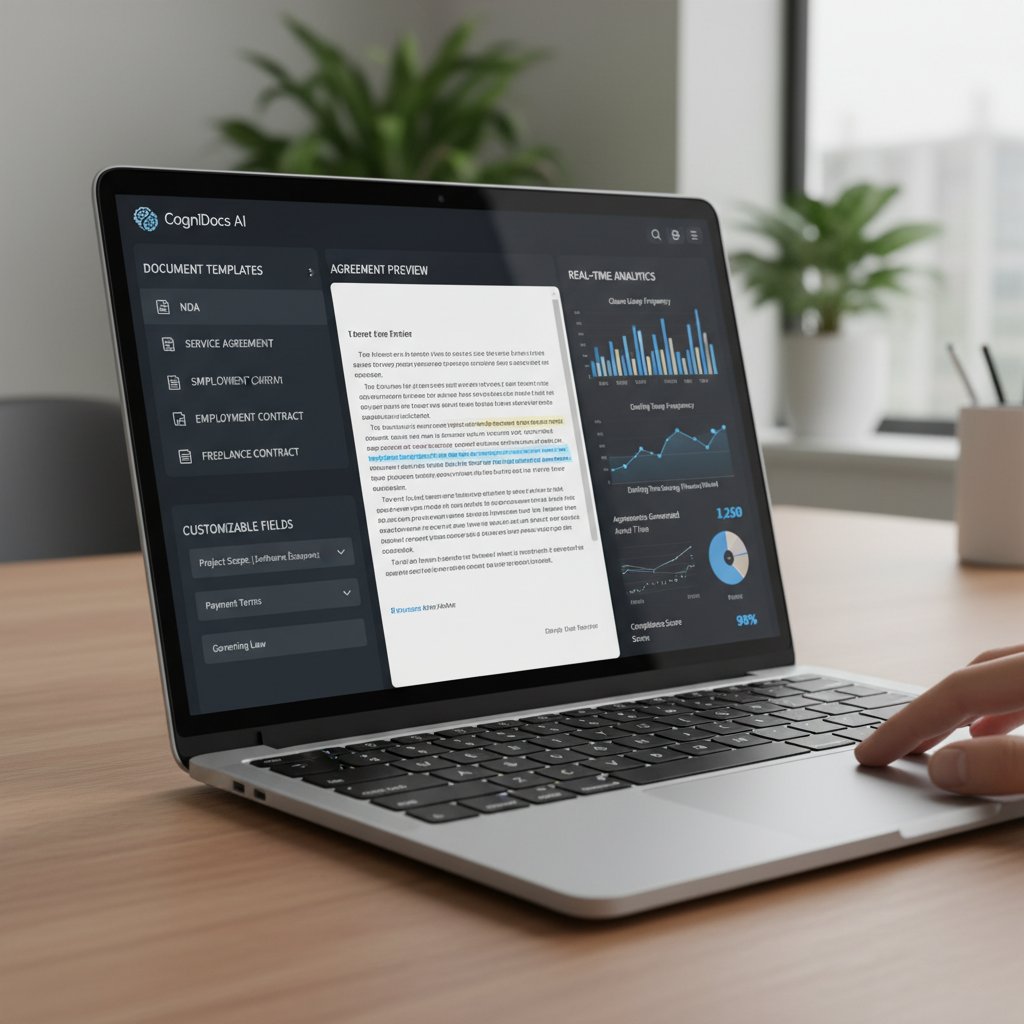
This approach doesn’t just reduce error—it increases trust. Parties know exactly what they’re signing, with automated checks and balances embedded in every step.
Risks and safeguards: Keeping control in the age of automation
Of course, there’s no such thing as a free lunch—AI-powered agreement generation introduces new risks that demand vigilance. Chief among these: data privacy, algorithmic bias, and overreliance on machine logic.
Here’s how to stay in control:
- Demand transparency: Use platforms that log every decision and customization, allowing for independent review.
- Insist on human oversight: Blend AI speed with legal expertise by building in lawyer review stages.
- Regularly audit templates: Keep your clause libraries and compliance checks up-to-date with the latest legal developments.
- Monitor data privacy: Ensure your agreement tool has robust encryption and complies with relevant data laws.
- Test for bias: Use tools that document their data sources and flag patterns of exclusion or bias.
Following these steps isn’t optional—it’s essential in a world where automation is only as strong as its safeguards.
The 2025 playbook: Best practices for generating personalized agreements
Your step-by-step guide to mastering agreement generators
Getting the most from modern agreement tools isn’t rocket science—but it does require a strategic approach. Here’s the playbook:
- Define your objectives: Know what you want from the agreement—don’t rely on default terms.
- Choose a reputable platform: Opt for AI-powered tools like filecreator.ai that combine automation with compliance.
- Input accurate, complete data: Garbage in, garbage out—take time to reflect the true deal details.
- Customize critical clauses: Don’t accept defaults for liability, payment, or confidentiality—tailor them.
- Run compliance checks: Use built-in validation features to catch red flags.
- Review with legal counsel as needed: Blend AI with human expertise for high-stakes agreements.
- Save and monitor: Store agreements securely and track for regulatory or business changes.

Red flags: What to avoid when choosing a generator
Not all tools are created equal. Watch out for these warning signs:
-
No audit trail or change logs.
-
Lack of built-in compliance checking.
-
Outdated templates or laws.
-
Poor data privacy or unclear encryption standards.
-
No option for legal review or customization.
-
Overly simplistic UI that hides important settings.
-
Vague promises of “one size fits all.”
Checklist: Are you ready to automate?
- You understand your business’s unique risks and requirements.
- You’ve vetted the platform’s compliance and privacy protocols.
- You’re prepared to review and customize critical clauses.
- You have access to legal counsel for complex matters.
- You’re willing to monitor and update agreements as laws change.
If you’ve checked these boxes, you’re ready to capitalize on the new agreement revolution.
Real-world impact: How industries are changing right now
Unexpected sectors leading the charge
Surprisingly, some of the earliest adopters of AI-powered agreement generation aren’t just tech or finance. The influencer economy, healthcare providers, and even traditional manufacturing have jumped in headfirst.
In healthcare, for example, AI-driven tools help generate precise patient consent forms and compliance documents in minutes. In influencer marketing, contracts now adapt instantly to brand risk, geography, and campaign goals—dramatically reducing disputes over content or payment.

It’s not about the size of the business but the complexity of the relationships at stake. Those who adapt are reaping the rewards in efficiency and trust.
Case study: The influencer agreement that changed everything
Take the case of a major influencer agency in Los Angeles. In 2024, they faced repeated disputes over brand deals—misunderstandings over payment schedules, content rights, and exclusivity. After switching to an AI-powered agreement generator, tailored to each campaign, disputes plummeted by 60%. The reason? Each agreement reflected the actual campaign, including jurisdiction, social platform, and deliverable timelines.
"Switching to personalized, AI-generated contracts turned our brand partnerships from chaos into clarity." — CEO, Leading Influencer Agency, Los Angeles (2024)
Market snapshot: Who’s using what in 2025?
| Industry | Top Use Cases | AI Penetration (%) |
|---|---|---|
| Legal | Routine contracts, NDAs | 55 |
| Finance | Loan agreements, compliance docs | 60 |
| Healthcare | Consent forms, compliance records | 45 |
| Marketing | Influencer, ad contracts | 70 |
| Manufacturing | Supplier, vendor agreements | 35 |
Table 4: AI-powered agreement generation adoption by sector
Source: Original analysis based on Pew Research, 2024, industry reports.
Controversies, debates, and the future of digital trust
The privacy paradox: Are we trading convenience for control?
As agreements become more digital and personalized, the elephant in the room is privacy. Every bit of data entered, clause tweaked, or term negotiated creates a fresh trail for surveillance. According to Pew Research, rising public concern about data misuse and surveillance is accelerating—especially as tech firms hoard power and small players struggle to keep up.
The paradox is brutal: we crave fast, frictionless deals, but every click exposes us to new vulnerabilities. The answer? Not to reject digital tools, but to demand more transparency, better privacy controls, and stronger regulatory oversight.

Smart contracts and the next wave of agreement tech
Smart contracts—self-executing agreements coded on blockchain—are now moving from crypto circles into mainstream business. Their allure: automatic enforcement, tamper-proof records, and reduced reliance on courts.
The catch? Smart contracts are only as smart as the code behind them. Unless the underlying terms are personalized and legally sound, these digital agreements risk amplifying mistakes at digital speed. The future isn’t about abandoning human judgment—but blending it with the relentless logic of code.
Will AI make lawyers obsolete—or just more powerful?
The debate is fierce. On one hand, AI is swallowing routine drafting tasks, making legal teams leaner and faster. On the other, complex negotiations, regulatory interpretation, and human nuance remain irreplaceable. If anything, AI is making lawyers more strategic—freeing them from grunt work and letting them focus on value-add.
"AI isn’t erasing legal expertise—it’s making it matter more than ever. The human factor is still the ultimate safeguard." — Legal Technology Analyst, 2024
Your next move: How to futureproof your agreements now
What to do today: Actionable takeaways
The world of personalized agreements is moving fast. Here’s how to stay ahead instead of playing catch-up:
- Audit your existing agreements: Identify where generic templates expose you to risk.
- Educate your team: Make sure everyone understands the power (and pitfalls) of personalization.
- Adopt a reputable tool: Choose AI-driven platforms like filecreator.ai for speed and compliance.
- Build legal review into your process: Don’t rely solely on automation for critical deals.
- Monitor and adapt: Keep contracts updated as your business, laws, and partners evolve.

The role of trusted tools like filecreator.ai
In a landscape loaded with risk and opportunity, trusted agreement generators are your new best friend. Filecreator.ai is designed for professionals who demand more than “good enough”—blending advanced AI, industry expertise, and dynamic compliance to help you generate personalized agreements that actually work. By automating the grunt work and surfacing the critical decisions, it frees you up to focus on strategy, relationships, and growth.
The key isn’t just technology—it’s trust. Using a vetted, reliable platform ensures your agreements are as strong as your business needs, not just as fast as the market demands.
The bottom line: Embracing the chaos (and the opportunity)
2025 isn’t just about faster contracts. It’s about fundamentally changing who has power, who takes risk, and who sets the rules. Personalized agreement generation is the sharpest tool in your arsenal—if you know how to wield it.
Ignore the revolution, and risk being left exposed. Embrace it, and you’ll transform paperwork into a weapon—one that defends your interests, accelerates your deals, and signals to the world that you play by the new rules. The chaos is real, but so is the opportunity. Choose wisely—and don’t sign anything generic ever again.
Sources
References cited in this article
- Forbes: The Cybersecurity Revolution No One Saw Coming(forbes.com)
- UCLA 2025 Expert Panel(newsroom.ucla.edu)
- Pew Research: Worries about life in 2025(pewresearch.org)
- Foley & Lardner LLP: Requirements Contracts Disruption(foley.com)
- Lexology: Dangers of Generic Clauses(lexology.com)
- ProMarket: Labor Antitrust Trends(promarket.org)
- CIO.com(cio.com)
- UNDRR GAR 2024(undrr.org)
- Disasters Avoided(disastersavoided.com)
- Carbon Law Group: Contracts Gone Wrong(carbonlg.com)
- DocuSign: AI Revolution(events.docusign.com)
- Legittai: Contract Management Evolution(legittai.com)
- LegalOn Technologies: 2025 State of Contracting(legalontech.com)
- SpotDraft 2025 AI Impact Report(insideainews.com)
- SPR 2025 Technology Predictions(spr.com)
- DocuSign: Agreement Tech Predictions(docusign.com)
- ContractsCounsel: Personal Services Agreement(contractscounsel.com)
- DLA Piper: Expert Determination(dlapiper.com)
- DocuSign: AI and Dynamic Agreements(docusign.com)
- Sdocs: AI in Digital Agreements(sdocs.com)
- Weagree: Conditions in Contracts(weagree.com)
- Juro: Conditional Logic in Contracts(juro.com)
- LegittAI: Debunking Myths(legittai.com)
- SmartContractCLM: Generative AI Myths(smartcontractclm.com)
- ATS Corporation: Debunking Automation Myths(atsautomation.com)
- 1E: AI Personalization Myths(1e.com)
- KPI Media: Digital Marketing Myths 2025(kpimedia.co)
- CMSWire: 1-to-1 Marketing Personalization(cmswire.com)
- Masimba Munjanja: 5 Myths About Contracts(masimbamunjanja.substack.com)
- Jay Russell: Legal Myths Debunked(jayrussellsouthcarolina.net)
- ContractPodAI: AI Contract Management Guide 2024(contractpodai.com)
- World Economic Forum: Trust in AI(weforum.org)
- Bain & Company: Automation Scorecard 2024(bain.com)
- Retool: State of AI 2023-2024(retool.com)
Perfect Documents, Instantly
Filecreator.ai transforms the way you produce professional documents. Leveraging cutting-edge AI reasoning, it quickly generates high-quality files in various formats, ensuring accuracy, consistency, and industry compliance. Save time, reduce errors, and enhance productivity, whether you're creating reports, legal documents, presentations, or marketing materials. Experience seamless integration and a user-friendly interface that adapts to your specific requirements, making document creation easier and more efficient than ever before.
Get startedStart Creating Professional Documents Today
Join thousands of professionals who trust AI-powered document generation
Frequently Asked Questions
What are the main problems with using generic contract templates?
Generic contracts contain vague phrases like "reasonable efforts" and "industry standard" that are legal landmines easily twisted by opposing counsel or invalidated in court. Courts are increasingly scrutinizing contract specificity, and without personalization to your exact scenario, boilerplate agreements leave you exposed to legal disputes and catastrophic financial loss.
Why is personalization becoming essential for contracts in 2025?
The surge in AI-powered agreement generators, adaptive legal tech, and digital risk has made personalized agreements the new strategic currency. As tech giants consolidate power and regulators struggle to keep up, personalized agreements have become necessary for protecting yourself and managing risk effectively.
What real-world example demonstrates the failure of generic contracts?
In 2024, the Michigan Supreme Court invalidated multiple contracts for lack of clear definitions, leaving businesses exposed to legal risk and catastrophic financial loss, illustrating that courts are now demanding greater specificity in contract terms.
How do vague contract terms create legal problems?
Vague phrases in boilerplate templates sound official but are easily disputed—opposing counsel can twist their meaning, or courts may invalidate them entirely. These ambiguous terms create legal disputes that generic templates fail to prevent.
Continue Reading
Explore more from Professional Document Generator

Personalized Contracts: How AI Changes Risk and Accuracy
Personalized contracts reduce risks that generic agreements create. This article examines how AI contract generation works, its limitations, and when human expertise remains essential.

Automated Contracts: Balancing Personalization with Control
This article examines how to generate personalized automated contracts while maintaining oversight. It covers the risks of automation hype and the practical safeguards needed.

AI-Powered Customized Agreements: Risks Beneath the Convenience
Generating customized agreements carries risks beyond convenience. This article examines the hidden pitfalls of AI-powered document creation and enforcement challenges.

Customized Contracts: Risks of AI-Powered Legal Document Generation
Generating professional customized contracts requires understanding the risks of AI-powered tools. This article examines what can go wrong and how to protect your business.

Risks and Benefits of Generating Contracts Online
Generating contracts online speeds up agreement creation but carries risks. This article explains what changed in digital contracting and how to navigate potential pitfalls.

Generating Professional Agreements: Why Precision Matters in 2025
Generating professional agreements requires precision and care in 2025. This article explains why generic templates fail, what risks to avoid, and how to protect your business.