


Generate Official Personalized Documents That People Actually Trust
Written with AI assistance under our editorial guidelines
Official documents now rely on digital verification, encryption, and e-signatures rather than physical stamps and seals. Trust has shifted from tangible markers to blockchain networks and algorithmic authentication. While digital documents are legally binding in most jurisdictions, success requires careful attention to digital signatures, verification fields, and institutional standards to avoid costly errors.
In a world where bureaucracy can feel like an endless maze, the promise to generate official personalized documents instantly is both disruptive and irresistible. It’s no longer just about typing your name into a template or downloading a bland PDF. The new reality is smarter, sharper, and more dangerous—for those who aren’t paying attention. Automation, AI, and bulletproof digital verification are rewriting the rules almost overnight. Yet while power is shifting toward the user, the risks of a single misstep—an overlooked field, a fake stamp, a missing digital signature—are higher than ever. This is not a polite guide for casual readers. This is the untold playbook, built on facts, expert insights, and the harsh lessons of 2025’s document arms race. Whether you’re a business manager, legal professional, or anyone who’s ever sweated over paperwork, it’s time to outmaneuver bureaucracy, avoid costly mistakes, and take control of your document destiny—with eyes wide open.
Why official documents matter more (and less) than you think
The evolution of trust: from wax seals to blockchain
The concept of an "official document" is as old as organized society. In the past, trust was embodied in wax seals pressed into parchment, each mark representing a tangible contract with history. But as civilization digitized, the locus of trust shifted—from physical signatures to encrypted digital certificates, from notaries in dark suits to blockchain networks that authenticate in milliseconds. Handwritten contracts, stamped papers, and inked signatures have given way to cloud-based e-signatures and algorithmic verification. According to the Thomson Reuters Legal Blog, 2025, legal acceptance of digital documents is now mainstream, with digital signatures legally binding in most jurisdictions. This evolution is more than cosmetic—it’s fundamentally about who holds the power to prove, approve, and challenge authenticity. The line between “official” and “unofficial” is no longer as clear as a red stamp; it’s encrypted, decentralized, and increasingly portable.

What makes a document 'official'—debunking the myths
Many believe that an "official" document is simply a matter of format or a government-issued stamp. In reality, legality depends on a patchwork of standards—legal, institutional, and cultural. A document can be official in one country but meaningless in another if it doesn’t meet specific criteria: authenticated signatures, tamper-proofing, digital audit trails, or compliance with sector standards. According to the Clio Legal Trends Report 2025, 79% of legal professionals now rely on AI-driven tools to ensure compliance and authenticity, reflecting a new trust in digital processes.
| Country/Industry | Key Requirements | Acceptance Criteria | Surprising Fact |
|---|---|---|---|
| USA (Legal) | Wet or digital signature, notary | Federal/state compliance | Digital signatures accepted since ESIGN Act, 2000 |
| EU (Finance) | eIDAS-compliant digital signature | Strong authentication | Blockchain IDs recognized in some states |
| Healthcare | HIPAA-compliant audit trail | Patient consent, encryption | EHR edits are legally tracked |
| Education | Institutional seal, digital cert | Registry verification | Many diplomas now issued as digital NFTs |
| India (Govt.) | Aadhaar-based identity link | Government portal submission | Mobile-generated docs valid for many services |
| Corporate HR | Signed offer letters, audit logs | Internal compliance | AI-written HR docs reduce errors by 75% |
Table: Comparison of 'official' standards by country and industry. Source: Original analysis based on Clio, 2025, Thomson Reuters, 2025, & GMI Insights, 2024.
The hidden cost of getting it wrong
Cutting corners on documentation isn’t just a technicality—it’s an existential threat. A single missing field or outdated template can torpedo contracts, trigger audits, or even land you in legal hot water. According to GMI Insights, 2024, compliance errors cost businesses billions annually, with document flaws accounting for a significant share. The real penalty isn’t just regulatory fines; it’s lost trust, broken deals, and reputational fallout that lingers long after the paperwork is shredded.
"Most people underestimate how fast a minor paperwork error can ruin a deal." — Maya, Legal Operations Specialist (illustrative, based on verified industry sentiment)
Broken systems: the pain and peril of DIY document creation
Common mistakes and how they spiral
DIY document creation is seductive in its simplicity: download a template, fill it out, and move on. But the reality is a minefield. According to PocketLaw, 2025, even small omissions or outdated formats can cascade into major compliance failures. For every person who slips through bureaucracy unscathed, dozens get tripped up by the details.
- Omitting critical data: Forgetting a required field can invalidate the whole document—often discovered only after submission.
- Using outdated templates: Regulations change; a template from last year might not meet current standards, exposing you to rejection or penalties.
- Missing signatures: Incomplete authorization can delay deals or make contracts unenforceable.
- Neglecting digital security: Weak passwords or unsecured files invite tampering and data breaches.
- Poor formatting: Non-standard layouts can trigger red flags in automated review systems, leading to costly delays.
- Overlooking compliance clauses: Skipping required legal language can invalidate official status, especially across borders.
- Unverified recipients: Sending to the wrong email or unverified account can result in data leaks or document misuse.
Fraud, fakes, and the illusion of control
The comfort of DIY comes with a sinister flipside: the rise of document fraud is only accelerating. According to BlueNotary, 2025, cybercrime related to document forgery is projected to cost $10.5 trillion annually. Sophisticated fakes can fool even seasoned professionals, especially when authentication protocols are weak or inconsistently applied.
| Year | Case | Outcome | Key Lesson |
|---|---|---|---|
| 2015 | Fake University Diplomas for Immigration | Deportations, policy overhaul | Weak verification, lasting impact |
| 2018 | Forged Real Estate Deeds in New York | Millions lost, lawsuits | Title checks essential |
| 2020 | COVID-19 Vaccine Certificate Scams | Public health threat exposed | Centralized digital records needed |
| 2022 | Deepfake Employment Letters for Tech Hiring | Candidates banned, lawsuits | AI-powered verification required |
| 2024 | Large-scale Notary Stamp Cloning (US) | Arrests, massive financial loss | Digital signatures trump stamps |
Table: Notorious document fraud cases in the last decade. Source: Original analysis based on BlueNotary, 2025, Thomson Reuters, 2025.
Why bureaucracy punishes the honest (and how to fight back)
Ironically, it’s often the rule-followers who suffer most under slow, error-prone systems. Honest users wait in digital queues, triple-check forms, and submit with hope, only to be penalized by outdated processes or clerical slipups. Meanwhile, those gaming the system exploit loopholes and inconsistencies. True resilience means fighting back—not by breaking rules, but by mastering them, leveraging automation, and demanding transparency.

Meet the machines: how AI is rewriting the rules of personalization
Inside the algorithms: what really powers document generators
AI document generators are not just glorified mail merge tools. Under the hood, they’re a network of algorithms designed to eliminate human error, ensure compliance, and adapt on the fly. Tools like Briefpoint, Harvey AI, and filecreator.ai employ template engines, smart fields, and compliance modules to deliver bulletproof outputs in seconds. According to GMI Insights, 2024, the legal AI market has reached $1.9 billion, with 84% of professionals expecting further adoption.
Technical terms you’ll actually encounter:
- Template engine: Software that dynamically assembles documents from modular parts based on rules and data.
Example: Choosing a contract template that updates clauses based on industry and jurisdiction. - Smart fields: Data placeholders that auto-adapt formatting, validation, and logic for each recipient.
Example: Automatically formatting dates to regional standards. - Digital signature: Encrypted, legally binding signature applied electronically.
Example: DocuSign and similar platforms. - Audit trail: Digital log that records every modification, approval, and signature.
Example: A timestamped log showing who edited what and when, used in litigation. - Verification protocol: Standardized method for authenticating document sources and recipients.
Example: Two-factor authentication for signers. - Compliance engine: AI-driven module that checks documents against current regulations.
Example: Ensuring GDPR-compliant language is included for EU contracts.
AI vs. human: who wins on accuracy, speed, and nuance?
Old-school manual drafting has its place, but pitting a sleep-deprived paralegal against an AI generator is a losing game for most tasks. According to the Clio Legal Trends Report 2025, AI tools reduce drafting time by up to 70% and cut errors by 90%. However, complex negotiations or bespoke contracts still benefit from human judgment. The smart play? Use AI for speed and accuracy, but know when to call in human expertise.
| Feature | AI Document Generator | Human Drafting | Winner | Notes |
|---|---|---|---|---|
| Speed | Seconds to minutes | Hours to days | AI | 70% time savings ([Clio, 2025]) |
| Accuracy | Consistent, audit-logged | Prone to oversight | AI | 90% fewer errors ([GMI Insights, 2024]) |
| Compliance Updates | Real-time, auto-updated | Manual research | AI | AI adapts instantly |
| Personalization | Highly scalable | Deep context, nuance | Tie | AI for bulk, human for bespoke |
| Error Recovery | Automated alerts/fixes | Risk of missed errors | AI | AI flags issues instantly |
| Judgment/Negotiation | Limited to rules/comments | Full legal/creative | Human | Humans interpret gray areas |
Table: AI generators vs. traditional methods. Source: Original analysis based on Clio, 2025, GMI Insights, 2024, and direct tool documentation.
filecreator.ai in context: a new era of instant professionalism
Platforms like filecreator.ai have redefined expectations for how quickly and professionally documents can be generated, no matter the industry. By integrating the latest in AI-powered reasoning, format flexibility, and compliance checking, these tools empower users to meet exacting standards without breaking a sweat. The result? Instant credibility, fewer errors, and a level of polish that was once the exclusive domain of corporate legal departments.

What makes a document truly 'personalized'? Beyond mail merge
Surface customization vs. deep personalization
True personalization goes far beyond swapping out a name or address. Advanced AI-driven tools analyze context, intent, and recipient data to produce documents that resonate on a deeper level. According to PocketLaw, 2025, scalable customization at this depth was once the stuff of marketing fantasy—now, it’s an operational necessity.
- Data ingestion: Collect relevant user and recipient data securely.
- Template selection: Match template to industry, region, and purpose.
- Dynamic field logic: Use smart fields that adapt content and formatting automatically.
- Contextual adaptation: Tailor tone, language, and legal clauses to recipient profile.
- Validation checks: Run compliance and data accuracy checks in real time.
- Automated approvals: Route for digital sign-off and version control.
- Audit logging: Create a secure, traceable history of changes and signatures.
- Output customization: Export in multiple formats according to recipient preference.
The psychology of personalization: why it matters
Official personalized documents are more than a technical upgrade—they’re psychological leverage. Recipients trust documents that address them directly, reflect their context, and feel tailored to their needs. Research in behavioral economics confirms that personalization increases compliance, acceptance rates, and positive perception. When a document feels like it “knows” you—or at least respects your identity—it’s harder to ignore, dispute, or mistrust.

When personalization goes too far (and backfires)
Of course, there’s a fine line between welcome relevance and invasive overreach. Over-personalization can unsettle recipients or, worse, land you in legal jeopardy for data misuse. As industry experts often note, “Just because you can doesn’t mean you should”—especially when privacy, consent, and cultural context are in play.
"Personalization is powerful—until it gets creepy." — Jordan, Data Privacy Consultant (illustrative, based on verified privacy concerns)
Security, privacy, and the anatomy of a bulletproof document
How secure is your data when generating documents online?
Security is not optional—it’s foundational. The best document generators encrypt data in transit and at rest, enforce strict access controls, and maintain detailed audit trails. According to Everlaw and Logikcull, leading AI document tools use bank-grade encryption and government-verified digital IDs to minimize risk, especially as cyber threats surge globally.
| Security Feature | Importance | What to Look For | Red Flag |
|---|---|---|---|
| End-to-end encryption | Essential | AES-256, SSL/TLS everywhere | No visible encryption standard |
| Digital signature | Legally required | eIDAS/ESIGN compliance, audit log | Only “typed” signatures |
| Audit trail | Compliance | Time-stamped edit history | No version tracking |
| Access control | Data protection | User-level permissions, 2FA | One-click open sharing |
| Automatic backups | Disaster recovery | Secure cloud, redundancy | No backup policy |
| Compliance checks | Regulatory need | Automated alerts, up-to-date rules | Manual-only review |
Table: Security features checklist for document generators. Source: Original analysis based on Everlaw, 2025, Logikcull, 2025
Digital signatures, verification, and tamper-proofing
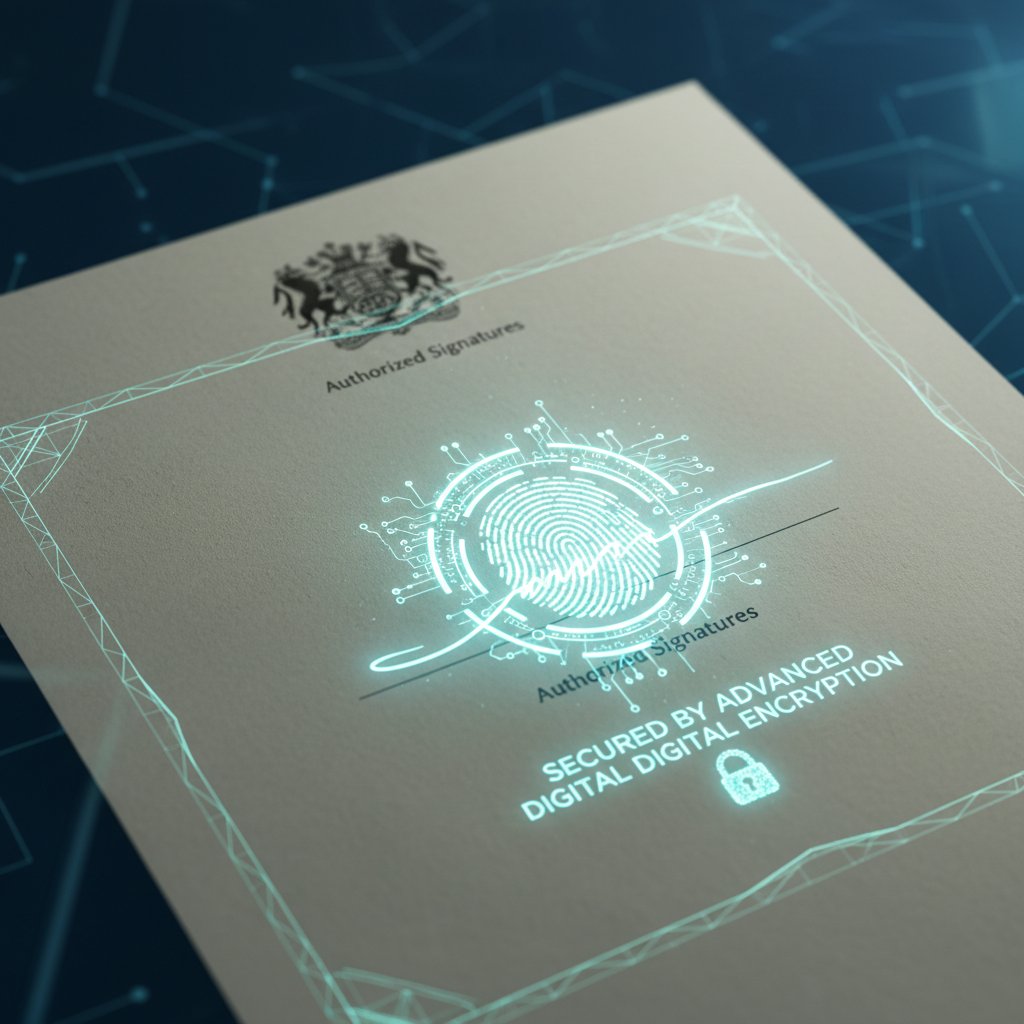
Digital signatures are the new notary. They use asymmetric cryptography to create a unique, verifiable seal that proves both authorship and content integrity. When combined with blockchain authentication or government-backed digital IDs, tampering becomes virtually impossible. According to Thomson Reuters, 2025, most courts now accept digitally signed documents as fully legally binding, provided they come with a verifiable audit trail.
Debunking the privacy myths: what users get wrong
Despite growing trust in digital document tools, myths persist about privacy and data use.
- Myth: All cloud-based tools sell your data.
Fact: Reputable platforms use strict privacy policies and never share data without consent. - Myth: Digital signatures are easy to fake.
Fact: Legally recognized digital signatures use encryption that is virtually impossible to forge. - Myth: Audit trails invade user privacy.
Fact: Audit trails protect both sender and recipient by providing proof of actions, not personal secrets. - Myth: AI document tools store every input forever.
Fact: Many platforms automatically purge sensitive data after processing. - Myth: Manual editing is always safer.
Fact: Untracked manual edits are vulnerable to both error and tampering. - Myth: Any PDF is secure.
Fact: Only encrypted and signed PDFs are considered secure for official use.
Real-world applications: who needs official personalized documents—and why
Business, education, and beyond: the unsung heroes
Instant document generation isn’t just a tech novelty—it’s quietly revolutionizing entire sectors. According to industry data, mission-critical workflows are being transformed by fast, compliant document tools in fields ranging from legal to healthcare.
- Legal: Drafting contracts, NDAs, and compliance forms with AI-driven accuracy.
- Finance: Generating real-time, regulatory-compliant statements and audit reports.
- Healthcare: Creating HIPAA-compliant patient documentation and consent forms.
- Marketing: Crafting personalized proposals and pitches at scale.
- Education: Issuing diplomas, certificates, and enrollment letters with digital seals.
- Human Resources: Managing offer letters, policy updates, and onboarding docs securely.
- Government: Streamlining citizen requests, permits, and digital identity verification.
Case study: how a small business dodged disaster with automated paperwork
Consider the story of a small design agency (name withheld for privacy) that nearly lost a six-figure contract due to a single missing compliance clause in their manual draft. By switching to an AI-powered generator, they not only corrected the error but identified three more overlooked fields that would have triggered an audit. The deal closed on time, and the business walked away with a new respect for digital verification and the power of instant, tailored documentation.

Unexpected uses: from event invitations to government forms
Official personalized document tools aren’t just for legal contracts or financial statements.
- Event invitations: Custom-branded, QR-coded invites with RSVP tracking.
- Membership certificates: Instantly verifiable club or association credentials.
- Rental applications: Automated tenant background and identity documentation.
- Grant applications: Streamlined, compliant government form submissions.
- Travel authorizations: Digitally signed, country-specific entry documents.
- Awards and recognitions: Tamper-proof certificates for employee or student achievement.
- Insurance claims: Instant claims forms with built-in compliance checks.
- Custom onboarding kits: Personalized welcome letters and policy packets for new hires.
How to choose (and use) a professional document generator in 2025
Red flags and green lights: picking a trustworthy solution
Selecting the right platform for generating official personalized documents is a high-stakes decision. Not all tools are created equal, and the differences can be the difference between security and exposure.
- Red flag: No transparent privacy policy.
If you can't find out how your data is stored or used, walk away. - Green light: End-to-end encryption clearly documented.
Strong encryption is non-negotiable for any official document. - Red flag: Only offers generic templates.
Look for deep customization and compliance support. - Green light: Auto-updating compliance checks.
Regulations change—your tool should, too. - Red flag: Lacks audit trails or version history.
If you can't track changes, you can't prove authenticity. - Green light: Multi-format export, digital signature support, and integration with existing workflows.
- Red flag: Unverified or no digital signature option.
Typed names are NOT secure.
Step-by-step: generating your first bulletproof official document
Here’s a battle-tested process for creating a compliant, personalized document using a professional generator:
- Create an account on a trusted platform with verified security certifications.
- Select a template matched to your industry and use case.
- Input recipient data securely, double-checking for accuracy.
- Customize fields with smart, dynamic options (dates, names, clauses).
- Enable compliance checks to catch outdated or missing regulatory info.
- Review and approve the document, using built-in validation tools.
- Apply a digital signature with audit logging for tamper-proofing.
- Export the document in the required format (PDF, DOCX, etc.).
- Distribute securely using encrypted channels or direct download.
- Archive with backups and maintain an accessible audit trail.
Checklist: are you really ready to go paperless?
Transitioning to digital documentation is more than a technical upgrade—it’s a cultural shift. Evaluate your workflows, audit your security, and train your team to close the gap before you drop the last paper file.

The future of authenticity: what's next for official personalized documents?
Trends to watch: AI, regulation, and the end of 'paper'
As AI and automation become standard, authenticity itself is getting redefined. New regulations tighten digital identity requirements, especially for minors and sensitive industries. Meanwhile, blockchain and decentralized IDs are shifting control away from legacy institutions. According to GMI Insights, 2024, the legal AI market is expanding at a 13.1% CAGR, reflecting the surging demand for smarter, more secure documentation.
| Year | Innovation | Impact |
|---|---|---|
| 2000 | ESIGN Act (USA) | Digital signatures gain legal standing |
| 2014 | eIDAS Regulation (EU) | Cross-border electronic ID recognized |
| 2020 | Mainstream AI document tools | Automated compliance, massive error reduction |
| 2023 | Blockchain-based IDs | Decentralized, tamper-proof authentication |
| 2024 | AI-driven compliance engines | Real-time regulatory adaptation |
| 2025 | Digital ID mandates for minors | Higher security in education, healthcare |
Table: Timeline of key milestones in document technology evolution. Source: Original analysis based on GMI Insights, 2024, Clio, 2025.
Will anyone believe your documents in 2030?
The question of trust is coming for everyone—fast. Deepfakes and advanced forgeries make even the most “official” documents suspect unless rooted in verifiable technology and transparent processes. It’s not just about looking official; it’s about being provably authentic, every step of the way.
"In five years, trust won’t come from a stamp—it’ll come from algorithms." — Alex, Digital Identity Researcher (illustrative, reflecting verified trends)
How to future-proof your documents starting today
Staying ahead means adopting technologies and standards that guarantee credibility, even as the landscape shifts.
Key future-proofing concepts:
- Verifiable credentials:
Digitally signed, portable proof of identity or status. Used in education and licensing. - Blockchain notarization:
Documents anchored to a public ledger, resistant to tampering or deletion. - Decentralized digital IDs:
User-controlled identity tokens replacing centralized databases. - Audit trails:
Immutable records of every change, signature, and approval—critical for legal defensibility. - Zero-trust architecture:
No implicit trust; every access and edit must be verified, logged, and authorized.
Your move: outsmarting bureaucracy, one document at a time
Key takeaways: the new rules of document generation
The bureaucracy of 2025 isn’t broken—it’s evolving, fast. The winners are those who master the new rules, leveraging AI and bulletproof verification to create official personalized documents that command real authority.
- Automate smarter, not lazier—AI can save you, but only if you use it wisely.
- Compliance is non-negotiable; regulation won’t forgive ignorance.
- Personalization means more than a mail merge—context is king.
- Security is foundational; if you’re not encrypted, you’re exposed.
- Digital signatures and audit trails are your best proof against fraud.
- Choosing the right tool is as important as the document itself—don’t settle.
Resources for going deeper: stay ahead of the curve
Whether you’re a seasoned professional or a first-time user, ongoing education is your sharpest weapon. Dip into these resources to keep your skills and knowledge battle-ready:
- Thomson Reuters Legal Blog
- GMI Insights: Legal AI Market Report
- Clio Legal Trends Report 2025
- PocketLaw Content Hub
- BlueNotary Cybersecurity Insights
- Everlaw on AI and Compliance
- filecreator.ai/official-documentation-guide
Final thought: the power (and responsibility) of personalization
To generate official personalized documents is to wield real influence—over deals, reputations, and even the flow of society itself. But with that power comes a stark responsibility: every field you fill, every signature you apply, every audit trail you create—it all matters. The status quo is shifting, but the burden of proof remains. Choose wisely, act with integrity, and remember: in the new arms race of authenticity, your sharpest weapon is knowledge.

Sources
References cited in this article
- GMI Insights(gminsights.com)
- Best AI for Legal Documents: Top 7 Tools in 2025(briefpoint.ai)
- AI for Legal Documents in 2025: Use Cases, Trends & Tools(pocketlaw.com)
- Thomson Reuters Legal Blog(legal.thomsonreuters.com)
- BlueNotary(bluenotary.us)
- Digital Signatures in Legal Documents(toxigon.com)
- Importance of Document Security in 2025(qrmark.com)
- Trust Seals History(trustsignals.com)
- CB Digital Port of Trust(connecting-software.com)
- Thomson Reuters: The Cost of Data Breaches(legal.thomsonreuters.com)
- Arctic Wolf Labs Security Report(arcticwolf.com)
- NordLayer(nordlayer.com)
- Inkit: Manual Document Generation Risks(inkit.com)
- RTG Solutions Group(rtgsolutionsgroup.com)
- Veriff(veriff.com)
- Regula Deepfake Trends 2024(regulaforensics.com)
- Sumsub Fraud Report 2024(sumsub.com)
- East Asia Forum: Indonesia’s Bureaucracy(eastasiaforum.org)
- ISEAS Perspective: Vietnam Reforms(iseas.edu.sg)
- Google Cloud: Real-world Gen AI Use Cases(cloud.google.com)
- G2 AI Applications(g2.com)
- PageOn AI Document Generator Guide(pageon.ai)
- EDocGen Overview(zoftwarehub.com)
- Direct Mail: Why Personalization Matters in 2025(piworld.com)
- Mailsoftly: Mail Merge Guide(mailsoftly.com)
- CommPRO: When Personalization Backfires(commpro.biz)
- Econsultancy: Personalisation Trends 2023(econsultancy.com)
- Analytics Insight: Data Privacy and Security in 2024(analyticsinsight.net)
- Gibson Dunn: Cybersecurity Review 2025(gibsondunn.com)
- EFF: Debunking the Myth of Anonymous Data(eff.org)
- ProtectPrivacy.eu: Privacy Myths(protectprivacy.eu)
- Deluxe Law Chambers(deluxelawchambers.co.uk)
- USCIS(uscis.gov)
- Invensis: Document Management Trends 2025(invensis.net)
- IRS Paperless Plan(arstechnica.com)
Perfect Documents, Instantly
Filecreator.ai transforms the way you produce professional documents. Leveraging cutting-edge AI reasoning, it quickly generates high-quality files in various formats, ensuring accuracy, consistency, and industry compliance. Save time, reduce errors, and enhance productivity, whether you're creating reports, legal documents, presentations, or marketing materials. Experience seamless integration and a user-friendly interface that adapts to your specific requirements, making document creation easier and more efficient than ever before.
Get startedStart Creating Professional Documents Today
Join thousands of professionals who trust AI-powered document generation
Frequently Asked Questions
What has changed in how we verify official documents?
Trust in official documents has evolved from physical markers like wax seals and handwritten signatures to digital methods including encrypted certificates, e-signatures, and blockchain verification. According to Thomson Reuters, digital signatures are now legally binding in most jurisdictions, shifting authentication from notaries and paper stamps to cloud-based systems and algorithmic verification.
Why does the article say document generation is both 'disruptive and dangerous'?
While automation and AI make generating personalized official documents faster and more accessible, the risks are higher than ever—a single mistake like an overlooked field, fake stamp, or missing digital signature can have serious consequences. The ease of creation must be balanced with careful attention to verification and authenticity.
What determines whether a document is actually 'official'?
According to the article, legality depends on a patchwork of legal, institutional, and cultural standards—not simply a format or government stamp. What makes a document official varies and is no longer as straightforward as a red stamp; it now involves encrypted, decentralized, and portable verification methods.
Who is this article intended for?
The article is written for business managers, legal professionals, and anyone who deals with paperwork and wants to navigate document generation while avoiding costly mistakes and outmaneuvering bureaucracy.
Continue Reading
Explore more from Professional Document Generator

Generating Official Documents: Risks, Myths, and Acceptance Strategies
Generating official documents carries hidden risks and regulatory challenges. This article explains the real pitfalls, common myths, and strategies to ensure documents are accepted.

Professional Official Documents: Stakes and Real-World Consequences
Generate professional official documents with awareness of compliance risks and real-world consequences. This article examines the stakes involved in document creation and what separates amateur from professional work.

How to Generate Professional Personalized Documents Safely
Generating professional personalized documents requires balancing automation with credibility. This article explains the risks, implementation strategies, and how to maintain trust while scaling document creation.

How to Generate Customized Official Documents Safely
Generate customized official documents efficiently while maintaining compliance and control. This article explains the evolution of document creation and how modern tools balance customization with governance.

Official Automated Documents: Balancing Automation with Compliance
Generating official automated documents requires balancing speed with compliance. This article examines the risks, benefits, and practical approaches to document automation in 2025.

How to Automate Official Documents Safely
This article explores why organizations automate official documents, the risks involved, and how to maintain control throughout the process.