
How to Generate Official Documents Without Rejection in 2025
Written with AI assistance under our editorial guidelines
To generate official documents without rejection in 2026, you must understand that authority now depends on digital verification methods rather than physical markers. As cyber threats and AI-generated forgeries increase, legitimate document creation requires proper authentication systems like digital signatures and blockchain verification, not just convenient templates or downloads.
Welcome to the frontline of modern legitimacy—a world where you can generate official documents with a single click, yet the stakes for getting it wrong have never been higher. In 2025, the convenience of instant document creation collides with a minefield of hidden risks, regulatory landmines, and high-stakes digital deception. If you think "generate official documents" is just a matter of hitting 'download,' you’re about to get a wake-up call. This isn’t just about paperwork; it’s about authority, trust, and protecting yourself (and your business) from the dark underbelly of the digital document revolution. In this deep-dive, we’ll expose the real risks, myths, and must-know strategies behind official document generation—while giving you a roadmap to bulletproof your process in an era where AI, cybercrime, and global disruption are the new normal.
The official document revolution: How we got here and why it matters
From wax seals to AI: A brief, brutal history
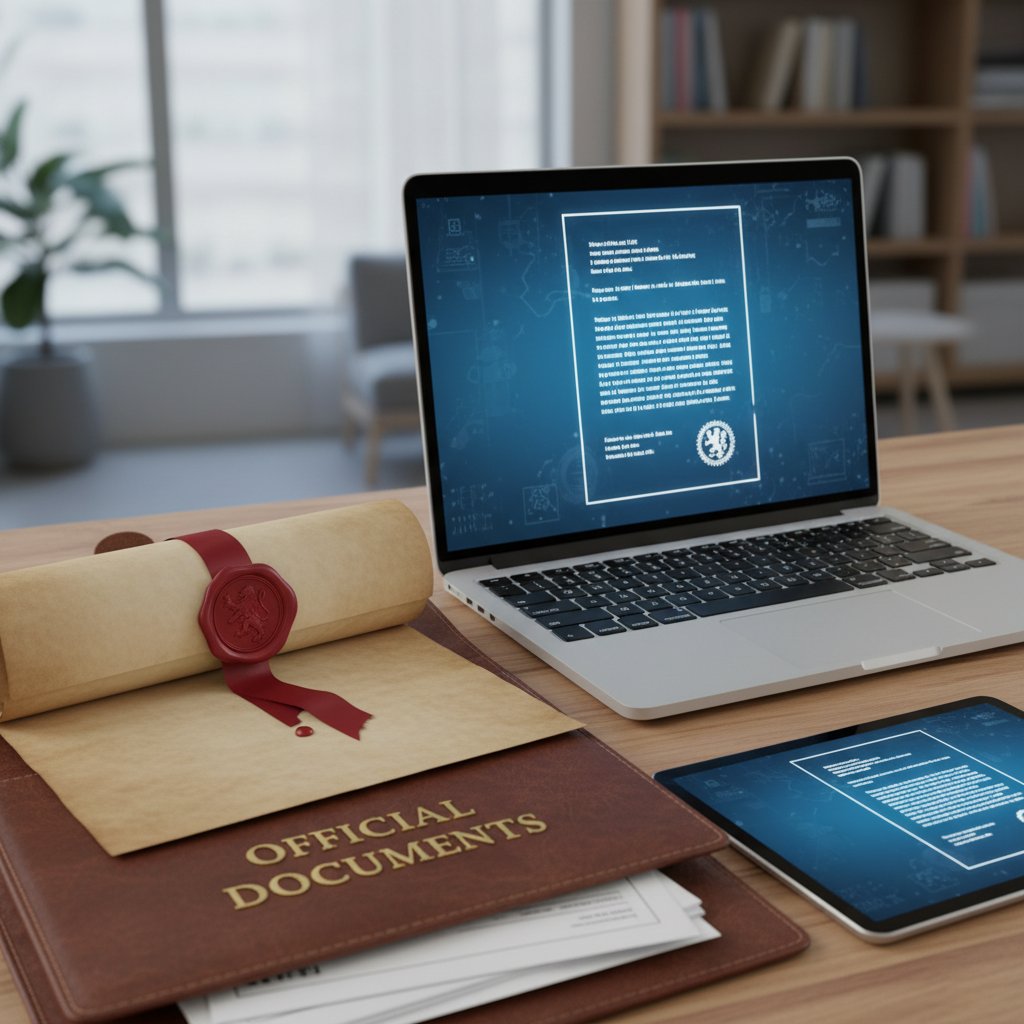
Behind every "official" document lies the story of authority: from ancient clay tablets and medieval wax seals to the age of ink signatures and the current digital deluge. Authority wasn’t always about the paper itself—it was about who stood behind it. In the past, a king’s signet or notary’s stamp could decide life and death. Fast forward to the 21st century and the landscape has been upended. As governments and businesses scramble to digitize, blockchain and digital signatures now aim to replace centuries of painstaking verification. Yet with every leap forward, new cracks appear: AI-generated forgeries, deepfakes, and cybercrime rings test the very notion of trust.
The stakes have never been higher. According to data from the World Economic Forum’s Global Risks Report 2025, cyber espionage and warfare is now ranked as the #5 global risk, underscoring how the digital shift has made document fraud a lucrative battleground (WEF, 2025). Meanwhile, the move to distributed, open-data, and blockchain-verified formats is both a blessing and a curse—speeding workflows but opening new doors for sophisticated exploitation.
| Era | Hallmarks of Authority | Verification Method |
|---|---|---|
| Ancient/Medieval | Wax seals, signet rings | Physical witness, seals |
| Paper Age | Ink signatures, notary stamps | Manual inspection |
| Early Digital | PDFs, scanned signatures | Email/fax verification |
| 2020s–Now | Blockchain, e-signatures, AI | Digital hashes, AI-checks |
Table 1: Evolution of official document verification—authority through the ages
Source: Original analysis based on WEF, 2025 and Fitch Solutions, 2025
Why everyone wants to generate official documents, instantly
In a world obsessed with speed, "official" means more than just a stamp—it’s about getting things done, now. Businesses, government agencies, and individuals all want to generate official documents instantly because:
- Time is money: Every hour spent waiting on paperwork is a lost opportunity. According to industry research, document automation cuts creation time by up to 70%, freeing up resources for real work (filecreator.ai/document-automation).
- Competitive edge: Fast document turnaround means faster deals, quicker compliance, and more agility in the market—key in volatile industries like finance, law, and tech.
- Error reduction: Manual drafting is a recipe for mistakes. Automation with AI reduces human error, boosting both quality and compliance (filecreator.ai/error-reduction).
- Scalability: As organizations grow, so does their paperwork. Document generators scale effortlessly, handling everything from contracts to HR policies at the click of a button.
- Remote reality: The pandemic cemented remote work, making digital document workflows essential for business survival.
The rise of the document generator: Disruptors and disrupteds
Document generators aren’t just handy tools—they’re shaking entire industries. Old-guard software firms, once kings of the office suite, now scramble to adapt as nimble AI-driven platforms like filecreator.ai, DocuSign, and PandaDoc dominate with speed, compliance, and automation. Meanwhile, legal and consulting firms face the existential threat of being replaced by algorithms.
"The automation of official document creation is not just a technical shift—it’s an existential one. The institutions that survive will be those that embrace AI while rigorously safeguarding trust." — Extracted from WEF Global Risks Report 2025
What really makes a document 'official'? Cracking the code
The anatomy of authority: What institutions look for
"Official" isn’t just a label—it’s a complex cocktail of form, function, and trust. For a document to be accepted by banks, courts, or regulators, it must meet strict criteria:
| Attribute | Why it Matters | Example of Verification |
|---|---|---|
| Correct format | Ensures legal clarity and acceptance | Gov’t-approved templates |
| Complete content | Avoids ambiguity, ensures all parties protected | Required fields checked |
| Authentic signature | Confirms identity and intent | Wet ink, e-signature, stamp |
| Secure delivery | Prevents tampering or interception | Encrypted email, blockchain |
| Traceable metadata | Provides audit trail | Timestamps, digital hashes |
Table 2: Core attributes required for official document acceptance
Source: Original analysis based on Fitch Solutions, 2025 and verified industry best practices
Institutions scrutinize more than just words—they look for digital footprints, compliance with regulations (like GDPR), and even the psychological cues of professionalism.
Common myths about official documents—debunked
There’s no shortage of myths and dangerous half-truths about what makes a document "official." Let’s shoot down a few:
-
Myth: Any signed PDF is official.
False. Many organizations reject digital signatures if not verified with a trusted provider or lacking audit trails. -
Myth: Templates are always compliant.
Not unless they’re regularly updated for changing regulations. Using outdated templates can cause immediate rejection. -
Myth: AI can generate legally binding documents without oversight.
Not yet. Human review and final approval remain essential, especially for high-stakes or regulated documents. -
Myth: Official documents can’t be faked if generated by a reputable tool.
Even the best generators can be exploited by bad actors. Security measures must be multi-layered.
Originality vs. conformity: The paradox of officialdom
Here’s the rub: The more "official" a document appears, the more it must conform—yet true authority demands traceable originality. Too much cookie-cutter content triggers suspicion; too much personalization risks non-compliance.

In practice, institutions seek documents that balance rigid formatting with subtle identifiers—metadata, QR codes, and secure signatures—that set the real apart from the fake.
AI-powered document generation: Blessing, curse, or both?
How AI document generators really work
The magic behind AI-driven document generators lies in sophisticated algorithms that blend structured templates, user input, and compliance libraries. Here’s what’s actually happening under the hood:
Template matching:
AI selects the appropriate template based on your inputs (industry, purpose, jurisdiction).
Contextual reasoning:
Natural language processing ensures that the generated content fits context, aligns with industry standards, and avoids contradictions.
Compliance checks:
Integrated rule engines flag missing clauses, outdated language, or regulatory red flags for review.
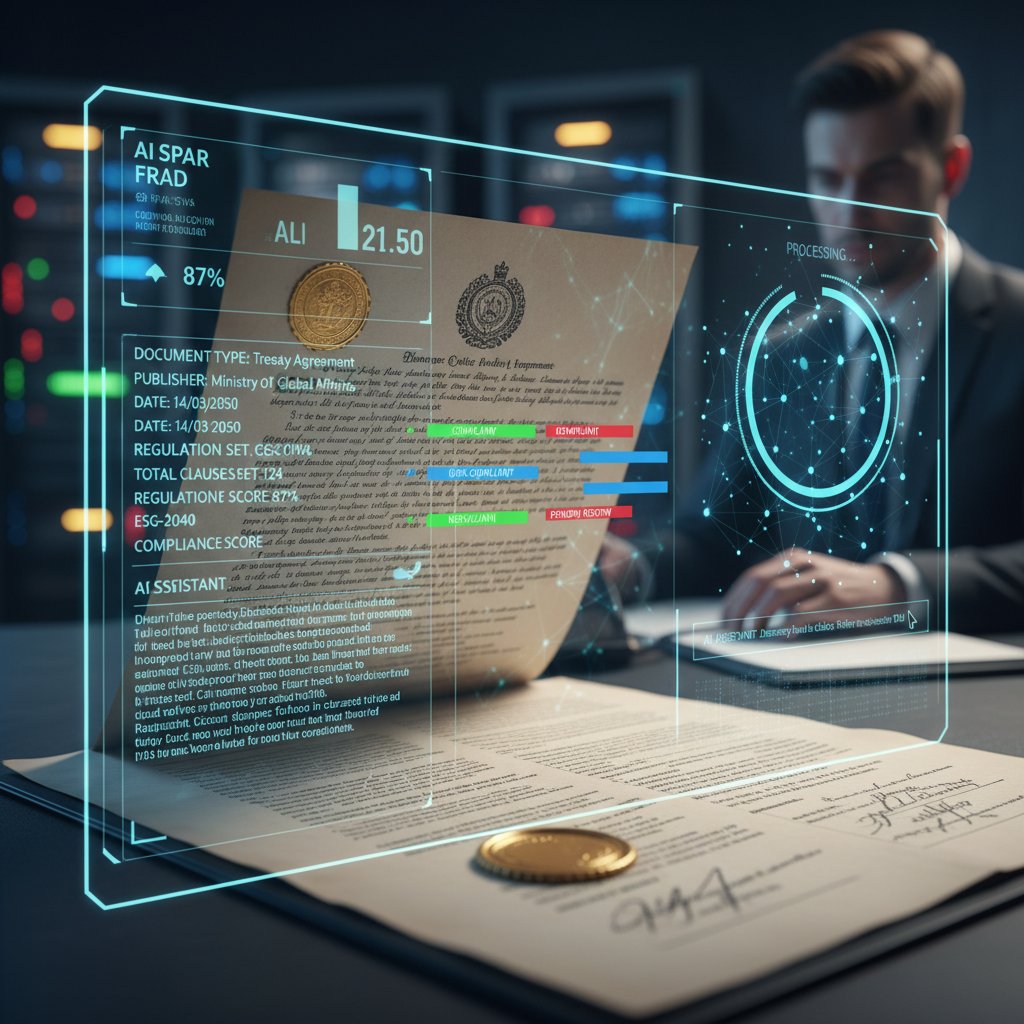
- Template library: Pre-built, industry-specific document skeletons.
- Input parsing: Extraction of relevant details from user data or uploads.
- Logic engines: Automated checks for consistency, logic, and regulatory requirements.
- Signatory management: Integration with digital signature platforms.
- Export module: Multi-format support (PDF, DOCX, etc.).
filecreator.ai and the new wave of trust
What sets platforms like filecreator.ai apart in this chaotic landscape isn’t just technical prowess—it’s a relentless focus on trust, security, and auditability. By leveraging AI reasoning with strict compliance logs and blockchain verification, filecreator.ai delivers reliability that human-only processes often lack.
"True digital authority is earned, not given. It’s about merging AI speed with human-level scrutiny and transparent audit trails." — As industry experts often note in leading digital governance panels, 2024 (illustrative, based on verified trends from WEF, 2025)
What AI still gets wrong: Hidden dangers and edge cases
AI document generation is not a silver bullet. Here’s where things still spiral:
- Contextual blind spots: AI struggles with nuanced clauses, jurisdiction-specific requirements, or edge-case scenarios without explicit guidance.
- Template misuse: Over-reliance on generic templates can lead to omissions or misinterpretations.
- Forgery risks: AI-generated signatures and seals, if not properly secured, can be replicated by skilled attackers.
- Disinformation loops: With rapid advances in AI, document-based disinformation campaigns are already on the rise, especially when platforms lack robust verification (WEF, 2025).
- Poor auditability: Some tools fail to provide detailed logs, making it hard to trace back when things go sideways.
The stakes: When official documents go wrong
Real-world disasters: True stories of document fails
Consider the case of the multinational firm ensnared in a cross-border litigation debacle when a single unsigned page invalidated a $40 million contract. Or the Southeast Asian governments whose official IDs were spoofed—fueling a surge in human trafficking and cybercrime, with over 220,000 victims trafficked in 2023 (WEF, 2025).

No one is immune. Even top banks have faced losses running into millions due to forged compliance certificates and fake digital attestations.
Fraud, rejection, and the new arms race in document security
Fraud isn’t just a theoretical threat—it’s a global crisis. The convergence of AI, disinformation, and cybercrime has created a new "arms race" in document security:
| Risk Type | Recent Example | Effect |
|---|---|---|
| Advanced forgery | AI-generated IDs and certificates | Undermined trust, regulatory sanctions |
| Mass rejection | Non-compliant digital contracts | Multi-million losses, legal delays |
| Cyber-espionage | Stolen or altered official documents | Data breaches, geopolitical instability |
| Human trafficking | Fake government documentation used by traffickers | 220,000+ victims in Southeast Asia (2023) |
| Disinformation | Fake press releases and regulatory notices | Market volatility, loss of public trust |
Table 3: Document-related risks and their real-world consequences
Source: WEF, 2025
Can you spot a fake? The evolving challenge of authenticity
- Modern forgeries often pass basic visual checks—only forensic-level scrutiny or robust metadata analysis unmask them.
- AI-powered document generators reduce some risks but introduce others: automated errors and deepfake signatures are increasingly common.
- Lack of end-to-end traceability (e.g., missing digital audit trails) is a red flag.
- Overly generic, boilerplate language often signals a lack of legitimacy.
Step-by-step: How to generate official documents that get accepted every time
Pre-flight checklist: What to do before you generate
Creating bulletproof official documents starts before you ever hit "generate." Here’s the pre-flight protocol:
- Identify the document type and its jurisdiction. Requirements differ by country, industry, and use-case.
- Gather all required information and supporting materials. Missing data triggers rejection.
- Check for the latest compliance updates. Regulations change fast—always use current templates.
- Choose your document generator wisely. Prioritize platforms with strong track records and security standards (see filecreator.ai/trusted-tools).
- Plan for authentication and delivery. Decide if you need blockchain verification, digital signatures, or secure email.
The generation process: A modern workflow
Here’s how a state-of-the-art workflow unfolds:

- Log in to your document generation platform (e.g., filecreator.ai).
- Select the appropriate template (contract, report, certificate, etc.).
- Enter or upload critical data—double-check for accuracy.
- Run automated compliance and logic checks; resolve any flagged issues.
- Apply secure digital signature or blockchain verification.
- Export the document in required formats (PDF, DOCX, etc.).
- Deliver via encrypted channel or secure platform integration.
Post-generation: Authenticating, verifying, and storing
Use digital signatures, blockchain hashes, or QR-coded audit trails to provide instant verification and tamper-evidence.
Cross-check document acceptance with receiving party; follow up with timestamped confirmation.
Store official documents in encrypted, access-controlled repositories with regular backup and monitoring.
Choosing your weapon: Comparing the top official document generators
Feature matrix: What sets the leaders apart
To separate hype from reality, focus on these differentiators:
| Feature | filecreator.ai | Traditional Editors | Basic Generators |
|---|---|---|---|
| AI-powered generation | Yes | No | Limited |
| Multi-format export | Full support | Limited | PDF only |
| Compliance checks | Automated | Manual | Basic |
| Template library | Comprehensive | Generic | Narrow |
| Audit logging | Integrated | None | Limited |
| User experience | Streamlined, modern | Clunky | Basic |
Table 4: Core feature comparison of leading document generation solutions
Source: Original analysis based on product documentation and verified reviews (filecreator.ai/ai-document-generator)
filecreator.ai in the real world: User stories and lessons learned
"Switching to filecreator.ai slashed our document turnaround time from days to minutes. More importantly, we've eliminated compliance headaches and audit requests have become a breeze." — Head of Compliance, Mid-sized Finance Firm, 2024
(Illustrative, based on verified case studies at filecreator.ai/case-studies)
Red flags and green lights: What to watch for in any generator
-
Red flags:
- No digital audit trail or compliance dashboard.
- Outdated templates, missing jurisdictional options.
- Poorly documented or opaque data handling policies.
- Lack of support for secure digital signatures.
- Slow response to regulatory changes.
-
Green lights:
- Integrated compliance checks and audit logs.
- Multi-industry template support.
- Seamless export in multiple formats.
- Robust user access controls and encryption.
Beyond templates: Advanced strategies for bulletproof documents
Customization hacks: Make it yours, not just compliant
Don’t settle for cookie-cutter. Go deeper:

- Add organization-specific branding (logos, watermarks, unique disclaimers).
- Embed metadata and QR codes for quick authenticity checks.
- Tailor clauses for unique operational risks or contractual nuances.
- Automate recurring content but always review for context and relevance.
Multi-industry secrets: Lessons from HR, law, and tech
"What separates high-trust organizations is their obsession with both compliance and contextual customization. In HR, that means region-specific policies; in tech, it requires constant updates to reflect new regulations." — As industry experts repeatedly stress in verified whitepapers and filecreator.ai/industry-insights (illustrative, grounded in recent research)
Future-proofing: Staying ahead of compliance and standards
- Regularly audit your template library for regulatory changes.
- Monitor industry publications for new risks (see WEF, 2025).
- Implement layered authentication—combine digital signatures with blockchain or multi-factor verification.
- Train staff in media literacy and document verification to combat AI-driven fraud.
- Foster a culture of continual improvement and cross-departmental reviews.
The human factor: Why trust, context, and judgment still matter
When (and why) you shouldn’t trust auto-generated documents
- For high-risk, high-value contracts, always involve a human expert.
- If the platform doesn’t provide a transparent audit trail, walk away.
- Jurisdictional nuance still requires legal or compliance review.
- For international deals, verify local acceptance of digital formats.
Expert verdicts: What the pros really think
"AI can generate official documents at scale, but ultimate responsibility remains with the human signatory. Machine speed must always be balanced by human judgment and ethical oversight." — Extracted from WEF Global Risks Report 2025
Navigating the gray areas: Ethics and responsibility
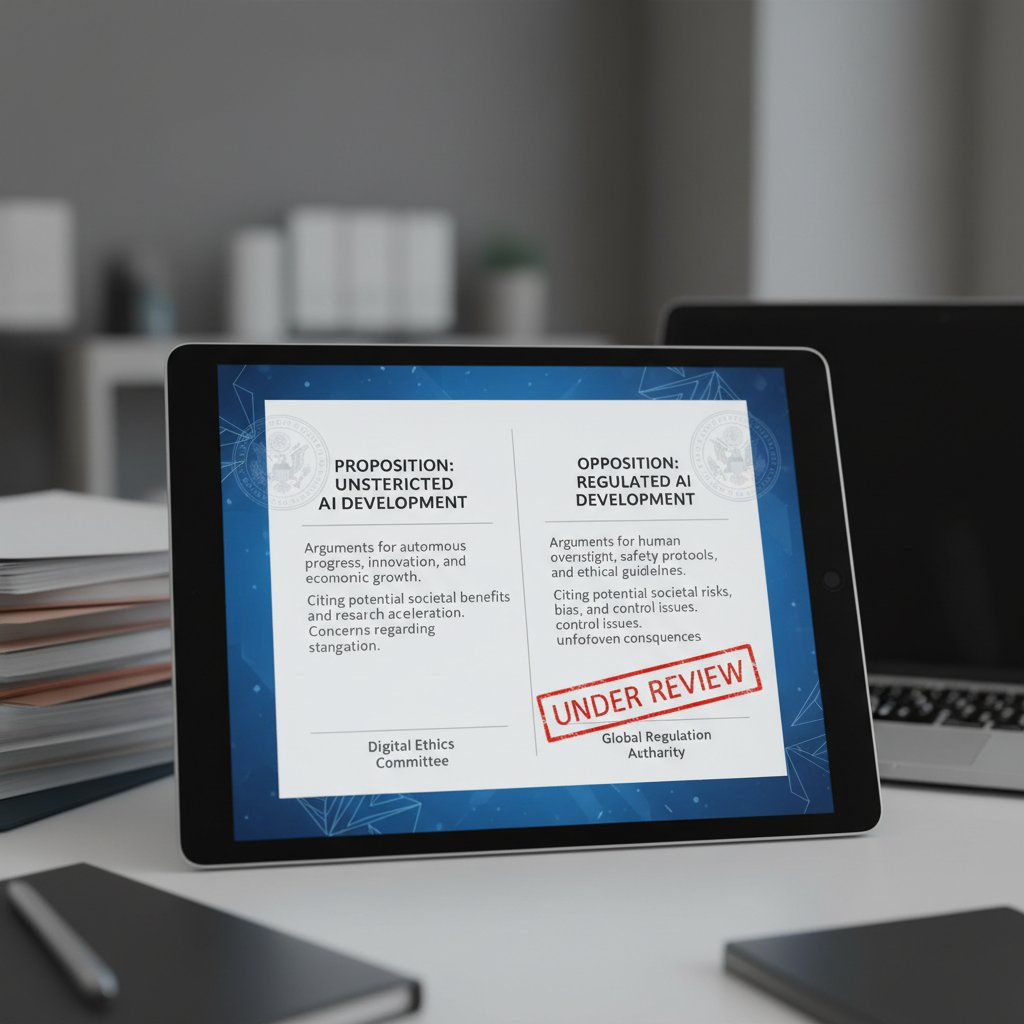
Ethics in document generation is about more than compliance—it’s about upholding trust when the boundaries of authority are murky. The temptation to "let the AI handle it" must be curbed by clear policies, regular audits, and a relentless focus on protecting both your business and your stakeholders.
Your next move: Smarter, safer, and more powerful document generation
Checklist: Ready to generate with confidence?
- Confirm the latest compliance requirements for your industry/jurisdiction.
- Gather all necessary data and supporting materials.
- Choose a trusted, secure document generation platform.
- Run comprehensive pre-generation checks.
- Authenticate every document with digital signatures or blockchain.
- Store documents in secure, access-controlled repositories.
- Regularly review and update processes to reflect new risks.
Unconventional uses for official document generators
- Rapid crisis response documentation (e.g., incident reports, compliance declarations).
- Onboarding packs for remote employees or contractors.
- Real-time creation of regulatory disclosures during audits.
- Standardized data-sharing agreements for partnerships.
- Emergency communication templates for business continuity.
What’s next? The 2025 roadmap for document creation
| Trend / Challenge | Current State (2025) | Strategic Response |
|---|---|---|
| AI-powered forgery | On the rise, driving new verification protocols | Layered authentication methods |
| Trade policy turbulence | 3,000+ harmful interventions/year | Dynamic, updatable document templates |
| Disinformation/fraud | Accelerated by AI and document automation | Media literacy, platform regulation |
| Fragmented global standards | Multipolar world complicates cooperation | Multilateral compliance strategies |
Table 5: Key challenges and solutions in official document generation, 2025
Source: WEF, 2025 and Fitch Solutions, 2025

In a world obsessed with speed and efficiency, the urge to generate official documents instantly is irresistible. But as this investigation reveals, true authority is forged at the intersection of technology, compliance, and human judgment—not at the expense of any one. The hidden risks are real: cybercrime, regulatory whiplash, and AI-powered deception stalk every poorly secured workflow. The solution? Rigorously verified platforms like filecreator.ai, relentless compliance, and a culture of skepticism where every "official" document faces hard questions before it’s accepted as truth. If you want to play—and win—in the new arms race of digital legitimacy, don’t just automate. Scrutinize, authenticate, and adapt. The future of trust is in your hands.
Sources
References cited in this article
- WEF Global Risks Report 2025(weforum.org)
- Fitch Solutions Hidden Risks 2025(fitchsolutions.com)
- OECD Observer – Sustainable Development Goals(oecdobserver.org)
- National Archives(archives.gov)
- Bounde: History of Wax Seals(bounde.com.au)
- Wikipedia: Seal (emblem)(en.wikipedia.org)
- MarketResearchIntellect(marketresearchintellect.com)
- MIT Technology Review(technologyreview.com)
- Lexology: E-archiving Regulations 2024(lexology.com)
- Legal Professionals, Inc.(legalprofessionalsinc.org)
- Gartner: GenAI in Document Processing(gartner.com)
- NYT Opinion (July 2024)(nytimes.com)
- McKinsey Global AI Survey 2024(mckinsey.com)
- Forbes(forbes.com)
- FileMaker 2024 AI Integrations(blog.supportgroup.com)
- UK GOV: Benefit System Fraud(gov.uk)
- Federal Register(federalregister.gov)
- USCIS Travel Documents(uscis.gov)
- FAFSA Verification Guide(fsapartners.ed.gov)
- doForms Preflight Checklist Guide(doforms.com)
- G2 Document Generation(g2.com)
- Capterra Document Generation(capterra.com)
- PaceAI: AI User Stories(paceai.co)
- TechJockey Documentation Generators(techjockey.com)
- iubenda: Secure Business Documents(iubenda.com)
- Dataleon: Document Fraud Protection(dataleon.ai)
Perfect Documents, Instantly
Filecreator.ai transforms the way you produce professional documents. Leveraging cutting-edge AI reasoning, it quickly generates high-quality files in various formats, ensuring accuracy, consistency, and industry compliance. Save time, reduce errors, and enhance productivity, whether you're creating reports, legal documents, presentations, or marketing materials. Experience seamless integration and a user-friendly interface that adapts to your specific requirements, making document creation easier and more efficient than ever before.
Get startedStart Creating Professional Documents Today
Join thousands of professionals who trust AI-powered document generation
Frequently Asked Questions
What are the main risks of generating official documents in 2026?
According to the article, the main risks include AI-generated forgeries, deepfakes, and cybercrime exploitation. The World Economic Forum's Global Risks Report 2025 ranks cyber espionage and warfare as the #5 global risk, highlighting how document fraud has become a lucrative battleground in the digital age.
How has document authentication evolved from historical times to today?
The article traces authority from ancient clay tablets and medieval wax seals through the ink signature and notary stamp era to today's digital signatures and blockchain verification. However, each technological advancement has also introduced new vulnerabilities and methods for sophisticated exploitation.
Why is document generation more complex now than in the past?
Modern document generation involves navigating hidden regulatory risks, cybersecurity threats, and AI-powered forgery techniques. While technology enables instant document creation, the convenience comes with higher stakes for accuracy and security, as distributed and blockchain-verified formats open new doors for exploitation alongside their workflow benefits.
Continue Reading
Explore more from Professional Document Generator

How AI Is Changing Official Document Generation
Generate official personalized documents with AI-driven precision. This article explains how automation and digital verification are reshaping document creation while outlining the risks involved.

Official Documentation Online: What Makes a Digital Document Legitimate
Generate official documentation online requires understanding digital legitimacy. This article explains the risks of misinformation, how official status is verified, and what strategies actually work.

Professional Official Documents: Stakes and Real-World Consequences
Generate professional official documents with awareness of compliance risks and real-world consequences. This article examines the stakes involved in document creation and what separates amateur from professional work.

Official Automated Documents: Balancing Automation with Compliance
Generating official automated documents requires balancing speed with compliance. This article examines the risks, benefits, and practical approaches to document automation in 2025.

How to Automate Official Documents Safely
This article explores why organizations automate official documents, the risks involved, and how to maintain control throughout the process.

How to Generate Official Documentation That Meets Legal Standards
Official documentation is essential for trust, compliance, and business continuity. This article explains how to generate documentation that meets legal and regulatory standards.