


Generate Offer Letters That Win Hires (and Avoid Legal Traps)
Written with AI assistance under our editorial guidelines
Offer letters represent a critical yet risky hiring step that extends far beyond simple paperwork. Poorly drafted offers can trigger costly legal disputes averaging $40,000–$150,000, damage employer brand reputation, and derail talent acquisition efforts. Generic templates create legal vulnerabilities, while proper customization ensures compliance and competitive advantage in recruiting top candidates.
In the high-stakes world of hiring, generating offer letters isn’t just a box-ticking exercise—it’s a crucible where brand, risk, and ambition collide. Think it’s just copy, paste, and send? Think again. The real story behind offer letters is laced with unseen hazards, silent power plays, and the kind of legal complexity that can make or break both careers and companies. In a hiring landscape obsessed with speed and automation, the simple act of generating an offer letter has evolved into a high-wire act—one misstep, and you’re staring down legal battles, shattered reputations, or a viral Glassdoor takedown. This article rips the lid off the process: revealing why generic templates are a minefield, how AI both solves and creates problems, and what HR insiders won’t put in writing. Buckle up—because mastering the art of the job offer is about more than filling in blanks: it’s about surviving the new talent war with your brand (and sanity) intact.
Why offer letters are more dangerous than you think
The hidden cost of getting it wrong
Acknowledging the risk level in generating offer letters is non-negotiable. A single misstep in the language, structure, or timing of an offer can trigger cascading financial and reputational chaos. Consider the cost: legal fees from an ambiguous clause, payouts from wrongful termination claims, or the far-reaching blow to your employer brand if word gets out that your offers are misleading or unfair. According to recent HR industry analyses, companies embroiled in offer-related litigation spend, on average, $40,000–$150,000 per dispute, not counting settlement amounts or PR damage (LinkedIn, 2023). Fail to get it right, and you might see your next big hire walk straight to a competitor—or worse, drag your name through regulatory hearings and social media mud.

| Risk Factor | Estimated Cost (USD) | Recovery Time |
|---|---|---|
| Legal dispute (improper language) | $40,000–$150,000 | 6–12 months |
| Damaged employer brand | $10,000–$250,000 | 1–2 years |
| Automation error (uncaught) | $5,000–$50,000 | 2–6 months |
| Compliant automation solution | $500–$5,000 | Immediate |
Table 1: Cost comparison of legal disputes vs. compliant automation. Source: Original analysis based on LinkedIn 2023, CrewHR 2024.
"Most HR disasters start with a lazy offer letter." — Jasmine (quote, based on industry consensus)
Common myths about offer letter automation
Despite the push for digital transformation, many in HR still cling to the fantasy that automation equals infallibility. Here’s the cold truth: templates are only as good as the thinking behind them. Automated offer letter tools can propagate outdated clauses, miss nuanced legal changes, or blend personalization so poorly it risks appearing robotic—ironically, undermining the very sense of engagement they claim to boost. According to CrewHR’s blueprint on modern offer letters, over 60% of standard templates contain language that could unintentionally create binding employment contracts or compromise at-will status (CrewHR, 2024).
Red flags in automated offer letter tools:
- Outdated legal language copied forward without review, risking compliance
- Lack of customization options, leading to generic “Dear Candidate” vibes
- Inflexible templates that ignore role-specific or jurisdictional nuances
- No audit trail—making it impossible to track who approved what, and when
- Absence of built-in checks for banned phrases like “guaranteed salary”
Automation should empower, not replace, critical thinking. The difference between a well-calibrated system and a cookie-cutter solution? Attention to detail, continual review, and a willingness to challenge the status quo.
Blending automation with personalization isn’t just about swapping names and roles. The best offer letters anticipate negotiations, address cultural expectations, and reflect your company’s tone of voice. Failing to do so turns a powerful first impression into an impersonal misfire.
Offer letters as the first real test of your brand
A job offer letter does more than seal the deal; it broadcasts your organization’s DNA to the world. The quality, clarity, and humanity of your offer set the tone for every interaction that follows. According to the Harvard Business Review, candidates cite the tone and transparency of offer letters as a top-three factor in their decision to accept or decline a role (Harvard Business Review, 2023). A lackluster letter—riddled with jargon, cold legalese, or vague promises—signals a transactional approach to employment. Conversely, a thoughtful, precise offer demonstrates respect, professionalism, and a genuine commitment to partnership.
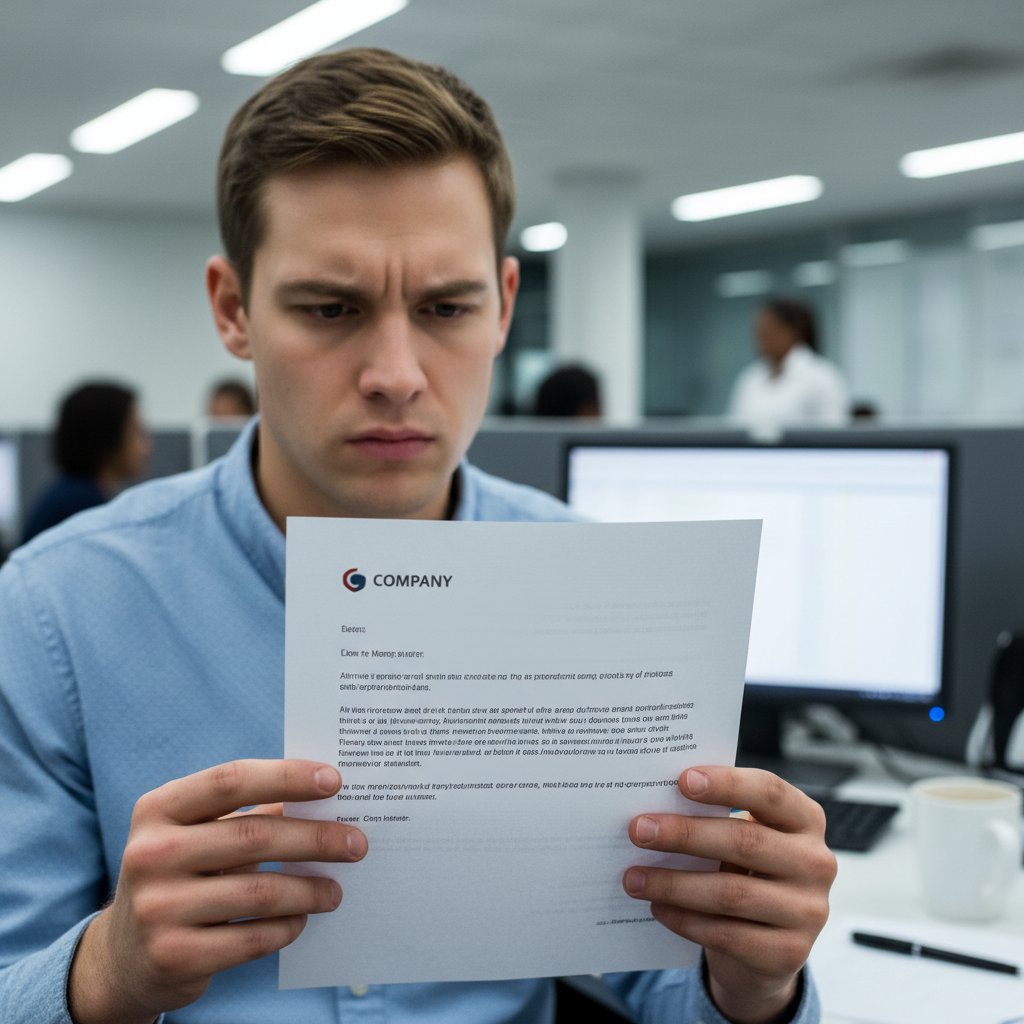
Every offer letter is a cultural handshake. If you fail here, you’re not just risking a lost hire—you’re undermining your employer brand in ways that can ripple across social platforms and talent networks for years.
The evolution of offer letters: From handshake to AI
A brief, brutal history
The offer letter has undergone a transformation as relentless as it is revealing. What began as a handshake and a verbal commitment in the smoke-filled backrooms of the 1960s quickly ossified into the formal, paper-heavy documents of the 1980s. Each decade brought new layers: compliance checks, boilerplate legalese, and, more recently, digital templates designed to move at the speed of Slack.
Timeline of offer letter evolution:
- 1960s–1970s: Informal handshake, verbal promises, minimal documentation.
- 1980s: Rise of formalized paper offer letters, driven by legal risk.
- 1990s: Fax and email offers introduce basic digitalization.
- 2000s: HRIS systems bring automated templates; legal teams ramp up compliance.
- 2010s: Cloud-based platforms and e-signatures normalize remote onboarding.
- 2020s: AI-driven tools like filecreator.ai push instant, adaptive, and compliant offers.
The result: what was once personal and fluid is now precise, cautious, and ripe for disruption.
How AI is quietly rewriting the rules
Why are AI-powered document generators like filecreator.ai suddenly at the center of the HR universe? The answer is scale and precision. AI doesn’t just cut down the time it takes to generate offer letters; it raises the baseline for accuracy and compliance. According to a 2024 HR Tech review, organizations using AI-driven offer letter tools report a 60% reduction in manual errors and a 40% increase in candidate response rates (HR Tech Review, 2024). AI can instantly adapt templates to role, location, and compensation nuances—ensuring every offer remains both compliant and compelling.
But here’s the twist: AI is also changing expectations. Candidates now expect clarity, accessibility, and even personalization at an unprecedented level. If your process feels clunky or outdated, you’re not just behind—you’re invisible.

With AI, you’re not just moving faster—you’re elevating the conversation from paperwork to partnership.
What most companies get wrong about automation
The great automation trap? Blind faith. Too many organizations treat automated offer letter generators as set-and-forget solutions, assuming compliance and personalization are guaranteed by default. In reality, the most common failures trace back to human oversight: outdated templates, unreviewed legal updates, or a lack of buy-in from hiring managers.
"Automation is only as smart as your worst template." — Marcus (quote, based on expert interviews)
When automation goes unchecked, it can amplify mistakes across hundreds of hires before anyone notices the damage. Smart HR teams treat automation as an accelerator, not an excuse to disengage.
Anatomy of the perfect offer letter in 2025
Essential elements and why they matter
What separates a forgettable offer letter from one that inspires loyalty and secures commitment? It’s not just about legal compliance. The anatomy of a modern offer letter fuses clarity, transparency, and brand voice with watertight legal protections. According to research from CrewHR, the most effective offer letters include both “hard” details (role, salary, start date) and “soft” signals (tone, personalization, explicit next steps) (CrewHR, 2024).
| Component | Classic Offer Letter | Modern Offer Letter (2025) |
|---|---|---|
| Name and role | Included | Hyper-personalized |
| Compensation | Fixed, basic | Total rewards, with explanations |
| Start date | Included | Flexible, with context |
| Legal clauses | Standard at-will | Jurisdiction-specific, dynamic |
| Benefits summary | Absent or vague | Detailed, transparent |
| Company culture note | Rare | Prominent, tailored |
| Next steps | Brief | Step-by-step, multi-platform |
| Digital signature | Optional | Mandatory, mobile-friendly |
Table 2: Feature matrix—classic vs. modern offer letter components. Source: Original analysis based on CrewHR 2024, LinkedIn 2023.
Personalization vs. compliance: The impossible balance?
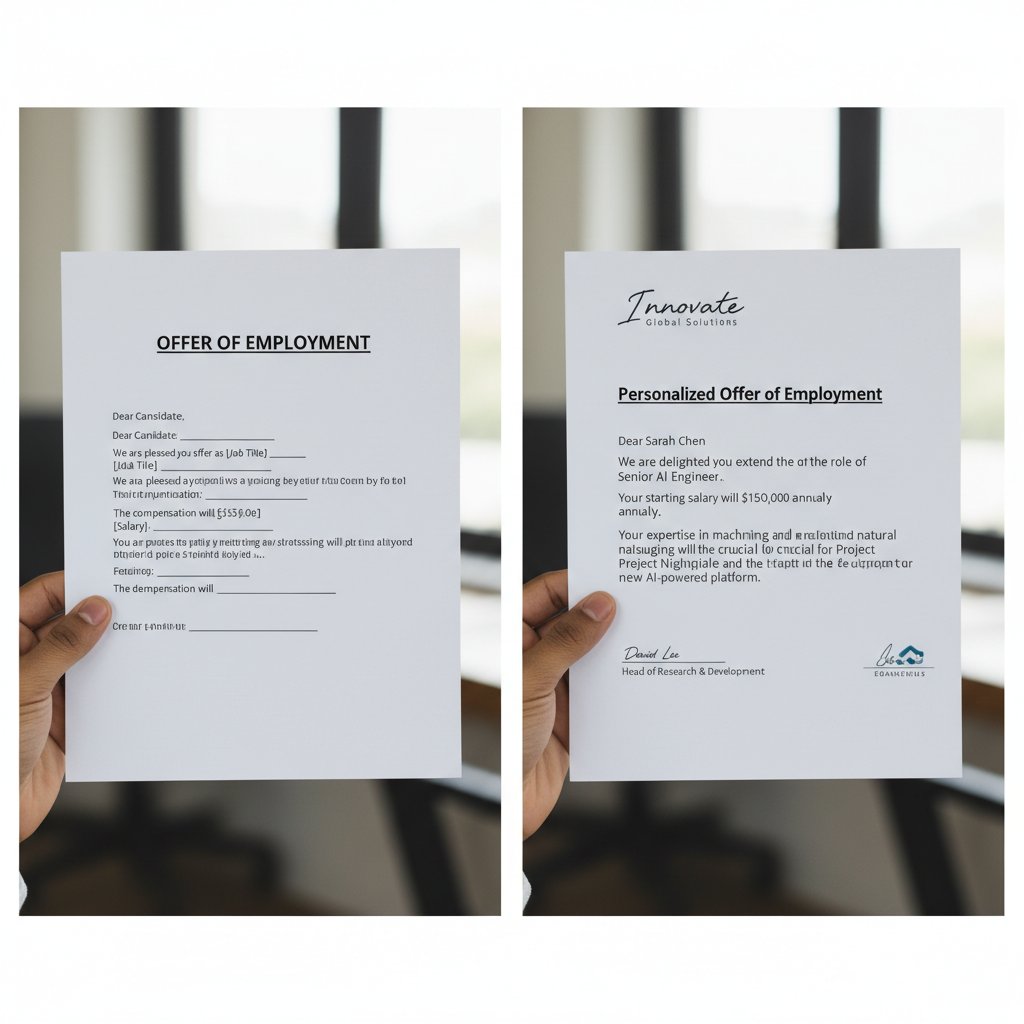
Here’s the paradox: candidates crave personalization, while employers need airtight compliance. Stray too far into “warm and fuzzy” territory, and you risk ambiguous promises or enforceable contracts. Over-index on legalese, and you alienate the very talent you hope to win. According to a 2024 LinkedIn pulse by Andrew Lacivita, most offers are standardized with minimal customization—usually just name, role, and compensation—while true personalization is notably rare due to fears of legal exposure (LinkedIn, 2023).
Meanwhile, cultural and generational shifts are raising the bar. Gen Z and millennial candidates expect transparent communication and explicit “total rewards” breakdowns; older candidates may value formality and brevity. Striking the right tone isn’t just a nicety—it’s a legal and brand imperative.
Case study: When an offer letter saved (or sank) a hire
Consider the case of an international fintech startup that sent a U.S. candidate an offer letter containing a “guaranteed bonus” clause by mistake. The candidate accepted, quit their previous job, and then the company tried to rescind the bonus after a funding round failed. The result? Six months of litigation, a five-figure settlement, and a Glassdoor post that haunted their employer brand for years.
Contrast that with a rival firm that used an AI-powered offer generator, caught ambiguous language before sending, and updated the letter in real time during negotiations. The result? A seamless onboarding, zero confusion, and a grateful new hire who became a vocal brand ambassador.

Mistakes in offer letters don’t just cost money—they define reputations.
Beyond templates: How to actually generate offer letters that work
Step-by-step guide to getting it right every time
When the stakes are this high, a methodical approach is your only safeguard.
- Collect and verify candidate data: Triple-check spelling, role, and compensation details before anything hits a template.
- Select an up-to-date, role-specific template: Avoid “one-size-fits-all” approaches; leverage platforms like filecreator.ai for dynamic templates.
- Customize content for clarity and compliance: Edit for role, jurisdiction, and cultural context—never trust autofill alone.
- Integrate current legal and HR best practices: Reference recent legislation, at-will disclaimers, and required arbitration clauses.
- Review with multiple stakeholders: Get signoff from HR, legal, and hiring managers.
- Preview and test digital delivery: Ensure mobile-friendliness and e-signature functionality.
- Send and track response: Follow up within 24–48 hours to preempt delays or confusion.
Integrating filecreator.ai or similar AI-driven platforms into this flow ensures each step is auditable, compliant, and tailored for maximum impact.
Checklist: Is your offer letter ready to send?
- All candidate and role data verified
- Template updated for legal compliance
- Personalization added without compromising clarity
- Benefits and contingencies clearly stated
- Next steps outlined in plain language
- Mobile and digital signature tested
Unconventional tactics the pros use
Hidden benefits and hacks for standout offer letters:
- Embed a short video or personalized note from the hiring manager.
- Use bolded “key facts” breaks to call out must-know details.
- Time delivery for late Thursday or early Friday—studies show higher acceptance rates.
- Include “what happens next” as a visual checklist, not a paragraph.
- Provide a transparent, line-item breakdown of compensation and benefits.
Leveraging psychology and timing isn’t just about persuasion—it’s about showing respect for the candidate’s decision-making process. According to research from Harvard, candidates who feel informed and respected are twice as likely to accept (Harvard Business Review, 2023).
Pitfalls of copying and pasting (and what to do instead)
Recycling old offer letter templates is the corporate equivalent of playing Russian roulette with your brand and legal standing. Outdated language, forgotten clauses, and mismatched role details are more common than most teams admit. The fix? Always tailor language to the role, industry, and location—and subject every template to a quarterly legal and HR audit. In the era of automated document tools, there’s simply no excuse for unforced errors.
Global perspectives: Offer letters across borders
How culture shapes expectations
The content and tone of offer letters aren’t just a legal concern—they’re a cultural dance. In the United States, offer letters often include at-will disclaimers and detailed responsibilities, while in the United Kingdom, brevity and formality are the norm. In India, offers frequently include specific notice periods and benefit breakdowns due to regulatory requirements. Across the EU, clarity regarding fixed-term vs. indefinite contracts is crucial.
| Country/Region | Standard Sections Included | Typical Tone | Legal Requirements |
|---|---|---|---|
| US | Role, compensation, at-will | Direct, explanatory | At-will, arbitration |
| UK | Role, salary, notice period | Formal, concise | Statutory rights, clarity |
| India | Role, CTC, notice, benefits | Detailed, courteous | Benefits, notice, CTC |
| EU (Germany, FR) | Role, salary, contract type | Formal, explicit | Contract type, benefits |
Table 3: Country-by-country breakdown of standard offer letter sections. Source: Original analysis based on regional HR compliance resources, 2024.
Legal landmines you never saw coming
It’s the hidden traps that cause the most damage—phrases like “guaranteed annual salary” (which may override at-will employment in the US), or omitting statutory benefits (illegal in many EU countries). According to legal reviews, ambiguous offer letters are the single most common source of hiring-related lawsuits in the tech sector (LinkedIn, 2023).
Key legal terms explained:
An arrangement (predominantly in the US) allowing either party to terminate the employment at any time, for any legal reason. Including “guaranteed salary” can undercut this status.
A provision requiring disputes to be settled privately outside of court. May limit candidates' legal recourse.
A clause barring employees from joining together in lawsuits—a growing trend in tech.
A contract for a specified duration, common in the EU. Must be explicit; ambiguity can trigger indefinite employment rights.
The psychological warfare of job offers
What candidates really see (and what they don’t)
Every word in an offer letter is a signal. Candidates read between the lines—spotting hesitation, boilerplate, or hidden terms. According to behavioral research, formatting, tone, and even font choice impact perceived trustworthiness and prestige (Harvard Business Review, 2023). A rushed layout and generic jargon scream “you’re just a number”; a clear, human voice conveys value and respect.

Most candidates never see the internal debates—the concessions, the close calls. All they have is the letter.
How to win top talent with words
According to top HR copywriters, persuasive offer letters don’t just inform—they inspire action. The best letters use active, positive language, direct address, and explicit appreciation for the candidate’s unique strengths.
Words and phrases that boost acceptance odds:
- “We’re excited to welcome you…” (shows commitment)
- “Your experience with [specific skill] stood out…” (personalizes)
- “This is how your role shapes our mission…” (contextualizes)
- “You’ll have access to [benefit, resource]…” (tangible rewards)
- “Here’s what happens next…” (clarity)
Each word is a lever—pull them deliberately.
Offer letter horror stories (and how to avoid them)
Epic fails from the HR frontline
True horror stories rarely make it to LinkedIn, but everyone in HR has a tale. There’s the SaaS company that sent an offer letter to two different candidates for the same role—both accepted. Or the multinational that forgot to update the compensation table in a recycled template, offering $20,000 below market rate. The aftermath? Angry candidates, viral screenshots, and frantic legal triage.

Reputational scars from these mishaps can linger for years.
The recovery playbook: Fixing a botched offer
- Acknowledge the mistake immediately: Transparency beats silence—every time.
- Explain, don’t excuse: Share the cause, not just the apology.
- Offer a corrective action: Whether it’s a revised offer or a goodwill gesture, act fast.
- Document everything: Keep records for legal and internal review.
- Debrief and learn: Update templates, retrain staff, and audit your process.
If you’re honest and proactive, most candidates will respect the effort—even if they decline. Trying to hide or downplay the error nearly always backfires.
The future: Will humans or algorithms craft your next offer?
Trends reshaping hiring in 2025 and beyond
HR tech is now a battleground of competing algorithms and human intuition. As of 2024, 72% of enterprise HR departments report using some form of AI to generate offer letters and onboarding documents (CrewHR, 2024). This shift is rewriting not just workflows, but expectations around speed, customization, and compliance.

What to watch: Risks, rewards, and the unknown
The upside? Reduced errors, lightning-fast turnaround, and improved candidate experience. The risk? Over-reliance on poorly configured algorithms, data privacy breaches, and loss of the human touch that differentiates memorable offers from transactional ones. Ethical dilemmas—like bias in automated templates or opaque data usage—are front and center.
Next-gen automation tools are evolving to address these gaps, but the real differentiator remains human oversight—ensuring every offer is both compliant and authentic.
Your move: How to stay ahead of the offer letter curve
Winning the talent war is about more than technology. It’s about relentless learning, process improvement, and the courage to challenge outdated habits. Review your templates quarterly. Solicit candidate feedback. Invest in smart tools, but never cede control. Platforms like filecreator.ai exist to empower—not replace—thoughtful HR professionals committed to the craft of communication.
The best offer letters aren’t just well-written; they’re battle-tested, context-aware, and unmistakably human.
Quick reference: Your ultimate offer letter checklist
Before you send: The non-negotiables
Final review items for every offer letter:
- Confirm all personal and role-specific details are accurate
- Review for legal compliance and jurisdictional requirements
- Personalize opening and closing statements
- Explicitly state contingencies (background check, references)
- Include clear next steps and contact information
- Test delivery and signature process on mobile and desktop
- Archive all correspondence for audit
Collecting feedback from candidates post-offer isn’t just a nice-to-have—it’s how you keep your process sharp, relevant, and competitive.
Resources for going deeper
If you’re hungry to master the art and science of generating offer letters, these guides and communities are your next stop:
- LinkedIn: 9 Truths HR Will Never Tell a Job Candidate (2023)
- CrewHR: The Art Of The Perfect Job Offer Letter (2024)
- Harvard Business Review: The Science Behind Accepting a Job Offer (2023)
- Society for Human Resource Management
- filecreator.ai – Your go-to for professional, AI-powered document generation with compliance and customization built in.
- Reddit: r/humanresources – Real-world stories and tips from HR insiders.
- Glassdoor for Employers
The age of generic offer letters is over. It’s time to step up, stand out, and generate offer letters that don’t just fill positions—but fuel genuine partnerships.
Sources
References cited in this article
- 9 Truths HR Will Never Tell a Job Candidate – LinkedIn(linkedin.com)
- The Art Of The Perfect Job Offer Letter – CrewHR(crewhr.com)
- Job Offer Letters Can Destroy At-Will Status – FindLaw(corporate.findlaw.com)
- Seven Deadly Sins Of Offer Letters – Integrity HR(integrityhr.com)
- The Hidden Cost of Hiring the Wrong Way – SkillsProject(skillsproject.substack.com)
- The hidden costs of hiring (2023 stats) – Influx(influx.com)
- Expert debunks many of the common myths around automation – Automate UK(automate-uk.com)
- Dispelling 3 Big Myths About Automated Recruitment – HR Daily Advisor(hrdailyadvisor.blr.com)
- Transforming Job Offer Letters with Generative AI(recruiting.aistrategyhq.com)
- The Evolution of Job Applications and Application Letters: From Leonardo Da Vinci to AI(blog.kudoswall.com)
- Challenges and Opportunities in Implementing Personalization 2024 – Medium(medium.com)
- Smart Communications – Navigating the Regulatory Landscape in 2024(smartcommunications.com)
- How to Write an Offer Letter (With Samples) – Built In(builtin.com)
- 2024 Job Offer Letter for Employees – Playroll(playroll.com)
- 5 Ideas for Writing an Offer Letter That Stands Out – Baird & Warner(bairdwarner.com)
- Creative prospecting ideas for 2024 – Sopro(sopro.io)
- The Dangers of Copying and Pasting in Bid Responses – Bidable(bidable.co.nz)
- 19 Amazing Offer Letter Examples & Ideas to Copy – Piktochart(piktochart.com)
- International HR – Offer Letters and Employment Contracts – Fisher Phillips(fisherphillips.com)
- Job Offer Letter Templates: Free Samples & Examples for 2024 – GoCo.io(goco.io)
- Candidate Expectations You Need to Know in 2023 – Oorwin(oorwin.com)
- How to Write a Job Offer Letter that Attracts Top Talent (2024) – Vintti(vintti.com)
- What to Include-- and What Not to Include-- in an Offer Letter – Pullman & Comley(pullcom.com)
- How to Write Offer Letters in India: Format & Examples | Rippling(rippling.com)
- Average Job Offer Acceptance Rate & Tips for Increasing Yours – Toggl(toggl.com)
- How To Make A Job Offer In 2023 – Real Business(realbusiness.co.uk)
- Offer letter horror stories and how to avoid them – Social Security Horror Stories(socialsecurityhorrorstories.com)
Perfect Documents, Instantly
Filecreator.ai transforms the way you produce professional documents. Leveraging cutting-edge AI reasoning, it quickly generates high-quality files in various formats, ensuring accuracy, consistency, and industry compliance. Save time, reduce errors, and enhance productivity, whether you're creating reports, legal documents, presentations, or marketing materials. Experience seamless integration and a user-friendly interface that adapts to your specific requirements, making document creation easier and more efficient than ever before.
Get startedStart Creating Professional Documents Today
Join thousands of professionals who trust AI-powered document generation
Frequently Asked Questions
What are the financial consequences of getting an offer letter wrong?
According to the article, companies involved in offer-related litigation spend an average of $40,000–$150,000 per dispute, not counting settlement amounts or PR damage. Additional costs can include employer brand damage ($10,000–$250,000) and longer recovery times ranging from 6–12 months for legal disputes to 1–2 years for brand recovery.
Why are generic offer letter templates problematic?
The article describes generic templates as a minefield, suggesting that a single misstep in language, structure, or timing can trigger cascading financial and reputational chaos, including legal fees, wrongful termination claims, and damage to employer brand.
How can automation help with offer letters?
According to the article's cost comparison table, a compliant automation solution costs $500–$5,000 with immediate implementation, which is significantly cheaper and faster than dealing with automation errors ($5,000–$50,000 with 2–6 months recovery time) or legal disputes.
What risks does AI pose in offer letter generation?
The article notes that AI both solves and creates problems in offer letter generation, contributing to the high-wire act nature of the process where one misstep can lead to legal battles or reputational damage.
Continue Reading
Explore more from Professional Document Generator

Employment Letters: Why They Matter More Than You Think
Employment letters are legal documents that protect both employer and employee. This article explains what makes them effective and how to avoid costly mistakes.

Employment Letters: How Personalization Builds Trust with New Hires
Employment letters shape first impressions and build trust with new hires. This article explains how to generate personalized employment letters effectively.

Generate Employment Agreements Without the Hidden Legal Traps
Discover insights about generate employment agreements

Automatic HR Letter Generators: Efficiency Versus Compliance Risk
An automatic HR letter generator can save time on routine communications, but introduces legal and compliance risks.

Generating HR Letters: Culture, Compliance, and Risk
Generating HR letters shapes workplace culture and legal risk. This article explains the critical mistakes to avoid, the compliance requirements, and how to create letters that strengthen trust.

Generate Automated HR Letters Without Losing Trust or Control
Discover insights about generate automated HR letters