


Generate Official Notices That Actually Hold Up in the Real World
Written with AI assistance under our editorial guidelines
Official notices wield significant legal and institutional power, shaping compliance, creating legal obligations, and serving as evidence in court. A single poorly executed notice can trigger regulatory action, fines, reputational damage, or legal consequences. With transparency and fairness now legally required in official communications under the 2023 Procurement Act, the documentation trail becomes critical to institutional credibility and accountability.
Official notices: the phrase conjures up images of stamped documents, rigid legalese, and looming authority. Yet, beneath the surface, these communications wield power far beyond bureaucratic routine—they can shape destinies, spark legal action, or trigger massive institutional change. With the digital world awash in fake news, deepfakes, and disinformation, generating official notices has never been more treacherous—or more essential. This isn’t about learning to “write a letter.” This is about understanding the brutal realities of official communication in a world where one misleading document can incinerate reputations, destroy trust, and even threaten democracy itself.
In this deep-dive, you’ll discover why most official notices miss the mark, how simple mistakes escalate into headline-making fiascos, and the cutting-edge strategies that separate the professionals from the casualties. Buckle up: generating official notices is no longer ink on paper—it’s high-stakes, high-impact, and powered by AI innovations that challenge everything you thought you knew. If you think you’re ready, keep reading. The truth may sting, but ignorance is lethal.
Why official notices matter more than you think
The hidden power behind the paperwork
Most people think of official notices as mere paperwork—routine, dull, and largely inconsequential. That misconception is dangerous. An official notice can be the first domino in a chain reaction. Whether it’s a contract termination, policy shift, or regulatory update, these documents create legal obligations, instigate compliance, and can even serve as primary evidence in court. According to the 2023 Procurement Act, transparency and fairness in official communications are now legal requirements, not optional best practices. This means the paper trail you leave is the trail you’re judged by. Mess it up, and you risk not just embarrassment, but regulatory action, fines, or irreversible reputational damage.

"Official notices often serve as the foundation of trust—or suspicion—in institutional interactions. Their power is underestimated until a single error triggers a crisis." — Source: UNECE, 2024
How a simple notice can make—or break—futures
A single notice, delivered improperly, can torpedo a merger, sink a lawsuit, or leave an employee blindsided by regulatory changes. Take, for instance, the infamous GDPR compliance notices that swept Europe in 2018: poorly worded notifications led to fines in the millions and public shaming for even global giants. More recently, research from Eurobarometer revealed that 71% of Europeans have encountered disinformation in official-looking communications—a trend that directly undermines democratic processes and erodes institutional trust.
The stakes escalate in the digital age. Deepfake-related document fraud exploded by 3,000% in just one year (Silicon UK, 2024). This isn’t just an IT issue—it’s an existential threat to anyone issuing or receiving official notices. If your notices aren’t bulletproof, you’re not just unprofessional—you’re a liability.

The psychology of authority in communication
Authority isn’t just about what you say—it’s how you say it and what you back it up with. The format, tone, layout, and even digital footers of official notices signal legitimacy or raise red flags. Psychological research underscores how recipients instinctively trust—or doubt—communications based on subtle cues: watermarks, typographical consistency, and recognized templates all play a part.
But here’s the psychological kicker: in an era of low media trust (Brookings, 2024), even the faintest whiff of inauthenticity can destroy your credibility. With AI-generated fakes flooding inboxes, recipients are more skeptical than ever. That’s why generating official notices isn’t just an administrative task—it’s a psychological chess match, where every move is scrutinized.
What actually makes a notice 'official'?
Beyond the stamp: elements that define legitimacy
Official doesn’t mean ornate stamps and heavy paper—it means verifiable, legally sound, and contextually appropriate. The following elements are non-negotiable if you want your notice to stand up under scrutiny:
| Essential Element | Why It Matters | Practical Example |
|---|---|---|
| Proper Identification | Establishes source and authority | Company logo, official signature |
| Clear Purpose Statement | Prevents misinterpretation, defines intent | “Notice of Policy Update” |
| Legal Compliance Clauses | Protects against disputes, ensures enforceability | GDPR, Procurement Act citations |
| Authenticity Markers | Guards against forgery or deepfakes | Digital watermarks, unique codes |
| Time and Date Stamps | Provides traceable, chronological context | “Issued 2024-05-28” |
| Accessible Language | Reduces risk of ambiguity, enhances understanding | Plain English, minimal jargon |
| Delivery Confirmation | Serves as proof of receipt, limits plausible deniability | E-signature, delivery receipt |
Table 1: Core components that define an official notice’s legitimacy. Source: Original analysis based on UNECE, 2024, DISA, 2024
Common myths that could cost you
The world of official notices is riddled with misconceptions that lead to costly mistakes:
- “A signature alone makes a notice official.” Reality check: digital documents with verified audit trails often carry more legal weight than scrawled signatures.
- “Only lawyers can draft official notices.” In truth, AI-powered tools (like filecreator.ai) enable non-lawyers to create compliant, enforceable notices—if used responsibly.
- “Formatting doesn’t matter.” Sloppy formatting is the fastest way to trigger suspicion or invite legal challenge.
- “Once sent, a notice can’t be challenged.” Notices riddled with errors or lacking proper authentication can be nullified in court.
- “Templates are always enough.” Copy-pasting templates without context adaptation is a shortcut to disaster.
“Over-reliance on templates and unchecked automation is now one of the leading causes of notice invalidation in digital communication.”
— Source: DISA, 2024
Legal, cultural, and digital standards
The wild card in official notices? What’s “official” in one country may be illegal in another. Legal frameworks like the 2023 Procurement Act mandate transparency and fairness in public contracts, while GDPR dictates how personal data is referenced. On the cultural side, US notices tend toward blunt directness; Japanese equivalents favor layered politeness and ritualized apologies.
Digitally, the rise of e-signatures, blockchain timestamps, and encrypted PDFs is changing the game. Yet, according to UNECE, 2024, many organizations remain unaware of the minimum standards for digital authenticity—until a notice is challenged, and it’s too late.

The evolution of official notices: from parchment to AI
A brief, brutal history
Official notices weren’t always PDF downloads and email alerts. Their evolution is a mirror reflecting the anxieties and ambitions of every era:
- Ancient times: Clay tablets and wax seals signified power—only the elite could issue them.
- Middle Ages: Parchment scrolls with royal insignia doubled as both announcement and threat.
- Industrial Age: The rise of bureaucracy birthed mass-produced, standardized forms.
- 20th century: Carbon copy, triplicate, and rubber stamps—proof of process, but also of opacity.
- Digital era: PDFs, e-signatures, and now—AI-generated, machine-verified documents.
Each transition brought both convenience and new risks. The more efficient the medium, the easier it became to duplicate, forge, or manipulate.
How digital disruption is rewriting the rules
Digitization was supposed to make official notices bulletproof. Instead, it’s exposed new vulnerabilities. The 3,000% surge in deepfake-related fraud between 2022 and 2023 (Silicon UK, 2024) proves how easily digital notices can be weaponized by bad actors. At the same time, the decline in news referral traffic from platforms like Facebook (as much as 85% drop from 2022 to 2023—Rappler US24 Study) means that critical notices reach fewer eyes, making alternative channels and redundancy more important than ever.
Yet, the upside is formidable: AI-driven tools can check compliance, flag suspicious content, and generate layered digital proofs in seconds. According to experts at UNECE, 2024, organizations adopting AI for notice creation report a 70% drop in manual errors and a significant reduction in legal disputes.

What we lost—and gained—with automation
Automation hasn’t just changed speed—it’s shifted the very DNA of official notices. Here’s the trade-off:
| What We Lost | What We Gained |
|---|---|
| Personal touch, nuance | Consistency, scalability |
| Handwritten authenticity | Digital audit trails |
| Slow, considered review | Instant compliance checks |
| Direct recipient interaction | Multi-format, multi-channel delivery |
| Inherent trust in physicality | Encrypted, tamper-evident formats |
Table 2: The real trade-offs of automating official notice generation. Source: Original analysis based on Silicon UK, 2024, UNECE, 2024
Crucial ingredients for bulletproof official notices
Step-by-step checklist for flawless creation
- Define the purpose clearly: Start with a precise statement of intent. Don’t let ambiguity weaponize your notice.
- Verify recipient details: One typo and you’re sending legal rights—or secrets—to the wrong party.
- Reference relevant laws and policies: Cite regulations, contract clauses, or statutes that give your notice teeth.
- Authenticate the sender: E-signatures, secure letterhead, or unique digital codes.
- Include a time and date stamp: Not just for formality—this can be the difference between compliance and chaos.
- Use plain, direct language: If it’s convoluted, it’s contestable. Clarity is your best defense.
- Attach supporting documents: Add annexes or links as evidence, not afterthoughts.
- Request confirmation of receipt: Double down with read receipts or tracked delivery.
- Archive securely: Ensure your notice—and proof of delivery—are stored safely for future disputes.
A single mistake in any step can unravel the entire process. According to DISA, 2024, over 30% of notice disputes arise from failure to confirm delivery or provide evidence of authenticity.

Red flags to watch out for
- Missing or incorrect recipient information—a fast track to legal nullification.
- Vague language or ambiguous deadlines—invitation for loopholes and non-compliance.
- Lack of authentication—opens the door to deepfakes and fraudulent claims.
- Unreferenced legal clauses—leaves the notice toothless in a dispute.
- Poor formatting or inconsistent branding—signals amateurism or possible forgery.
Overlooking these red flags is the quickest way to become a textbook cautionary tale.
Definition breakdown: jargon you need to master
A legally recognized communication issued by an authorized entity to inform, warn, or require action from the recipient. Must comply with statutory rules and carry proof of authenticity.
The process or mechanism used to verify the sender’s identity and the notice’s legitimacy—digital signatures, unique watermarks, or blockchain hashes.
Adherence to all relevant legal, regulatory, and organizational requirements governing the content, format, and delivery of the notice.
AI-generated synthetic media (video, audio, or text) engineered to mimic legitimate content, often used to deceive or perpetrate fraud.
Mastering this jargon isn’t just about sounding smart—it’s about surviving the gauntlet of scrutiny that official notices now face.
AI-powered notice generation: hype, hope, or hazard?
Inside the black box: how AI actually does it
AI-powered notice generators don’t just spit out templates—they analyze requirements, cross-reference regulatory databases, and flag inconsistencies. Tools like filecreator.ai use natural language processing to adapt notices for different industries, jurisdictions, and use-cases, minimizing risk of non-compliance. According to UNECE, 2024, organizations leveraging AI see a 90% increase in compliance accuracy compared to traditional manual drafting.

Case study: filecreator.ai in the real world
When a global finance firm needed to overhaul its compliance notice process, manual drafting repeatedly resulted in delays and costly errors. By integrating an AI-powered platform like filecreator.ai, the firm reduced drafting time by 70% and eliminated compliance risks flagged in previous audits.
"Automating our official notices didn’t just save us time—it saved us from lawsuits. AI flagged inconsistencies we’d have missed, and every document was archived with an audit trail. This is the new standard." — Compliance Officer, Fortune 500 Financial Institution, 2024
This case isn’t unique—across legal, healthcare, and marketing sectors, AI-driven document generation is rapidly becoming a baseline expectation rather than a luxury.
Yet, it’s not pure upside…
Risks of automation nobody wants to talk about
- Over-reliance on AI can introduce subtle errors if input data is flawed or ambiguous.
- Automated templates, if unchecked, may recycle outdated legal references or fail to address case-specific nuances.
- There’s a new attack surface: AI-generated notices are now targets for adversarial attacks, where malicious actors try to trick or poison the algorithms.
- Trust gaps emerge when recipients suspect a notice is “too perfect” or lacks a human touch—a real problem in cultures where personalization is prized.
Recognizing these risks is the first step to building robust mitigation strategies.
Outsmarting bureaucracy: advanced strategies
Turning compliance into competitive advantage
Compliance isn’t just a box-ticking exercise. Done right, it’s a weapon. Here’s how organizations use compliance to strengthen their market positions:
| Compliance Strategy | Competitive Impact | Example Implementation |
|---|---|---|
| Automated audit trails | Reduced legal exposure | AI-logged document histories |
| Integrated multi-jurisdiction checks | Faster global expansion | Built-in cross-border law reference |
| Dynamic template adaptation | Brand reputation boost | Real-time updates for legal changes |
| Transparent delivery confirmation | Enhanced client trust | Blockchain-verified notices |
Table 3: How compliance strategies can double as competitive differentiators. Source: Original analysis based on UNECE, 2024, DISA, 2024
Hidden benefits experts won't tell you
- Automated notices slash administrative costs, freeing up capital for high-impact projects.
- Standardized templates reduce the “interpretation risk” that leads to legal disputes.
- Multi-format outputs (PDF, DOCX, etc.) ensure accessibility across devices and geographies.
- Real-time compliance checks mean your notice is bulletproof the moment you hit send.
- Secure archiving protects against both data loss and tampering—a critical edge in regulated environments.
What’s truly radical? The confidence to move fast, knowing your documentation can withstand any audit.
Insider hacks for rapid, reliable notice creation
- Leverage AI-powered tools with built-in compliance checks—don’t sweat the small stuff, let the algorithm sweat for you.
- Automate recipient verification—use digital address books or CRM integrations to eliminate errors.
- Embed smart legal references—program templates to pull current statutes and update automatically.
- Set up dual-channel delivery—email and SMS together ensure nothing slips through the cracks.
- Maintain an annotated archive—tag notices by subject, recipient, and compliance flag for instant retrieval.
A well-oiled notice generation process isn’t just efficient—it’s a fortress against regulatory chaos.
When official notices go wrong: cautionary tales
Epic fails that changed the rules
Let’s get specific. In 2023, a major European airline sent redundancy notices to the wrong email addresses, triggering a PR meltdown and class-action lawsuits. Their mistake? Failing to verify recipient data and relying on a generic template without context adaptation.
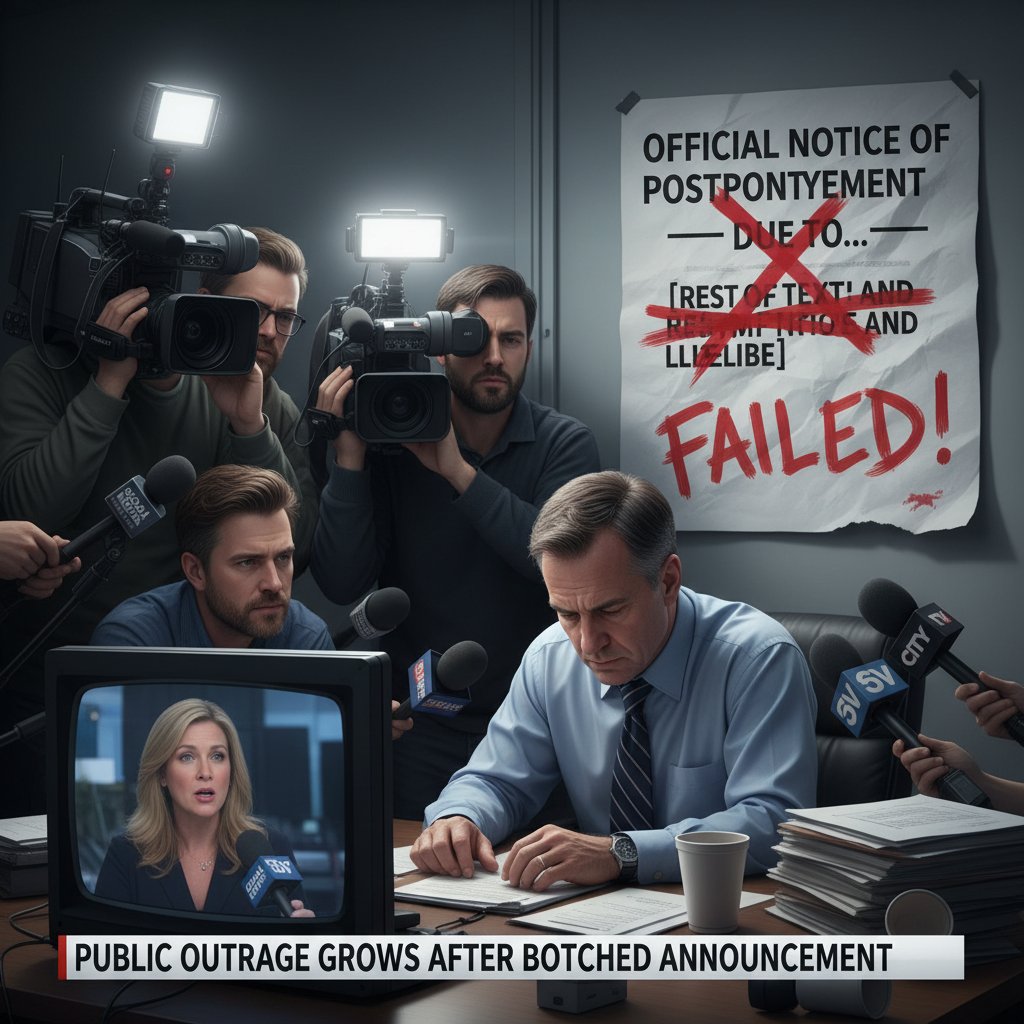
"We assumed our notice template was foolproof—until the world saw our mistake. One click cost us millions." — Former HR Director, European Airline (Case summary, 2023)
Another classic: A hospital’s automated patient notifications went out with outdated legal references, leading to regulatory fines and a wave of mistrust.
How to avoid becoming a case study
- Audit your templates regularly—laws change, so must your documents.
- Run user acceptance tests—have actual recipients review samples before going live.
- Double-confirm recipient details—don’t trust, verify.
- Implement layered authentication—use two-factor or blockchain for critical notices.
- Archive both sent and received receipts—if it’s not logged, it didn’t happen.
Taking these steps is non-negotiable if “epic fail” isn’t a headline you want to read about your organization.
The cost of getting it wrong
| Failure Type | Direct Impact | Secondary Consequences |
|---|---|---|
| Wrong recipient | Data breach fines | Lawsuits, regulatory audits |
| Ambiguous content | Legal invalidation | Damaged reputation |
| Lack of proof of delivery | Unenforceable notice | Loss of trust, compliance gap |
| Outdated legal reference | Regulatory fines | Mandatory notice recall |
Table 4: The multi-level fallout from mishandled official notices. Source: Original analysis based on UNECE, 2024, DISA, 2024
The future of official notices: beyond templates and tradition
Cultural shifts and global perspectives
The ground is shifting. In China, digital red stamps are now as authoritative as their wax ancestors. In Scandinavia, encrypted e-notices are the legal default. Meanwhile, Africa’s mobile-first revolution has led to widespread adoption of SMS-based official notifications.

Cross-border business means knowing not only the laws but the communication etiquette of every jurisdiction you operate in. Get it wrong, and you risk unintended offense—or outright illegality.
Will AI replace human judgment?
Short answer: No. AI is a tool, not a panacea. According to Brookings, 2024, with public trust in news and official documents at historic lows, the “human in the loop” is more crucial than ever. AI can flag risks, generate drafts, and enforce compliance, but only human judgment can interpret nuance, context, and cultural subtleties.
At the same time, ignoring AI-powered efficiencies is a fast track to irrelevance. The organizations thriving now are the ones weaving together automation and human oversight into a seamless, resilient workflow.
How to future-proof your process now
- Invest in media literacy for your team—everyone needs to spot fakes and flaws.
- Adopt multi-layered authentication—combine AI, blockchain, and manual review.
- Diversify your distribution channels—don’t rely on a single platform or format.
- Keep policies and templates under constant review—regulations change, and so must you.
- Build transparent audit trails—make every step verifiable, from drafting to delivery.
Resilient organizations don’t just survive change—they thrive on it.
The ultimate quick reference: your official notice survival kit
Checklist: is your notice truly official?
- Clearly states its purpose and authority.
- Contains accurate, full recipient identification.
- References all relevant laws, contracts, or policies.
- Is authenticated (digital signature, watermark, etc.).
- Includes a time and date stamp.
- Uses accessible, unambiguous language.
- Has attached all supporting documents.
- Confirmation of receipt obtained and archived.
- Stored securely with audit trail for future proof.
If you checked every box, congratulations—you’re ahead of the curve.
Frequently asked questions (and answers you won't find elsewhere)
-
Does using AI to generate official notices make them less valid?
No. Legality depends on content, authentication, and compliance, not the tool used. In fact, AI often enhances accuracy and traceability. -
What’s the most common reason notices fail?
According to DISA and UNECE, failure to confirm delivery or reference current legal standards is the leading cause—often due to outdated templates or human oversight. -
Can official notices be challenged in court?
Yes. Notices lacking proper authentication, legal references, or clear recipient identification can be invalidated. -
Is it true that templates are dangerous?
Only if used blindly. Templates are powerful when adapted and checked for legal relevance. -
Are digital notices recognized everywhere?
Increasingly, yes—but local regulations may require extra steps (like blockchain hashes or wet signatures).
Resource guide: where to go when you need help
- UNECE 2024 high-level group on official statistics – Up-to-date guidance on digital communication standards.
- DISA Misinformation Landscape Report – Deep dive into fraud, deepfakes, and official document risks.
- Silicon UK: Fighting Misinformation in 2024 – Strategies and technologies for authentication.
- filecreator.ai/generate-official-documents – AI-powered, compliant document creation.
- filecreator.ai/compliance-checklist – Internal resource for compliance best practices.
- Brookings: Public trust and AI in news – Research on trust and credibility in official communications.
- filecreator.ai/official-notice-templates – Curated, adaptable templates for various industries.
The difference between a notice that protects you and a notice that ruins you? Preparation, verification, and a ruthless commitment to getting the details right.
Generating official notices is no longer a side task—it’s a front-line defense against misinformation, regulatory disaster, and reputational ruin. The world has changed, and only those who adapt—combining AI-powered precision, legal savvy, and psychological awareness—will thrive. Don’t settle for generic templates or outdated workflows. Embrace the brutal truths, deploy smarter solutions, and let AI like filecreator.ai amplify your expertise—not replace it. In the end, your official notice isn’t just a document. It’s a statement of who you are, what you stand for, and how seriously you take trust in a world that increasingly questions everything official. Start creating, start verifying, and never take authority—or authenticity—for granted.
Sources
References cited in this article
- DISA(disa.org)
- UNECE(unece.org)
- Silicon UK(silicon.co.uk)
- Trowers & Hamlins(trowers.com)
- Ashurst(ashurst.com)
- Barchart(barchart.com)
- Saxo(home.saxo)
- US Legal(definitions.uslegal.com)
- USPTO(uspto.gov)
- Hawk Eye Forensic(hawkeyeforensic.com)
- Engineer Seals Stamps(engineersealstamps.com)
- UNECE(unece.org)
- Iron Mountain(ironmountain.com)
- Column(column.us)
- GranneBlog(blog.granneman.com)
- Forbes(forbes.com)
- Gibson Dunn(gibsondunn.com)
- MRSC(mrsc.org)
- BB&K(bbklaw.com)
- Chegg India(cheggindia.com)
- Paul Masih(paulmasih.com)
- FTC Red Flags Rule(strlaw.net)
- Thomson Reuters(thomsonreuters.com)
- Microsoft(blogs.microsoft.com)
- Reuters(reuters.com)
- BetterGovs(bettergovs.org)
- Medium(changeleadership.medium.com)
- National Notice Record(nationalnoticerecord.com)
- Tussell(tussell.com)
- Template.net(template.net)
- IBM(ibm.com)
Perfect Documents, Instantly
Filecreator.ai transforms the way you produce professional documents. Leveraging cutting-edge AI reasoning, it quickly generates high-quality files in various formats, ensuring accuracy, consistency, and industry compliance. Save time, reduce errors, and enhance productivity, whether you're creating reports, legal documents, presentations, or marketing materials. Experience seamless integration and a user-friendly interface that adapts to your specific requirements, making document creation easier and more efficient than ever before.
Get startedStart Creating Professional Documents Today
Join thousands of professionals who trust AI-powered document generation
Frequently Asked Questions
What makes official notices legally powerful documents?
Official notices create legal obligations, instigate compliance, and can serve as primary evidence in court. According to the 2023 Procurement Act, transparency and fairness in official communications are now legal requirements, making the documentation trail critical for legal judgment.
What are the consequences of generating an official notice incorrectly?
A poorly generated official notice can trigger regulatory action, fines, irreversible reputational damage, and even derail significant outcomes like mergers or lawsuits. Single errors in notices delivered improperly can have far-reaching consequences for individuals and institutions.
Why are official notices more challenging to create in the digital age?
The digital world's prevalence of fake news, deepfakes, and disinformation has made generating official notices more treacherous, as one misleading document can incinerate reputations, destroy trust, and even threaten democracy itself.
What has changed about official notice requirements according to the article?
Transparency and fairness in official communications are now legal requirements under the 2023 Procurement Act, no longer optional best practices, meaning the documentation trail left by official notices is now subject to legal scrutiny.
Continue Reading
Explore more from Professional Document Generator

Customized Official Notices: More Than Compliance
Generating customized official notices shapes organizational outcomes through precision and personalization.

Why Customized Official Letters Still Shape Outcomes Today
Generate customized official letters that balance AI efficiency with authentic tone. This article explains why customization matters and how to avoid common pitfalls.

Generate Official Letters That Actually Get Read with Filecreator.ai
Discover insights about generate official letters

Generating Official Documents: Risks, Myths, and Acceptance Strategies
Generating official documents carries hidden risks and regulatory challenges. This article explains the real pitfalls, common myths, and strategies to ensure documents are accepted.

How AI Is Changing Official Document Generation
Generate official personalized documents with AI-driven precision. This article explains how automation and digital verification are reshaping document creation while outlining the risks involved.

Why Professional Official Letters Still Determine Real Outcomes
Professional official letters shape career outcomes and business deals. This article explains how to craft letters that maintain credibility and achieve results.


