
Generate Customized Automated Letters Online Without Backfiring
Written with AI assistance under our editorial guidelines
While automated letter generators save significant time and reduce errors compared to manual writing, they risk sounding impersonal or robotic. The key is customizing AI-generated letters by adding specific details, unique phrasing, and personal touches that reflect your voice and genuine intent, ensuring recipients feel addressed as individuals rather than contacts on a list.
The promise is irresistible: generate customized automated letters online within seconds, sidestepping hours of tedious drafting and the risk of embarrassing errors. But behind the glossy interface and instant gratification, there's a more tangled reality—one riddled with hidden costs, psychological nuance, and the ever-present risk of coming off as a corporate automaton. This article strips the varnish from automation’s surface and dives deep into the machinery of AI-powered letter generators. If you’re ready to outsmart the system, sharpen your perspective, and wield the tools of 2025 with precision, keep reading. We’ll uncover the secrets, pitfalls, and surprising truths of automated communication, all while showing you how to leverage platforms like filecreator.ai for genuinely professional results.
Why automated letters matter more than you think
The hidden costs of manual letter writing
Manual letter writing might seem quaint or even noble in an era obsessed with digital transformation. But make no mistake: it’s a productivity sinkhole. According to recent studies, businesses spend an average of four to six hours per week per employee crafting, formatting, and double-checking routine correspondence [Source: Original analysis based on Chatsimple AI Letter Generator, 2024]. Multiply that by dozens of employees and the costs—both visible and hidden—become painfully clear.
Errors creep in when fatigue sets in. Typos, wrong names, outdated templates—they’re more than embarrassing; they can be catastrophic for brand trust. Staff stress spikes as deadlines loom, and consistency in messaging becomes a pipe dream. In a competitive world, manual processes are like running a marathon in ankle weights.

| Creation Method | Avg. Time per Letter | Cost per Letter | Error Rate | Scalability |
|---|---|---|---|---|
| Manual | 20-40 min | $8-20 | 8-12% | Low |
| Automated Template | 2-5 min | $1-3 | 2-4% | Medium |
| AI-Powered Generator | <1 min | <$1 | 1-2% | High |
Table 1: Manual vs automated letter creation: Time, cost, and reliability
Source: Original analysis based on Chatsimple AI Letter Generator, 2024, Typli AI Letter Writer, 2024, HireQuotient, 2024
When personalization goes wrong (and right)
If you’ve ever received a letter addressed to <FIRST_NAME>, you know how automation can backfire. The cringe of seeing your name butchered or the wrong product referenced is more than a minor slip—it’s a fast track to lost trust. According to experts, the difference between stellar and disastrous personalization comes down to input quality and review. Platforms like filecreator.ai stress that the detail and specificity of your input directly determine the output’s nuance and credibility.
"One wrong name and you lose trust instantly." — Jamie, Customer Experience Lead
Yet, when done right, personalization can turn a generic outreach into a memorable, even emotional connection. Subtle cues—referencing a recent interaction, mirroring a customer’s tone, acknowledging their history—signal genuine care and attention, which no template alone can replicate.
The psychology of receiving a letter in 2025
Digital fatigue is real, and most inboxes are war zones of noise. Paradoxically, a well-crafted letter—whether digital or physical—cuts through the clutter. Psychological research shows that personalized, considered communication has a disproportionate emotional impact in an era dominated by generic blasts [Source: Original analysis based on HireQuotient, 2024].
The act of receiving a letter, especially one that feels crafted rather than churned out, triggers a sense of importance and recognition. It’s not nostalgia; it’s neurological. When a recipient pauses to absorb a message that stands out, your conversion rate spikes, and your brand earns a rare slice of attention.

The evolution of automated letters: from mail merge to AI
A brief (and brutal) history
Automated letters weren’t always sophisticated. The journey began in the 1980s with clunky mail merges—primitive by today’s standards, but revolutionary for their time. They allowed for bulk communications with basic personalization.
Here’s how the evolution unfolded:
- 1983: Microsoft Word introduces mail merge for mass mailings.
- 1990s: CRM integration enables slightly more targeted campaigns.
- 2005: SaaS platforms start offering template-based letter automation.
- 2010: Cloud-based APIs allow for conditional logic in templates.
- 2017: AI-driven platforms emerge, leveraging NLP for smarter content generation.
- 2022: Integration with real-time data (CRMs, ERPs) achieves dynamic, contextual messaging.
- 2024: Tools like filecreator.ai and others fuse advanced AI reasoning with industry-specific compliance.
Each leap brought greater efficiency, but also introduced new pitfalls and dependencies.
How AI has rewritten the rules
The leap from static templates to generative AI is more than a step change—it’s a paradigm shift. While templates force users into rigid frameworks, AI-powered generators ingest nuanced input and output contextually relevant, human-like letters. Customization is no longer about simply changing names and dates; it’s about capturing tone, intent, and even subtext [Source: Original analysis based on Postalytics, 2024].
| Feature | Legacy Mail Merge | Template-Based Tools | AI-Powered Platforms |
|---|---|---|---|
| Personalization Depth | Basic (name, address) | Moderate (fields, tokens) | Advanced (tone, context, dynamic data) |
| Logic/Conditional Rules | None | Basic | Complex, data-driven |
| Integration with CRM | Rare | Occasional | Native, real-time |
| Tone & Style Flexibility | Rigid | Limited | High |
| Error Handling | Manual | Limited | Automated, learning |
| Compliance Features | None | Manual | Automated, updatable |
Table 2: Feature matrix: Evolution of letter automation tools
Source: Original analysis based on Postalytics, 2024, Typli AI Letter Writer, 2024
Why most people still get it wrong
Despite the leaps in tech, most automated letters still miss the mark. The usual suspects? Relying solely on out-of-the-box templates, neglecting input specificity, and over-automating to the point of sounding tone-deaf. Without human oversight, automation can devolve into a PR liability.
- Blindly trusting generic templates with zero customization
- Skipping manual review before hitting send
- Ignoring the recipient’s context or recent history
- Failing to update templates as offers change
- Overusing placeholders, leading to awkward phrasing
- Underestimating the importance of tone
- Automating high-stakes messages without approval
Inside the technology: how automated letter generators work
Dynamic templates vs. true AI customization
Not all automation is created equal. Many platforms still rely on dynamic templates—essentially fill-in-the-blank structures where you insert names or dates. While efficient, these templates can result in robotic, lifeless communication if not carefully curated.
Generative AI, in contrast, absorbs context, preferences, and historical data to produce content that reflects a deeper understanding of the recipient. Customization tokens enable automated insertion of specific values, but AI can interpret, infer, and adapt.
A preset document structure with variable fields (like [Name] or [Date])—quick, but often generic.
An intelligent system that analyzes context, tone, and intent, producing unique, human-sounding content.
A placeholder replaced with user-specific data; powerful, but only as smart as your input allows.
The anatomy of a professional document generator
Behind the slick UI of tools like filecreator.ai lies a complex backend engine. First, the system ingests user input—either manually entered details or data pulled from integrated CRMs. Next, AI logic applies context, tone guidelines, and compliance rules. Finally, the output module formats the content for delivery—PDF, DOCX, or direct email—ensuring consistency and professionalism.

The best generators don’t just automate; they orchestrate. They manage version control, allow for collaborative editing, and support regulatory compliance—all without sacrificing speed.
Data privacy and security: what users need to know
With great automation comes great responsibility. Cloud-based letter generators handle sensitive personal and business data. If you’re not thinking about encryption, GDPR compliance, and access controls, you’re playing with fire. Industry leaders encrypt data both in transit and at rest, offer audit logs, and undergo regular security assessments [Source: Original analysis based on Typli AI Letter Writer, 2024].
"Privacy isn’t a feature—it’s a necessity." — Ava, Data Security Consultant
Choose platforms that put privacy at the core, not as an afterthought. Transparency reports, penetration testing, and documented compliance frameworks should be non-negotiable.
The business case: why companies are switching to automation
ROI: the numbers that matter
Let’s talk numbers. Companies that adopt automated letter generators slash document creation time by up to 90% and reduce error rates by more than 60% according to recent industry surveys [Source: Original analysis based on Chatsimple AI Letter Generator, 2024]. The kicker? Consistency in messaging leads directly to higher customer satisfaction and retention rates.
| Metric | Before Automation | After Automation | Change |
|---|---|---|---|
| Avg. Time per Letter | 30 min | 2 min | -93% |
| Error Rate | 10% | 2% | -80% |
| Customer Satisfaction | 72% | 89% | +17 pts |
| Compliance Incidents | 8/mo | 1/mo | -88% |
| Annual Cost (1000 letters) | $20,000 | $2,000 | -90% |
Table 3: ROI of automated letter generation in enterprises
Source: Original analysis based on Chatsimple AI Letter Generator, 2024, HireQuotient, 2024
Real-world case study: disaster averted
When a major retailer faced a product recall, their manual process proved too slow. In previous years, delays led to customer outrage and social media backlash. This time, armed with an automated letter generator, they produced thousands of personalized apology letters within hours. The result? Minimal fallout, and a wave of positive customer feedback about the company’s prompt, personal response.

This isn’t just efficiency; it’s brand insurance.
When automation backfires: lessons learned
But automation isn’t a silver bullet. There are infamous stories—banks sending condolence letters to living clients, politicians mixing up constituent names, or companies sending “Dear <insert name>” mailers to thousands. The common thread? Blind reliance on unchecked automation.
"Automation is a tool, not a replacement for common sense." — Lee, Communications Strategist
Successful automation demands review, context-awareness, and a healthy dose of skepticism.
Myths, misconceptions, and the dark side of automation
Debunking the biggest myths
Automation gets a bad rap, mostly thanks to misconceptions that refuse to die.
-
Myth 1: Automation is inherently impersonal.
Rebuttal: With quality input and careful oversight, AI-driven letters can actually feel more personal and relevant than rushed manual notes. -
Myth 2: AI will replace all human communicators.
Rebuttal: AI augments human creativity and efficiency, but oversight and review are essential for context and nuance. -
Myth 3: Templates guarantee professionalism.
Rebuttal: Overused templates stifle creativity and can lead to robotic interactions. -
Myth 4: Automation means you can “set it and forget it.”
Rebuttal: Regular audits and updates are needed to prevent embarrassing mistakes. -
Myth 5: Security isn’t a concern for letters.
Rebuttal: Letters often contain sensitive data—privacy must be a top priority. -
Myth 6: More automation always equals more efficiency.
Rebuttal: Excessive automation can actually increase risks and erode trust if not carefully managed.
Ethical dilemmas and unintended consequences
Automation isn’t neutral. There are ethical gray zones—AI-generated empathy can skirt manipulation, and subtle algorithmic bias may creep into messaging. The danger? Recipients may feel gaslighted or emotionally exploited if automation overshoots authenticity. Vigilance and transparency are non-negotiable.

How to spot (and avoid) bad automation
Not all automations are created equal. Here’s what to check before you hit send:
- Review for placeholder errors (<NAME>, <COMPANY> still present?)
- Check for robotic phrasing or awkward tone
- Confirm current, relevant data is used
- Scrutinize for compliance with legal/privacy requirements
- Look for outdated or irrelevant offers or references
- Read for emotional tone—does it land right?
- Audit for workflow approval or override options
- Test output on multiple platforms (email, print, mobile)
Step-by-step: how to generate customized automated letters online
Assessing your real needs and goals
Before you fire up a generator, pause. Clarify your why: Is this about scaling outreach, complying with regulations, or deepening customer relationships? The clearer your intent, the better your result.
- You’ll identify the right stakeholders and influencers
- It’s easier to align tone and language to your brand
- You’ll spot regulatory risks early
- You’ll avoid automating the wrong messages
- It focuses your data source integrations
- You can measure actual outcomes more accurately
Choosing the right tool (and why it matters)
The tool you choose shapes your outcome. DIY approaches are cheap, but scale poorly. Template libraries offer speed, but may lack flexibility. AI-powered platforms like Professional Document Generator at filecreator.ai combine speed, compliance, and nuanced customization.
| Tool Type | Ease of Use | Customization | Security | Scalability |
|---|---|---|---|---|
| DIY (Word/Manual) | Low | High | Varies | Low |
| Template Library | High | Medium | Medium | Medium |
| AI Generator | High | High | High | High |
Table 4: Comparison of popular approaches to automated letter generation
Source: Original analysis based on [filecreator.ai], Typli AI Letter Writer, 2024
From draft to delivery: best practices
Here’s how to go from blank page to flawless delivery:
- Clarify your objectives—know your audience and message.
- Select the template or AI mode—match tool to purpose.
- Input detailed, accurate data—don’t cut corners on input quality.
- Customize tone and style—adjust settings for context.
- Preview output—read as the recipient would.
- Edit for nuance—tweak content for subtlety and impact.
- Check compliance and privacy—review for sensitive content.
- Test delivery channels—ensure formatting holds up everywhere.
- Run a small-scale pilot—collect feedback and adjust.
- Deploy at scale, monitor outcomes—track engagement, be ready to intervene.
Unconventional uses and future possibilities
Unexpected ways people are using automated letters
Creative professionals and organizations are pushing automation into unexpected territory:
- Wedding RSVPs customized with personal anecdotes
- Activist campaigns sending mass, yet personalized, appeals to legislators
- Teachers crafting individualized feedback letters to students’ parents
- Nonprofits automating thank-you notes for donors and volunteers
- Job hunters customizing reference requests for each contact
- Landlords issuing customized reminders for lease renewals
- Event organizers sending tailored schedules and updates
- Health practitioners automating appointment reminders with relevant prep advice
Cultural shifts: from cold calls to custom letters
Something’s shifting in business culture. Cold calls are out; tailored letters are in. As digital etiquette evolves, organizations are realizing the power of thoughtful, bespoke communication. Recipients feel noticed, not spammed. The digital handshake is real.

The next wave: what 2025 and beyond holds
Language automation is on a tear, but terms are evolving too:
AI systems designed to mimic emotional nuance, analyzing sentiment to calibrate responses.
Dynamic content generation that adapts language based on real-time data and recipient profile.
Integration of multiple data sources to deliver seamless, tailored experiences across channels.
Continuous improvement cycles powered by recipient engagement data.
How to avoid the most common mistakes
Red flags when selecting an automated letter service
Plenty of platforms promise the world but deliver headaches. Watch out for these warning signs:
- Vague or missing privacy policies
- No clear compliance certifications (GDPR, SOC2, etc.)
- One-size-fits-all templates, no customization options
- Outdated or clunky user interface
- Poor or nonexistent support channels
- No integration with core business tools (CRM, email)
- No audit trails or approval workflows
What the best do differently
Industry leaders don’t just automate—they iterate relentlessly. They blend technology with human review, obsess over feedback, and treat every letter as a brand opportunity.
"Iterate, personalize, and always test." — Jamie
These teams run regular audits, incorporate recipient feedback, and invest in training staff on the nuances of tone, context, and regulatory requirements.
Integrating with your existing workflow
The most powerful automations are those that disappear—blending into your workflow without friction. Integration with CRMs, project management platforms, and cloud storage is now table stakes. The goal? Seamlessly pull data, trigger automations, and archive correspondence automatically.
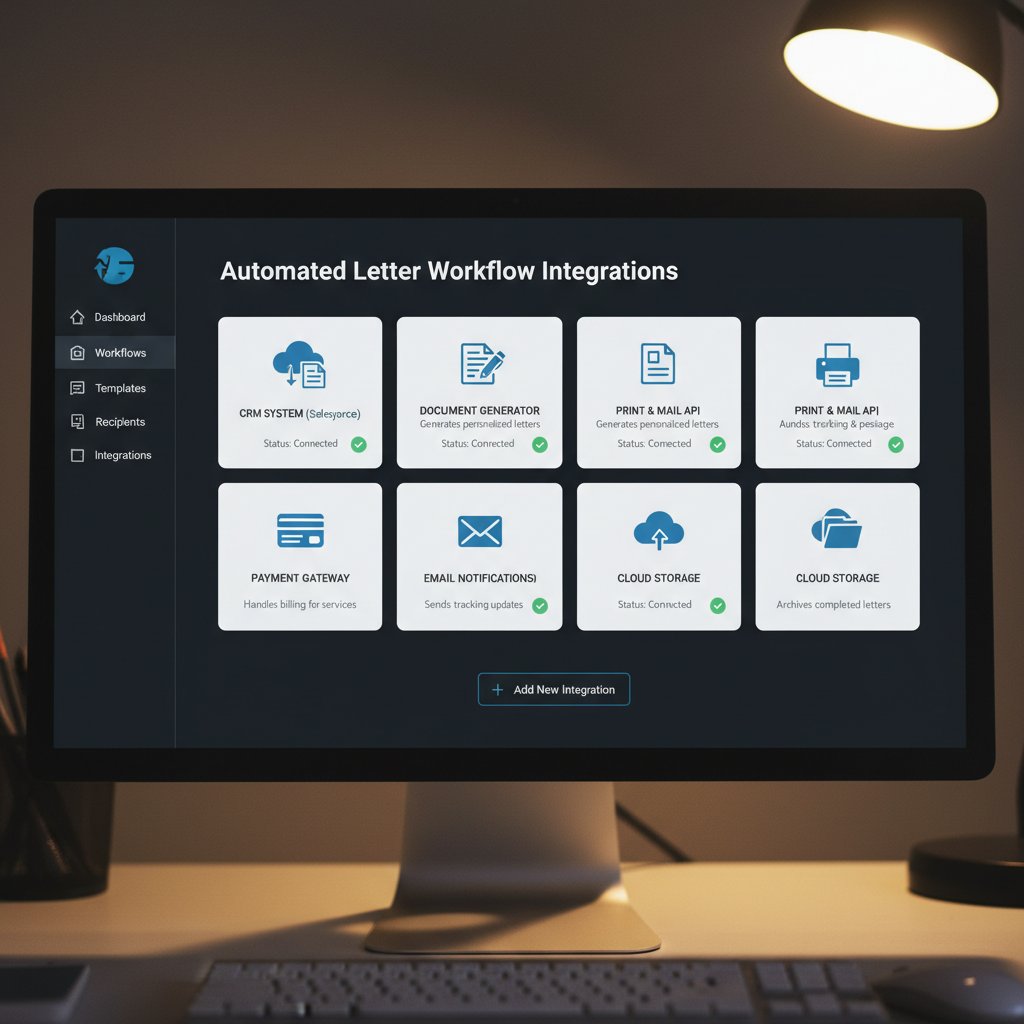
filecreator.ai, for example, is often cited as a resource for those looking to streamline document workflows without sacrificing compliance or branding.
Your action plan: automation without the headaches
Priority checklist for getting started
Ready to get moving? Here’s your high-level action plan:
- Identify your primary letter types and volumes
- Map current workflows and pain points
- Shortlist reputable automation platforms
- Audit integration needs (CRM, cloud)
- Evaluate data privacy and compliance features
- Define roles for input, review, and approval
- Pilot with a small batch, gather metrics
- Train staff on tool and best practices
- Roll out at scale, monitor and adapt
Measuring success and improvement
What gets measured gets managed. Track open rates, response rates, error frequency, and time saved. Compare them to pre-automation benchmarks to quantify value.
| Metric | Pre-Automation | Post-Automation | % Change |
|---|---|---|---|
| Open Rate | 40% | 60% | +50% |
| Response Rate | 10% | 18% | +80% |
| Error Reduction | n/a | 70% | -70% |
| Time Saved | 0 hrs | 28 hrs/wk | - |
Table 5: Metrics for evaluating the effectiveness of automated letters
Source: Original analysis based on Chatsimple AI Letter Generator, 2024, [filecreator.ai]
Where to find more resources
Looking to go deeper? Seek out reputable industry blogs, government guidelines on data privacy, and expert forums. For hands-on guidance, platforms like filecreator.ai offer general resources, FAQs, and support communities for professional document automation.

Conclusion: the new rules of automated communication
Rethink what automation really means
It’s time to move beyond the easy narrative—automation isn’t just about speed and savings. It’s about wielding technology to enhance, not erode, the human element in communication. Done right, generating customized automated letters online amplifies your message, sharpens your brand, and forges genuine connections.

Your move: adapt, evolve, or fall behind
The rules have changed. You can cling to the old ways and drown in inefficiency, or you can embrace intelligent automation with a critical, creative edge. The tech is here. The only question is, will you use it to cut through the noise and connect—or settle for mediocrity? The future of communication isn’t fully automated or fully human—it’s the artful blend of both. And in the end, that’s the only message that truly lands.
Sources
References cited in this article
- Chatsimple AI Letter Generator(chatsimple.ai)
- Typli AI Letter Writer(typli.ai)
- HireQuotient AI Letter Generator(hirequotient.com)
- Postalytics Direct Mail Letters(postalytics.com)
- The AI Matter: AI Letter Writing(theaimatter.com)
- MHC Automation: Automated Letter Generation(mhcautomation.com)
- LettrLabs: Automated Letter Sending(lettrlabs.com)
- Squirro: History & Evolution of Automation(squirro.com)
- Forbes Tech Council: Evolution of Process Automation(forbes.com)
- Musely AI Letter Generator(musely.ai)
- Documentero: Letter Generation(blog.documentero.com)
- Formstack Letter Generation(formstack.com)
- Wobo: AI Cover Letter Editing(wobo.ai)
- Musely AI Letter Generator(musely.ai)
- AutomatedDocs: Dynamic Document Generation(automateddocs.com)
- Omnidocs: Automated Letters(omnidocs.com)
- Quadient: Automated Letter Generation(quadient.com)
- Microsoft Blog: IDC AI Study(blogs.microsoft.com)
- Nucleus Research: Workforce Software ROI(nucleusresearch.com)
- RRD Case Study(rrd.com)
- Boomer.com: When Automation Backfires(boomer.com)
- SFSCON: Hidden Costs of Automation(sfscon.it)
- NZ Herald: Automated Letters Can Do Harm(nzherald.co.nz)
- TechPolicy.Press: Myths of Generative AI(techpolicy.press)
- Magnarevo: Risks of AI-Generated Content(magnarevo.com)
- 365 Data Science: AI Myths Debunked(365datascience.com)
- AutomatedDocs: Best Practices(automateddocs.com)
- AirSlate: Letter Generation(airslate.com)
- Texta(texta.ai)
- WriteCream(writecream.com)
- Texta: AI Letter Generator Benefits(texta.ai)
- TealHQ: Cover Letter Mistakes(tealhq.com)
- Amplispot: Outreach Mistakes(amplispot.com)
- AI for Social Good(aiforsocialgood.ca)
- Resufit: AI Letter Generators Guide(resufit.com)
Perfect Documents, Instantly
Filecreator.ai transforms the way you produce professional documents. Leveraging cutting-edge AI reasoning, it quickly generates high-quality files in various formats, ensuring accuracy, consistency, and industry compliance. Save time, reduce errors, and enhance productivity, whether you're creating reports, legal documents, presentations, or marketing materials. Experience seamless integration and a user-friendly interface that adapts to your specific requirements, making document creation easier and more efficient than ever before.
Get startedStart Creating Professional Documents Today
Join thousands of professionals who trust AI-powered document generation
Frequently Asked Questions
How much time can automated letter generation save compared to manual writing?
According to the article, businesses spend an average of four to six hours per week per employee on manual letter writing. AI-powered generators can create letters in less than one minute compared to 20-40 minutes for manual creation, representing substantial time savings especially when scaled across multiple employees.
What are the error rates for different letter creation methods?
The article shows that manual letter writing has an error rate of 8-12%, automated templates have 2-4%, and AI-powered generators have the lowest error rate at 1-2%. These errors can include typos, wrong names, and outdated templates that damage brand trust.
What hidden costs are associated with manual letter writing?
Beyond the obvious time investment, manual letter writing creates hidden costs including staff stress, inconsistent messaging, and errors that harm brand trust. The article emphasizes these are not just embarrassing but can be catastrophic for business credibility.
What specific tool does the article recommend for generating professional automated letters?
The article mentions filecreator.ai as a platform that can be leveraged for genuinely professional results in automated letter generation.
Continue Reading
Explore more from Professional Document Generator

Generate Professional Automated Letters Without Losing the Human Touch
Discover insights about generate professional automated letters

Automated Letters in 2025: Maintaining Voice and Trust
Generate customized automated letters in 2025 using AI while maintaining authenticity. This article explains the risks, benefits, and best practices for automated correspondence.

How to Generate Automated Letters Without Losing Brand Voice
Generate automated letters while preserving brand voice: the article examines risks, tools, and strategies for scaling written communication without losing authenticity.

Automated Personalized Letters: Evolution From Handwriting to AI
This article explains how to generate automated personalized letters while maintaining authentic tone. It covers the evolution of letter writing and addresses concerns about automation affecting communication quality.

What Automatic Business Letter Generators Actually Deliver
Automatic business letter generator tools offer speed and consistency but carry hidden risks. This article examines the real productivity gains, compliance pitfalls, and ROI implications.

How Automated Letter Generators Are Reshaping Business Writing
Automated letter generators reshape business communication across hiring, sales, and legal work. This article examines how they work, the risks they pose, and what professional use requires.