Streamline Financial Reporting: What Actually Works and What Doesn't
Written with AI assistance under our editorial guidelines
Most organizations struggle with outdated financial reporting processes hidden beneath claims of digital transformation, relying on spreadsheets, legacy systems, and manual work that drain resources and morale. Material weaknesses in internal controls persist across both public and private sectors, while finance professionals face burnout from repetitive tasks and compliance burdens. Real improvement requires honest assessment of broken systems and cultural change, not another failed transformation initiative.
Financial reporting is an institution—ancient, essential, and, frankly, a little broken. Even as digital dashboards glow and executives tout transformation, most organizations are still slogging through a quagmire of outdated processes, endless manual tweaks, and compliance headaches. The call to “streamline financial reporting” echoes in every boardroom, yet the gap between aspiration and execution remains a chasm. Ignore it, and your competition—armed with AI-driven efficiency—will eat your lunch. Embrace it, and you’ll discover an edge that’s not just about speed, but about clarity, accuracy, and real strategic power. This article rips the veil off the myths, exposes the hidden chaos, and arms you with hard-won insights, straight from the trenches and the latest research. Whether you’re a CFO, controller, or weary analyst, it’s time to get brutally honest about what’s broken, what works, and what will put you ahead in 2025’s high-stakes reporting game.
The hidden chaos: why financial reporting is broken
The anatomy of reporting dysfunction
Most organizations put on a brave face, touting their “digital transformation” and “data-driven culture,” but step inside the finance department and you’ll find a different story. Reporting dysfunction is widespread, often hiding in plain sight: spreadsheets stitched together by midnight oil, legacy systems that refuse to talk, and compliance checklists that grow longer every quarter. These unseen inefficiencies are like a tax on your time, draining resources and morale. According to recent research by the U.S. Government Accountability Office (GAO), material weaknesses in internal financial controls continue to limit the reliability of federal reporting, and the private sector is no less vulnerable. It’s not just the systems—the culture of “just get it done” buries the rot until a crisis erupts.

The real cost: stress, errors, and missed opportunities
If you think inefficiency is just a cost of doing business, think again. Every overlooked reconciliation, late close, or misfiled journal entry is a potential time bomb. The toll isn’t just financial—it’s emotional. Burnout rates among finance professionals remain stubbornly high, with stress fueled by manual processes, tight deadlines, and the ever-present specter of regulatory penalties. Research from Robert Half indicates that up to 70% of finance staff cite reporting burdens as a leading stressor, while 60% report that errors in manual processes have impacted decision-making.
"The real cost of chaos is invisible—until it hits your bottom line." — Alex
Missed opportunities compound the pain: slow reporting means slow reactions to market shifts, lost credibility with stakeholders, and a steady erosion of competitive advantage. In a world where 87% of finance teams now use some form of AI or data analytics (according to Solvexia and Robert Half, 2024), sticking to legacy processes is not just inefficient—it’s reckless.
Common misconceptions holding teams back
Despite the urgency, myths persist. Here are seven widespread misconceptions about streamlining financial reporting—and the reality behind each:
-
“Automation solves everything.”
Automation without process redesign only digitizes inefficiency. True streamlining is holistic. -
“Compliance is just a checklist.”
Real compliance requires integration into every workflow—not a rushed box-tick at month-end. -
“More data equals better insights.”
Data overload without curation leads to confusion, not clarity. Quality trumps quantity. -
“Standard templates work for everyone.”
Context matters: generic templates miss industry nuance and business-specific requirements. -
“Cloud migration fixes reporting.”
Cloud can enable agility, but unintegrated systems breed new silos. -
“Only finance should care about reporting.”
Cross-functional collaboration is essential; silos breed blind spots. -
“Once streamlined, always streamlined.”
Change is constant. Processes must adapt with shifting regulations and business models.
Rewriting the rules: what streamlining really means
Beyond automation: the new definition
Streamlining isn’t about slapping a shiny dashboard over chaos or buying the latest software flavor of the month. It’s a mindset—a willingness to ruthlessly interrogate every step, to challenge sacred cows, and to elevate reporting from repetitive grunt work to strategic muscle. According to Deloitte, the shift is real: advanced analytics and AI are empowering finance teams to move from number crunching into advisory roles, but only when workflows are reimagined, not just automated. Streamlining means mapping the hidden currents beneath the surface, breaking down barriers, and fostering a culture where reporting is everyone’s concern.
The human factor: culture and resistance
Let’s not kid ourselves—people resist change. The average finance professional has survived a dozen “transformations,” most of which fizzle when the novelty fades or when the first technical glitch sends everyone back to their spreadsheets. Resistance flows from more than laziness; it’s rooted in fear, lost expertise, and the threat of losing control. The antidote? Radical transparency and involvement. According to a 2024 INAA survey, organizations that involved end-users in tool selection and workflow redesign achieved twice the improvement in reporting speed and quality compared to top-down, tech-driven initiatives.
"Don’t mistake movement for progress." — Maya
Change is not about more meetings or more software. It’s about empowering people to own the process, question assumptions, and demand better—not just faster—outcomes.
Digital transformation is not a magic wand
Digital initiatives fail every day, not because the tech is bad, but because the context is ignored. A new ERP may promise real-time insight, but if your data is dirty or your people are untrained, you’ve bought a very expensive bottleneck. Success is measured by outcomes, not buzzwords.
| Reporting model | Cost (avg., $/yr) | Error rate (%) | Avg. cycle time (days) | User satisfaction (1-10) |
|---|---|---|---|---|
| Manual | $240,000 | 4.8 | 7 | 4.1 |
| Automated | $170,000 | 1.5 | 2.2 | 7.8 |
| Hybrid | $185,000 | 2.2 | 3.4 | 8.2 |
Table 1: Comparison of manual, automated, and hybrid reporting models (Source: Original analysis based on Robert Half, Deloitte, INAA 2024).
The anatomy of a streamlined reporting process
Mapping the modern workflow
A truly streamlined reporting process is a symphony, not a solo act. Each stage—from raw data ingestion to executive-ready insight—must be orchestrated for speed, accuracy, and adaptability. Here’s how the leaders do it:
- Data collection: Automatically pull from validated, integrated sources (ERP, CRM, external feeds).
- Data cleansing: Use AI and rules-based checks to ensure accuracy and completeness.
- Consolidation: Merge and standardize multi-entity, multi-currency data in real time.
- Policy application: Apply accounting and compliance rules consistently with RegTech.
- Preliminary analysis: Automatic variance and trend detection flags issues early.
- Collaboration: Enable review and comment cycles within secure, shared platforms.
- Final review: Layer in human judgment, scenario modeling, and executive sign-off.
- Distribution: Deliver tailored reports to stakeholders via secure, multi-format channels.
Each step is interlocked, eliminating hand-offs and minimizing manual intervention—a stark contrast to the legacy model of chained spreadsheets and midnight email marathons.
Key technologies making a difference in 2025
What’s truly moving the needle now? AI and machine learning, once the domain of tech giants, are mainstream in financial reporting. Advanced cloud platforms (like Dynamics 365 and filecreator.ai/financial-reporting-solutions) connect data points, automate compliance, and deliver insights at a velocity that manual processes simply can’t match. Blockchain is gaining traction, providing tamper-proof audit trails that regulators love. And let’s not forget RegTech: investment in this space has exploded, automating regulatory checks and giving compliance teams real-time visibility.

Spotting bottlenecks before they become disasters
Even the best workflows can choke under pressure. The difference is that streamlined teams spot issues early—before they trigger overtime or audit failures. According to NOW CFO, cyber risks and version control remain overlooked threats in digital finance, especially as hybrid work rearranges traditional oversight.
Checklist: 7 red flags your reporting process needs intervention
- Reports routinely delayed, especially at quarter or year-end.
- Frequent errors or corrections discovered post-distribution.
- Data sources are manually copied/pasted or require reformatting.
- Multiple versions of key reports exist at the same time.
- Cross-functional teams complain about lack of visibility.
- Regulatory filings require last-minute scrambling.
- IT or compliance teams frequently override process steps.
If you’re nodding along to more than two of these, it’s time for a reporting intervention.
Case studies: victories and failures from the field
When streamlining saved the quarter
Consider the case of a mid-market manufacturer staring down the barrel of a Q3 close with millions in inventory discrepancies. Their old system—patched together through years of “temporary” fixes—collapsed under the pressure of rapid expansion. Enter a cloud-based, AI-driven solution: automated reconciliations, real-time dashboards, and cross-departmental collaboration slashed the close from 11 days to just 4. The CFO didn’t just hit the deadline; she delivered insights that redirected capital in time to seize a market opportunity.

Cautionary tales: lessons from reporting disasters
But the road isn’t always smooth. One high-profile infrastructure firm (name withheld by request) suffered cascading failures when a rushed cloud migration left data unvalidated and compliance controls untested. The result? Late filings, regulator intervention, and a public loss of trust. Here’s how it unfolded:
| Date | Issue | Escalation | Resolution |
|---|---|---|---|
| Jan 15, 2024 | Data migration starts | Incomplete mapping | - |
| Feb 28, 2024 | Key data missing from reports | Internal flags ignored | - |
| Mar 13, 2024 | Regulatory deadline missed | Emergency meeting | Extension requested |
| Apr 2, 2024 | Public disclosure required | Stock price drops | Compliance consultant |
| May 20, 2024 | Controls re-established | Workflow redesigned | Reports stabilized |
Table 2: Timeline of missed deadlines and escalating issues in a failed reporting transformation (Source: Original analysis based on industry reports, 2024).
What these stories teach us
Success isn’t about tools—it’s about discipline. The victorious team invested in clean data, cross-training, and scenario rehearsals. The cautionary tale? A reminder that speed without control is a recipe for disaster.
Definition list: must-know concepts
- Reporting lag: The time between period end and final report publication. In the digital age, every extra day is a risk.
- Data silos: Isolated pockets of information—often a result of unintegrated systems—that hinder holistic analysis.
- Real-time visibility: The holy grail—instant, accurate insight into financial performance, enabled by seamless data flows.
Cutting through the noise: evaluating tools and solutions
What to look for (and what to run from)
Choosing the right reporting platform isn’t about glossy interfaces. Here’s what matters:
- End-to-end integration: If your reporting tool doesn’t plug into ERP, CRM, and legacy systems, expect more manual work.
- Data lineage tracking: Can you trace every number back to its source? If not, your audit trail is weak.
- Automated compliance checks: Don’t settle for bolt-on regulatory fixes—true automation bakes compliance in.
- Flexible, customizable templates: Cookie-cutter reports won’t satisfy stakeholders or regulators.
- Cloud-first architecture: Local installs are obsolete. Security and remote access demand cloud.
- User-centric design: If your team can’t use it, they won’t.
- Strong version control: Prevents embarrassing “which file is final?” moments.
- Proactive risk alerts: Early-warning systems for anomalies or compliance gaps.
8 hidden benefits of modern reporting tools:
- Empower audit-readiness with real-time logs
- Enable cross-departmental collaboration
- Support multi-format exports (PDF, XLSX, DOCX)
- Reduce human error through automation
- Facilitate rapid scenario modeling
- Enhance data security with cloud safeguards
- Accelerate close cycles
- Surface actionable trends, not just raw numbers
The filecreator.ai advantage (and why it matters)
Filecreator.ai exemplifies the new breed of professional document generators redefining what’s possible in financial reporting. Seamlessly integrating with modern data sources, the platform allows finance teams to produce regulatory-compliant, beautifully structured reports in record time. No more wrestling with formatting or worrying about outdated templates—just fast, accurate, compliance-ready reports that let you focus on insight instead of logistics. In a landscape crowded with generic software, filecreator.ai stands out for its adaptability and depth, making it an asset for any organization serious about reporting transformation.
Making the right choice for your business
Selecting a reporting solution isn’t a one-size-fits-all proposition. Use this framework to guide your decision:
| Solution type | Integration | Automation | Customization | Compliance | Support | Scalability | Cost |
|---|---|---|---|---|---|---|---|
| Legacy spreadsheet | Low | None | High | Manual | Low | Low | Low |
| Generic SaaS | Medium | Partial | Medium | Add-on | Medium | Medium | Med |
| Specialist platform | High | Full | High | Automated | High | High | High |
| Custom build | Variable | Variable | Max | Custom | Variable | Max | Max |
Table 3: Feature comparison matrix for leading financial reporting solution types (Source: Original analysis based on Solvexia, ERP Software Blog, 2024).
Beyond the numbers: cultural and societal impacts of reporting
Transparency as power: how reporting shapes trust
Numbers are never just numbers. In the age of ESG and real-time disclosure, transparent reporting isn’t a compliance chore—it’s a source of power. Stakeholders, from investors to regulators to the public, judge organizations by the quality and candor of their disclosures. According to EFRAG, 74% of public companies are investing in sustainability tech to bolster trust and future-proof their brands. Transparency is a competitive weapon, forging credibility in a landscape where greenwashing and obfuscation are fatal.

When compliance drives innovation
Regulatory requirements are often seen as a ball and chain. But real innovation is usually born of constraint. The new SEC rules on cybersecurity and climate reporting have forced companies to rethink their entire data architecture—and, in many cases, driven upgrades that yield deeper, faster insights.
"Sometimes, the best ideas come from a deadline." — Jordan
According to Cappitech, RegTech investment is skyrocketing not just to avoid fines, but to unlock operational advantages. Compliance isn’t an obstacle; it’s a catalyst.
Reporting as a narrative: telling your company's real story
Dry numbers don’t inspire, but stories do. Best-in-class organizations use reporting to shape narrative—for investors, partners, and employees. The secret isn’t fiction, but context: explaining not just what happened, but why, and what it means.
6 steps to creating narrative-driven financial reports:
- Start with the “why”: Anchor every report in the purpose behind the numbers.
- Define key themes: Focus on drivers (growth, risk, ESG) that matter most to stakeholders.
- Humanize the data: Use case studies or anecdotes to make metrics relatable.
- Visualize selectively: Support your story with targeted, meaningful graphics—not page fillers.
- Highlight impacts: Clarify how results connect to strategic goals.
- Close with action: Offer recommendations, not just information.
Pitfalls, risks, and how to bulletproof your reporting
Top risks no one talks about
Plenty of articles warn about fraud or regulatory penalties. But the silent killers in reporting are often less obvious:
- Data security lapses: Cloud without proper controls is a hacker’s playground.
- Version confusion: Multiple “final” drafts lead to errors and embarrassment.
- Over-automation: Blind trust in bots can entrench mistakes faster than ever.
- Skill gaps: New tools are useless if staff aren’t trained.
- Compliance drift: Rules change, but old templates linger.
- Shadow IT: Unsanctioned tools introduce new vulnerabilities.
- Culture of silence: Teams afraid to flag issues guarantee disaster.
7 reporting red flags and how to address them:
- Frequent password resets but no multi-factor authentication: upgrade your access controls.
- Increasing reliance on manual overrides in “automated” processes: revisit automation logic.
- Report corrections after publication: implement stronger review protocols.
- Delays traced to unclear accountability: clarify roles and escalation paths.
- Teams running “shadow” reporting tools: standardize and centralize solution selection.
- New regulations trigger panic, not preparation: schedule proactive compliance reviews.
- Discussion of errors is taboo: foster an open, blame-free reporting culture.
Debunking the 'set and forget' myth
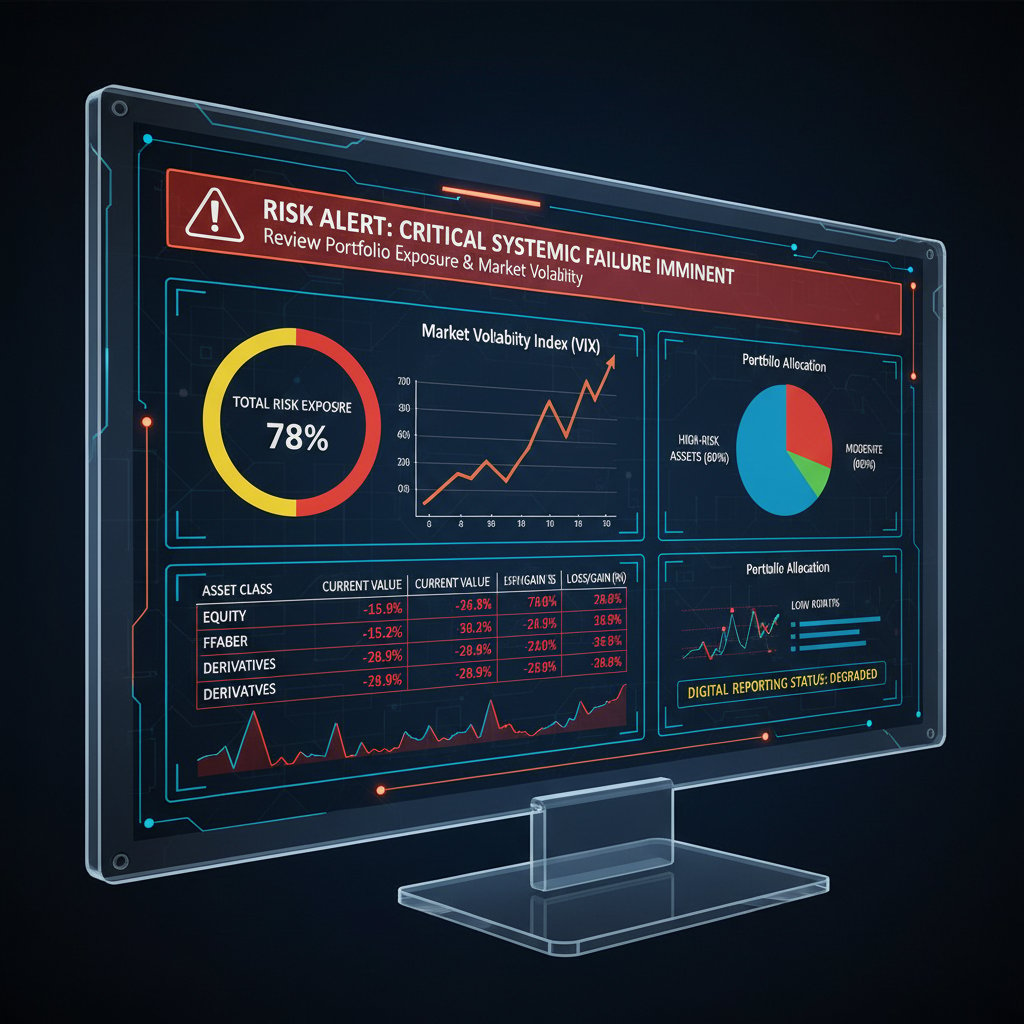
No reporting system, however sleek, can run itself indefinitely. The “set and forget” fallacy is seductive precisely because it promises liberation from tedium. But as digitization accelerates, oversight is more—not less—critical. According to NOW CFO, digitized financial workflows are uniquely vulnerable to cyber attacks, and complacency is the biggest risk of all.
The ultimate reporting risk checklist
You can’t afford blind spots. Use this comprehensive checklist to safeguard your workflow:
- Conduct regular audits of data sources and integrations
- Implement multi-factor authentication for all platforms
- Schedule quarterly compliance reviews for regulatory changes
- Train staff on both new and legacy systems
- Enforce version control protocols with clear naming conventions
- Document workflows and escalation paths
- Run penetration tests on cloud infrastructure
- Maintain offsite encrypted backups
- Establish rapid response plans for detected anomalies
- Foster a culture of continuous improvement through open feedback
The future of financial reporting: where do we go from here?
Emerging trends and bold predictions
While the future is unwritten, certain trends are reshaping the present. Predictive analytics now augment traditional financial statements, providing early warnings and opportunity spotting. Real-time reporting—the gold standard—has become accessible to mid-market firms, not just Fortune 500 giants. AI-driven insight extraction is shifting finance from “what happened” to “what now.” As filecreator.ai and similar platforms make seamless integration and multi-format output the norm, the technical barriers are falling away—leaving strategy and talent as the true differentiators.

What finance leaders are (and aren’t) ready for
The readiness gap is real. According to an INAA survey, while 87% of leaders report using some AI-based process, only 42% feel prepared to manage the associated risks. Here’s what’s top of mind:
| Priority/fear | % leaders reporting |
|---|---|
| Data security | 68 |
| Regulatory compliance | 55 |
| Talent/skills shortage | 49 |
| Speed of reporting | 46 |
| Integration of new tech | 43 |
Table 4: Current top priorities and fears for 2025 financial reporting (Source: INAA, 2024).
Your move: disrupting yourself before someone else does
In the end, the choice is stark: disrupt, or be disrupted. Don’t wait for a compliance crisis or a reputational hit to rethink your process. The winners will be those who ruthlessly interrogate their workflows today, not when regulators or markets force their hand.
Definition list: proactive vs. reactive reporting
- Proactive reporting: Anticipates issues, enables scenario planning, and empowers decision-makers with timely insights. It’s active defense—always scanning the horizon.
- Reactive reporting: Stuck in a cycle of fire-drills and post-mortems, responding only after the alarm sounds. It’s playing catch-up, not setting the pace.
Ready to revolutionize your reporting? A practical roadmap
Step-by-step guide to streamlining your financial reporting
Here’s how to overhaul your reporting process—no buzzwords, just actionable steps:
- Assess your current state: Map out sources, tools, and pain points.
- Engage stakeholders: Secure cross-departmental buy-in for change.
- Inventory data: Identify gaps, inconsistencies, and silos.
- Define objectives: Align reporting goals with business strategy.
- Benchmark internally and externally: How do your cycles and quality stack up?
- Research solutions: Evaluate platforms based on integration, automation, compliance, and security.
- Run pilots: Test shortlisted tools with real workflows.
- Document new processes: Clarity prevents drift and confusion.
- Train your team: Upskill on tools, standards, and cybersecurity.
- Implement phased rollout: Minimize disruption by staging changes.
- Monitor and measure: Track cycle times, errors, and user satisfaction.
- Continuously optimize: Build a feedback loop for ongoing improvement.
Quick reference: what to do next Monday morning
Start strong with these six immediate actions for quick wins:
- Review your reporting calendar and identify recurring bottlenecks
- Audit data sources for accuracy and redundancy
- Check compliance protocols for recent regulatory changes
- Survey your team—what frustrates them most about the process?
- Identify one manual step to automate this month
- Schedule a meeting to discuss reporting transformation with IT and compliance
Resources and further reading
Looking for deeper insight? Explore authoritative resources like the U.S. Government Accountability Office, 2024, Deloitte’s 2024 Finance Trends Report, and EFRAG’s Sustainability Reporting Guidelines, 2024 for current frameworks and case studies. For organizations seeking a competitive edge in professional documentation and compliance-ready financial statements, filecreator.ai offers advanced AI-powered solutions tailored for today’s reporting challenges.
Sources
References cited in this article
- My Business Manager: 2025 Accounting Trends(blogs.mybm.in)
- ERP Software Blog: Financial Reporting Trends 2025(erpsoftwareblog.com)
- Cappitech: 2025 Regulatory Reporting Trends(cappitech.com)
- Indian Muneem: Future Trends in Financial Reporting(indianmuneem.com)
- GAO 2024 Federal Financial Report(gao.gov)
- NOW CFO: 2024 Financial Reporting Challenges(nowcfo.com)
- Deloitte: 2023 Reporting Season(www2.deloitte.com)
- ISMP Vaccine Error Reports(ismp.org)
- COPD Reporting Challenges(tandfonline.com)
- Visier: Change Fatigue(visier.com)
- IRIS Carbon: Streamlined Compliance Reporting(iriscarbon.com)
- HR Future: Tech in Financial Reporting(hrfuture.net)
- ACCA: Future of Financial Reporting 2024(accaglobal.com)
- NOW CFO: Reporting Best Practices(nowcfo.com)
- FlowForma: KeyBank Case Study(flowforma.com)
- GOV.UK: Best Practice Report 2023-24(gov.uk)
- Bunker: Reporting Software Tools(bunkertech.io)
- Pulivarthi Group: Automation Case Study(pulivarthigroup.com)
- ICAI: Case Studies on Excellence(studycafe.in)
- CFO Hub: Building Robust Reporting(cfohub.com)
- DFIN Solutions: Reporting Trends(dfinsolutions.com)
- HighRadius: Financial Reporting Trends(highradius.com)
- AIA: Accounting Fraud Red Flags(aiaworldwide.com)
- ScienceDirect: Cultural Tightness and Reporting(sciencedirect.com)
- PwC: 2024 Transparency Report(pwc.com)
- Deloitte: Human Capital Trends(www2.deloitte.com)
- OneStream: Narrative Reporting 2024(onestream.com)
- Grant Thornton: 2024 Risks(grantthornton.co.uk)
- Deloitte: 2023 Financial Reporting Alert(dart.deloitte.com)
Perfect Documents, Instantly
Filecreator.ai transforms the way you produce professional documents. Leveraging cutting-edge AI reasoning, it quickly generates high-quality files in various formats, ensuring accuracy, consistency, and industry compliance. Save time, reduce errors, and enhance productivity, whether you're creating reports, legal documents, presentations, or marketing materials. Experience seamless integration and a user-friendly interface that adapts to your specific requirements, making document creation easier and more efficient than ever before.
Get startedStart Creating Professional Documents Today
Join thousands of professionals who trust AI-powered document generation
Frequently Asked Questions
What are the main problems with current financial reporting processes?
Most organizations struggle with outdated processes including spreadsheets stitched together manually, legacy systems that don't communicate, and compliance checklists that grow longer each quarter. According to the U.S. Government Accountability Office, material weaknesses in internal financial controls continue to limit the reliability of financial reporting in both federal and private sectors.
How does broken financial reporting affect finance professionals?
The impact is both financial and emotional. Research from Robert Half shows that up to 70% of finance staff cite reporting burdens as a leading stressor, and many experience burnout fueled by manual processes, tight deadlines, and regulatory penalties.
What is the competitive risk of not streamlining financial reporting?
Organizations that ignore reporting inefficiencies risk falling behind competitors armed with AI-driven efficiency. Streamlined reporting provides not just speed, but also clarity, accuracy, and strategic power in 2026's high-stakes reporting environment.
Why do organizations continue to operate with broken reporting systems despite claiming 'digital transformation'?
A culture of 'just get it done' often buries underlying systemic problems until a crisis erupts. Organizations put on a brave face about their digital transformation while still relying on inefficient spreadsheets, legacy systems, and growing compliance burdens.
Continue Reading
Explore more from Professional Document Generator

Why Report Creation Consumes So Much Team Time and What Changes It
Streamline report creation by identifying the hidden time costs in traditional workflows. This article reveals where teams lose hours and what strategies reduce manual work.

Easy Financial Report Generator: From Chaos Cost to Unfair Edge
Discover insights about easy financial report generator

Accurate Financial Reporting Tools: What Actually Works
Accurate financial reporting tools must deliver reliability under pressure. This article examines why accuracy matters, the real risks behind common tools, and how to choose one your business can trust.

Creating Instant Financial Statements: Real Risks and Requirements
Create financial statements instantly with automation and AI. This article examines the real costs, compliance risks, and how to implement speed safely.

Generating Financial Reports Quickly: Balancing Speed with Accuracy
Generate financial reports quickly while managing risks and avoiding common pitfalls. This article explains the methods that work and the traps to avoid.

Professional Financial Reports: What Makes Them Win Decisions
Professional financial reports require clear structure and strategic presentation. This article explains the key elements that command respect and drive stakeholder decisions.