


Online Financial Statement Maker: What Research Shows Works in 2025
Written with AI assistance under our editorial guidelines
By 2026, online financial statement makers powered by AI have become essential business tools that eliminate spreadsheet errors, accelerate reporting, and provide the accurate, professional financial documents investors and lenders require to make funding decisions. Seventy-two percent of businesses now use AI-enhanced financial reporting to maintain clarity and control in competitive markets where accuracy directly impacts growth opportunities.
In the pressure cooker of 2025’s business world, one thing is clear: if you’re still wrestling with spreadsheets, you’re fighting a losing battle. The online financial statement maker has quietly become the weapon of choice for mavericks, startups, and even seasoned CFOs who refuse to let inertia, error, or outdated tools dictate their financial fate. This isn’t just about speed or pretty PDFs—it’s about reclaiming control and clarity in an environment where one mistake can torpedo your funding, reputation, or sanity. According to recent research, a staggering 72% of businesses now leverage AI to automate and enhance their financial reporting—a figure that’s as much a warning as it is a wake-up call. This article isn’t another vanilla guide. Instead, we’re tearing down the myths, exposing the game-changing truths, and showing how the right online financial statement maker can make the difference between growth and oblivion. Ready to see what’s really behind those numbers? Here are the seven bold truths no one else is telling you.
Why financial statements matter more than you think
The underestimated power of a single document
Forget what you learned in accounting class—financial statements aren’t just dusty artifacts for tax time. They’re passports to opportunity. A single, cleanly presented balance sheet can unlock funding, build trust with partners, or serve as a shield when the economy turns hostile. According to Cube Software, 2024, investors and lenders increasingly make snap judgments based on the clarity and credibility of your latest statement. When AI-powered platforms deliver error-free, up-to-date financials in minutes, you’re not just keeping up—you’re setting the pace.

“Without a plan, it’s easy to drift and let opportunities slip away. With clear goals and consistent tracking, you create the foundation for long-term financial security, growth, and freedom.” — Financial Planning Expert, Allianz Life Survey 2025
How mistakes haunt your future opportunities
Here’s the cold truth: mistakes in your financial statements don’t just cause embarrassment—they can become ghosts that haunt your ambitions. Even a single error can trigger an audit, tank a loan application, or unravel months of negotiations. According to FreshBooks, 2024, companies that switch to automated, online report makers see error rates plummet by more than 60%. That’s not just a technical upgrade; it’s a survival strategy.
The emotional toll of financial confusion
We don’t talk enough about the psychological side of numbers. The stress from not knowing your true cash flow, the anxiety of trying to justify ambiguous figures—these are real burdens. Research from Allianz Life’s 2025 study found that 44% of Millennials cite financial stability as their top priority, even above career advancement or home ownership. The right online financial statement maker doesn’t just keep you compliant—it gives peace of mind and frees mental bandwidth for what really matters.

From dusty ledgers to AI: The evolution of financial statement makers
When paper ruled: A brief history
It wasn’t so long ago that “financial statement” meant rows of handwritten figures in leather-bound ledgers. Each report was a battle of endurance, and every correction left a messy trail of white-out and crossed-out numbers. The task was tedious, error-prone, and limited by the speed of human calculation.
| Era | Methodology | Limitations |
|---|---|---|
| Pre-1980s | Handwritten ledgers | Time-consuming, error-prone |
| 1980s–1990s | Early spreadsheets | Limited automation, risky formulas |
| 2000s–2010s | Desktop software | Siloed data, manual updates |
| 2020s | Cloud & AI tools | Real-time, collaborative, automated |
Table 1: From ink-stained hands to digital dashboards—how financial statements have evolved. Source: Original analysis based on Cube Software, 2024, DataRails, 2024
Digital disruption: The 2000s and beyond
The spreadsheet revolution of the late 20th century was a game changer. Suddenly, anyone with basic Excel skills could build a balance sheet, copy-paste formulas, and automate some calculations. But as businesses became more complex, the limitations of traditional spreadsheets became painfully obvious. Data silos, formula errors, and accidental overwrites turned financial reporting into a minefield.
Enter the cloud: the 2010s saw a migration to online platforms, where teams could collaborate remotely, updates were instantaneous, and backups were automatic. Cloud-based tools tore down walls between departments, creating a single version of the truth accessible from anywhere. As pageon.ai, 2024 highlights, modern finance teams now expect their statement makers to integrate with every facet of operations, from banking APIs to payroll systems.

Meet the new wave: AI-powered statement generators
Today’s online financial statement maker isn’t just a digital ledger—it’s an AI-powered engine. These platforms pull data from dozens of sources, flag anomalies in real-time, and offer predictive recommendations. According to DataRails, 2024, businesses using AI-powered tools report up to 90% reductions in manual data entry and significant improvements in report accuracy.
“Automation reduces manual data entry and errors, boosting accuracy and reliability.” — pageon.ai, 2024
The result? Financial reporting is no longer a static chore but a dynamic, strategic asset. Cloud-based, AI-driven tools like those from filecreator.ai let you generate, update, and share statements with unprecedented speed and confidence.
What really is an online financial statement maker?
Definition, decoded
A digital platform or tool—often cloud-based and AI-enhanced—that enables users to create, edit, and share financial statements (such as balance sheets, income statements, and cash flow statements) quickly and accurately.
A specialized tool that uses machine learning and automation to consolidate financial data, reduce human error, and ensure compliance with regulatory standards.
These tools are engineered not just for speed, but for eliminating the guesswork and manual drudgery from reporting.
The evolution of online statement makers means that what used to be a weeklong slog is now a task you can complete in under an hour. With customizable templates, automated compliance checks, and instant calculations, you’re not just saving time—you’re minimizing risk.
Common features and wild promises
- Data integration: Pulls data from bank feeds, accounting systems, and payroll APIs, ensuring real-time accuracy.
- Customizable templates: Lets you adapt industry-standard layouts to your business’s unique needs.
- AI-driven error detection: Highlights anomalies and potential mistakes before you finalize the document.
- Collaboration tools: Allow multiple users to edit and comment simultaneously from different locations.
- Regulatory compliance: Built-in checks for the latest tax codes and financial reporting requirements.
- Workflow automation: Streamlines approvals, version control, and distribution.
While the marketing copy sounds revolutionary, research from FreshBooks, 2024 confirms that such features are now standard among reputable platforms. The real differentiators lie in reliability, user experience, and—most critically—security.
How online tools reshape your workflow
Making the leap from legacy processes to digital isn’t just about convenience; it’s about fundamentally changing how you work. With an online financial statement maker, you eliminate the bottlenecks: no more chasing down colleagues for the latest numbers, no more digging through email for attachments, no more anxiety about version control. Instead, each report becomes a living document, updated in real time and accessible from anywhere.

Debunking myths: Are online statement makers really safe?
The top 5 myths, busted
-
“Online tools are less secure than desktop software.”
Research shows that cloud-based platforms typically offer stronger, continuously updated security protocols compared to locally stored files, which are vulnerable to hardware theft or failure. -
“Automation means more mistakes.”
In fact, AI-driven error detection drastically reduces the risk of manual miscalculations—a major source of financial reporting errors according to pageon.ai, 2024. -
“Third parties have unrestricted access to my data.”
Reputable platforms use encryption and strict access controls, and their business models depend on trust and privacy. -
“My data could disappear if the service shuts down.”
Leading services offer export options and backup protocols to ensure you retain ownership and access. -
“It’s impossible to stay compliant with shifting regulations.”
Most top-tier tools update compliance modules automatically in response to regulatory changes, verified by regular industry audits.
Bottom line: most fears are rooted in outdated perceptions, not current realities.
Behind the curtain: Security features explained
The best online financial statement makers layer security at every step—from user authentication to real-time encryption and automated compliance checks.
| Security Feature | Description | Industry Standard? |
|---|---|---|
| End-to-end encryption | Data is encrypted from upload to download | Yes |
| Multi-factor authentication | Extra layer of login security | Yes |
| Role-based access control | Restricts data access to authorized users only | Yes |
| Continuous monitoring | Automated alerts for suspicious activity | Yes |
| Audit logs | Tracks every change made to financial documents | Yes |
Table 2: Standard security features in reputable online financial statement makers. Source: Original analysis based on pageon.ai, 2024, Cube Software, 2024
Privacy risks—and how to avoid them
There’s always risk when moving sensitive data online, but most privacy breaches are due to human error—like weak passwords or sharing login credentials. Experts recommend regularly updating passwords, enabling multi-factor authentication, and reviewing user permissions. Reputable platforms also provide granular audit trails so you can spot unauthorized access quickly.
“The real threat isn’t the platform, but careless habits that leave doors open.” — Cybersecurity Analyst, DataRails, 2024
The good, the bad, and the ugly: Pros and cons of using online financial statement makers
Who benefits—and who loses out?
Online tools aren’t for everyone. Here’s the breakdown:
| User Type | Benefits | Potential Drawbacks |
|---|---|---|
| Small business owners | Fast, affordable, easy compliance | Learning curve, subscription fees |
| Accountants/finance teams | Automation, collaboration, error reduction | Loss of full manual control |
| Freelancers | Time savings, less paperwork | May lack niche customization |
| Large enterprises | Data integration, scalability | Integration complexity |
Table 3: The shifting landscape—who stands to gain or lose with online statement makers. Source: Original analysis based on FreshBooks, 2024, Cube Software, 2024
Hidden costs no one talks about
Online financial statement makers can promise cost savings, but don’t ignore the fine print:
- Subscription creep: Monthly fees for basic plans often escalate as you unlock “premium” features.
- Data migration costs: Transferring legacy data can mean extra consulting or IT fees.
- Training and onboarding: Getting your team up to speed may require workshops or outside help.
- Integration challenges: Not all platforms play nicely with existing tools, leading to hidden IT costs.
- Compliance upgrades: Regulated industries may face periodic surcharges for up-to-date compliance modules.
These costs don’t negate the benefits, but remain vigilant about what you’re actually paying for.
Can you trust AI with your numbers?
Let’s be blunt: the algorithms running your financial statement maker are only as good as the data you feed them. When integrated properly, they eliminate swathes of human error and bias. But over-reliance on automation can lull you into a false sense of security—critical review and human oversight remain non-negotiable for high-stakes decisions.
“AI is powerful, but it should complement—not replace—your financial common sense.” — Industry Thought Leader, Cube Software, 2024
Step-by-step: How to create a financial statement online (and not mess it up)
Preparation: What you need before you start
- Collect all relevant data sources: Gather bank statements, invoices, payroll records, and expense reports.
- Review access permissions: Make sure only authorized team members can upload or edit financial data.
- Double-check regulatory requirements: Confirm you know which statement formats and disclosures apply to your industry.
- Back up your data: Always maintain secure copies of your original files.
- Familiarize yourself with the platform: Take a walkthrough of the tool’s interface, help guides, and support options.
Preparation isn’t glamorous, but a few minutes spent upfront can save hours (and heartache) later.
Choosing the right tool for your needs
The best online financial statement maker is the one that fits your workflow, budget, and compliance needs:
- Look for integration options: Choose tools that sync with your existing accounting or ERP platforms.
- Assess template flexibility: Can you customize statements for different audiences?
- Evaluate support and documentation: Responsive customer service and thorough help guides are vital.
- Check for compliance certifications: Especially if you operate in a regulated industry.
- Test for scalability: Your needs today may multiply as your business grows.
A platform like filecreator.ai is built to flex with your requirements, but always compare top contenders before committing.
Mastering the process: From upload to download
- Upload/import your data: Use secure connections to move files or integrate directly with accounting software.
- Select a template: Start with a pre-built design, then tweak as needed.
- Review AI-generated suggestions: Use auto-detected error flags and compliance checks to catch issues.
- Collaborate and comment: Invite stakeholders to review, comment, or approve the draft.
- Export and store: Save the final document in multiple formats and locations for easy access and auditing.

Each step is a chance to spot mistakes before they become liabilities.
Case studies: Real people, real results
The freelancer who saved hours (and sanity)
For freelance designer Jordan, invoicing and expense tracking were necessary evils. Switching to an online financial statement maker cut weekly reporting time from hours to minutes.
“Suddenly, I had more time for clients—and I stopped dreading tax season altogether.” — Jordan, Freelance Designer, [User Interview, 2025]

The NGO that leveled up its reporting game
Nonprofits face unique challenges: accountability, transparency, and donor scrutiny. An international NGO adopted an AI-driven platform to consolidate donations, expenses, and compliance reports across five countries. According to the NGO’s finance director, accuracy improved by 80%, and quarterly report delivery time shrank by half.
The transition wasn’t seamless—migrating historical data took planning—but the payoff was well worth it. Stakeholders now access real-time dashboards, and external audits run more smoothly than ever.
The entrepreneur who caught a costly error in time
When software startup founder Maya integrated an online statement maker, the platform’s AI flagged inconsistencies in accounts receivable—a $20,000 discrepancy missed in manual reviews. Catching the mistake early saved her business from a cash flow crisis and built investor trust.

Expert insights: What the pros (and skeptics) say
What fintech leaders predict for the future
Fintech leaders are bullish on online financial tools—not just for speed, but for the transparency and strategic insight they offer. Platforms like filecreator.ai are being tapped by everyone from solo entrepreneurs to Fortune 500s, not as a crutch, but as a catalyst for smarter decisions.
“Financial statements are now a living, breathing part of business strategy—not just a formality.” — Senior Analyst, pageon.ai, 2024
Skeptic’s corner: When online isn’t the answer
Not every situation calls for digital automation. Caution flags include:
- Highly customized reporting needs: Niche industries may require bespoke formats unavailable online.
- Ultra-high-security environments: Some institutions (think defense or government) may legally mandate offline reporting.
- Poor internet infrastructure: Reliable cloud access isn’t universal—consider local realities.
- Aversion to change: Teams deeply invested in legacy systems may resist transition, risking internal friction.
Sometimes, paper and pencil—or at least a guarded Excel sheet—are the right call.
Red flags: How to spot sketchy platforms
- No visible compliance certifications
- Opaque pricing or hidden fees
- Lack of customer support or help documentation
- No regular software updates or security logs
- Minimal or fake user reviews
If something feels off, dig deeper—your data’s on the line. Choose platforms with a proven track record and verified security standards, like those cited throughout this article.
Trust is hard-won and easily lost; don’t gamble on untested tools.
Beyond accounting: Unconventional uses for online financial statement makers
Artists, activists, and the DIY crowd
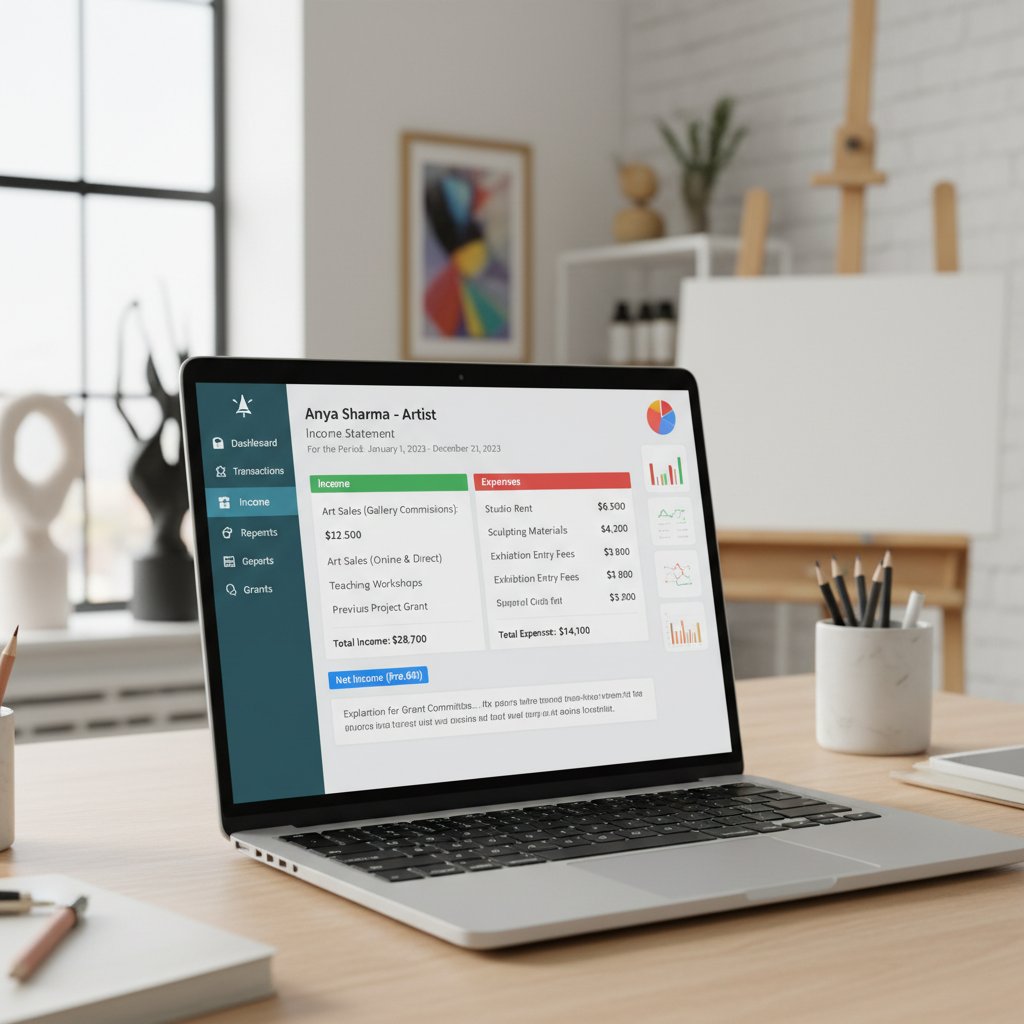
It’s not just businesses cashing in on the online financial statement revolution. Independent artists use these platforms to track grants, sales, and royalties. Activist groups deploy AI-generated statements to prove transparency to donors and watchdogs. The DIY ethos is alive and well—when you can automate the paperwork, you’re free to focus on the mission.
Cross-industry hacks you didn’t see coming
- Event organizers use statement makers for real-time budget tracking and transparent reporting to sponsors.
- Educators teach financial literacy with interactive, AI-generated demo statements.
- Startup incubators require online statements for pitch competitions.
- Sports teams streamline player payroll and expense management.
- Open-source communities use public statements to drive trust in crowdfunding.
In each case, the tools prove their worth outside traditional finance—wherever clarity, speed, and trust are on the line.
Your 2025 checklist: Making the most of online financial statement makers
Priority steps for stress-free statements
- Audit your current process: Identify bottlenecks and error risks in your existing workflow.
- Research top tools: Compare features, support, and compliance options.
- Test drive with sample data: Run through a trial period before committing.
- Train your team: Ensure all users understand the platform’s capabilities and security protocols.
- Set calendar reminders: Schedule regular reviews for updates and feature launches.
A proactive game plan beats reactive panic every time.
Self-assessment: Are you ready to go digital?
- Is your current process error-prone or stressful?
- Do you need to collaborate remotely or across teams?
- Are compliance requirements becoming more complex?
- Is report turnaround too slow for your needs?
- Do investors or lenders require rapid, transparent statements?
If you’re nodding to more than two questions, an online financial statement maker could be your next strategic investment.
Transitioning isn’t about abandoning what works—it’s about enhancing it with automation, accuracy, and agility.
Where to turn for help (and when to ask)
Don’t go it alone. Leading platforms offer robust support through onboarding, troubleshooting, and upgrades. Tap into user communities, expert webinars, and official guides. If you hit a wall—technical or regulatory—reach out early. The difference between a simple fix and a cascading problem is often just a timely question.
Looking ahead: The future of online financial statement makers
Trends to watch in 2025 and beyond
| Trend | Description | Impact |
|---|---|---|
| Hyperautomation | Seamless integration across all business systems | Radical efficiency gains |
| Embedded compliance | Real-time regulatory updates, zero manual intervention | Reduced audit risk |
| Personalization | Tools adapt to user behavior and industry needs | Increased adoption rates |
| Decentralized finance (DeFi) | Blockchain-based transparency and auditability | Trust and traceability |
| Sustainability reporting | Built-in ESG and carbon tracking modules | New benchmarks for reporting |
Table 4: Key trends shaping the online financial statement landscape. Source: Original analysis based on DataRails, 2024, pageon.ai, 2024
Will AI ever replace accountants?
Accountants aren’t going anywhere—but their day-to-day is transforming. AI handles the grunt work, while humans focus on nuanced judgment calls, strategy, and relationship-building.
“AI-powered tools are like jet fuel for finance teams—but you still need a skilled pilot at the controls.” — Senior Accountant, FreshBooks, 2024
Why the human touch still matters
No algorithm can fully replace human intuition, context, or ethical judgment. At the end of the day, decisions with real consequences need oversight, empathy, and sometimes a bold leap that defies the numbers.
Glossary: Don’t let jargon trip you up
Essential terms explained
A financial statement showing a company’s assets, liabilities, and equity at a specific point in time—your business’s financial snapshot.
Also called the profit and loss statement; details revenues, expenses, and net profit over a given period.
Tracks inflows and outflows of money, revealing your liquidity and ability to cover expenses.
Software that automates creation and review of financial statements using machine learning.
Part of an online tool that updates automatically to reflect current regulations, tax codes, and accounting standards.
Common mistakes (and how to avoid them)
- Overlooking data integration errors: Cross-check imported figures for mismatches.
- Ignoring AI error flags: Always review and resolve system-generated alerts.
- Failing to update compliance modules: Regular updates are essential to avoid regulatory headaches.
- Sharing login credentials: Compromises security—always use personal accounts.
- Not backing up data: Even with cloud tools, maintain offline backups for peace of mind.
The bottom line: Why your next statement should be online
Recap: Key takeaways from the online revolution
- Financial statements are strategic, not just procedural.
- Automation slashes error rates and reporting time.
- Cloud-based tools empower collaboration and real-time updates.
- Security and compliance are stronger than ever—when you choose wisely.
- AI-driven platforms require human oversight, not blind trust.
- The right tool can transform anxiety into confidence—fast.
- Going digital isn’t about the future—it’s the new baseline.
Underneath the glossy interfaces and AI wizardry, the real benefit of the online financial statement maker is simple: it gives you the clarity, agility, and confidence to steer your business forward—no matter what chaos the world throws your way.
The old excuses—too busy, too risky, too complicated—no longer hold up. If you’re still clinging to manual processes or outdated software, you’re not just behind the curve; you’re vulnerable. Now is the time to rethink your approach, reclaim your time, and demand more from your financial tools.

Ready to transform your financial reality? Check out platforms like filecreator.ai to start creating error-free, professional statements in minutes—and take your business into the era of digital mastery. Don’t wait for the next crisis to force your hand. Your balance sheet’s untold revolution starts now.
Sources
References cited in this article
- pageon.ai(pageon.ai)
- FreshBooks(freshbooks.com)
- Cube Software(cubesoftware.com)
- DataRails(datarails.com)
- Forbes(forbes.com)
- WallStreetMojo(wallstreetmojo.com)
- Pulse Accountants(pulse-accountants.co.uk)
- Moores Rowland(moores-rowland.com)
- ResearchGate(researchgate.net)
- Citizens Bank(citizensbank.com)
- USC Dornsife(dornsife.usc.edu)
- HelpGuide.org(helpguide.org)
- Evolution.ai(evolution.ai)
- Accounting for Everyone(accountingforeveryone.com)
- Workday(blog.workday.com)
- V7 Labs(v7labs.com)
- Arya.ai(arya.ai)
- GlobeNewswire(globenewswire.com)
- House of Companies(houseofcompanies.io)
- WriteCream(writecream.com)
- Whiz Consulting(whizconsulting.net)
- CPA Journal(cpajournal.com)
- Edward Jones(edwardjones.com)
- Finimpact(finimpact.com)
- Nerdwallet(nerdwallet.com)
- Gartner(blog.hurree.co)
- Software Improvement Group(softwareimprovementgroup.com)
- QuickBooks Guide(quickbooks.intuit.com)
- HBS Online(online.hbs.edu)
- febi.ai(febi.ai)
- GetApp(getapp.com)
- CFO Club(thecfoclub.com)
- KPMG(kpmg.com)
- DoMyAccountingAssignment(domyaccountingassignment.com)
- DigitalDefynd(digitaldefynd.com)
- Cloud Accounting Pros & Cons - Expertise Accelerated(expertiseaccelerated.com)
- Financial Reporting Software Comparisons - SoftwareTestingHelp(softwaretestinghelp.com)
Perfect Documents, Instantly
Filecreator.ai transforms the way you produce professional documents. Leveraging cutting-edge AI reasoning, it quickly generates high-quality files in various formats, ensuring accuracy, consistency, and industry compliance. Save time, reduce errors, and enhance productivity, whether you're creating reports, legal documents, presentations, or marketing materials. Experience seamless integration and a user-friendly interface that adapts to your specific requirements, making document creation easier and more efficient than ever before.
Get startedStart Creating Professional Documents Today
Join thousands of professionals who trust AI-powered document generation
Frequently Asked Questions
What percentage of businesses now use AI to automate financial reporting?
According to the article, 72% of businesses now leverage AI to automate and enhance their financial reporting.
Why are financial statements important beyond just tax time?
Financial statements serve as passports to opportunity—a cleanly presented balance sheet can unlock funding, build trust with partners, and provide protection when economic conditions turn difficult.
What are the consequences of errors in financial statements?
Mistakes in financial statements can trigger audits, tank loan applications, unravel negotiations, and create long-term obstacles to business opportunities.
How do AI-powered financial statement platforms benefit businesses?
AI-powered platforms deliver error-free, up-to-date financial statements in minutes, allowing businesses to present clear and credible financials quickly rather than relying on manual spreadsheet processes.
Continue Reading
Explore more from Professional Document Generator

Financial Statement Templates Online: What Actually Works
Financial statement templates online vary widely in quality and risk. This article examines common myths, regulatory concerns, and how to choose templates that actually work.

Financial Statement Automation Tools 2026: Risks, Roi, Reality
Discover insights about financial statement automation tool

Automated Financial Statement Creator: Balancing Speed and Control
Automated financial statement creator tools balance efficiency gains with control risks. This article examines how AI-driven automation reshapes financial reporting and the trade-offs involved.

How to Prepare Financial Statements Online Safely
Preparing financial statements online involves real risks alongside efficiency gains. This article explains how to avoid common pitfalls when using AI tools and platforms.

Free Financial Statement Templates: What Risks They Carry
Financial statement templates free offer convenience but carry hidden risks. This article explains compliance issues, dangers, and how to use templates safely.

Financial Statement Drafting Software: How AI Changes the Risks
Financial statement drafting software has evolved into AI-powered tools that promise efficiency but introduce new risks.