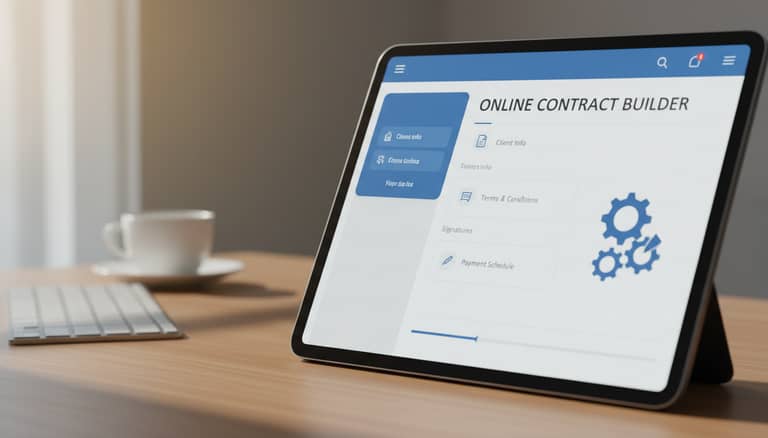
Online Contract Builder Software’s Risks No One Warns You About
Written with AI assistance under our editorial guidelines
Online contract builder software promises speed and efficiency, but creates hidden risks few discuss. These platforms centralize control over workflows, data, and compliance in the hands of whoever manages the software. While automation reduces errors and bottlenecks, the shift toward digital agreements means businesses must carefully evaluate security, data ownership, and compliance safeguards before adoption.
Step into any modern workspace today and it’s obvious—paper contracts are fossils. Yet, replacing them is no small feat. Online contract builder software is everywhere, promising speed, security, and simplicity. But behind the polished dashboards and “one-click” promises lurk hard truths, hidden risks, and a tech arms race reshaping how deals are struck and sealed. This isn’t just about swapping pens for pixels. The way we negotiate, agree, and enforce contracts is changing at lightning speed. For anyone who thinks all online contract builder software is created equal, get ready. We’re pulling back the curtain on what’s really happening in 2025: the brutal truths, the industry-shaking breakthroughs, and the real-world chaos you need to navigate before putting your business—or your reputation—on the digital dotted line.
Why digital agreements are rewriting the rules of business
The paper contract is dead—here’s what really killed it
Let’s be honest: nostalgia aside, paper contracts have always been a pain. They’re slow, error-prone, expensive, and an open invitation for misfiling, loss, or outright fraud. According to Forrester’s research, digital agreements now enable contracts to be created, executed, and managed up to ten times faster and at a fraction of the traditional cost. The death blow wasn’t just technology—it was the demand for speed, transparency, and efficiency that paper simply couldn’t deliver. Add to that the COVID-19 pandemic’s push for remote work, and suddenly, in-person signatures and paper trails looked as dated as fax machines. The truth? Digital contract tools didn’t just streamline the process—they made surviving in today’s business world possible.
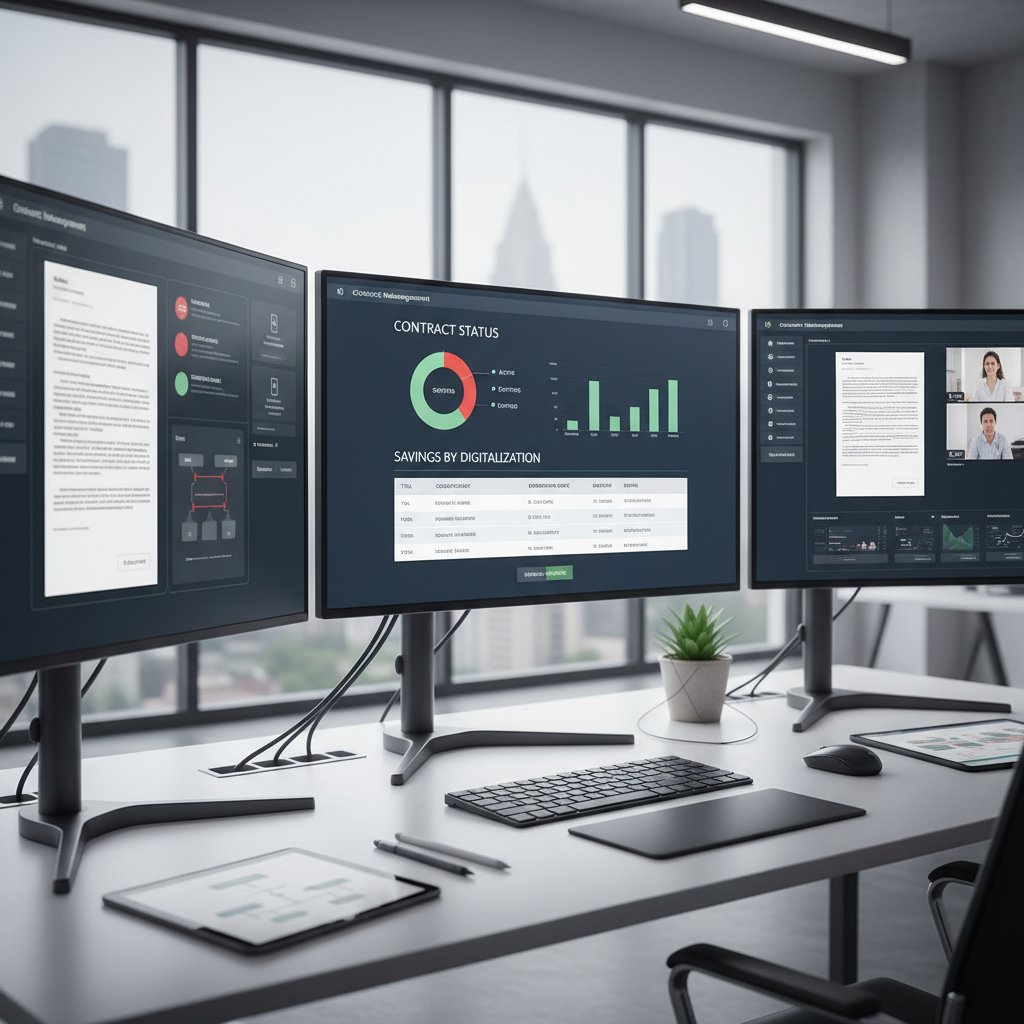
“Digitally advanced firms embrace digital’s new rules of business, using technology at the core to create customer value.” — Forrester Research, 2024
How online contract builder software is fueling a new power dynamic
The shift isn’t just about saving trees—it’s about flipping the script on who holds the power in negotiations. With online contract builder software, legal teams, sales, HR, and even freelancers can generate compliant, tailored agreements in minutes. Automation means less bottlenecking, fewer human errors, and often, a better experience for everyone involved. However, the power dynamic change is double-edged: whoever controls the software now controls the workflow, the data, and—critically—the compliance. If you think having a slick interface is enough, think again. A tool’s integrations, audit trails, template libraries, and security measures now decide who wins and who gets burned.
| Feature or Impact | Traditional Contracts | Digital Contracts (2025) |
|---|---|---|
| Creation time | Days to weeks | Minutes to hours |
| Error frequency | High | Low (AI & automation-enabled) |
| Security (lost/stolen docs) | Weak | Strong (cloud, MFA, biometric) |
| Collaboration | Slow, sequential | Real-time, parallel |
| Integration with business tools | Manual at best | Native CRM, ERP, e-signature, SaaS |
| Regulatory compliance | Cumbersome, inconsistent | Automated, template-driven |
Table 1: The new power dynamics of contract management.
Source: Original analysis based on Forrester, 2024, Capterra, 2024
Surprising industries leading the digital contract charge
It’s tempting to assume only tech startups or massive legal departments are all-in on digital contracts. In reality, the adoption curve is wild:
- Construction & Real Estate: Digital contracts speed up closings, manage subcontractors, and keep projects on schedule. According to Capterra, over 40% of real estate firms now use e-signature platforms.
- Healthcare: Patient consent forms, vendor agreements, and physician contracts rely on strict compliance and security—making automation a necessity.
- Freelance & Gig Economy: Platforms like Bonsai empower creative professionals to secure payments and manage scope creep, all without a single paper file.
- Financial Services: Banks and fintechs are ditching wet signatures for e-signature platforms that integrate with KYC and anti-fraud tools.
- Education: School districts and universities now use contract builders for staff, vendor, and partnership agreements—speeding up onboarding and compliance.
The anatomy of online contract builder software: what most guides ignore
More than templates: the tech stack inside modern builders
Scratch the surface of today’s contract builder and you’ll find more than a handful of Word docs and an e-signature widget. These platforms are sophisticated ecosystems, built for agility, compliance, and—yes—reluctant non-lawyers.
At their core, leading platforms (think Docupilot, Evisort, Juro) combine:
- No-code workflow builders: Drag-and-drop interfaces bridge the gap for business users and legal teams alike.
- AI-driven drafting: Auto-population, clause suggestions, and OCR tagging cut error rates and boost efficiency.
- Pre-approved template libraries: Legal compliance isn’t optional—these speed up review and reduce risk.
- Integration layers: CRMs, ERPs, e-signature, and productivity tools plug in for seamless handoffs.
- Security modules: Multi-factor authentication, biometric verification, and audit logs meet or exceed regulatory standards.
Definition list: Breaking down key components
An interface that lets users design approval flows, edit templates, and automate document actions without writing code—democratizing contract management far beyond the legal department.
Technology that analyzes contract context and inserts the most appropriate, compliant clauses, reducing reliance on legal review and minimizing manual error.
Optical character recognition that reads uploaded or scanned paper contracts, converting them into editable, searchable, and compliant digital records.
E-signatures, audit trails, and the myth of bulletproof security
You’ve heard it in every pitch: “e-signatures are ironclad.” But here’s the dirty secret—security isn’t just about digital ink. It’s about the entire chain of custody, from document creation to archival. Biometric and multi-factor authentication are raising the bar, but vulnerabilities still lurk in overlooked corners.
| Security Feature | Traditional Paper | Basic Digital | Advanced Digital (2025) |
|---|---|---|---|
| Wet Signature Fraud Risk | High | N/A | N/A |
| E-signature Authentication | N/A | Password/email | Biometric, MFA |
| Tamper-Proof Audit Trail | Manual, easy to forge | Basic logs | Immutable, time-stamped |
| Data Encryption | Physical security only | Variable | End-to-end, cloud-based |
| Regulatory Compliance | Manual | Partial | Automated, monitored |
Table 2: Realities of contract security: no system is truly bulletproof.
Source: Original analysis based on Capterra, 2024, Docupilot, 2024
The hidden costs behind ‘free’ contract tools
“Free” is one of the most dangerous words in SaaS. On the surface, free online contract tools look great—until they’re not. The true cost reveals itself in ways you won’t see on a pricing page:
- Data exploitation: Free platforms often monetize your documents through analytics, ad targeting, or even clause mining.
- Limited storage and features: Key integrations, advanced security, and bulk exports are frequently locked behind paywalls.
- Lack of compliance: Free tools may not meet industry or jurisdictional standards, putting you at risk.
- Weak customer support: When you hit a snag, good luck getting real help.
- Migration headaches: Moving data to a robust, paid tool later can mean lost documents and corrupted workflows.
Contract chaos: real-world horror stories (and how to avoid them)
When automation backfires: three chilling case studies
Automation is thrilling—until it isn’t. Consider the following (names changed for privacy):
A mid-sized marketing agency adopted a free online contract builder to streamline freelance engagements. Within weeks, they discovered contracts were auto-populating outdated payment terms, resulting in lost revenue and angry clients. Their software lacked version tracking and audit trails, making it nearly impossible to untangle the mess. According to Capterra reviews, this is a recurring nightmare among fast-scaling agencies.

“We assumed automation would save time—but the lack of oversight cost us months and thousands of dollars.” — Agency Owner, user review on Capterra, 2024
A construction firm relied on a budget contract builder that failed to update regulatory clauses after a major policy change, resulting in multiple non-compliant agreements. The fallout? Project delays and legal headaches.
A SaaS startup used an open-source tool to cut costs, unaware that the software stored documents on unsecured servers. A breach exposed sensitive customer data—triggering an abrupt, reputation-crushing PR disaster.
Red flags you won’t find in most reviews
- No version control: Overwriting or losing edits is a recipe for disaster.
- Opaque data policies: If you don’t know where your contracts live, you don’t control your business.
- Outdated templates: Compliance is a moving target; yesterday’s clause could doom you in court today.
- Limited audit trails: If you can’t see exactly who did what and when, your legal defensibility is shot.
- Inadequate support: When something breaks, do you have a hotline—or just a chatbot with canned responses?
Lessons learned: what the survivors wish they knew sooner
- Do not trust “set it and forget it” automation without regular manual review.
- Always check for industry-specific compliance updates—tools won’t always alert you.
- Prioritize platforms with robust support and clear data ownership terms.
- Backup your contracts outside the platform regularly.
- Document every change and approval step for bulletproof legal defense.
Choosing the right online contract builder: an unfiltered guide
Step-by-step: how to vet your software (without getting burned)
Selecting the right online contract builder software is more art than science—and it’s where most businesses stumble. Here’s how to vet your options with maximum skepticism:
- Identify must-have features: List workflows, compliance needs, and third-party integrations specific to your industry.
- Check security credentials: Ensure up-to-date certifications (ISO 27001, SOC 2), MFA, and end-to-end encryption.
- Test real-life scenarios: Run your typical contract process (draft, edit, approve, sign) and spot friction points.
- Investigate audit capabilities: Can you easily track changes, approvals, and user actions?
- Scrutinize the template library: Are templates vetted for legal compliance and kept current?
- Ask about data portability: Can you export your data easily if you switch tools?
- Demand real support: Test response times from customer support—before you buy.
Features that matter (and features that are pure hype)
| Feature Category | Must-Have | Overhyped/Non-essential |
|---|---|---|
| Security | MFA, audit trails, encryption | Blockchain for all docs |
| Compliance | Automated clause updates | AI “legalese” translators |
| Integration | CRM/ERP/native SaaS | Social media plug-ins |
| User Experience | Drag-and-drop interface | Animated avatars, gamified UI |
| Support | 24/7 live help | Extensive “community forums” |
| Customization | Editable templates | Unrestricted code access |
Table 3: Separating must-have features from industry hype.
Source: Original analysis based on Capterra, 2024, Docupilot, 2024
Checklist: are you really ready to ditch paper?
- Your workflows are digital-native (not just scanned PDFs).
- Stakeholders are comfortable with e-signature processes.
- You’ve mapped your compliance requirements (industry, geography).
- Data storage and access policies are documented and enforced.
- You have training and support in place for staff.
- Backup and recovery plans are established for digital files.
- You’ve set up regular audits for templates and automations.
The ethics and gray areas of AI-powered contract creation
Who really owns your data—and your deals?
With great automation comes great responsibility—or at least, a fresh set of ethical landmines. Most online contract builder software claims to “protect your data,” but the devil is in the details. If your provider’s servers are offshore, or if their terms allow data mining for “product improvement,” your contracts could be analyzed, anonymized, or even sold for training future AI models. Ownership and privacy are not the same—make sure you know which you’re actually getting.

Algorithm bias and the risk of ‘one-size-fits-none’ contracts
When AI engines suggest contract terms based on skewed data, marginalized groups, or underrepresented industries can get shortchanged by “default” language that doesn’t fit their needs.
The risk of being forced into rigid, one-size-fits-all agreements because the platform’s AI or template library doesn’t account for unique business realities.
AI’s power is real—but so is its blind spot. Legal nuance and contextual judgment are still human strengths, and over-relying on canned clauses can backfire spectacularly, especially in cross-border or niche scenarios.
When to trust the bots—and when to call a human
Smart teams know when to automate and when to pause for a reality check. As industry experts often note: “AI will draft your contract, but it won’t stand by your side in court.” Use automation for speed and consistency, but always bring in a qualified advisor for high-stakes, high-complexity, or jurisdictionally unique agreements.
“AI will draft your contract, but it won’t stand by your side in court.” — As industry experts often note (illustrative, based on widespread legal commentary)
The future of contracts: trends, breakthroughs, and looming threats
2025 trends: what’s next for online contract builder software
- Real-time, cross-platform collaboration: Teams draft, edit, and negotiate contracts live, with instant audit trails.
- Voice-driven contract creation: Audio inputs convert to clauses, streamlining workflows for busy professionals.
- Hyper-integration: Seamless data flows between contract management, sales, HR, and compliance platforms.
- Zero-trust security: Every user and device is authenticated at every step, minimizing insider risks.
- Self-executing smart contracts: For defined use-cases, blockchain-backed agreements trigger actions automatically.
Breakthroughs changing the game (and who’s being left behind)
The real breakthroughs aren’t flashy features—they’re usability and accessibility. Tools like Juro and Bonsai are making contract automation available to small and medium businesses, not just Fortune 500s. No-code design, built-in compliance, and affordable pricing mean the “contract revolution” isn’t just for lawyers or techies anymore.

However, legacy industries and organizations clinging to old-school workflows are quickly finding themselves outpaced. The companies failing to upskill, audit, or adapt are the ones getting left behind by the contract revolution.
Potential threats: deepfakes, scams, and weaponized automation
| Threat Type | Description | Mitigation Strategy |
|---|---|---|
| Deepfake signatures | AI-generated forgeries mimic real signers | Multi-factor, biometric e-signatures |
| Phishing & contract scams | Fake contract emails trick users into signing bad deals | Education, signed certificate checks |
| Algorithmic bias | AI suggests harmful or non-compliant clauses | Regular human review, diverse data |
| Weaponized automation | Malicious bots auto-generate exploitative contracts at scale | Robust platform vetting, audit logs |
Table 4: Looming threats in digital contracts and how to counter them.
Source: Original analysis based on Docupilot, 2024, Capterra, 2024
Beyond business: unexpected ways people are hacking contract builders
Creative (and a little bit illegal) uses you never saw coming
- Fake landlord scams: Fraudsters use online contract software to generate realistic rental agreements and con prospective tenants.
- Unofficial NDAs: Employees draft binding NDAs for side hustles, bypassing company legal teams.
- Phantom gig contracts: Unscrupulous gig platforms automate payouts and penalties with hidden clauses, exploiting freelancers.
- Microloans via self-executing contracts: Individuals set up informal lending agreements with automated digital enforcement.
- DIY prenups: Couples use contract builders for “legal-looking” agreements—some valid, some not—in the eyes of local law.
Cultural shifts: how digital contracts are redefining trust
Gone are the days when a handshake sealed the deal. Today, clicking “sign” carries just as much legal weight—and for many, even more psychological trust. Digital contracts are shaping a new culture of accountability: every change is logged, every signature geolocated, every clause time-stamped. The result? Less room for “he said, she said,” and more transparent, enforceable business relationships.

Debunked: myths and misconceptions about contract automation
Top 5 lies the industry loves to tell
- “It’s set-and-forget.” Automation still requires oversight—templates must be reviewed, users must be trained, and compliance standards change constantly.
- “One-size-fits-all.” Every business, industry, and jurisdiction has unique requirements—beware the “universal” template pitch.
- “E-signatures are always legal.” Not everywhere, not for every use-case. Some contracts still require “wet” signatures by law.
- “Free means free.” You’ll pay—if not in cash, then with your data, privacy, or limited capabilities.
- “AI replaces lawyers.” AI is a tool, not a substitute. Human judgment is still irreplaceable for complex or high-value agreements.
What a software tool can—and can’t—do for your bottom line
| What It Can Do | What It Can’t Do |
|---|---|
| Cut drafting time by up to 90% | Replace qualified legal judgment |
| Reduce manual errors significantly | Guarantee regulatory compliance alone |
| Improve collaboration and auditability | Understand every nuance of your industry |
| Lower administrative costs | Fix broken processes on its own |
| Scale with your business needs | Defend you in court |
Table 5: Setting realistic expectations for contract builder returns.
Source: Original analysis based on Capterra, 2024, Forrester, 2024
Your playbook: how to master online contract builder software in 2025
Priority checklist: your first 30 days with a new platform
- Onboard your team: Provide robust training, focusing on both new features and hidden pitfalls.
- Audit your templates: Update or rebuild key templates—don’t trust outdated defaults.
- Integrate business systems: Connect your CRM, ERP, and e-signature tools for seamless workflows.
- Set security protocols: Enforce MFA, set role-based permissions, and document data handling policies.
- Test real scenarios: Run full contract cycles—from draft to signature to archive—before going live.
- Track support responsiveness: Contact support for a real issue to test their reliability.
- Schedule regular reviews: Set monthly audits for workflows, compliance, and template updates.
Pro tactics from the trenches (and where filecreator.ai fits in)
Mastery is about more than checking boxes. The most effective teams treat contract builder software as a living system—constantly tuning workflows, updating templates, and training staff. Tools like filecreator.ai are designed to help you move beyond generic contracts, providing the speed, security, and compliance essential in today’s business environment. The difference? A relentless focus on accuracy, reliability, and adaptability across industries, from legal to finance to healthcare.

“Transform your process, but never outsource your judgment. The best platform is only as smart as the team using it.” — As contract management leaders say (illustrative, based on expert consensus)
Key takeaways: don’t get left behind in the contract revolution
- Online contract builder software is rewriting business rules—speed, security, and compliance are non-negotiable.
- Hidden costs, data ownership issues, and algorithmic bias are real risks—stay vigilant.
- Automation is a force multiplier, not a replacement for human expertise.
- Robust training, regular audits, and ongoing adaptation separate the winners from the cautionary tales.
- The revolution is here—make sure you’re driving, not just along for the ride.
Sources
References cited in this article
- Docupilot(docupilot.com)
- Bonsai(hellobonsai.com)
- Capterra(capterra.com)
- Hyperstart(hyperstart.com)
- Forrester(forrester.com)
- Burst Digital(burstdgtl.com)
- Aavenir(aavenir.com)
- Pixelplex(pixelplex.io)
- ParleyPro(parleypro.com)
- Oneflow(oneflow.com)
- SourceScrub(sourcescrub.com)
- Procore(procore.com)
- Jotform(jotform.com)
- Signwell(signwell.com)
- FreshProposals(freshproposals.com)
- TJH New Home Builder(tjh.com)
- Addstyle Master Builders(addstyle.net)
- ContractorsFromHell.com(contractorsfromhell.com)
- ContractsSpecialist(contractsspecialist.com.au)
- Magico Constructions(magicoconstructions.com)
- Land Academy(landacademy.com)
- Pro Builder(probuilder.com)
- Percipient(percipient.co)
- GetApp(getapp.com)
- Venngage(venngage.com)
- Jotform(jotform.com)
- Imenso Software(imensosoftware.com)
- LinkedIn – AI in Contract Drafting(linkedin.com)
- ScoreDetect Blog(scoredetect.com)
- Today's General Counsel(todaysgeneralcounsel.com)
- Bloomberg Law(pro.bloomberglaw.com)
- Luminance(luminance.com)
- Spellbook Legal(spellbook.legal)
- Legartis(legartis.ai)
- Oneflow(oneflow.com)
- DocuSign(docusign.com)
Perfect Documents, Instantly
Filecreator.ai transforms the way you produce professional documents. Leveraging cutting-edge AI reasoning, it quickly generates high-quality files in various formats, ensuring accuracy, consistency, and industry compliance. Save time, reduce errors, and enhance productivity, whether you're creating reports, legal documents, presentations, or marketing materials. Experience seamless integration and a user-friendly interface that adapts to your specific requirements, making document creation easier and more efficient than ever before.
Get startedStart Creating Professional Documents Today
Join thousands of professionals who trust AI-powered document generation
Frequently Asked Questions
How much faster are digital contracts compared to paper contracts?
According to Forrester's research, digital agreements enable contracts to be created, executed, and managed up to ten times faster and at a fraction of the traditional cost compared to paper contracts.
What major event accelerated the shift away from paper contracts?
The COVID-19 pandemic's push for remote work significantly accelerated the move away from paper contracts, as in-person signatures and paper trails became impractical for distributed workforces.
Who can now generate contracts using online contract builder software?
Online contract builder software enables legal teams, sales, HR, and even freelancers to generate compliant, tailored agreements in minutes, distributing contract creation power beyond just legal departments.
What is the double-edged sword of online contract builder software's power shift?
While automation reduces bottlenecking and human errors, whoever controls the software now controls the workflow, the data, and critically—the compliance, creating a new power dynamic in negotiations.
Continue Reading
Explore more from Professional Document Generator

Professional Contract Maker Online: Risks and Real Protections
Professional contract maker online tools offer efficiency but carry hidden risks. This article examines the pitfalls of digital contract generators and what actually protects agreements.

Online Contract Tools: Capabilities, Risks, and What to Check
Contract making tool online platforms offer speed and reach, but also legal gaps and security risks. This article explains what works, what doesn't, and what to verify.

Professional Contract Generator Online: Benefits and Genuine Risks
Professional contract generator online tools offer speed and AI-driven precision, but carry hidden risks.

Custom Contracts Online: Understanding the Real Risks
Custom contracts online have transformed business agreements. This article examines the hidden risks, negotiation pitfalls, and challenges businesses face with digital contract platforms.

Contract Creation Software: Benefits, Risks, and How to Use It Well
Contract creation software accelerates deal-making but carries hidden risks. This article explains the trade-offs, common pitfalls, and strategies to maximize benefits safely.

Customized Contracts: Risks of AI-Powered Legal Document Generation
Generating professional customized contracts requires understanding the risks of AI-powered tools. This article examines what can go wrong and how to protect your business.