


Marketing Materials Creation App in 2025: How to Avoid the Good Enough Trap
Written with AI assistance under our editorial guidelines
Marketing materials creation apps democratize design, allowing startups and enterprises equal access to templates and AI-driven tools. However, 73% of marketers struggle to differentiate their content in an oversaturated market where "good enough" no longer suffices. Success requires moving beyond slick interfaces and generic AI outputs to create bold, distinctive brand messaging that cuts through noise.
The age of the marketing materials creation app is upon us, and not a moment too soon—or too late, depending on who’s holding the creative reins. With 82% of marketers doubling down on content, but 73% admitting it’s harder than ever to stand out, the market is crowded, noisy, chaotic. Welcome to 2025: the year where a slick UI and a clever AI aren’t enough. You’re up against relentless competition, content saturation, and an audience allergic to sameness. This is the playbook for brands surviving the digital arms race, where “good enough” gets you forgotten and only the bold cut through the noise. In this searing deep dive, we pull back the curtain on the marketing materials creation app phenomenon—unveiling harsh realities, hidden costs, and the essential questions nobody wants to answer. Buckle up. The truth about automated marketing collateral is more provocative, and more necessary, than the industry would have you believe.
The marketing materials revolution: how we got here
From ad agencies to AI: a brief history
Once upon a time, the power of brand messaging rested in the hands of creative agencies—swanky offices, big egos, and even bigger invoices. Fast forward through centuries: from the printing press in the 1400s enabling mass distribution, to the relentless machine of the Industrial Revolution churning out posters and pamphlets by the millions. The 1990s urban agencies were temples of creative genius, but the real revolution arrived quietly, coded in lines of algorithmic logic: AI-powered marketing materials creation apps.

The democratization of design tools isn’t just a buzzword—it’s an existential shift. Today, startups and multinationals alike can wield the same arsenal of templates, data-driven insights, and instant rendering tools. According to Omnicore’s 2025 statistics, 60% of U.S. social media users have made a purchase after influencer endorsements, highlighting just how much the landscape has shifted from Madison Avenue to Main Street (Source: Omnicore, 2025).
| Year | Milestone | Impact on Marketing Materials |
|---|---|---|
| 1400s | Printing press | Mass communication possible |
| 1860s-1920s | Industrial Revolution | Mass production/distribution rises |
| 1990s | Desktop publishing, creative agencies boom | Design democratized, cost drops |
| 2010s | Cloud-based collaborative tools emerge | Real-time, remote teamwork |
| 2020s | AI-driven apps and automation | Instant, data-driven collateral |
Table 1: Key milestones in marketing materials technology evolution
Source: Original analysis based on Statista, Omnicore, 2025
"AI hasn't just changed the game—it rewrote the rules."
— Alex, Creative Director (Quote)
Marketing materials creation apps didn’t just speed things up; they flipped the creative power structure. Now, brand managers can sidestep the agency gatekeepers and get hands-on, building campaigns in hours instead of weeks. It’s a revolution that’s as risky as it is liberating: with every barrier broken, the responsibility (and risk) for brand voice and consistency lands squarely on your desk.
The rise (and risks) of automation
Automation promised a creative utopia: templates, drag-and-drop designs, and customizable brand kits at your fingertips. But speed has a shadow, and nowhere is this clearer than in the hidden costs of over-automation.
- Loss of nuanced creativity: Templates can’t always capture the subtleties of brand personality. One-size-fits-all leads to brands blending into the background.
- Brand dilution: Over-reliance on generic assets risks making your brand indistinguishable from the competition.
- Complacency in quality control: Automated workflows often skip essential human checks, leading to embarrassing errors.
- Data privacy pitfalls: Automated tools feed on user data, raising concerns about how much you’re sharing—and with whom.
As automation accelerates, so do the stakes. The creative role itself is morphing; marketers are forced to become both technologists and storytellers. According to Supermetrics’ 2025 report, marketers now handle 230% more data than they did three years ago, yet most struggle to extract actionable insights (Source: Supermetrics, 2025). Automation hasn’t replaced creative thinking—it’s made strategic vision more critical than ever.
Why 2025 is a tipping point
What’s different today? Remote work isn’t a trend—it’s the norm. Decentralized teams are collaborating across continents in real time, armed with AI-powered tools that auto-generate everything from pitch decks to influencer kits.
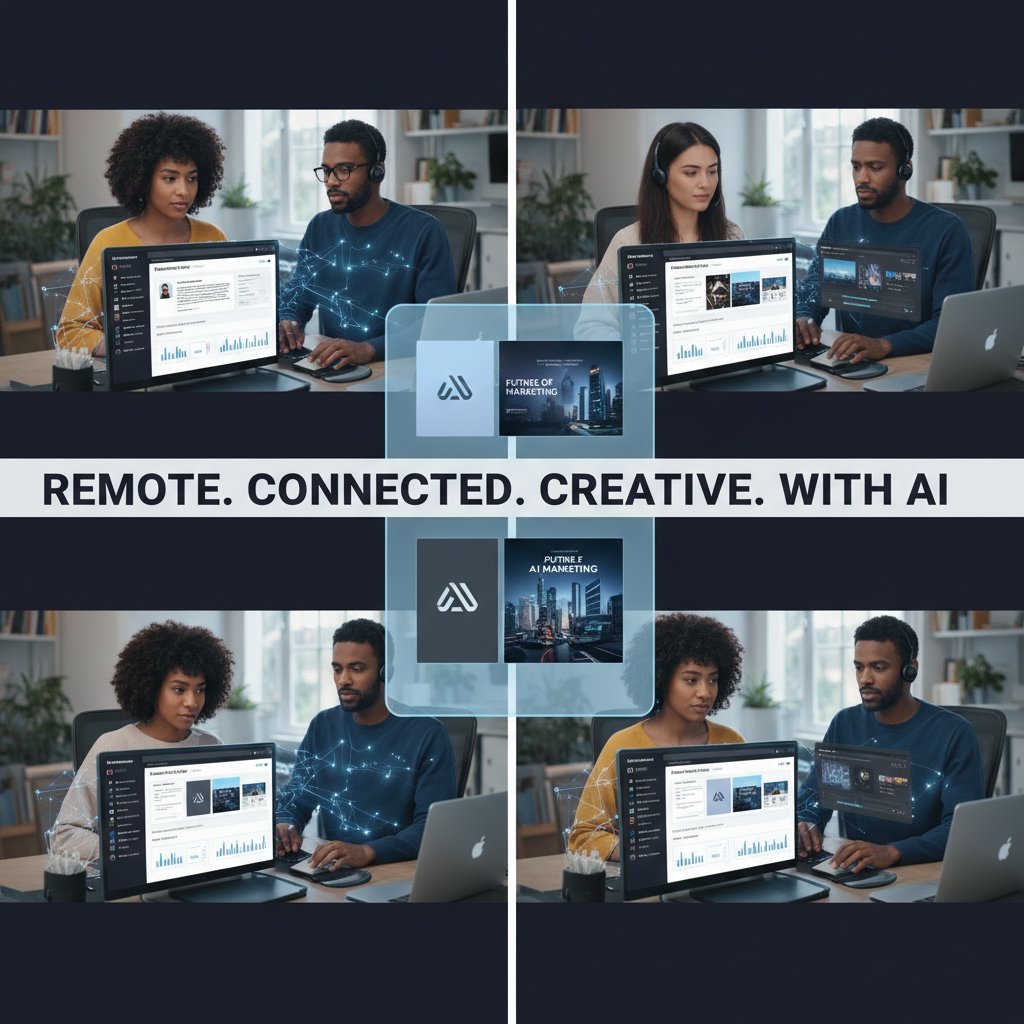
This hyper-connected world is a double-edged sword. On one hand, creativity and execution are democratized. On the other, the glut of content means standing out is a blood sport. Social media ad engagement has dropped to 31% globally. The fight isn’t just for attention—it’s for relevance. In this environment, the right marketing materials creation app isn’t a nice-to-have—it’s a survival kit.
What nobody tells you about marketing materials creation apps
Beneath the glossy UI: what’s really going on
Scratch beneath the surface of any “easy” app and the reality is far messier. Machine learning models, vast libraries of design templates, and real-time data feeds hum behind every drag-and-drop interface. It’s tempting to believe that the tech does all the work, but the truth is more complex.
| App | AI Personalization | Template Variety | Analytics Integration | Mobile Support |
|---|---|---|---|---|
| filecreator.ai | Advanced | Extensive | Full | Yes |
| Canva | Moderate | Large | Limited | Yes |
| Adobe Express | Advanced | Large | Full | Yes |
| Visme | Basic | Moderate | Limited | Yes |
Table 2: Core tech stack features across top marketing materials creation apps
Source: Original analysis based on Omnicore, 2025 and verified vendor data
“It’s not just drag-and-drop. There’s serious tech under the hood,” Jamie, a senior UX engineer, reminds us (Quote). The myth of effortless design ignores a brutal truth: user-friendly interfaces are built on layers of complexity that require maintenance, updates, and—yes—human oversight.
The 'good enough' trap: why most brands settle
Marketing teams are drowning in choice and deadlines. The result? “Good enough” has become the default. According to AdamConnell’s 2025 content marketing stats, 33% of B2B marketers have undocumented strategies and 20% have none at all—yet they churn out content anyway (AdamConnell, 2025).
But here’s the ugly secret: “good enough” quietly kills brands.
- Missed creative opportunities: Brands who push for excellence discover unique messaging and visual identity.
- Better audience engagement: Standout materials drive higher conversion rates and recall.
- Long-term brand equity: Custom, high-quality pieces build trust over time.
Settling for “average” isn’t just a creative loss—it’s a competitive risk. The algorithmic sameness of most templates means that the brands willing to push past “good enough” are the ones audiences remember.
The paradox of choice: overwhelmed by options
With hundreds of digital marketing tools at your disposal, decision fatigue is the norm. The sea of apps—each claiming best-in-class AI or template libraries—can paralyze even the savviest marketer.
How to narrow down your app options:
- Define your end goals: Don’t get seduced by features; clarify what your team actually needs.
- Prioritize must-haves: List your non-negotiables—format support, brand kit integration, compliance checks.
- Test workflows: Get hands-on. Trial versions reveal real usability.
- Check for integrations: Does the app work with your existing stack?
- Audit support: Is there real help, or just an FAQ rabbit hole?
The antidote to the paradox of choice is ruthless focus—and a willingness to walk away from apps that don’t fit your workflow.
Inside the machine: how AI-powered apps actually work
Smart templates, dumb mistakes
Template-driven workflows promise efficiency, but they’re not infallible. The core promise: pick a template, drop in text or images, and output a finished product. But not all templates are created equal—and not all automation is “smart.”
- Outdated assets: Some libraries recycle old trends, making your brand look stuck in the past.
- Inconsistent formatting: Poorly coded templates cause alignment and branding issues.
- Lack of accessibility: ADA compliance is often overlooked in template design.
- Limited customization: “Locked” templates restrict creative tweaks, trapping you in their box.
Automation gets you 80% of the way—but the last 20% can make or break your campaign. AI still stumbles on nuance, context, and brand-specific quirks, often requiring manual intervention to avoid embarrassing gaffes.
Data-driven design: who’s in control?
Today’s marketing materials creation apps don’t just churn out templates—they analyze user data to recommend layouts, headlines, and image choices. Real-time analytics feed directly into the creative process, enhancing engagement metrics and targeting precision.
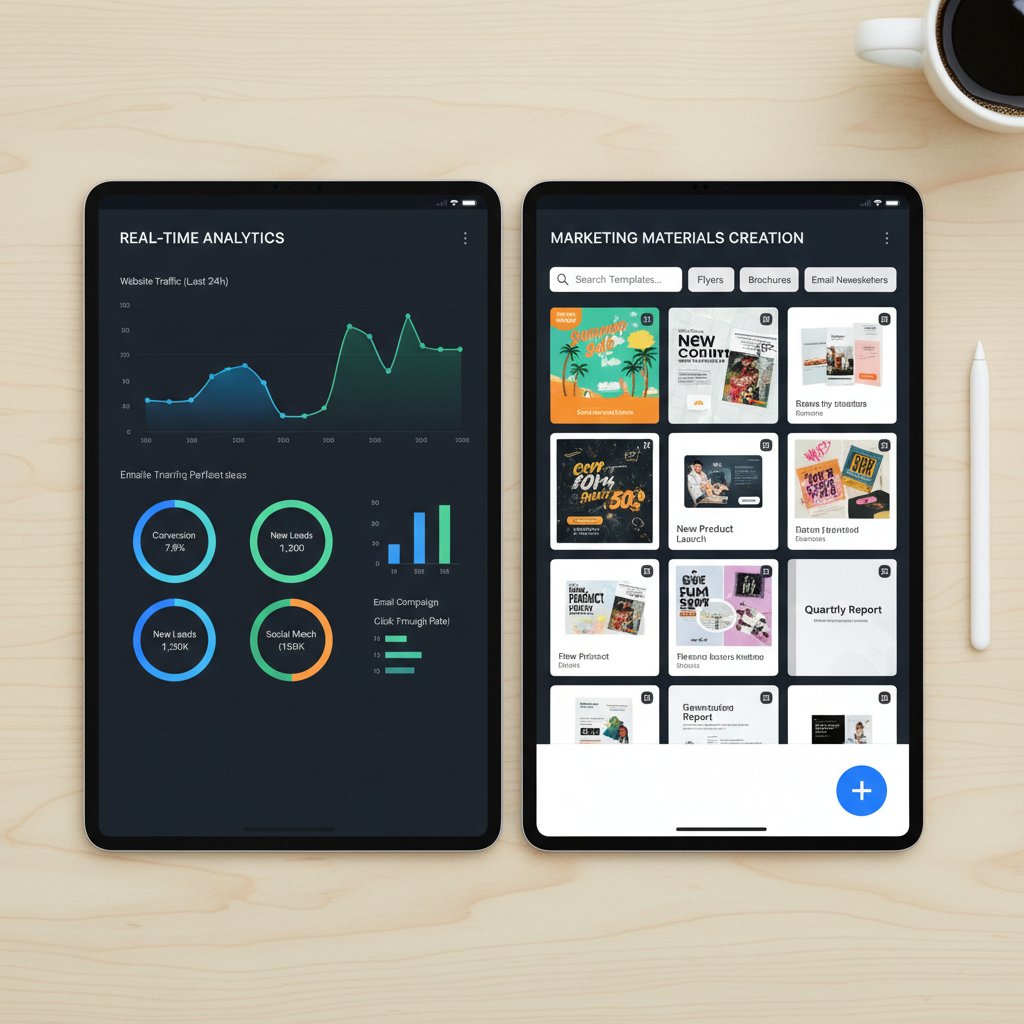
But there’s a catch: each click, upload, and edit feeds the machine. The more you use the app, the more you reveal about your brand’s strategy and preferences. The privacy debate isn’t hypothetical—your asset library may be quietly training someone else’s AI.
Control and transparency are now as essential as creativity. Understanding the app’s data policy and analytics dashboard isn’t optional—it’s brand hygiene.
Human vs. machine: finding the sweet spot
Creative outcomes vary radically between fully manual workflows and AI-generated materials. Here’s how they compare:
| Aspect | Manual Design | AI-Generated Workflow |
|---|---|---|
| Speed | Slower, iterative | Instant, batch output |
| Consistency | Variable, style drift occurs | High, with brand kit |
| Originality | High when expert-led | Moderate, template-limited |
| Error Rate | Human, but catchable | Automated, some blind spots |
| Adaptability | Unlimited, resource-dependent | Fast, but template-bound |
Table 3: Manual vs. AI-generated marketing materials comparison
Source: Original analysis based on Omnicore, 2025, expert interviews
The best brands blend both: they let AI handle the grunt work, then layer on human insight for the finishing touches. Hybrid workflows—where tech handles structure and humans inject personality—are the new creative gold standard.
Real-world wins and epic fails: case studies from the front lines
The startup that scaled fast (and what broke in the process)
Picture this: a SaaS startup leverages a marketing materials creation app to crank out campaign assets for a product launch. Growth is exponential—until a viral campaign exposes a critical flaw: inconsistent logo usage across templates. The team celebrates a successful launch, but cracks soon show.

What worked? The pace, the ability to A/B test collateral, and the capacity to quickly localize content for global markets. What didn’t? Quality control, brand asset management, and the dangerous assumption that automation equals perfection.
When brand consistency goes off the rails
One multinational corporation deployed dozens of creators across regions with little oversight. The result: a Frankenstein’s monster of fonts, colors, and messaging. It only took one off-brand flyer—printed and distributed at a major event—to trigger a crisis call.
Priority checklist for brand-safe marketing materials:
- Centralize your brand kit: Make official logos, typefaces, and color palettes accessible.
- Lock critical template elements: Prevent unauthorized edits to core branding.
- Conduct regular audits: Review assets before publication, every time.
- Educate your team: Build brand literacy into your onboarding.
"One sloppy flyer can undo months of hard work." — Riley, Brand Manager (Quote)
Brand consistency isn’t an accident. It’s a relentless, disciplined process—especially when everyone’s armed with creation apps.
Unconventional uses: beyond marketing
It’s not just marketers tapping into these tools. HR creates onboarding kits; legal teams prep compliance checklists; finance departments churn out branded statements. The best marketing materials creation apps flex across silos.
- Training manuals: Streamline employee onboarding.
- Investor reports: Turn raw data into polished presentations.
- Technical documentation: Standardize layouts for compliance.
- Event collateral: Automate ticketing, banners, and swag.
Cross-team adoption works when the tool allows for customization without compromising brand or security. The key: clear governance and permission hierarchies.
The big comparison: what sets the top apps apart?
Features that matter (and the ones that don’t)
Not all features are created equal. Must-haves: robust template libraries, real-time collaboration, brand kit integration, compliance checks, and export flexibility. Nice-to-haves: animated assets, niche format support, or advanced photo editing.
| Feature | filecreator.ai | Canva | Adobe Express | Visme |
|---|---|---|---|---|
| AI-driven document creation | Yes | Limited | Yes | Basic |
| Multi-format export | Full | Partial | Full | Partial |
| Industry templates | Extensive | Large | Moderate | Moderate |
| Real-time editing | Yes | No | Yes | No |
| Integrated compliance | Automated | Manual | Automated | Manual |
Table 4: Feature matrix of leading marketing materials creation apps for 2025
Source: Original analysis based on verified vendor documentation and Omnicore, 2025
Expert consensus is clear: the tools that blend creative flexibility with compliance and data-driven insights are the ones to watch.
Price vs. value: is free ever worth it?
Free tools are seductive, but there’s always a cost—if not upfront, then in time, branding, or hidden fees. Teams using free tiers often hit paywalls or discover limitations in output quality and support.

Long-term ROI trumps upfront savings. Investing in a tool that reduces manual rework, minimizes errors, and scales with your needs pays off—especially as your campaigns become more complex.
User experience: the overlooked battleground
A slick UI is meaningless if it sabotages productivity. Hidden menus, clunky export workflows, or poor mobile optimization can drain hours from your week.
- Unintuitive navigation: Buries key features, causing frustration.
- Slow rendering: Kills agile workflows and creativity.
- Accessibility gaps: Leaves team members out, undermining inclusion.
- Buggy mobile support: Hampers remote and on-the-go editing.
Prioritize tools with responsive support, a strong community, and a commitment to accessibility. The best marketing materials creation apps meet you where you are—on desktop, tablet, or phone.
Common myths about marketing materials creation apps—debunked
Myth: Templates kill creativity
The loudest critics argue that templates stifle originality, but reality paints a different picture. Well-designed templates are creative springboards, not cages. They let you focus energy on messaging and strategy, rather than reinventing layouts.
Definition List:
A centralized collection of visual assets—logos, colors, fonts—that ensures consistency across all marketing materials. Essential for large teams and automated tools.
Dynamic templates that adapt content and design elements based on brand guidelines and user preferences, often powered by AI.
Permissions that determine who can modify core template elements, safeguarding brand integrity.
Case after case shows that creative teams who customize templates and build unique asset libraries outperform those who rely on default options.
Myth: AI design is always generic
If you think AI-generated collateral is doomed to be bland, you’re missing the point. Leading apps incorporate user data and brand kits to produce outputs that are anything but cookie-cutter.

To get custom results, guide the AI: upload your assets, set detailed brand parameters, and review outputs critically. The best tools learn your preferences and evolve—if you invest in training them.
Myth: You don’t need a pro if you have an app
Here’s the bottom line: automation accelerates creation, but it doesn’t replace taste, strategy, or storytelling acumen. Professionals add value through nuanced brand understanding, creative risk-taking, and quality control.
"Tech speeds things up, but it doesn’t replace taste." — Morgan, Creative Strategist (Quote)
Blend expert input with automation by using standardized workflows for fast output, then relying on seasoned marketers or designers for final polish.
Choosing the right app: your 2025 decision guide
What to look for (and what to avoid)
Choosing a marketing materials creation app isn’t about chasing the latest trend—it’s about matching features to your actual needs.
- Clarify objectives: Are you prioritizing speed, compliance, or creative control?
- Audit your workflows: Identify bottlenecks or pain points.
- Request demos: Don’t settle for static screenshots.
- Check integration: Does it play well with your CRM, DAM, or analytics tools?
- Evaluate support: Do they offer real, human help?
Assess the community, update cadence, and real-world case studies before you commit. A tool that adapts to industry shifts—like those from filecreator.ai—will serve you long after today’s trends fade.
Questions you must ask before committing
Before you stake your brand’s reputation, grill app vendors with these questions:
- What data permissions do you require, and who owns uploaded assets?
- How often are templates and compliance modules updated?
- Does the app support multi-format export and accessibility standards?
- What’s the process for onboarding and training?
- Is there 24/7 support, and how responsive is it?
Deal-breakers: vague answers, infrequent updates, or a lack of transparency about data use. Avoid buyer’s remorse by demanding clarity up front.
How to future-proof your marketing toolkit
Staying ahead isn’t about chasing hype—it’s about building a modular, adaptable stack. The most resilient brands integrate flexible solutions like filecreator.ai that offer robust template libraries, compliance tools, and seamless export options.

When innovation cycles accelerate, you need a toolkit that grows with you—not one that locks you into last year’s workflow.
The future is now: trends, risks, and what’s next
AI arms race: where do we go from here?
Recent breakthroughs in generative AI and data analytics are redefining what’s possible in marketing collateral. Apps now deliver automated compliance checks, predictive content suggestions, and real-time audience targeting.
| Capability | 2025 Apps | Projected (2028) |
|---|---|---|
| Automated compliance | Yes | Hyper-personalized |
| Predictive analytics | Basic integration | Deep, real-time feedback |
| Cross-platform sync | Yes | Multimodal, device-agnostic |
| Custom brand AI training | Limited | Advanced, user-trained |
Table 5: Current vs. projected capabilities of leading marketing apps
Source: Original analysis based on Supermetrics, 2025, Omnicore, 2025
But with every leap, there’s a risk of losing control—or getting left behind if you don’t adapt.
Risks you can’t ignore: copyright, compliance, and chaos
Legal and compliance pitfalls can devastate brands. Here are the top risks:
- Copyright infringement: Using unlicensed images or templates.
- Data privacy: Mishandling customer or team data in cloud-based apps.
- Brand inconsistency: Poor version control or unauthorized edits.
- Regulatory noncompliance: Missing accessibility or industry-specific standards.
How to mitigate:
- Use verified, rights-cleared assets only.
- Regularly audit permissions and access.
- Stay current with local and global compliance needs.
- Choose vendors with transparent data policies (filecreator.ai and similar).
Risk management isn’t optional—it’s survival.
The new creative class: who wins and who loses?
As the power to create migrates from agencies to individuals, the “creative class” is being redefined. The winners are the ones who harness automation without sacrificing vision. The losers are those who hide behind templates, waiting for the next trend to save them.

This is the democratization of branding, where anyone with a sharp idea and the right app can compete. But the real winners are those who never treat their brand as an afterthought.
Your 2025 playbook: actionable steps for marketing domination
Quick-start checklist: getting more from your app
Ready to level up? Here’s your step-by-step guide:
- Centralize your brand assets: Upload logos, colors, and fonts to your app first.
- Train your team: Short, focused workshops beat long handbooks.
- Automate routine tasks: Use the app for batch processing, not critical campaigns.
- Review outputs: Human eyes catch what AI misses.
- Iterate relentlessly: Treat every campaign as an experiment.
Priority actions:
- Set up shared folders and permissions.
- Audit your templates for compliance and accessibility.
- Integrate analytics dashboards.
- Schedule quarterly workflow reviews.
- Stay plugged into industry updates.
The payoff: higher productivity, fewer mistakes, and a brand that’s both agile and bulletproof.
Building a brand that lasts (with or without AI)
Great branding survives technology cycles. Focus on these timeless rules:
- Clarity beats cleverness: Be understood, not just admired.
- Consistency builds trust: Never compromise your look or messaging.
- Adaptation is strength: Evolve with your audience, not at them.
- Story drives everything: Use tools to tell, not replace, your story.
In the age of automation, platforms like filecreator.ai complement your strategy by making high-quality, compliant output the default—not the exception.
Conclusion: the only thing worse than bad marketing is invisible marketing
In 2025, the starkest fate isn’t ridicule—it’s irrelevance. Brands that blend creative ambition with ruthless execution, using marketing materials creation apps as force multipliers, dominate. The rest fade into the digital haze, lost in a sea of “good enough.”

Ask yourself: will your next campaign be remembered, or will it vanish, unseen and unremarkable? The tools are here, the stakes are high. Use them wisely, or risk being another ghost in the content machine.
Sources
References cited in this article
- Omnicore Digital Marketing Stats 2025(omnicoreagency.com)
- Statista Marketing Statistics(hubspot.com)
- Supermetrics Marketing Data Report 2025(discover.supermetrics.com)
- Cropink Digital Marketing Statistics(cropink.com)
- AdamConnell Content Marketing Stats(adamconnell.me)
- History of Marketing - DDIY(ddiy.co)
- Denise Lee Yohn: History of Marketing(deniseleeyohn.com)
- Wikipedia: History of Marketing(en.wikipedia.org)
- LeadFuze: History of Content Marketing(leadfuze.com)
- Martech Zone: History of Marketing(martech.zone)
- Jasper.ai Blog(jasper.ai)
- Salesforce AI Marketing(salesforce.com)
- Sprout Social AI Tools(sproutsocial.com)
- ABA Banking Journal(bankingjournal.aba.com)
- AppsFlyer 2025 Trends(appsflyer.com)
- Influencer Marketing Hub 2025 Predictions(influencermarketinghub.com)
- Digital Market Reports: Marketing Misconceptions(digitalmarketreports.com)
- Click Consult: Marketing Myths(click.co.uk)
- Compose.ly: Content Marketing Myths(compose.ly)
- Desygner: Marketing Materials(desygner.com)
- AppGrooves: Top Apps(appgrooves.com)
- Adobe: How to Create Marketing Materials(adobe.com)
- Kimp.io: Paradox of Choice in Marketing(kimp.io)
- ClearVoice: Paradox of Choice(clearvoice.com)
- IBM: AI in Marketing(ibm.com)
- Salesforce: AI Marketing Tools(salesforce.com)
- Creatio: AI in Marketing(creatio.com)
- Digital Authority Partners: Common Pitfalls(digitalauthority.me)
- Fivestars Insights: Common Marketing Mistakes(blog.fivestars.com)
- Casual Astronaut: Content Marketing Mistakes(casualastronaut.com)
- DigitalDefynd: Epic Marketing Failures(digitaldefynd.com)
- StrategyOnline: Marketing Wins and Fails(strategyonline.ca)
- Amra and Elma: Marketing Case Studies(amraandelma.com)
- Strikingly: Unconventional Marketing Ideas(strikingly.com)
- Forbes: Innovative AI Applications(forbes.com)
- RoyerComm: Unconventional Uses of Printed Materials(royercomm.com)
- Protean Studios: Top Marketing Software(proteanstudios.com)
- Dev Chandra: Content Creation Apps(devchandra.com)
- UserTesting: Importance of UX(usertesting.com)
- Mailchimp: Data-Driven Marketing(mailchimp.com)
- Beautiful.ai: AI in Marketing(beautiful.ai)
- Fluent: App Marketing Predictions 2024(fluentco.com)
- ClickUp: Digital Marketing Apps 2024(clickup.com)
Perfect Documents, Instantly
Filecreator.ai transforms the way you produce professional documents. Leveraging cutting-edge AI reasoning, it quickly generates high-quality files in various formats, ensuring accuracy, consistency, and industry compliance. Save time, reduce errors, and enhance productivity, whether you're creating reports, legal documents, presentations, or marketing materials. Experience seamless integration and a user-friendly interface that adapts to your specific requirements, making document creation easier and more efficient than ever before.
Get startedStart Creating Professional Documents Today
Join thousands of professionals who trust AI-powered document generation
Frequently Asked Questions
What percentage of marketers are increasing their content production in 2025?
According to the article, 82% of marketers are doubling down on content in 2025.
Why is 'good enough' no longer a viable strategy for marketing materials in 2026?
The article states that with content saturation, relentless competition, and an audience allergic to sameness, 'good enough' gets brands forgotten—only bold approaches cut through the noise.
How have marketing materials creation tools democratized design?
The article explains that AI-powered marketing materials creation apps have enabled startups and multinationals to access the same templates, data-driven insights, and instant rendering tools that were previously exclusive to high-end creative agencies.
What is the main complaint from marketers about content creation in 2025?
While 82% of marketers are increasing content production, 73% admit it's harder than ever to stand out in the crowded, noisy, and saturated market.
Continue Reading
Explore more from Professional Document Generator

Marketing Material Generator Online: Myths Versus Reality
Marketing material generator online tools promise efficiency, but this article examines the myths and real strategies that separate successful brands from the rest.

Create Engaging Marketing Materials That People Can’t Ignore
Discover insights about create engaging marketing materials

How an Easy Marketing Materials Creator Protects Your Brand
An easy marketing materials creator combines speed with brand protection. This article explains how AI-powered tools help teams maintain authenticity while producing materials quickly.

Why Most Professional Marketing Materials Fail to Stand Out
Professional marketing materials must capture attention in a crowded market. This article explains how to create materials that avoid invisibility and establish credibility.

Marketing Document Creation Tools: Costs, Risks, and Workflow Impact
This article examines the best marketing document creation tool options, breaking down real costs and workflow challenges marketers face today.

Generate Marketing Collateral That Actually Converts in 2026
Discover insights about generate marketing collateral