


Online HR Document Preparation Is Now Your Biggest Risk Factor
Written with AI assistance under our editorial guidelines
Online HR document preparation has become critical because 68% of job candidates abandon applications due to complex forms, while 36% of companies still rely on paper-based onboarding prone to errors and compliance failures. Without digital solutions, organizations face growing legal risks and productivity losses.
Step into any HR department, and you’ll likely find an uneasy alliance between paper and pixels. Despite the rise of digital HR, most organizations still wrestle with outdated, risk-ridden document routines behind closed doors. Online HR document preparation isn’t just a buzzword—it’s the frontline of a workplace revolution, exposing the fragile underbelly of compliance, security, and productivity in modern companies. This isn’t about fluffy “digital transformation” slogans. It’s about the relentless, sometimes brutal reality that if your HR paperwork remains stuck in the analog age, you’re not just inefficient—you’re in danger.
Recent data exposes a staggering truth: 68% of candidates bail out of the application process midway because forms are too complex or clunky (peopleHum, 2023). Add to this the legal landmines of new regulations and the psychological cost of manual drudgery, and it’s clear—digital HR isn’t optional. It’s existential. In this in-depth exposé, we’ll rip the covers off the myths, showcase the disasters, and reveal how AI-driven platforms like filecreator.ai are rewriting the rules. From compliance chaos to psychological burnout, from risk to redemption, discover the seven brutal truths HR can’t ignore.
The hidden crisis in HR paperwork
Why most HR documents fail
For all the talk about digital transformation, paperwork remains HR’s Achilles’ heel. Even in 2025, 36% of organizations cling to paperwork-centric onboarding (SHRM, 2023). The result? Documents that are error-prone, non-compliant, and soul-crushingly inefficient. The numbers don’t lie: half of all employees quit over low pay, but a staggering 70% cite lack of growth, and 57% point to disrespect as reasons for leaving, according to peopleHum (2023). These aren’t just statistics—they’re red flags waving over broken HR processes.
Paper-driven HR documents tend to fail on two fronts: accuracy and agility. Errors slip in during manual entry, and revision cycles become endless. Worse, compliance is a moving target, especially with regulations like the EU Pay Transparency Directive complicating everything. According to Culture Amp, 2024, legal compliance for HR paperwork is now more complex than ever. It’s no wonder that employees and HR alike are frustrated.

“A well-architected ‘expert assistant’ can revolutionize how HR people work. We can become ‘full-stack’ HR professionals, find data about our teams in seconds instead of weeks.” — Josh Bersin, HR Industry Analyst, Josh Bersin, 2024
Real-world disasters: HR gone wrong
Imagine this: A multinational firm loses a superstar hire because their onboarding documents vanished in a sea of emails. Another mid-sized player faces a compliance audit only to discover half their contracts are missing signatures—or worse, stored on an ex-employee’s personal laptop. These aren’t horror stories. They’re lived realities for HR teams clinging to manual processes. According to Gallup (2023), employee engagement has a 3.8x greater impact on stress than work location, with paperwork-induced headaches fueling this problem.

When documents are scattered across shared drives, emails, and physical files, mistakes are inevitable. Sensitive data leaks, clients lose trust, and the brand’s reputation takes a hit no PR campaign can fix. According to a SHRM report, 2023, paperwork delays during onboarding are a primary reason new hires disengage or leave within months.
The unspoken emotional toll of manual HR tasks
Let’s talk about the elephant in the break room: the emotional exhaustion of manual HR. Every lost document, every duplicate form, every “urgent” revision eats away at morale. HR professionals are expected to be strategic partners, yet most spend their days firefighting paperwork.
Layer in constant regulatory changes and you have a recipe for chronic stress. According to Gallup (2023), engagement is the key driver of workplace stress, with tedious, repetitive document tasks at the center of employee burnout. This goes beyond inconvenience—it’s a silent productivity killer, draining organizations from the inside out.
From chaos to code: how digital HR documentation emerged
A brief, brutal history of HR paperwork
Human Resources began as a paperwork powerhouse—think rows of filing cabinets, carbon copies, and signature sheets passed from desk to desk. The pace was glacial, but the risk was high. From the 1970s onward, minor digitization crept in: spreadsheets, then basic word processors. But true transformation didn’t arrive until the 2010s, when cloud-based HR platforms started replacing paper. Yet, the scars remain: legacy systems, half-baked digital “fixes,” and rampant fragmentation.
| Era | Dominant HR Document Method | Key Risks | Typical Outcome |
|---|---|---|---|
| Pre-1990s | Paper files | Loss, theft, illegibility | Slow, error-prone |
| 1990s-2000s | Spreadsheets/Word docs | Version chaos, manual entry | Limited improvement |
| 2010s | Cloud storage | Fragmented systems, weak security | Siloed, semi-digital |
| 2020s-present | AI-powered online tools | New tech risks, rapid compliance | Agile, but vigilance needed |
Table 1: Evolution of HR document preparation and associated risks. Source: Original analysis based on SHRM, Culture Amp, Josh Bersin.

Covid-19: the remote work catalyst
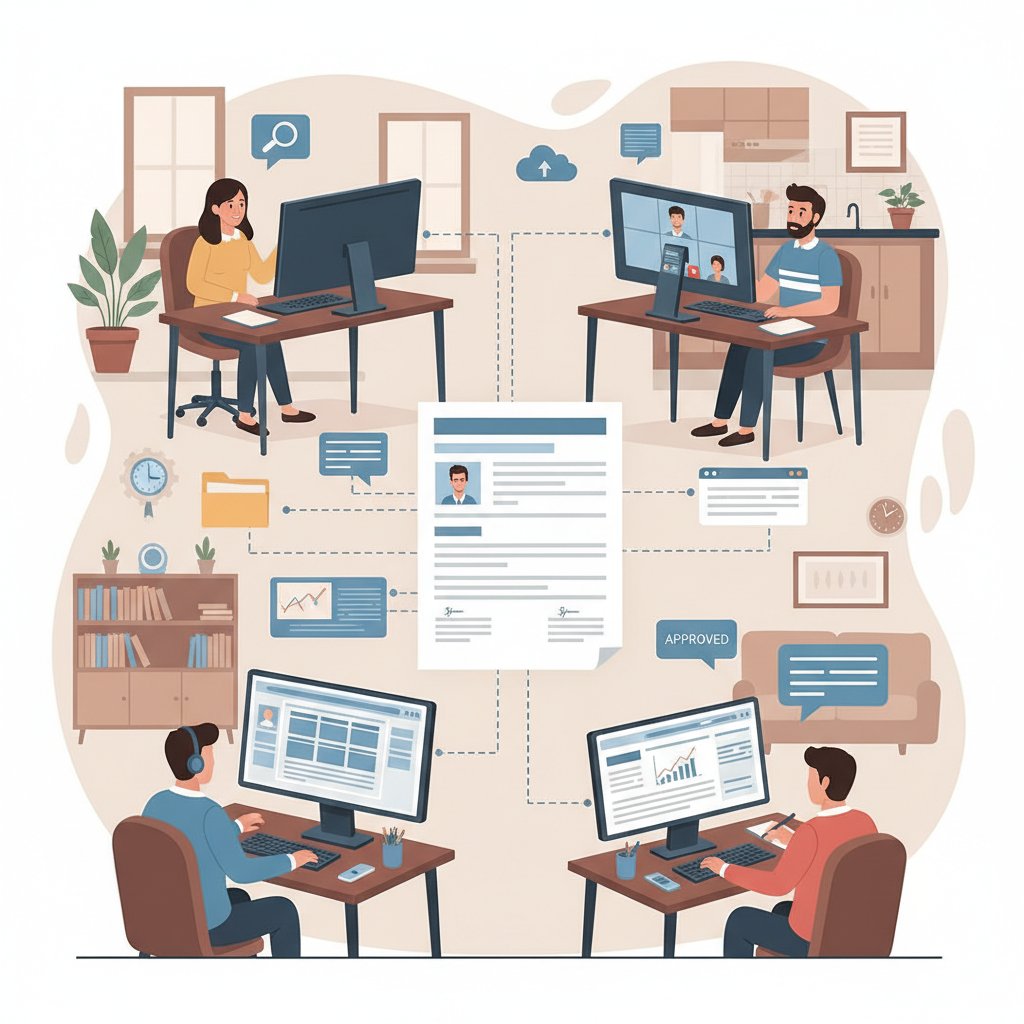
The pandemic didn’t invent remote work, but it did make digital documentation a survival skill. HR teams went from closed-door meetings to Zoom, from paper forms to online HR document preparation overnight. What was once a “nice to have” became non-negotiable. According to Owl Labs (2023), 29% of hybrid and remote employees now expect pay raises if forced back to the office—proof that remote-first documentation isn’t just about convenience, but about employee retention and competitive advantage.
Suddenly, lagging on digital transformation wasn’t just embarrassing. It was existential. Paper trails failed when offices closed. Companies without scalable, online HR documentation found themselves exposed—unable to hire, onboard, or comply with laws from afar. This global stress test forced even the most stubborn organizations to embrace online HR document preparation, or risk irrelevance.
AI’s arrival in the HR trenches
The latest wave isn’t just about digitizing forms—it’s about real intelligence. AI has bulldozed its way into HR, cutting data retrieval time from weeks to seconds, automating compliance checks, and even flagging errors before they metastasize. According to Josh Bersin, 2024, AI-powered HR tools have redefined the meaning of “full-stack” HR.
“A well-architected ‘expert assistant’ can revolutionize how HR people work. We can become ‘full-stack’ HR professionals, find data about our teams in seconds instead of weeks.” — Josh Bersin, 2024
But AI’s not a panacea. Tools are only as smart as their inputs—and the risk of automating bad practices is real. As more organizations turn to platforms like filecreator.ai, the competitive line isn’t just who goes digital first, but who goes digital smart.
The upshot? Data-driven HR teams see productivity jump by up to 15% (PerformYard, 2024), and companies that fail to catch up risk being outpaced—or outright replaced.
Debunking myths: what online HR document preparation really is
Myth vs. reality: common misconceptions exposed
Online HR document preparation has its evangelists and its skeptics. Let’s strip away the marketing and face the uncomfortable realities:
-
Myth 1: Online HR docs are just glorified PDFs.
Reality: Modern tools dynamically generate, update, and validate documents in real time, often integrating compliance checks and workflow automation. -
Myth 2: Online equals insecure.
Reality: Leading platforms use end-to-end encryption, robust access controls, and regular audits. Security risks exist—but they’re usually higher in email and paper-based workflows. -
Myth 3: Templates kill personalization.
Reality: AI-powered tools support deep customization—roles, locations, pay bands, even languages—at the click of a button. -
Myth 4: Digital HR docs are only for big companies.
Reality: SMBs and startups are among the biggest adopters, leveraging affordable online tools to compete with larger players. -
Myth 5: Compliance is an afterthought.
Reality: In 2025, legal compliance is built into the DNA of leading online document platforms, not bolted on as an afterthought.

Are online tools actually secure?
Security is the lightning rod in the digital HR debate. The reality? No system is invulnerable, but online HR document preparation platforms have made massive security strides. According to Culture Amp, 2024, top providers deploy advanced encryption, role-based access, and audit trails to thwart breaches.
| Security Feature | Paper-based HR | Online HR Document Generators | AI-powered Platforms |
|---|---|---|---|
| Access control | Low | High | Highest |
| Data encryption | N/A | Standard | Advanced (AES-256+) |
| Audit trails | Manual | Automated | Real-time monitoring |
| Compliance automation | None | Some | Built-in, real-time |
| Breach risk | High | Moderate | Low (with best practices) |
Table 2: Security comparison in HR documentation. Source: Original analysis based on Culture Amp, 2024; Josh Bersin, 2024.
But even the best tools can’t save you from human error or weak policy enforcement. As the research shows, over 60% of breaches still result from simple mistakes—lost passwords, “reply all” slip-ups, or rogue downloads. True security is a blend of robust technology and relentless human vigilance.
Organizations must regularly train HR staff on security hygiene and audit their chosen platforms. Compliance is not a checkbox—it’s an ongoing war.
Personalization vs. ‘one-size-fits-all’ fears
Another brutal truth: One-size-fits-all HR documentation is dead weight. Employees want recognition, not boilerplate. Online HR document preparation tools (especially those powered by AI) now allow granular personalization—contract clauses adjusted for local laws, onboarding tailored to roles, benefits aligned with seniority.
Personalization used to be a luxury reserved for elite firms. Now, with platforms like filecreator.ai, it’s a baseline expectation. A tailored experience isn’t just a “nice touch”—it’s a retention driver, helping HR teams stand out in a competitive job market.
Yet, beware the illusion of depth. Not all online platforms deliver true personalization—some merely automate template-filling. HR leaders must scrutinize their tools, demanding flexibility and nuance, not just speed.
The anatomy of a modern online HR document generator
Inside the machine: how it really works
Forget the marketing buzz—today’s HR document generators are less like “template pickers” and more like data-driven engines. Here’s the real deal:
- User logs in and selects a template (contract, onboarding packet, policy).
- The system pulls in real-time data—employee details, legal requirements, company preferences.
- AI layers on compliance checks, highlighting errors or missing fields.
- The user customizes sections (roles, pay, benefits) and, if needed, collaborates across departments.
- The document is generated in the preferred format (PDF, DOCX, etc.), ready for digital signing and secure distribution.

Key HR document generator terms:
AI in HR documentation means systems can “understand” context, flag anomalies, and suggest improvements—not just fill blanks.
Real-time legal checks built into the creation process, reducing regulatory risk and audit nightmares.
Seamless conversion to PDF, DOCX, PPTX, and more, ensuring documents are universally accessible.
Only authorized users can view or edit sensitive HR files, slashing internal security risks.
Automatic, uneditable records of every document change—your best friend in a compliance investigation.
AI-powered vs. template-driven: what sets them apart?
Not all online HR document generators are created equal. The gulf between AI-powered and template-driven systems is glaring:
| Feature | Template-driven Tools | AI-powered HR Document Generators |
|---|---|---|
| Personalization | Limited | Deep, contextual |
| Compliance Checking | Manual/Basic | Automated, real-time |
| Error Detection | Minimal | Proactive, AI-suggested |
| Integration | Siloed | API-rich, multi-platform |
| User Experience | Static | Dynamic, adaptive |
| Data Security | Variable | Advanced, with frequent updates |
Table 3: Comparative analysis of template vs. AI-powered HR document systems. Source: Original analysis based on Josh Bersin, 2024; peopleHum, 2023.
While template tools save time, they can also lock in outdated content and compliance gaps. AI-powered platforms give HR teams the edge—finding, fixing, and future-proofing critical documents at scale. But sophistication comes with complexity; onboarding staff requires training, and misuse can introduce new risks.
filecreator.ai: a new breed of online HR document generator
Enter filecreator.ai—a platform emblematic of the next generation. Designed to create professional, compliant HR documents instantly, it leverages advanced AI to eliminate bottlenecks, reduce errors, and enforce best practices. Its approach aligns with the latest research: real-time data integration, multi-format support, and built-in compliance. Whether you’re a global powerhouse or a scrappy startup, filecreator.ai’s ethos is simple—accuracy, speed, and adaptability for any HR document challenge.

Risks, red flags, and how to avoid disaster
Security nightmares: when online HR goes wrong
Let’s be blunt: Online HR document preparation can backfire spectacularly when security is half-baked. Think payroll details leaked via a misconfigured cloud folder, or sensitive contracts exposed through a weak password. According to a 2024 SHRM cybersecurity study, HR is a top target for cybercriminals—phishing, ransomware, and social engineering attacks are on the rise.

"Data leaks aren’t just embarrassing—they’re existential threats. Too many HR teams still underestimate the sophistication of today’s cyberattacks." — SHRM Cybersecurity Report, 2024
The lesson is brutal but clear: Your online HR document preparation platform is only as secure as your weakest process. Two-factor authentication, encrypted storage, regular audits, and relentless staff training are non-negotiable.
Compliance pitfalls and how to dodge them
Even with the best tech, compliance is a moving target. Laws change, standards shift, and one slip can cost millions. Organizations must build compliance checks into every stage of their document workflow, not just “at the end.” Here’s how:
- Regularly audit document templates: Ensure every clause reflects the latest laws and company policy.
- Automate legal updates: Use platforms that sync with regulatory databases, flagging outdated sections.
- Enable digital signatures: Legally binding and audit-proof, cutting the lag (and risk) of manual signings.
- Train end-users: Compliance isn’t set-and-forget—HR staff must understand how to use these tools correctly.
- Maintain audit trails: Track every change, every signature, every access for seamless audits.
If compliance falls through the cracks, the fallout is severe: fines, lawsuits, and irreparable brand damage. According to Culture Amp, 2024, the EU Pay Transparency Directive alone has triggered compliance overhauls in thousands of firms.
Never rely on “set and forget.” Compliance is an always-on process that demands attention and constant updating.
Red flags: what experts warn about
Not all online HR tools are created equal. Watch for these warning signs:
-
Lack of regular security audits: If you can’t see the audit logs, you’re already exposed.
-
Inflexible templates: If you can’t adapt documents to new laws or local requirements, run.
-
Hidden costs: Surprise fees for “premium” features or overage charges can torpedo budgets.
-
Weak user management: If everyone has admin access, your risk multiplies.
-
No integration with core HR systems: Siloed HR docs lead to duplicate work and mistakes.
-
Relying solely on automation without human review can embed mistakes and miss context.
-
Failing to train all HR staff on new digital tools invites errors and data breaches.
-
Ignoring user feedback and not iterating on tools leads to compliance gaps and inefficiency.
Case files: how companies are winning (and losing) with online HR docs
Startups rewriting the rulebook
Startups thrive on speed, but HR paperwork used to be their Achilles’ heel. Now, the most agile startups use online HR document preparation to onboard talent in minutes, not weeks. Take, for example, a Berlin-based fintech that slashed onboarding drop-off rates by 40% after switching to an AI-powered document platform (Josh Bersin, 2024). The secret? Automating compliance, digital signatures, and instant document delivery.

With the right tools, these firms are not just keeping up—they’re setting the pace for established giants stuck in paperwork quicksand.
But it’s not all sunshine. Startups that overlook security or compliance often face painful course corrections—sometimes involving regulatory audits or public embarrassment on social media.
Enterprise missteps: cautionary tales
Large organizations aren’t immune to disaster. One Fortune 500 company faced a seven-figure lawsuit after an outdated contract template failed to reflect new labor laws. Another global retailer missed a critical compliance deadline because of fragmented document storage.
The lesson? The larger the company, the higher the stakes. Complexity breeds risk, and “just digitizing” isn’t enough.
"It took a single non-compliant contract for us to realize that our digital transformation was only half done. The devil is always in the details." — Anonymous CHRO, Fortune 500, SHRM Case Study, 2023
Remote teams, global hires: unexpected advantages
Remote and hybrid teams have driven the online HR document revolution. By adopting online HR document preparation, one global SaaS firm enabled onboarding across six time zones—no more couriered contracts or missed signatures. According to Owl Labs, 2023, 29% of remote workers expect digital HR processes as standard.
This isn’t just about efficiency—it’s about access. Digital-first HR documentation enables global hiring, real-time compliance, and inclusive onboarding for employees with accessibility needs.

Practical guide: mastering online HR document preparation
Step-by-step: upgrading your HR process
Getting started doesn’t require a big bang transformation. Here’s how to reboot your HR documentation—without chaos:
- Assess your current workflow: Which documents are paper-based, error-prone, or compliance risks?
- Choose the right platform: Prioritize security, compliance features, and multi-format support.
- Migrate legacy documents: Digitize old files, clean up duplicates, and standardize naming conventions.
- Customize templates: Reflect your company’s policies, culture, and compliance requirements.
- Train your HR team: Invest in onboarding and ongoing education on your new tools.
- Set up audit trails and user controls: Protect sensitive data and enable seamless audits.
- Iterate and improve: Gather feedback, monitor for compliance changes, and update regularly.

Checklist: is your current approach future-proof?
Is your HR document process built to last? Use this reality check:
- Digital storage with secure, encrypted access.
- Dynamic templates updated automatically for new laws.
- Audit trails for every document, from creation to signature.
- Multi-format exports (PDF, DOCX, etc.) for universal compatibility.
- Seamless integration with payroll, ATS, and other core HR systems.
- User roles with granular access control.
- Automated compliance checks for every document.
- Mobile-optimized document viewing and signing.
- Real-time collaboration tools for cross-team workflows.
- Proactive alerts about legal or compliance changes.
If you’re missing more than two boxes, it’s time for an overhaul.
The push for online HR document preparation isn’t about chasing fads—it’s about survival in an environment where risk, regulation, and employee expectations have never been higher.
Quick reference: must-have features in 2025
Automatic updating of document templates as laws change, with real-time alerts for HR teams.
Seamless conversion between PDF, DOCX, PPTX, and other formats for flexible use and distribution.
Fine-grained user permissions to safeguard sensitive HR information and restrict access as needed.
Legally enforceable e-signatures integrated directly into the document workflow.
Multiple HR, legal, and management users can edit and comment on documents simultaneously.
Every change, signature, and access event is logged for bulletproof compliance.
Direct connections to payroll, ATS, and employee databases for end-to-end automation.
Unconventional uses and hidden benefits
Beyond compliance: creative HR doc strategies
Online HR document preparation isn’t just about surviving audits. The most innovative HR teams are flipping the script:
- Dynamic onboarding playbooks: Creating living onboarding guides that update with every new hire, tailored by role and region.
- Pulse surveys embedded in HR docs: Collecting anonymous feedback during document signing to gauge morale and spot red flags early.
- Real-time policy rollouts: Instantly distributing updated handbooks or codes of conduct—no more chasing acknowledgments.
- DEI reporting automation: Embedding diversity metrics collection directly into onboarding or review forms for effortless reporting.
- Emergency communications: Using document platforms for crisis protocols, ensuring instant, auditable receipt and response tracking.

Saving time, money, and sanity: surprising statistics
Online HR document preparation isn’t just a tech upgrade—it’s a bottom-line game-changer. Consider the data:
| Metric | Pre-Digital (Manual) | Online HR Document Prep | Source/Year |
|---|---|---|---|
| Candidate drop-off during onboarding | 68% | 28-40% | peopleHum, 2023 |
| Productivity gain | Baseline | +15% | PerformYard, 2024 |
| Time to retrieve employee data | Weeks | Seconds | Josh Bersin, 2024 |
| Compliance errors per year | High | Low | Culture Amp, 2024 |
| Employee burnout risk | High | Lower (AI support) | Gallup, 2023 |
Table 4: Impact of online HR document preparation on key HR metrics. Source: Original analysis based on peopleHum, PerformYard, Culture Amp, Gallup, Josh Bersin.
The numbers don’t just make a case—they sound the alarm. Manual HR isn’t just slow. It’s a direct threat to your organization’s talent, compliance, and credibility.
Even modest investments in digital HR document tools often pay for themselves in months, not years.
The future of HR documentation: bold predictions
Will AI replace HR compliance officers?
Let’s kill the hype: AI won’t replace compliance officers overnight. But it’s already augmenting their work, automating the grunt tasks and flagging risks human eyes might miss. According to Josh Bersin, 2024, “AI-powered assistants are transforming HR roles from paperwork jockeys to strategic advisors.”
But here’s the rub—AI is only as effective as the humans guiding it. Compliance officers become even more critical, interpreting AI’s suggestions, handling edge cases, and ensuring ethical, legal, and human-centered outcomes.
“AI can do what humans can’t: analyze thousands of pages of regulations instantly. But HR still needs experts to make the judgment calls that matter.” — Industry Compliance Lead, Culture Amp, 2024
What to watch: trends shaping tomorrow’s HR docs
The digital HR frontier is shifting fast. Stay sharp by tracking these trends:
- Embedded analytics: HR docs increasingly feature built-in analytics for real-time insights.
- Zero-trust security: Multi-factor authentication, continuous monitoring, and AI-driven anomaly detection.
- Hyper-personalization: Documents adapt automatically to role, region, and even employee learning style.
- Integrated employee feedback: Pulse questions and policy sign-offs baked into every document touchpoint.
- AI-powered compliance: Auto-flagging of out-of-policy clauses, legal updates delivered as push alerts.

How to stay ahead of the curve
Survival in the online HR document preparation game comes down to two things: relentless adaptation and ruthless attention to compliance. The best HR teams actively monitor for tech, legal, and workplace trends, regularly revisiting their processes, and never, ever assuming “set and forget” is safe.
Stay plugged in to trusted sources, invest in ongoing training, and—most importantly—choose platforms that evolve as fast as the world around you. Platforms like filecreator.ai don’t just keep up; they drive the change, ensuring your HR documents are as agile as your people.
The bottom line: digital HR is not a destination. It’s a state of constant vigilance, curiosity, and improvement.
Conclusion
In the brutal light of 2025, online HR document preparation is no longer “optional tech”—it is the backbone of any organization serious about compliance, productivity, and talent retention. The statistics and stories dissected here are clear: clinging to manual or outdated digital processes is, quite simply, a liability. From the hidden crisis of paperwork to the rise of AI-powered platforms like filecreator.ai, the evidence is overwhelming. Digital HR document tools slash errors, boost productivity, and transform burnout into engagement. But the revolution is not without its risks—security failures, compliance missteps, or one-size-fits-all solutions can still torpedo progress.
For HR teams looking to survive and thrive, the rules are simple: question your assumptions, demand relentless improvement, and never mistake digital convenience for true transformation. Your documents deserve more than a digital facelift—they need a strategy, a conscience, and constant vigilance. The untold revolution is already here. The only question is whether your HR operation is ready for the truth.
Sources
References cited in this article
- peopleHum(peoplehum.com)
- Gallup(zety.com)
- Culture Amp(cultureamp.com)
- Josh Bersin(joshbersin.com)
- SHRM(shrm.org)
- Gartner(gartner.com)
- CASO(caso.com)
- PeopleSpheres(peoplespheres.com)
- Recruitment Smart(recruitmentsmart.com)
- Centuro Global(centuroglobal.com)
- Benefit News(benefitnews.com)
- CSO Online(csoonline.com)
- HiBob(hibob.com)
- SHRM(shrm.org)
- AIHR(aihr.com)
- HRM Handbook(hrmhandbook.com)
- hirewitheve.ai(hirewitheve.ai)
- FinancesOnline(financesonline.com)
- Forbes(forbes.com)
- Market.us(market.us)
- SHRM(shrm.org)
- Baker McKenzie(bakermckenzie.com)
- The Business & Financial Times(thebftonline.com)
- Devôt(devot.team)
- Terranova Security(terranovasecurity.com)
- IBM Security(secureframe.com)
- Varonis(varonis.com)
- SHRM(shrm.org)
- SaaSworthy(saasworthy.com)
- TalentHR(blog.talenthr.io)
- Peoplebox.ai(peoplebox.ai)
- People Management(peoplemanagement.co.uk)
- Ponemon Institute(go.greenshades.com)
- Electric.ai(electric.ai)
Perfect Documents, Instantly
Filecreator.ai transforms the way you produce professional documents. Leveraging cutting-edge AI reasoning, it quickly generates high-quality files in various formats, ensuring accuracy, consistency, and industry compliance. Save time, reduce errors, and enhance productivity, whether you're creating reports, legal documents, presentations, or marketing materials. Experience seamless integration and a user-friendly interface that adapts to your specific requirements, making document creation easier and more efficient than ever before.
Get startedStart Creating Professional Documents Today
Join thousands of professionals who trust AI-powered document generation
Frequently Asked Questions
What percentage of job candidates abandon applications due to complex forms?
According to data cited in the article, 68% of candidates bail out of the application process midway because forms are too complex or clunky (peopleHum, 2023).
What proportion of organizations still use paperwork-centric onboarding in 2025?
According to SHRM data from 2023 cited in the article, 36% of organizations still cling to paperwork-centric onboarding processes.
What are the two main ways paper-driven HR documents tend to fail?
Paper-driven HR documents fail on two fronts: accuracy and agility. Errors slip in during manual entry, revision cycles become endless, and compliance becomes increasingly difficult to maintain.
What regulations are mentioned as complicating HR document compliance?
The article mentions the EU Pay Transparency Directive as an example of regulations that complicate HR document compliance and make legal compliance more complex than ever.
Continue Reading
Explore more from Professional Document Generator

Instant HR Document Generation: Balancing Speed with Compliance
Instant HR document generation automates compliance tasks and reduces administrative burden. This article examines what works, the real risks, and how HR teams can implement it effectively.

Automated HR Documents: What the Risks Really Are
Automated HR documents promise efficiency but carry hidden risks. This article examines the trade-offs, compliance challenges, and strategies that actually work.

HR Document Generators: What Changes and What Doesn't
HR document generators automate manual documentation tasks but introduce new compliance risks. This article examines what these tools actually change and where HR teams should focus attention.

Generate HR Documents That Prevent Audits, Chaos and Burnout
Discover insights about generate HR documents

HR Document Creation Tool Myths: What's Actually Costing Your Team
HR document creation tool myths drain resources and perpetuate inefficiency. This article explains which assumptions cost HR teams time and how to address them.

Automated Employment Documents: Efficiency Gains and Compliance Risks
Automated employment documents reshape HR workflows. This article examines the efficiency gains, compliance risks, and organizational impact of employment document automation.