


Create Professional Marketing Materials That Don’t Look AI-Made
Written with AI assistance under our editorial guidelines
Professional marketing materials fail because they blend into generic templates rather than standing out, not due to poor aesthetics. Research shows viewers judge credibility in milliseconds, yet most brands play it safe with predictable designs. Notably, a 2024 survey found 67% of marketers achieved their most effective assets using affordable internal tools or SaaS platforms, proving expensive agency work isn't necessary for professional results.
If you think professional marketing materials are just about glossy printouts and neat logos, you’re already behind. In 2025, the battlefield for attention is ruthless: inboxes flooded, feeds overflowing, and every brand screaming for relevance. The uncomfortable truth? Most marketing collateral—yes, even the “professional” stuff—gets tossed, ignored, or worse, remembered for all the wrong reasons. The stakes have changed. Professional isn’t a look—it’s a spine, a pulse, and a purpose. Whether you’re a startup grinding for your first demo or a Fortune 500 gunning for one more percent of market share, the way you create professional marketing materials can mean the difference between myth and mediocrity. This article will rip the veil off industry platitudes, bust the myths about budget, and show you how modern tools like filecreator.ai and the latest data-driven strategies are rewriting the rules. Ready to stop blending in and start making an impact? Read on—because the real cost of getting this wrong is invisibility.
Why most marketing materials fail (and what nobody tells you)
The hidden epidemic of mediocrity
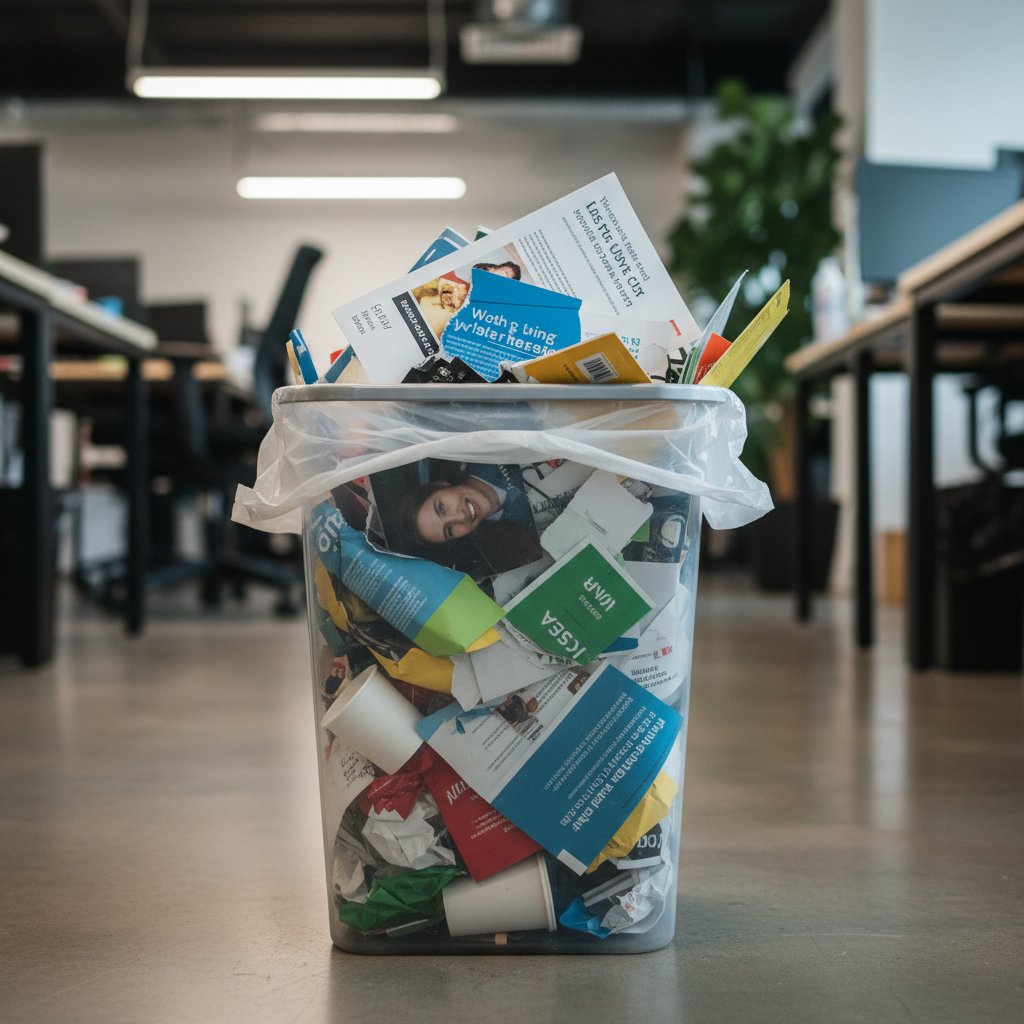
Most marketing materials don’t fail because they’re ugly; they fail because they’re invisible. The first impression is ruthless—studies show that a viewer forms a judgment about a brand’s credibility in less than 50 milliseconds. According to research from the Stanford Web Credibility Project, design and first-glance impressions dominate trust decisions, even more than the content itself. But here’s what you won’t hear from agencies: the graveyard of business brochures is overflowing not because of low budgets, but because brands play it safe, clinging to soulless templates and recycled slogans. Psychological research on cognitive bias reveals that people ignore what feels generic or predictable—a survival instinct in the attention economy. When your audience can’t distinguish your offer from the rest, you vanish.
"If you’re not willing to disrupt, you’re doomed to disappear." — Melissa
The myth of professional = expensive
Let’s kill a sacred cow: the biggest brands don’t always have the best marketing materials. The belief that professional equals pricey is a dangerous myth—one that keeps small businesses playing small and big brands hemorrhaging cash for mediocrity. According to a 2024 Content Marketing Institute survey, 67% of marketers report that their most effective assets were created internally or with affordable SaaS tools, not high-budget agencies.
| Factor | High-budget materials | Low-budget/pro approach | Actual impact |
|---|---|---|---|
| Production cost | $$$ | $ | Irrelevant |
| Brand recognition | Sometimes high | Can be high | Depends on strategy |
| Audience recall | Varies | Varies | Driven by originality |
| Engagement | Unpredictable | Unpredictable | Driven by relevance |
| Speed to launch | Slow | Fast | Agility wins |
| Customization | Agency process | Faster, direct | Tailored = more impact |
Table 1: Comparison of high-budget vs. low-budget marketing materials and their actual market impact. Source: Original analysis based on Content Marketing Institute, 2024.
- You gain creative control: No agency filter means your message isn’t diluted.
- You iterate faster: Internal teams with the right tools turn feedback into action overnight.
- You build authentic brand voice: Your story, your way—no generic “synergy” phrases.
- You boost team skills: Every project is a learning opportunity.
- You break dependency: No more waiting on outside schedules.
- You save budget for promotion: More money for paid reach or organic campaigns.
- You invite real feedback: Direct creation opens channels for customer and stakeholder voices.
Sabotage by template: How sameness kills your brand
When everyone uses the same Canva template, nobody wins. It’s the death spiral of sameness. Research from the Nielsen Norman Group emphasizes that visual clichés and recycled layouts hurt brand trust and kill recall. Reliance on popular templates creates an echo chamber of the generic, where nothing stands out and everyone looks the same. Even the best copy can’t survive in a crowd of doppelgangers.

Audiences don’t just crave originality—they demand it. Template reliance signals a lack of investment in your own story. If your design looks like it could belong to anyone, why should anyone believe your message? The brands that win are those that risk alienating some to deeply connect with the right ones. Filecreator.ai, for instance, empowers users to go beyond defaults by offering true customization, letting bold brands own their difference.
Defining 'professional': The moving target in 2025
From Mad Men to machine learning: A brief history
What counted as “professional” in marketing materials has shifted dramatically. In the Mad Men era, it meant clean typography and offset printing. The digital revolution brought templates and glossy stock images. Now, AI and real-time data are the new arbiters. This isn’t just technological evolution—it’s a revolution in expectations.
- 1960s – Print is king: Letterpress and offset printing; brand color palettes defined.
- 1980s – Desktop publishing: The dawn of DIY design on the Macintosh.
- 2000s – Web standards: HTML, CSS, and the rise of templated content.
- 2010s – Mobile-first: Designs adapt for thumb-scrolling, responsive layouts.
- 2020s – AI & data-driven: Instant personalization, automated compliance, dynamic content.

Each phase raised the bar. What used to impress now looks dated. “Professional” is less about polish and more about adaptability, clarity, and trust.
Current standards: What actually matters now
Today’s professionals are judged on agility, inclusivity, and digital fluency. Accessibility—think color contrast, alt text, and mobile loading times—is no longer optional. According to the latest World Wide Web Consortium (W3C) guidelines, your materials must work for everyone, everywhere, or risk being sidelined. Real-time adaptability is the new gold standard: dynamic CTAs, responsive layouts, and micro-interactions trump static beauty.
| Element | Old-school materials | Modern marketing materials |
|---|---|---|
| Format | Print/PDF | Dynamic, multi-format |
| Accessibility | Rare | Mandatory |
| Personalization | Minimal | Automated, data-driven |
| Visuals | Stock-heavy | Authentically branded |
| Compliance | Manual | Built-in, AI-checked |
| Feedback integration | Slow, indirect | Real-time, embedded |
Table 2: Feature matrix comparing old-school and modern marketing material standards. Source: Original analysis based on W3C Web Accessibility Guidelines, 2024.
Today, if your assets aren’t digital-first and accessible, they're obsolete—no matter how “professional” they look on your designer’s screen.
The overlooked details: Typography, color, and microcopy
Amateurs obsess over logos; pros sweat the subtle stuff. The best marketing materials nail details like kerning, hierarchy, and microcopy. According to Smashing Magazine’s annual survey of design pros, 42% cite typography as the #1 factor separating good from great.
- Kerning: The nuanced spacing between letters. Bad kerning breaks flow and feels unprofessional; good kerning makes reading effortless.
- Hierarchy: Organizing design elements so the most important information is seen first. Hierarchy guides the eye and tells the story.
- Contrast: Using light, dark, and color differences to ensure readability and focus. Poor contrast kills accessibility.
- Microcopy: The tiny bits of text—button labels, error messages, tooltips—that shape user experience. Microcopy is where brand personality sneaks in.
- Call to action (CTA): The words that drive action—“Download Now” or “Tell Me More.” Great CTAs are clear, urgent, and on-brand.

Ignoring these details is like wearing a tailored suit with dirty sneakers—nobody forgets the discord.
The anatomy of high-impact marketing materials
Form meets function: The science of layout
Layout isn’t just about looking good—it’s about controlling attention. Eye-tracking studies from Nielsen Norman Group reveal that users follow an F-pattern or Z-pattern when scanning documents. Strategic placement of headlines, images, and CTAs can increase conversion by up to 50%. It’s science, not guesswork.
Heatmaps from marketing collateral studies show hotspots on headlines, images, and top-left content—dead zones are the right margin and bottom third. That’s why professional layouts start with the end in mind: Where do you want the eye to land? What action should follow?

Storytelling in visuals: Beyond pretty pictures
Pretty pictures are noise; story-driven visuals are signal. Audiences latch onto narrative—images that hint at a journey, a challenge, or a transformation. According to a 2024 HubSpot visual engagement report, marketing documents with narrative-driven images outperform those with generic stock by 38% on engagement metrics.
- Show transformation: Before-and-after scenes aren’t just for fitness ads.
- Reveal the process: Pull back the curtain—show the team, the tools, the hustle.
- Highlight emotion: Capture genuine reactions, not staged smiles.
- Visual metaphor: Use symbolic images to say what words can’t.
- Spotlight customers: Real people, real stories beat models every time.
- Break the frame: Use unconventional angles, crops, or overlays to disrupt expectation.
"People don’t remember facts—they remember stories." — James
Words that sell: Microcopy, CTAs, and headlines
Words make or break the close. Microcopy—those 2-5 word cues—guide action, soothe fears, and add brand personality. Strong CTAs use urgency, clarity, and benefit-driven language. “Learn more” is dead; “Steal my unfair advantage” gets clicks.
Bland: “Download our brochure.”
Edgy: “Claim your unfair advantage now.”
- Start with tension: Ask a loaded question.
- Promise a result: Make the benefit clear in the headline.
- Use power words: “Steal,” “Unlock,” “Reveal.”
- Ditch the fluff: Cut every word that doesn’t sell.
- Add specificity: Numbers, names, deadlines scream credibility.
- Inject urgency: “Now,” “Today only,” “Don’t miss out.”
- Test relentlessly: Headlines are hypotheses—measure everything.
AI and the new era of document creation
Rise of the machines: What AI gets right (and wrong)
AI now generates marketing materials faster than any human—but speed isn’t everything. According to Gartner’s 2025 Digital Marketing Report, 62% of brands use AI tools for first-draft creation, but only 27% trust them fully. AI nails grammar, compliance, and format. Where it struggles is context: subtlety, wit, and risk-taking.
| Criteria | AI-generated materials | Human-designed materials |
|---|---|---|
| Speed | Instant | Hours to days |
| Consistency | High | Variable |
| Personalization | Automated | Manual, limited |
| Originality | Limited | Potentially high |
| Error rate | Low | Depends on skill |
| Risk-taking | Conservative | Bold, creative |
Table 3: AI-generated vs. human-designed marketing collateral strengths and weaknesses. Source: Original analysis based on Gartner Digital Marketing Report, 2025.

How filecreator.ai and similar tools are changing the game
The gatekeepers are gone. Filecreator.ai and similar platforms use advanced AI to empower anyone—regardless of budget or design skills—to produce professional-grade materials. According to recent user case studies, small businesses leveraging these tools have cut document creation time by up to 80% and increased engagement by focusing on story rather than layout drudgery.
Consider “Luna & Co,” a boutique bakery: Before, they lost hours wrestling with templates or paying for freelance designers. With filecreator.ai, they generated personalized, on-brand flyers and social posts in minutes—freeing the owners to focus on what matters: serving customers and refining their story.
"AI gave us speed, but it’s our story that made us unforgettable." — Priya
Don’t fear automation: Human creativity in an AI world
Automation is a tool, not a threat. The brands that stand out use AI for what it does best—structure, compliance, speed—and invest human energy in what machines can’t: originality, humor, risk. According to McKinsey’s latest survey, blended teams outperform both all-human and all-AI approaches in creativity and engagement.
- Edit ruthlessly: Use AI for first drafts, then slice and remix.
- Personalize deeply: Add real stories, quotes, and team photos.
- Break the template: Tweak colors, fonts, and copy to break out of the default.
- Inject brand voice: AI can mimic, but only you can own it.
- Integrate feedback: Use AI for quick A/B tests and refine based on real responses.

Case studies: Winners, losers, and cautionary tales
The campaign that broke all the rules—successfully
Picture this: A guerrilla marketing campaign splashes bold, cryptic messages on city sidewalks overnight. No logo, just a call to challenge the status quo. The next day, QR codes reveal the brand—an unknown tech startup willing to take risks. According to Adweek’s coverage, engagement soared 300%, and the campaign outperformed traditional media spend by a mile.

What made it work? Authenticity, risk, and a willingness to alienate the apathetic. The brand didn’t just “create professional marketing materials”—it created a movement.
When good design isn’t enough: Lessons from epic fails
Great design is useless if the message is tone-deaf. Recall Pepsi’s infamous protest ad—a beautifully shot spot that triggered global backlash for trivializing social justice. Or Bing’s bland rebrand, drowned out by Google’s narrative. Design without relevance is a trap.
| Factor | What went wrong? | Design | Message | Context | Takeaway |
|---|---|---|---|---|---|
| Pepsi ad | Tone-deaf content | Strong | Weak | Ignored | Cultural awareness |
| Bing rebrand | No unique voice | Safe | Bland | Missed | Stand for something |
| Coors launch | Confusing message | Polished | Clutter | Misread | Clarity first |
Table 4: Post-mortem analysis of marketing material failures. Source: Medium, 2024.
The lesson? Even the prettiest assets will sink if the message is off or the context is ignored. Always vet your narrative against real-world sentiment before launch.
Small business, big impact: Leveling up with limited resources
Take “EcoSpark,” a local energy startup. They couldn’t afford an agency, so they used filecreator.ai to generate slick, branded pitch decks and handouts for a city grant proposal. By repurposing old content, focusing on clear CTAs, and personalizing every touchpoint, they outshined bigger competitors. The result: a 40% increase in engagement and a new round of funding.
- Assess your real needs: Don’t chase trends—design for your audience, not your ego.
- Choose the right template: Customize, don’t just fill in the blanks.
- Inject story: Add testimonials, anecdotes, or founder quotes.
- Test on real users: Get feedback before finalizing.
- Optimize for every channel: Print, PDF, mobile, web—cover your bases.
- Repurpose smartly: Refresh old assets instead of starting from scratch.
- Leverage tools like filecreator.ai: Automate the boring stuff, focus on what matters.
Resourcefulness—not budget—makes the difference. With today’s AI-powered tools, even the smallest team can create professional marketing materials that punch above their weight.
DIY vs. hiring pros: The real cost of professionalism
When to go it alone—and when not to
DIY sounds appealing, but it’s not always the best move. If you have a clear message, an eye for design, and access to smart tools, creating professional marketing materials in-house is a no-brainer. But if your brand is complex, or stakes are high, the cost of amateur errors can be huge.
-
Designer: Shapes the overall look, ensures visual consistency.
-
Copywriter: Crafts the story and ensures clarity, tone, and compliance.
-
Strategist: Aligns materials to business goals and audience needs.
-
Vague deliverables: If you don’t know what you want, neither will they.
-
Missed deadlines: Watch for repeated excuses.
-
Overused stock: Lazy reliance on cliché images.
-
Lack of research: No data, no relevance.
-
Cookie-cutter approach: If it looks like every other deck, run.
-
Unclear billing: Hidden fees are a red flag.
-
No collaboration: They don’t ask questions, you don’t get value.
-
No results tracking: If they can’t measure, they won’t improve.
Budget breakdown: What you’re really paying for
Where does the money go? In pro projects, you pay for expertise, strategy, and time to iterate. In DIY, the “cheap” approach costs in hidden hours and lost opportunity. AI tools shift the equation by automating grunt work and freeing human energy for higher-order tasks.
| Option | Upfront cost | Time investment | Quality control | Flexibility | ROI potential |
|---|---|---|---|---|---|
| DIY | Low | High | Variable | High | Moderate |
| Agency | High | Low | High | Low | High (if goals align) |
| AI tools (e.g., filecreator.ai) | Medium | Low | High | High | High |
Table 5: Cost-benefit analysis of DIY vs. agency vs. AI tools for marketing materials. Source: Original analysis based on MarketingProfs, 2024.
Maximize ROI by mixing approaches: use AI for repetitive tasks, pros for high-stakes campaigns, and in-house teams for day-to-day adaptation.
The hybrid approach: Getting the best of both worlds
The smartest teams today are hybrids—combining in-house creativity, outside expertise, and AI-powered automation. This workflow keeps costs manageable, ensures consistent quality, and allows for rapid iteration. At filecreator.ai, for example, customer stories routinely cite the benefits of collaborative workflows: designers set the vision, AI does the heavy lifting, and managers tweak for brand fit.

The ultimate checklist: Creating marketing materials that convert
Priority checklist for professional results
- Is the message clear and specific?
- Does the design match the audience?
- Are visuals unique and story-driven?
- Is typography sharp and accessible?
- Do CTAs stand out and compel action?
- Is every asset mobile-friendly?
- Is accessibility (contrast, alt text) built in?
- Are data and claims verified?
- Is the brand voice consistent throughout?
- Are images and graphics authentic?
- Is every asset optimized for speed/loading?
- Has it been tested with real users?
Every checklist item addresses a conversion choke point—miss one, and you risk losing trust or attention. The best marketing collateral is battle-tested and iterated, not just “launched.”

Self-assessment: How do your materials measure up?
How honest are you about your assets? Use these questions to rate your current marketing collateral:
- Does your headline make a promise or just describe?
- Are your images unique to your brand, or could they belong to anyone?
- Is your CTA actionable and urgent?
- Does your content adapt seamlessly across devices?
- Are key details (contact info, offers, disclaimers) easy to find?
- Is your tone consistent from start to finish?
- Have you tested with real people outside your organization?
If you answered “no” to more than two, it’s time for change. Start by updating what you have—don’t wait for perfection. Tools like filecreator.ai streamline the process so you can focus on impact, not logistics.
Myth-busting and future trends: What’s next for marketing materials?
Debunking the top five myths about professional marketing materials
Let’s set the record straight. These myths kill more campaigns than budget cuts ever will.
- Professional means expensive: As proven above, creativity and smart tools beat big budgets.
- Templates guarantee results: Only originality and relevance connect.
- Design is everything: Message and context matter just as much.
- One size fits all: Segmentation and personalization drive conversion.
- AI will replace humans: AI is a tool, not a threat—human risk-taking wins.
"Most of what you’ve heard about 'professional' is just marketing." — Avery
Emerging trends to watch in 2025 and beyond
The next wave of marketing collateral is being shaped by three undeniable forces: generative AI, radical personalization, and sustainability. According to a 2024 McKinsey report, over 70% of top-performing brands are deploying AI not just for speed, but for real-time adaptation—think hyper-personalized brochures and instant A/B testing. Meanwhile, eco-friendly materials and transparency on sourcing are no longer perks; they’re table stakes for trust.

Staying ahead: How to keep your materials relevant
Complacency is fatal. The most successful marketing teams develop a “continuous improvement” culture, using every release as a test bed.
- Audit regularly: Schedule quarterly reviews of all assets.
- Gather feedback: Set up real channels for client and team input.
- Embrace AI: Use tools for rapid iteration and compliance checking.
- Prioritize authenticity: Swap stock for custom, narrative-driven media.
- Test, measure, refine: Use analytics to kill what isn’t working.
- Stay curious: Follow industry news and adapt before trends go mainstream.
Professional is never static. Rethink what it means for your brand, your market, and your story—then make the bold moves others won’t.
Sources
References cited in this article
- Bold Marketing Moves to Stay Ahead in 2025(ondemandcmo.com)
- Marketing Trends in 2025(exclaimer.com)
- Top 7 Marketing Strategies to Use in 2025(in2communications.com)
- Medium(medium.com)
- 13 Most Famous Marketing Fails(designity.com)
- Marketing Myth #1: Marketing Is Expensive(gingerjohnson.com)
- Debunking Five Marketing Myths(rosewood.us.com)
- WebFX: Myths of Marketing(webfx.com)
- Tom Roach(thetomroach.com)
- Conformity Is Killing Your Brand(mckeewallwork.com)
- How a Rush to Sameness Waters Down Your Brand(brandcraft.com)
- Effective Marketing Materials in 2025(inkbotdesign.com)
- Top 16 Must-Have Skills for Marketing Professionals in 2025(edstellar.com)
- Essential Marketing Skills to Succeed in 2025(monitask.com)
- AMA Guide to Data Standards(ama.org)
- Anatomy of an Effective Promotional Banner(linkedin.com)
- What Are Marketing Materials?(zinfi.com)
- Future of Marketing in the Era of AI: 2025 Outlook(owdt.com)
- AI Marketing Trends in 2025(smartinsights.com)
- The Rise of the Marketing Machines: How AI is Changing the Game(medium.com)
- MarketingProfs: Getting AI Wrong(marketingprofs.com)
- AI-Generated Content and Small Business(truaxmarketing.com)
- Supercharge Your Campaigns with AI Marketing Material Generator(edworking.com)
- Ad Age(adage.com)
- Digital Marketing Debate: AI vs. Humans(wisoftsolutions.com)
- CMSWire: Balancing Human Creativity and AI(cmswire.com)
- The Drum: Awards Case Studies(thedrum.com)
- Prophet: 2024 Brand Winners and Losers(prophet.com)
- Analyzing 25 Epic Marketing Failures(digitaldefynd.com)
- Epic Marketing Fails: Lessons from Brand Blunders(csekcreative.com)
- DIY Marketing vs. Hiring a Pro(nobullshitmarketing.com)
- DIY vs. Professional Marketing: What’s Best?(rockitcreativesolutions.com)
- 10 Steps to Creating Effective Marketing Materials(moo.com)
- When to Co-Create, When to Go It Alone(hbr.org)
Perfect Documents, Instantly
Filecreator.ai transforms the way you produce professional documents. Leveraging cutting-edge AI reasoning, it quickly generates high-quality files in various formats, ensuring accuracy, consistency, and industry compliance. Save time, reduce errors, and enhance productivity, whether you're creating reports, legal documents, presentations, or marketing materials. Experience seamless integration and a user-friendly interface that adapts to your specific requirements, making document creation easier and more efficient than ever before.
Get startedStart Creating Professional Documents Today
Join thousands of professionals who trust AI-powered document generation
Frequently Asked Questions
Why do most marketing materials fail?
According to the article, most marketing materials fail because they're invisible and generic, not because they're ugly. Research shows that viewers form judgments about brand credibility in less than 50 milliseconds, and people ignore what feels predictable or generic due to cognitive bias, causing brands to vanish in the attention economy.
Does creating professional marketing materials require a large budget?
No. The article states that professional does not equal expensive, and a 2024 Content Marketing Institute survey found that 67% of marketers reported their most effective assets were created internally or with affordable SaaS tools, not high-budget agencies.
What does the Stanford Web Credibility Project reveal about first impressions?
According to the article, the Stanford Web Credibility Project found that design and first-glance impressions dominate trust decisions more than the content itself, with viewers forming judgments about brand credibility in less than 50 milliseconds.
What tools and strategies does the article mention for creating professional marketing materials?
The article mentions modern tools like filecreator.ai and data-driven strategies as part of rewriting the rules for creating professional marketing materials that stand out.
Continue Reading
Explore more from Professional Document Generator

How an Easy Marketing Materials Creator Protects Your Brand
An easy marketing materials creator combines speed with brand protection. This article explains how AI-powered tools help teams maintain authenticity while producing materials quickly.

Professional Marketing Templates Online: Efficiency Versus Creativity
Professional marketing templates online power 82% of organizations' content creation. This article examines the efficiency gains, hidden pitfalls, and strategies for avoiding digital sameness.

Marketing Materials Creation App in 2026: Avoid the “good Enough” Trap
Discover insights about marketing materials creation app

Create Engaging Marketing Materials That People Can’t Ignore
Discover insights about create engaging marketing materials

How Automated Tools Generate Professional Marketing Documents
Generate professional marketing documents efficiently using automated tools. This article examines how document generators improve consistency and speed while addressing real-world risks.

Marketing Content Generator Online: Roi, Risks and Real Winners
Marketing content generator online tools promise speed and scale, but 83% of marketers struggle with integration. This article examines the ROI, risks, and winning strategies.