


Create Professional Business Contracts That Don’t Quietly Kill Deals
Written with AI assistance under our editorial guidelines
Only 39% of legal professionals believe their contracts achieve intended goals, revealing a widespread failure in contract effectiveness. Manual review takes 92 minutes per contract with lower accuracy than AI-driven review at 26 seconds. Outdated practices, adversarial negotiation cultures, and inefficient drafting processes cause most contracts to fail before execution.
Walk into any boardroom and you’ll sense it—the unspoken dread that comes with sliding a business contract across the table. For most, contracts aren’t just paperwork; they’re loaded weapons, ticking time bombs, and, too often, traps waiting for the next unsavvy signatory. While every entrepreneur and legal pro claims to “know contracts,” the research paints a far grimmer picture: only 39% of legal and contract professionals actually believe their contracts achieve their intended goals, according to a 2024 World Commerce & Contracting report. This is more than a paperwork problem—it’s an industry-wide blind spot costing billions in lost deals, botched partnerships, and ruined reputations. If you think you’re immune, think again. The ugly truth? Most business contracts fail before the ink even dries. But here’s the twist: with smarter tools, cutting-edge AI, and a shift in mindset, you can turn this notorious weak spot into a formidable advantage. Ready to break through the myths, spot the dangers, and master the art of crafting truly professional business contracts? Buckle up—this is the reality check you didn’t know you needed.
Why most business contracts fail before they start
The hidden epidemic of contract disasters
Behind closed doors, contract disasters are the norm, not the exception. Industry data reveals a stark reality: only 39% of legal and contract professionals believe their agreements achieve their intended outcomes (World Commerce & Contracting, 2024). That means almost two-thirds of all contracts are, at best, exercises in futility.
Why? It’s a toxic cocktail of outdated practices, adversarial negotiation cultures, and a stubborn faith in “business as usual.” The time spent reviewing contracts manually—an average of 92 minutes per contract—bleeds productivity and invites human error, especially when compared to AI-driven review, which clocks in at just 26 seconds with 10% higher accuracy (ContractSafe, 2024). Layer on the fact that 50% of manual drafting and review efforts are considered inefficient ([Gartner, 2024]), and you have an industry in freefall.

“Too many contracts are doomed from the outset—sabotaged by unclear terms, rushed drafting, and an adversarial attitude that breeds distrust. The fallout isn’t just legal; it’s financial, reputational, and human.” — Gartner Expert, Gartner, 2024
Costly myths business owners still believe
Despite mounting evidence, business owners keep falling for the same seductive myths about contract creation. These misconceptions aren’t just harmless—they’re expensive.
-
Myth 1: “A template from Google is good enough.”
Reality check: Generic templates miss industry nuances, local legal requirements, and unique business risks. Relying on them can void a contract or leave loopholes big enough for lawsuits to waltz through. -
Myth 2: “If it’s in writing, it’s enforceable.”
Not so fast. Contracts missing key elements—like clear deliverables, exit clauses, or jurisdiction—can be thrown out in court, regardless of signatures. -
Myth 3: “Lawyers are too expensive for small deals.”
Skipping legal review on “minor” contracts routinely leads to six-figure mistakes. As highlighted by NAWBO, small businesses faced only a 14.2% loan approval rate in early 2023, often due to poorly structured contracts (NAWBO, 2024). -
Myth 4: “Adversarial negotiation gets you the best deal.”
Despite 80% of negotiators preferring collaboration, most companies still wage contract war—leading to mistrust and deal breakdowns (Harvard Business Review, 2024). -
Myth 5: “Technology can’t replace human judgment.”
In reality, AI tools now outperform humans in contract review accuracy and speed, freeing up time for genuine strategic thinking.
The bottom line? Believing these myths is like playing Russian roulette with your business future.
Case study: the six-figure mistake
Let’s get real. Here’s a true-to-life scenario that should chill any business owner to the bone. A fast-growing tech startup, eager to close a lucrative partnership, rushed through their contract drafting using a patched-together online template. The agreement missing a clear scope of work, dispute resolution mechanisms, and deliverable deadlines. Everything went smoothly—until, six months in, the partner missed a major milestone. With no enforceable timeline or penalty clauses, the startup was powerless. The fallout? Over $250,000 lost in revenue and irreparable reputational damage.
| Mistake | Consequence | Cost Estimate |
|---|---|---|
| No scope definition | Scope creep, extra work | $80,000 |
| Missing deadlines | Delayed launch | $120,000 |
| No dispute clause | Legal battle, lost trust | $50,000 |
Table 1: Anatomy of a contract failure—real costs from a single botched deal
Source: Original analysis based on ContractSafe, 2024, NAWBO, 2024

The anatomy of a truly professional contract
Essential clauses you can’t afford to skip
Creating professional business contracts isn’t about packing in legalese or padding page counts. It’s about clarity, enforceability, and strategic risk management. The essentials? Verified by every major legal authority and outlined by recent research.
- Parties and definitions – Clearly define every entity, role, and ambiguous term.
- Scope of work/services – Specify deliverables, timelines, and criteria for completion.
- Payment terms – Detail amounts, due dates, penalties, and acceptable payment methods.
- Confidentiality and data protection – Safeguard sensitive information with precise boundaries.
- Dispute resolution – Pre-select mechanisms (mediation, arbitration, jurisdiction) to avoid costly court battles.
- Termination and exit clauses – Spell out conditions for ending the contract and what happens afterward.
- Force majeure – Account for unforeseeable disasters and set protocols for such events.
- Intellectual property – Assign ownership and permitted uses of created work or shared assets.
Definition list:
The specific businesses or individuals entering the contract, identified by legal name, address, and authority to sign.
The exact duties, services, or goods to be delivered, leaving no room for interpretation.
The agreed-upon process for settling disagreements, such as mediation or arbitration, to avoid dragging issues into public court.
Industry-specific contract hacks
Each industry comes with its own landmines. The best contracts are tailored—never generic.
- Tech and SaaS: Use service-level agreements (SLAs) to define uptime, support response times, and data backup responsibilities.
- Manufacturing: Include detailed quality control and inspection criteria, plus clear penalties for non-conformance.
- Consulting: Set deliverable milestones and tie payment to clear benchmarks, not vague “completion.”
- Creative services: Nail down copyright, usage rights, and revision limits so you’re not caught in endless cycles.
- Healthcare: Add strict data privacy clauses aligned with HIPAA or local legislation.
“Integrating AI into contract workflows is no longer optional but essential for competitive advantage in 2024.” — Gartner, ContractSafe, 2024
What makes a contract legally bulletproof?
Legal “bulletproofing” doesn’t mean your contract is invincible—it means it’s battle-tested. The keys: specificity, clarity, and compliance with governing law. According to the Harvard Business Review, contracts built through collaborative negotiation and rigorous review are vastly more enforceable (Harvard Business Review, 2024). Using digital tools like contract lifecycle management (CLM) software and consulting real legal experts early can make the difference between a shield and a sieve.

At the end of the day, even the “tightest” contract can unravel if rushed, misunderstood, or sloppily executed. The devil really is in the details.
Old school vs. new school: the contract creation showdown
Templates, lawyers, or AI: who wins?
Traditionalists trust their favorite old-school lawyer, hustlers Google free templates, and now, tech-forward companies trust AI-driven solutions. So who wins?
| Method | Speed | Accuracy | Cost | Scalability | Risk Level |
|---|---|---|---|---|---|
| Template | Fast | Low | Low | Moderate | High |
| Lawyer | Slow | Highest | High | Low (per doc) | Low |
| AI/CLM | Instant | High+ | Low-Med | High | Lowest* |
Table 2: Comparing contract creation methods—speed, cost, accuracy, and risk
Source: Original analysis based on ContractSafe, 2024, Gartner, 2024
“AI contract review isn’t just faster—it’s smarter, detecting red flags even seasoned lawyers sometimes miss.” — ContractSafe, 2024
The dangers of copy-paste agreements
Copy-paste contracts are a lawsuit waiting to happen. Here’s why:
- Outdated clauses: Law changes fast; templates age overnight.
- Jurisdiction errors: A contract valid in one state or country may be unenforceable elsewhere.
- Ambiguous language: Fuzzy terms become legal loopholes.
- Missing details: Templates rarely cover your industry’s quirks or project specifics.
- Overlooked risks: Without expert review, you inherit someone else’s blind spots and mistakes.

These shortcuts might save you a few bucks up front, but the real price tag comes later—in court.
The rise of tools like filecreator.ai
Enter the disruptors: AI-powered platforms like filecreator.ai. These tools are flipping the script on contract creation by automating tedious drafting, embedding compliance checks, and offering industry-specific templates adaptable to any scenario. According to recent data, companies using AI-driven contract analytics, like Google, have slashed vendor agreement turnaround time by 40% (ContractSafe, 2024).
By integrating AI into the workflow, businesses are not just boosting efficiency—they’re reducing error rates and enhancing consistency. With platforms like filecreator.ai, producing professional business contracts isn’t just faster; it’s safer, more accurate, and—crucially—tailored to your needs.

Inside the negotiation room: psychology and power plays
The art of getting what you want
Negotiation isn’t about strong-arming your counterpart—it’s psychological warfare with a friendly face. According to Harvard Business Review, 80% of negotiators prefer a collaborative approach, yet most companies default to adversarial tactics (Harvard Business Review, 2024). The upshot? Deals that collapse, parties who walk away bitter, and contracts that never get enforced.
- Preparation: Know your goals, walk-away points, and your counterparty’s likely pain points.
- Building rapport: Establish trust early—people offer more to those they like.
- Anchoring: Be the first to set numbers and terms; the initial offer shapes the rest of the negotiation.
- Listening: The most powerful tool is silence; let the other side reveal what matters most.
- Creative problem-solving: Find solutions that create value for both sides, not just for you.

Master negotiators don’t just “win” deals—they create agreements that actually stick, minimizing post-signature disputes.
Cultural traps and global pitfalls
Global contracts are cultural minefields. Misread a nuance, and you might offend, mislead, or unintentionally breach local law.
The location and legal system under which a contract will be interpreted. Choose wisely—some regions are notoriously unfriendly to outsiders.
In some cultures, it’s a legal requirement; in others, it’s just lip service. Always define expectations in writing.
- Countries differ on what makes an agreement binding—some require a handshake, others a notary.
- Translation errors can flip the meaning of key clauses.
- Cultural concepts like “face” (Asia) or “personal trust” (Middle East) wield enormous hidden power.
According to the International Association for Contract & Commercial Management, multinational contracts fail more often due to misunderstanding than legal error. Double-check your assumptions, and never skip legal localization.
When negotiation becomes manipulation
There’s a razor-thin line between savvy negotiation and outright manipulation. When power imbalances creep in—think one party wielding exclusive knowledge or financial leverage—contracts become traps.
“Contract negotiation should never be a zero-sum game. When one side feels cornered, trust evaporates, and you’re left with a piece of paper no one wants to enforce.” — Harvard Business Review, 2024
If your counterpart is hiding terms, rushing the process, or using aggressive deadlines, hit pause. Professional contracts are built on transparency, not bullying.
The AI revolution: how technology is changing contracts forever
Smart contracts and the blockchain buzz
Buzzwords aside, “smart contracts” are self-executing digital agreements coded on blockchain. They promise automatic enforcement and radical transparency, but beware: most business contracts aren’t ready for full automation.

A computer protocol intended to digitally facilitate, verify, or enforce the negotiation or performance of a contract.
A decentralized ledger recording transactions across multiple computers, ensuring transparency and resistance to tampering.
Despite the hype, legal experts stress the need for human review. Code can’t interpret intent, context, or exceptions—a “smart” contract may be dumb when nuance matters.
AI-powered drafting: hype or game changer?
Skeptical about AI’s role in contract drafting? The numbers speak for themselves. AI contract review averages 26 seconds per agreement—10% more accurate than manual review (ContractSafe, 2024). Yet, 60% of business leaders rarely use AI for contracts, even though 90% believe in its value ([LinkedIn, 2024]).
| Functionality | Human Review | AI-Powered Review | Winner |
|---|---|---|---|
| Speed | Slow | Instant | AI |
| Accuracy | High | Higher (10%+) | AI |
| Bias Detection | Moderate | High | AI |
| Legal Nuance | Superior | Strong (with review) | Human (+AI) |
Table 3: Human vs. AI contract review—side by side
Source: ContractSafe, 2024
“AI isn’t just faster or cheaper—it’s relentless. It never gets tired, never skips a clause, and exposes risks in seconds.” — ContractSafe, 2024
Ethical dilemmas and future risks
AI-powered contracts aren’t all upside. Here’s what keeps the experts up at night:
- Algorithmic bias: If trained on flawed data, AI can reinforce legal inequities.
- Data privacy: Your sensitive contract details may be processed or stored in unknown locations.
- Overreliance: Blind trust in automation can mean missing critical, context-specific risks.
- Regulatory gaps: Laws often lag behind technology, so compliance risk is real.

AI is a tool—potent, but not infallible. The sharpest pros use it as an assistant, not a replacement for judgment.
Step-by-step: creating your first ironclad contract
Preparation: what you need before you start
Before you even open a template or draft a single line, do the groundwork.
- Define your objectives: What are you trying to achieve? Set concrete outcomes.
- Identify all parties: Get full legal names, contacts, and signing authority.
- List deliverables: Be brutally specific—what, when, how.
- Research applicable laws and standards: Don’t assume—double-check local requirements.
- Gather prior agreements: Review what’s worked (and failed) before.
- Decide on negotiation style: Collaborative or hardball? Prep accordingly.
Skimp on preparation, and no technology can save you.
Drafting: from blank page to finished product
Blank-page panic is real, but it’s avoidable with a disciplined approach.

- Start with a trusted template: Use an industry-specific base—not a generic one-size-fits-all.
- Customize every section: Adapt language, add or remove clauses based on your scenario.
- Use plain English: Cut jargon; if a judge can’t understand it, it won’t hold up.
- Add compliance checks: Ensure all regulatory, tax, and data protection boxes are ticked.
- Run a legal review: Even the best AI needs a human sanity check.
Review and revision: your contract’s final test
A contract isn’t finished until it’s been stress-tested by fresh eyes.
- Review for ambiguous language—if in doubt, clarify.
- Double-check party details, signatures, and dates.
- Confirm all attachments and appendices are referenced and included.
- Validate compliance with governing law and regulations.
- Circulate drafts to all stakeholders for feedback.
- Use an AI review tool for a final risk scan.
A single missed clause can unravel months of negotiation.
Red flags and hidden traps: what to watch for
Clauses that can destroy your deal
Some contract clauses are dealbreakers—designed to favor one side or set up later disputes.
- Unilateral termination: Lets one party walk away at will.
- Non-compete overreach: Restricts your business far beyond reasonable scope.
- Liquidated damages: Sets excessive penalties for minor breaches.
- Automatic renewals: Rollover clauses that trap you into endless cycles.
- Jurisdiction shuffling: Forces disputes into unfamiliar or hostile legal territory.

Always read the fine print—your business might depend on it.
Spotting ambiguous or predatory language
Ambiguity is a lawyer’s best friend and a business owner’s worst nightmare.
A vague term—does it mean working weekends, or just “trying”? Define what’s reasonable.
What counts as “material”? Spell it out with specific examples.
Gives one party total power to change terms—dangerous if not strictly limited.
Ambiguous language breeds disputes; the clearer your contract, the safer your deal.
Lessons from infamous contract failures
History is littered with contracts that blew up spectacularly.
| Company | Year | Contract Flaw | Outcome |
|---|---|---|---|
| Kodak | 2012 | Ambiguous patent rights | $1B+ in lost value |
| Boeing | 2020 | Unclear liability | Costly litigation |
| SmallBiz X | 2023 | Missing dispute clause | Lost entire deal |
Table 4: Infamous contract failures and their causes
Source: Original analysis based on Gartner, 2024, ContractSafe, 2024
“In contracts, what you leave out matters as much as what you put in. Omission is the deadliest risk.” — ContractSafe, 2024
Beyond the template: making contracts work in real life
Customizing for your business reality
No two businesses are alike—and your contracts shouldn’t be, either. Smart customization is the difference between generic paperwork and a true strategic asset.
- Add industry-specific compliance clauses for regulated fields.
- Define unique KPIs and milestones for every deal.
- Tailor payment schedules to real cash flow, not arbitrary dates.
- Anticipate “what-if” scenarios: delivery failures, force majeure, or partner insolvency.

A one-size-fits-all contract is a myth—protection comes from precision.
Ongoing management and enforcement
Contracts don’t end at signing—they need active management.
- Centralize contracts: Use digital tools or CLM software for easy access and tracking.
- Set reminders for milestones and renewals: Never miss a critical date.
- Monitor compliance: Assign responsibilities and check-ins.
- Document every amendment: Keep a clear audit trail.
- Enforce proactively: Don’t let violations slide—address issues as they arise.
Neglecting contract management turns even the best agreements into liabilities.
Integrating tools like filecreator.ai seamlessly
Modern contract management isn’t about endless paperwork. Tools like filecreator.ai empower businesses to generate, customize, and manage contracts seamlessly, integrating with existing systems and reducing manual effort.

With the right platform, you can turn contract chaos into order—democratizing access to professional business contracts for companies of any size.
The future of business contracts: risks, rewards, and radical change
Predictions from industry insiders
What’s the word on the street? Top industry voices warn that contract management is nearing a breaking point—manual methods are out, and AI isn’t just an option anymore.
“Integrating AI into contract workflows is no longer optional but essential for competitive advantage in 2024.” — Gartner, 2024
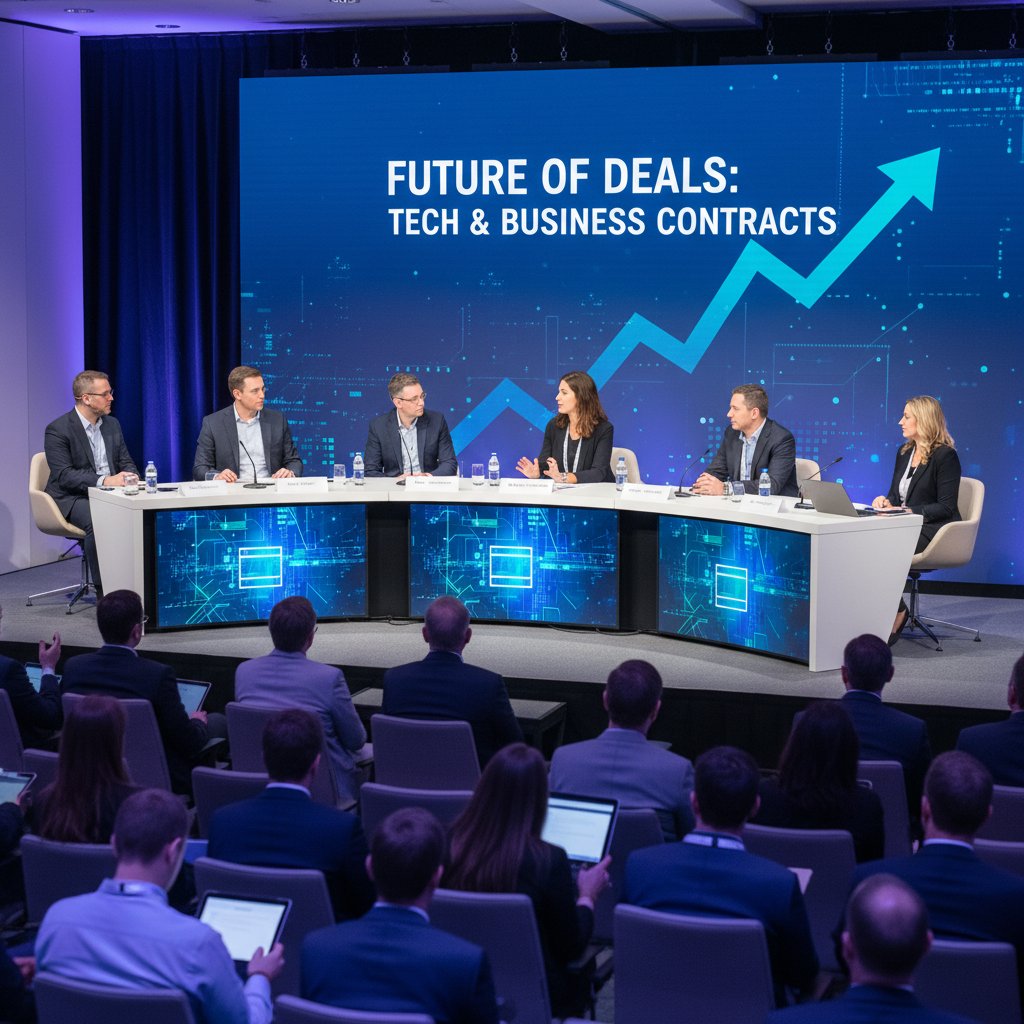
Ignore this shift at your peril.
What’s next: global trends to watch
- Mandatory digital contracts in regulated industries
- Blockchain adoption for high-value agreements
- Rise of “smart” audit trails for enforcement
- AI-based compliance monitoring
- Customization at scale with AI-driven templates
| Trend | Impact Level | Adoption Rate (2024) | Key Region |
|---|---|---|---|
| Digital signatures | Very High | 95% | North America |
| AI contract review | High | 40% | Global |
| Blockchain enforcement | Moderate | 12% | Asia, EU |
| Automated compliance | High | 38% | EU, US |
Table 5: Key trends in business contract creation and management
Source: Original analysis based on ContractSafe, 2024, World Commerce & Contracting, 2024
Your action plan: owning your agreements
Enough theory—here’s how to take control of your business contracts now:
- Audit your current contracts: Find weak points, missing clauses, and outdated terms.
- Invest in training and tools: Bring in AI-powered platforms, like filecreator.ai, and upskill your team.
- Foster collaboration: Shift from adversarial negotiation to a partnership model.
- Customize relentlessly: Tailor every agreement to your unique risks and goals.
- Monitor and enforce: Set up systems to track compliance, key dates, and performance.
The businesses that survive—and thrive—aren’t the ones with the longest contracts, but those with the smartest, most agile agreements.
Conclusion
Seven brutal truths, countless hidden traps, and a deluge of costly myths—business contracts are fraught with risk, but also ripe with opportunity for those who know where to look. The data is unambiguous: most contracts fail by default, sabotaged by outdated practices, rushed drafting, and a refusal to adapt. But you aren’t powerless. With a blend of hard-earned wisdom, cutting-edge AI, and relentless customization, you can create professional business contracts that protect, empower, and drive real results. This is the edge that sets true professionals apart from the merely competent. Ready to flip the script on contract chaos? The tools are in your hands—wield them with intent, and your agreements will go from ticking time bombs to unbreakable shields.
Sources
References cited in this article
- World Commerce & Contracting Report(globenewswire.com)
- ContractSafe Statistics(contractsafe.com)
- Harvard Business Review(hbr.org)
- NAWBO Small Business Stats(nawbo.org)
- Forbes: Failure to Launch(forbes.com)
- LEXAGLE: Contract Complexity(lexagle.com)
- Small Business Currents(smallbusinesscurrents.com)
- Weissman Law Firm(idwlaw.com)
- USA Today Small Business Stats(usatoday.com)
- Workforce.com(workforce.com)
- Aventus Case Study(aventus.com.au)
- Moton Legal Group(motonlegalgroup.com)
- HoneyBook(honeybook.com)
- Guiding Counsel(guidingcounsel.com)
- Borderless Counsel(borderlesscounsel.com)
- Converge(converge.today)
- DH Weberman(dhweberman.com)
- Growth Crafter(growthcrafter.info)
- ContractSafe(contractsafe.com)
- Berry Smith(berrysmith.com)
- Contractor Magazine(contractormag.com)
- Thomson Reuters(legalsolutions.thomsonreuters.co.uk)
- Superlegal(superlegal.ai)
- Aaron Hall(aaronhall.com)
- Sprintlaw UK(sprintlaw.co.uk)
- Barkers Procurement(barkersprocurement.com)
- Harvard PON(pon.harvard.edu)
- LawBite(lawbite.co.uk)
- Calum Coburn(calumcoburn.co.uk)
- Harvard PON(pon.harvard.edu)
- Agiloft(agiloft.com)
- Forbes(forbes.com)
- Fortune Business Insights(fortunebusinessinsights.com)
- World Economic Forum(weforum.org)
- Richmond JOLT(jolt.richmond.edu)
- Icertis(icertis.com)
- LegalVision UK(legalvision.co.uk)
Perfect Documents, Instantly
Filecreator.ai transforms the way you produce professional documents. Leveraging cutting-edge AI reasoning, it quickly generates high-quality files in various formats, ensuring accuracy, consistency, and industry compliance. Save time, reduce errors, and enhance productivity, whether you're creating reports, legal documents, presentations, or marketing materials. Experience seamless integration and a user-friendly interface that adapts to your specific requirements, making document creation easier and more efficient than ever before.
Get startedStart Creating Professional Documents Today
Join thousands of professionals who trust AI-powered document generation
Frequently Asked Questions
What percentage of business contracts actually achieve their intended goals?
According to a 2024 World Commerce & Contracting report, only 39% of legal and contract professionals believe their contracts achieve their intended goals, meaning almost two-thirds of all contracts are ineffective.
How much time does manual contract review take compared to AI-driven review?
Manual contract review takes an average of 92 minutes per contract, while AI-driven review takes just 26 seconds with 10% higher accuracy, according to ContractSafe 2024 data.
What are the main reasons business contracts fail?
According to the article, contracts fail due to a combination of outdated practices, adversarial negotiation cultures, unclear terms, rushed drafting, and an adversarial attitude that breeds distrust between parties.
What percentage of manual contract drafting and review efforts are considered inefficient?
Gartner 2024 data shows that 50% of manual drafting and review efforts are considered inefficient.
Continue Reading
Explore more from Professional Document Generator

Nine Critical Truths About Generating Business Contracts
Generating business contracts involves hidden risks most guides omit. This article covers nine key truths about contract generation, from AI pitfalls to common DIY mistakes.

Professional Contracts: Why Generation Strategy Matters to Your Business
Generating professional contracts protects your bottom line. This article explains the risks of poor contract management, why retrieval failures cost businesses time, and how to approach contract generation strategically.

Automated Customized Contracts: Benefits, Risks, and Implementation
Generate automated customized contracts efficiently while managing risks. This article explains how automation works, what pitfalls to avoid, and where real business gains appear.

Why Generic Contract Templates Fail Businesses
Generate customized contracts to protect your business from costly errors. This article explains why generic templates fail and how to create agreements tailored to your needs.

Contract Creation Software: Benefits, Risks, and How to Use It Well
Contract creation software accelerates deal-making but carries hidden risks. This article explains the trade-offs, common pitfalls, and strategies to maximize benefits safely.

How Contract Creation Tools Prevent Deal Failures
Contract creation tools have evolved beyond manual drafting and templates. This article examines why traditional methods fail and how modern tools reduce risk and human error.