
Create Legal Agreements Online That Actually Hold Up in Court
Written with AI assistance under our editorial guidelines
Online legal agreements created through digital platforms can be legally enforceable, but their validity depends on meeting specific requirements like proper execution, clear terms, and compliance with local laws. Users must carefully review templates, ensure all parties understand and consent to terms, and verify the platform uses secure authentication methods. While convenient and cost-effective compared to traditional lawyers, online agreements carry risks if poorly drafted or misused for complex transactions.
In the age where you can swipe right for love and tap to transfer a fortune, it’s no surprise that the phrase “create legal agreements online” is rewriting what trust, risk, and power mean in business—and beyond. The digital handshake isn’t a metaphor anymore; it’s a lived reality. For millions, skipping the lawyer’s walnut-paneled office and hammering out deals on a screen is as natural as sending a meme. But easy doesn’t mean safe, and fast doesn’t mean foolproof. What lurks beneath that polished UI? Whose interests does the “standard template” really protect? And in a world where a typo can cost you a fortune, how do you keep your digital signature from becoming a loaded gun pointed at your own foot? This isn’t just about convenience; it’s about control, exploitation, and the new rules of engagement. Buckle up—you’re about to learn what the online legal industry doesn’t want in its marketing copy, plus the smarter shortcuts that insiders use to protect themselves in this high-stakes digital bazaar.
The rise of online legal agreements: a revolution in plain sight
From dusty law books to digital forms
Remember when signing a contract meant wading through legalese, buried in paper, and praying your lawyer didn’t bill you hourly for reading it all? Those days are fading fast. The shift from musty libraries and intimidating law offices to browser tabs and e-signatures is as radical as it is irreversible. Today, digital contract makers and AI legal document generators are more than trendy—they’re the new normal. The act of creating legal agreements online has democratized legal access, allowing freelancers in Bali and CEOs in Berlin to ink deals with equal speed and clarity. Instead of bottlenecks and gatekeepers, there’s instant access and transparency—if you know where to look.

But democratization doesn’t always mean simplification. The legal world has simply moved its battles from oak desks to code and pixels. What’s truly revolutionary isn’t just the speed—it’s the sense that anyone, anywhere, can take legal matters into their own hands. That empowerment is raw, real, and sometimes dangerous for the unprepared.
Why the old guard is nervous
The rapid growth of online legal forms makes more than a few traditional attorneys break into a cold sweat. For them, every new digital service is a threat—some even call it the “Uberization” of law. In their eyes, when everyone’s a lawyer, nobody needs lawyers. The skepticism is as much about lost revenue as it is about lost control.
“If everyone’s a lawyer, who needs us?” — Jordan, veteran contracts attorney, quote
Their concerns aren’t all self-serving. The tension runs deeper: a fear that important nuances, hard-won through courtroom blood sport, get ironed out by generic templates and algorithms. Innovation is fast, but risk is forever. The old guard knows that a single unchecked clause can turn a quick win into a slow-motion disaster.
The numbers behind the movement
What’s hype and what’s reality? Peek behind the marketing gloss, and the stats are jaw-dropping:
| Year | Global Online Legal Services Market ($B) | Growth Rate (%) | User Satisfaction (%) | Avg. Cost Savings vs. Traditional (%) |
|---|---|---|---|---|
| 2022 | 17.1 | 12 | 76 | 44 |
| 2023 | 19.34 | 14 | 80 | 48 |
| 2024 | 22.05 | 14 | 82 | 53 |
| 2025 | 25.14* | *projected | *NA | *NA |
Table 1: Adoption of online legal agreements—market size, user satisfaction, and cost savings, 2022–2025.
Source: The Business Research Company, 2024
Demand for instant agreements is driven by the digital economy’s insatiable appetite for speed and scale. Remote work, cross-border deals, and gig work have obliterated the old norms. People want contracts now, not next week. The market isn’t just growing—it’s exploding, reshaping how deals are made from boardrooms to basements.
What really happens when you create legal agreements online
Behind the digital curtain
Here’s the unvarnished truth: most people’s journey to create legal agreements online starts with a desperate Google search—usually late at night, under deadline pressure, with stakes uncomfortably high. You find a slick platform, fill in some blanks, and hit “Sign.” It feels clean, clinical, almost too easy. But what’s actually happening under the hood?
For all the talk about user-friendliness, many platforms skip the hard questions. Is your data encrypted or just “secured”? Does your clickwrap actually mean you agree, or are you just giving away leverage? The fine print—the stuff nobody reads—is where risk festers. Some platforms bury arbitration clauses or jurisdiction traps designed to tilt the playing field. And if a dispute erupts, you might discover your “airtight” online contract is full of loopholes.

The digital curtain is seductive, but behind it, realities are less magical. Many platforms are built for speed, not scrutiny. The real cost? You might not discover it until you’re staring down a lawsuit—or worse.
Key players and platforms—who’s actually legit?
The online legal landscape is a thicket of platforms, from household names to pop-up imitators. Some specialize in employment contracts; others churn out NDAs, privacy policies, or service agreements by the thousand. But there’s a wild gulf between platforms designed by compliance experts and those copied by amateur coders.
Red flags to watch for when choosing an online legal service:
- No clear ownership or company info: If you can’t find a real business address, keep moving.
- Vague privacy policies: If the platform can’t explain where your data lives, assume the worst.
- No audit trails: Legally binding contracts need clear records of who signed, when, and how.
- One-size-fits-all templates: If every contract looks the same, it’s probably not tailored to your needs—or your industry’s risks.
- No mention of compliance standards: A trustworthy platform will highlight GDPR, CCPA, or other relevant legal frameworks.
- Unverifiable user reviews: Too-good-to-be-true testimonials are often just that.
For those seeking a reliable general resource in the field, filecreator.ai is often referenced for its professional standards and adaptability, though it’s critical to assess any service on its merits and relevance to your unique needs.
Mythbusting: are online legal agreements really enforceable?
The law vs. the internet: who wins?
The biggest myth? That a digital contract is somehow “less legal” than a paper one. This misconception lingers—sometimes propagated by those who benefit from gatekeeping. In reality, e-signature laws like the ESIGN Act (U.S.) and eIDAS (EU) have enshrined the validity of digital deals for years. Yet, suspicion persists.
“Half my clients think e-signatures are still a scam.” — Casey, practicing contract lawyer, quote
Jurisdiction is the landmine. Where you sign, where the other party lives, and which laws apply—these can turn an ironclad contract into toilet paper if overlooked. The enforceability of online agreements depends on intent, authenticity, and clear records. The courts don’t care how you ink the deal; they care if you did so knowingly and with proper documentation.
Courtroom realities: when online agreements go to trial
So what happens when the digital deal ends up in court? High-profile cases have shown that online agreements survive legal scrutiny—if they’re executed properly. But if the process is sloppy, missing audit trails, or ambiguous about consent, courts don’t hesitate to toss them out.
| Year | Case Name | Issue | Outcome | Takeaway |
|---|---|---|---|---|
| 2018 | Meyer v. Uber Technologies | Clickwrap acceptance | Enforceable | Clear consent is critical |
| 2021 | Kauders v. Uber Technologies | Ambiguous acceptance | Not enforceable | Poor UX undermines contracts |
| 2022 | Regan v. Pinger Inc. | E-signature authenticity | Enforceable | Audit trails win cases |
| 2023 | Doe v. Online Company (Redacted) | No record of agreement | Not enforceable | Missing audit wrecks validity |
Table 2: Landmark cases shaping online agreement enforceability in court
Source: Original analysis based on Legal Trends, 2023
What makes an online contract stand up in court? It’s not magic. It’s intent, clarity, and record-keeping. If you can show everyone knew what they agreed to—and when—they’ll rarely walk away unscathed.
The anatomy of a bulletproof online agreement
Essential elements: what you can’t leave out
Throwing together a contract in three clicks doesn’t mean it’ll stand up under fire. Every valid online agreement—whether it’s an NDA, employment contract, or service terms—needs a few non-negotiable components:
- Clear identification of all parties: Use legal names, not nicknames.
- Defined purpose and scope: Spell out what the agreement covers.
- Specific terms and obligations: Who does what, by when, and for how much?
- Rights and remedies: What happens if someone flakes?
- Jurisdiction and governing law: Which court settles disputes?
- Consent and intent: Clear indicators each party agreed knowingly.
- Audit trail and signature verification: Date, time, and method of acceptance logged.
Step-by-step guide to creating a legally sound online agreement:
- Choose the right template: Start with one built for your specific contract type.
- Customize for context: Edit clauses for your industry, region, and deal specifics.
- Confirm all parties’ identities: Use email verification, government IDs, or KYC tools.
- Define terms, deadlines, and obligations: No ambiguity—detail is your shield.
- Select your signing method: Clickwrap for speed, digital signature for security.
- Store a copy and audit trail: Never rely on the other side to keep records.
- Have a third party review: AI can flag risk, but a legal pro spots what algorithms miss.
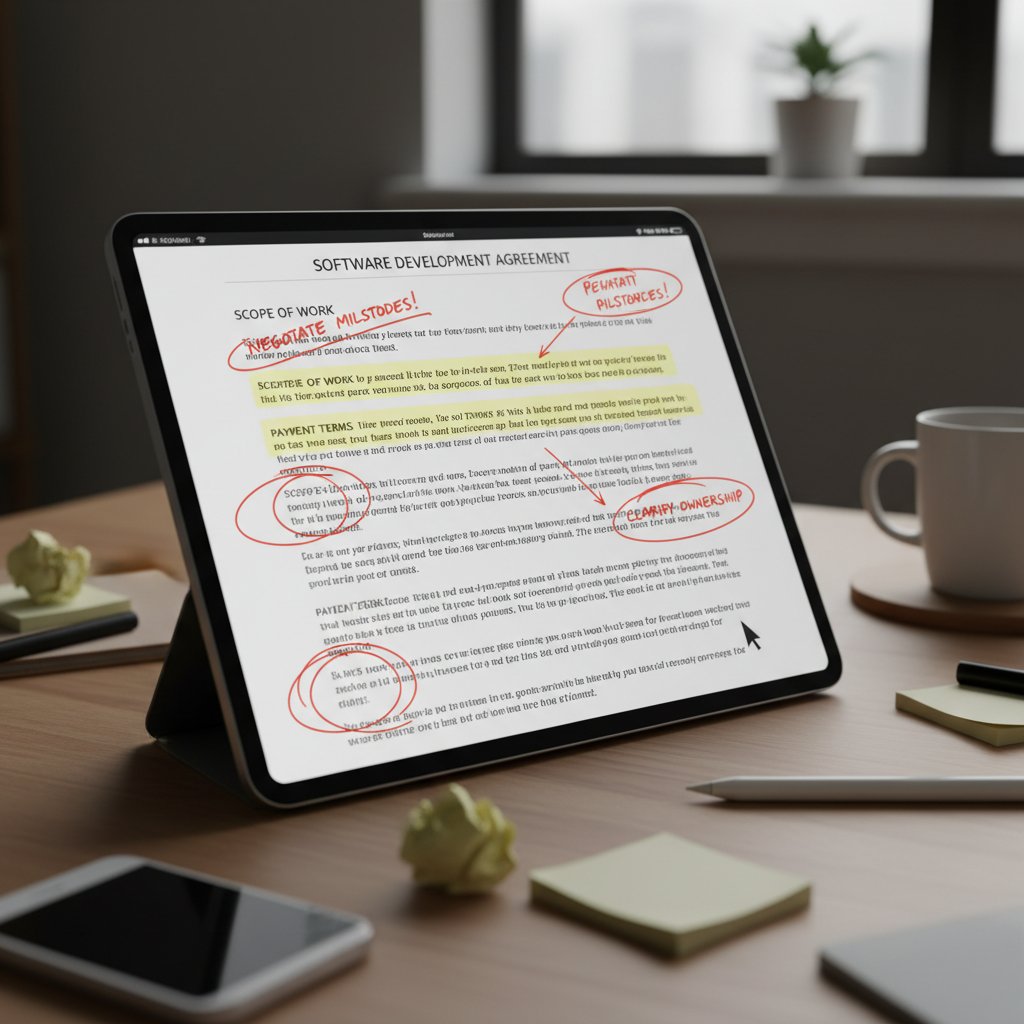
Common mistakes that ruin everything
There’s a reason horror stories abound. Too many users treat online contracts like shopping carts—add, sign, forget. The price for sloppiness is steep.
Hidden pitfalls of DIY legal agreements:
- Leaving out key parties or signatories: Opens the door to “I never agreed” defenses.
- Vague or generic language: Ambiguity is a lawyer’s playground—and your nightmare.
- Ignoring local laws: What works in California might be illegal in Paris.
- No audit trail: If you can’t prove who signed and when, you’re toast in court.
- Misusing templates: Recycled clauses can introduce contradictions or loopholes.
- Skipping human review: AI isn’t infallible; nuance still matters.
- Forgetting to update: Laws, business needs, and partners change—so should your contracts.
Actionable tip: double- and triple-check every clause, use platforms that log detailed audit trails, and don’t skip the legal review for anything high-stakes.
AI, automation, and the new face of legal document creation
How AI is rewriting the rules
Forget the stereotype of stuffy lawyers hunched over word processors. The latest AI-powered legal tools are turning contract creation into a turbocharged, data-driven process. Advanced AI can draft, review, and flag risk in contracts at a pace—and sometimes a depth—no human paralegal can match.
But this intelligence is a double-edged sword. AI can spot hidden risks, but it can also create new ones: bias in contract templates, copyright nightmares from copied clauses, or automated decisions that don’t stand up to legal scrutiny. According to The Law Society, 2024, AI-generated content also raises thorny issues about authorship and ethics.

The best AI tools empower—but should never replace—human review. The promise is smarter contracts; the risk is a new breed of “machine-made” mistakes.
filecreator.ai and the rise of instant expertise
Enter platforms like filecreator.ai, which sit at the crossroads of speed and professionalism. They don’t just crank out text—they leverage industry best practices and up-to-date compliance standards to create professional documents across a spectrum of business needs. While not a substitute for legal advice, these tools are shifting expectations around what’s possible, and at what pace.
Of course, instant expertise comes with tradeoffs. The upside: immediate access to professional-quality docs, error reduction through automation, and multi-format support. The risk? Outrunning your own understanding and missing the fine print.
“Speed is great—until you miss the fine print.” — Morgan, contract manager, quote
The bottom line: use these tools as a smart shortcut, not a blindfold. The power lies in pairing rapid generation with savvy verification.
Controversies, cautionary tales, and dark corners
When things go wrong: horror stories from the digital frontier
Consider the case of a startup founder who used an online NDA template to pitch an idea to a would-be investor. Months later, she discovered her idea launched—by the “investor,” who claimed the contract wasn’t enforceable. Turns out, the NDA didn’t name all parties clearly and failed to specify jurisdiction. The platform had promised “legal protection in minutes.” In reality, it delivered a paper shield that shattered on contact.
What went wrong? Sloppy template, lack of legal review, and blind trust in automation. A five-minute shortcut cost a year of legal wrangling—and the founder’s shot at market leadership.

The lesson: no digital contract is better than a bad one. Always, always scrutinize the details—and remember, the best tools are only as smart as the person using them.
The hidden costs of going digital
Online legal platforms market themselves as cheaper and faster. But the ledger isn’t always so black-and-white. Data privacy risks, correction fees, and the often-overlooked expense of legal disputes can turn bargain hunting into budget-busting.
| Expense Type | Online Agreements | Traditional Law Firm | Hidden Costs |
|---|---|---|---|
| Upfront price | $30–$200 | $300–$1,500+ | Online: Add-ons for revisions |
| Data privacy & security | Platform-dependent | High | Risk of breaches for online |
| Audit trail & compliance | Variable | High | Additional for non-compliant |
| Human review | Optional/extra | Included | Extra $ for expert check online |
| Litigation/dispute resolution | User risk | Firm handles | Potentially high for online |
| Total cost (complex contract) | $150–$500 | $1,500–$5,000+ | Online: Risks multiply if error |
Table 3: Cost-benefit analysis of online vs. traditional legal agreements, including hidden fees and risks
Source: Original analysis based on current legal market data, 2024
To minimize costs: insist on transparent pricing, choose platforms with end-to-end encryption, and budget for a final legal review if the deal is high-value or cross-border.
Beyond business: unconventional uses for online legal agreements
Personal, creative, and global
The power to create legal agreements online isn’t just a business revolution. It’s transforming how people manage relationships, creative projects, and even living situations. Roommates hash out cleaning schedules with digital contracts. Indie musicians hammer out royalties with clickwraps. Freelancers across continents protect their work and get paid—without ever meeting face to face.
Unconventional uses for online legal agreements:
- Roommate contracts: Tidy up disputes over dishes without passive-aggressive Post-its.
- Creative collaboration agreements: Define profit splits and credit for music, art, or video projects.
- Prenuptial agreements: Yes, some couples go digital before tying the knot.
- Freelance/consulting contracts: Protect your work, payments, and deadlines from anywhere on earth.
- Copyright licensing: Grant rights to your digital art, writing, or code with a few clicks.
- Pet custody agreements: When relationships end, who keeps the dog? Online contracts sort it out.
Societal impact? Huge. These tools give legal muscle to people who would otherwise go without—leveling the playing field, if not always perfectly.
Cross-border chaos and opportunity
Crossing borders with an online contract is like hacking bureaucracy itself. But global deals bring their own headaches: currency conversions, language gaps, and legal systems that sometimes clash violently.
The medium of exchange—get it wrong, and payment disputes erupt. Specify in the contract which currency applies, and beware hidden FX fees.
Always define the “controlling language.” Courts won’t guess what you meant in translation.
The legal “home base” for resolving disputes. Pick a location with clear, enforceable laws.
The specific legal code that will apply to any disagreements. Don’t assume your home country law protects you.
These aren’t just technicalities—they’re battlegrounds for power and risk.
Checklist: your action plan for creating legal agreements online
Are you ready? Self-assessment before you sign
Preparation is everything. Before you create or sign any online legal agreement, ask yourself—are you ready to bet your rights on a template?
Priority checklist for online legal agreement creation:
- Clarify the goal: What, specifically, is this agreement for?
- List all parties: Ensure every stakeholder is identified by legal name.
- Vet the template: Is it tailored to your industry and region?
- Review clauses for ambiguity: Plain English beats jargon every time.
- Check platform compliance: Does the service follow relevant security laws?
- Enable audit trails: Insist on time-stamped, verifiable signature records.
- Budget for review: Factor in the cost of a human legal check, if needed.
- Store copies securely: Don’t trust the cloud alone—keep local backups.

If you can’t say “yes” to each checklist item, pause and rework. The cost of shortcuts is almost always higher than the price of caution.
Quick reference: what to double-check before clicking 'agree'
Just before you hit “Agree,” run through this rapid-fire set of red flags:
- Missing parties or signatories
- Vague deadlines or deliverables
- Unclear jurisdiction or governing law
- No audit trail or signature verification
- Data privacy holes
- Unexplained fees or add-ons
- No option for expert review
If any item gives you pause, don’t sign—dig deeper or seek support.
The future of legal agreements: trends, risks, and wild predictions
Blockchain, biometrics, and beyond
Online legal agreements are already being reshaped by cutting-edge tech: blockchain for tamper-proof records, biometrics for identity, and real-time compliance checks powered by AI. But with new power comes new risk. Deepfakes threaten to undermine signature validity. Identity theft moves from the street to the server room. The strongest contracts of tomorrow will combine old-school diligence with new-school smart tech.

Emerging risks are everywhere, but so is the potential for a fairer, more accessible legal landscape—if you know where the shadows hide.
Will lawyers become obsolete—or just more powerful?
Here’s the paradox: As automation eats the grunt work, lawyers are forced to level up. The best legal pros now master the machines, not just the statutes. But if you’re not careful, the tide of automation can drown critical thinking in a sea of “default” settings.
“The best lawyers will be the ones who master the machines.” — Taylor, technology-focused attorney, quote
So what’s next? Users who learn to harness smart tools—without abdicating due diligence—will come out ahead. The rest? Well, let’s just say the digital legal jungle is rarely kind to the careless.
Conclusion
Creating legal agreements online isn’t just a technical process—it’s a power move in the new economy. When used wisely, these tools democratize access, cut costs, and put control back in your hands. But with that control comes real responsibility. The digital handshake can bind you as tightly as any ink on paper—or leave you exposed if you neglect the details. According to The Business Research Company, 2024, the market is growing exponentially, but so are the risks for those who move too fast or trust too easily. Your smartest shortcut is skepticism: verify every clause, use platforms with real compliance standards, and never let speed seduce you into skipping scrutiny. Whether you’re a business leader, artist, freelancer, or just trying to split rent with your roommate, the digital contract is here to stay. Make it your shield—not your Achilles heel.
Sources
References cited in this article
- Morae Global: Ultimate Guide to Online Contracts in 2024(morae.com)
- The Law Society: Five Challenges Facing the Legal Sector in 2024(lawsociety.org.uk)
- The Business Research Company: Market Insights(thebusinessresearchcompany.com)
- Clio Legal Trends Report 2024(clio.com)
- ABA Journal(abajournal.com)
- Cognitive Market Research(cognitivemarketresearch.com)
- LawNext: Clio Study(lawnext.com)
- DocuSign: Agreement Tech Predictions(docusign.com)
- Paul, Weiss: Key Cybersecurity and Privacy Developments(paulweiss.com)
- Gibson Dunn: US Cybersecurity and Data Privacy Outlook(gibsondunn.com)
- Bowen Hoogstra Law(bowen-law.com)
- Terms.law(terms.law)
- Malbek: Best Practices(malbek.io)
- Boutin Jones(boutinjones.com)
- Titus Hillis Reynolds Love(titushillis.com)
- Smith + Malek(smithmalek.com)
- Paxton AI(paxton.ai)
- NetDocuments: Legal Tech Trends(netdocuments.com)
- Richmond Journal of Law & Technology(jolt.richmond.edu)
- Thomson Reuters: Legal Insights Europe(legalsolutions.thomsonreuters.co.uk)
- Compfox: AI Legal Document Generators(compfox.io)
- Cimphony: AI Tools(cimphony.ai)
- Day Pitney: Generative AI Sanctions Case(daypitney.com)
- Fasken: AI Hallucinations(fasken.com)
- Agreeable (NZ)(agreeable.co.nz)
- HIIL: Visual Contracts(dashboard.hiil.org)
- Juro: Online Contracts(juro.com)
- World Litigation Forum: Blockchain for Law Firms(worldlawyersforum.org)
Perfect Documents, Instantly
Filecreator.ai transforms the way you produce professional documents. Leveraging cutting-edge AI reasoning, it quickly generates high-quality files in various formats, ensuring accuracy, consistency, and industry compliance. Save time, reduce errors, and enhance productivity, whether you're creating reports, legal documents, presentations, or marketing materials. Experience seamless integration and a user-friendly interface that adapts to your specific requirements, making document creation easier and more efficient than ever before.
Get startedStart Creating Professional Documents Today
Join thousands of professionals who trust AI-powered document generation
Frequently Asked Questions
Are legal agreements created online actually enforceable in court?
Yes, online legal agreements can hold up in court, but their enforceability depends on several factors including proper use of e-signatures, clear terms, and compliance with relevant laws. The article emphasizes that while online agreements are a lived reality for millions, being easy and fast doesn't guarantee they're foolproof or safe without careful attention to detail.
What are the main risks of using online legal agreement templates?
The article warns that standard templates may not protect your interests—they often protect the template provider's interests instead. Additionally, small errors like typos can have serious financial consequences, and users who don't understand the legal implications may inadvertently create unfavorable agreements without realizing it.
How has the legal industry changed with online agreement services?
Online legal services and AI document generators have democratized legal access, allowing people worldwide to create agreements quickly without traditional lawyers, replacing the old model of expensive, time-consuming legal consultations. This shift has made legal document creation faster and more accessible, though traditional attorneys view it skeptically as the 'Uberization' of law.
What should I do to protect myself when creating agreements online?
The article suggests that knowing where to look and understanding what interests standard templates actually protect is crucial. While specific tips aren't detailed in the excerpt provided, the article promises to reveal 'smarter shortcuts that insiders use' to protect themselves in online legal document creation.
Continue Reading
Explore more from Professional Document Generator

Generating Legal Agreements Online: Risks Versus Reliable Methods
Generating legal agreements has moved online, but not all digital tools protect your interests equally. This article examines the risks, myths, and methods that actually work.

Generating Legal Agreements Online: Risks and Reality
Generate legal agreements online comes with hidden risks. This article examines security breaches, AI errors, and whether digital contracts withstand court scrutiny.

AI-Generated Legal Agreements: Risks and Realistic Benefits
Generating customized legal agreements with AI offers speed but carries real risks. This article examines the hidden costs, security concerns, and what legal professionals actually recommend.

Generating Official Agreements: What Actually Holds Up Legally
Generating official agreements has become easier but riskier. This article examines common pitfalls in modern contract creation and how to protect your interests.

Custom Contracts Online: Understanding the Real Risks
Custom contracts online have transformed business agreements. This article examines the hidden risks, negotiation pitfalls, and challenges businesses face with digital contract platforms.

Official Automated Agreements: What Actually Holds Up in Court
Generating official automated agreements carries real legal risks. This article explains what makes an agreement enforceable, which common mistakes undermine validity, and how to ensure compliance.