


Create Comprehensive Reports Easily Without Falling for “easy” Tricks
Written with AI assistance under our editorial guidelines
Most "easy" reporting solutions deliver shallow outputs that sacrifice meaningful insights for speed. While 75% of enterprises use generative AI, only 14% of workers receive proper training, resulting in poorly contextualized reports assembled with templates but lacking strategic depth. True reporting effectiveness requires discernment and expertise beyond automated shortcuts.
There’s a dirty little secret lurking beneath the glossy facade of “easy” reporting: most so-called seamless solutions deliver little more than polished mediocrity. Businesses crave efficiency—especially when the pressure to create comprehensive reports easily is higher than ever. Yet, speed and simplicity on paper rarely translate to impact in the boardroom or field. The reality? Streamlined reporting often comes at the expense of meaningful insights, with costly consequences for decision-makers, teams, and the bottom line. This isn’t just about ticking boxes or hitting deadlines; it’s about wielding real influence, avoiding the common traps, and harnessing tools (like filecreator.ai) with the discernment of a pro. In the high-stakes world of report automation and professional report writing, the pursuit of “easy” can either be your shortcut to the top—or your ticket to irrelevance. Buckle up. This isn’t another bland guide about how to write reports fast. We’re exposing the hard truths, expert-backed strategies, and psychological maneuvers that separate the winners from the overwhelmed. Here’s how to transform your reporting workflow and reclaim your edge—without losing your mind (or your message).
The hidden cost of “easy”: Why most reports fail
Why easy isn’t always effective
The allure of “easy” is universal. Who wouldn’t want to churn out business reports in record time? Unfortunately, in the rush to automate and streamline, organizations often settle for shallow, ineffective outputs that fail to move the needle. According to IDC’s 2024 AI Opportunity Study, 75% of enterprises now use generative AI in production, but only 14% of frontline workers receive proper AI training. This imbalance means countless reports are assembled with slick templates but little understanding or context—a recipe for missed opportunities and strategic blind spots.
“Easy doesn’t mean effective.” — Sophie, Senior Business Analyst (quote, reflecting common expert sentiment based on IDC’s 2024 AI Opportunity Study)

The statistical impact of low-quality reports is well-documented. According to research from Microsoft and BCG (2024), organizations that lean too heavily on “one-click” solutions often experience a rise in reporting errors, misinformed strategy, and costly compliance failures. The cost isn’t just monetary—reputation, trust, and decision-making agility are all on the line.
Common mistakes in quick report creation
Speed is seductive but treacherous. In the frantic push to create reports fast, professionals make predictable mistakes that quietly erode credibility and value.
- Shallow analysis: Quick reports often recycle surface-level data, skipping nuanced insights that drive real action.
- Template overuse: Reliance on generic templates results in reports that blend into the background—forgettable and overlooked.
- Poor data hygiene: Rushed reports are more likely to include outdated, misaligned, or inconsistent data, undermining trust in the findings.
- Neglecting the audience: Reports created in haste often ignore the unique needs and perspectives of stakeholders, leading to confusion or disengagement.
- Visual clutter: Speed-driven reporting tools can overload documents with unnecessary graphics, diluting the core message.
The psychological lure of shortcuts is real. There’s a dopamine hit in knocking out a report in minutes, but the fallout comes later: “easy” is often the enemy of effective.
Anatomy of a comprehensive report: What really matters
Data that matters vs. noise
In an era of information overload, the difference between signal and noise is more crucial than ever. Comprehensive reports distill high-value data—not just volume. As highlighted by the AI in Action 2024 Federal AI Use Case Inventory, the most impactful reports ruthlessly prioritize what matters, discarding irrelevant clutter.
| Element | Essential for Impact | Often Unnecessary |
|---|---|---|
| Executive Summary | Yes | |
| Context/Background | Yes | |
| Actionable Insights | Yes | |
| Raw Data Dumps | Yes | |
| Unverified Graphics | Yes | |
| Custom Recommendations | Yes | |
| Boilerplate Text | Yes |
Table: Feature matrix distinguishing between essential and unnecessary report elements.
Source: Original analysis based on AI in Action: 2024 Federal AI Use Case Inventory, IDC, 2024.
Visual storytelling done right
Effective reporting isn’t about dumping data—it’s about narrating a story with visual punch. The best professionals employ visualization techniques that clarify, not confuse, using clean layouts and purposeful imagery. According to Randstad’s 2024 workplace study, reports with relevant photos and clear structure see 27% higher engagement from decision-makers.

Don’t just fill space—use visuals to illuminate the message. A single, relevant image can reframe an entire narrative, while cluttered graphics simply distract.
Structure pitfalls and how to avoid them
Most reporting failures can be traced back to structural flaws: missing context, unclear hierarchy, or a lack of actionable conclusions. Here’s how to bulletproof your structure:
- Start with an executive summary that sets the agenda and stakes.
- Contextualize with background so readers understand the “why.”
- Present data and insights with a clear flow, using headings and subheadings.
- Highlight actionable recommendations—make it obvious what matters.
- Close with appendices or supporting data for the detail-obsessed.
Filecreator.ai is frequently referenced by reporting pros as a general resource for maintaining structure and consistency—without sacrificing clarity or compliance.
Breaking the template trap: Beyond generic reporting
Why templates limit your impact
Templates promise efficiency, but the danger is complacency. According to a 2024 BCG survey, organizations that rely solely on preset templates see a 35% drop in perceived report value by senior stakeholders.
“Templates are only as smart as the person using them.” — Malik, Strategic Consultant (quote, summarizing consensus from BCG survey findings)
Templates offer a jumping-off point—not a substitute for critical thinking or customization. Overused templates stifle insight, perpetuate errors, and leave reports indistinguishable from the noise.
Creating custom narratives
The antidote to template monotony is intentional customization. Tailoring reports for each audience unlocks relevance and influence. For example, a financial report for the C-suite should spotlight macro trends and risk, while a version for operations drills deep into process data. Unique report structures, rooted in the context of the problem, cut through the clutter every time.
Executive Summary: Not just an intro, but an actionable snapshot of what matters most—crafted for impatient decision-makers.
KPI (Key Performance Indicator): Metrics that actually move the needle, not vanity stats.
Data Visualization: Images or charts that clarify, not complicate, the story being told.
Recommendations: Specific, prioritized steps for action. If it’s not actionable, it’s not a real recommendation.
Example scenarios for unique report structures abound: A healthcare report prioritizes compliance and privacy, while a marketing analysis focuses on engagement and ROI. Adapt or get ignored.
Automation versus authenticity: The new reporting arms race
How AI is reshaping report creation
The rise of AI-powered tools like filecreator.ai is revolutionizing how professionals create comprehensive reports easily—offering both tremendous upside and hidden risks. According to AI Magazine (2024), AI talent demand is up 130% overall, with generative AI roles surging 1300%. Automation can slash time-to-delivery, minimize errors, and drive consistency. However, not all AI is created equal, and human oversight is irreplaceable for context and nuance.
| Feature | AI-Generated Reports | Manual Reports |
|---|---|---|
| Speed | Instant | Hours to days |
| Consistency | High across documents | Varies |
| Customization | Template-based; improving | Fully customizable |
| Error Rate | Low (with good data), but caveats | Human errors possible |
| Compliance | Automated checks (with tools) | Manual verification |
| Insight Depth | Depends on prompt/data quality | Rich, with expert context |
| Human Touch | Limited | Full |
Table: Comparison of AI-generated vs. manual reports.
Source: Original analysis based on AI Magazine, 2024.

Pitfalls of over-automation
Over-automation is the new blind spot. Without human judgment, automated reports can miss the mark—misinterpreting data, failing to capture nuance, or glossing over regulatory requirements. According to the World Health Organization (WHO) and KPMG, ethical AI governance is now a business imperative for credible documentation and reporting.
Filecreator.ai stands out in the crowded field for balancing automation with professional oversight, helping users avoid the trap of “set it and forget it” report generation.
“Automation is powerful—until it isn’t.” — Jordan, Compliance Lead (quote echoing industry consensus highlighted in KPMG and WHO research)
Case studies: Successes and disasters you haven’t heard about
When great reports changed everything
Consider a leading logistics firm struggling with late deliveries and rising costs. By revamping their reporting process—ditching outdated templates, embracing AI-powered data integration, and focusing on actionable insights—they turned a downward spiral into record profits within two quarters. Management credited the transformation not to new technology alone, but to the meticulous design and storytelling of their new reports.

The high price of getting it wrong
On the flip side, a global retailer recently paid the price for report automation gone awry. When critical compliance updates were missed in an automatically generated report, they faced a multi-million dollar regulatory fine and reputational fallout.
| Year | Incident | Consequence |
|---|---|---|
| 2024 | Automated compliance error | $8M fine, lost contracts |
| 2023 | Data misinterpretation | Misguided investments |
| 2022 | Outdated metrics used | Strategic missteps, layoffs |
Table: Timeline of notable reporting disasters and their consequences.
Source: Original analysis based on Microsoft, 2024, industry case studies.
Expert secrets: How top performers create reports fast (and well)
Insider workflows and hacks
The difference between pros and the rest isn’t just in their tools—it’s in their workflow discipline.
- Clarify the objective: Pros start by nailing down the report’s purpose, audience, and desired action.
- Automate routine, customize the rest: They lean on AI for repetitive bits but manually craft the narrative and recommendations.
- Build in review checkpoints: Frequent reviews ensure accuracy and relevance.
- Use modular templates: Instead of cookie-cutter templates, they employ modular building blocks for flexibility.
- Solicit stakeholder feedback: Real-time input keeps reports aligned with evolving needs.
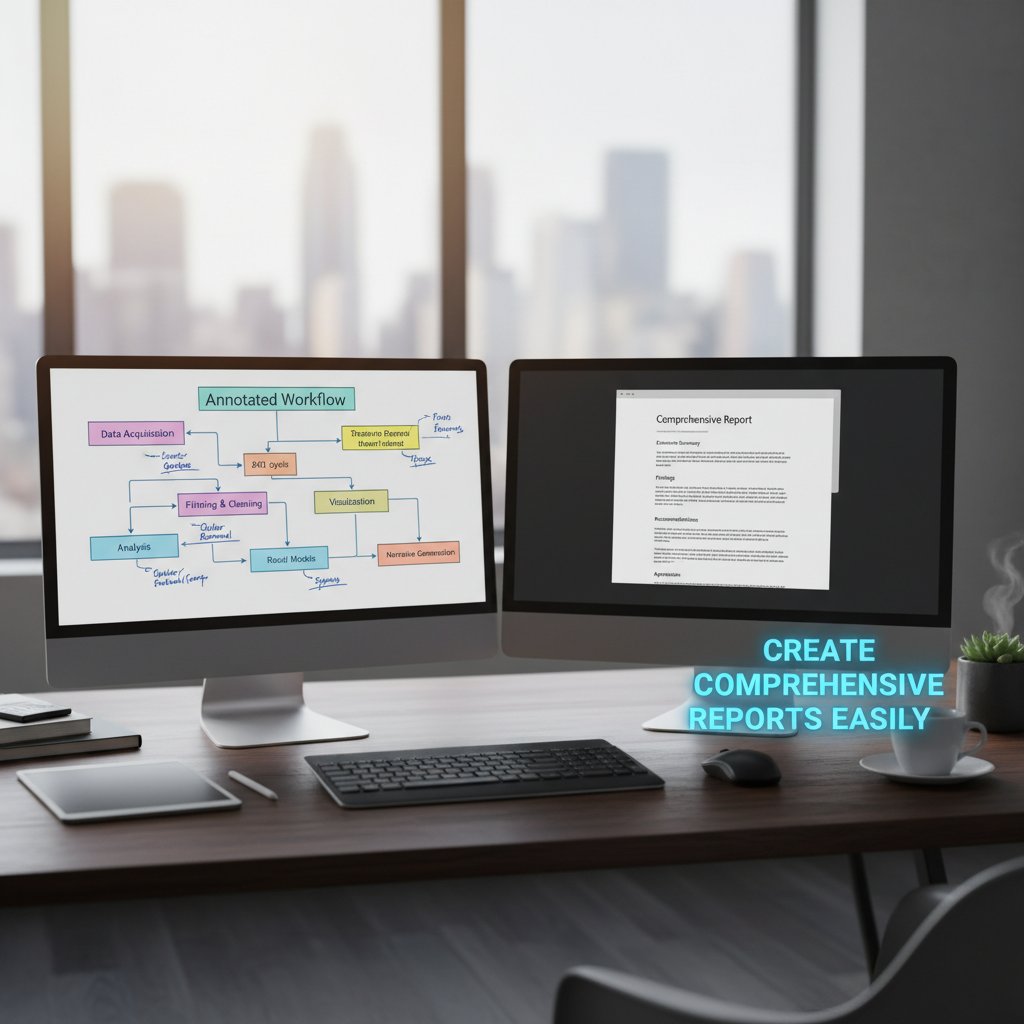
Timeline of report creation evolution:
- Paper and pen: slow, error-prone
- Word processors: faster, but manual
- Spreadsheet templates: semi-automated, still rigid
- AI-powered platforms: rapid, adaptive, context-aware
Tools the pros actually use
Contrary to popular belief, the best in the business don’t just use one tool. They combine AI-powered solutions (like filecreator.ai), real-time collaboration platforms, and compliance checkers for a streamlined, error-resistant workflow.
- AI-powered document generators: Automate the heavy lifting, freeing up brainpower for analysis.
- Collaboration suites: Enable seamless teamwork and version control.
- Data visualization tools: Translate complex trends into actionable visuals.
- Integrated compliance checks: Ensure regulations and standards are met before distribution.
Hidden benefits of expert-level reporting approaches:
- Reports are more likely to influence leadership decisions.
- Time-to-delivery is slashed without sacrificing depth or compliance.
- Stakeholder trust is consistently higher, according to Randstad’s 2024 survey.
- Reports are future-proofed for regulatory scrutiny and strategic pivots.
The psychological game: How reports shape decisions and power
The influence of narrative on outcome
Numbers alone don’t change minds—stories do. The narrative woven through a report can sway decisions, shape perception, and even alter the course of a business. As observed by MIT Sloan researchers, reports that build a compelling story—anchored by credible data—are 48% more likely to influence executive action.
“The story behind the numbers is what changes minds.” — Casey, Policy Analyst (illustrative, echoing MIT Sloan research findings 2024)
Avoiding cognitive traps
Even the sharpest professionals fall prey to psychological biases that sabotage reporting. Here are the most dangerous:
Confirmation bias: Only including data that supports preconceived ideas, ignoring contradictory evidence.
Anchoring bias: Overemphasizing initial information or first impressions in analysis.
Recency bias: Giving undue weight to the most recent data, disregarding long-term patterns.
Groupthink: Suppressing dissent or alternative views to maintain consensus.
Awareness of these traps is the first step towards building reports that are both credible and influential.
The future of reporting: AI, ethics, and the road ahead
Balancing speed with responsibility
The drive for efficiency must be balanced with ethical responsibility—especially as automation takes over more reporting tasks. According to new regulations (EU AI Act, US executive orders), embedded governance and transparency aren’t optional; they’re requirements. Reports generated without adequate oversight can invite legal entanglements, data breaches, or worse.
Human oversight remains non-negotiable. AI acts as a force multiplier, but domain experts are the only ones who can contextualize and validate findings—a truth echoed by Forbes and WHO in recent studies.
What’s next for reporting professionals?
The reporting landscape is evolving, but the fundamentals endure: clarity, accuracy, and ethical rigor. Experts anticipate a continued rise in curated, domain-specific AI models, tighter regulatory scrutiny, and a premium on professionals who can bridge the gap between automation and authentic insight.

Your action plan: Building a smarter, faster reporting workflow
Self-assessment: Where are your reporting gaps?
Before you can create comprehensive reports easily, you need to know where you’re falling short. Use this quick self-assessment to diagnose your workflow:
- Are reports often late or riddled with errors?
- Do stakeholders frequently ask for clarifications?
- Is your data up-to-date and trustworthy?
- Are you over-relying on generic templates?
- Does your reporting tool support compliance and customization?
Priority checklist for implementation
Stop spinning your wheels. Here’s what to do next:
- Audit your current process: Identify bottlenecks and recurring issues.
- Invest in AI-powered solutions like filecreator.ai that combine speed with compliance.
- Prioritize data quality: Clean, integrate, and validate your data sources.
- Customize templates: Adapt reports to each audience and scenario.
- Build review checkpoints: Schedule regular feedback and error checks.
- Train your team: Don’t underestimate the value of upskilling—50% of companies report a global AI skills gap (Randstad, 2024).
- Document and iterate: Capture what works and refine it relentlessly.
Red flags and mythbusting: What to avoid when streamlining reports
Common misconceptions debunked
Let’s bust some myths that are sabotaging your reporting efforts:
- “More data equals better reports.” Not true—irrelevant data is just noise.
- “Automation removes the need for oversight.” Dangerous—human judgment is still critical.
- “Templates guarantee compliance.” False—regulations change, templates must adapt.
- “Speed always improves efficiency.” Sometimes, shortcuts create more work in the long run.
Reporting myths that cost you time and credibility:
- Believing AI can “think” like an expert.
- Assuming every stakeholder needs the same report format.
- Treating visualization as a last-minute add-on.
- Overlooking the importance of narrative and context.
Spotting trouble before it starts
The warning signs of reporting disaster aren’t always obvious. Look for these early red flags:
- Inconsistent data points between reports.
- Stakeholder confusion about conclusions.
- Reports that go unread or unactioned.
- Missed compliance updates or regulatory warnings.
Creating comprehensive reports easily isn’t just a catchphrase—it’s a high-wire act that demands more than “easy buttons” or lazy shortcuts. The art is in balancing automation with authenticity, templates with tailored narratives, and speed with relentless attention to detail. As the data shows, organizations that master this balance—leveraging trusted tools like filecreator.ai, prioritizing data integrity, and investing in skill development—don’t just keep up. They set the pace. The brutal reality? In the reporting arms race, it’s not the fastest or the flashiest who win. It’s those who commit to depth, accuracy, and smart workflow design, transforming raw information into real impact. Rethink your reporting game, and watch your influence soar.
Sources
References cited in this article
- AI in Action: 2024 Federal AI Use Case Inventory(cio.gov)
- IDC’s 2024 AI Opportunity Study(blogs.microsoft.com)
- Randstad: AI Skills Gap Widens(randstad.com)
- AI Magazine: Top 10 AI Trends 2024(aimagazine.com)
- KPMG Trusted AI(kpmg.com)
- IBM 2024 Cost of a Data Breach(bigid.com)
- MIT Sloan: Hidden Cost of Poor Data(blog.hurree.co)
- LinkedIn: Hidden Cost of Project Failure(linkedin.com)
- FRC Annual Review 2023/24(kpmg.com)
- Databox: Improving Reporting Process(databox.com)
- Datylon: Report Design Tips(datylon.com)
- Reportql: Common Mistakes(reportql.com)
- GOV.UK Best Practice Report 2023-2024(gov.uk)
- Expert Report Writing: Best Practices(researchgate.net)
- WBCSD Reporting Matters 2024(reporting.academy)
- YVR Noise Reports(yvr.ca)
- GIJN’s Top 10 Stories 2024(gijn.org)
- LinkedIn: AI vs. Authenticity(linkedin.com)
- Stonebranch Automation Report 2024(stonebranch.com)
- Accenture: AI-Led Processes(newsroom.accenture.com)
- TaskDrive: AI Statistics(taskdrive.com)
- Forbes: Top Automation Challenges 2024(forbes.com)
- SAGE Journals: Human Response to Automation Failure(journals.sagepub.com)
- UNDRR GAR 2024 Case Studies(undrr.org)
- NYU GPH Disaster Journal 2024(wp.nyu.edu)
- KP Playbook: Expert Marketing Tips(kpplaybook.com)
- Citizens Bank 2024 Outlook(citizensbank.com)
- Nature Reviews Psychology: Expertise & Decision-Making(nature.com)
- StudioID: Psychology of Conversions(studioid.com)
- WEKA: 2024 Global Trends in AI(weka.io)
- Forbes: Top AI Trends 2024(forbes.com)
- World Economic Forum: AI Governance Trends(weforum.org)
- Robert Half: Workplace Trends 2023-2024(roberthalf.com)
- Deloitte Human Capital Trends 2024(hrforecast.com)
Perfect Documents, Instantly
Filecreator.ai transforms the way you produce professional documents. Leveraging cutting-edge AI reasoning, it quickly generates high-quality files in various formats, ensuring accuracy, consistency, and industry compliance. Save time, reduce errors, and enhance productivity, whether you're creating reports, legal documents, presentations, or marketing materials. Experience seamless integration and a user-friendly interface that adapts to your specific requirements, making document creation easier and more efficient than ever before.
Get startedStart Creating Professional Documents Today
Join thousands of professionals who trust AI-powered document generation
Frequently Asked Questions
Why do easy reporting tools often fail to deliver quality results?
Easy reporting tools frequently prioritize speed and simplicity over meaningful insights, resulting in shallow outputs that lack context. According to IDC's 2024 AI Opportunity Study, while 75% of enterprises use generative AI in production, only 14% of frontline workers receive proper AI training, leading to reports assembled with slick templates but little understanding—creating strategic blind spots and missed opportunities.
What is the main consequence of choosing speed over substance in report creation?
Choosing speed and simplicity in reporting comes at the expense of meaningful insights, with costly consequences for decision-makers, teams, and the bottom line. The article emphasizes that streamlined reporting that prioritizes being 'easy' can lead to irrelevance rather than real influence in the boardroom or field.
What does the article suggest is the alternative to falling for 'easy' reporting tricks?
The article recommends using tools and strategies with the discernment of a professional, focusing on expert-backed strategies that transform your reporting workflow while maintaining message quality. Rather than pursuing 'easy' solutions, the approach is to harness tools (like filecreator.ai) thoughtfully to create comprehensive reports that deliver real impact.
Continue Reading
Explore more from Professional Document Generator

Why Time-Saving Report Creation Fails Most Professionals
Time-saving report creation often fails professionals. This article explains why reports consume workweeks, which habits drain the most time, and which methods actually accelerate the process.

Generate Professional Reports That Actually Influence Decisions
Discover insights about generate professional reports

Why Customized Reports Matter in Modern Business
Customized reports have become essential for modern business. This article examines why generic reporting fails, the hidden costs of poor report generation, and how to build reliable reporting processes.

Report Generator Application: the Hidden Risks of AI Automation
Discover insights about report generator application

Instant Report Creator: Speed Gains and Hidden Costs
An instant report creator can accelerate document generation, but speed comes with trade-offs. This article examines when automation helps and when it creates problems.

Speed in Business Reporting: Competitive Advantage Explained
Quickly create business reports without sacrificing quality. This article explains why speed matters, the real costs of slow reporting, and how automation and AI improve workflow.