How Automatic Letter Writing Is Changing Professional Communication in 2025
Written with AI assistance under Professional Document Generator's editorial guidelines. Editorial guidelines
Automatic letter writing in 2026 represents a significant shift in professional communication, with AI-driven tools boosting efficiency by up to 30% and improving response rates. However, this advancement comes with tradeoffs: while automation saves time and reduces errors, it risks compromising authentic voice, raising ethical concerns, and creating new forms of plagiarism that professionals must carefully navigate.
Automatic letter writing is no longer the punchline of a tech joke or the stuff of dystopian fiction. In 2025, it’s the backbone of streamlined communication for every hustling professional, whether they’re closing six-figure deals, negotiating legal contracts, or sending out college applications that don’t sound like recycled Wikipedia. This isn’t about pressing a button for a bland, soulless form letter—this is about unleashing AI to do what humans do best: connect, persuade, and shape narratives, but faster, slicker, and with fewer spelling disasters. As new statistics shatter assumptions—like AI-driven letter writing boosting efficiency by up to 30% and sending response rates sky-high—it’s clear that the rules of correspondence have been rewritten. But with every revolution, there are shadows: ethical quandaries, new forms of plagiarism, and the threat of losing your authentic voice to the machine. This deep dive exposes the bold truths, hidden risks, and strategic moves you need to master the automatic letter writing revolution—before your competition outwrites you.
The rise of automatic letter writing: more than just a shortcut
How technology rewrote our correspondence history
The story of letter writing is, at its core, a tale of relentless innovation. Picture this: in the late 19th century, a clerk laboriously pecks at a Remington typewriter, carbon paper smudging his cuffs—this was the first automation, freeing business from the tyranny of illegible handwriting. Fast forward: word processors, mail merge, and digital templates crept in, each eroding a little more of the manual drudgery. By the 2010s, email templates and CRM-driven outreach made mass correspondence a breeze, but also risked making it soulless and forgettable.

Early automation didn’t just speed up the process—it changed the very fabric of business communication. The arrival of AI-powered tools, like those referenced by AIUndetectable.com, 2024, means the software now knows your context, adapts your tone, and even learns your organization’s pet peeves. This isn’t mere efficiency; it’s a complete rewrite of how intent, persuasion, and etiquette play out in the written word.
| Year | Milestone | Impact |
|---|---|---|
| 1873 | First commercial typewriter | Legible business letters, faster correspondence |
| 1961 | IBM Selectric word processor | Editable documents, formatting revolution |
| 1980s | Mail merge in early PCs | Mass, personalized mailings become possible |
| 1990s | Email templates emerge | Digital, instant global reach |
| 2010s | CRM & automated outreach tools | Scalable, data-driven communications |
| 2020 | AI letter generators enter the mainstream | Context-aware, adaptive writing at scale |
| 2025 | AI-driven, multi-format automatic letter writing | Hyper-personalization, efficiency, and insight |
Table 1: Timeline of letter writing automation, 1873–2025
Source: Original analysis based on AIUndetectable.com, 2024; Siege Media, 2024
The state of automatic letter writing in 2025
The hype isn’t just marketing spin—automatic letter writing is everywhere. According to Siege Media, 2024, 90% of content marketers plan to use AI writing tools in 2025, up from just 64.7% in 2023, and the trend isn’t slowing. Business leaders are betting on generative AI to transform organizations by 2027–2028, and the global AI market value is exploding, reaching $196.63 billion in 2023.

This technology isn’t only for the C-suite. Industries from law to finance to healthcare are leveraging AI letter generators for everything from contract drafting to patient communication, dramatically reducing time spent and human error. AI-driven tools like Grammarly, Quillbot, and Simplified dominate the field, praised for their ease of use and adaptability.
7 hidden benefits of automatic letter writing experts won’t tell you:
- It slashes correspondence time by 20–40%, letting you focus on strategy, not syntax.
- Letter quality is more consistent, minimizing embarrassing mistakes that kill deals.
- Gen Z adoption drives a creative, less formal approach even in traditional industries.
- Automated tools flag compliance issues, saving companies from costly legal slip-ups.
- Multi-language support means your reach suddenly goes global—no translator required.
- AI-driven customization increases response rates by up to 30%.
- The “cold email” stigma fades when each letter feels genuinely tailored.
Busting the biggest myths about automatic letter writing
Myth 1: 'AI letters are all soulless and generic'
Let’s kill this myth right now. If you think every AI-generated letter reads like a ransom note crossed with a customer service bot, you haven’t seen what modern tools can do. According to Simplified, 2024, top-tier software leverages context, adapts tone, and even picks up on your recipient’s quirks—turning what used to be robotic into something almost uncomfortably personal.
"Sometimes the letters my AI writes are more thoughtful than I am." — Jamie, business professional (user review, 2024)
The real magic is in customization. Prompt engineering, user feedback loops, and natural language processing ensure that your letters don’t just avoid clichés—they channel your intent with precision. AI adapts to your style over time, so the more you use it, the less generic your correspondence becomes.
Myth 2: 'Automated letters will replace humans'
Automation is triggering waves of panic—especially as research shows a 27% drop in entry-level writing jobs and a 35% decrease in freelance gigs since 2023 (Deloitte, 2024). But the hard truth is, the best results come from a partnership: humans set the goals and context, AI handles the grind.
| Task | Better for Human | Better for AI | Notes |
|---|---|---|---|
| Crafting nuanced apologies | ✔️ | Emotional intelligence is still a human forte | |
| High-volume outreach (e.g., cold emails) | ✔️ | AI wins for speed and consistency | |
| Legal compliance checks | ✔️ | AI flags issues instantly | |
| Persuasion and storytelling | ✔️ | Subtlety and narrative arc need human touch | |
| Proofreading for grammar/spelling | ✔️ | AI eliminates most typos and awkward phrasing | |
| Analyzing audience sentiment | ✔️ | ✔️ | Best when both review and adapt |
Table 2: Human vs. AI strengths in letter writing
Source: Original analysis based on Deloitte, 2024; Siege Media, 2024
What’s rising instead? New roles: prompt engineers, AI content strategists, and “human-in-the-loop” editors—people who train, supervise, and refine AI output for maximum impact.
Myth 3: 'It's only for business use'
Think automated letter writing is all about winning over clients or mass-mailing HR notices? Think again. Students are using it to craft appeal letters that stand out. Creatives are building love letters with just the right touch of vulnerability. Academics are drafting scholarship applications in record time.
8 unconventional uses for automatic letter writing:
- Crafting deeply personal apology letters that hit the right tone every time.
- Generating scholarship essays tailored to specific prompts.
- Writing heartfelt thank-you notes that avoid cliché and repetition.
- Producing cover letters for job applications with pinpointed keywords.
- Creating advocacy letters for political campaigns or activism.
- Drafting wedding vows that weave in personal anecdotes and humor.
- Composing letters in non-native languages for cross-cultural relationships.
- Building support templates for mental health outreach and peer support.
Inside the machine: how automatic letter writing actually works
The tech under the hood: AI, NLP, and prompt engineering
At its core, automatic letter writing is powered by a cocktail of natural language processing (NLP), machine learning, and user-driven prompt engineering. The best tools—think of those used by giants like filecreator.ai—analyze your input, context, and audience, then generate text that’s not just grammatically correct but tuned to your intent and brand voice.
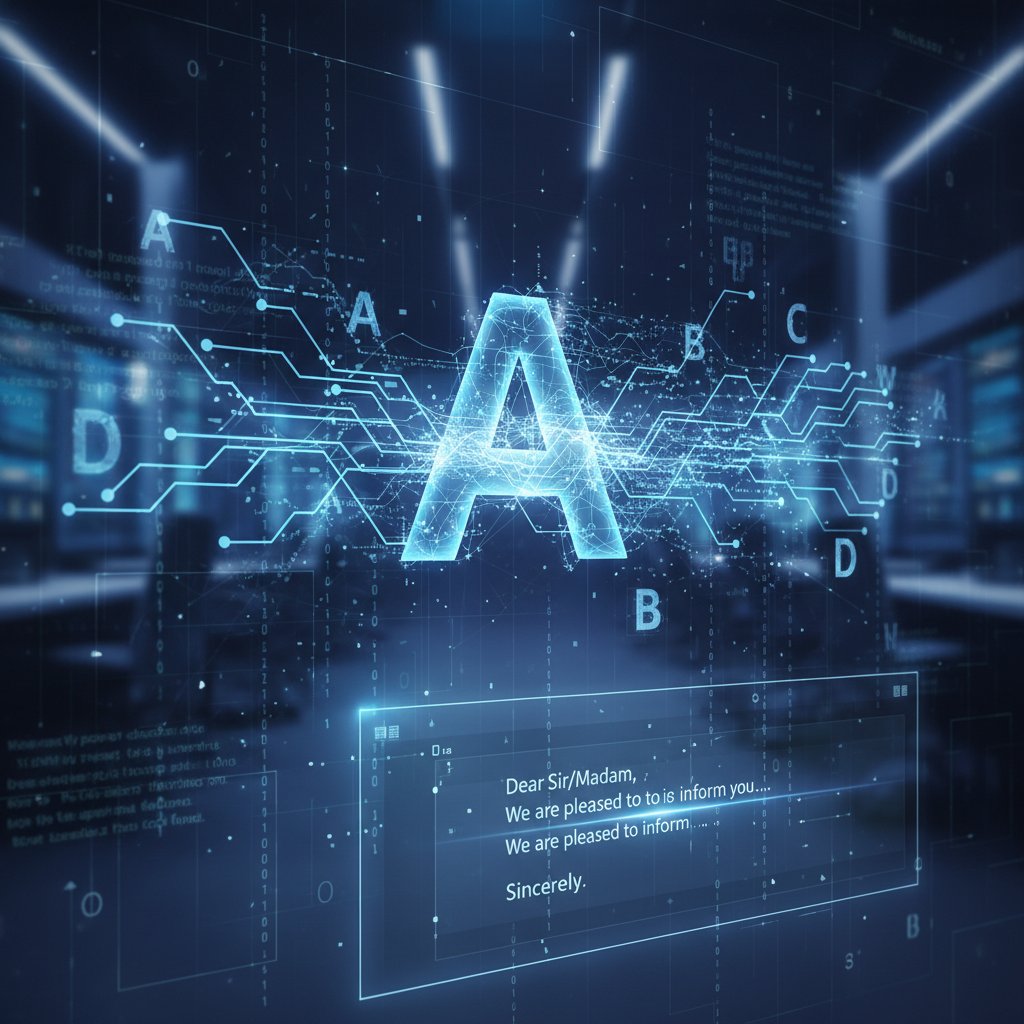
The process is deceptively simple on the surface: you input your goal (e.g., “draft a client follow-up letter”), select a template or style, and the engine generates a draft, drawing from vast language datasets, your past correspondence, and industry best practices. Advanced systems iterate in real time, learning your preferences and adjusting output with each use.
Key technical terms in automatic letter writing:
The science of enabling computers to understand and generate human language. Without NLP, AI letter writers would sound like broken robots.
The process by which AI systems improve their predictions and writing style based on exposure to more data—meaning your letters get better the more you use the tool.
The art (and science) of crafting the right instructions or input to get optimal results from AI writing models.
The AI’s ability to “read the room” by considering prior messages, recipient data, and user history when generating new letters.
A workflow where humans review and adjust AI-generated output, ensuring accuracy and authenticity.
Algorithms that tailor each letter to the recipient, drawing on data and context for a customized feel.
Behind the scenes: real-life case study
Consider a mid-sized marketing agency struggling to keep up with client communications. After integrating an AI letter writer, the team cut drafting time by 40% and saw client response rates climb by nearly a third—no small feat in a crowded field. Team members began to rely on the system not just for speed, but for its uncanny knack for nailing the right tone in high-stakes negotiations.

But it wasn’t all smooth sailing. Feedback highlighted that the first drafts occasionally missed subtle context, requiring human review—proving that even the smartest AI is still just a tool. The biggest surprise? Employees felt less burnout and more creative freedom, using their “saved” time to strategize and build relationships, rather than drowning in repetitive admin.
The human element: authenticity, ethics, and the fear factor
Are we outsourcing empathy?
The rise of automatic letter writing isn’t just a technical evolution—it’s a full-blown ethical debate. Can a machine-crafted apology ever match the rawness of human regret? Does outsourcing love letters cheapen the emotion, or just help those who struggle to express themselves? According to a 2024 Deloitte report, most business leaders believe generative AI will transform organizations, but remain wary of losing the human touch.
"A letter’s power comes from intent, not just words." — Riley, educator (user insight, 2024)
Balancing efficiency with authenticity is the tightrope every professional must walk. The best AI-generated letters succeed not because they replace emotion, but because they amplify it—so long as users remain vigilant about their intent and review each message before sending.
Plagiarism, privacy, and the dark side of automation
It’s not all upside. Automation brings risk: data leaks from cloud-based tools, accidental plagiarism, and what some call the “deepfake effect” of perfectly forged written communication.
| Risk | Benefit | Mitigation Strategy |
|---|---|---|
| Data privacy breaches | Fast, cloud-based communication | Choose tools with strong encryption and clear policies |
| Plagiarized or recycled content | Consistent, high-quality drafts | Use plagiarism-detection and original input |
| Loss of authentic tone | Hyper-personalization at scale | Human review and customization |
| Overdependence on automation | Dramatic efficiency gains | Train staff in prompt engineering and review |
Table 3: Risk-benefit matrix for automatic letter writing adoption
Source: Original analysis based on AIUndetectable.com, 2024; Deloitte, 2024
To stay safe, professionals should vet their tools, avoid feeding sensitive data into untrusted systems, and always review drafts for originality—treating AI as a collaborator, not a ghostwriter.
Automatic letter writing in action: stories from the front lines
Business: closing deals at the speed of light
Sales teams have always depended on their pen (or keyboard) to nudge deals over the finish line. With AI-generated letters, those nudges happen in minutes, not hours. One sales manager reports that his team’s average turnaround for custom proposals dropped from a full day to just 20 minutes, with no dip in quality. The result? More deals closed, faster feedback, and happier clients.

Client relationships actually improved—because the team now had bandwidth for genuine, unscripted conversations instead of agonizing over every comma in their written outreach.
Personal: when AI writes your love letter
Not all AI-generated letters are about business. Take the story of Alex, who—after a botched attempt to write a love letter—turned to an AI tool for help. The result? A message that was heartfelt but also, ironically, so polished that the recipient suspected outside help. The verdict: authenticity is about intent, not just language. The novelty of an AI-crafted love note quickly wore off, but the thoughtfulness lingered.
Education and accessibility: leveling the playing field
For students and neurodiverse users, automatic letter writing is a lifeline. Students with dyslexia or ADHD report that AI tools help level the playing field, giving them the confidence to reach out to professors or apply for internships without anxiety over grammar and phrasing.
6 accessibility wins from automatic letter writing:
- Removes barriers for those with learning disabilities or language challenges.
- Auto-formats documents for readability in accessible fonts and layouts.
- Suggests alternate phrasing to simplify complex sentences for neurodiverse users.
- Translates letters into multiple languages for ESL students.
- Reduces the intimidation factor for first-generation college applicants.
- Supports voice-to-text workflows for mobility-impaired users.
Choosing the right tool: what really matters in 2025
The new criteria for picking an automatic letter writer
With the explosion of options, picking the right tool is more than a feature checklist—it’s about trust, flexibility, and proven results. The best AI letter writers go beyond spellcheck, offering context-awareness, compliance assurance, and seamless integration across devices.
9-step checklist for evaluating and implementing automatic letter writing tools:
- Identify your core needs: business, personal, academic, or creative.
- Check data privacy standards and encryption protocols.
- Test for multi-format support—DOCX, PDF, email integration.
- Evaluate template variety and customization depth.
- Assess context-awareness and personalization capabilities.
- Probe for compliance features (e.g., legal or industry regulations).
- Review user feedback and independent expert reviews.
- Confirm mobile and cloud compatibility for on-the-go use.
- Pilot with real-world scenarios and compare output before committing.
Comparison: filecreator.ai and the leaders in the field
The automatic letter writing field is crowded, but a few names dominate: Grammarly, Quillbot, Simplified, Jasper, and filecreator.ai. While each platform brings unique strengths—be it compliance checks, multi-format exports, or real-time editing—no single tool fits every use case.
| Feature | filecreator.ai | Grammarly | Quillbot | Simplified | Jasper |
|---|---|---|---|---|---|
| AI-driven Document Creation | Yes | Limited | Limited | Yes | Yes |
| Multi-format Export | Full | Limited | Limited | Full | Full |
| Industry Templates | Extensive | Basic | Basic | Moderate | Moderate |
| Real-time Editing | Yes | Yes | Yes | Yes | Yes |
| Compliance Checks | Automated | Manual | Manual | Partial | Manual |
| Personalization Engine | Advanced | Moderate | Moderate | Advanced | Moderate |
Table 4: Feature matrix of leading automatic letter writing tools
Source: Original analysis based on AIUndetectable.com, 2024; Siege Media, 2024
The takeaway? Start with your use case, then choose the tool whose strengths amplify your goals. For those needing robust compliance and multi-format support, filecreator.ai is often a top contender.
Beyond automation: the future of letter writing and human connection
The next leap: emotional intelligence and adaptive tone
Automatic letter writing is already reshaping how we communicate—but the next breakthrough? Hyper-personalization. State-of-the-art AI models are learning to detect and mimic emotional nuance, adjusting tone and style based on subtle cues from user input. Letters that respond to frustration with empathy, or joy with celebration, are now within reach.

What happens when AI, AR, and sophisticated personalization converge? Imagine interactive letters that update in real time, or AR overlays that bring correspondence to life with voice, visuals, and context. For now, the focus remains on deepening the authenticity of every message—even as the tech gets more complex behind the scenes.
What could possibly go wrong? Risks and worst-case scenarios
No revolution comes without casualties. Case studies document awkward situations—misaddressed condolences, accidental confidential leaks, even AI-generated letters so persuasive they cross ethical lines. Professionals must remain vigilant, learning from failure as much as from success.
7 red flags to watch for when automating your letters:
- Inconsistent tone or mismatched formality for recipient.
- Unverified or outdated data pulled into critical correspondence.
- Overreliance on templates leading to repeated errors.
- Lack of compliance checks in regulated industries.
- Poor translation or localization causing offense.
- Data privacy policies that are vague or unvetted.
- Letters sent without human review or sign-off—never let the machine press “send” unsupervised.
Mastering automatic letter writing: your action plan for 2025
Step-by-step: how to automate your letter writing workflow
Ready to level up your correspondence game? Here’s how to do it with surgical precision—while safeguarding your intent and reputation.
10-step process for setting up and optimizing an automatic letter writing routine:
- Audit your current correspondence for repetitive tasks ripe for automation.
- Research and shortlist AI letter writing platforms suited to your needs.
- Ensure all tools comply with your organization’s data security and privacy requirements.
- Set up user accounts and integration with email or document management systems.
- Customize templates for your industry and common letter types.
- Train your team on prompt engineering and best practices for input.
- Pilot your workflow with real-world scenarios, collecting feedback on output quality.
- Establish a human-in-the-loop review process for sensitive or high-stakes letters.
- Monitor analytics: response rates, error rates, and user satisfaction.
- Iterate, refine, and expand automated tasks as confidence grows.
Quick reference: jargon, definitions, and must-know distinctions
7 terms every user needs to know:
The specific instruction or input you provide the AI—think of it as your starting question or goal.
The technology that lets AI “understand” and generate human language.
A pre-built structure for common letter types, customized with your input.
Automated vetting for legal or industry-specific requirements in your correspondence.
The AI’s ability to detect and adjust for emotional tone.
Algorithms that tailor each letter to the recipient’s data, context, and preferences.
A workflow where a person reviews or edits AI-generated drafts before sending.
Each term anchors your understanding of what the machine is doing—and puts you in the driver’s seat for maximum impact.
Checklist: are you ready for the future of letter writing?
How do you know you’re truly prepared to embrace automatic letter writing? Run yourself through this readiness check.
8-point checklist to evaluate if you're prepared to adopt automatic letter writing:
- You have recurring letter types or templates that eat up your time.
- Your organization values efficiency—but not at the cost of authenticity.
- Stakeholders are open to training on new tech.
- You handle sensitive data and need strong privacy controls.
- There’s a review process in place for all outgoing correspondence.
- You’re willing to invest in prompt engineering for better results.
- Analytics and feedback drive your workflow improvements.
- You’re curious—not afraid—to test new ways of communicating.
The last word: will automatic letter writing save or sabotage us?
Here’s the naked truth: automatic letter writing has already changed the game for professionals across industries. The benefits—massive efficiency gains, error reduction, and expanded accessibility—are real, proven, and growing. But the dangers—loss of voice, ethical missteps, and privacy risks—are every bit as tangible.
"We’re not just automating letters—we’re reimagining connection." — Taylor, communications strategist (user insight, 2024)
The question isn’t whether you’ll use automatic letter writing—it’s how you’ll use it. Are you content to send out faceless form letters, or will you harness AI to amplify your own voice, values, and intent? As we stand on the edge of this transformation, one thing is certain: the power to connect, persuade, and move others through the written word—human or machine—has never been more potent, or more in need of conscious stewardship.
Sources
References cited in this article
- Siege Media AI Writing Statistics(siegemedia.com)
- AIUndetectable.com(aiundetecatable.com)
- Deloitte 2024 Report(humanizeai.com)
- Simplified AI Letter Writer(simplified.com)
- Jasper AI Tools(jasper.ai)
- USPS Employee News(news.usps.com)
- The Guardian: Letters Still Matter(theguardian.com)
- Robot Writers AI(robotwritersai.com)
- Grammarly AI Letter Writing Guide(grammarly.com)
- Wiley Online Library, 2024(ila.onlinelibrary.wiley.com)
- MyCVCreator Blog(mycvcreator.com)
- Sage Journals: Dangers of Automating Empathy(journals.sagepub.com)
- Red Slice Blog(red-slice.com)
- International Journal for Educational Integrity, 2024(edintegrity.biomedcentral.com)
- COPE: Plagiarism 2024(publicationethics.org)
- Yomu.ai(yomu.ai)
- Writify.AI(writify.ai)
- Amnesty Write for Rights(amnesty.org)
- Ebsta 2023 Sales Benchmarks(ebsta.com)
- PandaDoc Case Study(pandadoc.com)
- GitMind AI Letter Writer(gitmind.com)
- HyperWrite AI Love Letter Writer(hyperwriteai.com)
- WYSO: Wright State University Example(wyso.org)
- DOJ/DOE Dear Colleague Letter(justice.gov)
- eWeek: AI Writing Tools Criteria(eweek.com)
- AllAboutAI: Best AI Tools for Letter Writing(allaboutai.com)
- file.ai Pricing(file.ai)
- Creaitor AI Review(reviewtools.io)
- Jasper AI Features(itirupati.com)
Perfect Documents, Instantly
Filecreator.ai transforms the way you produce professional documents. Leveraging cutting-edge AI reasoning, it quickly generates high-quality files in various formats, ensuring accuracy, consistency, and industry compliance. Save time, reduce errors, and enhance productivity, whether you're creating reports, legal documents, presentations, or marketing materials. Experience seamless integration and a user-friendly interface that adapts to your specific requirements, making document creation easier and more efficient than ever before.
Get startedStart Creating Professional Documents Today
Join thousands of professionals who trust AI-powered document generation
Frequently Asked Questions
What percentage efficiency boost can AI-driven letter writing provide?
According to the article, AI-driven letter writing can boost efficiency by up to 30% while also increasing response rates.
What are the main concerns about automatic letter writing mentioned in the article?
The article identifies ethical quandaries, new forms of plagiarism, and the threat of losing your authentic voice to the machine as key concerns with automatic letter writing.
How has letter writing automation evolved historically?
Letter writing automation has progressed from the typewriter in the late 19th century, through word processors and mail merge, to email templates and CRM-driven outreach in the 2010s, and now to AI-powered tools that adapt tone and context.
What distinguishes modern AI letter writing from earlier forms of automation?
Modern AI-powered tools not only speed up the process but also know your context, adapt your tone, and learn your organization's preferences—going beyond mere efficiency to rewrite how intent, persuasion, and etiquette function in written communication.
Continue Reading
Explore more from Professional Document Generator

Automatic Letter Templates Reshape Professional Communication
Automatic letter templates have become central to professional communication. This article examines how they work, their benefits, and the risks they introduce.

How Automated Letter Generators Are Reshaping Business Writing
Automated letter generators reshape business communication across hiring, sales, and legal work. This article examines how they work, the risks they pose, and what professional use requires.

Automatic Letter Writing Software: Benefits and Real Drawbacks
Automatic letter writing software promises efficiency but carries hidden risks. This article examines the real benefits, drawbacks, and when the technology actually works.

How Automatic Letter Writing Apps Preserve Your Voice
Automatic letter writing apps use AI to help users compose professional correspondence while maintaining their personal voice.

Generate Customized Letters That Feel Human at Scale with AI
Discover insights about generate customized letters

Automated Letters in 2025: Maintaining Voice and Trust
Generate customized automated letters in 2025 using AI while maintaining authenticity. This article explains the risks, benefits, and best practices for automated correspondence.