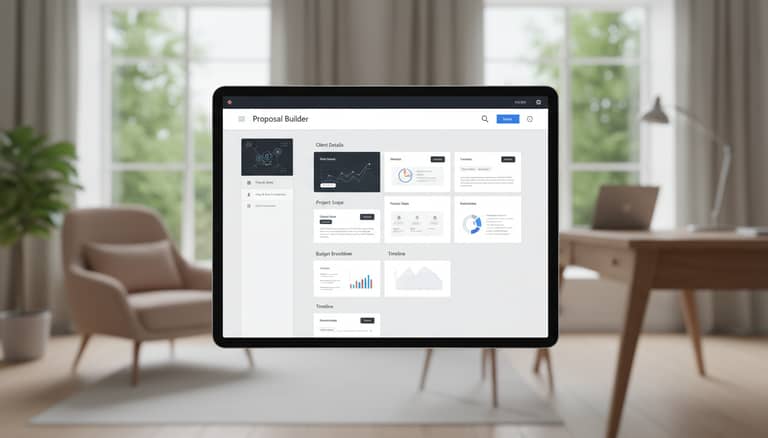
Online Proposal Builder in 2025: Power, Pitfalls, and Payoffs
Written with AI assistance under our editorial guidelines
Online proposal builders have become essential business tools in 2025, offering speed and automation that traditional methods cannot match. However, they come with hidden costs, security risks, and workflow challenges that require careful management. Success depends on understanding both the genuine advantages—like real-time collaboration and digital audit trails—and the potential pitfalls of relying on these platforms for critical business deals.
The age of handshakes and paper promises is over. In 2025, the business world spins at the speed of a Wi-Fi signal, and your next big deal could hinge on something as unsexy as an “online proposal builder.” This isn’t just about sending slick PDFs—it’s about the brutal reality of competition, automation, and the gnawing fear of being left in the digital dust. If you’re still kludging together proposals in Word or hoping your graphic designer can work late, you’re already behind. The truth? The tools you use to create, send, and track proposals are now as important as your pitch itself.
But here’s what nobody wants to tell you: for every promise of speed and automation, there’s an underbelly of hidden costs, security landmines, and workflows that can make or break your reputation. In this deep dive, we rip apart the myths, expose the risks, and lay out the real hacks for dominating with digital proposals in a world obsessed with instant results and ruthless efficiency. Whether you’re a startup hustler, a corporate closer, or a creative gunning for the next big client, mastering the online proposal builder game isn’t optional—it’s survival.
Why proposals matter more than ever in the digital era
The rise and fall of the handshake deal
It wasn’t so long ago that a firm handshake and a promise over coffee could seal million-dollar deals. But the world is rewired. Today, contracts are hashed out over pixels, not pints, and every agreement is one bad attachment away from disaster. The digital transformation isn't just a buzzword—it's a tidal wave. According to Meltwater’s 2024 global digital report, there are 5.35 billion internet users worldwide, and digital transformation investments are growing at an 18% compound annual rate (Meltwater, 2024).
If you’re still relying on traditional methods, expect to get left behind. The modern market demands speed, transparency, and auditable digital trails. The handshake deal didn’t die with COVID—it morphed into a hyperlink and a digital signature.

"If your proposal isn't digital, your deal is already dead."
— Maya, sales strategist
How the modern buyer’s expectations have changed
Today’s buyers want more than just a number and a logo—they want instant, hyper-personalized, data-rich proposals that scream credibility. The days of “please see attached” are done. Clients expect real-time collaboration and live updates, not email chains that belong in a museum. According to DOIT’s 2024 survey, 90% of organizations have a digital transformation strategy in place (DOIT, 2024). If your process isn’t streamlined and digital, you’re likely an afterthought.
Unspoken benefits of online proposal builders that experts rarely tell you about:
- Stealth personalization: The right proposal builder lets you pre-fill details from CRM data, making every proposal feel custom—even at scale.
- Engagement tracking: Advanced analytics reveal which sections your client lingers on, arming you for smarter follow-ups.
- Consistent branding: Automated templates ensure your brand is always represented perfectly—no more off-brand fonts or rogue hex codes.
- Speed equals trust: Fast turnarounds don’t just impress—they signal operational prowess.
- Seamless collaboration: Real-time editing slashes approval cycles and minimizes “version control hell.”
The overlooked psychological edge of great proposals
There’s a dirty secret in sales: professionalism is persuasion. The look, feel, and flow of your proposal can tip the scales before anyone reads a single word. Modern proposal builders don’t just make documents—they manufacture trust. A study from Better Proposals (2024) found that proposals built with specialized software have 30–40% higher close rates than traditional approaches (Better Proposals, 2024). It’s not just about speed; it’s about showing you have your act together.
| Medium | Conversion Rate (%) | Engagement Tracking | Personalization |
|---|---|---|---|
| Traditional | 18 | None | Manual |
| Digital Builder | 28–32 | Advanced | Automated |
| Hybrid (PDF+Web) | 23 | Limited | Semi-manual |
Table 1: Proposal conversion rates by medium.
Source: Original analysis based on Better Proposals, 2024 and Esign.co.uk, 2024.
Decoding the online proposal builder phenomenon
What exactly is an online proposal builder?
Strip away the buzzwords, and an online proposal builder is a digital platform designed to create, customize, send, and track business proposals in the cloud. Unlike static templates, these tools combine automation, analytics, and multimedia to transform dull documents into interactive sales weapons. The technology stack usually includes drag-and-drop editors, cloud-based storage, CRM integration, electronic signatures, and real-time analytics.
Definition list: Key online proposal builder terms explained
The process of using software to generate, customize, and deliver proposals with minimal manual effort.
Legally binding digital signatures replacing the need for wet ink, often integrated into proposal platforms.
Data insights tracking how recipients interact with your proposal—what they read, how long they spend, which sections they skip.
Direct connection between your proposal tool and customer relationship management system, pulling client data into documents.
Multiple stakeholders editing and commenting simultaneously, eliminating version control nightmares.
Mythbusting: What online proposal builders can’t do
Let’s get real. No matter how sexy the AI feels, no tool can close a deal for you. The best online proposal builder is an amplifier, not a silver bullet. Without compelling content, sharp pricing, and authentic follow-up, even the slickest proposal will flop.
"AI can automate, but it can't close for you."
— Eli, tech consultant
There’s no substitute for human intuition, negotiation finesse, or the strategic use of silence in a pitch meeting. Automated tools create leverage, not guarantees.
The anatomy of a winning digital proposal
A great digital proposal isn’t just a pretty PDF. It’s a well-oiled, interactive pitch machine. Key elements include a bold cover, tailored executive summary, clear scope of work, smart pricing tables, multimedia embeds (think video intros or 360° product tours), and frictionless e-signature capture. Modern builders like filecreator.ai help you orchestrate every piece seamlessly, so nothing gets lost in translation.

Step-by-step guide to mastering your online proposal builder:
- Select a dynamic template: Choose one that aligns with your brand and industry best practices.
- Integrate your CRM: Auto-populate client details and past interactions for instant personalization.
- Add interactive elements: Embed videos, pricing calculators, and clickable sections to boost engagement.
- Leverage analytics: Set up engagement tracking and notification triggers for recipient activity.
- Collaborate in real time: Invite team members to edit and comment, speeding up review cycles.
- Automate follow-ups: Use built-in reminders for seamless, timely nudges.
- Sign and deliver: Capture electronic signatures and archive proposals for compliance.
The dark side: Hidden costs and common pitfalls
When automation backfires
Automation addiction is real. In the race to send proposals faster, it’s easy to let templates do the thinking for you. But generic, one-size-fits-all content can torpedo credibility and tank your close rate. According to Proposable (2024), poorly-targeted automated proposals are four times more likely to be ignored (Proposable, 2024).
Red flags to watch for when choosing a builder:
- Over-reliance on templated content: If every proposal looks and reads the same, clients spot the laziness from a mile away.
- Hidden fees: Some platforms lure you in with low sticker prices, then nickel-and-dime for features like analytics or unlimited signatures.
- Limited customization: Beware builders that lock you into rigid templates with little room for brand differentiation.
- Vendor lock-in: Export restrictions or proprietary formats mean you can’t migrate your data if you switch tools.
- Cumbersome onboarding: A steep learning curve can sabotage adoption, especially in larger teams.
Security and privacy: What nobody warns you about
Every digital shortcut comes with a risk. Sensitive deal data, pricing models, and client lists are now floating in the cloud, ripe for the picking if your provider’s security isn’t airtight. Top platforms offer SOC 2 certification, end-to-end encryption, and granular permission controls, but not all builders are created equal.
| Platform | Encryption | SOC 2 Certified | Data Localization | 2FA Support | Price Tier |
|---|---|---|---|---|---|
| Proposify | AES-256 | Yes | EU/US | Yes | Mid-High |
| PandaDoc | AES-256 | Yes | Global | Yes | Mid |
| Better Proposals | AES-128 | No | UK/EU | Yes | Low-Mid |
| filecreator.ai | AES-256 | Yes | Multi-region | Yes | Variable |
Table 2: Security feature comparison across leading online proposal builder platforms.
Source: Original analysis based on Esign.co.uk, 2024 and platform documentation.
The human touch: Why you can’t automate everything
Efficiency is intoxicating, but empathy still closes deals. Prospects want to feel heard, not just processed by an algorithm. Even the smartest proposal builder can’t replicate the spark of a well-timed joke or a personalized introduction that hits home.
"Templates are fast, but personality closes the deal."
— Ava, creative director
Balance automation with a killer sense of timing and a unique brand voice. If you sound like a bot, expect to be treated like one.
Choosing your weapon: How to pick the right online proposal builder
Feature checklist: What actually matters in 2025
The proposal software market is flooded. Shiny features are everywhere, but only a handful genuinely move the needle. According to recent expert reviews, these priorities cut through the noise:
- Real-time collaboration: Enables teams to edit and comment live, reducing bottlenecks.
- Advanced analytics: Tracks recipient engagement for smarter follow-ups.
- CRM and email integration: Automates data entry and accelerates workflow.
- Secure e-signatures: Ensures legally binding closures.
- Robust customization: Allows for on-brand, flexible document design.
- Mobile optimization: Ensures clients can review and sign from any device.
- Transparent pricing: No hidden usage restrictions or per-signature fees.
Feature matrix: How top tools stack up
The landscape is competitive. Each online proposal builder claims unique strengths, but gaps become obvious on closer inspection—especially when you factor in security, real-time editing, and compliance checks.
| Feature | filecreator.ai | Proposify | PandaDoc | Better Proposals |
|---|---|---|---|---|
| AI-driven document creation | Yes | Limited | Limited | No |
| Multi-format export | Full support | Partial | Partial | PDF only |
| Industry templates | Comprehensive | Good | Basic | Basic |
| Real-time editing | Yes | No | Yes | No |
| Integrated compliance checks | Automated | Manual | Manual | Manual |
| Security (SOC 2, AES-256) | Yes | Yes | Yes | No |
Table 3: Feature comparison matrix for major online proposal builders.
Source: Original analysis based on platform feature documentation and Esign.co.uk, 2024.
ROI reality check: Are premium tools worth it?
The sticker price rarely tells the whole story. Factor in the hours saved, deals closed, and brand errors avoided, and premium online proposal builders often pay for themselves. According to Better Proposals (2024), proposal creation time can be reduced by up to 70% using advanced tools, and close rates can jump by up to 40%. But beware: some platforms sneak in charges for additional users, document storage, or analytics. Read the fine print—or risk “value” vaporizing into thin air.

Case files: Successes, failures, and lessons from the field
How a startup clinched its first enterprise deal
A creative agency, bootstrapped and sleep-deprived, was stuck in a vicious cycle of late-night proposal revisions. When they switched to an online proposal builder (Proposify), the impact was undeniable: proposal turnaround dropped from days to hours, win rates soared by 35% in six months (Better Proposals, 2024). The secret? Template-driven consistency paired with analytics, enabling them to pounce when clients were actively reading.

The freelancer who turned chaos into cashflow
Imagine a freelancer drowning in Google Docs, outdated attachments, and client ghosting. After adopting an online proposal builder, their process evolved from chaos to a streamlined sequence—faster quotes, instant signatures, and a reliable paper trail.
Unconventional uses for online proposal builders:
- Grant applications: Nonprofits win by tracking application engagement and customizing narratives.
- Partnership proposals: Creative agencies align legal, sales, and marketing teams in one workflow.
- Complex project bidding: Contractors showcase interactive blueprints and custom pricing tables.
- Event planning: Organizers send immersive, visually branded proposals with embedded timelines.
When a proposal builder failed—and what we can learn
Not every tech upgrade is a miracle. A small business owner, seduced by automation, sent out generic proposals en masse—only to see response rates nosedive. The lesson? Automation without attention is a double-edged sword.
"You can’t automate trust, but you can automate mistakes."
— Liam, small business owner
Expert takes: What industry insiders really think
What sales leaders say about AI-powered proposals
There’s a clear consensus: AI removes grunt work, but human expertise still closes the deal. According to Forbes (2024), sales leaders are leaning into AI for analytics and engagement tracking but warn against over-automation that strips out personality (Forbes, 2024). The smart money? Use AI builders to handle compliance and formatting—use human insight for persuasion.

Contrarian view: When NOT to use a proposal builder
There are rare moments when tradition still wins—like bespoke, relationship-driven deals, or industries where digital signatures aren’t yet standard. Complex government bids often demand formats builders can’t match.
Timeline of online proposal builder evolution:
- Early 2000s: Basic PDF and Word templates rule.
- 2010: Rise of cloud-based sharing and e-signatures.
- 2015: Integration with CRM and analytics begins.
- 2020: AI-driven content and real-time collaboration emerge.
- 2024: Advanced automation, mobile-first design, and analytics are standard.
Predictions: What’s next for proposal tech?
While the future is a black box, current trends point to increased AI-driven suggestions, deeper CRM integration, and globalized compliance features. The market is consolidating, but niche players are innovating faster than ever.
| Year | Milestone | Impact |
|---|---|---|
| 2005 | First online proposal builders launched | Shift from static docs to cloud |
| 2015 | Analytics and e-signatures integrated | Improved tracking, faster closing |
| 2020 | Real-time cloud collaboration | Transformed team workflows |
| 2024 | AI-powered personalization | Higher close rates and engagement |
Table 4: Timeline of major milestones in proposal technology.
Source: Original analysis based on Esign.co.uk, 2024 and Forbes, 2024.
Beyond business: Surprising ways online proposal builders are changing culture
Nonprofits, creatives, and the proposal power shift
It’s not just sales teams reaping the rewards. Nonprofits are leveraging proposal builders for grant applications, tracking donor engagement, and tailoring pitches to funding agencies. Artists and creatives use these tools to secure commissions, collaborate with clients globally, and showcase their work with interactive portfolios.

The psychology of yes: How interface design shapes decision-making
Digital proposals aren’t just faster—they’re engineered to persuade. Color cues, button placement, and embedded testimonials trigger psychological impulses that nudge clients toward “yes.” The right visual cues reduce cognitive load and make signing feel effortless.
Definition list: Psychological triggers in proposal design
Embedding client logos or testimonials to build trust quickly.
Limited-time offers or countdowns to spur action.
Clean design with clear calls-to-action minimizes decision fatigue.
Using recipient’s name and tailored content to increase engagement.
On-brand visuals reinforce credibility at every touchpoint.
Global impact: Online proposal builders and remote work
The rise of remote work has turbocharged demand for online proposal builders. Distributed teams now collaborate in real time, with proposals seamlessly crossing time zones and borders. The Digital Europe Programme alone allocated €48.2 million for digital transformation, requiring digital proposals for access (European Commission, 2023).
Ways online proposal builders have changed remote collaboration:
- Enabled same-day approvals across continents, eliminating shipping delays.
- Centralized feedback, reducing email chaos and version confusion.
- Created a single source of truth for compliance audits.
- Allowed instant customization for international clients and regulations.
- Empowered cross-functional teams to contribute without stepping on toes.
How to master the modern proposal: Practical steps and checklists
Step-by-step: From blank page to winning proposal
A proven workflow separates rookies from rainmakers. According to Esign.co.uk (2024), here’s how top closers build digital proposals:
- Define objectives: Zero in on client goals and key decision makers.
- Select a tailored template: Use an online builder for on-brand visuals and structure.
- Integrate client data: Pull from CRM for accuracy and personalization.
- Draft value-driven content: Focus on outcomes, not just features.
- Embed multimedia: Add videos, demos, or interactive pricing for engagement.
- Review and refine: Collaborate with stakeholders in real time.
- Send and track: Monitor recipient engagement and follow up strategically.
- Collect signatures: Use integrated e-signatures for frictionless closure.
Self-assessment: Is your proposal process broken?
Spot the warning signs before your next big deal falls apart. If you recognize these issues, it’s time for a workflow overhaul:
- Proposals take more than a day to assemble or require manual formatting.
- Revision history is lost in endless email chains.
- Branding is inconsistent or looks amateurish.
- You lack visibility into client engagement.
- Approvals require chasing signatures via snail mail or outdated PDFs.
Checklist: Signs your proposal workflow needs an upgrade
- Proposals are built from scratch each time.
- No analytics on proposal opens or engagement.
- Manual data entry is the norm.
- Revisions are managed via email or chat.
- Approvals require printing or third-party e-signature hacks.
- Feedback cycles are slow and confusing.
Quick reference: Proposal hacks for busy pros
Optimize your workflow with these rapid-fire tips:
- Use pre-formatted, industry-specific templates from trusted sources like filecreator.ai to save hours.
- Embed short personalized video intros—they boost engagement rates by up to 26%.
- Schedule automated reminders for unsigned proposals to nudge clients without nagging.
- Track which pages get the most attention, then lead with that content in follow-ups.
- Create a library of winning proposal sections to mix and match for rapid assembly.
The future of closing deals: Where we go from here
Will AI ever fully replace human proposals?
The AI arms race is real, but it’s not the end of human expertise. Automation handles the grunt work, but only people can connect, persuade, and adapt to nuance. The future? Collaboration—AI handling the heavy lifting, people bringing the magic.

Your move: How to stay ahead of the curve
The rules just changed. To outpace the competition in 2025, you need to rethink every stage of your proposal workflow. Stop seeing online proposal builders as “nice to have”—they’re now the backbone of a high-velocity, mistake-proof sales engine. Platforms like filecreator.ai are setting the pace with real-time editing, AI-driven compliance checks, and seamless integrations. If your process feels sluggish, there’s a reason your pipeline does too.
Final word: The new rules of winning proposals
The brutal truth is this: in today’s world, your proposal process is as critical as your product. The right online proposal builder saves you sanity, closes more deals, and signals to clients that you’re playing at the highest level. Don’t let outdated habits sabotage your success. The new rules aren’t coming—they’re already here.

Ready to break the cycle of proposal chaos? Start mastering your digital workflow now—and let the wins take care of themselves.
Sources
References cited in this article
- Better Proposals(ddiy.co)
- Esign.co.uk(esign.co.uk)
- Forbes(forbes.com)
- Meltwater Digital 2024(meltwater.com)
- UNCTAD Digital Economy Report 2024(unctad.org)
- DOIT Software(doit.software)
- Loopio RFP Stats(loopio.com)
- Inventive AI(inventive.ai)
- Proposify(proposify.com)
- Flowcase(flowcase.com)
- Inglishe(inglishe.com)
- Forbes(forbes.com)
- ForwardFuture.ai(forwardfuture.ai)
- The Bid Lab(thebidlab.com)
- Prospero Blog(goprospero.com)
- TrustRadius(trustradius.com)
- G2 Reviews(g2.com)
- GetAccept(getaccept.com)
- Nucleus Research(nucleusresearch.com)
- Grow.propoze.app(grow.propoze.app)
- Proposify Case Studies(proposify.com)
- Wharton Global Youth(globalyouth.wharton.upenn.edu)
- Hinz Consulting(hinzconsulting.com)
- EU Horizon Europe(rea.ec.europa.eu)
- Forbes Nonprofit Council(forbes.com)
- OpenGrants.io(opengrants.io)
- Chillybin(chillybin.co)
- Visily(visily.ai)
- BairesDev(bairesdev.com)
- Business Research Insights(businessresearchinsights.com)
- HR Stacks(hrstacks.com)
- Forbes Advisor(forbes.com)
- The Knot Proposal Checklist(theknot.com)
- FundsforNGOs(fundsforngos.org)
- Manifestly(manifest.ly)
Perfect Documents, Instantly
Filecreator.ai transforms the way you produce professional documents. Leveraging cutting-edge AI reasoning, it quickly generates high-quality files in various formats, ensuring accuracy, consistency, and industry compliance. Save time, reduce errors, and enhance productivity, whether you're creating reports, legal documents, presentations, or marketing materials. Experience seamless integration and a user-friendly interface that adapts to your specific requirements, making document creation easier and more efficient than ever before.
Get startedStart Creating Professional Documents Today
Join thousands of professionals who trust AI-powered document generation
Frequently Asked Questions
Why are online proposal builders becoming essential in 2025-2026?
Online proposal builders are now critical because the business world operates at digital speed, with 5.35 billion internet users globally and digital transformation investments growing at 18% annually. Traditional methods like handshake deals and Word documents no longer meet modern buyer expectations for speed, transparency, and real-time collaboration, making the tools you use for proposals as important as your pitch itself.
What do modern buyers expect from digital proposals?
Today's buyers demand instant, hyper-personalized, data-rich proposals that demonstrate credibility and enable real-time collaboration with live updates, rather than the outdated 'please see attached' email approach that no longer meets modern expectations.
What risks and pitfalls exist with online proposal builders?
While online proposal builders promise speed and automation, the article warns of hidden costs, security risks, and problematic workflows that can damage your reputation if not properly managed.
Is mastering online proposal builders optional for businesses?
No—according to the article, mastering the online proposal builder game is not optional but essential for survival in the modern competitive landscape, whether you're a startup, corporate seller, or creative professional.
Continue Reading
Explore more from Professional Document Generator

How Automatic Business Proposal Software Reshapes Deal Strategy
Automatic business proposal software automates proposal creation and reduces manual errors. This article explains how automation changes deal-winning, the real risks involved, and what separates effective tools from hype.

Proposal Document Creator Vs AI Noise: Win More Deals in 2026
Discover insights about proposal document creator

How to Generate Business Proposals Online That Close Deals
This article examines how to generate business proposals online effectively. It covers what AI tools do well, their limitations, and the tactics that close real deals.

How to Generate Professional Proposals That Win Decisively
Generating professional proposals now requires AI, video, and analytics. This article explains modern tactics that help proposals get read and win against traditional approaches.

How to Generate Customized Proposal Documents Buyers Engage with
To generate customized proposal documents effectively, you need precision and authenticity beyond templated pitches.

Automatic Proposal Generators: Efficiency Versus Authentic Client Engagement
Automatic proposal generators speed up proposal creation but risk losing authenticity. This article examines the trade-offs between efficiency and meaningful client engagement.