Legal Drafting Software Online: Power, Risks, Reality and What the Evidence Shows
Written with AI assistance under our editorial guidelines
Online legal drafting software has grown explosively due to advances in cloud computing and AI, with the market projected to reach $10.82 billion by 2030. While the technology offers significant time savings and error reduction, it introduces serious concerns around cybersecurity, regulatory compliance, and data security that cannot be ignored.
If you think legal drafting software online is just the next shiny office toy, you’re missing the bonfire at your own front door. In 2025, the legal world is rewriting its own rules—outsourcing drudgery, automating risk, and sparking a turf war that’s as much about power as about process. But for every story of time saved and errors caught, the shadow lingers: cybersecurity threats, regulatory wildcards, and the sobering realization that not all that glitters is secure, compliant, or even correct. This isn’t about robots replacing lawyers—it’s about whether you can trust the machine with your signature, your secrets, and, ultimately, your fate. In this deep-dive, we slice through the hype with seven hard truths and overlooked wins about legal drafting software online. Ignore them at your own peril.
Why everyone is suddenly obsessed with legal drafting software online
The pain of old-school legal drafting
Before the cloud and AI, legal drafting was an endurance test, not a craft. Picture this: stacks of contracts bleeding red ink, endless midnight edits, and a parade of missed mails and lost signatures. Each document, a testament to human error and the tyranny of version control. According to a 2025 ABA Survey, 85% of litigators still remember the chaos of paper filings and the anxiety of a misplaced clause. You weren’t just drafting, you were firefighting—juggling compliance, client demands, and a gnawing fear that one oversight would bring it all down.

"I lost days chasing down signatures—never again." — Andrea, legal operations manager
This grind wasn’t just inefficient—it was soul-sapping. Firms bled billable hours, and clients paid for the privilege of human error. The old way’s biggest crime? Making law feel archaic, inaccessible, and out of sync with an on-demand world.
How online legal drafting exploded in 2025
The tipping point came with a collision of tech advances and market desperation. In the last decade, cloud computing unchained lawyers from office walls, while AI and machine learning began dissecting legalese with surgical precision. According to MarketsandMarkets, the legal AI software market ballooned from $3.11B in 2025, surging toward an expected $10.82B by 2030, at a staggering 28.3% CAGR. Meanwhile, pandemic-era necessity forced 73% of law firms into cloud-based platforms, and 85% of litigators adopted electronic filings—an adoption rate that would’ve been unthinkable just five years ago.
Table 1: Key Milestones in Legal Drafting Software Evolution (2010-2025)
| Year | Breakthrough/Shift | Adoption Rate (Global) | Regulatory Milestone |
|---|---|---|---|
| 2010 | Early cloud word processors | ~5% | EU eSignature Directive |
| 2015 | Document automation emerges | ~12% | US E-SIGN Act mainstreamed |
| 2020 | AI contract review launches | ~33% | First GDPR fines for legal tech vendors |
| 2023 | Pandemic accelerates cloud | ~58% | Remote notarization becomes legal in 40+ US states |
| 2025 | Hybrid AI+human platforms | ~73% | Drafting AI under regulatory scrutiny |
Source: Original analysis based on ABA Survey 2025, MarketsandMarkets 2025, and verified regulatory releases.
The result? A wild west of SaaS vendors, legal tech unicorns, and an arms race for the smartest, safest, and fastest platform money can buy.
What most users still get wrong about online software
Online legal drafting is not a silver bullet. Despite the slick pitches, many users confuse “automated” with “instant and error-free.” But the reality is, without proper oversight, the risks multiply—think missed nuances, integration headaches, and a false sense of security. According to Litera’s 2025 report, AI tools still stumble on complex legal language and context, requiring vigilant human review.
Hidden benefits of legal drafting software online experts won’t tell you:
- Silent error detection: AI-powered tools flag subtle inconsistencies and missing clauses that humans might skip, reducing malpractice risk.
- Clause libraries fuel speed: Customizable templates and clause banks mean faster drafting and standardized outputs—no more reinventing the wheel each time.
- Audit trails for compliance: Digital logs provide defensible records for regulatory scrutiny, a lifesaver in litigation or audit scenarios.
- Remote power: Cloud platforms allow collaboration across continents, closing deals and filing motions without postal delays.
- Early warning system: Integrated compliance checks warn about regulatory gaps before they metastasize into court battles.
- Analytics for improvement: Usage data can pinpoint inefficiencies and drive process optimization—a competitive edge few exploit.
- Cost clarity: Subscription pricing and usage analytics make true ROI visible, putting an end to hidden labor costs.
The anatomy of modern legal drafting software
Under the hood: How AI and automation actually work
Scratch beneath the marketing gloss and you’ll find a blend of natural language processing (NLP), machine learning, and rule-based engines humming away. NLP algorithms parse legal text, identifying obligations, risks, and structure. Machine learning models learn from thousands of precedent documents, while template engines assemble outputs at lightning speed. The result: documents that seem to draft themselves, but are built on mountains of pre-analyzed data.
Key terms powering online legal drafting:
Algorithms that analyze, interpret, and generate human-language text. In legal drafting, NLP reads and structures contracts, flagging ambiguous or risky wording.
Software that uses predefined document blueprints, letting users input variables to produce consistent outputs. Think of it as the scaffolding for every new contract or pleading.
A searchable bank of vetted legal clauses. Select, customize, and drop into your draft—standardizing risk language and accelerating review.
What separates a professional-grade tool from the rest
Not all platforms are born equal. According to G2’s 2025 analysis, superior tools stand apart on three fronts: airtight security, rigorous compliance, and frictionless user experience. Security means encrypted data storage, granular access controls, and robust audit logs. Compliance is about keeping pace with evolving regulations—GDPR, CCPA, and a patchwork of local rules. User experience? It’s the difference between “done in minutes” and “call IT for help.”
Table 2: Feature Matrix—Modern Legal Drafting Platforms
| Feature | Basic Tool | Mid-tier Tool | Pro-grade Tool |
|---|---|---|---|
| Encryption | Basic | AES-256 | AES-256 + Zero-Trust |
| Compliance | Minimal | GDPR-ready | GDPR, CCPA, custom configs |
| Template Library | Limited | 100+ | 1,000+ and customizable |
| Clause Bank | None | Basic | AI-curated, firm-wide precedents |
| Integration | Standalone | MS Office/Docs | Multi-app, API, e-signature |
| Audit Trail | Manual | Partial | Full, exportable, real-time |
| User Experience | Clunky | Simple | Intuitive, guided, mobile-first |
Source: Original analysis based on G2, 2025, validated by platform features.
The surprising limits of AI legal writing
Here’s the chaser: even the best AI can’t grasp context like a seasoned lawyer. AI-driven drafting catches typos and boilerplate mismatches, but it stumbles when nuance matters—regional law, negotiation tactics, or bespoke risk. According to Litera’s 2025 review, unchecked automation risks propagating mistakes at scale. Human review isn’t optional; it’s existential.
"AI can draft, but it can't understand nuance—yet." — Marcus, senior associate attorney
Unfiltered: Who wins and who loses in the online legal drafting gold rush
Entrepreneurs, freelancers, and the new legal DIY class
The democratization of legal drafting is real. For entrepreneurs and freelancers, online platforms mean access to tools that were once the exclusive domain of big firms. Suddenly, startups are closing funding rounds and negotiating NDAs over coffee, not conference tables, using platforms like filecreator.ai as their secret weapon. According to GlobalGrowthInsights, contract drafting software’s value is set at $3.17B in 2025, and even solopreneurs can draft compliant documents in minutes.

This isn’t just convenience—it’s a power shift. The playing field is flatter, the entry barrier lower, and legal expertise just a login away.
When automation backfires: Horror stories and hard lessons
But for every success story, there’s a cautionary tale. In 2024, a small business owner used an online template for a major partnership agreement, only to discover—too late—that a critical indemnity clause was missing. The result? Litigation that nearly bankrupted the company. According to GlobeNewswire, lack of user training is a persistent problem, with many users failing to recognize where automation ends and human oversight must begin.
Red flags to watch out for when drafting legal documents online:
- One-size-fits-all templates: Generic forms rarely fit complex, high-stakes deals.
- No audit trail: If you can’t see who changed what, risk spirals.
- Unverified AI outputs: Always review AI-suggested language for context and accuracy.
- Weak encryption: Your sensitive data is a target—insist on robust security.
- Poor integration: Data silos make for compliance nightmares and inefficiency.
How traditional law firms are fighting back
Traditional firms aren’t just watching this revolution—they’re scrambling to adapt. Some are launching in-house tech incubators, while others forge partnerships with software platforms. But not all are ready to leap. According to NatLawReview (2025), many firms still hesitate, citing security and integration concerns.
"We had to choose: adapt or become obsolete." — Jenna, partner at midsize law firm
The hybrid model—pairing AI drafting with expert review—is emerging as the survival path for established practices.
The dark side: Risks and ethical dilemmas of online legal drafting
Data privacy, security, and the fine print you never read
Every click, every upload, every e-signature—each is a data point vulnerable to interception or misuse. Cyberattacks on legal tech platforms are rising, with GlobeNewswire (2024) reporting a surge that’s forced vendors to invest heavily in encryption and compliance. But users rarely read the fine print, exposing themselves to risks that go far beyond the screen.

A single breach can expose confidential client data and trigger regulatory investigations under GDPR or CCPA, with fines that can cripple even the largest firms.
The myth of ‘set it and forget it’ legal automation
Automation is not autopilot. The allure of “set it and forget it” legal tech is a dangerous mirage. According to Definely and Thomson Reuters, while automation can cut drafting time by up to 80%, unchecked auto-fill or template use can propagate errors at scale. Human review and regular updating of templates are non-negotiable.
Common myths about legal drafting software online debunked:
- “Templates are always compliant.” Regulations and case law change—so must your documents.
- “AI doesn’t make mistakes.” AI catches patterns, not context; it needs guidance.
- “Cloud tools are automatically secure.” Security depends on vendor investment and your own digital hygiene.
- “Any staff can use it with zero training.” Lack of training is a root cause of most drafting errors, according to GlobeNewswire’s 2025 findings.
- “If it looks official, it’s safe.” Visual polish can mask substantive flaws—always dig deeper.
Societal impact: Who gets left behind?
Not everyone can tap into the online legal drafting revolution equally. Digital divides—by income, geography, and infrastructure—persist. According to US Legal Support (2025), 32.4% of law firms plan to invest in legal tech this year, but adoption lags in rural and lower-income regions.
Table 3: Access to Online Legal Drafting by Region/Income (2025)
| Region | High-Income Urban | Low-Income Urban | Rural/Remote |
|---|---|---|---|
| Adoption Rate (%) | 82 | 41 | 19 |
| Barriers | Few | Cost, Training | Connectivity, Cost |
| Typical Use | Full-featured | Basic templates | Rare, limited |
Source: Original analysis based on US Legal Support 2025, ABA Survey 2025.
The risk? A widening gap where only the connected compete.
Mastering the tools: How to choose and use online legal drafting software like a pro
Step-by-step: Your path to mastering legal drafting software online
Getting the most out of legal drafting software online is not about luck—it’s about method. Here’s how to turn the tool into your advantage:
- Identify your needs: Map your document types, compliance requirements, and team workflows before diving in.
- Research platforms: Compare core features—security, template depth, integration—using trusted reviews (see filecreator.ai for guidance).
- Trial with real cases: Pilot with live documents, not test data, to reveal usability and gaps.
- Customize templates: Build or adapt templates to fit your precise risk profile and industry standards.
- Train your team: Don’t scrimp on onboarding—every user must know the software’s power and limits.
- Review outputs: Pair automation with a human second look for every critical document.
- Stay updated: Monitor legal and tech updates to keep templates and processes current.
Checklist: Are you really ready to go digital?
Switching to digital isn’t just a flip of the switch—it’s a readiness test for your organization.
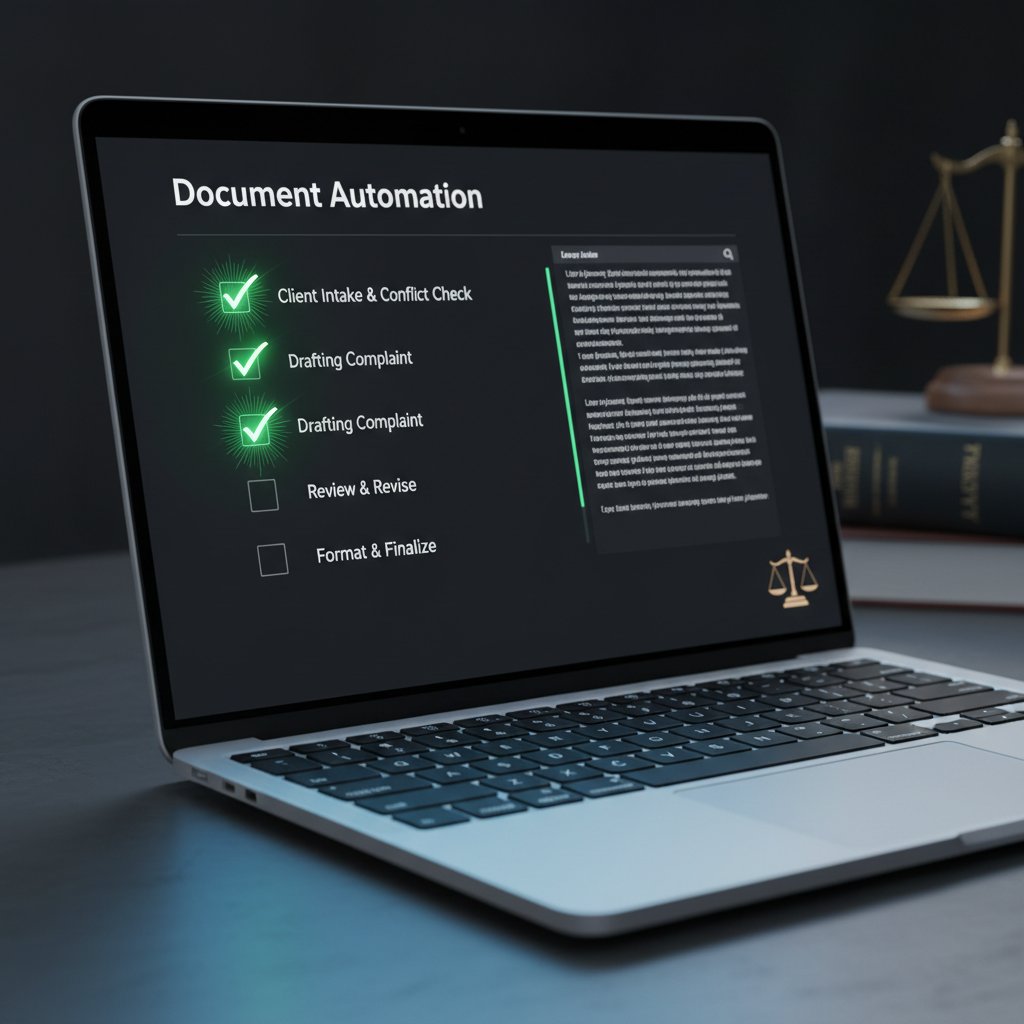
Priority checklist for implementing legal drafting software online:
- Your team understands the risks and benefits.
- You’ve mapped integration points with existing systems.
- Data privacy policies are updated and tested.
- There’s a clear escalation path for errors or security events.
- User training is mandatory and recurring.
- You have access to support (not just a FAQ).
- Templates are reviewed by real legal experts.
Case study: Turning online drafting into a business advantage
A fast-growing creative agency transformed its sales process using online legal drafting software. By integrating customizable templates and real-time collaboration, deals closed three times faster, with fewer disputes and zero lost paperwork.
"We closed deals 3x faster—no more red tape." — Riley, creative agency founder
Agility isn’t a buzzword here—it’s the competitive edge that leaves slower rivals in the dust.
Beyond the hype: What the data really says about online legal drafting
Current adoption rates and user satisfaction in 2025
According to the ABA Survey (2025), 73% of law firms now use cloud-based legal tools, with user satisfaction highest among those leveraging advanced automation. The contract drafting software market is valued at $3.17B, with notable year-over-year increases in both adoption and satisfaction.
Table 4: User Satisfaction and Adoption by Profession/Region (2025)
| Profession / Region | Adoption Rate (%) | User Satisfaction (Avg/5) |
|---|---|---|
| Large Law Firms | 92 | 4.6 |
| Small Firms | 61 | 4.2 |
| Solo Practitioners | 47 | 4.1 |
| North America | 76 | 4.5 |
| Europe | 68 | 4.4 |
| Asia-Pacific | 54 | 4.0 |
Source: Original analysis based on ABA Survey 2025, US Legal Support 2025.
Satisfaction is closely tied to training, integration, and support—not just the software itself.
The real cost-benefit analysis: Is it worth it?
Time is money, and automation slashes drafting hours by up to 80% (Definely, Thomson Reuters). But beware the hidden costs: high subscription fees, training, integration, and the occasional regulatory headache. For most, the ROI emerges within months, especially if used for high-volume, low-complexity documents. According to Briefpoint (2025), automation reduces billable hours, translating to lower client costs—a win for all but the legacy billers.

What’s missing: Gaps in the current generation of tools
Even the best platforms can frustrate. Users cite missing integrations, rigid templates, and lack of multilingual support as persistent pain points. The wish list? Smarter AI that understands context, deeper analytics, and even more robust compliance checks.
Must-have vs. nice-to-have features in legal drafting software online
Secure cloud storage, customizable templates, audit trails, regular updates, integration with e-signature tools.
Advanced analytics, AI negotiation support, multi-language drafting, real-time collaboration with clients.
Expert and insider perspectives: What’s next for legal drafting software
Insider predictions: The next breakthroughs
Industry insiders agree: the next leap isn’t just smarter drafting—it’s deeper integration. Expect AI to move from flagging errors to suggesting negotiation tactics, and tighter links between drafting, e-signature, and compliance monitoring. The legal tech stack is converging, and those who master it will set the new standards.

Regulatory shakeups and what they mean for users
2025 is the year regulators began catching up. Evolving AI regulations in both the US and EU now demand explainability, auditability, and clear consent for any automated legal drafting. As NatLawReview (2025) warns, compliance is a moving target, and firms must monitor the fine print as closely as their clients.
"Regulators are finally catching up to the tech." — Elena, compliance counsel
The role of services like filecreator.ai in the new legal landscape
Platforms like filecreator.ai are setting the gold standard for professional document generation—bringing together AI, compliance, and user-first design. By automating the grunt work and embedding best practices, they’re rewriting the playbook for professionals who demand both speed and precision. As the legal world digitizes, such resources are no longer optional—they’re the new baseline for staying relevant.
The final verdict: Should you trust legal drafting software online?
Key takeaways: Winners, losers, and gray areas
The brutal truth? Online legal drafting is reshaping the profession—eliminating drudgery, but demanding new vigilance.
- Winners: Firms and users who embrace automation, invest in training, and pair technology with expert oversight.
- Losers: Those who blindly trust templates, skip compliance checks, or lag behind on updates.
- Gray areas: Users in regions with poor infrastructure, or those facing complex, highly negotiated deals—these still require hands-on legal expertise.
Practical next steps for every reader
Ready to join the revolution? Here’s how to get smart—fast.
- Explore trusted platforms like filecreator.ai for tailored, compliant document generation.
- Start with low-risk documents to build confidence and iron out kinks.
- Invest in quality training—knowledge is the real game-changer.
- Conduct regular audits—don’t trust, verify.
- Keep an eye on regulatory changes—compliance is everyone’s job.
- Push boundaries: automate not just contracts, but also HR policies, financial statements, and technical documentation.
Unconventional uses for legal drafting software online
- Drafting complex partnership agreements for cross-border startups.
- Automating NDAs for influencer marketing campaigns.
- Creating standardized policies for new remote workforce models.
- Generating technical manuals for regulated industries.
The future: Are we writing ourselves out of a job or into a new era?
The question isn’t whether legal drafting software online will change your workflow. It’s whether you’ll wield the tool or be blindsided by it. This isn’t about job loss—it’s about evolution. The most valuable professionals won’t just draft faster; they’ll think deeper, analyze smarter, and focus on what machines can’t: judgment, empathy, and strategy. The pen and the keyboard are fusing into something new—and the story’s only just begun.

Sources
References cited in this article
- Clio Draft(clio.com)
- Definely(definely.com)
- MarketsandMarkets(marketsandmarkets.com)
- GlobeNewswire(globenewswire.com)
- Allied Market Research(alliedmarketresearch.com)
- Gartner Peer Insights(gartner.com)
- Law Society UK(lawsociety.org.uk)
- Thomson Reuters Legal Blog(legal.thomsonreuters.com)
- Agiloft(agiloft.com)
- Verified Market Reports(verifiedmarketreports.com)
- Grand View Research(grandviewresearch.com)
- Thomson Reuters CoCounsel(legal.thomsonreuters.com)
- Richmond Journal of Law and Technology(jolt.richmond.edu)
- CIMphony.ai(cimphony.ai)
- ABA Journal 2024(abajournal.com)
- NPR(npr.org)
- Harvard Law School(hls.harvard.edu)
- GlobalGrowthInsights(globalgrowthinsights.com)
- Smokeball Blog(smokeball.com)
- G2 Reviews(g2.com)
- ABA Legal Technology Survey(americanbar.org)
- Paul Weiss 2024(paulweiss.com)
- Forbes(forbes.com)
- ABA Law Practice(americanbar.org)
- North Carolina State Bar 2024(ncbar.gov)
- Thomson Reuters Drafting Checklist(legal.thomsonreuters.com)
- Flowtrics(flowtrics.com)
- G2 Reviews(g2.com)
- Destination CLEs(destinationcles.com)
- LegalWritingLaunch(legalwritinglaunch.com)
- Ashwell & Ashwell PLLC(ashwell.law)
- Above the Law(abovethelaw.com)
- Info-Tech Research Group(netdocuments.com)
- Holland & Knight(hklaw.com)
- Custom Market Insights(custommarketinsights.com)
- Clio Legal Trends Report 2024(lawnext.com)
- DataIntelo(dataintelo.com)
Perfect Documents, Instantly
Filecreator.ai transforms the way you produce professional documents. Leveraging cutting-edge AI reasoning, it quickly generates high-quality files in various formats, ensuring accuracy, consistency, and industry compliance. Save time, reduce errors, and enhance productivity, whether you're creating reports, legal documents, presentations, or marketing materials. Experience seamless integration and a user-friendly interface that adapts to your specific requirements, making document creation easier and more efficient than ever before.
Get startedStart Creating Professional Documents Today
Join thousands of professionals who trust AI-powered document generation
Frequently Asked Questions
What was the main problem with legal drafting before online software became widespread?
Traditional legal drafting was inefficient and error-prone, involving stacks of paper contracts, endless midnight edits, missed signatures, and version control chaos. According to the article, 85% of litigators remember the anxiety and chaos of paper filings, where firms wasted billable hours and clients paid for human errors.
How much is the legal AI software market expected to grow by 2030?
According to MarketsandMarkets data cited in the article, the legal AI software market is expected to surge from $3.11B in 2025 to $10.82B by 2030, representing a compound annual growth rate of 28.3%.
What percentage of law firms and litigators have adopted cloud-based and electronic filing platforms?
According to the article, 73% of law firms moved to cloud-based platforms following the pandemic, and 85% of litigators adopted electronic filings—adoption rates the article notes would have been unthinkable just five years prior.
What are the main concerns about legal drafting software mentioned in the article?
The article identifies cybersecurity threats, regulatory uncertainties, and the risk that software may not be secure, compliant, or accurate as key concerns alongside the potential benefits of automation and error-catching.
Continue Reading
Explore more from Professional Document Generator

Automated Legal Document Drafting: Capabilities and Limitations
Automated legal document drafting reshapes contract creation and legal work. This article examines the technology's actual capabilities, genuine hazards, and strategic advantages for legal professionals.

Automated Contract Drafting Software: Benefits and Risks Explained
Automated contract drafting software is reshaping legal document creation. This article examines the genuine advantages, the real risks, and how the technology is changing contract work.

Automated Legal Documents: What's Driving Adoption and Where the Risks Lie
Automated legal documents have transformed legal work. This article examines the adoption surge, the efficiency gains, and the ethical and operational risks reshaping the industry.

Automatic Contract Drafting Software: What Works and Where Risks Emerge
Automatic contract drafting software is reshaping legal workflows. This article examines how the technology works, where risks emerge, and what businesses need to know before implementation.

Legal Drafting Automation Tools Reshape Contract Work
Legal drafting automation tools are reshaping contract generation and document workflows. This article examines the real impact, the risks, and how legal professionals are adapting.

Generate Legal Templates Safely in 2026 with AI That Lawyers Trust
Discover insights about generate legal templates