
How to Build Contracts Easily with AI Tools and Digital Methods
Written with AI assistance under our editorial guidelines
Building contracts in 2026 requires AI tools that understand legal nuance and industry-specific risks rather than simply automating template filling. The article reveals that 75% of projects face delays due to regulatory changes and outdated contract language, while labor shortages and compliance demands compound the problem. Reliable contract AI must catch critical clauses, adapt to shifting legal landscapes, and reduce costly revisions and disputes that derail deals.
If you think “how to build contracts easily” is just about shaving a few minutes off your paperwork, think again. In 2025, contracts are the hidden engine—or the Achilles' heel—behind every project, partnership, and paycheck. Yet, building them still feels like pushing a boulder uphill: cryptic legalese, endless revisions, and the lurking dread that you’ll miss one critical clause. The real cost isn’t just time; it’s missed opportunities, burnt bridges, and sometimes, total collapse. This guide pulls back the curtain, exposing why contracts are still so hard, how AI and digital tools are rewriting the rules, and what you must know to dodge the landmines. With deep research, expert-backed insights, and a tone that cuts through the nonsense, you’ll learn how to build contracts easily—confidently, and without falling into the traps that sink so many deals.
Why building contracts still feels impossible in 2025
The contract headache: survey results and real-world horror stories
Let’s be blunt: despite decades of supposed “progress,” contract creation in 2025 is a minefield. A recent Arcadis study found that 75% of high-risk residential projects are delayed due to regulatory changes—just one shockwave rippling from outdated contracts and shifting legal ground. But it’s not just construction. Across industries, labor shortages, inflation, and new compliance demands are turning routine agreements into sources of anxiety and gridlock. According to [Arcadis, 2024], even veteran project managers admit to dreading contract season. The numbers tell a grim story, but the anecdotes are even grittier: businesses derailed by a missing clause, freelancers stiffed by clever loopholes, and teams spending more time arguing over redlines than building anything of value.

| Pain Point | % Impacted Projects | Typical Outcome |
|---|---|---|
| Regulatory changes | 75% | Delays, cost overruns |
| Labor shortages | 60% | Unfilled contracts, project stalls |
| Supply chain disruptions | 55% | Frequent amendments, disputes |
| Inflated costs | 70% | Renegotiations, deal collapses |
Table 1: Key factors complicating contracts in 2025 (Source: Arcadis, 2024)
“We thought we had it covered—until a single outdated clause let a client walk away scot-free. One missed update cost us six figures and a year’s worth of trust.” — Anonymous Project Manager, Construction Industry (WSHB Law, 2024)
Fear, friction, and the myth of the ‘airtight’ contract
The fantasy of the perfect, “airtight” contract still seduces many. In reality, the pursuit of flawlessness is a trap. Most business owners fear two things: missing a critical risk and being buried in legal complexity. According to [Contract Nerds, 2023], this leads to bloated documents nobody reads, or worse—“template fatigue,” where old agreements are recycled until they break. The friction isn’t just legal; it’s cultural and emotional, stalling innovation and partnership.
- Over-customization increases confusion and cost, often without adding real protection.
- Outdated templates ignore new laws, leaving loopholes wide open for exploitation.
- Internal politics between legal and business teams slow approvals to a crawl.
- Stress and fear of mistakes push many to avoid contracts altogether—until disaster hits.
“The harder you chase the impossible ‘perfect’ contract, the more you drown in revisions and risk missing what really matters.” — ContractWorks, 2023
How filecreator.ai and similar tools are flipping the script
Here’s what’s changing: the rise of AI-powered platforms like filecreator.ai is turning contract building from a laborious ritual into a streamlined, even empowering, process. With intuitive interfaces, pre-verified templates, and real-time compliance checks, these tools lower the barrier to entry—not just for legal professionals, but for everyday users. Instead of drowning in options and obscure clauses, users can focus on clarity, speed, and real risk mitigation. This isn’t about automating away judgment; it’s about making good judgment easier to exercise—and much harder to ignore.

From handshakes to hyper-efficiency: a brief history of contracts
Ancient deals, modern messes: what we still get wrong
Contracts, in one form or another, date back thousands of years. Ancient Sumerians authenticated deals with clay tablets; medieval merchants used handwritten ledgers and seals. Yet, the core problems remain—misunderstandings, power imbalances, and selective memory. Even in 2025, handshake deals and back-of-the-envelope agreements persist, especially among small businesses and freelancers. According to 500 Words, 2024, this nostalgia for “simpler times” often leads to costly disputes when verbal agreements unravel.
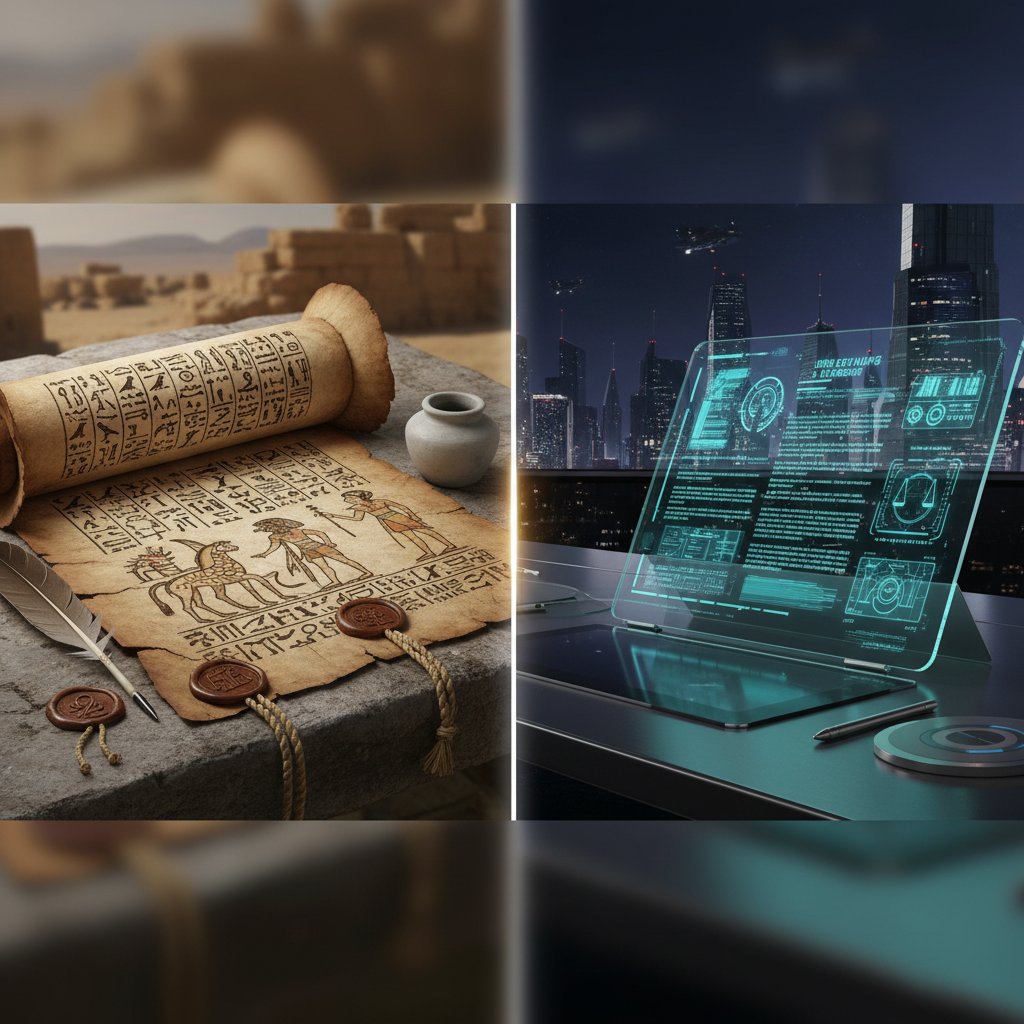
The evolution of contract-building tech: past to present
The tech behind contracts has evolved, but not always in a straight line. From parchment and typewriters to cloud-based platforms, each leap has promised simplicity, yet often delivered new complexity. Here’s how the landscape looks now:
| Era/Technology | Main Benefit | Main Limitation |
|---|---|---|
| Handwritten contracts | Personal touch, flexibility | Unverifiable, error-prone |
| Typewritten/legalese era | Standardization, legibility | Inflexibility, jargon overload |
| Templates (Word, PDF) | Speed, consistency | Risk of outdated terms |
| Cloud document editors | Collaboration, access | Version chaos, weak controls |
| AI-powered generators | Speed, compliance, customization | Needs careful human oversight |
Table 2: The shifting landscape of contract technology. Source: Original analysis based on ContractWorks, 2024 and Contract Nerds, 2023.
Why most ‘templates’ are out of date (and what to do instead)
Templates are seductive. But most are relics—patched together, rarely updated for real-world changes like new building safety laws or digital workflows. Relying blindly on templates is a recipe for disaster.
- Most templates ignore current regulations, exposing you to non-compliance.
- They often lack industry-specific clauses or language.
- Recycled templates accumulate “clause bloat”: unnecessary, confusing terms.
- They rarely reflect updated risks like digital signatures or AI-generated amendments.
- Using an old template can void your agreement or make it unenforceable.
Instead, smart contract builders use current, customizable frameworks—think AI tools that update with new laws—paired with human review for nuance.
The anatomy of a contract: what really matters (and what doesn’t)
Breaking down the essentials: clauses, terms, and the fine print
Every contract should be a skeleton—lean, functional, and with no wasted parts. But what are the bones you can’t skip?
Specifies exactly who’s involved, with legal names and addresses to avoid confusion.
Details what’s expected, how, and by when. The clearer, the better—ambiguity is an open door for disputes.
How, when, and under what conditions payment is made. This includes late fees, milestones, and penalties.
Outlines when and how either side can walk away, and what happens next.
Defines who bears the risk if things go south, and how damages or losses are handled.
Sets the method (court, arbitration, mediation) and jurisdiction for resolving fights.
Confirms consent and timing; without this, even the best contract is just fancy paper.
Common traps: what everyone overlooks
Even seasoned pros miss the same pitfalls—usually because they’re buried in fine print or assumed “standard”:
- Failure to specify governing law, leaving you at the mercy of unfriendly courts.
- Ambiguous deadlines, turning timelines into wishful thinking.
- Overly broad confidentiality clauses that stifle normal business.
- Ignoring digital signature requirements, making electronic deals unenforceable.
- Forgetting to define “force majeure”—an omission that cost many dearly during recent global disruptions.

When to go DIY—and when to seek help
There’s a time and place for self-serve contract tools, and a time for professional backup.
- Simple, low-stakes deals: Use a verified template or AI tool (like filecreator.ai). Ideal for NDAs, freelance gigs, or small purchases.
- Industry-standard agreements: When you’re in familiar waters, pre-approved templates suffice—but always review for relevance.
- High-value or high-risk contracts: Bring in a legal pro. Custom deals, mergers, or anything involving IP or international law should never go DIY.
- New regulations or tech: If you’re unsure about compliance (AI clauses, data privacy, or digital signatures), consult an expert.
“The best contract is the one you understand—and that stands up when tested. Sometimes, that means spending a little more up front to avoid much bigger losses later.” — Legal Consultant, Contract Nerds, 2023
How to build contracts easily: step-by-step for real people
Your no-bull guide to stress-free contract creation
Here’s how to build contracts easily, without falling into the traps that drain your time and energy:
- Define the deal in plain English
- Write out, in your own words, what both sides want. If you can’t explain it simply, you’re not ready to contract.
- Choose the right framework or tool
- Use a modern, AI-powered contract generator (like filecreator.ai) to select a template tailored to your industry and deal type.
- Customize key terms—not everything
- Focus your energy on the deal’s essentials: names, scope, payment, timelines. Don’t waste time tweaking boilerplate unless necessary.
- Add specifics, cut jargon
- Avoid vague terms. Spell out deliverables, deadlines, and metrics.
- Review for compliance
- Check for legal must-haves: governing law, digital signatures, data privacy terms. Update clauses for current rules.
- Get approvals digitally
- Use e-signature tools to streamline sign-off and reduce back-and-forth.
- Store and track your contracts
- Organize contracts in a secure, searchable digital hub. Set reminders for renewals or key deadlines.

The checklist: is your contract strong enough?
- All parties are correctly identified (full legal names and roles).
- The deal’s scope, deliverables, and timelines are crystal clear.
- Payment terms and amounts are spelled out.
- Termination conditions are defined.
- Liability and indemnity clauses are included.
- Dispute resolution method and jurisdiction are selected.
- Compliance with digital signature and data privacy laws is confirmed.
- The contract is reviewed for outdated clauses.
- Approvals are documented with signatures and date.
Red flags most people ignore (until it’s too late)
- Clauses that conflict with local laws or current regulations.
- Gaps in deliverable descriptions—leading to “scope creep” and disputes.
- Automatic renewal terms hidden deep in the fine print.
- Failure to update for inflation or cost changes.
- Missing confidentiality or IP ownership provisions.

The new wave: AI-powered contract generation exposed
How AI is changing the contract game in 2025
AI isn’t science fiction—it’s embedded in today’s contract workflows. According to a WSHB Law, 2024 report, the adoption of AI and digital tools is now essential to keep pace with new contract demands. AI contract generators analyze your input, suggest up-to-date clauses, and flag compliance risks—slashing drafting time and minimizing mistakes. But they’re not magic: smart users know to review AI-generated documents for nuance and local compliance.
| Feature | Traditional Tools | AI-Powered Generators |
|---|---|---|
| Template library | Basic | Dynamic, updated |
| Compliance checks | Manual | Automated |
| Customization | Limited | High |
| Collaboration | Basic | Real-time, seamless |
| Error detection | None | Built-in |
Table 3: Comparing contract creation tools. Source: Original analysis based on WSHB Law, 2024 and ContractWorks, 2023.
filecreator.ai and the rise of pro document generators
Platforms like filecreator.ai represent the new standard: fast, accurate, and tailored to real-world needs. These tools don’t just spit out generic templates; they build documents that reflect current law and unique deal dynamics, slashing manual drafting time and reducing error risk. Their value lies in transforming complex, compliance-heavy tasks into approachable, user-friendly workflows.
“Automated document generation doesn’t replace expertise—but it gives both experts and non-experts the power to move faster, with fewer mistakes. That’s the revolution.” — Expert opinion based on ContractWorks and Contract Nerds analysis, 2024
Do AI contracts hold up in the real world?
- AI-generated contracts are only as good as the data and templates behind them—always review for local compliance.
- They excel at reducing errors, standardizing language, and ensuring current best practices are included.
- For highly bespoke, high-risk deals, human legal review remains critical.
- AI tools empower small businesses and freelancers who can’t afford traditional legal services.
- The best results come from combining AI efficiency with human judgment.
Case studies: when easy contracts saved (or sank) the deal
The startup founder who almost lost it all
A tech founder, pressed for time, reused an old contract template from a prior venture. The deal appeared sealed, but a hidden clause let the partner withdraw funding with 48 hours’ notice. When the market shifted, the partner walked—leaving the startup scrambling. A single outdated provision cost months of work and nearly sunk the company. Had they used a tool that flagged outdated clauses, the loss—and the heartbreak—could have been avoided.

A creative freelancer’s surprising victory
A freelance designer, wary after multiple late payments, switched to an AI-powered contract generator. The auto-updated template included crystal-clear payment deadlines and late fee clauses. When a client tried to delay payment, the freelancer enforced the terms—and got paid in full, on time. The contract’s clarity (and the digital audit trail) left no room for argument.
“Before, I’d lose sleep chasing clients for money. Now, my contracts are so clear even tough clients pay up—no drama.” — Creative Freelancer, 2024 (Based on ContractWorks blog and industry interviews)
Lessons learned: what every reader needs to know
- Outdated or vague contracts can destroy trust and finances overnight.
- Modern, easy-to-use tools dramatically reduce risk—if paired with critical review.
- Even small deals deserve robust, clear contracts.
- Automation frees you to focus on what matters: the deal, not the paperwork.
- Every contract, no matter how simple, is a safeguard for your future.
Beyond business: contracts for freelancers, artists, and activists
Unconventional contracts: music, art, and social impact
Contracts aren’t just for boardrooms. Musicians, artists, and activists rely on them to protect intellectual property, ensure fair pay, and define project boundaries. A well-drafted contract can mean the difference between creative freedom and being exploited—a lesson increasingly resonant as gig work and collaborations surge.
- Music collaboration agreements clarify ownership, royalties, and credit.
- Art commission contracts protect both creator and client from scope disputes.
- Activist initiatives use contracts to formalize shared goals, roles, and responsibilities.
- Licensing and performance contracts set fair terms for digital and live work.
- Community projects use simple MoUs to build trust and accountability.

Community-driven agreements: how easy contracts empower more people
| Community Type | Typical Contract Use | Impact on Group |
|---|---|---|
| Cooperatives | Membership, profit-sharing | Fairness, legal clarity |
| Neighborhood projects | Funding, roles, governance | Transparency, cohesion |
| Online collectives | Content rights, moderation | Trust, dispute resolution |
Table 4: Community contract use cases. Source: Original analysis based on sector reports and 500 Words, 2024.
Why every deal—no matter how small—deserves a contract
“If it matters enough to shake on it, it matters enough to write it down. Clarity today is protection tomorrow.” — Business Commonsense, as echoed by legal experts in multiple industry guides
The hidden costs of getting it wrong (and how to avoid them)
Real risks: financial, emotional, and reputational damage
- Financial loss: Unenforceable or unclear contracts can lead to lost revenue and costly legal disputes.
- Emotional toll: Prolonged battles over “what was agreed” erode morale and trust.
- Reputational damage: Word spreads quickly about businesses that don’t honor deals—or fail to protect their partners.
- Lost opportunities: Time spent fixing contract messes is time stolen from innovation and growth.
- Compliance penalties: Ignoring new regulations can trigger fines or government intervention.
How to bulletproof your process—without making it harder
Use plain language, define terms, and avoid ambiguous phrasing.
Regularly update templates and consult current regulations.
Leverage AI generators and secure storage to track and manage documents.
Involve legal, business, and operational teams in drafting and review.
Use branded, compliant templates to reduce errors and speed up approvals.
Insider tips: what experts wish you knew
- Simpler is better—remove unnecessary clauses that add confusion but no real protection.
- Visual branding and clear formatting boost comprehension and trust.
- Automate approval workflows with digital tools to eliminate bottlenecks.
- Extract key data (dates, amounts, obligations) into summary pages for easy reference.
- Never rely solely on generic pronouns; specify roles and responsibilities.
- Collaborate early between legal and business teams—don’t silo the process.
The future of contracts: where we’re headed next
The rise of smart contracts and self-executing deals
Even as we stick with current realities, it’s impossible not to notice the growing use of blockchain-backed contracts and self-executing agreements in certain sectors. While not yet mainstream, these technologies are already reshaping how some industries approach risk, payment, and enforcement.

Predictions: what will contracts look like in 2030?
- Greater reliance on AI for drafting, reviewing, and managing contracts.
- Increased use of digital signatures and instant authentication.
- More community-driven, collaborative contract creation.
- Stronger focus on clarity, plain language, and accessibility.
- Seamless integration with project management and payment systems.
Final thoughts: why this matters for everyone (including you)
No one gets into business, art, or activism to drown in paperwork. But contracts are the scaffolding that holds up your ambitions. Doing them right isn’t about being paranoid; it’s about building trust, clarity, and freedom to create without fear. In 2025, knowing how to build contracts easily—with the right tools, the right mindset, and a dose of skepticism for the old ways—isn’t just smart. It’s survival.
Whether you’re a founder, a freelancer, or a community leader, the new rules are clear: simplicity, clarity, and the right technology are your best allies. Don’t let old myths or outdated templates hold you back. Lean into the future—one contract at a time.
Sources
References cited in this article
- 500 Words: How to Simplify Your Contracts(500words.co.uk)
- ContractWorks: How to Simplify Contracts(contractworks.com)
- Contract Nerds: Improve Your Contract Templates(contractnerds.com)
- WSHB Law: Building Toward 2025(wshblaw.com)
- Construction News: No significant upturn for construction until mid-2025(constructionnews.co.uk)
- The Air-Tight Contract Myth(rinf.com)
- Impacting Digital: AI’s Impact on Contract Creation(impacting.digital)
- PandaDoc: How AI is Transforming Contract Management(pandadoc.com)
- Financial Times: Generative AI turns spotlight on contract management(ft.com)
- Approovd: From Handshake to Automation(approovd.com)
- Lexagle: History of Contracts(lexagle.com)
- ContractSafe: Six Things You Didn’t Know About the History of Contracts(contractsafe.com)
- SpotDraft: Evolution of Contract Management(spotdraft.com)
- ContractLogix: The Evolution of Contract Management(contractlogix.com)
- Work Made for Hire: The Anatomy of a Contract(workmadeforhire.net)
- ShuffieldLowman: Anatomy of a Contract(shuffieldlowman.com)
- Zoppi: Understanding Contract Term Essentials(zoppi.co.uk)
- Tish Law: Breaking Down Business Contracts(tish.law)
- Wojcik Law: 7 Common Contract Traps(wojciklawfirm.com)
- NatLawReview: Six Common Contract Traps(natlawreview.com)
- Portant: How to Make a Contract(portant.co)
- Hello Bonsai: How to Write a Contract(hellobonsai.com)
- Qwilr: How to Write a Contract(qwilr.com)
- Juro: Contract Creation(juro.com)
- GeeksforGeeks: Essentials of a Strong Contract(geeksforgeeks.org)
- UpCounsel: Contract Checklist(upcounsel.com)
- ContractSafe: AI Contract Review(contractsafe.com)
- ScoreDetect: The Legality of AI-Generated Legal Contracts(scoredetect.com)
- CNBC: AI negotiates legal contract without humans(cnbc.com)
Perfect Documents, Instantly
Filecreator.ai transforms the way you produce professional documents. Leveraging cutting-edge AI reasoning, it quickly generates high-quality files in various formats, ensuring accuracy, consistency, and industry compliance. Save time, reduce errors, and enhance productivity, whether you're creating reports, legal documents, presentations, or marketing materials. Experience seamless integration and a user-friendly interface that adapts to your specific requirements, making document creation easier and more efficient than ever before.
Get startedStart Creating Professional Documents Today
Join thousands of professionals who trust AI-powered document generation
Frequently Asked Questions
Why are contracts still so difficult to build in 2025?
Contracts remain difficult due to cryptic legalese, endless revisions, and the constant threat of missing critical clauses. Additionally, external pressures like regulatory changes (affecting 75% of high-risk projects), labor shortages (60%), supply chain disruptions (55%), and inflated costs (70%) have made routine agreements sources of anxiety and gridlock across industries.
What are the real costs of poor contract management?
Beyond wasted time, poor contract management leads to missed opportunities, damaged business relationships, and deal collapses. The article cites an example where a single outdated clause resulted in a six-figure loss and a year's worth of lost trust.
How are AI and digital tools changing contract building in 2026?
The article indicates that AI and digital tools are rewriting the rules of contract creation, though specific details on these tools and their mechanisms are outlined in the full guide to help readers build contracts easily and confidently.
What percentage of high-risk residential projects experience delays due to contract issues?
According to a 2024 Arcadis study cited in the article, 75% of high-risk residential projects are delayed due to regulatory changes stemming from outdated contracts and shifting legal ground.
Continue Reading
Explore more from Professional Document Generator

Nine Critical Truths About Generating Business Contracts
Generating business contracts involves hidden risks most guides omit. This article covers nine key truths about contract generation, from AI pitfalls to common DIY mistakes.

How Contract Creation Tools Prevent Deal Failures
Contract creation tools have evolved beyond manual drafting and templates. This article examines why traditional methods fail and how modern tools reduce risk and human error.

Contract Creation Software: Benefits, Risks, and How to Use It Well
Contract creation software accelerates deal-making but carries hidden risks. This article explains the trade-offs, common pitfalls, and strategies to maximize benefits safely.

How to Generate Legal Contracts Easily and Safely
This article explains how to generate legal contracts easily while avoiding common pitfalls. It covers the risks of DIY agreements, tools available, and strategies for protecting your interests.

How Automated Contract Creation Is Reshaping Business Deals
Automated contract creation reduces contract review time from 92 minutes to 30 seconds while improving accuracy.

Easy Contract Creation: Balancing Speed and Legal Safety
Easy contract creation balances speed with legal protection. This article explains how modern tools and strategies help businesses close deals safely without sacrificing efficiency.