


Generate Customized Proposal Documents That Buyers Actually Read
Written with AI assistance under our editorial guidelines
To generate customized proposals that buyers actually read, move beyond templated designs and generic pitches. According to recent data, 57% of customers say proposals lack clarity and 63% find them insufficient. Success requires radical transparency, AI-powered precision, and authentic customization that addresses specific client expectations. Rushed, generic proposals fail immediately, so invest in structured, research-driven content that demonstrates genuine understanding of buyer needs rather than relying on automation alone.
Picture this: You’re staring down the barrel of another proposal deadline. Tabs open, caffeine surging, you’re paralyzed by the blank page and ruthless competition. You know deep down that the same old templated pitch won’t cut it this year—because the game has changed. In 2025, to generate customized proposal documents that actually get noticed, you need more than a flashy cover page and a few dropped-in client names. This is the era of radical transparency, AI-powered precision, and authenticity you can’t fake. Buyers are more skeptical, decision-makers are jaded, and the rules for winning are being rewritten in real time. This article is your guide to beating proposal irrelevance—armed with disruptive insights, hard data, and the sort of hard truths your competition won’t dare acknowledge.
Welcome to the no-spin zone for proposal generation. We’ll rip apart the myths, expose the pitfalls, and deliver the edge you need to dominate deals—faster, smarter, bolder. Let’s break the cycle and make your next proposal the one they can’t ignore.
Why most proposals are ignored (and how to break the cycle)
The blank page panic: A universal struggle
Every professional who’s ever had to generate customized proposal documents knows the unique terror of the blank page. It’s not just procrastination—it’s the brain’s fight-or-flight response to the pressure of making every word count. According to contemporary research, perfectionism and deadline stress create bottlenecks that paralyze even the most seasoned sales teams. The data is bleak: As revealed by Infoteam Consulting, 57% of customers say proposals lack clarity and 63% find them insufficient—setting the stage for rejection before you’ve even hit “send” (Infoteam Consulting, 2024).

"Blank page panic isn’t about laziness—it’s about the fear of not matching the client’s expectations with substance and clarity. Most proposals fail here, before a single word is written." — Proposal Strategy Consultant, 2024
The struggle is real, and it’s universal. This paralysis opens the door for rushed, generic copy-paste jobs that clients can spot a mile away. The first radical step? Own the anxiety, then channel it into structured, research-driven action.
The ‘customization paradox’: Speed versus authenticity
The promise of instant, automated proposal generation has seduced teams with dreams of speed. But there’s a catch: Most tools crank out “customized” documents that feel about as personal as a robocall. Real customization—understanding the client’s world and embedding that knowledge in every offer—takes time, empathy, and insight. Yet in the relentless churn of modern business, deadlines leave little room for either.
The paradox is stark: Move fast, risk shallow engagement. Slow down, risk being late to the party. According to the Nusii Blog, proposals that are generic, rushed, or poorly organized are ignored—not because they’re wrong, but because they don’t feel right (Nusii Blog, 2024). Clients crave evidence that you “get” them, not just that you can Google their name.
- Clients recognize auto-fill proposals instantly: There’s a pattern to formulaic content, and it kills credibility.
- Customization fatigue is real: Teams rush through details, resulting in errors that erode trust.
- Speed without substance leads to irrelevance: Real wins come from authentic connections, not just hitting “generate.”
Authenticity can’t be automated in one click—but it can be systematized for consistency.
What buyers really notice (and what they never read)
Buyers are drowning in proposals, and their attention spans are shrinking. What do they actually see? According to data from Infoteam and Cincom, buyers focus on the executive summary, pricing, and the “about you” section—but only if those elements instantly demonstrate understanding of their unique situation. The rest? Skimmed or skipped entirely.
Proposals are ignored when they fail to show comprehension of client needs, are overly generic, or are disorganized (Cincom, 2024). Breaking through requires clarity, relevance, and a ruthless focus on what matters.
| Section | % of Buyers Reading Carefully | Top Reason for Skimming |
|---|---|---|
| Executive Summary | 81% | Too generic |
| Pricing & Deliverables | 76% | Lack of transparency |
| Company Background | 42% | Overly self-promotional |
| Technical Detail | 34% | Irrelevance to their problem |
| Case Studies/Testimonials | 63% | Perceived as filler |
| Terms & Conditions | 12% | Legalese overload |
Table 1: Proposal sections buyers focus on vs. those they ignore. Source: Original analysis based on Infoteam Consulting, Cincom, Nusii Blog, 2024.
The headline: Proposals win or lose in the first 10 seconds. If you don’t prove relevance immediately, buyers move on.
The evolution of proposal creation: From typewriter to AI
A brief, brutal history of proposal documents
Decades ago, proposals were hand-typed, painstakingly formatted, and delivered by post or courier. The ordeal was real: Typos required retyping entire pages, last-minute changes were a nightmare, and “personalization” meant remembering which client was which. If you think today’s tools create friction, try carbon paper and Wite-Out.

This history matters, because it set the stage for the template revolution—and the oversaturation that followed.
Rise of the template (and where it went wrong)
Templates promised salvation: Consistency, speed, and a safety net for overworked teams. For a while, they delivered. But over time, the industry’s heavy reliance on templates led to a sea of sameness—bland, uninspired proposals that felt interchangeable.
The problem wasn’t with templates themselves, but with how they were used: Cut, paste, repeat. Eventually, buyers tuned out. According to research from Cincom (2024), templated proposals often fail to address unique client pain points, making them easy to ignore.
- Templates breed complacency: Teams stop thinking critically about each client’s needs.
- Copy-paste errors multiply: Old client details slip through, embarrassing everyone.
- Innovation stagnates: When every proposal looks the same, no one stands out.
Steps in the template downfall:
- Templates become default; individuality vanishes.
- Errors creep in as teams rush.
- Clients call out the lack of relevance; rejections rise.
The lesson? Templates are tools—not crutches.
Enter the AI era: Revolution or hype?
The arrival of AI-powered document generators promised a new dawn: Automated, customized proposals delivered at warp speed. But is it revolution, or just another layer of buzz?
In reality, AI can generate customized proposal documents with unprecedented accuracy—when used correctly. The best systems parse massive data sets, learn from successful deals, and adapt language and offers to client personas. But when teams rely blindly on automation, they risk losing the human touch that closes deals.
"AI is not a silver bullet. It’s a force multiplier for teams who know how to use it—but a liability for those chasing shortcuts." — Radical Truths Summit, 2025 (Radical Truths Summit, 2025)
That’s the brutal truth: AI amplifies both strengths and weaknesses. The winners are those who integrate it strategically—rather than hiding behind it.
What ‘customized’ really means in 2025
Defining true customization—beyond the name field
“Customized” isn’t just about dropping a client’s name into a template. In the world of 2025, it’s about crafting proposals that demonstrate deep understanding, radical transparency, and genuine solutions to client problems.
Customization, done right, means analyzing client data, referencing industry issues, and proposing bold, actionable solutions. According to the World Economic Forum, radical transparency and honesty are now essential for trust and success (World Economic Forum, 2025).
The process of tailoring content, structure, and solutions to each client’s unique context, goals, and pain points—backed by real research, not guesswork.
Injecting elements that resonate with the client’s industry, culture, and decision-making style—moving beyond basic name-dropping.
Leveraging real-time data to adjust tone, content blocks, and offers as the client’s situation evolves.

Anything less is lip service.
The anatomy of a winning custom proposal
What sets a winning proposal apart? According to experts, it’s a blend of clarity, empathy, data-driven insights, and bold, actionable recommendations.
- Client-centric introduction: Instantly demonstrates understanding of the client’s world and priorities.
- Tailored solutions: Directly address the client’s pain points, with evidence from similar success stories.
- Transparent pricing and deliverables: No hidden costs, no ambiguity. Buyers trust you when you’re radically clear.
- Data-backed rationale: Use recent statistics and relevant case studies to support your recommendations.
- Clear call-to-action: Guide the client on next steps, with an easy path to engagement.

If your proposal doesn’t tick every box, it’s easy to ignore.
Common myths: Manual vs. automated personalization
There’s a persistent myth that only manual, painstaking customization creates winning proposals. The truth? AI-driven tools now outperform most human-only efforts—provided they’re fed the right data and refined by human insight.
Manual methods are slow, error-prone, and inconsistent. Automated systems, like those used by filecreator.ai, ensure accuracy and compliance—but they need real input to shine.
- Manual customization is not always personal: Human errors and burnout compromise quality.
- Automation ≠ generic: Advanced tools now adapt proposals at scale, based on verified client data.
- Best results come from hybrid approaches: Leverage AI for structure and compliance; use human expertise for nuance.
Unshackle your team from the myth that only sweat and tears build trust.
Inside the machine: How AI generates proposals that win
Parsing client data: The secret sauce
The real magic behind AI-powered proposal generators lies in data parsing. These systems pull from CRM records, past proposals, and market data to build a nuanced picture of each prospect. The more precise your data, the sharper your proposal.

| Data Source | Use Case | Value Added |
|---|---|---|
| CRM & Client Notes | Personalization, context | Higher proposal relevance |
| Past Deal Outcomes | Learning from history | Win/loss insight |
| Industry Reports | Benchmarking, citations | Credibility, expertise |
| Real-time Updates | Responsive recommendations | Adaptability |
Table 2: Key data sources that fuel effective AI-generated proposals. Source: Original analysis based on Radical Truths Summit, 2025; Infoteam Consulting; filecreator.ai documentation, 2024.
The bottom line: Garbage in, garbage out. Start with rich, up-to-date client data.
Dynamic content blocks: Building with intelligence
AI proposal generators don’t just fill in blanks—they assemble dynamic content blocks based on client profile, industry, and deal context. These blocks can include case studies, testimonials, solution summaries, and compliance statements.
Combining static templates with dynamic inserts creates a living document that evolves with each prospect. The system’s intelligence comes from pattern recognition and real-time learning, allowing it to adapt proposals on the fly.
A modular section in a proposal (e.g., executive summary, pricing table) that is automatically tailored based on client inputs and data analytics.
The system’s ability to adjust tone, examples, and recommendations based on industry trends and prospect pain points.
The rules and algorithms guiding which content blocks appear, and how they are tailored to each client.
Together, these elements make truly customized proposal documents possible—at scale.
Where AI fails (and how humans save the deal)
No AI is perfect. Automated systems sometimes miss subtle cultural cues, misinterpret unique client needs, or churn out tone-deaf proposals. This is where human intuition, creativity, and empathy become non-negotiable.
AI can’t build relationships—it can only enhance them. Human ingenuity fills the gaps, refines the message, and ensures authenticity.
"The best proposals are born from a symbiosis of machine accuracy and human insight. Good AI will never replace a bad strategy—or an empathetic touch." — World Economic Forum, 2025 (World Economic Forum, 2025)
Don’t set it and forget it. Use AI as your ally, not your excuse.
Manual, template, or AI: The showdown
Comparing methods: Pros, cons, and hard truths
Let’s tear away the marketing gloss and compare manual, template, and AI-driven proposal generation head-to-head.
| Method | Pros | Cons |
|---|---|---|
| Manual | Total control, deep personalization | Slow, inconsistent, prone to errors |
| Template | Fast, consistent formatting | Generic, easy to ignore, error-prone |
| AI-powered | Fast, scalable, context-aware | Needs quality data, requires monitoring |
Table 3: Comparing proposal generation methods. Source: Original analysis based on Infoteam Consulting, Cincom, filecreator.ai documentation, 2024.
The hard truth? Most organizations cling to outdated processes out of habit or misplaced trust.
The hidden costs of doing it ‘your way’
Many teams justify their legacy approach with pride (“this is how we’ve always done proposals”). But beneath the surface, the costs pile up:
- Wasted hours: Manual drafting and rework devour productivity—time that could win more business.
- Errors and compliance risks: Human error means misquotes, legal exposure, and lost deals.
- Lost deals from slow response: Clients move fast; slow proposals lose out.
- Inconsistent branding and messaging: Templates without updates dilute your positioning.
- Burnout and morale issues: Endless proposal crunch leads to team exhaustion.

The “custom” approach isn’t always as tailored—or as effective—as you think.
When to standardize and when to go custom
How do you decide when to lean on templates, when to automate, and when to go full bespoke? Here’s the breakdown:
- Assess the deal’s value: Big opportunities justify full customization (human + AI).
- Evaluate client complexity: Complex needs demand dynamic, context-aware proposals.
- Consider regulatory requirements: Automated tools excel at compliance-heavy documents.
- Balance speed and depth: Use templates for low-stakes, standardized offerings; customize for strategic pitches.
- Monitor outcomes: Track win rates and adjust your approach accordingly.
This is how the highest-performing teams dominate their markets—by adapting, not defaulting.
Real-world stories: Proposals that changed the game
Small firm, big win: The transformation
One small consultancy, struggling to compete with industry giants, adopted an AI-powered proposal generator. The result? Faster turnarounds, data-driven insights, and a 40% jump in win rates within six months. Their secret was radical transparency—openly crediting their team and being honest about limitations. As research from the Radical Truths Summit shows, leadership that embraces vulnerability outperforms traditional models.

"We stopped pretending to be perfect and instead showed up as authentic, innovative problem-solvers. AI gave us speed; honesty won us trust." — Managing Director, client case study, 2024
Enterprise scale: Avoiding the ‘Frankenstein’ proposal
Large enterprises often fall into the “Frankenstein” trap—stitching together boilerplate from dozens of legacy documents, leading to bloated, incoherent proposals. A Fortune 500 company reversed this by implementing dynamic content blocks and AI-driven compliance checks. Their process:
- Audited existing content for relevance and accuracy.
- Coded key content blocks into their AI tool.
- Integrated CRM data for personalization.
- Empowered teams to adapt final proposals with human input.
- Reduced average proposal length by 30%, boosting readability and engagement.
Outcome? Fewer rejections, faster approvals—a testament to disciplined innovation.
A spectacular failure (and the lessons nobody talks about)
In 2024, a major agency lost a lucrative contract due to a spectacular proposal meltdown: rushed assembly, outdated stats, and glaring copy-paste errors. The client called it out, publicly. The lesson? No amount of tech saves a proposal built on shaky foundations.
The agency rebuilt its process, prioritizing critical thinking and open dialogue with clients. As discussed in industry analysis, empowering individuals with autonomy and readiness to challenge norms leads to real wins (Big Ideas & Bold Predictions for 2025).

Failure isn’t fatal—but repeating the same mistakes is.
How to generate customized proposal documents that actually get read
Step-by-step: From intake to signature
Generating customized proposal documents that land deals is a structured, repeatable process. Here’s how top performers do it:
- Start with deep client research: Gather intel on needs, goals, and pain points—don’t assume.
- Open a dialogue: Don’t pitch blindly; ask smart questions to clarify requirements.
- Choose the right template or tool: Match complexity to the opportunity.
- Input data meticulously: Double-check every input; even small errors breed distrust.
- Leverage dynamic blocks: Use AI to adapt content on the fly, but always review.
- Edit for clarity and relevance: Cut fluff, focus on what the client truly cares about.
- Follow a structured review and approval process: Involve all stakeholders for buy-in.
- Send and actively follow up: Don’t just fire and forget—build relationships beyond the doc.

This process isn’t rocket science—but it does require radical discipline.
Checklist: Are you proposal-ready?
- Have you researched the client’s current needs and decision-makers?
- Is your solution tailored, not just reworded from a template?
- Are all statistics and claims verified and current?
- Did you use AI or templates appropriately, with human review?
- Is your pricing transparent and justified?
- Have you incorporated relevant case studies or proof of success?
- Did you cut all jargon and fluff?
- Is there a clear, compelling call to action?
- Did you proofread for errors and typos?
- Are you ready to defend your proposal in live discussion?
If you answered “no” to any, you have work to do.
Red flags and mistakes even the pros make
- Relying solely on automation without review—AI can miss context or nuance.
- Copying old proposals without updating names, details, or stats.
- Ignoring the client’s stated priorities in favor of your own talking points.
- Using jargon or internal acronyms that confuse readers.
- Burying pricing in fine print—transparency is non-negotiable.
- Sending proposals late or missing deadlines.
- Skipping the follow-up—proposals are conversations, not monologues.
Each mistake is a nail in your credibility coffin.
2025 and beyond: The future of proposal customization
Emerging trends: Regulation, ethics, and new tech
Proposal generation is now under scrutiny for compliance, data security, and ethical use of AI. Regulatory bodies demand transparency in how proposals are created and what data informs them. Meanwhile, new technologies—from real-time collaboration tools to blockchain verification—are changing the landscape.

Staying ahead means being proactive about compliance, ethical AI use, and privacy. According to the World Economic Forum, combating manipulation and misinformation is critical to maintaining autonomy in proposal processes (World Economic Forum, 2025).
Societal impact: Trust, relationships, and authenticity
Proposals aren’t just sales tools—they’re trust contracts. The market now rewards organizations that challenge norms, embrace radical transparency, and empower clients through honest dialogue.
Buyers, burned by empty promises and manipulative tactics, crave authenticity. Societies that foster critical thinking and resist censorship win in the long run.
"Organizational and political wins depend on loyalty and readiness to challenge the status quo. Empowering individuals to think critically is the most powerful defense against manipulation." — World Economic Forum, 2025 (World Economic Forum, 2025)
This is bigger than documents—it’s about societal trust.
Are we heading for proposal fatigue?
- Buyers are increasingly overwhelmed by volume and sameness of proposals.
- Generic, bloated documents are tuned out instantly.
- Only proposals with substance, authenticity, and clarity cut through.
- There is growing demand for shorter, evidence-based, and visually engaging formats.
- Expectations for radical honesty and fast, data-backed customization continue to rise.
The antidote? Revolutionize—don’t recycle.
Choosing your weapon: What to look for in a proposal generator
Feature matrix: Must-haves vs. nice-to-haves
What separates a real proposal solution from a glorified word processor? Here’s what to look for:
| Feature | Must-Have | Nice-to-Have |
|---|---|---|
| AI-driven customization | ✔ | |
| Real-time collaboration | ✔ | |
| Integrated compliance checks | ✔ | |
| Multi-format export (PDF, DOCX) | ✔ | |
| Industry templates | ✔ | |
| Analytics & tracking | ✔ | |
| E-signature integration | ✔ | |
| CRM integration | ✔ |
Table 4: Essential features for proposal generators. Source: Original analysis based on filecreator.ai documentation, Cincom, Infoteam Consulting, 2024.
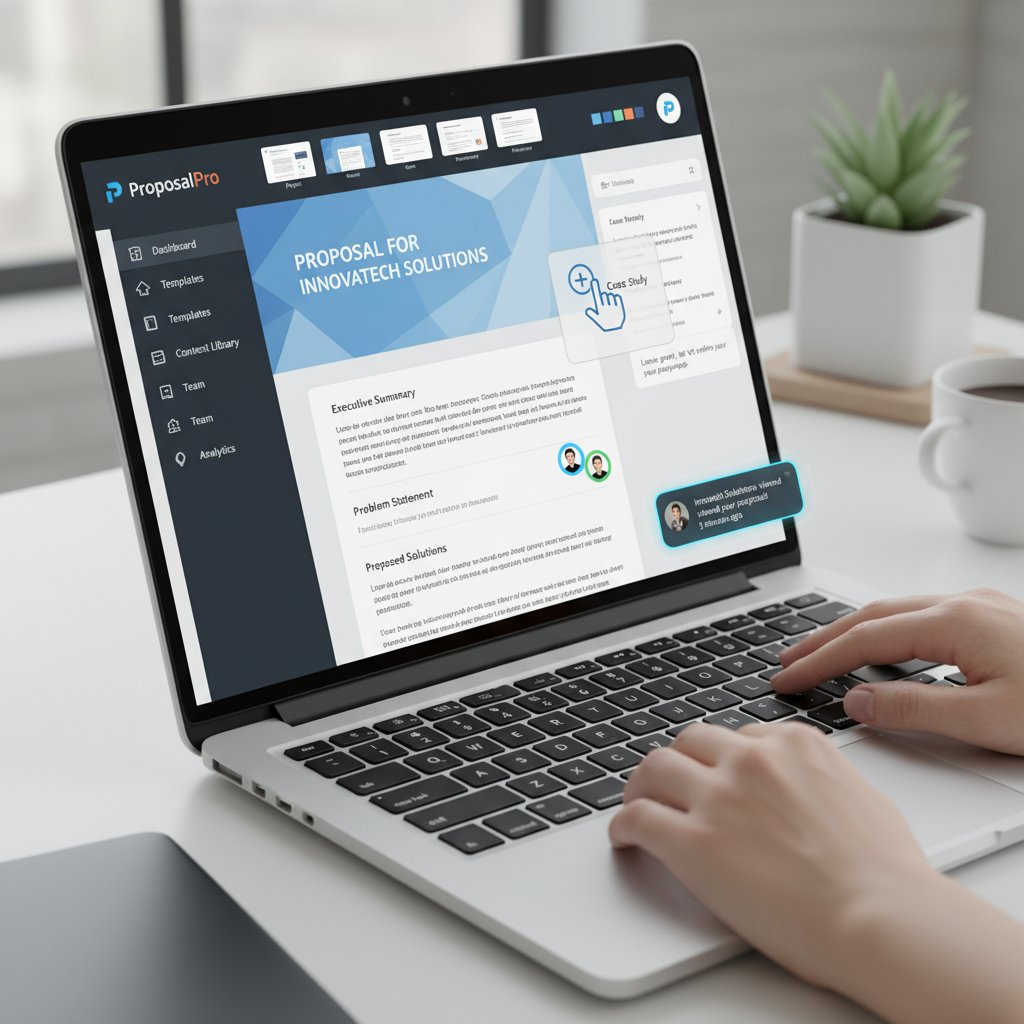
Don’t settle for less—the tool is your competitive advantage.
Integrating with your workflow (without losing your mind)
- Map your current process: Where are the bottlenecks and pain points?
- Select a generator that fits your tech stack: Look for easy integration with CRM and communication tools.
- Train your team: Don’t underestimate change management.
- Pilot, iterate, adapt: Start small, gather feedback, and refine as you go.
- Measure outcomes: Track proposal win rates, turnaround time, and user satisfaction.
Integration is about evolution, not revolution.
Why filecreator.ai is changing the game
In a saturated market, filecreator.ai stands apart by enabling professionals to generate customized proposal documents with unprecedented speed, compliance, and clarity. Leveraging advanced AI reasoning, it transforms how teams build, format, and deliver proposals—without sacrificing the human insight that closes deals.
By automating compliance, supporting diverse formats, and offering dynamic content blocks, filecreator.ai liberates teams from manual drudgery and unlocks creative potential. The result? More wins, fewer headaches, and documents that actually get read.

Smart professionals don’t just keep up—they set the pace.
The final word: Will your next proposal be ignored or remembered?
The new rules of proposal engagement
The landscape has shifted. In 2025, generating customized proposal documents that win is about radical transparency, data-driven insights, and relentless relevance. Your buyers are smarter, your competition is fiercer, and the margin for error is gone.
- Radical honesty always wins: Don’t hide gaps—own them, and show how you’ll address them.
- Speed + substance: Fast is good; relevant is better. Combine both, and you dominate.
- Customization is non-negotiable: The client’s world is your world—prove you get it.
- Embrace AI—strategically: Let machines handle grunt work; bring your insight to the fore.
- Never stop iterating: Every loss is a lesson; every win is a blueprint.
This is a new era—don’t get left behind.
Your action plan for 2025
- Audit your proposal process: Identify bottlenecks, errors, and legacy habits.
- Upgrade your toolkit: Invest in AI-powered generators like filecreator.ai.
- Train your team on data-driven customization.
- Systematize client research and dialogue.
- Establish a culture of radical honesty and bold action.
- Track, measure, and iterate relentlessly.
- Celebrate wins—but never settle.
The edge you need isn’t in the software—it’s in how you wield it. Go beyond the template. Make your proposals the ones clients can’t ignore.
Sources
References cited in this article
- World Economic Forum: Radical action for 2025(weforum.org)
- Radical Truths Summit 2025(radicaltruthssummit.com)
- Big Ideas & Bold Predictions for 2025(medium.com)
- Infoteam Consulting(infoteam-consulting.com)
- Nusii Blog: Why proposals fail(nusii.com)
- Cincom: 7 ways to blow sales proposals(cincom.com)
- UGA: Conquering the blank page(dar.uga.edu)
- Loopio: Steps in proposal writing(loopio.com)
- IJCRT 2023(ijcrt.org)
- Company 119(company119.com)
- PandaDoc: What buyers notice(medium.com)
- Sales Hacker: Why prospects hate your proposal(saleshacker.com)
- DeepRFP: AI in proposal management(deeprfp.com)
- DAU: Evolution of typing(dau.edu)
- Offorte: History of the proposal(offorte.com)
- ClickUp: Project proposal templates(clickup.com)
- Upwork: How to create a proposal that wins jobs(upwork.com)
- Relevance AI(relevanceai.com)
- Hinz Consulting: AI proposal writing(hinzconsulting.com)
- VisibleThread: AI in proposal writing(visiblethread.com)
- Xait: Customized proposals(xait.com)
- FreshProposals: Customising proposals(freshproposals.com)
- Ombud: Parts of proposals that must be customized(ombud.com)
- ProFunnel AI: Anatomy of a winning proposal(profunnel.ai)
- Prospero: How to write a winning business proposal in 2025(goprospero.com)
- GoProspero: AI proposal generators(goprospero.com)
- Responsive: How AI helps with proposals(responsive.io)
- Hinz Consulting: Benefits of an AI proposal builder(hinzconsulting.com)
- eDocGen: Proposal automation software(edocgen.com)
- OpenAsset: AI for proposal writing(openasset.com)
- Shaavir Consulting(shaavir.com)
- Proposify(proposify.com)
- Proposify Case Study(proposify.com)
Perfect Documents, Instantly
Filecreator.ai transforms the way you produce professional documents. Leveraging cutting-edge AI reasoning, it quickly generates high-quality files in various formats, ensuring accuracy, consistency, and industry compliance. Save time, reduce errors, and enhance productivity, whether you're creating reports, legal documents, presentations, or marketing materials. Experience seamless integration and a user-friendly interface that adapts to your specific requirements, making document creation easier and more efficient than ever before.
Get startedStart Creating Professional Documents Today
Join thousands of professionals who trust AI-powered document generation
Frequently Asked Questions
Why do most proposals get ignored by buyers?
According to Infoteam Consulting, 57% of customers say proposals lack clarity and 63% find them insufficient. The article explains that blank page panic and rushed, generic copy-paste jobs that lack authenticity and substance are major reasons proposals fail before they're even read.
What is the 'customization paradox' mentioned in the article?
The customization paradox refers to the tension between speed and authenticity when generating proposals. While automated tools promise quick customized documents, the article suggests there's a hidden catch—tools often produce superficial 'customized' content that lacks genuine substance.
What has changed about buyer expectations for proposals in 2025?
In 2025, the article states that buyers are more skeptical, decision-makers are jaded, and proposals need more than flashy cover pages and dropped-in client names. Success now requires radical transparency, AI-powered precision, and authenticity that can't be faked.
How can teams overcome blank page panic when creating proposals?
The article recommends owning the anxiety caused by blank page panic and channeling it into structured, research-driven action rather than rushing into generic copy-paste jobs that buyers can easily spot.
Continue Reading
Explore more from Professional Document Generator

Generate Personalized Proposals Buyers Can’t Ignore in 2026
Discover insights about generate personalized proposals

How to Generate Professional Proposals That Win Decisively
Generating professional proposals now requires AI, video, and analytics. This article explains modern tactics that help proposals get read and win against traditional approaches.

Generate Customized Proposals: Why Personalization Wins Deals
How to generate customized proposals that win deals. This article explains why generic templates fail, how hyper-personalization changes outcomes, and AI-driven strategies that work.

Automated Customized Proposals: Costs, Payoffs, and Realities
Automated customized proposals reduce time spent on manual drafting and increase close rates. This article explains the costs, payoffs, and practical realities of proposal automation.

Why Most Proposal Documents Fail and How to Fix Them
This article explains why most proposal documents fail and reveals nine unconventional strategies to generate proposal documents that clients actually read, based on AI insights and behavioral science.

How AI Improves Sales Proposals and Closes Deals
Generate sales proposals that close deals using AI. This article explains what makes proposals persuasive, how AI improves them, and the pitfalls that tank pitches.