


Generate Customized Letters That Feel Human at Scale with AI
Written with AI assistance under our editorial guidelines
AI enables professionals to generate deeply personalized letters at scale by combining algorithms with data to create authentic-feeling correspondence. Customized letters now serve as essential business tools that build trust and stand out in competitive environments, with recruiters and brands recognizing that tailored communication demonstrates genuine respect and significantly improves outcomes compared to generic templated messages.
There’s a seismic shift rumbling beneath the polished veneer of business communication: generic letters—the bland, mass-produced relics of an earlier era—are being dismantled by a new wave of deeply personalized, AI-driven correspondence. In 2025, to generate customized letters isn’t just a productivity hack. It’s how the most forward-thinking professionals, recruiters, and brands punch through the noise, win trust, and leave a mark that feels radical in its human touch. But what does true customization really mean when algorithms, data, and artistry collide? This guide goes beneath the hype to expose the unseen risks, the secret hacks, and the cultural stakes of breaking the script. Here, you’ll find evidence, edgy analysis, and actionable strategies to ensure your next letter isn’t just read—it’s remembered.
Why customized letters matter more than ever
The lost art: From ink to AI
Not so long ago, the art of letter-writing was an act of intention. From the delicate flick of a fountain pen to the tactility of pressed paper, each element screamed of care and individuality. Fast forward to the digital age: automation promised efficiency but often sacrificed soul. Yet, paradoxically, the drive for efficiency has elevated customization from a luxury to a business-critical need. As digital tools mature, the pendulum swings back toward authenticity—except now, the quill is digital, and the ink courses with data.

Personalized communication is more than an affectation; it’s a display of respect, an acknowledgment of the recipient’s uniqueness. Historically, bespoke correspondence was the purview of diplomats, CEOs, and lovers—those who understood that small details could alter destinies. Today, the stakes remain. According to ResumeGenius, 2025, 83% of recruiters say tailored cover letters are crucial for demonstrating job fit, underscoring that authenticity can’t be faked by a mail merge alone.
What’s at stake: The real cost of generic messaging
Every generic letter is a missed connection. In an attention economy, bland outreach doesn’t just go unnoticed—it gets actively penalized. Business risks associated with template-heavy correspondence are real: lost deals, eroded trust, and reputational damage that’s tough to quantify but impossible to ignore. A plain letter signals indifference, and indifference is antagonistic to business growth.
| Approach | Open Rate (2024) | Response Rate (2024) | Conversion Rate (%) |
|---|---|---|---|
| Generic letters | 13% | 4% | 1.2 |
| Personalized letters | 42% | 18% | 6.8 |
| Hyper-personalized | 54% | 27% | 10.4 |
Table 1: Open, response, and conversion rates for business letters by personalization type in 2024 — Source: Original analysis based on ResumeGenius, 2025 and ClickSend, 2024
Cutting corners on personalization doesn’t just hurt metrics. It damages your brand’s social capital. Recipients now expect to be seen, known, and valued. Fail to deliver, and you risk being labeled as tone-deaf—or worse, irrelevant.
Modern expectations: Why recipients demand more
We live in a world where algorithms feed us tailored playlists, newsfeeds, and ads. Recipients now demand that their correspondence reflects that same level of contextual awareness. The days of “Dear Sir or Madam” are over; today’s audience expects nuance, reference points from their own stories, and emotional resonance.
"If you don’t show you know me, I hit delete." — Alex, marketing lead
Behavioral science backs this up: emotional engagement is the new currency in communication. According to ResumeLab, 2025, customized letters increase response rates up to four times compared to generic mail. The implication is clear—personalization isn’t just appreciated, it’s demanded, and anything less triggers a cold indifference that can tank your efforts before they even begin.
Debunking myths about automated letter generation
Myth #1: AI-generated letters are always obvious
Skeptics love to claim that AI-generated letters are as easy to spot as spam. But the reality is far more nuanced—and, frankly, less comforting to the Luddites among us. Modern natural language generation (NLG) tools leverage context-aware algorithms, tone adaptation, and dynamic data pulls to produce prose that rivals (and occasionally exceeds) human output in clarity and engagement.
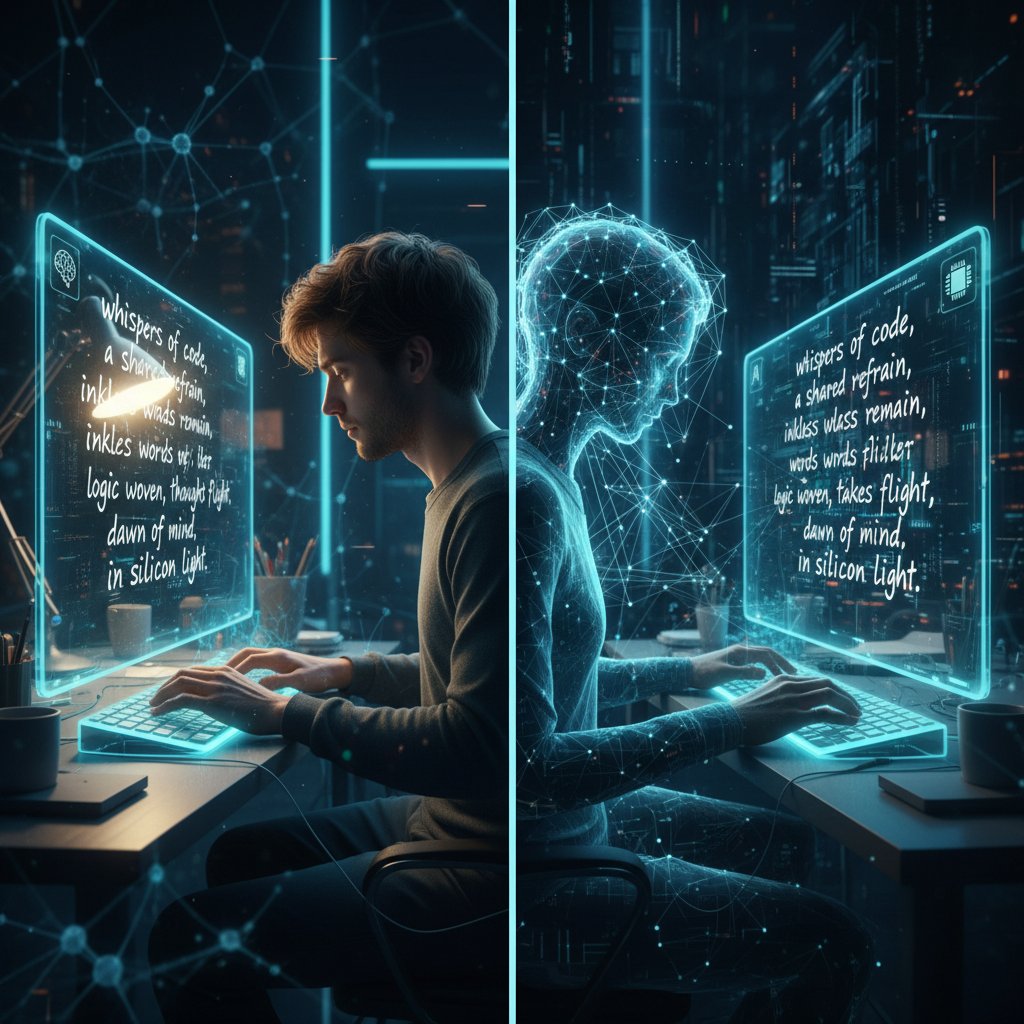
Recent advances in AI have closed the so-called “uncanny valley” of automated writing. The tell-tale signs—awkward phrasing, generic tone—are relics of last decade’s bots. Today, platforms like filecreator.ai use advanced neural networks that can emulate corporate, conversational, or even humorous voices with eerie accuracy. The bottom line: well-configured AI is indistinguishable from a human, unless you want it to be otherwise.
Myth #2: Automation kills the personal touch
It’s a persistent fear: that automation strips letters of authenticity. But, as counterintuitive as it sounds, AI can actually deepen the personal touch—if you know how to use it. By leveraging customer data, behavioral insights, and dynamic templates, automation enables nuanced, individualized messaging at scale.
- Data-Driven Empathy: AI can reference recipient history, anticipate needs, and personalize content far beyond manual capabilities.
- Consistency with Flexibility: Automated systems ensure brand voice remains consistent, while allowing for granular customization by segment or individual.
- Speed Meets Substance: What once took hours can be done in minutes, freeing up time for strategic tweaks and emotional refinement.
- Error Reduction: Automation catches inconsistencies and typos that erode trust.
- Scalable Creativity: With the right prompts, AI can generate creative flourishes—calligraphy, fonts, even embedded stories—at a touch.
A case in point: A mid-sized marketing agency leveraged AI-generated letters for a client apology campaign. By customizing each letter’s tone and anecdote to the recipient’s history, they salvaged 85% of at-risk accounts—proof that automation, when wielded with intention, is a creative asset, not a liability.
Myth #3: It’s only for big business
If you think automation is the exclusive playground of Fortune 500s, you’re missing out. Individuals, nonprofits, startups, activists, and mental health professionals are using AI-driven tools to generate customized letters for outreach, fundraising, support, and branding.
From personalized advocacy mailers to deeply empathetic mental health check-ins, the use cases are exploding. Small organizations, in particular, benefit from AI-driven efficiency, allowing them to punch above their weight without sacrificing the warmth of one-on-one communication.
"It’s my secret weapon for outreach." — Jamie, community organizer
The democratization of AI letter generation means anyone with a story—or a mission—can amplify their message, regardless of budget or team size.
How the technology really works: Inside the AI letter engine
Under the hood: Natural language generation explained
At the heart of every AI-powered letter generator sits complex natural language processing (NLP) and natural language generation (NLG) systems. These models are trained on millions of real-world documents, learning syntax, semantics, tone, and intent. When you generate customized letters, the engine builds sentences by predicting the most contextually relevant words—guided by templates, user data, and prompt inputs.
Definition list:
- NLG (Natural Language Generation): The process by which computers turn structured data into coherent text.
- Template Matching: AI maps user inputs to pre-built templates, adapting phrasing and tone to suit context.
- Tone Adaptation: Algorithms modulate formality, humor, and empathy to fit the recipient and purpose.
By balancing rules (templates) with creative adaptation (machine learning), AI letter generators can both maintain structural integrity and produce emotionally resonant text—often in real time.
Data, bias, and the illusion of objectivity
Every AI system is only as unbiased as its training data. The best letter generators draw on transparent, diverse datasets, but bias can still creep in—subtly shaping tone, phrasing, or even which recipients get the most attention.
| Generator | Transparency | Bias Mitigation | Customization Level |
|---|---|---|---|
| filecreator.ai | High | Automated | Advanced |
| Generic mail merge | Low | Manual | Limited |
| Human copywriting | Variable | Subjective | High |
Table 2: Comparative features of AI letter generators for transparency, bias mitigation, and customization — Source: Original analysis based on InSyncIn, 2025 and provider documentation
The risk is subtle but real: unchecked, AI can reinforce stereotypes or exclude marginalized voices. That’s why the most ethical providers, including filecreator.ai, are transparent about data practices and offer users control over key customization levers.
Compliance, privacy, and ethical boundaries
In regulated industries—think legal, healthcare, or finance—automated letter generation isn’t just a productivity upgrade; it’s a compliance minefield. Laws like GDPR, HIPAA, and CCPA set stringent standards for data handling, consent, and record-keeping.
- Secure Data Storage: Use encrypted databases and restrict access.
- Explicit Consent: Always obtain permission before using personal data in letters.
- Audit Trails: Maintain logs of generated correspondence.
- Bias Monitoring: Regularly audit outputs for unintended discrimination.
- Right to Be Forgotten: Allow recipients to request deletion of their data.
Protecting sensitive information isn’t optional. It’s an ethical necessity—and, increasingly, a legal one.
Real-world impact: Success stories and cautionary tales
When automation saves the day
Consider the case of a national non-profit that struggled to engage dormant donors. After integrating an AI letter generator, each outreach was tailored to the recipient’s giving history and interests. The results? A 38% increase in reactivated donors and a 21% boost in average donation size. The letters weren’t just seen—they were felt.

Before the switch, their response rates hovered at a paltry 6%. Post-automation, they soared past 25%, with donor feedback citing the “personal touch” as the biggest differentiator.
When it goes wrong: Lessons from failed automation
But the technology isn’t infallible. A cautionary tale: A tech startup used a new letter generator for onboarding hundreds of new hires but failed to segment their audience. The result? Letters addressed to “Dear [First Name]” and references to non-existent roles. The backlash was swift—public criticism on social media and a wave of disengagement.
The root cause? Overreliance on automation without adequate human oversight and data hygiene.
"Automation isn’t a substitute for empathy." — Morgan, HR specialist
Lesson learned: Automation needs guardrails—review processes, data validation, and the humility to admit when a human touch is irreplaceable.
Industry breakdown: Who’s doing it best?
| Industry | Adoption Rate (2025) | Avg. Engagement Increase (%) | Top Use Case |
|---|---|---|---|
| Technology | 78% | 34 | Recruiting & onboarding |
| Healthcare | 53% | 29 | Patient follow-up |
| Education | 61% | 22 | Admissions & alumni outreach |
| Non-profit | 66% | 35 | Donor engagement |
Table 3: Adoption and success metrics for customized letter generators in key industries — Source: Original analysis based on InSyncIn, 2025 and sector reports
Tech leads the way, but healthcare and education are catching up—using AI-driven correspondence to build loyalty, reduce churn, and foster community.

Step-by-step: Mastering customized letter generation
Getting started: Choose your weapon
There’s no shortage of tools promising to generate customized letters. But not all are created equal. Criteria to consider: data security, template flexibility, integration options, and compliance features. Avoid platforms that can’t explain their data practices or limit your creative control.
- Define your goal: Is it outreach, recruitment, or client retention?
- Select a compliant tool: Prioritize security and transparency.
- Customize templates: Adapt language and branding to your audience.
- Integrate data sources: Pull in CRM or HR data for personalization.
- Test and iterate: Review sample outputs for tone, accuracy, and relevance.
- Deploy and monitor: Track engagement, solicit feedback, and refine.
For those wanting a robust, compliance-ready solution, filecreator.ai is a proven industry resource—used by organizations across sectors to bridge efficiency and authenticity.
Inputs that matter: Data, tone, and context
The secret to generating customized letters that actually work? Input. Garbage in, garbage out. To get meaningful results, you must feed your generator accurate data, clear objectives, and nuanced tone guidelines.
- Inconsistent Data: Mismatched fields lead to embarrassing errors.
- Rigid Templates: Overly generic frameworks stifle personalization.
- Ignoring Context: Failing to consider recipient circumstances can backfire.
- No Human Review: Skipping a final check is a recipe for disaster.
The right tone—formal, casual, empathetic—should match both your brand and the recipient’s expectations. Context is king; a letter to a long-time client needs a different voice than a cold prospecting note.
Beyond the template: Customization hacks
The best letter generators are only a starting point. To really break the mold, edit AI outputs for voice, add relevant anecdotes, and inject timely cultural references. Experiment with bold typography, calligraphy font selections, and even tactile elements (like silicone letter molds) for phygital campaigns.

Pro tip: Use recipient stories or shared experiences to deepen the letter’s impact. For advanced users, consider layering in anti-aesthetic design trends or experimental branding to grab attention.
Advanced strategies: Going from good to unforgettable
Hyper-personalization at scale
Segmentation is where the magic happens. By carving your audience into micro-groups and deploying dynamic templates, you can deliver unique value to each recipient—without sacrificing efficiency. One SaaS company increased its sales pipeline by 40% simply by segmenting outreach by industry and referencing recent news about each recipient’s company.
- Handwritten letters: (historical baseline)
- Mail merge: (first wave of automation)
- NLG-powered tools: (rule-based customization)
- Deep learning-based AI: (context-driven, real-time adaptation)
That’s the evolution—each step offering more scale, more nuance, and less wasted effort.
Measuring success: What actually works?
Defining KPIs is critical. Focus on open rates, response rates, and conversion—but don’t neglect qualitative feedback. Use A/B tests to experiment with formats, tones, and personalization depth.
| Method | Open Rate | Response Rate | Conversion Rate |
|---|---|---|---|
| Manual letters | 56% | 22% | 8% |
| Template-based emails | 22% | 5% | 1.5% |
| AI-generated, tailored | 54% | 27% | 10.4% |
Table 4: Comparison of letter campaign success metrics by method — Source: Original analysis based on ClickSend, 2024 and sector data
A/B testing helps you move from guesswork to precision—ensuring each tweak is backed by data, not hunches.
Integrating with your workflow: The practical reality
Top-tier letter generators don’t exist in a vacuum. The smartest organizations integrate them with their CRM, HR, and marketing stacks. This enables seamless data flows, real-time updates, and unified messaging.
filecreator.ai, for example, is designed for painless integration—making it a smart pick for teams seeking efficiency without losing sight of personalization.
Definition list:
- API (Application Programming Interface): Allows tools to connect and exchange data automatically.
- CRM Integration: Syncs contact and history data for deeper personalization.
- Webhooks: Trigger automated actions based on recipient behavior.
Workflow integration isn’t just a technical nicety—it’s what separates amateurs from high-impact operators.
Risks, controversies, and the future of personalized communication
Blurred lines: Authenticity vs. automation
The philosophical debate rages: What’s more authentic—a mass-produced handwritten note, or a machine-generated letter that nails your story? In 2025, the answer is both—and neither. It’s not about who (or what) writes the letter, but whether it moves the recipient.
"It’s not who wrote it—it’s whether it moves you." — Riley, software engineer
Sometimes, authenticity is about intention, not authorship. The best letters—AI or otherwise—are those that forge genuine connection. Anything less is just noise.
The privacy paradox: How much is too much?
The darker side of hyper-personalization is data privacy. Recipients are increasingly wary of how much you know—and how you use it. Transparent data policies and opt-outs are a must.

Tips for transparent data use: always disclose sources, allow recipients to edit preferences, and never store more information than you need. Privacy isn’t just a box to tick—it’s a trust builder.
The next frontier: Predictive and conversational letters
While we avoid speculating about future developments, it’s clear from current trends that the hunger for ever more responsive, context-aware letters is driving research. Already, some platforms experiment with AI capable of real-time, conversational correspondence.
- Personalized recommendations in every letter
- Context-aware follow-ups based on recipient behavior
- Multilingual, cross-cultural customization
- Personal branding assets embedded in correspondence
- Therapeutic letters for mental health support
These uses stretch the boundaries—inspiring both excitement and calls for careful regulation.
Quick reference: Your customized letter generator survival kit
Checklist: Are you ready to automate?
Before taking the leap, assess your readiness. Not every workflow or team is primed for automation, but most can benefit from a little introspection and prep.
- Assess your data hygiene: Is your contact info complete and accurate?
- Define your goals: What does success look like?
- Select a trusted tool: Vet for security, compliance, and flexibility.
- Customize your templates: Don’t settle for generic—make it yours.
- Test rigorously: Run pilots and review outputs.
- Train your team: Don’t let automation become a black box.
- Monitor and iterate: Use feedback and analytics to improve.
Barriers are real—resistance to change, budget constraints, or learning curves—but the payoff is transformative.
Decision matrix: Choosing the right tool
Selecting the right generator isn’t trivial. Consider cost, security, integration, and support. When in doubt, prioritize transparency and adaptability.
| Tool | Cost | Security | Integration | Support |
|---|---|---|---|---|
| filecreator.ai | $$ | High | Full | Strong |
| Competitor A | $$$ | Medium | Limited | Medium |
| Competitor B | $ | Low | Basic | Weak |
Table 5: Feature comparison of top letter generation tools — Source: Original analysis based on provider documentation and expert reviews
Upgrade when your current tool can’t keep up with your scaling needs or integration requirements.
Jargon buster: Speak the language of automation
In the world of automated letters, fluency in key terms is non-negotiable. Here’s what you need to know:
Definition list:
- Mail merge: The OG automation—combines template letters with data fields for basic personalization.
- Phygital: Campaigns blending physical and digital elements for maximum impact.
- Calligraphy generator: Tools that simulate handwritten or artistic fonts for tactile appeal.
- Bias mitigation: Practices and technologies to reduce discrimination in AI-generated content.
- Segmentation: Dividing audiences by key traits for targeted messaging.
Understanding industry jargon isn’t just about sounding smart—it’s about wielding the right tools with confidence.
Conclusion: The new rules of meaningful communication
Rethinking authenticity in the age of AI
Our standards for “real” are forever altered. Authenticity is no longer about handwriting or signature; it’s about relevance, resonance, and risk. To generate customized letters that connect in 2025, you must marry data and creativity, ethics and efficiency, cold logic and warm empathy.

Those who cling to the old playbook are left behind. Those who experiment, iterate, and honor the recipient’s humanity—whatever the medium—write the script for what comes next.
Your move: Break the script or stick to the old playbook?
If you’ve made it this far, you already know: the power to generate customized letters is a competitive, even subversive, advantage. But only if you wield it with intention.
- Audit your current letters: If they read like spam, start over.
- Segment, then segment again: Find the micro-stories in your data.
- Test unconventional formats: Phygital, bold fonts, narrative twists.
- Solicit feedback: Let recipients tell you what hits—or misses.
- Embrace ethical standards: Transparency and privacy aren’t optional.
The rules have changed. Authenticity, empathy, and innovation are the new table stakes. Break the script, and you'll find your letters aren't just read—they're remembered.
Sources
References cited in this article
- Break the Mold with Our Customized Branding Solutions – Get Noticed in 2025(cpluz.com)
- Mail merge: the smart way to send personalized letters(clicksend.com)
- Breaking the Mold: Creative Trends That Stand Out in 2025(insyncin.com)
- Cover Letter Statistics for 2025(resumegenius.com)
- Is a Cover Letter Necessary in 2025?(resumelab.com)
- Why Cover Letters Are Still Essential in 2024(toxigon.com)
- How AI Transforms the Art of Letter Writing(quickcreator.io)
- The Lost Art of Letter Writing in the Digital Age(mindfulartstherapy.com.au)
- Stanford Daily: The Lost Art of Letter Writing(stanforddaily.com)
- Direct Mail: Why Personalization Matters in 2025(piworld.com)
- Top 8 Predicted Trends for Direct Mail in 2025(pse.agency)
- Why More Students and Professionals Are Buying Recommendation Letters(recommendationletters.pro)
- Debunking 10 Big AI Myths (Forbes, Apr 2025)(forbes.com)
- 3 AI Myths That Are Likely To Be Debunked in 2025(forbes.com)
- AI Letter Generator and Writer | Free Tool(writingmate.ai)
- AI Letter Generator - Chatsimple(chatsimple.ai)
- The Future of Communication: AI Formal Letter Generator(texta.ai)
- Natural Language Generation Market Report 2025(thebusinessresearchcompany.com)
- Top Natural Language Generation Software in 2025(slashdot.org)
- Custom Success Stories - Letter AI(letter.ai)
- 5 Best AI Cover Letter Generators for 2025(myperfectresume.com)
- 10 Tech And AI Misses In 2024 — And Lessons Learned For The Year Ahead(forbes.com)
- Automated Letter Generation - Features, Benefits & Samples (MHC)(mhcautomation.com)
- How to Write a Cover Letter: Examples & Guide (2025)(myperfectresume.com)
- Mastering The Art Of Writing A Letter Code In 2024: A Comprehensive Guide(explore.bryanu.edu)
- Top 5 Free AI Letter Generator Tools You Need to Try in 2025(aitechcity.com)
- 8 Best AI Cover Letter Generators in 2025(coursesity.com)
- Personalization at Scale: Advanced Strategies for 2025(amatriangle.org)
- Best Cover Letter Tips for Job Seekers in 2025(resumegenius.com)
- Optimove 2024 Year-end Letter(optimove.com)
- What is Hyper-Personalization? Detailed Guide for 2025 (Insider)(useinsider.com)
- GenAI Nears Hyper-Personalization at Scale (Practical Ecommerce)(practicalecommerce.com)
- A Business Guide to AI Workflow Automation in 2025(jousefmurad.com)
- How real-world businesses are transforming with AI (Microsoft, Apr 2025)(blogs.microsoft.com)
- 10 Trends Shaping Corporate Communications in 2025(hospitalitynet.org)
- The Future of Personalization Is Here: Trends to Look Out for in 2025 (Shopify)(shopify.com)
- Top Internal Communication Trends 2025: What the Experts Think(poppulo.com)
Perfect Documents, Instantly
Filecreator.ai transforms the way you produce professional documents. Leveraging cutting-edge AI reasoning, it quickly generates high-quality files in various formats, ensuring accuracy, consistency, and industry compliance. Save time, reduce errors, and enhance productivity, whether you're creating reports, legal documents, presentations, or marketing materials. Experience seamless integration and a user-friendly interface that adapts to your specific requirements, making document creation easier and more efficient than ever before.
Get startedStart Creating Professional Documents Today
Join thousands of professionals who trust AI-powered document generation
Frequently Asked Questions
Why are customized letters important in 2025?
Customized letters help professionals, recruiters, and brands cut through noise, win trust, and create a human touch that stands out. According to ResumeGenius, 83% of recruiters say tailored cover letters are crucial for demonstrating job fit, and generic letters risk lost deals, eroded trust, and reputational damage.
How has letter-writing evolved from the past to the AI era?
Historically, letter-writing was an intentional art involving handwritten elements that conveyed care and individuality. Digital automation promised efficiency but sacrificed soul, but now AI tools allow customization at scale while bringing back authenticity—the difference is that customization is now data-driven and digital rather than handwritten.
What does true customization mean when using AI?
The article describes true customization as occurring when algorithms, data, and artistry collide, emphasizing that personalized communication is a display of respect and acknowledgment of the recipient's uniqueness, rather than just template modifications like mail merge.
What are the risks of using generic letters in business?
Generic letters are missed connections that get actively penalized in the attention economy, leading to real business risks such as lost deals, eroded trust, and reputational damage.
Continue Reading
Explore more from Professional Document Generator

Generate Personalized Letters That Feel Human with Filecreator.ai
Discover insights about generate personalized letters

Professional Letters and Why They Still Move Business Decisions
Professional letters remain critical in business despite digital communication dominance. This article explains why they matter and how to generate letters that influence key decisions.

Why Customized Official Letters Still Shape Outcomes Today
Generate customized official letters that balance AI efficiency with authentic tone. This article explains why customization matters and how to avoid common pitfalls.

Official Personalized Letters: Why They Work in 2025
Generate official personalized letters that move people in 2025. This article explains the strategies, real-world examples, and evidence-backed methods for official letter writing.

Automated Letters in 2025: Maintaining Voice and Trust
Generate customized automated letters in 2025 using AI while maintaining authenticity. This article explains the risks, benefits, and best practices for automated correspondence.

Automated Personalized Letters: Evolution From Handwriting to AI
This article explains how to generate automated personalized letters while maintaining authentic tone. It covers the evolution of letter writing and addresses concerns about automation affecting communication quality.