


Fast Legal Documentation Software That Won’t Get You Sued
Written with AI assistance under our editorial guidelines
Fast legal documentation software addresses the modern demand for rapid turnaround times in law firms, where delays cost revenue and reputation. However, speed introduces risks including automation errors and compliance oversights. Effective solutions balance velocity with safeguards to prevent mistakes that could expose firms to liability while maintaining the efficiency clients now expect.
Legal professionals once wore slow, careful document creation like a badge of honor. Today? That’s a luxury few can afford. The demand for fast legal documentation software has hit law like a shockwave, promising to liberate teams from the tyranny of templates, version confusion, and missed compliance. But the seductive promise of instant contracts and error-free files hides a darker reality—one where speed can turn reckless, automation introduces new risks, and tech hype leaves real needs unmet. This article dismantles the myths of legal doc automation, exposes hidden pitfalls, and gives you the research-backed roadmap you need to survive the new legal arms race. If you think you know what “fast” means in legal tech, think again.
Why speed is now a survival skill in legal work
The high cost of slow documentation
Every minute lost to manual drafting or chasing down a missing contract version is a minute your competitors are getting ahead. According to recent research by Cimphony in their 2024 review of legal document automation, firms that stick with legacy processes spend up to 30% more time per document—and those hours pile up fast (Cimphony, 2024). The legal market, once defined by its deliberate pace, has become a battlefield where turnaround times are measured in hours, not days. Clients expect rapid results, and the firms that can’t deliver risk becoming obsolete, losing both revenue and reputation as they fall behind more agile, tech-powered rivals.
But speed isn’t just about beating the clock. It’s about unlocking new opportunities that slow documentation would choke off entirely. Complex deals, global partnerships, and regulatory shifts wait for no one. If your documentation process can’t keep up, you’re not just missing deadlines—you’re missing the future.

A 2024 survey by TechBullion found that over 70% of legal professionals identified “document turnaround” as their biggest bottleneck (TechBullion, 2024). And it’s not just about lost productivity—slow processes breed costly mistakes, version confusion, and compliance oversights that can trigger regulatory nightmares. In a high-stakes environment, slow is dangerous, not just inconvenient.
How the demand for instant results is changing law
The legal profession isn’t just speeding up; it’s transforming. Where once careful review and slow deliberation were the norm, clients now demand rapid answers, on-demand contracts, and real-time updates. “Law used to be about accuracy first, speed second. Now, if you can’t deliver fast, accuracy doesn’t even matter—you’re already out of the running,” said one managing partner in a recent interview published by Rankings.io.
“We lost a seven-figure deal last year because our drafting process took a week longer than the competition. The message was clear: speed isn’t a bonus, it’s a baseline.” — Senior Partner, AmLaw 200 Firm (Rankings.io, 2024)

This shift is seismic, not incremental. As automation tools become the norm, clients are learning to expect—and demand—instant documentation. The lawyers and firms who adapt first seize a competitive advantage; those who hesitate are left explaining delays to clients who are already looking elsewhere. And this isn’t just happening in big law. Small firms, startups, and in-house teams are finding that the race to automate is now a matter of survival, not preference.
filecreator.ai and the race to automate
Enter the new breed of legal tech platforms. Filecreator.ai represents a paradigm shift—balancing the speed of AI with the rigor demanded by legal professionals. It stands out not merely for speed, but for integrating high-quality document creation with compliance and customization—a direct response to the industry’s most pressing pain points.
The software landscape is evolving quickly. What sets top platforms apart in the legal arms race? Industry analysis and user feedback reveal several critical differentiators:
- Hybrid automation and customization: The fastest tools aren’t worth much if they can’t handle non-standard clauses or unique compliance needs. The best platforms, like filecreator.ai, blend AI-driven speed with deep customization.
- End-to-end document lifecycle management: Winning software doesn’t just spit out contracts. It manages versioning, collaboration, secure sharing, and audit trails—addressing the entire documentation lifecycle.
- User-centric design: Adoption depends on more than features. Intuitive interfaces, thorough onboarding, and responsive support define the user experience—and the true value of “fast.”
What really makes legal documentation software ‘fast’?
Speed vs. accuracy: Can you have both?
It’s the eternal balancing act of legal automation: how do you deliver near-instant results without sacrificing the precision that legal work demands? According to research from TechBullion, while AI-powered automation can reduce contract generation times by up to 80%, error rates spike when platforms cut corners on compliance checks or human review (TechBullion, 2024). The race isn’t just for speed, but for the elusive sweet spot where time savings don’t devolve into risky shortcuts.
| Feature | Fastest Tools | Most Accurate Tools | Hybrid Leaders (e.g., filecreator.ai) |
|---|---|---|---|
| Document creation time | < 2 minutes | 10-30 minutes | 2-5 minutes |
| Custom clause integration | Limited | Extensive | Robust |
| Compliance assurance | Basic/Automated | Manual/Expert Review | Automated + Human-in-the-loop |
| Error rate (2024 average) | 7-12% | 1-3% | 2-5% |
Table 1: Comparing speed and accuracy across leading legal documentation platforms.
Source: Original analysis based on TechBullion, 2024, Cimphony, 2024.
The smartest players know the trick: automation should amplify human expertise, not replace it. The platforms delivering both speed and accuracy are those building “human-in-the-loop” workflows—where AI handles the grunt work, but legal professionals retain final say.
Technical deep dive: How automation delivers (and fails)
Fast legal documentation software runs on a cocktail of machine learning, template libraries, and workflow automation. At its best, automation pulls data from client systems, assembles compliant documents in seconds, and enables rapid review. But cracks appear when these tools hit the real world. According to a 2024 industry analysis, nearly 40% of “auto-generated” contracts required significant manual revision before they were client-ready (Cimphony, 2024). Why? Because context matters—AI can’t always spot a clause that’s legally dangerous in a particular jurisdiction, or flag a subtle compliance risk that only a seasoned lawyer would notice.
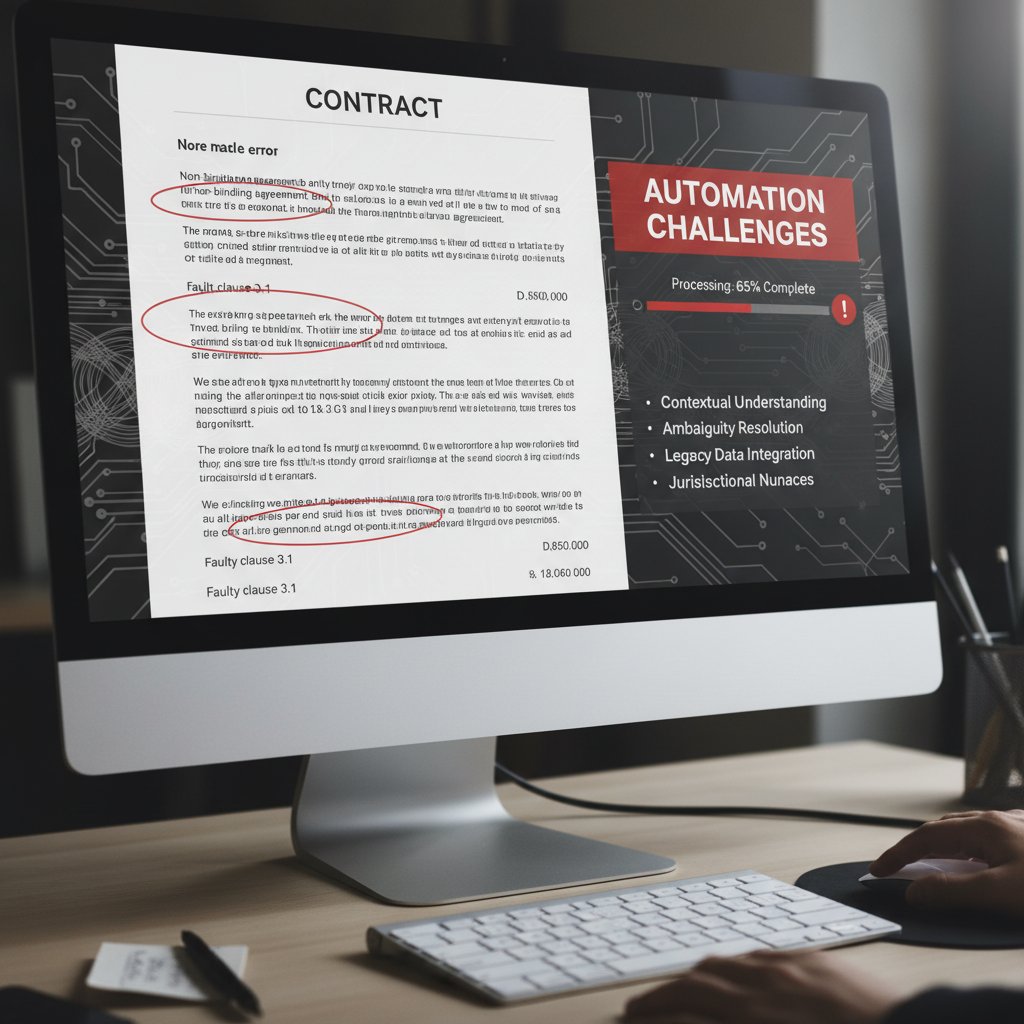
The technical gulf between “fast” and “good” boils down to three issues: (1) limited template intelligence, (2) poor integration with firm-specific systems, and (3) weak support for complex, multi-party negotiations. True innovation lies in platforms that merge automation with robust API integrations, user-friendly editing, and audit-grade security.
The hidden bottlenecks nobody talks about
Legal tech vendors love to tout their “one-click” miracles. But behind the marketing, most teams hit invisible speed bumps that turn fast tools into slow headaches:
- Onboarding pain: User interfaces either overwhelm with options or fail to support real-world workflows, stalling adoption.
- Integration gaps: Tools that won’t play nice with legacy systems force manual workarounds, erasing promised time savings.
- Underdeveloped compliance modules: Fast isn’t safe when compliance checks are an afterthought, not a foundation.
- Poor version control: Without robust document management, teams waste time chasing down the “right” version—undoing any speed gains.
- Opaque pricing: Many platforms push hidden fees or require expensive upgrades for essential features, undermining ROI from the start.
No matter how slick the demo, a tool that doesn’t fit your real needs will slow you down faster than the old manual processes ever did. According to current user feedback, many firms report that lack of transparency and true end-to-end management are the major killers of promised efficiency.
The myth of one-click compliance: What users get wrong
Compliance shortcuts: Fact or fantasy?
The promise of “instant compliance” is as old as legal tech itself—and just as misleading. While automation can speed up basic compliance checks (like missing signatures or required clauses), it cannot reliably interpret complex regulatory shifts or client-specific risk profiles. According to a 2024 analysis by Cimphony, over 60% of legal teams reported that automated compliance modules flagged false positives or failed to catch nuanced issues (Cimphony, 2024). Compliance is not a toggle; it’s a process that demands human judgment, especially as regulations grow more tangled and jurisdiction-specific.
Even the best AI can’t keep pace with the constantly shifting sands of legal frameworks. “Anyone who tells you a tool can guarantee compliance at the click of a button is selling snake oil,” warned one legal innovation officer in a 2024 roundtable.
“Compliance isn’t a box you check—it’s a discipline you build into every step of your process. Automation helps, but it never absolves you from responsibility.” — Legal Innovation Officer, Top 100 Law Firm (Cimphony, 2024)
Common legal tech misconceptions debunked
Misunderstandings about what “fast legal documentation software” can actually deliver are rampant. Let’s tear down the three biggest myths:
- Myth 1: “AI always improves accuracy.” In reality, generative AI can hallucinate legal language or miss context-specific risks. Human review remains essential.
- Myth 2: “Template libraries cover every need.” Most template banks are generic; complex deals or unique compliance requirements quickly outstrip their utility.
- Myth 3: “Automation kills errors.” While automation reduces manual mistakes, it can also automate errors at scale if not built or supervised correctly.
Legal teams looking to automate must approach tech adoption like due diligence—scrutinizing claims, insisting on transparency, and never mistaking software speed for legal safety.
True compliance is a living, breathing process, not a product feature. Relying on automation alone is like trusting a GPS to drive your car through uncharted territory—it might help you navigate, but you still need to keep your hands on the wheel.
Data privacy dilemmas in the age of AI
The fast lane of automation comes with a sharp curve: data privacy. As legal documents become digitized, the risk of breaches and compliance failures escalates. In 2024, the legal sector saw a 25% increase in reported data incidents tied to new document automation tools (TechBullion, 2024). Encryption, robust access management, and audit trails have become non-negotiable requirements, not “nice-to-haves.”

Automating legal work at scale means your data is only as secure as your weakest vendor. Vetting platforms for compliance certifications, built-in encryption, and transparent privacy policies is now part of the legal professional’s core skill set. At the end of the day, speed means little if it comes at the expense of your firm’s reputation and your client’s trust.
Under the hood: Anatomy of a fast document generator
From template to final doc in seconds
Modern legal document generators operate like high-performance assembly lines: fast, precise, and (if engineered right) impressively flexible. The process that turns a request into a finished contract in minutes is deceptively complex—but the best platforms make it look effortless.
- Template selection: Start with a robust, customizable template library, mapped to current laws and client needs.
- Data intake: Seamless integration pulls in data from client systems, matter management, or CRM.
- Automated assembly: AI-driven engines build the document, inserting variables, clauses, and compliance checks.
- Human review: Critical stop for legal professionals to spot context-specific risks or tailor language.
- Finalization and export: Instantly output to multiple formats (PDF, DOCX, digital signature workflows).
The magic isn’t just in the speed—it’s in the choreography. Good platforms like filecreator.ai fuse automation with moments for human expertise, ensuring accuracy without sacrificing tempo.
The platforms that win combine clever engineering with respect for legal nuance, giving users a genuine sense of control rather than just a glorified mail merge.
APIs, integrations, and the illusion of seamlessness
APIs (application programming interfaces) and software integrations are the secret sauce of “fast” document workflows—connecting disparate tools, automating data flows, and eliminating redundant input. But not all integrations are created equal. According to Cimphony’s 2024 report, integration failures are a leading cause of post-implementation regret for legal tech buyers (Cimphony, 2024).
A set of protocols enabling software components to communicate. In legal tech, robust APIs allow document generators to sync with case management, billing, and signature platforms—making truly seamless workflows possible.
The process of connecting different software systems. True integration means automatic data transfer, unified search, and consistent user experience. Weak or partial integrations add friction, creating more work instead of less.
A platform with a “check-the-box” integration doesn’t deliver real value unless it fits your firm’s unique stack. Always demand live demos, proof-of-concept trials, and references from firms with similar workflows. Remember: if it doesn’t play well with your existing tools, it’s not seamless—it’s sabotage.
The illusion of seamlessness is the fastest way to disappointment. Dig beneath the marketing gloss to find out whether integrations are truly robust or just a thin veneer.
How ‘fast’ can turn reckless: Real-world fails
Speed is seductive, but unchecked automation has a way of backfiring—sometimes spectacularly. In 2024 alone, there were several high-profile cases where “fast” legal documentation software generated contracts that, while rapid, were riddled with compliance gaps or outright errors (TechBullion, 2024).
| Failure Type | Impact | Real-World Example |
|---|---|---|
| Auto-generated errors | Invalid contracts, legal dispute | Missed jurisdiction clause; deal failed |
| Version confusion | Lost work, conflicting edits | Parallel edits collided; data lost |
| Poor integration | Manual rework, cost overruns | CRM sync failed; re-entry required |
Table 2: Common consequences of prioritizing speed over diligence in legal doc automation.
Source: Original analysis based on TechBullion, 2024, Cimphony, 2024.
The lesson? The “move fast and break things” ethos is a terrible fit for legal work. Fast is only safe when backed by rigorous controls, real integration, and a culture that values both velocity and vigilance.

Who’s winning—and losing—in the new legal arms race?
Law firms, startups, and the automation divide
The race to adopt fast legal documentation software is splitting the legal world down the middle. Large law firms with deep pockets are building bespoke solutions, integrating automation into every layer of their practice. Startups and smaller firms, meanwhile, gravitate toward out-of-the-box platforms that promise speed without the need for a full IT department. According to a 2024 survey, over 60% of big law firms report successful automation deployments, compared to just 32% of small firms (Cimphony, 2024).
But here’s the twist: some of the most agile adopters aren’t law firms at all—they’re in-house legal teams at tech companies, or compliance departments in highly regulated industries. They’re using automation to reduce outside counsel costs, accelerate deal cycles, and lock down compliance at scale.

As the gap widens between automation haves and have-nots, the real winners are the organizations that match tools with training, invest in change management, and treat automation as an ongoing journey, not a one-time fix.
Case study: The firm that automated too soon
One cautionary tale comes from a mid-sized firm that jumped on an “instant contract generator” in the hope of outpacing larger rivals. The result? Dozens of client-facing documents riddled with errors, compliance violations, and missing terms.
“Speed was our only metric,” the managing partner admitted in a post-mortem published by TechBullion. “We didn’t realize that automation without expertise is just faster failure.”
“Automating legal work is like driving a race car—it’s thrilling, but if you don’t respect the machine, you’ll crash. We learned the hard way that human judgment can’t be automated away.” — Managing Partner, Case Study Firm (TechBullion, 2024)
The firm’s hard-won lesson: embrace automation, but never at the expense of core quality controls and expert oversight.
Winners: Unexpected industries using legal automation
Legal automation’s impact goes far beyond law firms. Some of the fastest-growing adopters in 2024 include:
- Healthcare providers: Automating patient consent forms and regulatory filings, slashing administrative time by up to 50% (TechBullion, 2024).
- Finance teams: Generating audit-ready financial statements and compliance docs with 90% greater accuracy.
- Marketing agencies: Crafting NDAs, contracts, and campaign approvals at speeds that keep pace with creative cycles.
- HR departments: Producing policy updates, onboarding packets, and global workforce agreements on demand.
These “unexpected” winners show that legal automation isn’t just about law—it’s about any organization where documents, compliance, and speed collide.
Adapting the lessons of legal doc automation to non-legal teams often drives innovation that law firms themselves are still struggling to achieve.
Beyond contracts: Unconventional uses no one saw coming
Compliance, HR, and global deals in hyperdrive
Fast legal documentation platforms are rewriting the playbook for compliance and HR teams. Where once a new policy or international contract rollout might have taken weeks, now it’s hours. According to a 2024 industry survey, 45% of global corporations now use automated tools to manage cross-border agreements and regulatory filings (TechBullion, 2024). The ability to instantly update, translate, and distribute documents gives compliance pros a secret weapon in the fight against ever-changing rules.

The bottom line? The same engines that speed up contract drafting are now powering transformation everywhere—enabling proactive compliance, smoother onboarding, and faster international growth.
Creative hacks: How power users bend the rules
The most innovative users aren’t just saving time—they’re redefining what “documentation” means. Here’s how seasoned pros are getting more from their platforms:
- API-driven document assembly: Linking legal doc generators with business intelligence tools to create data-rich, custom contracts at scale.
- Automated audit trails: Triggering real-time logs every time a document is accessed or edited, slashing compliance risk and proving due diligence.
- Multi-format publishing: Instantly generating not just contracts, but pitch decks, compliance manuals, and client-facing reports from the same core data.
- Conditional logic templates: Deploying smart forms that adapt clauses based on deal parameters, eliminating manual intervention.
- Real-time collaboration: Enabling teams to co-edit, comment, and track changes—even across continents.
For these power users, “fast” means more than speed—it means agility, creativity, and a competitive edge that static processes can’t touch.
The future of legal documentation belongs to the experimenters—the teams willing to rethink not just how fast they work, but how much more they can do with the right tools.
Choosing your weapon: What to demand from your software
Comparison matrix: What matters in 2025
A flood of platforms promises everything from instant contracts to bulletproof compliance. In the harsh light of user experience, only a few deliver the right mix of features, flexibility, and trust.
| Feature | filecreator.ai | Leading Competitor | Legacy Editor |
|---|---|---|---|
| AI-powered creation | Yes | Partial | No |
| Multi-format export | Full | Limited | Limited |
| Built-in compliance checks | Automated | Manual | None |
| Customizable templates | Yes | Yes | Minimal |
| End-to-end lifecycle mgmt | Yes | Partial | No |
| Robust integrations | API-based | Surface-level | No |
Table 3: A real-world comparison of fast legal documentation platforms.
Source: Original analysis based on Cimphony, 2024, TechBullion, 2024.
The critical differences? True AI-powered creation, lifecycle management, and robust integration—none of which should be up for compromise in your next platform.

Red flags that should stop you cold
- Opaque pricing: If you can’t see what each tier includes, assume hidden costs are lurking.
- No compliance certifications: Without evidence of encryption and audit trails, walk away.
- Limited integrations: If the platform operates in a silo, you’ll end up working harder, not smarter.
- Weak user support: Poor onboarding and training signal trouble ahead.
- No version control: If you can’t track every edit, you can’t prove (or defend) your process.
A fast contract today means little if you’re facing a compliance meltdown tomorrow. Choose platforms that are transparent, accountable, and have a proven track record with organizations like yours.
Ignore the red flags at your peril—choosing the wrong tool is the fastest way to sabotage your own success.
Priority checklist: Before you automate
- Define your real pain points. Don’t buy hype—know exactly what’s slowing you down.
- Map your workflow. Identify integration needs before you shop.
- Demand proof of compliance. Certifications aren’t optional.
- Insist on demos and pilots. See the tool in action with your own data.
- Plan for change management. Automation fails without user buy-in and training.
- Calculate true ROI. Consider not just time saved, but risk reduced and revenue unlocked.
Taking time to vet your options beats undoing months of headaches later. In the legal automation game, the smarter buyer always wins.
The future on trial: Where do we go from here?
Emerging trends and predictions
Legal documentation won’t slow down—if anything, the pressure for speed and accuracy is intensifying. Industry research signals a continued surge of “hybrid” platforms, blending AI automation with deeper customization and human oversight (TechBullion, 2024). Built-in security, transparent pricing, and seamless integration are becoming table stakes, not differentiators.

Documentation platforms aren’t just getting faster—they’re getting smarter about compliance, security, and the nuances that separate a good contract from a great one. In this new era, “fast” means not only quick output, but also a platform that can adapt as regulations and business needs change.
What the experts say (and what they won’t admit)
“We’re only scratching the surface of what automation can do for legal work. But anyone selling a risk-free, one-click future is lying. The tools are powerful, but expertise is irreplaceable.” — Legal Technology Analyst, Industry Roundtable (Cimphony, 2024)
The candid truth from experts: automation is an amplifier, not a replacement. The greatest gains come to those who treat these platforms as partners—augmenting, not overriding, the judgment and knowledge that define legal excellence.
Legal automation is a tool, not a magic wand. Those who master it will lead the field; those who abdicate responsibility will get burned.
How to stay ahead—and what to avoid
- Invest in training: The best software is useless without skilled, empowered users.
- Regularly review workflows: Adapt your processes as the tech (and regulations) evolve.
- Demand vendor transparency: Insist on clear pricing, proven compliance, and happy references.
- Don’t chase hype: Choose features that solve your actual problems, not what’s trending this quarter.
- Build feedback loops: Collect user input and measure outcomes to drive continuous improvement.
Technology is only as powerful as the strategy behind it. The future belongs to teams that combine speed with skill, automation with accountability.
Conclusion: The only certainty is change
Key takeaways for the new era
The age of fast legal documentation software isn’t coming—it’s here, and it’s ruthless. The winners aren’t the teams with the fanciest dashboards, but those who balance speed with substance, automation with expertise, and tech with trust.
- The high cost of slow documentation is lost revenue, missed deals, and regulatory risk.
- Speed without compliance is a recipe for disaster; automation must serve, not supplant, legal expertise.
- The best tools offer customization, integration, and robust security—not just a quick fix.
- True transformation happens when teams invest in both technology and the training to wield it well.
- The future of legal documentation is hybrid, user-centric, and relentlessly focused on real-world needs.
At the end of the day, “fast” is only as good as the foundation you build beneath it.
Your roadmap: From stress to strategy
- Audit your current process. Identify every bottleneck and pain point.
- Define your requirements. Separate “must-haves” from “nice-to-haves.”
- Research platforms with real-world validation. Look for verified compliance, peer references, and transparent pricing.
- Test in your actual workflow. Don’t rely on demos alone—run pilots with your own docs.
- Invest in user training. Adoption rises and errors fall when users feel empowered.
- Build continuous improvement loops. Review performance, gather feedback, and refine.
A strategic approach to automation isn’t just about moving faster—it’s about working smarter, safer, and with more confidence than ever before.
Final reflection: Is fast always better?
Speed is intoxicating. In a profession obsessed with risk, it’s easy to be seduced by the promise of instant documentation, AI-driven accuracy, and one-click compliance. But the real measure of success isn’t how quickly you can spit out a contract—it’s whether you can do it right, every time, without trading away security, compliance, or the expertise your clients depend on.
The only certainty is change. The legal world will keep moving faster, and the tools you choose today will shape not just your workflow, but your reputation, resilience, and relevance tomorrow. Don’t just automate—elevate. The future is on trial, and the verdict is in your hands.
Sources
References cited in this article
- Cimphony: 7 Best Legal Document Automation Software 2024(cimphony.ai)
- TechBullion: Navigating Document Automation in Legal Tech: A 2024 Perspective(techbullion.com)
- Rankings.io: Best Document Management Software for Law Firms(rankings.io)
- LexisNexis: Fast law: why speed is the priority for lawyers using AI(lexisnexis.co.uk)
- ABA Journal: The legal tech trends that defined 2024(abajournal.com)
- DocDraft: Latest Trends in Legal Document Automation for 2024(docdraft.ai)
- Compfox: AI Legal Document Drafting(compfox.io)
- The Business Research Company: Legal Document Management Software Market 2024(thebusinessresearchcompany.com)
- Concord: Guide to Legal Tech Tools in 2024(concord.app)
- BRYTER: Legal Automation in 2024(bryter.com)
- Templafy: Best Document Automation Software 2024(templafy.com)
- PwC: Document Automation - breaking the bottleneck(pwc.co.uk)
- LexWorkplace: The Myth of One-Size-Fits-All Legal Software(lexworkplace.com)
- Wolters Kluwer: 5 Compliance Management Myths(wolterskluwer.com)
- DLA Piper: 2023 compliance year in review and what to watch in 2024(dlapiper.com)
- BarkerGilmore: Top Challenges Facing Compliance Teams in 2024(barkergilmore.com)
- Forbes: Safeguarding Data Privacy In The Age Of AI Innovation(forbes.com)
- TrustArc: Data Privacy in the Age of AI(trustarc.com)
- TechJockey: Top 7 Documentation Generators Online in 2024(techjockey.com)
- Oneflow: Document generation software: A complete guide in 2024(oneflow.com)
- Grand View Research: Legal Technology Market Report(grandviewresearch.com)
- Exploding Topics: 25 Disruptive LegalTech Companies & Startups(explodingtopics.com)
- Docketwise: Complete Guide to Legal Document Management(docketwise.com)
- Dutable: How Technology is Transforming Legal Documentation in 2025(dutable.com)
- WiseGuyReports: Global HR Compliance Software Market(wiseguyreports.com)
- HRLineUp: 10 Best HR Compliance Software 2024(hrlineup.com)
- Docupile: Legal Document Management Software for Law Firms(docupile.com)
Perfect Documents, Instantly
Filecreator.ai transforms the way you produce professional documents. Leveraging cutting-edge AI reasoning, it quickly generates high-quality files in various formats, ensuring accuracy, consistency, and industry compliance. Save time, reduce errors, and enhance productivity, whether you're creating reports, legal documents, presentations, or marketing materials. Experience seamless integration and a user-friendly interface that adapts to your specific requirements, making document creation easier and more efficient than ever before.
Get startedStart Creating Professional Documents Today
Join thousands of professionals who trust AI-powered document generation
Frequently Asked Questions
How much time can legal documentation software save compared to manual processes?
According to Cimphony's 2024 research, firms using legacy manual processes spend up to 30% more time per document compared to those using automation software.
What is the biggest bottleneck identified by legal professionals today?
A 2024 TechBullion survey found that over 70% of legal professionals identified 'document turnaround' as their biggest bottleneck in their work.
Why is speed becoming critical in the legal profession?
Clients now expect rapid turnaround times measured in hours rather than days, and firms that cannot deliver risk becoming obsolete by losing revenue and reputation to more agile, tech-powered competitors.
What risks does slow documentation introduce beyond lost productivity?
Slow processes breed costly mistakes, version confusion, and compliance oversights that can trigger regulatory nightmares, making slowness not just inconvenient but potentially dangerous in high-stakes legal environments.
Continue Reading
Explore more from Professional Document Generator

Creating Legal Documents Quickly: Balancing Speed with Legal Safety
Speed matters in modern business deals. This article explains how to create legal documents quickly while managing the risks that come with acceleration.

Fast Contract Drafting Tools: Speed Versus Safety
Fast contract drafting tools balance speed with accuracy. This article examines how automation affects contract quality and which approaches actually reduce legal risk.

How to Draft Legal Documents Quickly and Safely
How to draft legal documents quickly while avoiding critical errors. This article examines the risks of speed, the tools that help, and the strategies professionals use.

Document Drafting Automation Software: Benefits and Hidden Costs
Document drafting automation software transforms how professionals create contracts and reports. This article examines the real benefits, hidden costs, and workplace shifts automation brings.

Automated Legal Documents: What's Driving Adoption and Where the Risks Lie
Automated legal documents have transformed legal work. This article examines the adoption surge, the efficiency gains, and the ethical and operational risks reshaping the industry.

Legal Document Automation Services for Law Firms
Legal document automation services are transforming law firm operations. This article examines the efficiency gains, hidden costs, and strategic considerations for implementation.