


Fast HR Policy Generator or Compliance Risk? What HR Must Know
Written with AI assistance under our editorial guidelines
AI-powered HR policy generators offer speed and efficiency but introduce significant compliance risks and cultural costs. While traditional manual policies were slow and labor-intensive, automated templates sacrifice nuance and legal precision. HR leaders must balance the convenience of instant generation with careful review, customization, and alignment to company values before implementation.
What happens when you trade the slow agony of HR paperwork for the seductive promise of instant, AI-powered policy? The reality isn’t just about going faster—it’s about what’s lost and gained in the stampede for speed. In boardrooms and break rooms everywhere, the “fast HR policy generator” has gone from novelty to necessity. But the risks, the hidden costs, and the very real impact on company culture? Those get buried as deep as the old paper manuals. If you’re wondering whether template-driven HR is a shortcut to disaster or a lifeline for modern managers, you’re not alone. This guide exposes the mechanics, the myths, and the consequences of putting your policies on autopilot. With research-backed truths and stories from the trenches, you’ll discover what actually works—and what every HR leader needs to know before clicking “generate.”
The rush for speed: why HR policy is broken (and how we got here)
From painstaking manuals to instant templates: a timeline
HR policy wasn’t always about speed, or even convenience. Decades ago, building company rules meant marathon workshops, legal reviews, and three-ring binders thicker than a phone book. It was grueling, slow, and deeply human. But as the business world sped up, so did the pressure on HR. According to the Harvard Business Review (2024), the 1980s marked a turning point, with HR teams shifting from “employee advocacy” to “cost control.” Suddenly, efficiency trumped engagement, and one-size-fits-all templates started creeping in.
| Era | Dominant Approach | Key Impact |
|---|---|---|
| Pre-1980s | Custom, human-led manuals | High trust, slow, people-focused |
| 1980s-2000s | Cost-driven, template-based | Efficiency, loss of nuance |
| 2010s-present | AI and automation, instant tools | Speed, risk, compliance tension |
Table 1: Evolution of HR policy creation and its consequences. Source: Original analysis based on Harvard Business Review, 2024.
- HR begins with bespoke, employee-centric processes.
- Market pressures in the 1980s drive template adoption.
- Technology advances bring automation and instant policy generation.
- Each era leaves its own mark on organizational culture and regulatory risk.
The hidden costs of traditional HR policy creation
The old way wasn’t just slow—it was brutally inefficient. Consider this: building a single HR policy from scratch could take weeks of cross-departmental meetings, legal vetting, and endless revisions. The result? Massive labor costs, bottlenecks, and policies that were obsolete before the ink was dry. Recent research from PerformYard, 2024 reveals that 85% of companies today are expanding employee wellbeing programs largely as a reaction to outdated, disconnected HR policies that failed to keep up with evolving workforce needs. The most shocking part: these legacy processes often produced policies that nobody actually read, let alone followed.
- Excessive labor hours: Teams spent hundreds of hours per year on manual drafting and revisions, draining resources from more strategic initiatives.
- Compliance lag: Slow policy cycles made it nearly impossible to keep pace with changing laws, exposing organizations to regulatory fines.
- Employee disengagement: Outdated, generic policies eroded trust and made HR seem irrelevant.
- Documentation bloat: Every update added complexity, with multiple conflicting versions circulating through email chains.
Why 'fast' became the new holy grail for HR
The hunger for speed isn’t just about impatience—it’s about survival. In a marketplace where hybrid work, remote teams, and evolving regulations move at breakneck speed, being slow is practically reckless. According to Forbes, 2024, companies embracing flexible HR tools and remote-friendly policies see up to 21% higher sales growth. The catch? When speed becomes the only metric, quality and compliance often take a back seat.

Rushing to “fast” often means you’re racing against legal risk, cultural backlash, and employee cynicism. When the only thing that matters is ticking the compliance box, the soul of your company’s HR policy gets left behind.
What is a fast HR policy generator—really?
Defining 'fast': automation, AI, and the illusion of simplicity
On the surface, a fast HR policy generator promises instant results—a few clicks, some basic inputs, and out pops a document that looks ready for the boardroom. But what does “fast” actually mean in this context? The answer is more complicated (and riskier) than most vendors admit.
Software or online tools that use automation, templates, and increasingly, AI to create HR policies quickly.
The use of artificial intelligence (machine learning, natural language processing) to draft or customize HR policies based on user inputs or data.
Broader term for any system (not just AI-based) that turns prompts or forms into ready-to-use policy documents.
The illusion? That speed and simplicity equal quality and compliance. In reality, these tools vary wildly in sophistication. According to the Society for Human Resource Management (SHRM), 2024, the best systems go beyond copy-paste—they actually interpret regulations and context.
The anatomy of a modern HR policy generator
Beneath the shiny interface, today’s fast HR policy generators resemble a mashup of legal databases, AI models, and design templates. The process looks seamless, but real speed comes from how well these elements are integrated—and how deeply they’re updated with current regulations.

A typical modern tool includes:
- Document templates: Pre-built, legally vetted structures that can be customized for different industries and company sizes.
- AI reasoning engine: Uses generative models to adapt language and content based on inputs.
- Compliance triggers: Automatic checks for regulatory updates, jurisdiction-specific requirements, and red flags.
- Collaboration features: Letting HR, legal, and leadership teams edit in real time.
- Export options: Seamless conversion to formats like PDF, DOCX, and more.
filecreator.ai and the new wave of document automation
Enter platforms like filecreator.ai, which promise not just speed, but accuracy and adaptability. By leveraging advanced AI to instantly generate professional-quality HR documentation, these tools reduce errors, ensure compliance, and free up HR teams to focus on strategy instead of paperwork. For organizations battling time, cost, and the relentless pace of regulatory change, smart automation offers a real lifeline—if you know its limits.
The promises—and pitfalls—of instant HR policies
What vendors claim (and what they never say out loud)
Every “automated HR policy creator” on the market loves to trumpet the same talking points: instant compliance, effortless customization, and peace of mind. But scratch beneath the surface, and the story is a bit less rosy.
- “Instant compliance with every click”: Most tools only cover major federal regulations, ignoring local quirks or niche industry laws.
- “One size fits all”: The reality? Generic templates often miss cultural, operational, or leadership nuances unique to your company.
- “No legal expertise needed”: Automation doesn’t equal wisdom. Over-reliance on software can lead to dangerous gaps.
- “Set it and forget it”: Fast policy creation can breed complacency, with managers assuming the tool catches every risk.
- “Always up to date”: Many tools update monthly, not in real time—leaving you exposed during legal changes.
Speed vs. compliance: a dangerous trade-off?
Speed thrills, but legal missteps can kill. According to SHRM (2024), 68% of HR leaders admit that the desire for “faster policy cycles” has led to at least one compliance oversight in the past year. Here’s the real trade-off:
| Feature | Fast HR Policy Generator | Traditional Manual Drafting |
|---|---|---|
| Speed | Minutes to hours | Days to weeks |
| Customization | Limited (template-driven) | High (bespoke) |
| Legal oversight | Automated checks, not perfect | Human review, more thorough |
| Cost | Low upfront, risk of errors | High labor cost, fewer errors |
| Compliance updates | Varies by vendor | Manual, slow |
Table 2: The real-world trade-offs between fast policy generation and traditional drafting. Source: Original analysis based on SHRM, 2024.
Customization, context, and the myth of 'one size fits all'
The biggest lie in automated HR policy? That a single template can work for every company, every culture. As experts from Boost’rh, 2024 emphasize, “83% of young workers say job satisfaction depends on HR policies that match company culture.” A generic policy might check a legal box, but it won’t build trust or drive engagement.
“Retention isn’t about perks; it’s about leadership. When employees feel unseen, unheard, or undervalued, they disengage and eventually leave.” — Segail Argdc, LinkedIn, 2024
How fast is too fast? Real-world stories from the HR trenches
When quick fixes backfire: compliance horror stories
Let’s not sugarcoat it—speed can create spectacular HR disasters. Consider the case of a midsize tech firm that used an automated policy builder to address a new remote work regulation. They copied, pasted, and sent. Two months later, a state audit uncovered critical omissions, resulting in a five-figure fine and a battered reputation. According to Culture Amp, 2024, fragmented, rushed policies are a leading cause of employee grievances and legal headaches.
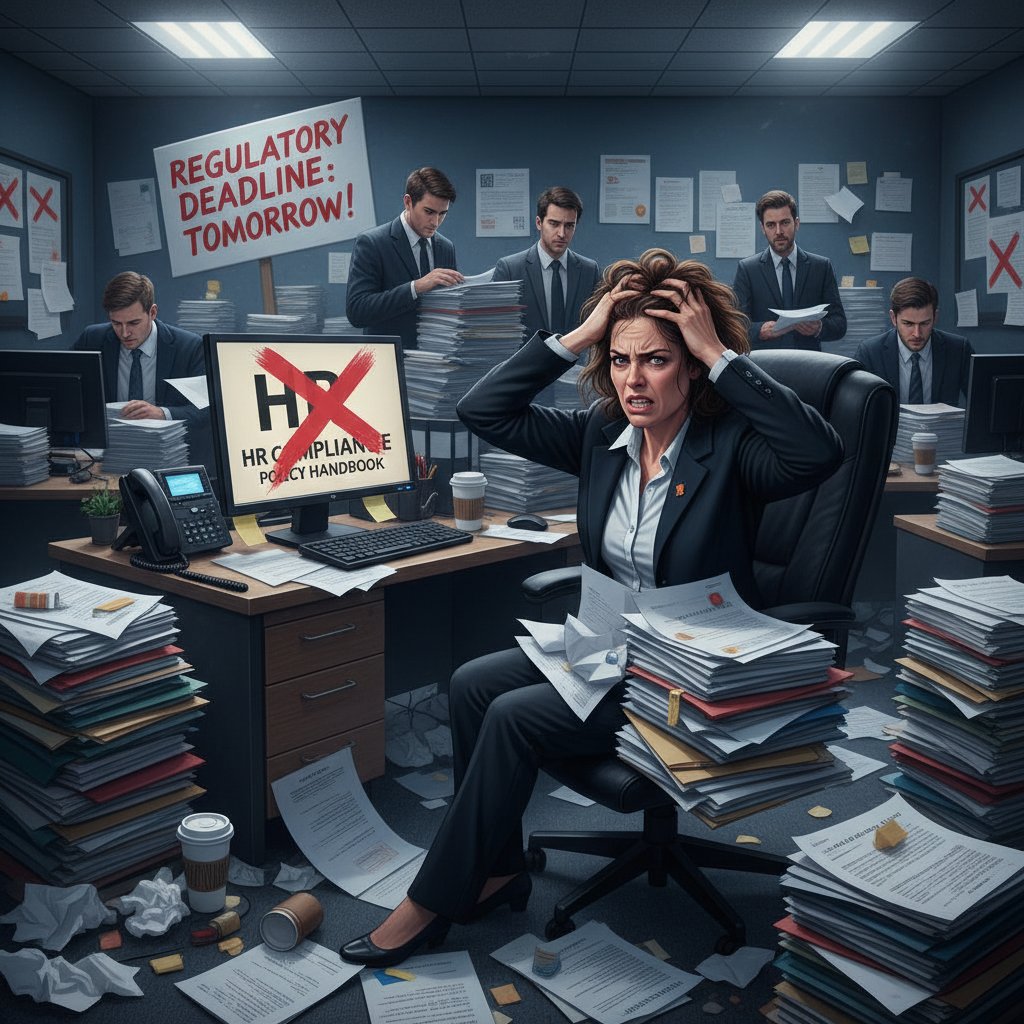
The moral? Fast isn’t always smart. Every shortcut comes with a shadow—usually in the form of unforeseen risk.
Success at scale: companies that nailed HR automation
But it’s not all doom and gloom. Global organizations with smart implementation have turned fast HR policy generation into a competitive edge. A Fortune 500 retailer, for example, used AI-driven policy automation to standardize onboarding across 20+ countries. The result: 30% faster hiring cycles—and a measurable spike in employee satisfaction.
“We thought automation would feel impersonal, but our teams actually felt more empowered with clear, up-to-date guidelines. The key was customizing templates to reflect our real-world values.” — HR Director, Fortune 500 Retailer, Forbes, 2024
What they wish they’d known before clicking 'generate'
Every HR leader who’s lived through a fast policy rollout has a list of hard-earned lessons. Here’s what comes up most often:
- Templates are a starting point, not the finish line: Always customize to reflect your company’s actual practices and values.
- Legal reviews still matter: Automated checks catch big risks, but miss local nuances.
- Employee feedback is gold: Rolling out policies without input leads to confusion and resistance.
- Update cycles need discipline: A policy is only as good as its last update—don’t let automation breed complacency.
- Transparency is critical: Explain not just what the policy is, but why it exists.
Busting the top myths about fast HR policy generators
Myth #1: Fast means sloppy
The notion that speed equals carelessness is outdated. Platforms like filecreator.ai prove that, with the right logic and compliance integration, you can have both speed and substance. The real issue isn’t how quickly a policy is produced—it’s whether the tool builds in enough legal and contextual safeguards.
“Fast doesn’t have to mean risky. The best AI tools are constantly learning from new regulations and user feedback, making policies both quick and robust.” — Industry Analyst, SHRM, 2024
Myth #2: AI can’t handle nuance
AI is only as good as its training data and the humans behind it. Today’s best HR policy generators use advanced natural language processing to adapt tone, terminology, and even cultural references. But context still matters. As research from LinkedIn, 2024 shows, employee retention depends on leadership and cultural fit—things AI can support, but not replace.
Myth #3: Compliance is guaranteed
No tool, no matter how sophisticated, can offer 100% compliance in every jurisdiction, at every moment. Relying solely on automation is a recipe for legal blind spots.
- Regulations change faster than monthly software updates: If your generator lags, so will your compliance.
- Interpretation matters: AI can spot rules, but not always intent or gray areas.
- Industry-specific quirks: Some policies require industry expertise, not just generic templates.
- Manual oversight is irreplaceable: Always have a human review before rollout.
Under the hood: How AI-powered HR policy generators really work
Data, algorithms, and the ghost in the machine
At the heart of every fast HR policy generator is a data-hungry AI engine. These systems ingest legal texts, best-practice templates, and (sometimes) anonymized user feedback. Algorithms then match your inputs to regulatory requirements and spit out draft policies in seconds.

But algorithms aren’t infallible; they’re shaped by the biases and blind spots of their creators. As the Society for Human Resource Management, 2024 points out, the best platforms combine machine logic with human review.
Training sets, bias, and the ethics of automated policies
Training data is the DNA of every AI-driven HR policy tool. If the underlying data is outdated, biased, or incomplete, the resulting policies will be too.
The massive set of sample policies, legal texts, and regulatory documents used to “teach” an AI model how to draft HR documentation.
Systematic errors in AI outputs caused by gaps or prejudices in the training data—potentially leading to discriminatory or flawed policies.
Ethics isn’t just a philosophical debate; it’s a daily operational reality. Failing to audit your tool’s training data can expose your company to legal and reputational risks.
Are we outsourcing HR judgment to machines?
If you’re relying on AI to “think” for you, you’re not leading—you’re abdicating. Automated tools are powerful assistants, not replacements for human judgment. As Culture Amp (2024) notes, overemphasizing automation can fragment HR policy and erode trust.
“It’s tempting to let the machine decide, but real HR leaders use technology as a scalpel—not a sledgehammer.” — Culture Amp Analyst, Culture Amp, 2024
Making it work: Your step-by-step guide to choosing and using a fast HR policy generator
Checklist: What to vet before you trust any tool
Before you hand over your HR policies to an algorithm, here’s what you need to check:
- Legal coverage: Does the tool cover all relevant jurisdictions (local, state, federal)?
- Customization depth: How much can you tailor language and rules to your actual practices?
- Update frequency: Are compliance updates in real time or on a set schedule?
- User access and permissions: Can you control who edits, approves, and views drafts?
- Integration: Does the tool play nicely with your existing HRIS, payroll, and document management systems?
- Support and training: What resources are available if something goes wrong?
- Audit trail: Is every edit and approval logged for future reference?
How to avoid the biggest implementation pitfalls
Even the smartest tool can flop if not rolled out wisely. Here’s how experienced HR leaders dodge the landmines:
- Don’t skip the human review: AI flags risks, but humans catch the context.
- Pilot before full rollout: Test on a single policy or department before going global.
- Train your team: Don’t assume everyone knows how to use new tech effectively.
- Set update reminders: Schedule regular reviews, even if the tool claims “always up to date.”
- Solicit feedback from users: Employees know when a policy feels off—listen to them.
- Keep legal in the loop: Run every draft by counsel, especially in regulated industries.
Beyond speed: Ensuring real compliance and buy-in
Speed is only valuable if it doesn’t sacrifice engagement or legality. Here’s how real-world organizations balance both:
| Priority | Fast HR Policy Generator | Best Practice for Success |
|---|---|---|
| Compliance | Automated checks plus legal review | Combine AI with human oversight |
| Engagement | Limited unless actively customized | Involve employees in policy creation |
| Update cycles | As per vendor schedule, at risk of lag | Set internal reminders for review |
| Auditability | Digital logs of edits and approvals | Maintain clear version control |
Table 3: Strategies for balancing speed, compliance, and engagement. Source: Original analysis based on PerformYard, 2024, SHRM, 2024.
The ripple effect: How fast HR policy changes your company culture
Morale, inclusion, and the risk of 'template thinking'
When policies are pumped out at warp speed, morale can become collateral damage. Employees spot copy-paste culture a mile away—especially younger workers. As Boost’rh, 2024 notes, “83% of young employees say their job satisfaction hinges on HR policies reflecting real company values.”

If your HR policies feel generic, so will your culture. Real inclusion comes from policies that are as dynamic as your workforce.
Unconventional uses for fast HR policy generators
These tools aren’t just for compliance checklists—they’re being used in surprising ways:
- Rapid crisis response: Instantly drafting policies for remote work, health emergencies, or regulatory shocks.
- Onboarding at scale: Customizing training and conduct guidelines for different locations, teams, or projects.
- M&A integration: Harmonizing policies between merging organizations to minimize friction.
- Employee-driven updates: Allowing team leads or departments to suggest and review policy changes in real time.
- Temporary initiatives: Quickly rolling out short-term policies for pilot programs or experimental benefits.
The future: Where does HR policy automation go from here?
Reality check: automation is here to stay, but the winners are those who blend machine speed with human insight. As the dust settles, organizations are learning that the real value of fast HR policy isn’t in the click—it’s in the conversation that follows.
The verdict: When speed works, when it hurts, and what every HR leader needs to know
Key takeaways (and brutal truths)
Fast HR policy generators aren’t a panacea, but they’re not poison, either. The truth is complicated—and that’s exactly why the conversation matters.
- “Fast” HR policy is only as good as the diligence behind it—automation amplifies both strengths and weaknesses.
- Compliance is a moving target; don’t trust any tool to keep you totally safe without human review.
- Employee engagement depends on policies that feel authentic, not generic.
- Templates are a starting point, not the finish line.
- The best results come when you blend AI-driven speed with leadership-driven wisdom.
Who should—and shouldn’t—use fast HR policy generators
- Best suited for:
- Organizations with distributed teams or rapid onboarding needs.
- Companies in need of quick compliance updates across multiple jurisdictions.
- HR teams looking to automate low-value, repetitive drafting and focus on strategy.
- Should reconsider if:
- Your organization requires deeply nuanced, culture-specific policies.
- You lack legal support for reviewing AI-generated drafts.
- There’s little buy-in from leadership or employees.
Final word: Redefining 'fast' in HR for 2025 and beyond
Speed is seductive, but wisdom is irreplaceable. The real future of HR policy isn’t about choosing between automation and authenticity—it’s about using both, in concert, to build workplaces that are resilient, compliant, and genuinely engaged.

The fast HR policy generator, when wielded with care, is a lever for progress—not a shortcut to irrelevance. Before you hit “generate,” make sure you’re ready to own what happens next.
Sources
References cited in this article
- PerformYard HR Statistics(performyard.com)
- Forbes HR Trends 2024(forbes.com)
- SHRM State of the Workplace(shrm.org)
- Boost’rh HR Policy(boostrh.com)
- Harvard Business Review(hbr.org)
- Culture Amp HR Trends(cultureamp.com)
- GoCo State of HR(goco.io)
- Aon Five Big HR Trends(aon.com)
- Josh Bersin HR Predictions(joshbersin.com)
- Galaxy.ai HR Policy Generator(galaxy.ai)
- SHRM 2023-2024 Report(shrm.org)
- HireQuotient AI HR Policy Generator(hirequotient.com)
- Grand View Research(grandviewresearch.com)
- McKinsey Automation Statistics(paperform.co)
- Forbes HR Initiatives 2024(forbes.com)
- SHRM Technology Report(shrm.org)
- BorderlessHR Case Studies(blog.borderlesshr.com)
- Easy-Peasy.AI Policy Generator(easy-peasy.ai)
- Deloitte HR Tech Trends(www2.deloitte.com)
- Forbes HR Trends 2024(forbes.com)
- SHRM Predictions(shrm.org)
- WebHR Automation Stories(web.hr)
- Deel HR Automation Stats(deel.com)
- Business & Financial Times(thebftonline.com)
- SilverCloudHR AI Myths(silvercloudhr.co.uk)
- UNLEASH Productivity Myths(unleash.ai)
- PeopleHum HR Statistics(peoplehum.com)
- MyHRConcierge AI Limits(myhrconcierge.com)
- HR Executive AI in HR(hrexecutive.com)
- SHRM AI in Workplace(shrm.org)
- ADP AI in HR(adp.com)
- BCG Generative AI in HR(bcg.com)
Perfect Documents, Instantly
Filecreator.ai transforms the way you produce professional documents. Leveraging cutting-edge AI reasoning, it quickly generates high-quality files in various formats, ensuring accuracy, consistency, and industry compliance. Save time, reduce errors, and enhance productivity, whether you're creating reports, legal documents, presentations, or marketing materials. Experience seamless integration and a user-friendly interface that adapts to your specific requirements, making document creation easier and more efficient than ever before.
Get startedStart Creating Professional Documents Today
Join thousands of professionals who trust AI-powered document generation
Frequently Asked Questions
What is a fast HR policy generator and why has it become so popular?
A fast HR policy generator is an AI-powered tool that creates HR policies instantly, moving away from the traditional time-consuming process of manual policy development. According to the article, it has gone from a novelty to a necessity in modern businesses due to pressure to improve speed and efficiency, though this shift comes with hidden costs and compliance risks.
How has HR policy creation changed over time?
HR policy creation has evolved from custom, human-led manuals in the pre-1980s era focused on employee advocacy, to cost-driven templates in the 1980s-2000s, to today's AI and automation tools. According to Harvard Business Review (2024), the 1980s marked a turning point when HR shifted from 'employee advocacy' to 'cost control,' prioritizing efficiency over engagement.
What are the main risks of using template-driven HR policies?
The article indicates that trading traditional HR paperwork for instant, AI-powered policies involves losing nuance and creating compliance tensions, though the full extent of these risks is explored throughout the guide. One consequence mentioned is the loss of the people-focused approach that characterized earlier eras of HR policy development.
What was inefficient about traditional HR policy creation?
Building a single HR policy from scratch the traditional way could take weeks of cross-departmental meetings, legal vetting, and endless revisions, resulting in massive labor costs and bottlenecks.
Continue Reading
Explore more from Professional Document Generator

What Automated HR Policy Creators Actually Deliver
Automated HR policy creators promise efficiency gains for overwhelmed HR teams. This article examines the real benefits, genuine risks, and what vendors don't disclose about HR policy automation.

Easy HR Policy Drafting Software That Doesn’t Break Compliance
Discover insights about easy HR policy drafting software

Why Most HR Policies Fail and How to Fix Them
Generate HR policies that actually prevent workplace crises rather than merely meet compliance requirements.

HR Policy Automation Software: Benefits and Real Risks
HR policy automation software helps companies manage compliance and regulatory change. This article examines the benefits, real risks, and outcomes of automation implementation.

Speed Versus Compliance in HR Document Generation
Generate HR documents quickly while maintaining compliance. This article explains the balance between speed and accuracy in HR documentation, and the strategies that prevent audit failures.

How to Generate Compliant HR Policies That Withstand Audits
Generate compliant HR policies with research-backed strategies that address hidden compliance traps. This article explains the costliest mistakes and the methods experts use to stay protected.