
Document Creation Without Consultants That Cuts Costs by 70%
Written with AI assistance under our editorial guidelines
Organizations can now create professional documents in-house using AI generators and cloud collaboration tools, eliminating costly consultant dependencies. This shift enables companies to reduce document creation costs by 70% while improving speed and control over their processes, moving away from the historical reliance on external experts for compliance and template standardization.
Ditching the consultant is no longer a radical act—it’s a strategic power move. “Document creation without consultants” has exploded into the mainstream for one reason: organizations are done paying gatekeepers to do what they can now manage in-house, sharper and faster. If you’ve ever watched your budget bleed or deadlines slip through endless consultant reviews, you know the pain. But here’s the truth most won’t admit: the chains are breakable. With the rise of AI document generators, collaborative cloud tools, and user-friendly workflows, the landscape has shifted irreversibly. This isn’t about cutting corners or bypassing expertise; it’s about claiming control, slashing costs, and unleashing agility that consultants can only envy. In this deep-dive, we’ll lay bare the myths consultants have sold you, arm you with battle-tested strategies, and introduce you to the tools making DIY professional documents not just possible, but preferable. If you’re ready to break free, own your process, and thrive in 2025, keep reading.
Why consultants became the gatekeepers of document creation
The rise of the consultant-industrial complex
Consultants didn’t always rule the document world. But as regulatory frameworks multiplied and documentation standards ballooned, companies scrambled for compliance. Enter the “consultant-industrial complex”—a self-reinforcing system where outside experts became the default architects of everything from contracts to annual reports. According to recent research from PandaDoc, 2025, over 62% of medium to large enterprises hired consultants for document-heavy projects in the last two years. The rationale was obvious: consultants offer specialized expertise, act as neutral referees in internal disputes, and, most importantly, provide a safety net against costly mistakes. But that safety net came at a price—financially, culturally, and operationally.

For years, outsourcing document creation seemed to guarantee accuracy and compliance. Consultants brought “best practices,” proprietary templates, and a veneer of accountability. But as more companies joined the arms race for external validation, the costs—both visible and hidden—began to pile up.
| Decade | Consulting Spend (Global, USD) | Document Automation Adoption (%) |
|---|---|---|
| 2000 | $43B | 3% |
| 2010 | $77B | 10% |
| 2020 | $160B | 32% |
| 2024 | $192B | 54% |
Table 1: Escalation of consulting spend vs. document automation adoption. Source: Original analysis based on [Statista, 2024], PandaDoc, 2025
How companies became dependent on outside expertise
Decades of “consultant first” thinking bred deep dependencies. Internal teams lost the muscle memory to create and manage complex documents, instead deferring to outsiders for even routine tasks. According to the Bynder, 2025 survey, more than 70% of organizations admitted they wouldn’t trust an internal draft without an external consultant’s review—despite the proliferation of sophisticated, AI-driven tools.
This reliance wasn’t just about skills. Consultants became trusted intermediaries who managed collaboration, version control, and cross-departmental wrangling. They set the rules, owned the templates, and carried the accountability badge. In many cases, their presence was less about actual expertise and more about risk avoidance—an expensive insurance policy against potential compliance blowups.
"Consultants were seen as the only way to guarantee compliance. But at some point, they became the only way companies knew how to work." — Industry Expert, Bynder, 2025
The hidden costs no one talks about
What the consultant-industrial complex rarely discloses are the cascading hidden costs. Beyond the obvious price tags—hourly rates, retainer fees, rushed “urgent” changes—the deeper toll comes in lost agility, slower time-to-market, and a culture of learned helplessness.
| Cost Factor | Traditional Consultant | In-House/Automated |
|---|---|---|
| Direct Fees | High | Low |
| Turnaround Time | Medium/Slow | Fast |
| Accountability | Shared/Externalized | Internal |
| Version Control | Manual | Automated |
| Compliance Risk | Moderate | Low (with AI tools) |
| Hidden Costs (Delays, Rework) | High | Low |
Table 2: Consultant vs. in-house/automated document creation cost factors. Source: Original analysis based on [PandaDoc, 2025], Bynder, 2025
The result? Organizations pay a premium for a slow, rigid process—and often, for expertise that their teams could cultivate themselves with the right modern tools.
The myth of complexity: why you don’t need a consultant for everything
Breaking down the smoke and mirrors
Let’s dismantle the illusion: document creation is not inherently too complex for non-experts. Consultants thrive on mystique—arcane jargon, proprietary templates, and “proprietary frameworks.” In reality, the majority of business documents are variations on well-trodden patterns. Research from Docupilot, 2025 reveals that over 80% of standard business documents can be accurately generated using AI-powered platforms with embedded compliance checks.

The rise of cloud-based editors and collaborative platforms like filecreator.ai has stripped away the smoke and mirrors. These systems provide live co-editing, version history, and automated compliance—all without the consultant price tag. The “complexity” argument is losing its power.
Complex documents—legal agreements, financial reports, technical manuals—follow predictable structures. Today’s document generators allow teams to leverage pre-built templates, automate data integration, and maintain compliance with a few clicks. The consultant’s mystery box? It’s just a box, and the tools are now in your hands.
Common misconceptions about document creation
Many organizations remain shackled by misconceptions, slowing their adoption of DIY document generation:
- “Automated tools can’t ensure compliance.” In fact, leading platforms like Docupilot and Bynder embed up-to-date regulatory frameworks and industry standards, according to their 2025 documentation.
- “Templates are too generic.” Modern AI generators adapt templates to sector, tone, and use-case, outperforming old static forms.
- “Collaboration will fall apart without a neutral party.” Cloud-based platforms offer granular permissions, live editing, and immutable audit trails—no external referee needed.
- “Errors are inevitable without external review.” AI-driven validation and version control now catch the majority of formatting and compliance lapses before release.
- “Our documents are too unique for automation.” Data from Bynder, 2025 shows that 76% of “custom” documents rely on standardized language and structure, easily managed by today’s platforms.
There’s a reason LSI keywords like “DIY professional documents” and “self-service document creation” are trending: the market is waking up.
When you peel back the consultant narrative, you find that the real power comes from user empowerment, not mystification.
When expert help is actually justified
Still, not every situation is ripe for a DIY approach. There are times when consultants truly add value:
- Complex regulatory changes: When your industry faces major compliance overhauls, expert interpretation is critical.
- Mergers and acquisitions: Large-scale transactions require bespoke legal and financial documentation that exceeds template capabilities.
- Litigation or high-risk scenarios: Legal proceedings or reputationally sensitive documents demand specialist scrutiny.
"There are cases where internal teams simply can't shoulder the liability. In those moments, a consultant isn't a luxury—it's a necessity." — Legal Advisor, PandaDoc, 2025
But for the vast majority of use cases—from HR policies to marketing decks—the myth of indispensable complexity no longer holds.
The new DIY era: powerful tools and platforms changing the game
How AI is leveling the playing field
AI isn’t just automating document creation—it’s democratizing it. Once the exclusive domain of white-shoe consultants, the power to produce compliant, professional-grade documents now sits at every keyboard. According to PandaDoc, 2025, AI adoption for document creation has doubled since 2022, with organizations reporting a 60% reduction in manual drafting time.

These platforms don’t just spit out templates. They learn from your data, offer contextual recommendations, and flag compliance risks in real time. Filecreator.ai, for example, leverages advanced reasoning to ensure documents meet industry standards from the first draft—cutting down on human error and rework.
AI-driven document generators allow internal teams to reclaim ownership. You get tailored outputs, auto-formatting, and dynamic content integration—without the cost or delays of third-party intervention.
What modern document generators can and can’t do
Let’s get specific about strengths and limitations:
| Functionality | Modern Document Generators | Consultants |
|---|---|---|
| Compliance Checks | Automated, Real-Time | Manual, Delayed |
| Custom Templates | Yes, Adaptable | Yes, Often Proprietary |
| Data Integration | Seamless (API, CSV, etc.) | Manual |
| Collaboration | Real-Time, Cloud-Based | Email, Scheduled Calls |
| Interpretation of Ambiguity | Limited | Expert, Contextual |
| Handling Novel Scenarios | Limited | Strong |
| Cost | Low, Subscription-Based | High, Hourly/Retainer |
Table 3: Capabilities of modern document generators vs. consultants. Source: Original analysis based on Bynder, 2025, Docupilot, 2025
While AI tools excel at speed, consistency, and compliance, they do have boundaries. If your scenario is highly novel or ambiguous, you may still need flesh-and-blood expertise. But for 90% of routine documentation, the machine wins.
The new paradigm is not man versus machine—it’s knowing when to automate and when to consult.
Introducing filecreator.ai and other toolkits
Filecreator.ai exemplifies how organizations are reclaiming document autonomy. With a clean interface, multi-format support, and industry-specific templates, it streamlines everything from internal reports to sophisticated contracts. It’s not alone; tools like PandaDoc, Bynder, and Docupilot are raising the bar on usability and compliance.

What unites these platforms is their focus on user empowerment: seamless integration with data sources, built-in collaboration, and customizable workflows. The upshot? Internal teams now produce documents with consultant-level polish—without the overhead.
If you value speed, precision, and independence, these toolkits are your ticket to consultant-free success.
Case studies: companies that ditched consultants and won (or lost)
The startup that saved six figures
Consider NovaApps, a US-based SaaS startup. Facing a $120,000 consultant quote for compliance documentation and onboarding manuals, they opted for a hybrid approach: filecreator.ai for drafting and Docupilot for automated compliance checks. The result? Completed documentation in 3 weeks, at a fraction of the original cost.

According to the company’s COO, “We not only cut costs, but we actually understood our own processes better.” The team reported faster onboarding, fewer errors, and improved morale. Their story is indicative of a broader trend: agile teams are reaping rewards by taking control of their documentation process.
The established firm that stumbled—and got back up
But not every transition is frictionless. Midway Inc., an established finance company, canned their consulting contract hoping to automate all document workflows overnight. Within a month, critical errors surfaced in highly specialized compliance reports—errors that could have been caught by an expert eye. After a rapid assessment, they reinstated targeted consulting support for the trickiest segments, while using filecreator.ai for the rest.
The lesson wasn’t to abandon automation, but to blend it with strategic expertise. As the firm’s Head of Operations put it:
"We learned the hard way: you can automate 90% and still need a human for the last 10%. Now, we’re faster and smarter than ever." — Head of Operations, Midway Inc., 2024
Lessons learned from both sides
The real world is messier than any sales pitch. Here’s what the winners and “almost-winners” have in common:
- Early self-assessment is vital. Know where your team’s strengths and limits lie before you cut the consultant cord.
- Hybrid workflows win. Automation plus targeted expertise beats either approach alone—especially during transitions.
- Education is non-negotiable. Teams need to upskill in both tool usage and compliance basics to avoid rookie mistakes.
- Templates are your friend. Start with best-practice frameworks and customize only as needed.
- Review cycles matter. Even automated drafts benefit from a second set of eyes, internal or external.
The bottom line: strategic independence is possible, but only if you understand your terrain.
Step-by-step: how to master document creation without consultants
Assessing your real needs
Going consultant-free is exhilarating—but not if you leap before you look. Start by mapping your real requirements:
- Inventory document types: Identify everything from contracts and reports to policies and collateral.
- Evaluate current workflows: Where do bottlenecks or errors crop up?
- Audit team skills: Who can own templates, compliance reviews, or workflow setup?
- Identify compliance needs: Which documents are “must-pass” from a regulatory perspective?
- Set success metrics: Define what “good enough” looks like—speed, accuracy, cost.
Only with a clear-eyed assessment can you avoid the most common DIY pitfalls.
True independence is less about brute-forcing every task and more about knowing which battles to fight—and which to delegate, even if only temporarily.
Building your DIY document workflow
The path to consultant-free mastery is paved with structure. Here’s how to architect your workflow for speed and reliability.

- Choose your platform: Opt for a reputable document generator with template support and compliance features—think filecreator.ai, PandaDoc, or Docupilot.
- Centralize templates: Build or customize templates for every major document type. Store them in a shared repository.
- Automate data integration: Connect your platform to relevant data sources for seamless updates (APIs, CRM, HRIS).
- Standardize input fields: Simplify forms and reduce manual entry to minimize error rates.
- Train your team: Host sessions on tool usage, compliance basics, and workflow protocols.
- Implement review cycles: Set up internal sign-offs and automated notifications for draft completion.
- Continuously optimize: Gather feedback and tweak templates, workflows, and training over time.
Well-structured workflows transform the document creation process from chaos to competitive advantage.
Avoiding common pitfalls
Even the best-laid plans can stumble. Here’s how to steer clear of the usual traps:
- Underestimating compliance needs: Don’t assume a template covers all regulatory bases. Review requirements regularly.
- Skipping training: The most powerful tool is useless if your team doesn’t know how to wield it.
- Neglecting version control: Ensure your platform tracks edits and maintains a single source of truth.
- Over-customizing templates: Resist reinventing the wheel for every document—standardization saves time and money.
- Failing to review outputs: Automation reduces errors but doesn’t eliminate them. Always review critical drafts.
If you embrace these lessons, you’ll avoid the fate of organizations who leapt before they looked—and landed flat.
Cost, speed, and risk: the real numbers behind going consultant-free
Comparing costs: consultants vs. DIY
Is the consultant-free approach just hype, or does the math back it up? Let’s compare the true costs.
| Scenario | Consultant Model (Annual) | DIY Automated Model (Annual) |
|---|---|---|
| Direct Fees | $100,000 | $12,000 |
| Turnaround Time (Avg.) | 3-4 weeks per doc | 1-2 days per doc |
| Error Rate | 4-7% | 2-3% (with review) |
| Compliance Failure Risk | Moderate | Low (with AI tools) |
Table 4: Comparative costs and operational metrics. Source: Original analysis based on PandaDoc, 2025, Bynder, 2025
The verdict: for most routine documentation, DIY platforms slash costs and time-to-delivery, while maintaining or even improving quality.
Time to delivery: how the process really stacks up
Speed is often the dealbreaker. Consultants juggle multiple clients, build in buffer time, and operate through elongated feedback loops. DIY tools, by contrast, deliver near-instant results.
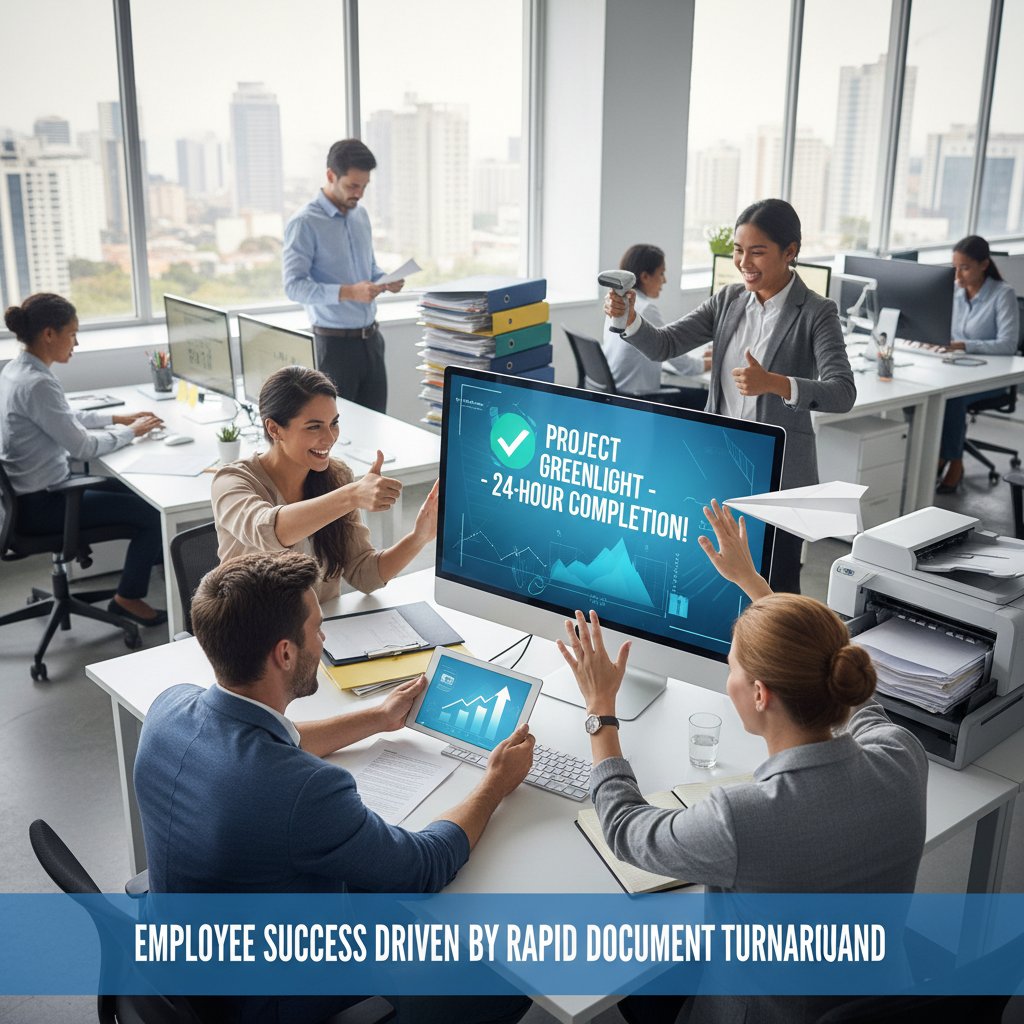
Current data shows that automated document platforms cut delivery times by up to 80%. Internal collaboration becomes real-time; version history is immutable; reviews are tracked automatically. The result? Projects move faster, and teams spend less time waiting and more time executing.
The true ROI isn’t just in dollars saved, but in reclaimed momentum.
Risk analysis and how to mitigate it
Going it alone does entail risks. Compliance gaps, template misfires, or overlooked edits can bite. Mitigation is key:
- Vet your platforms: Stick with established, audited document generators.
- Maintain backup workflows: For mission-critical docs, keep a consultant or legal advisor on call.
- Implement tiered reviews: Not every doc needs the same scrutiny. Prioritize by risk.
- Stay current: Update templates and compliance logic regularly based on new laws or standards.
- Document everything: Track decisions, changes, and policies in a centralized audit trail.
Risk management isn’t about eliminating all danger—it’s about containing it to tolerable levels and learning as you go.
Expert insights: what insiders really think
Contrarian voices from the industry
Not everyone cheers the end of the consultant era. Some insiders argue that speed and cost aren’t everything—deep expertise and accountability remain critical for complex or high-stakes projects.
"The pendulum is swinging, but we shouldn’t throw out the baby with the bathwater. Automation is great, but there’s still no substitute for lived experience when the stakes are high." — Senior Consultant, Bynder, 2025
The most successful companies blend self-sufficiency with smart outsourcing, deploying consultants only where their expertise offers unique, irreplaceable value.
The point isn’t to demonize consultants, but to reclaim the balance of power.
Advice for going solo from seasoned pros
Learn from those who’ve succeeded at ditching consultants:
- Start small and scale up: Tackle low-risk documents first, then expand.
- Build internal champions: Identify team members to own workflows and evangelize best practices.
- Invest in continuous learning: Keep your team’s compliance, tool, and workflow knowledge razor-sharp.
- Leverage community: Tap into online forums, training, and support channels for rapid troubleshooting.
- Don’t chase perfection: Focus on “good enough” outputs for most documents; reserve perfectionism for critical cases.
Success comes not from bravado, but from building a resilient, learning-focused culture.
The future of document creation: predictions for 2025 and beyond
Right now, the present is the only certainty—and the present says the consultant’s monopoly is over. The democratization of document creation technology has permanently shifted the calculus. Internal teams are rewriting the rules by leveraging automation, collaboration, and a growth mindset.

Organizations that embrace this shift—learning, iterating, and blending DIY with selective expertise—are already pulling ahead. The only real question is whether you’ll be one of them.
The consultant-industrial complex isn’t vanishing overnight, but it’s shrinking fast.
The jargon decoded: key terms and what they really mean
Understanding industry jargon
“Document creation without consultants” comes with a new vocabulary. Here’s what you actually need to know:
A software tool that uses artificial intelligence to automate the drafting, formatting, and compliance-checking of documents. It learns from user input and industry standards.
A centralized collection of pre-built document structures, customizable for specific industries, use cases, or compliance requirements.
Real-time, multi-user editing of documents, often powered by cloud platforms. Tracks changes and maintains version history automatically.
Embedded rules and frameworks ensuring generated documents meet legal, regulatory, or industry-specific standards.
Automated system tracking changes, edits, and document histories to prevent loss and ensure accountability.
Knowing the lingo isn’t just for techies—it’s for anyone who wants to stay ahead.
How to spot consultant speak
Consultants have their own dialect. Here’s how to translate:
Their playbook of standardized approaches, often dressed up as proprietary wisdom. Usually available in any reputable template library.
Getting everyone to agree on a document’s content—something modern collaborative tools can now manage in real time.
The process for introducing new document practices or templates—now automated by workflow software.
Off-the-shelf, ready-to-use product—what filecreator.ai and its peers actually provide.
Decoding the jargon demystifies the process—and empowers you to take back control.
Your independence checklist: is it time to fire your consultants?
Self-assessment: are you ready to go solo?
Before you make the leap, audit your readiness:
- Do you understand your document workflows and compliance needs?
- Have you identified/documented your most critical templates?
- Is your team trained on your chosen automation tools?
- Do you have a process for reviewing and updating templates?
- Is your leadership aligned on goals and risk tolerance?
If you can answer “yes” to at least four, you’re ready to claim your independence.
Independence isn’t just about cutting costs—it’s about building confidence and capacity.
Hidden benefits of taking control
The upside of ditching consultants goes way beyond your bottom line:
- Faster iterations: Internal teams can adapt immediately to changing needs.
- Greater ownership: Employees understand and improve their own workflows.
- Reduced bottlenecks: Say goodbye to endless email chains and scheduling backlogs.
- Culture of learning: DIY approaches foster upskilling and innovation.
- Cost predictability: Subscription-based tools eliminate unpredictable hourly fees.
- Better morale: Teams gain pride in their own output and autonomy.
In a world that rewards agility, these benefits aren’t just “nice to have”—they’re essential.
Next steps: where to find resources and communities
Ready to start? The modern web is brimming with resources—training, templates, and thriving forums of document pioneers like you.

Start with the knowledge base at filecreator.ai, plug into LinkedIn groups, and dive into webinars from leading platforms like Docupilot and Bynder. Sharing insights and war stories accelerates your learning curve, and ensures you’re never flying solo—even when consultants are out of the picture.
The path is open. Walk it with eyes wide open, and you’ll never look back.
Conclusion: breaking free from the consultant-industrial complex
Key takeaways and final thoughts
Breaking free from the consultant-industrial complex is less a leap and more a steady, intentional march. The evidence is clear: with AI-powered document generators, collaborative editing tools, and a willingness to learn, organizations of every size can own their documentation destiny.
- Consultants built the gate but you hold the key. Their era of exclusive control is fading fast.
- Tools like filecreator.ai put power back in your hands. Speed, compliance, and quality are no longer out of reach.
- Hybrid strategies win. Use consultants for the genuinely complex—automate the rest.
- Cost, speed, and autonomy are the new currency. The organizations that thrive are the ones who seize control, iterate relentlessly, and never stop learning.
- You already have what you need. The only thing left is to start.
Document creation without consultants isn’t a fad. It’s the new normal for teams who want to own their process, slash costs, and accelerate their growth. The only gatekeeper is you.
Ready to break free? Start today—and never look back.
Sources
References cited in this article
- Bynder: Top 7 Collaborative Document Editing Tools in 2025(bynder.com)
- Docupilot: Document Generation Guide 2025(docupilot.com)
- PandaDoc: Best Automation Solutions 2025(pandadoc.com)
- Folderit: Document Management for Consultants(folderit.com)
- Investopedia: Gatekeepers in Consulting(investopedia.com)
- Consulting Quest: History of Consulting(consultingquest.com)
- LEK: New Age in Document Creation(lek.com)
- I’d Rather Be Writing: Simplicity vs. Complexity(idratherbewriting.com)
- Medium: The Myth of Necessary Complexity(medium.com)
- Docupilot: Document Generation Software(docupilot.com)
- Bit.ai: AI-Powered Collaboration(bit.ai)
- BBN Times: xAI’s Grok Studio(bbntimes.com)
- AI Doc Maker: How AI Saves Hours(aidocmaker.com)
- Relevance AI: Microsoft Word AI Agents(relevanceai.com)
- G2: Document Generation Software Reviews(g2.com)
- Templafy: Guide to Document Generation(templafy.com)
- Medya AI: AI Document Generators 2024(medya.ai)
- Piktochart: AI Document Generator(piktochart.com)
- Business Insider: Consulting Firms Losing Workers(businessinsider.com)
- Uplift Content: SaaS Case Study Trends 2024(upliftcontent.com)
- Templafy: AI Document Generation(templafy.com)
- Jotform: AI Document Generator(jotform.com)
- Guzon Consulting: Lessons Learned 2024(guzonconsulting.com)
- Innovation Leader: The End of Consulting as We Know It(innovationleader.com)
- Klariti: Master Documents in Word(klariti.com)
- Boston Institute of Analytics: Automating Document Management(bostoninstituteofanalytics.org)
- Flowster: Master Document Workflow(flowster.app)
- Crispy Software Solutions: Document Management Workflow 2024(crispysoftwaresolutions.com)
Perfect Documents, Instantly
Filecreator.ai transforms the way you produce professional documents. Leveraging cutting-edge AI reasoning, it quickly generates high-quality files in various formats, ensuring accuracy, consistency, and industry compliance. Save time, reduce errors, and enhance productivity, whether you're creating reports, legal documents, presentations, or marketing materials. Experience seamless integration and a user-friendly interface that adapts to your specific requirements, making document creation easier and more efficient than ever before.
Get startedStart Creating Professional Documents Today
Join thousands of professionals who trust AI-powered document generation
Frequently Asked Questions
How much can organizations save by creating documents without consultants?
Organizations can cut costs by 70% by moving document creation in-house instead of relying on external consultants, according to the article's title and main premise.
What percentage of medium to large enterprises hired consultants for document-heavy projects?
According to PandaDoc 2025 research cited in the article, over 62% of medium to large enterprises hired consultants for document-heavy projects in the last two years.
What tools now make in-house document creation possible without consultants?
The article mentions AI document generators, collaborative cloud tools, and user-friendly workflows as the technologies that have made DIY professional document creation possible and preferable.
Why did consultants become the primary architects of business documents?
As regulatory frameworks multiplied and documentation standards increased, companies turned to consultants for their specialized expertise, ability to act as neutral referees in disputes, and perceived protection against costly compliance mistakes.
Continue Reading
Explore more from Professional Document Generator

Document Automation Reduces Consulting Costs and Exposes Waste
Document automation reduces consulting costs by cutting manual workflows that consultants use to justify fees.

Why Organizations Are Moving Beyond External Document Consultants
This article explains why external document consultants are losing ground to AI automation and in-house expertise, and how organizations can build competitive advantage internally.

Document Design Without Outsourcing That Rivals Agencies in Weeks
Discover insights about document design without outsourcing

Problems with External Document Consultants and ROI Loss
External document consultants promise quick solutions but often sabotage projects and drain budgets. This article examines the hidden risks and real-world failures.

Automated Document Generation Vs Consultants: Cost and Efficiency Analysis
This article examines the real costs, risks, and opportunities when choosing between automation and consultant-led approaches.

Nine Alternatives to Hiring Consultants for Business Problem-Solving
This article examines nine alternatives to hiring consultants, explaining how companies are solving business problems faster and more cost-effectively without external experts.