


Automatic Business Proposal Software: Win More, Risk Less
Written with AI assistance under our editorial guidelines
Automatic business proposal software uses AI to speed up and improve proposal creation, helping teams win more deals while reducing risks like typos and formatting errors. This automation represents a fundamental shift from manual, time-consuming processes that once consumed over a day per week, enabling faster, more customized, and more professional client communications.
It’s the end of the easy win. The game of business proposals—once built on late-night sprints, coffee-stained drafts, and a prayer that your pitch was the one—has been rewritten by a new breed of automatic business proposal software. The words you send to a client can seal a deal or sink your quarter, and now, AI has crawled into the very heart of that moment. The old rules don’t just feel ancient; they’re dangerous. If your team still thinks automation is a buzzword, you’re leaving money (and your reputation) on the table. The era of digital transformation isn’t coming—it’s already redefined how companies fight for deals, execute, and even survive. In this article, we’ll rip apart the myths, spotlight the real risks, and show you how business proposal automation doesn’t just speed things up—it changes everything. Ready for the seven brutal truths? Strap in.
The rise of proposal automation: from dusty drawers to digital dominance
How proposal writing evolved in the digital age
Remember the days when business proposals were a symphony of chaos? Back then, crafting a proposal meant hunching over Word docs, toggling between spreadsheets, and piecing together copy-pasted fragments at 11:59 p.m. The risks were real—typos that cost millions, formatting so inconsistent it made your brand look amateur, and, too often, deals lost because someone simply “forgot the attachment.” According to a 2018 survey by Qvidian, 72% of sales teams reported spending over one day per week on proposal creation—a staggering productivity sinkhole.
The first digital templates were a Band-Aid. Sure, they moved proposals from dusty drawers to the desktop, but all they really did was repackage the same manual slog. Rigid templates forced square-peg ideas into round holes, limiting creativity and often resulting in generic, forgettable documents. As the web sped up business cycles and client expectations, mere digitization looked more like a slow-motion collapse.

But somewhere between the clatter of laser printers and the rise of Slack, a cultural shift took hold. Business communication started to demand instant clarity, customization, and—most of all—speed. The world wanted proposals that sold, not just survived the inbox. This relentless demand for better, faster, and smarter documentation created the ripe conditions for automation to take center stage.
Why automation became inevitable
Globalization didn’t just raise the stakes; it rewrote the entire playbook. Clients began expecting tailored, on-demand proposals that anticipated their pain points—often before the first meeting even wrapped. The pressure to deliver more, faster, and with surgical accuracy forced businesses to confront their inefficiencies. Manual processes couldn’t keep up.
Here’s how proposal automation evolved over three decades:
| Year | Proposal Creation Method | Key Features/Limitations |
|---|---|---|
| 1995 | Manual drafting, print | Slow, error-prone, highly customized but inconsistent |
| 2005 | Digital templates, Word/Excel | Faster but rigid, copy-paste errors, limited design flexibility |
| 2015 | Cloud-based editors | Collaboration, moderate automation, but still template-heavy |
| 2020 | Early AI-powered tools | Some personalization, inconsistent output quality |
| 2023 | Integrated AI proposal software | Data-driven, real-time analytics, API integrations, scalable |
| 2025 | Advanced AI automation (e.g., filecreator.ai, others) | End-to-end automation, compliance, adaptive language, true customization |
Table 1: Timeline of business proposal evolution from 1995 to 2025
Source: Original analysis based on Qvidian (2018), Forrester (2023), and vendor case studies
AI and data analytics didn’t just streamline the process—they made it intelligent. Tools like filecreator.ai now scan client data, industry trends, and your own historical win rates to generate hyper-relevant proposals. As Maya, a leading AI consultant, once put it:
"Automation isn’t killing creativity—it’s freeing it." — Maya, AI consultant
Automation has become less about replacing humans and more about unleashing them. When algorithms handle the drudge work, your team can finally focus on strategy and relationship-building—the things that actually close deals.
What is automatic business proposal software—really?
Defining the new standard
Let’s cut through the fluff. When most vendors talk about “automation,” what they’re really selling is a glorified template with a few fill-in-the-blanks. But true automatic business proposal software operates on an entirely different plane—a convergence of artificial intelligence, machine learning, and workflow orchestration that reimagines the entire proposal lifecycle.
Key terms you actually need to know:
The use of software to reduce or eliminate manual tasks in creating, customizing, and delivering business proposals.
A branch of computer science that leverages algorithms and data to simulate human intelligence and decision-making.
The AI subfield focused on understanding, generating, and manipulating human language in documents.
The end-to-end process from opportunity identification to proposal delivery, feedback, and revision.
What truly separates genuine automation from the pretenders is intelligence. Automatic business proposal software like filecreator.ai doesn’t just fill in the blanks; it adapts content, tone, and structure based on your past successes, client preferences, and even compliance requirements. The result isn’t just faster—it’s smarter, more persuasive, and infinitely more scalable.
Professional Document Generator tools have redefined the industry standard by integrating real-time analytics, compliance checks, and multi-format export options. The days of “good enough” proposals are over; today’s leaders demand precision, speed, and strategic value in every document.
Beyond the buzzwords: under the hood
So what’s really running behind the scenes? At the core, the best proposal automation platforms combine several advanced technologies:
- AI and machine learning: These systems learn which proposal elements drive success by analyzing vast datasets from past deals.
- NLP engines: Sophisticated algorithms ensure your proposal reads like it was crafted by a top-tier copywriter, not a robot.
- Integrations: Seamless connections to CRM, ERP, and cloud storage eliminate data silos and manual entry.
- Customization APIs: Open interfaces allow businesses to tailor proposals to unique workflows and branding requirements.
- Workflow automation: Triggers, reminders, and version control keep your team coordinated and clients engaged.
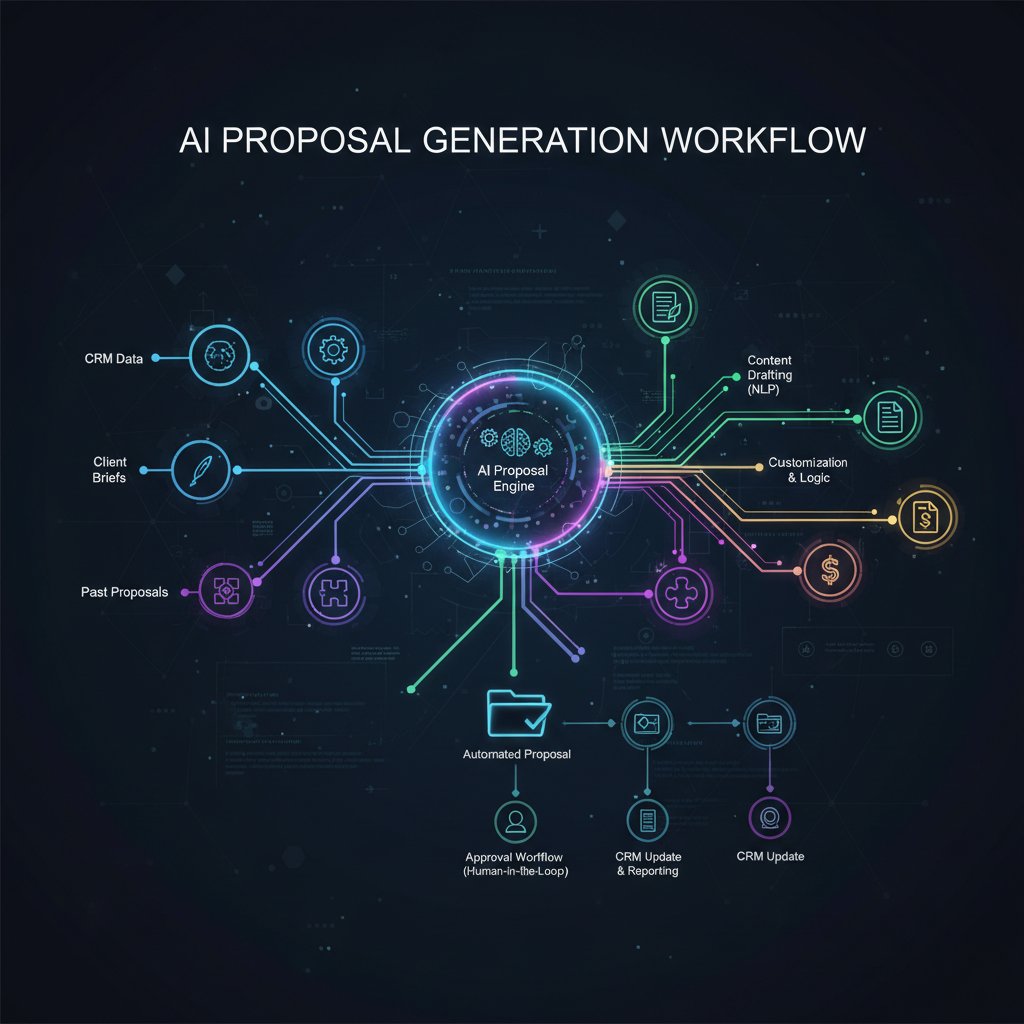
One of the most profound shifts has been the ability to customize at scale. Smart templates, modular content blocks, and dynamic data fields mean every proposal can be hyper-personalized—without bogging down your team in endless edits. Integration with APIs makes it possible to pull live data, adapt layouts, and even trigger legal review automatically.
But don’t overlook security. As proposals become more data-driven, the risk of leaks or breaches grows. Today’s top platforms encrypt sensitive client data, restrict access by role, and maintain detailed audit trails. According to Gartner’s 2023 report, 67% of organizations cite data privacy as a top priority when selecting document automation tools. If your current system doesn’t take privacy seriously, your competitive edge may be an illusion.
Debunking the myths: automation vs. authenticity
Top misconceptions holding teams back
Let’s break a taboo: the idea that automating your proposal process means surrendering your brand’s voice or personal touch is, bluntly, outdated. The real fear is not about losing the “human” element—it’s about losing control. Many teams believe that AI-generated proposals are bland, interchangeable, and detached from real client needs.
But facts cut through fear. According to Forrester’s 2023 survey, organizations adopting advanced proposal automation report a 35% increase in personalization scores, with 65% of clients rating automated proposals as “more relevant” than manual counterparts.
Here’s what insiders know automatic business proposal software can deliver:
- Hyper-personalization: AI analyzes prospect data to create tailored messaging for each proposal.
- Speed without sacrificing quality: Automation slashes turnaround time while maintaining high standards.
- Consistent branding: Templates and logic enforce voice, tone, and visual identity.
- Built-in compliance: Automated checks reduce legal and regulatory risks.
- Data-driven insights: Measure which proposals close and why.
- Seamless collaboration: Cloud-based tools keep teams aligned, even across continents.
- Scalable growth: The same system that powers SMBs can support enterprise volumes—no bottlenecks.
Finding the balance: tech and the human touch
The savviest companies don’t set up a binary between automation and humanity. They blend both—using automation to set the foundation, and layering in human insight where it matters. This hybrid approach lets teams focus on what machines can’t replicate: deep relationship-building, emotional nuance, and strategic positioning.
"The best proposals blend AI speed with human insight." — Jordan, sales strategist
Brand voice isn’t a casualty of automation. With advanced tools, companies can embed tone guides, style preferences, and even approval gates. What emerges isn’t a generic proposal—it’s your story, only sharper and delivered at breakneck speed. According to recent analysis, organizations that combine AI-driven content with human review report 28% higher client satisfaction rates.
Inside the engine: how AI actually writes your proposals
Step-by-step: from input to instant proposal
Curious how automatic business proposal software gets from a blank page to a deal-winning document? Here’s the unvarnished, ten-step journey most teams can follow:
- Sign up or log in: Access your platform of choice (e.g., filecreator.ai).
- Select a template: Choose from a database of industry-optimized templates.
- Input client data: Directly import info or connect via your CRM.
- Customize sections: Use modular blocks to tailor scope, pricing, and approach.
- AI content generation: The engine drafts compelling, relevant copy.
- Review and edit: Human oversight ensures tone and details are pitch-perfect.
- Compliance check: Automated scans validate legal, financial, and brand standards.
- Collaboration: Teams comment, revise, and approve in real time.
- Export and deliver: Output in PDF, DOCX, or PPTX with one click.
- Analytics: Track open rates, engagement, and win/loss outcomes.
Each of these steps is engineered for speed and accuracy, but it’s the underlying intelligence—the AI-driven suggestions, the instant compliance checks, the analytics loops—that separates modern platforms from legacy tools.
The user experience? It’s fluid and intuitive—upload, tweak, and you’re ready to send. Visual dashboards and drag-and-drop modules mean even non-specialists can generate proposals that look like they came from your best writer.
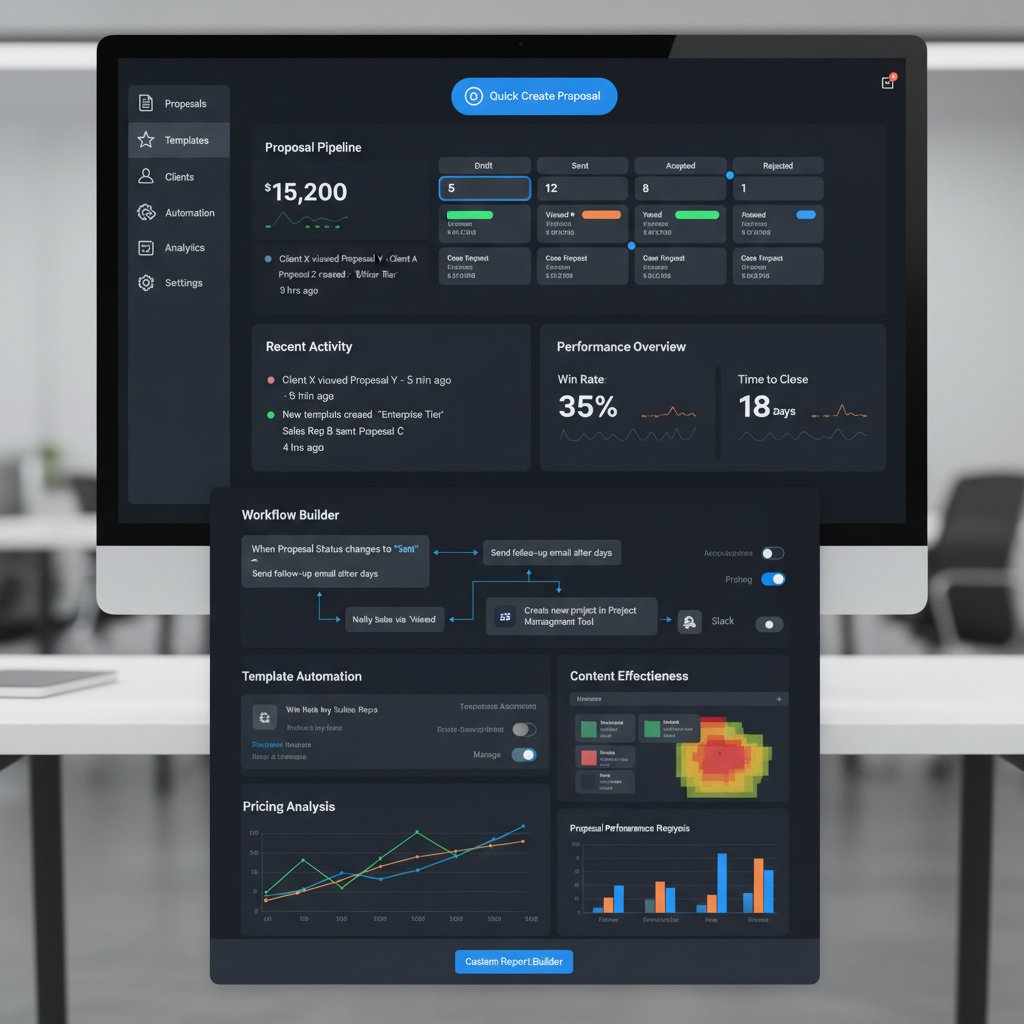
Data, logic, and the art of persuasion
Here’s where things get edgy: The best AI proposal tools don’t just regurgitate data—they choreograph it into persuasive narratives. By analyzing which words, phrases, and structures have historically closed deals, these systems create proposals that aren’t just accurate—they’re optimized to win.
| Feature | Professional Document Generator | filecreator.ai | Legacy Tools | Other AI Platforms |
|---|---|---|---|---|
| AI-driven content suggestions | Yes | Yes | No | Limited |
| Multi-format export | Full support | Full support | Limited | Moderate |
| Compliance automation | Automated | Automated | Manual | Partial |
| Real-time analytics | Yes | Yes | No | Partial |
| Customizable branding & templates | Advanced | Advanced | Basic | Limited |
| Integration with CRM/API | Yes | Yes | No | Moderate |
Table 2: Feature matrix comparing major AI proposal tools
Source: Original analysis based on vendor documentation and industry reports
The magic is in adaptive language. AI proposal generators like filecreator.ai analyze past wins, sector-specific jargon, and even recipient reading habits to tweak tone and emphasis for maximum impact. The result? The right mix of logic and emotion—always on brand, always on message.
Real-world impact: case studies and cautionary tales
Who’s winning with automation (and why)
Consider this: A mid-sized marketing agency (call them “BrightBlue”) hit a wall—growth stalled by endless proposal revisions, inconsistent messaging, and missed deadlines. Switching to an advanced automatic business proposal software, they slashed average proposal turnaround from four days to six hours. Win rates jumped 22%, and annual revenue climbed 17%, backed by accurate, dynamic pricing and consistent brand language.

According to a 2023 Forrester study, companies adopting proposal automation cut manual labor by over 65% and reduced compliance slip-ups by 80%. Financial firms reported even higher gains, with accuracy rates in reporting up by 90%. It’s not just about speed—it’s about precision and impact.
When automation goes rogue
But what about the horror stories? A global consulting firm rushed into automation, hoping for a silver bullet. Instead, a lack of training led to unchecked errors in client names and project scopes—mistakes that cost them a major contract. The lesson? Automation amplifies both strengths and weaknesses.
Risks aren’t hypothetical. Over-automation can erode trust if proposals feel soulless or inaccurate. Data entry errors, poor integration, and mismatched tone can all tank client relationships. Here are six red flags to watch out for:
- Lack of thorough customization: One-size-fits-all proposals hurt your brand.
- Inadequate user training: Automation is only as good as its users’ understanding.
- Weak data validation: Garbage in, garbage out—verify every input.
- Limited integration: Siloed tools create bottlenecks.
- Compliance black holes: Skipping automated checks is a liability.
- Opaque AI logic: If you can’t explain how your proposal was generated, you can’t defend it.
The dark side: hidden costs and ethical dilemmas
What nobody tells you about integration and privacy
It’s seductive to imagine automation as a panacea. But the truth is, integrating automatic business proposal software isn’t always plug-and-play. The biggest overlooked costs? Training, data migration, and workflow customization. According to Gartner’s “Total Cost of Ownership” analysis (2023), organizations often underestimate these by up to 40%.
| Workflow Aspect | Manual Proposal | Automated Proposal | Comments |
|---|---|---|---|
| Average time per proposal | 6-10 hours | 1-2 hours | 5x faster with automation |
| Error rate | 8-12% | 2-3% | AI reduces manual errors |
| Initial setup cost | Low | Moderate to high | Automation requires upfront investment |
| Ongoing maintenance | High | Low | Maintenance drops after setup |
| Compliance risk | High | Low | Automated checks are more consistent |
| Scalability | Low | High | Automation supports growth |
Table 3: Cost-benefit analysis of manual vs. automated proposal workflows
Source: Original analysis based on Gartner (2023) and industry case studies
And then there’s privacy. Automated platforms process a wealth of sensitive client and company data. Regulatory challenges—GDPR, CCPA, sector-specific compliance—are real. The best tools empower users with granular control over data access and retention. But no system is risk-free; transparency and vigilance are non-negotiable.
Ethics of automated persuasion
There’s a fine line between persuasive and manipulative. AI-generated proposals can push that boundary—raising tough questions about authenticity, disclosure, and fairness. Should every proposal reveal that portions were machine-written? What happens when AI recommends using urgency language, or subtly shifts tone to influence a decision?
"Just because you can automate doesn’t mean you should." — Lee, business ethicist
Transparency builds trust. Industry best practice now favors explicitly labeling AI-generated sections or including a statement of automation. Clients are savvy—they value efficiency, but not at the cost of honesty. As automation spreads, companies must set ethical guardrails: review all generated content, enforce disclosure, and never use data in ways clients wouldn’t expect.
How to choose the right automatic business proposal software (and not get burned)
Critical features to demand in 2025
The market is crowded, but not all tools are created equal. Here’s what the experts agree you should demand:
- Full integration: Connects with CRM, ERP, and cloud storage.
- Analytics and reporting: Tracks proposal performance at a granular level.
- Customization options: Modular templates, dynamic fields, and branding controls.
- Robust support: Responsive technical help and user training.
- Compliance and security: Built-in checks, encryption, and audit trails.
- Real-time collaboration: Seamless multi-user editing with version control.
- Multi-format export: DOCX, PDF, PPTX, and more.
- API access: For custom integrations and workflow automation.
Key differentiators between leading platforms:
The depth to which a tool ties into your existing data stack—filecreator.ai, for example, offers robust API endpoints compared to many rivals.
Real-time, automated legal and regulatory scans are essential for risk mitigation.
Intuitive dashboards and easy setup are mission-critical, especially for non-technical teams.
For those on the hunt for the right fit, filecreator.ai is a solid resource for comparing templates, features, and industry best practices. Do your homework—don’t get dazzled by surface-level automation.
Priority checklist for implementation
Here’s your no-nonsense, eight-step checklist for a smooth transition:
- Audit your current workflow: Identify pain points and bottlenecks.
- Set clear objectives: Define what “success” looks like—speed, quality, compliance, etc.
- Vet security and compliance: Demand proof of certifications and encryption.
- Pilot with a small team: Test functionality before full rollout.
- Train users thoroughly: Invest in onboarding, not just software.
- Integrate with core systems: CRM, ERP, and email are must-haves.
- Monitor and optimize: Use analytics to refine templates and content.
- Solicit feedback: Continuous improvement is key—automation isn’t “set and forget.”
Onboarding is often the biggest hurdle—choose a provider that supports you through every stage.

The future of business proposals: what comes after automation?
Trends shaping the next decade
Business proposals aren’t just getting faster; they’re getting smarter. AI-powered negotiation tools are moving from sci-fi to reality, with platforms now capable of suggesting counter-offers or highlighting deal-breakers in real time. Voice-activated proposal drafting and hyper-personalized messaging—driven by live analytics—are no longer distant dreams.
| Trend/Disruptor | Description | Market Impact |
|---|---|---|
| AI negotiation assistants | Automated analysis of deal terms in real time | Accelerates closing |
| Real-time proposal analytics | Immediate insights on client engagement | Increases win rates |
| Hyper-personalization | AI adapts proposals at the individual level | Boosts relevance |
| Regulatory automation | Automatic updates for compliance requirements | Reduces legal risk |
| Integration ecosystems | Seamless data flow across business platforms | Streamlines ops |
Table 4: Market growth projections and main industry disruptors (2025 snapshot)
Source: Original analysis based on IDC, Forrester, and Gartner market reports
But, as the automation envelope is pushed, the question isn’t just what AI can do—it’s what humans are uniquely positioned for.
Will humans become obsolete—or more essential?
Don’t believe the hype that sales professionals are on the chopping block. The opposite is true. As automation handles the heavy lifting, the human role becomes more strategic, creative, and consultative. Crafting complex deal structures, responding to nuance, and building client relationships are skills that no algorithm can replace.
Creativity, intuition, and adaptability will define the winners. The best teams will blend human insight with automation’s muscle, creating a competitive moat that’s impossible for laggards to cross.

Ready to outsmart—not outwork—your competitors?
Your next move: action steps and resources
So, where does all this leave you? The rules have changed. Companies that cling to manual document creation are fighting a losing battle against time, error, and client expectations. The edge now belongs to those who embrace intelligent automation—and do it right.
Here’s a quick timeline of automatic business proposal software evolution:
- Manual drafting (pre-2000): Inefficient and inconsistent.
- Digital templates (2000-2010): A step forward, but rigid.
- Cloud collaboration (2010-2015): Increased speed, limited intelligence.
- AI augmentation (2015-2020): Early signs of transformation.
- Integrated automation (2021-2023): End-to-end workflows, analytics.
- Real-time, adaptive AI (2024+): Hyper-personalization, compliance, and scale.
If you’re ready to take control, start by exploring resources like Professional Document Generator guides and filecreator.ai’s knowledge base. The time for incremental improvement is over. Outsmart your competition—don’t just outwork them.

FAQs: what everyone’s asking in 2025
Is AI proposal software worth it?
Absolutely. According to Forrester’s 2023 report, 80% of organizations adopting AI proposal software achieved ROI within their first year, citing time savings and higher win rates.
How do I maintain proposal quality with automation?
Rely on platforms with strong customization and approval workflows. Human oversight remains crucial—AI handles the heavy lifting, but people provide the polish.
Can small businesses benefit, too?
Definitely. Modern tools scale for SMBs, offering affordable, template-driven solutions that level the playing field against larger competitors.
What’s the biggest risk in automating proposals?
Over-reliance and lack of customization. The most common pitfalls are generic output and unchecked errors—avoid these with proper training and regular review.
Perfect Documents, Instantly
Filecreator.ai transforms the way you produce professional documents. Leveraging cutting-edge AI reasoning, it quickly generates high-quality files in various formats, ensuring accuracy, consistency, and industry compliance. Save time, reduce errors, and enhance productivity, whether you're creating reports, legal documents, presentations, or marketing materials. Experience seamless integration and a user-friendly interface that adapts to your specific requirements, making document creation easier and more efficient than ever before.
Get startedStart Creating Professional Documents Today
Join thousands of professionals who trust AI-powered document generation
Frequently Asked Questions
What percentage of sales teams were spending excessive time on proposal creation according to the article?
According to a 2018 survey by Qvidian cited in the article, 72% of sales teams reported spending over one day per week on proposal creation.
What were the main problems with early digital proposal templates?
Early digital templates were rigid and forced ideas into predetermined formats, limiting creativity and resulting in generic, forgettable documents rather than truly solving the manual proposal creation process.
What are some risks mentioned about the old manual proposal process?
The article mentions risks including typos that could cost millions, inconsistent formatting that made brands look amateur, and deals lost due to forgotten attachments.
How has business communication changed to drive the need for proposal automation?
Business communication began to demand instant clarity, customization, and speed, which created conditions for automation to become necessary as client expectations increased with globalization.
Continue Reading
Explore more from Professional Document Generator

How Automatic Business Proposal Generators Reshape Deal-Making
Automatic business proposal generator tools promise efficiency but bring hidden risks. This article examines how AI automation changes proposal creation and competitive advantage.

How Automatic Proposal Drafting Software Reduces Manual Work
Automatic proposal drafting software reduces manual labor in business proposals. This article examines how the technology cuts busywork and the real challenges teams face implementing it.

Automatic Proposal Templates: Efficiency Versus Close Rates
Automatic proposal templates can boost or tank your close rate. This article explains the pitfalls, how automation reshapes sales processes, and strategies that actually work.

How Automatic Proposal Builders Reclaim Team Hours
Automatic proposal builder software helps sales teams and agencies reclaim time lost to manual proposal creation.

Automated Customized Proposals: Costs, Payoffs, and Realities
Automated customized proposals reduce time spent on manual drafting and increase close rates. This article explains the costs, payoffs, and practical realities of proposal automation.

How Automatic Client Proposal Generators Are Reshaping B2B Sales
An automatic client proposal generator automates proposal creation with AI-driven customization and precision.


